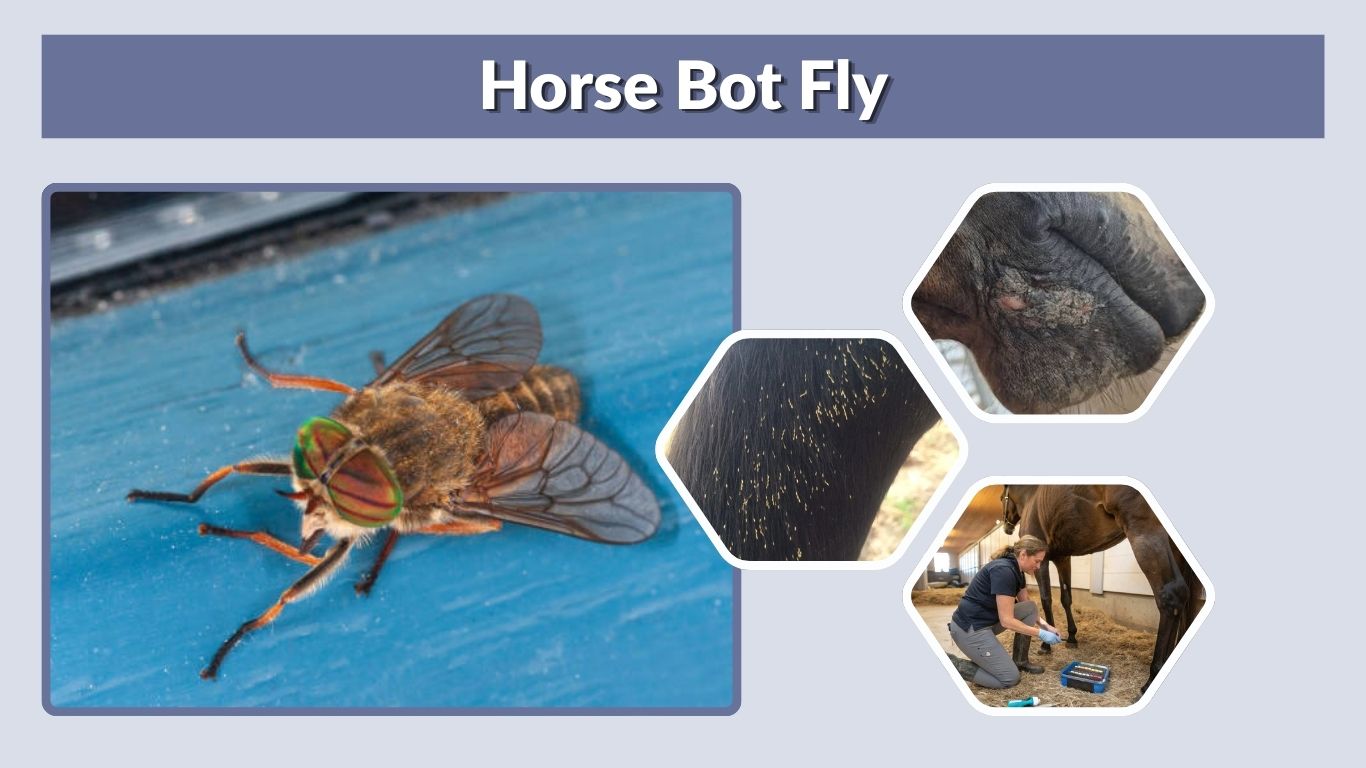
Horse bot flies are bee-like flies whose larvae develop inside horses. Adult females attach small yellow eggs to the horse’s hair, especially on the legs, shoulders, neck, and around the jaw. When a horse licks or bites these areas, larvae enter its mouth, migrate through oral tissues, and eventually attach to the stomach or intestine. Most infestations cause few obvious symptoms, but heavy burdens may irritate the mouth or digestive tract. Regular egg removal and veterinarian-directed deworming provide effective control.
What Is a Horse Bot Fly?
Horse bot flies belong to the genus Gasterophilus. Unlike horse flies, adult bot flies do not take blood meals or create painful bites. Their main purpose during their short adult lives is to mate and deposit eggs on horses or, for certain species, nearby vegetation.
Horse Bot Fly Identification
Adult horse bot flies generally have:
- A brown, yellow, or dark bee-like body
- Dense hair over the head and thorax
- One pair of transparent wings
- Reduced mouthparts that cannot bite
- A body measuring up to approximately 2 cm
- A loud buzzing flight that can frighten horses
An adult female may hover near a horse and repeatedly dart toward its body while laying eggs. This activity can make the horse run, kick, stamp, or rub itself, even though the fly is not biting.
Common Horse Bot Fly Species
Several Gasterophilus species can infest horses. The most familiar include:
- Common horse bot fly: Commonly attaches eggs to the forelegs, shoulders, and other areas the horse can lick.
- Throat bot fly: Usually places eggs beneath the jaw.
- Nose bot fly: Deposits eggs around the lips and nose.
- Dark horse bot fly: May lay dark-colored eggs on the horse’s face and body.
The preferred egg-laying location and the larvae’s final attachment site vary among species.
What Do Bot Fly Eggs Look Like on Horses?
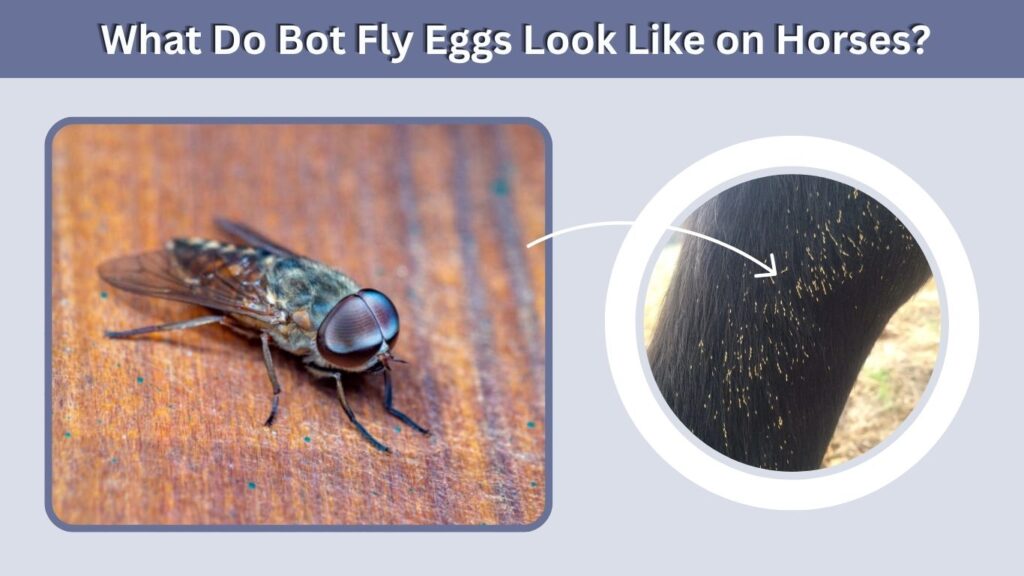
Horse bot fly eggs appear as numerous tiny yellow, cream, tan, or occasionally dark specks firmly glued to individual hairs. They may look like grass seeds or small drops of dried paint, but they cannot be brushed away easily with an ordinary grooming brush.
Where to Check for Eggs
Inspect these areas carefully during bot fly season:
- Front legs, especially around the knees
- Shoulders and upper forelegs
- Chest and belly
- Neck and mane
- Under the jaw
- Around the lips and nose
- Cheeks and throat
- Other places the horse can lick
Egg placement depends partly on the bot fly species. Checking the entire coat is therefore more reliable than examining only the legs.
Are Bot Fly Eggs Harmful?
The eggs themselves do not feed on or injure the horse. The problem begins when larvae hatch and enter the mouth. Warmth, moisture, rubbing, and licking can stimulate hatching in some species.
Finding eggs indicates exposure, but it does not reveal how many larvae are already inside the horse. Fecal egg counts used for intestinal worms do not reliably diagnose bot fly larvae.
Horse Bot Fly Life Cycle
The bot fly life cycle involves both the horse and its surrounding environment. Completing the cycle can take close to a year, depending on the species and climate.
From Egg to Stomach Larva
The basic stages are:
- An adult female glues eggs to the horse’s hair.
- The eggs hatch spontaneously or after stimulation by licking and warmth.
- First-stage larvae enter the mouth.
- Larvae temporarily migrate through the tongue, gums, or spaces around the teeth.
- More developed larvae travel to the stomach or upper intestine.
- They attach to the digestive lining for several months.
- Mature larvae detach and pass out in the manure.
- They pupate in soil or dried manure before becoming adult flies.
Seeing bot fly larvae in horse manure usually means mature larvae have completed their internal development. They are commonly reddish or brownish, segmented, and covered with rows of small spines.
Symptoms of Bot Flies in Horses
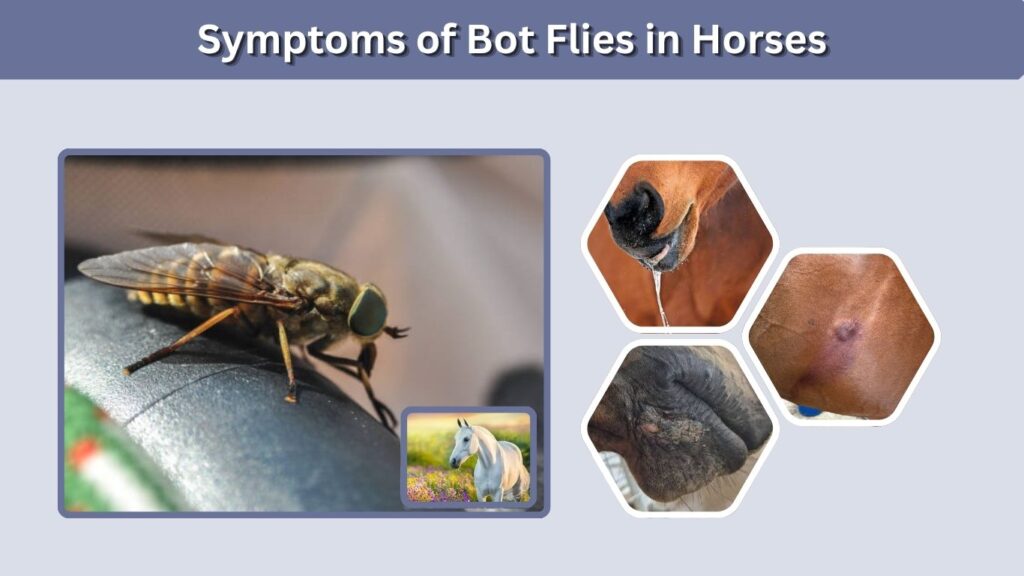
Many horses with stomach bots show no recognizable illness. Nevertheless, larvae can produce inflammation, erosions, or ulcers where they attach. Oral stages may cause more noticeable discomfort than stomach stages.
Possible Symptoms
Signs that may occur include:
- Excessive salivation
- Frequent head shaking
- Rubbing or irritation around the mouth
- Difficulty chewing
- Dropping partially chewed food
- Reduced appetite
- Unexplained weight loss or poor condition
- Mild or recurring colic
- Irritability during bot fly activity
- Larvae visible in manure
Severe complications such as digestive obstruction, esophageal impaction, or stomach perforation are possible but rare. These symptoms can also result from dental disease, ulcers, or other parasites, so veterinary examination is essential.
Bot Fly Wounds on Horses
A typical horse bot fly does not bite the skin or create an open external wound. Its eggs remain attached to hair, and the larvae usually migrate through the mouth before reaching the digestive tract.
A swollen, draining, ulcerated, or maggot-filled wound should not automatically be labeled a bot fly wound. Other possibilities include bacterial infection, traumatic injury, screwworm infestation, or a summer sore associated with Habronema larvae. Have a veterinarian inspect such a lesion promptly. Do not squeeze it or attempt to dig larvae from the tissue.
How to Remove Bot Fly Eggs From a Horse
Removing eggs before the horse licks them reduces the number of larvae entering its mouth. Inspect and groom exposed horses regularly throughout the fly season.
Using a Bot Fly Knife
A bot fly knife has a specialized serrated edge that scrapes eggs from the hair without cutting deeply into the coat. To use it:
- Secure the horse in a calm, well-lit location.
- Wear gloves and identify the affected hairs.
- Hold the tool nearly parallel to the horse’s body.
- Scrape gently in the direction of hair growth.
- Collect and dispose of the removed eggs.
- Avoid sensitive skin, wounds, eyes, and mucous membranes.
Never use an extremely sharp household knife near the horse’s skin. Work carefully around the legs because a frightened or irritated horse may kick.
Other Egg-Removal Tools
A bot stone, grooming block, or specialized bot egg comb may remove eggs from certain coat types. A disposable safety razor can sometimes help, but it must be used cautiously to prevent cuts and excessive hair removal.
Ordinary brushes rarely remove firmly attached eggs. Fly spray may discourage adult flies temporarily but should not be expected to kill every egg already glued to the coat. Use only products labeled for horses and follow all directions.
Treatment for Bot Flies in Horses
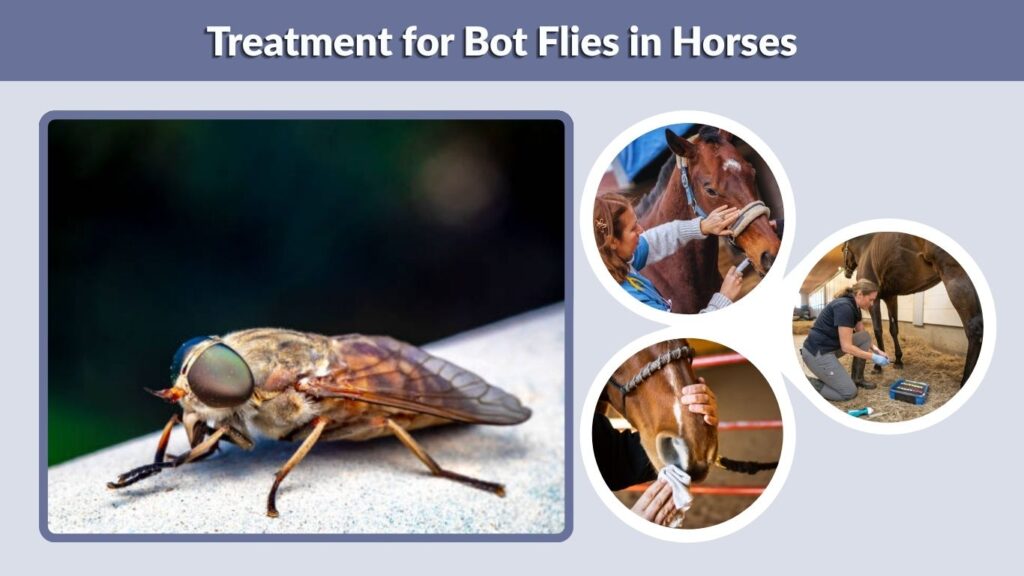
Manual grooming removes exterior eggs but does not kill larvae already inside the mouth or stomach. Internal treatment requires an appropriate equine dewormer selected with veterinary guidance.
What Wormers Kill Horse Bots?
Ivermectin is highly effective against oral and stomach stages of Gasterophilus. Moxidectin also has activity against stomach stages, although its effectiveness may be more variable. The Merck Veterinary Manual advises that autumn ivermectin treatment can reduce larval burdens and does not necessarily need to wait until the first frost.
The best product and timing depend on:
- The horse’s age, weight, and health
- Local bot fly season
- Other parasites requiring control
- Previous deworming treatments
- Drug-resistance conditions within the herd
- Whether the horse is pregnant, elderly, or underweight
Do not estimate the horse’s weight casually, combine dewormers, or use concentrated livestock products without veterinary instructions.
Avoid Routine Overuse of Dewormers
The American Association of Equine Practitioners recommends veterinarian-guided parasite programs instead of deworming every horse at fixed intervals throughout the year. Bot control should be incorporated into the horse’s complete parasite plan rather than treated as an isolated problem.
Fecal egg counts help guide control of certain intestinal worms, but they do not measure the horse’s bot larva burden.
How to Prevent Horse Bot Flies
No single method completely prevents bot flies. Combining regular grooming, physical protection, facility management, and properly timed internal treatment produces better control.
Practical Prevention Methods
- Examine the coat frequently during warm weather.
- Remove visible eggs before the horse can lick them.
- Check newly arrived horses before introducing them to a herd.
- Use horse-labeled fly repellents as directed.
- Provide shelter during periods of intense fly activity.
- Use fly sheets, masks, and boots when suitable.
- Remove manure regularly from stalls and turnout areas.
- Discuss seasonal deworming with an equine veterinarian.
- Inspect the mouth if the horse develops chewing difficulty or heavy salivation.
Cleaning manure supports general fly management, although adult bot flies do not reproduce in manure in exactly the same way as common house and stable flies.
Bot Fly vs. Horse Fly
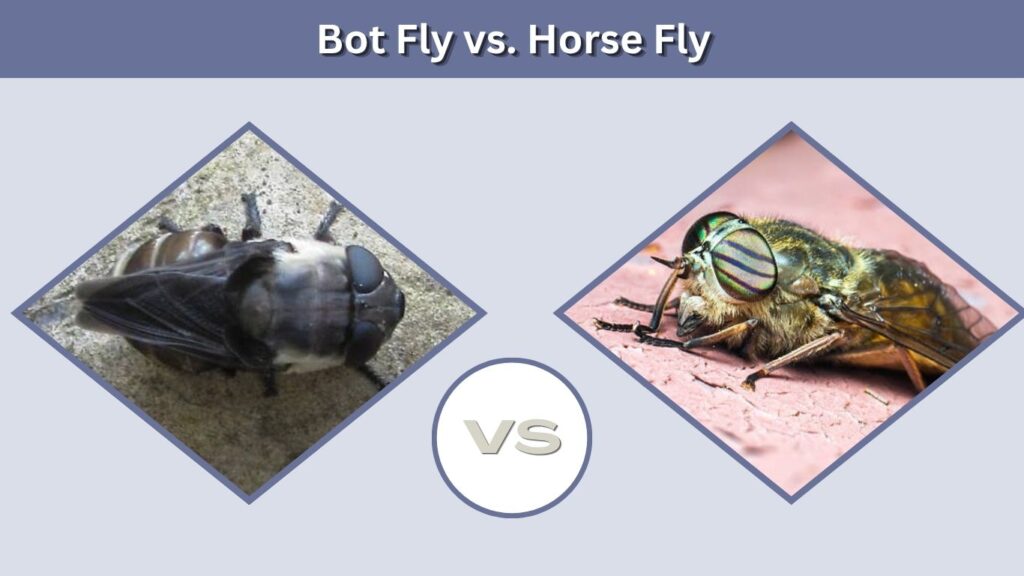
Bot flies and horse flies are different insects with different effects on horses.
| Feature | Horse Bot Fly | Horse Fly |
| Adult feeding | Does not feed or bite | Females take blood meals |
| Main problem | Eggs and internal larvae | Painful skin bites |
| Appearance | Hairy and bee-like | Large eyes and broad body |
| Eggs | Attached to horse hair or vegetation | Laid near aquatic or damp habitats |
| Immediate skin injury | Usually none | Painful wound or welt |
| Control | Egg removal and deworming | Repellent, barriers, shelter, and traps |
A painful bleeding bite is much more likely to come from a horse fly, deer fly, stable fly, or another biting insect than an adult horse fly.
FAQs
Do horse bot flies bite horses?
Adult horse bot flies do not bite because their mouthparts are greatly reduced. However, their buzzing and egg-laying behavior can distress horses.
Can humans get bot flies from horses?
Human infection with horse bot fly larvae is rare but documented. Accidental larvae may produce migrating skin irritation rather than completing their normal life cycle. Wear gloves when removing eggs, wash your hands, and seek medical care for an unexplained moving or spreading skin lesion after horse exposure.
What kills both fly eggs on horses?
Physical removal with a bot knife, grooming block, or specialized comb is the most dependable approach. Do not rely solely on fly spray to destroy attached eggs.
Can bot fly larvae be seen in horse manure?
Yes. Mature larvae may detach from the digestive tract and pass in manure before pupating in the environment. Their presence should be discussed with a veterinarian.
When should horses be treated for both flies?
Treatment is commonly planned near the end of the local bot fly season, often during autumn. However, timing varies with climate, exposure, and the horse’s complete parasite-control program, so consult a veterinarian.