
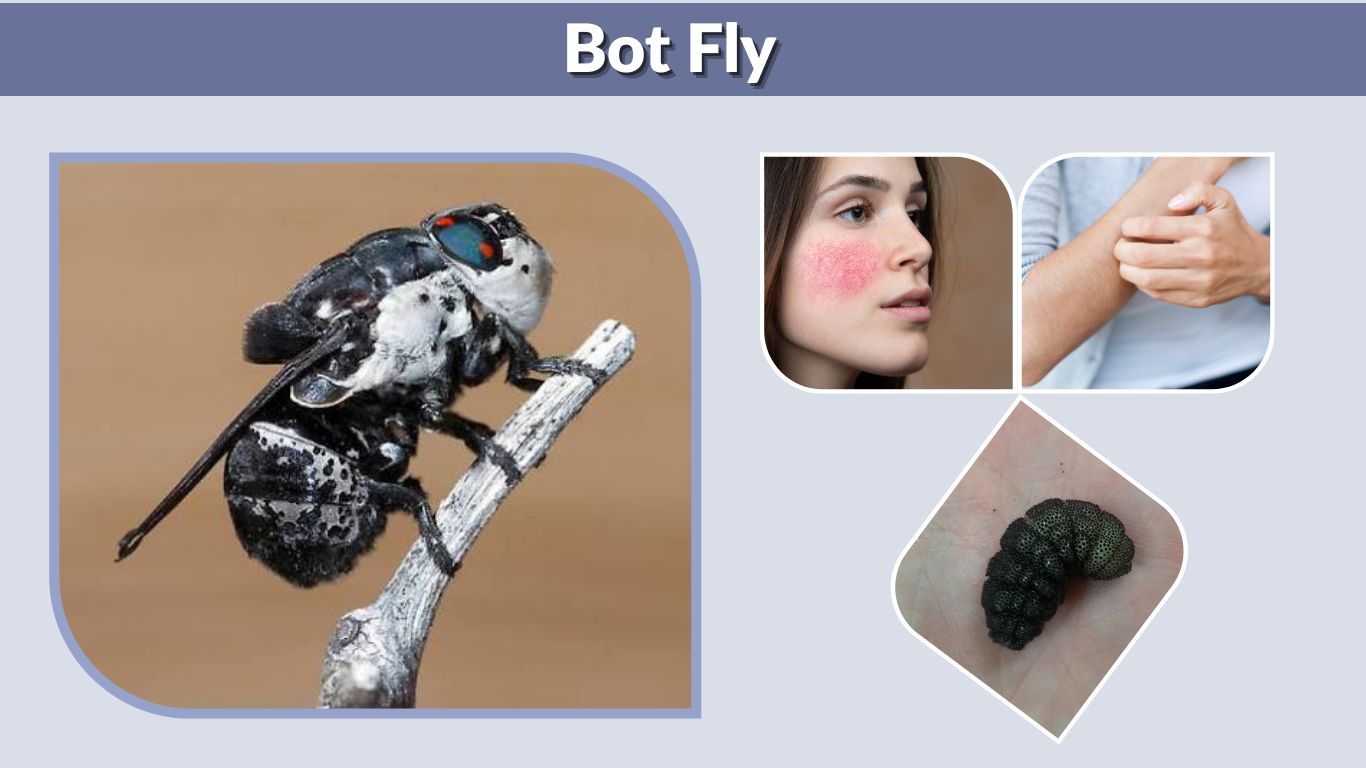
A bot fly is a parasitic fly whose larvae develop inside or on the bodies of mammals. Although adult bot flies can look intimidating, the larval stage causes most of the problems associated with these insects. Different bot fly species affect humans, horses, cattle, rabbits, rodents, dogs, cats, and other animals. In people, certain species can produce a skin condition called myiasis, where a larva develops beneath the skin. Understanding what bot flies look like, where they occur, how infestations develop, and how removal is performed can make these unusual parasites less confusing.
What Is a Bot Fly?
Bot flies are members of several groups of specialized parasitic flies. Unlike common house flies, their larvae depend on animal hosts during development.
Some species are highly host-specific. For example, horse bot flies primarily develop in horses, while rodent bot flies use rodents and related mammals.
What Does a Bot Fly Look Like?
Adult bot flies vary by species but often have:
- Large, stout bodies
- Hairy or fuzzy appearance
- Brown, yellow, black, or gray coloration
- One functional pair of wings
- Large compound eyes
- Bee-like appearance in some species
Some adult bot flies closely resemble bumblebees, which can make identification difficult.
Do Adult Bot Flies Bite?
Adult bot flies generally are not known for biting humans to obtain blood.
The major concern is their larvae, which can develop beneath the skin or within particular tissues of their natural hosts.
Bot Fly Larvae
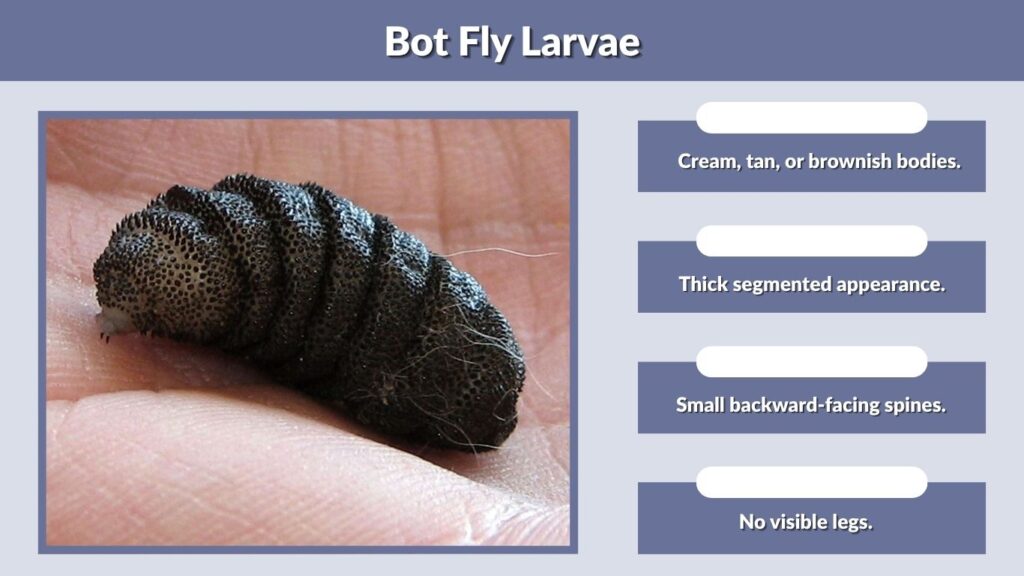
A bot fly larva is a thick, grub-like immature fly specially adapted to survive within an animal host.
Its exact appearance changes as it grows.
What Do Bot Fly Larvae Look Like?
Bot fly larvae commonly have:
- Cream, tan, or brownish bodies
- Thick segmented appearance
- Small backward-facing spines
- No visible legs
- A tapered or barrel-shaped body
- Darker structures around the rear breathing opening
The spines can help hold the larva in position inside its host.
Bot Fly Larvae in Skin
Certain bot fly larvae can develop beneath the skin, producing a raised lesion.
The larva usually maintains a small opening to the surface so that it can breathe.
A person may notice movement, tenderness, itching, or intermittent discomfort around the affected area.
Bot Flies in Humans
The human bot fly, Dermatobia hominis, is one of the best-known species associated with people.
Human infestation is called furuncular myiasis because the lesion can resemble a boil.
How Do Bot Flies Get Into Humans?
The human bot fly has an unusual method of reaching its host.
Rather than always placing eggs directly on people, the female may attach eggs to another insect, such as a mosquito. When that insect lands on a person, warmth can stimulate the eggs to hatch, allowing larvae to enter the skin.
Signs of a Bot Fly in Human Skin
Possible symptoms include:
- A boil-like bump
- A small opening in the center
- Local redness
- Itching
- Tenderness or pain
- Clear or blood-tinged drainage
- Sensation of movement under the skin
These symptoms can resemble other skin conditions, so appearance alone cannot reliably confirm bot fly infestation.
What Does a Bot Fly Bite Look Like?
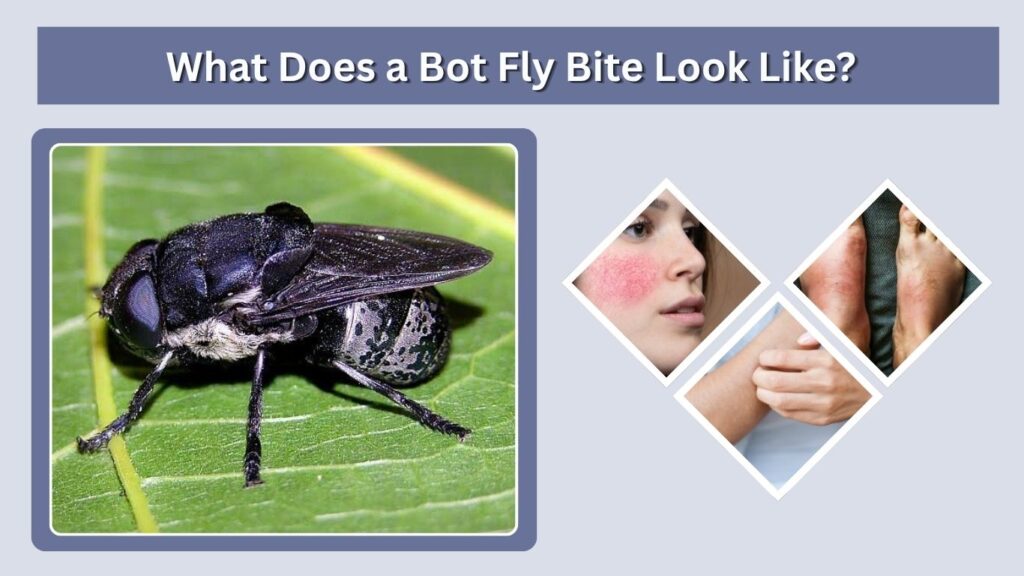
The phrase bot fly bite is commonly used, but a typical human bot fly lesion is not simply the result of an adult fly biting.
Instead, the symptoms develop because a larva has entered and is growing in the skin.
Bot Fly Wound Stages
An early lesion may look similar to an insect bite or small red bump.
As the larva grows, the swelling may become more noticeable and develop a central breathing opening.
The surrounding area may become irritated or painful.
After proper removal, the wound usually begins healing, although medical evaluation is important if infection or other complications are suspected.
Bot Fly Removal in Humans
A bot fly larva must be removed completely without leaving damaged larval material behind.
Because of this, professional medical removal is the safest approach when human infestation is suspected.
How Is a Bot Fly Removed?
Depending on the location and situation, a healthcare professional may enlarge the opening slightly or use another appropriate technique to remove the larva intact.
Afterward, the wound can be cleaned and monitored for infection.
Should You Remove a Bot Fly Yourself?
Trying to squeeze, cut, or dig a suspected larva out at home is not recommended.
Incorrect removal can injure the skin, rupture the larva, cause bleeding, or increase infection risk.
Anyone who believes they have a bot fly larva should seek professional medical care, especially after travel to an area where human bot flies occur.
Bot Fly on Dogs
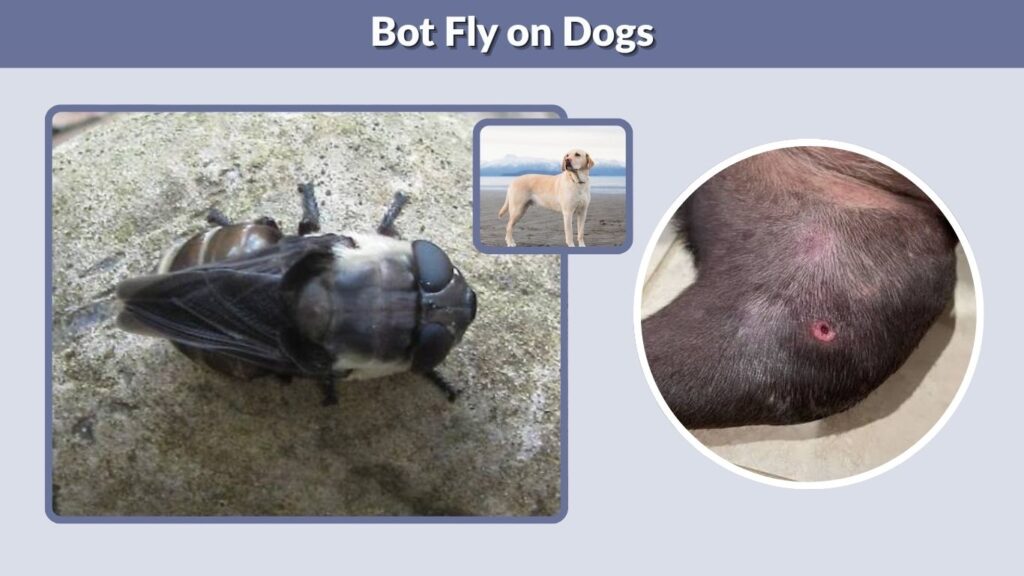
Dogs can develop bot fly-related swellings, particularly from species such as Cuterebra, whose normal hosts are usually rodents or rabbits.
Dogs may become exposed while investigating burrows or areas occupied by wildlife.
Signs of Bot Fly Larvae in Dogs
Possible signs include:
- Raised skin lump
- Small central opening
- Drainage
- Excessive licking
- Local swelling
- Discomfort when touched
The swelling is sometimes called a warble.
Bot Fly Removal From a Dog
A veterinarian should evaluate suspected bot fly larvae.
Attempting to squeeze the larva out may rupture it and cause additional inflammation or complications.
Veterinary treatment typically focuses on safe removal and proper wound care.
Bot Fly on Cats
Cats can also encounter Cuterebra larvae, particularly outdoor cats that hunt rodents or investigate burrows.
Signs in Cats
A cat with a bot fly larva may have a lump beneath the skin with a visible opening.
The cat may lick or scratch the area repeatedly.
Because lumps and open wounds have many possible causes, veterinary examination is recommended rather than assuming every skin swelling is a bot fly.
Bot Flies in Horses
Horse bot flies are among the most familiar bot flies affecting domestic animals.
Species in the genus Gasterophilus have a life cycle closely connected with horses.
Bot Fly Eggs on Horses
Adult females attach eggs to the horse’s hair, commonly around areas such as the legs or body.
The eggs are often:
- Small
- Yellowish or cream-colored
- Attached firmly to individual hairs
- Visible in clusters during bot fly season
Horses may lick areas containing eggs, helping newly hatched larvae enter the mouth.
Horse Bot Fly Life Cycle
Larvae initially develop around the mouth before eventually reaching the digestive system, where they remain for part of their development.
Mature larvae later leave the horse in the manure and pupate in the soil.
Adult flies then emerge and continue the cycle.
Horse owners should work with a veterinarian when planning parasite-control programs.
Where Are Bot Flies Found?
Bot flies occur in many regions of the world, but individual species have different geographic distributions and preferred hosts.
Where Does the Human Bot Fly Live?
The human bot fly is primarily associated with tropical areas of Central and South America, with its range extending into parts of the Americas.
Travel-related cases may be diagnosed in people after they return to countries where the human bot fly is not normally established.
Are There Bot Flies in the United States?
Yes. Several bot fly species naturally occur in the United States.
However, the presence of native bot flies does not mean that human bot fly infestation is common throughout the country.
Species affecting rabbits, squirrels, rodents, horses, and other mammals are considerably more relevant in many U.S. regions.
Bot Fly Life Cycle
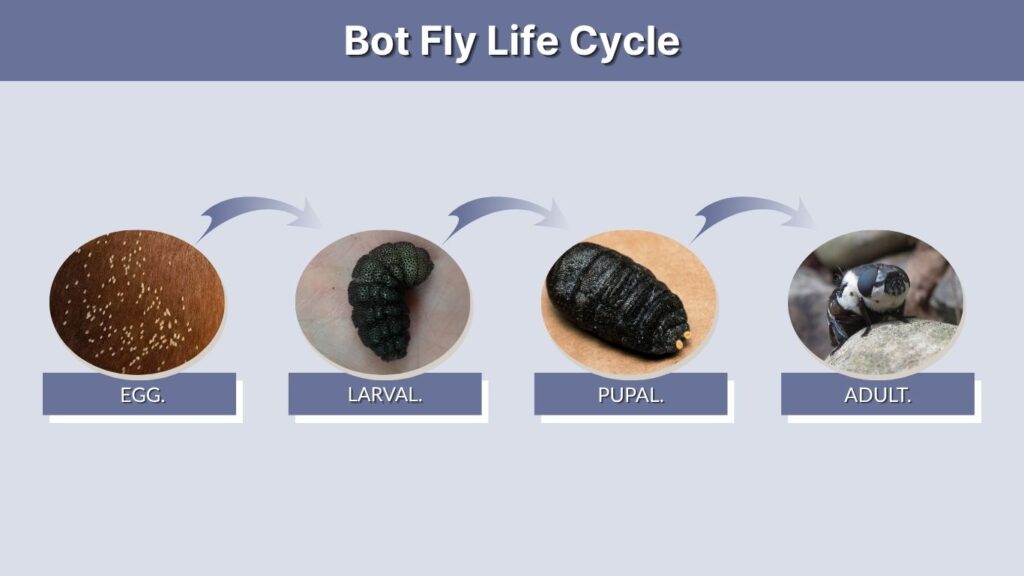
Although the details differ by species, bot flies generally pass through four stages.
Egg
An adult female places eggs either on a host, vegetation, or sometimes another insect that helps transport them.
Larva
After hatching, the larva enters its appropriate host and feeds or develops for weeks or months depending on the species.
Pupa
A mature larva eventually leaves the host and enters the soil, where it develops into a pupa.
Adult
The adult emerges, mates, and begins the reproductive cycle again.
Adult life may be relatively short because reproduction is their primary function.
FAQs
Are bot flies dangerous to humans?
Human bot fly infestation is usually treatable, but the larva should be properly removed. Medical care can also identify infection or rule out other conditions that resemble myiasis.
Where are bot flies found?
Bot fly species occur in many parts of the world. The human bot fly is particularly associated with tropical Central and South America, while other bot flies occur throughout North America and elsewhere.
Can bot flies infest dogs and cats?
Yes. Dogs and cats can occasionally become accidental hosts of certain bot fly larvae, especially Cuterebra species associated with rodents and rabbits.
What does a bot fly larva look like?
Bot fly larvae are thick, legless, segmented grubs. Depending on their developmental stage, they may be cream-colored, tan, or brown and often possess small backward-facing spines.
How do you remove a bot fly?
A suspected bot fly in a person should be evaluated and removed by a healthcare professional. Animals with suspected bot fly larvae should be treated by a veterinarian rather than attempting to squeeze or cut the larva out at home.