
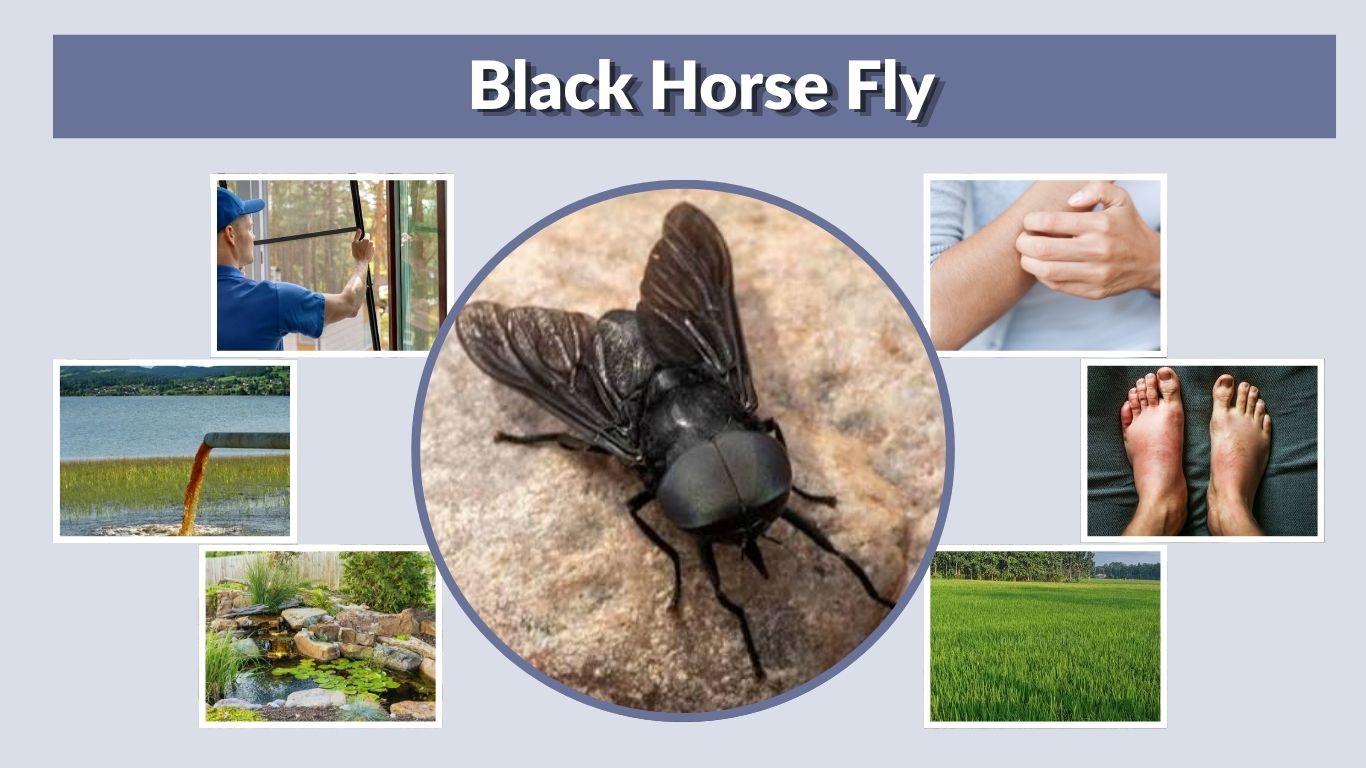
The black horse fly is a large, dark-colored biting fly that often attracts attention because of its impressive size and painful bite. In North America, the name commonly refers to Tabanus atratus, a glossy black horse fly found around wetlands, fields, woodlands, farms, and livestock areas. Females feed on blood, while males rely mainly on nectar and other plant sugars. Although black horse flies are not usually dangerous to healthy people, their bites can be painful and irritating. Here is how to identify them, understand their life cycle, and reduce encounters.
What Is a Black Horse Fly?
Black horse flies belong to the family Tabanidae, which includes horse flies and deer flies. One of the best-known solid-black species is Tabanus atratus, sometimes simply called the black horse fly.
Black Horse Fly Identification
A typical adult can be recognized by several characteristics:
- Large, robust fly-like body
- Mostly glossy or velvety black coloration
- Large compound eyes
- Broad, powerful wings
- Thick thorax and abdomen
- Short antennae
- Strong, fast flight
- Females equipped with cutting mouthparts
Their dark appearance makes them noticeably different from many gray or striped horse flies.
Is Every Large Black Fly a Black Horse Fly?
No. Several flies can be dark or nearly black.
Large blow flies, flesh flies, robber flies, and other horse fly species may occasionally be mistaken for a black horse fly.
Body shape, eye structure, wing pattern, behavior, and geographic location all help with accurate identification.
How Big Is a Black Horse Fly?
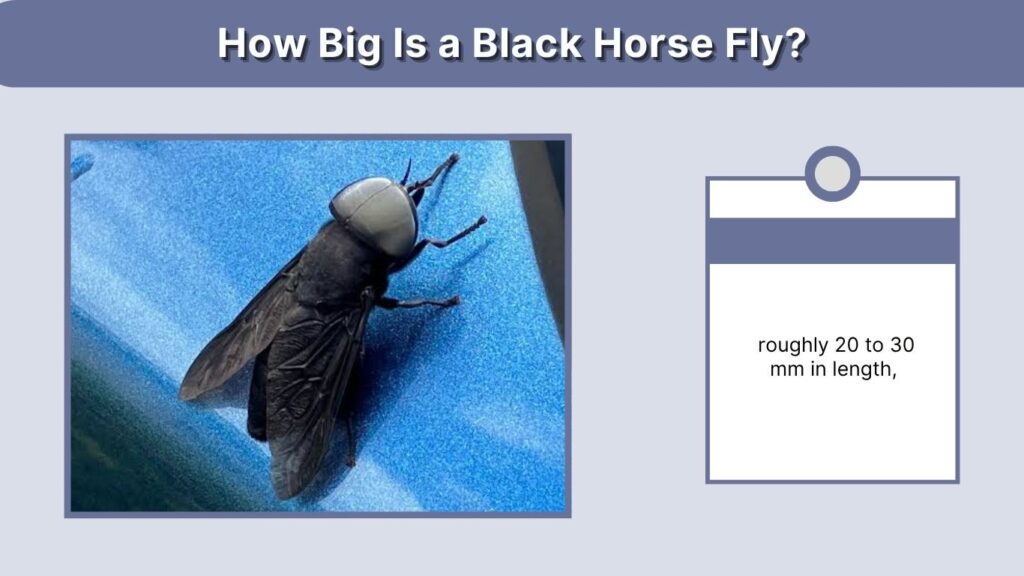
One reason these insects are so noticeable is their size. A giant black horse fly can look intimidating when it flies near people, pets, or livestock.
Black Horse Fly Size
Adult Tabanus atratus can reach roughly 20 to 30 mm in length, with especially large individuals approaching about an inch or more.
Females are often noticeably large and heavy-bodied.
Their broad wings and loud flight can make them appear even larger while airborne.
Giant Black Horse Fly Size Comparison
A large black horse fly may be:
- Much larger than a common house fly
- Similar in length to a large bee
- More robust than many deer flies
- Nearly an inch long in some cases
Their size does not necessarily mean they are more dangerous, but larger females can produce an especially noticeable bite.
Do Black Horse Flies Bite?
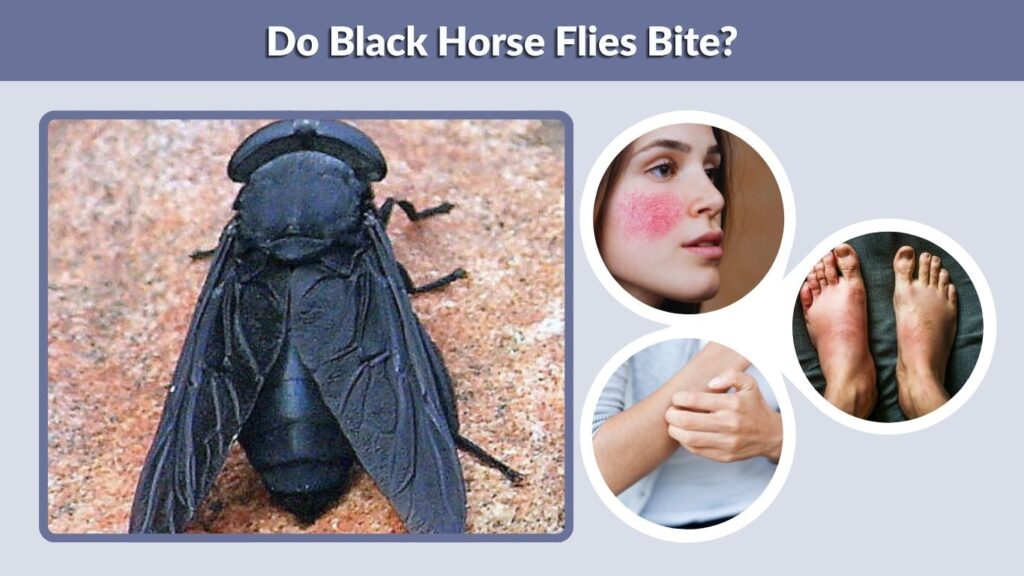
Yes. Female black horse flies bite mammals, including humans, horses, cattle, deer, and other warm-blooded animals.
The female needs protein from blood to help develop her eggs.
What Does a Black Horse Fly Bite Feel Like?
Horse flies do not pierce skin with a needle-like mouthpart like mosquitoes.
Instead, females use cutting mouthparts to slice the skin and then drink the blood that pools at the wound.
A bite may cause:
- Immediate sharp pain
- Redness
- Swelling
- Itching
- A small raised bump
- Tenderness around the bite
Because the skin is physically cut, a horse fly bite is often more painful than a mosquito bite.
What Does a Big Black Horse Fly Bite Look Like?
A bite commonly appears as a red, swollen bump or welt.
The center may show a small cut, puncture-like mark, or irritated area. Swelling can become larger in people who react strongly to insect bites.
Most bites improve without serious problems.
Black Horse Fly Bite Treatment
Wash the area gently with soap and water. Applying a cold compress can help reduce swelling and discomfort.
Try not to scratch the bite because broken skin increases the chance of infection.
Seek medical attention if you develop severe swelling, difficulty breathing, dizziness, widespread hives, increasing warmth or redness, pus, or other signs of a serious allergic reaction or infection.
Are Black Horse Flies Dangerous?
Black horse flies can be painful pests, but occasional bites are generally not dangerous to most healthy people.
Can Black Horse Flies Spread Disease?
Horse flies can mechanically carry some disease-causing organisms between animals when they move rapidly between hosts.
This is particularly important around livestock.
For people, the more common concerns are pain, swelling, allergic reactions, and secondary infection caused by scratching.
Male vs Female Black Horse Fly
Male and female black horse flies differ significantly in feeding behavior.
Female Black Horse Fly
Females are the ones responsible for biting.
They feed on nectar for energy but also seek blood meals for egg production.
Females usually have eyes that are visibly separated when viewed from above.
Male Black Horse Fly
Males do not bite people or animals.
Their diet consists mainly of nectar, pollen-related plant resources, and sugary liquids.
Male horse flies often have eyes that meet or nearly meet along the top of the head, helping distinguish them from females.
Black Horse Fly Habitat and Range
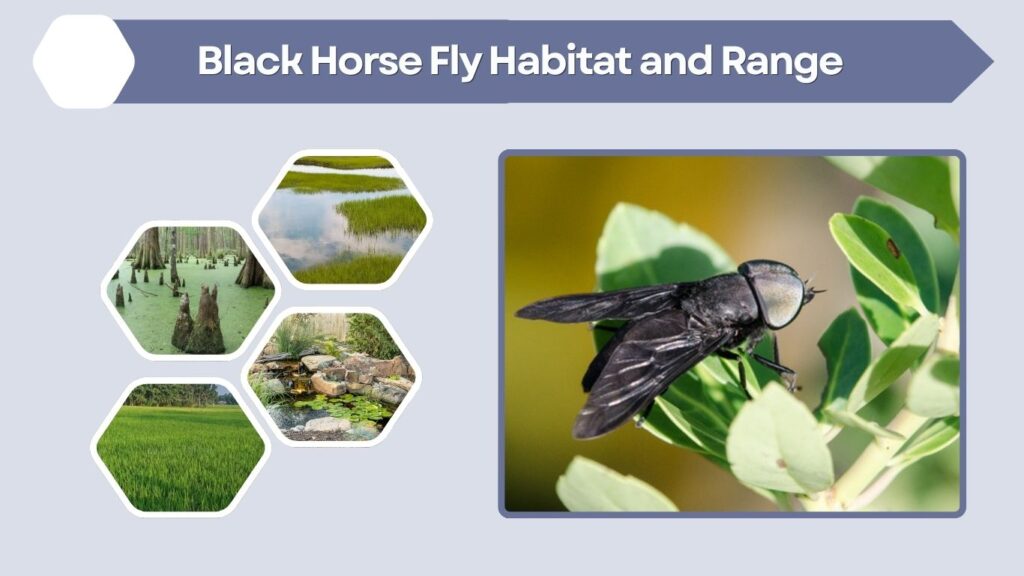
Black horse flies are most common in environments that provide suitable larval habitat and plenty of animal hosts.
Where Do Black Horse Flies Live?
They are commonly associated with:
- Marshes
- Swamps
- Pond edges
- Wet woodlands
- Streams
- Moist fields
- Farms
- Livestock pastures
Adults may travel some distance away from their breeding areas while searching for food or hosts.
Black Horse Flies in Florida, Texas, and Other States
Large dark horse flies occur across many parts of the United States.
Reports of black horse flies are common from areas including Florida, Texas, Illinois, Michigan, Iowa, and other eastern or central states.
However, not every black horse fly seen in these locations is necessarily Tabanus atratus. Several related horse fly species may have very dark bodies.
Black Horse Fly Larvae and Life Cycle
Most people only notice adults, but horse flies spend much of their development in immature stages near water or moist soil.
Black Horse Fly Eggs
Female horse flies commonly deposit masses of eggs on vegetation or objects located above moist environments.
When the eggs hatch, young larvae move into wet soil, mud, or shallow aquatic habitats.
Black Horse Fly Larvae
The larvae are elongated, pale to brownish, and adapted to moist environments.
Many horse fly larvae are predators. They may feed on:
- Small insect larvae
- Worms
- Tiny aquatic organisms
- Other soft-bodied invertebrates
Larval development can take considerably longer than the adult stage.
Pupal and Adult Stages
After completing larval development, the insect enters the pupal stage.
The adult eventually emerges and begins searching for nectar or, in the case of females, suitable blood hosts.
Depending on species and climate, completing the entire life cycle can take many months or longer.
Black Fly vs Horse Fly
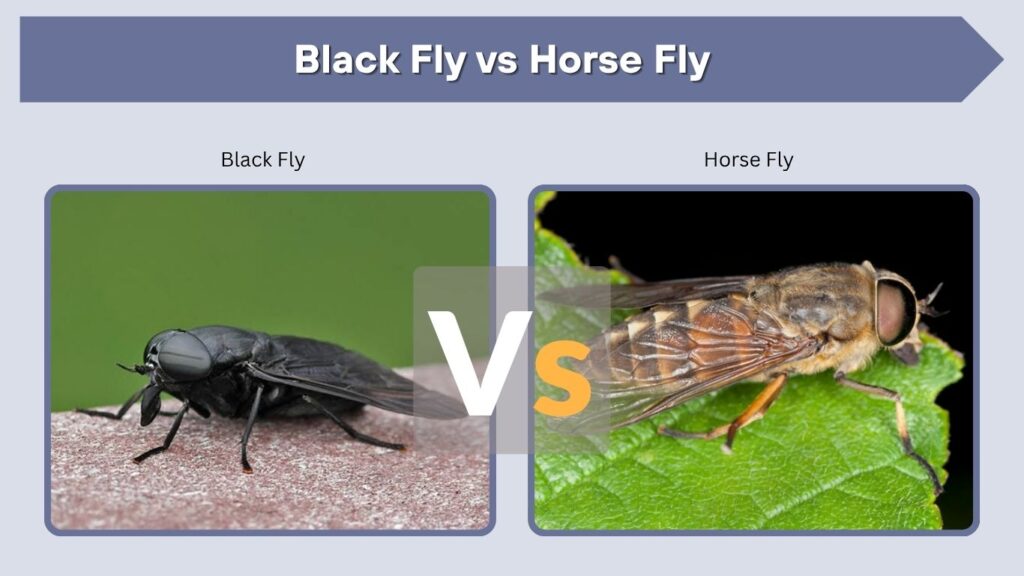
Black flies and black horse flies are completely different insects despite their similar names.
Size Difference
Black flies are usually tiny, often only a few millimeters long.
Horse flies are considerably larger and can exceed 20 mm.
Bite Difference
Female black flies and female horse flies can both bite.
However, horse fly bites are often immediately painful because their larger cutting mouthparts create a more noticeable wound.
Black fly bites are smaller but may become extremely itchy or swollen.
Appearance
A black horse fly has a large, muscular body with prominent eyes and powerful wings.
A black fly is much smaller and generally has a compact, somewhat hump-backed appearance.
Therefore, a black fly is not simply a small black horse fly.
Black Horse Fly vs Deer Fly
Horse flies and deer flies belong to the same family, but they often look different.
Deer flies tend to be smaller and commonly have patterned or banded wings. Many have yellowish, brown, or black markings.
Black horse flies are generally larger and heavier-bodied.
Both groups have females capable of delivering painful bites.
Black and White or Yellow and Black Horse Flies
Not every horse fly is solid black.
Some species have white, gray, orange, or yellow markings.
Black and White Horse Fly
A black-and-white striped horse fly may belong to another species within the horse fly family.
Some species display pale abdominal bands, spots, or patterned wings.
Black and Yellow Horse Fly
Yellow-and-black horse flies may resemble bees at first glance, especially while flying.
Looking at the large fly-like eyes, antennae, single functional pair of wings, and overall body structure can help distinguish them from bees and wasps.
How to Get Rid of Black Horse Flies
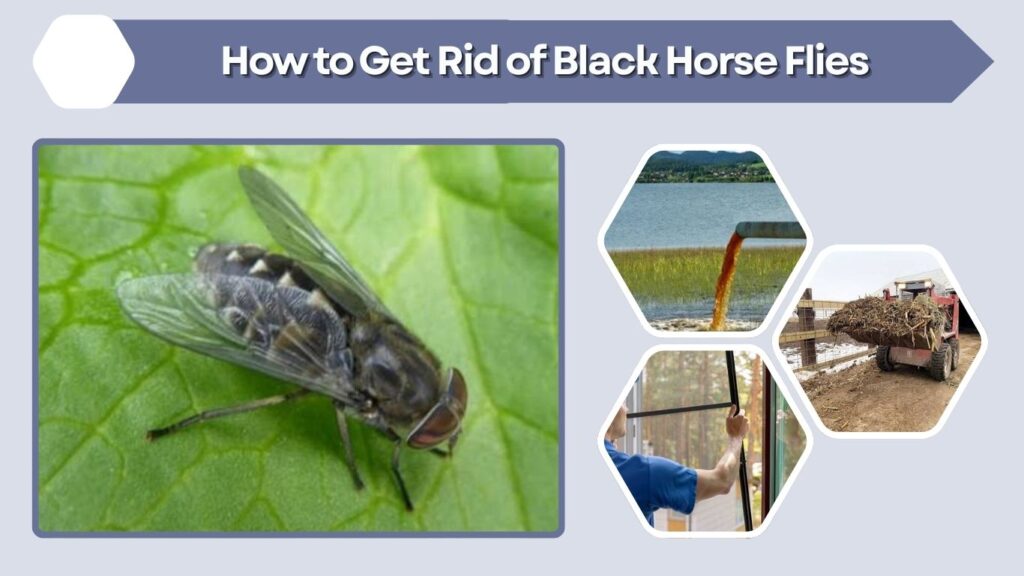
Because adult horse flies are strong fliers and may arrive from wetlands or pastures some distance away, eliminating them completely outdoors can be difficult.
Reduce Horse Fly Activity
Helpful measures include:
- Removing unnecessary standing water when practical
- Keeping livestock areas clean
- Using screens on doors and windows
- Wearing long sleeves and long pants outdoors
- Using an appropriate insect repellent
- Avoiding peak horse fly activity where possible
- Using traps designed specifically for horse flies
Do Black Ball Horse Fly Traps Work?
Horse fly traps frequently use large dark or black objects because horse flies are attracted to moving, dark shapes that resemble potential animal hosts.
Some traps combine a dark ball with a funnel or collection chamber.
These traps may reduce local numbers, particularly around barns, paddocks, patios, and livestock areas, although they rarely eliminate every horse fly.
FAQs
Is a black horse fly dangerous?
Usually not. The biggest concerns are painful bites, swelling, allergic reactions, and possible secondary infection. Horse flies can also mechanically spread certain pathogens among livestock.
How big can a giant black horse fly get?
Large black horse flies can approach approximately 1 inch or more in body length, depending on species and individual variation.
Do male black horse flies bite?
No. Male horse flies feed primarily on nectar and plant sugars. Only females take blood meals.
Why are black horse flies attracted to me?
Female horse flies use movement, body heat, carbon dioxide, visual contrast, and other cues to locate potential hosts. Dark clothing may also make a person more visually noticeable to some horse flies.
What is the scientific name of the black horse fly?
The species most commonly called the black horse fly in North America is Tabanus atratus. However, people sometimes use the term more generally for other large, dark-colored horse flies.