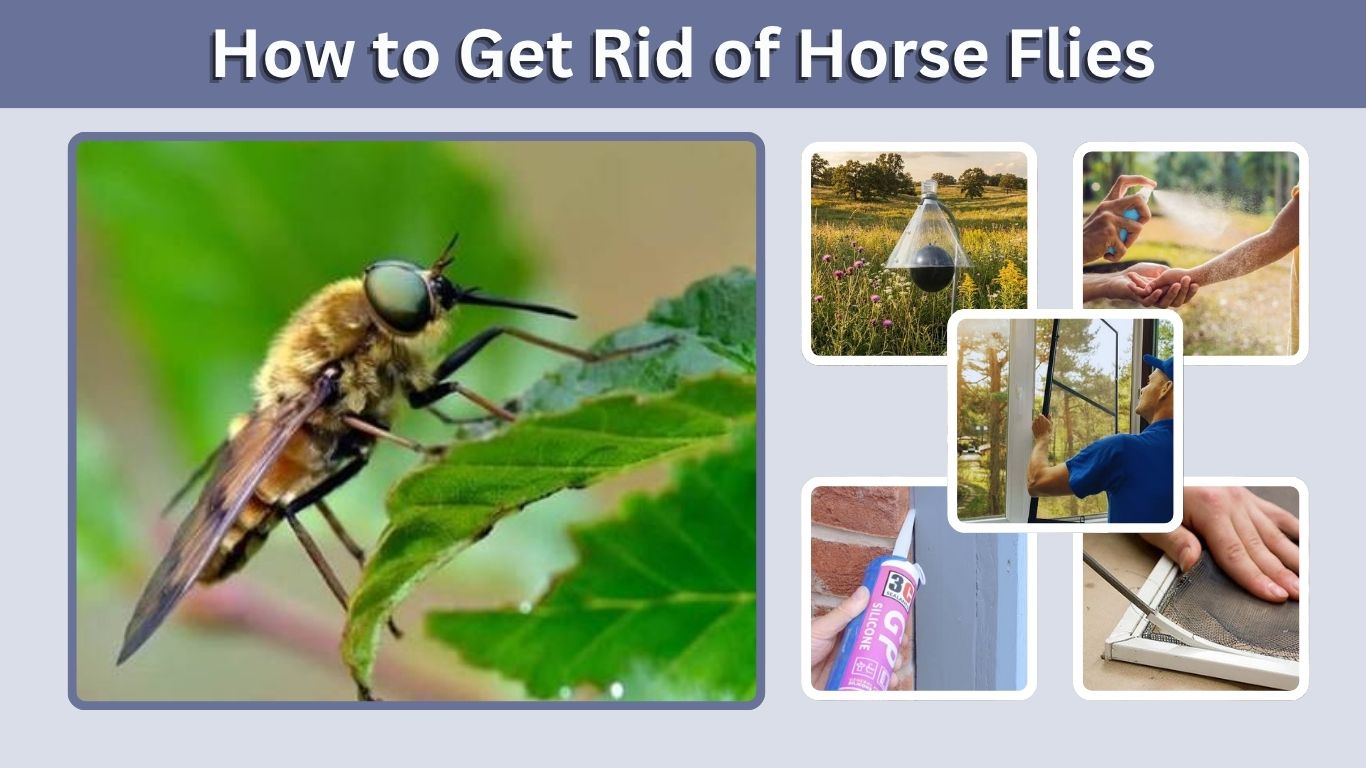
Horse flies are large, fast-moving flies that can turn time outdoors into an uncomfortable experience. Female horse flies bite people and animals to obtain blood, and their bites can be surprisingly painful. Getting rid of horse flies usually requires more than simply spraying the insects you see. The best approach combines traps, physical barriers, habitat management, repellents, and good sanitation. Here are effective ways to reduce horse flies around your house, yard, pool, barn, and animals.
How to Get Rid of Horse Flies Quickly
Horse flies can travel considerable distances, so completely eliminating them from an outdoor property may be difficult. However, you can greatly reduce their numbers by combining several control methods.
The most effective approach is to target adult flies while making your property less attractive to them.
1. Use Horse Fly Traps
Horse fly traps are one of the most useful options for controlling adults outdoors.
Many traps use:
- Large dark-colored objects
- Movement
- Heat
- Sunlight
- Funnel-shaped entrances
- Sticky surfaces
Horse flies are strongly attracted to large, dark moving objects because they can resemble potential animal hosts.
Place traps around:
- Barns
- Pastures
- Outdoor seating areas
- Pool areas
- Gardens
- Animal enclosures
Position traps slightly away from places where people regularly sit so attracted flies are drawn away rather than toward you.
2. Install Powerful Outdoor Fans
Horse flies are strong fliers, but constant airflow can make it difficult for them to land and bite.
A large fan can be especially helpful around:
- Patios
- Porches
- Outdoor dining areas
- Pool seating
- Horse stalls
Direct airflow across the area where people or animals spend the most time.
Fans provide immediate protection without using insecticides.
3. Remove Attractive Organic Material
Horse flies are commonly associated with areas containing livestock, manure, moisture, and other organic material.
Keep outdoor areas clean by:
- Removing manure regularly
- Cleaning animal bedding
- Emptying wet feed
- Cleaning spilled food
- Removing decaying vegetation
- Keeping trash containers closed
Good sanitation will not eliminate every horse fly, but it makes your property less attractive to many nuisance flies.
4. Manage Wet Areas Around Your Property
Horse fly larvae commonly develop in moist environments such as wet soil, muddy areas, marshes, pond edges, and similar habitats.
Improve drainage where practical.
Pay attention to:
- Muddy animal pens
- Waterlogged soil
- Leaking water troughs
- Poorly draining areas
- Wet vegetation
- Ditches
However, horse flies may originate from natural wetlands far beyond your property, so eliminating small amounts of standing water does not always solve a serious infestation.
5. Use Personal Repellent
When horse flies are active, applying an appropriate insect repellent can help prevent bites.
Common active ingredients used in personal insect repellents include:
- DEET
- Picaridin
- IR3535
- Oil of lemon eucalyptus products formulated as repellents
Always follow the product label.
Repellent works best when combined with protective clothing and other control measures rather than being used as the only solution.
6. Wear Protective Clothing
Horse flies usually attack exposed skin.
When working outdoors during heavy horse fly activity, wear:
- Long pants
- Long-sleeved shirts
- Closed shoes
- Socks
- Hats when appropriate
Light-colored clothing may also be preferable because horse flies can be attracted to large dark objects.
7. Use Only Labeled Outdoor Insecticides When Necessary
For severe problems, an insecticide labeled for fly control around the specific outdoor area may temporarily reduce adult flies.
Treatment may be applied to approved resting areas or structures depending on the product.
Never apply pesticides simply because they are available. Read the entire label and verify that the product is approved for:
- The intended location
- The target pest
- Nearby animals
- Outdoor structures
Avoid spraying flowers where bees and other pollinators are actively feeding.
8. Keep Grass and Vegetation Managed
Keeping vegetation maintained around heavily used areas can make outdoor spaces less favorable for numerous biting insects.
Trim:
- Tall grass
- Dense weeds
- Excess vegetation around barns
- Overgrown vegetation surrounding patios
This method is most effective when combined with traps and sanitation.
9. Protect Doors and Windows
If horse flies repeatedly enter your home, inspect your screens and entry points.
Check for:
- Torn window screens
- Gaps around doors
- Unscreened windows
- Open garage doors
- Damaged screen doors
Repair screens and keep doors closed when horse flies are particularly active.
10. Combine Several Control Methods
There is rarely one product that instantly eliminates a large horse fly population.
A stronger strategy may combine:
- Outdoor traps
- Fans
- Protective clothing
- Repellent
- Screens
- Sanitation
- Vegetation management
Using several methods addresses both the flies already present and the conditions that allow problems to continue.
How to Get Rid of Horse Flies in the House
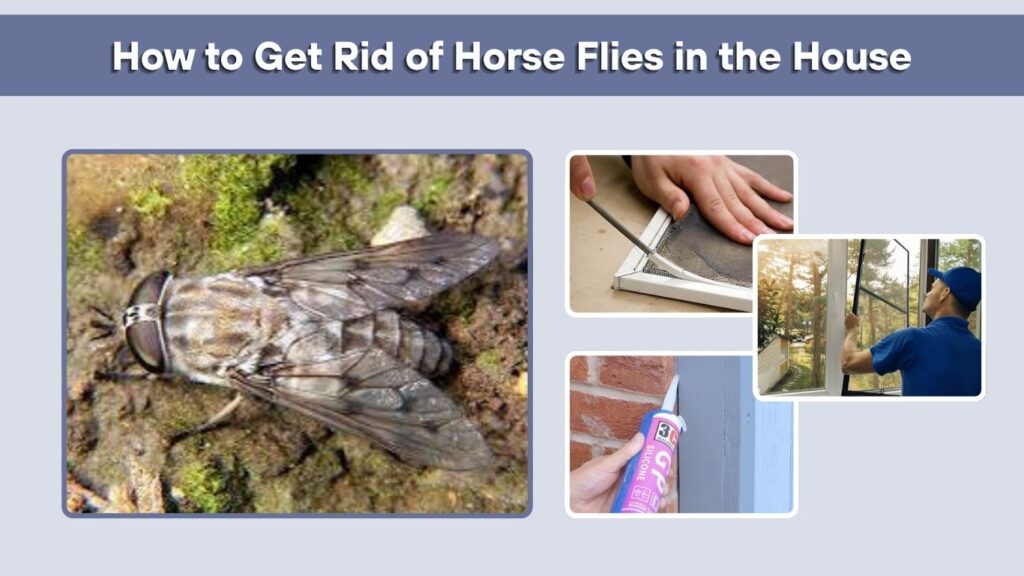
Finding a large horse fly buzzing around indoors can be alarming, but indoor infestations are uncommon. Horse flies generally prefer outdoor environments and normally enter houses accidentally.
Why Are Horse Flies Getting Inside?
They may enter through open doors, windows, garages, or damaged screens.
If you repeatedly see them indoors:
- Inspect window screens.
- Seal gaps around exterior doors.
- Keep unscreened windows closed.
- Check frequently opened garage doors.
- Repair damaged screen doors.
Individual flies can usually be removed with a fly swatter, vacuum, or indoor fly trap.
A large number appearing repeatedly may indicate that flies are entering through a specific opening rather than breeding inside your house.
How to Get Rid of Horse Flies in Your Yard
Outdoor horse fly control can be challenging because adults can fly into your property from the surrounding habitat. Concentrate protection around the parts of your yard you actually use.
Create Horse Fly-Free Zones
Place traps around the perimeter rather than immediately beside seating areas.
Then use fans around:
- Patios
- Decks
- Gazebos
- Play areas
- Outdoor tables
Also remove animal waste and keep muddy areas under control.
For large rural properties, complete elimination may be unrealistic, but reducing activity around high-use areas can make a significant difference.
How to Get Rid of Horse Flies Around a Pool
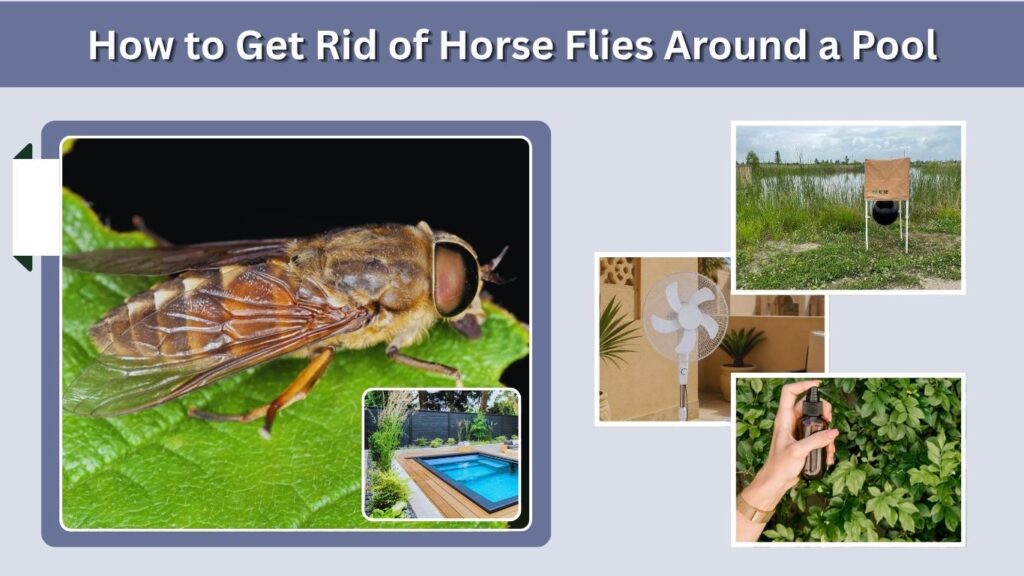
Horse flies can become especially annoying around swimming pools because people provide exposed skin and movement that attract biting females.
Water itself is not necessarily the only reason they are present.
Protect Your Pool Area
Try these methods:
- Place horse fly traps away from the pool.
- Use outdoor fans near seating areas.
- Keep vegetation surrounding the pool maintained.
- Remove unnecessary wet or muddy areas nearby.
- Use repellent when appropriate.
- Cover skin when relaxing outside the water.
Avoid routinely spraying insecticides close to swimming water unless the product specifically permits that type of application.
How to Get Rid of Horse Flies Naturally
Natural control works best when the goal is reducing horse fly activity rather than expecting immediate eradication.
Nonchemical Methods
Useful approaches include:
- Physical horse fly traps
- Outdoor fans
- Window screens
- Protective clothing
- Removing manure
- Improving drainage
- Keeping outdoor areas clean
Some essential oils are commonly promoted as horse fly repellents, but their effectiveness and duration can vary considerably.
Do not rely on homemade essential-oil mixtures as your main protection where heavy biting pressure exists.
How to Get Rid of Horse Flies on Horses
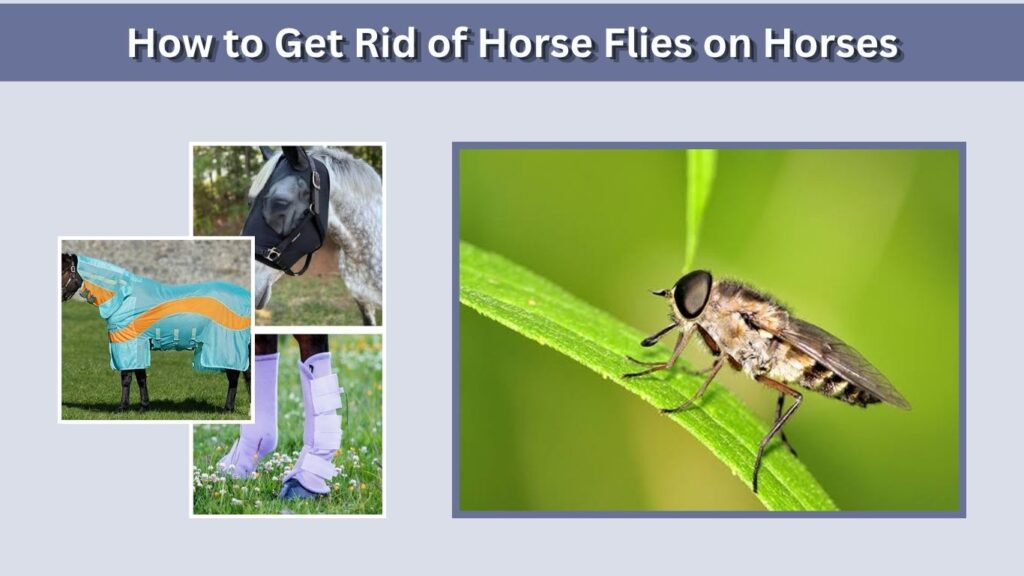
Horse flies can cause significant irritation to horses because females repeatedly attempt to take blood meals. Constant biting may cause horses to kick, stamp, twitch, or become restless.
Protecting Horses
Depending on the animal and environment, control may include:
- Horse fly traps
- Fly sheets
- Fly masks
- Leg protection
- Fans inside stalls
- Regular manure removal
- Clean bedding
- Horse-safe fly repellents
Only use repellents or insecticides specifically labeled for horses and follow all application instructions.
If flies are causing wounds, severe irritation, or unusual behavior, consult a veterinarian.
How Big Do Horse Flies Get?
Horse flies vary considerably by species. Many are approximately ¼ to 1 inch long, while some large species can exceed an inch.
Their large eyes, broad bodies, powerful wings, and loud flight make them easy to notice.
Female horse flies have cutting mouthparts that produce a painful bite rather than a sting. Males do not take blood meals and primarily feed on nectar and other plant sugars.
FAQs
1. What is the best way to get rid of horse flies?
The most reliable strategy combines horse fly traps, fans, protective clothing, repellents, sanitation, and management of wet or muddy areas.
2. Why do I keep getting horse flies around my house?
Nearby livestock, wetlands, ponds, muddy areas, wildlife, or suitable breeding habitat may support horse flies. Adults can also travel into your property from surrounding areas.
3. How do you keep horse flies away from you?
Use an effective insect repellent, wear long and preferably light-colored clothing, and use fans when sitting in one outdoor location.
4. Do horse flies bite or sting?
Horse flies bite rather than sting. Female horse flies cut the skin and feed on blood. Males feed mainly on nectar and do not bite for blood.
5. Can horse flies transmit Lyme disease?
Horse flies are not considered the normal vectors responsible for Lyme disease. Lyme disease is primarily transmitted through the bite of infected Ixodes ticks.