
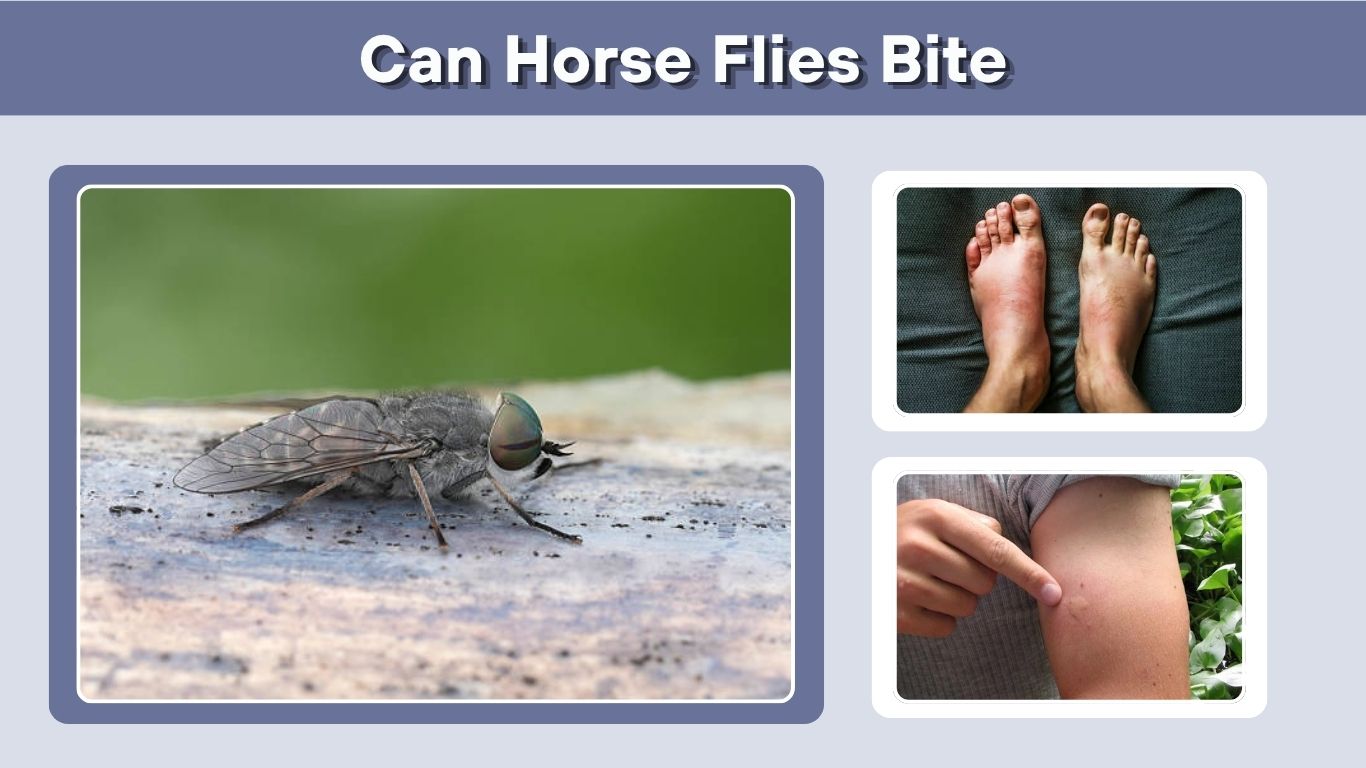
Yes, horse flies can bite humans, and their bites can be surprisingly painful. Female horse flies need blood to support egg production, so they use sharp mouthparts to cut the skin rather than simply piercing it like a mosquito. The result may be immediate pain, redness, swelling, itching, or even bruising. Most horse fly bites heal without serious problems, but allergic reactions and infection can occasionally occur. This guide explains how horse flies bite, what their bites look like, possible health risks, treatment, size, behavior, and ways to avoid them.
Can Horse Flies Bite Humans?
Horse flies belong to the family Tabanidae and are strong daytime-flying insects commonly found around wetlands, pastures, ponds, streams, and livestock. Only females take blood meals; males primarily feed on plant sugars. Female horse flies use cutting mouthparts to create a small wound and then consume the blood that pools at the surface.
Why Do Horse Flies Bite?
Female horse flies bite because blood provides nutrients needed for egg development.
Rather than inserting a narrow needle-like mouthpart, they use scissor-like structures to cut the skin. This feeding method explains why their bites can feel sharper and more painful than many mosquito bites.
Horse flies may attack:
- Humans
- Horses
- Cattle
- Deer
- Other large mammals
- Various wildlife
Males do not normally bite animals for blood.
Do Horse Flies Bite or Sting?
Horse flies bite; they do not sting.
They have no bee-like stinger. Their cutting mouthparts create a small wound in the skin, after which they feed on blood.
Because the bite can produce an immediate sharp sensation, people sometimes describe it as a sting, but biologically it is a bite.
Can a Horse Fly Bite Multiple Times?
Yes. A female may attempt to feed again if interrupted before completing a blood meal.
Horse flies are persistent feeders and strong fliers. Swatting one away does not necessarily prevent it from returning or another fly from attacking.
What Does a Horse Fly Bite Look Like?
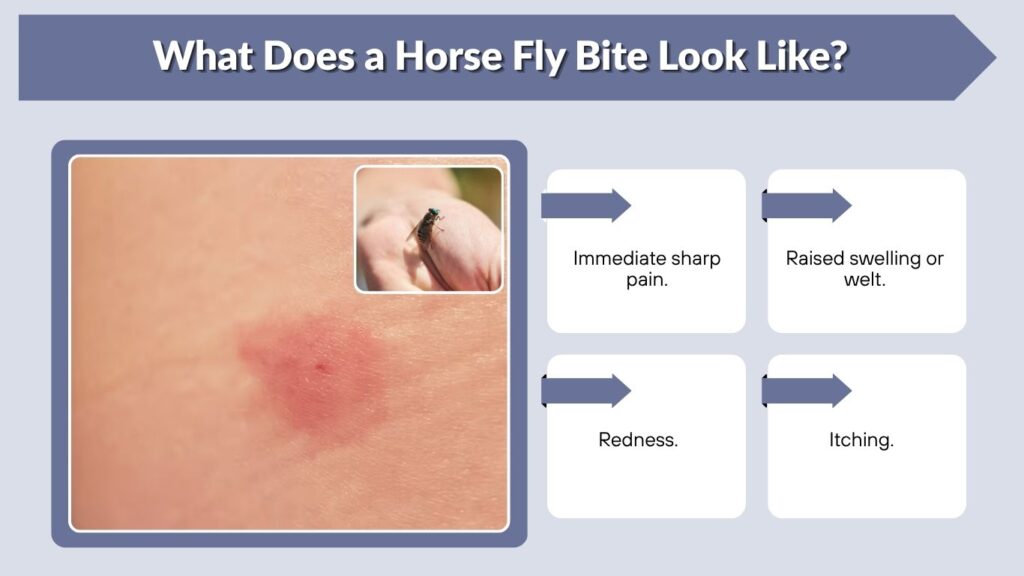
A horse fly bite usually causes a noticeable skin reaction soon after contact. Because the fly physically cuts the skin, the area may be more painful than a typical mosquito bite. Common reactions include redness, swelling, itching, burning, and localized pain.
Common Horse Fly Bite Symptoms
A bite may cause:
- Immediate sharp pain
- Redness
- Raised swelling or welt
- Itching
- Burning sensation
- Tenderness
- Small amount of bleeding
- Mild bruising
The severity varies depending on individual sensitivity and the location of the bite.
Can a Horse Fly Bite Cause Swelling?
Yes. Localized swelling is a common reaction to insect bites, including horse fly bites.
The body’s inflammatory response to the wound and insect saliva can create a raised, red area around the bite.
Mild swelling generally improves as the bite heals. Rapidly increasing or extensive swelling deserves more attention, particularly if accompanied by other symptoms.
Can a Horse Fly Bite Cause Bruising?
Bruising can occur because horse flies cut the skin and damage tiny blood vessels while feeding.
The result may be a small red or purple area surrounding the wound. Minor bruising alone is not usually serious, but worsening pain, spreading redness, or other unusual symptoms should be evaluated.
Can Horse Fly Bites Be Dangerous?
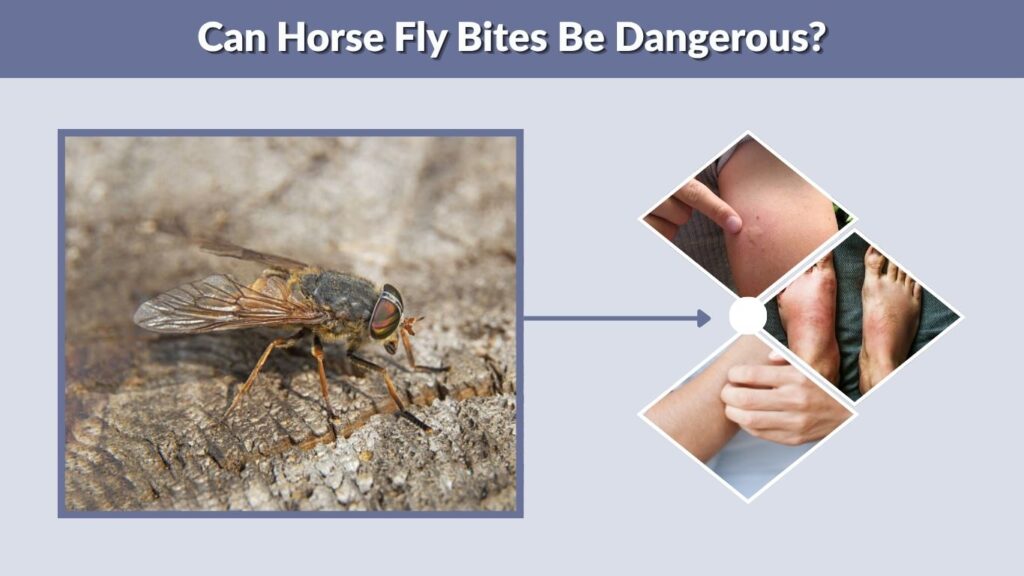
Most horse fly bites cause only temporary discomfort. Serious complications are uncommon, but bites can occasionally become infected or trigger significant allergic reactions. Some members of the horse/deer fly group are also capable of transmitting pathogens under particular circumstances.
Can You Be Allergic to Horse Flies?
Yes. Some people can have stronger allergic reactions to insect bites.
Warning signs of a severe reaction can include:
- Difficulty breathing
- Swelling of the face or mouth
- Difficulty swallowing
- Dizziness or fainting
- Widespread rash or flushing
Severe breathing problems or facial or throat swelling require emergency medical care.
Can a Horse Fly Bite Get Infected?
Yes. Any break in the skin can potentially become infected, especially if it is repeatedly scratched.
Watch for worsening:
- Redness
- Swelling
- Pain
- Warmth
- Drainage or pus
Increasing redness, swelling, or pain over the following days can be a sign that medical evaluation is appropriate.
Can Horse Flies Carry Disease?
Horse and deer flies can transmit some pathogens, although the risk depends heavily on location and species.
In the United States, the CDC specifically identifies deer flies (Chrysops species) as capable of transmitting tularemia in western regions. Tularemia is caused by Francisella tularensis and can produce fever, swollen lymph nodes, and sometimes an ulcer at the infection site.
This does not mean an ordinary horse fly bite is likely to cause disease. Most bites remain local skin injuries.
Can You Get Lyme Disease From a Horse Fly?
Lyme disease is primarily transmitted through infected Ixodes ticks, not horse flies.
A horse fly bite should therefore not automatically be interpreted as a Lyme disease exposure. However, unexplained illness following any insect or tick exposure should be discussed with a healthcare professional.
How to Treat a Horse Fly Bite
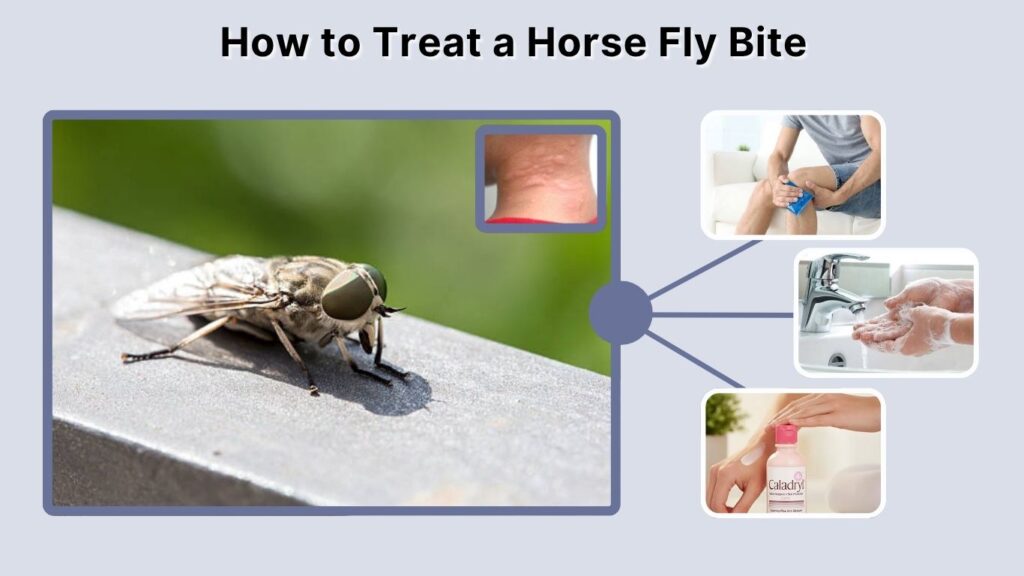
Most uncomplicated insect bites can be managed with basic first aid. Keeping the wound clean is particularly important because horse flies create a physical break in the skin.
Horse Fly Bite Treatment
For a minor bite:
- Wash the area thoroughly with soap and water.
- Avoid repeatedly scratching the bite.
- Apply a wrapped cold pack for short periods to reduce discomfort and swelling.
- Monitor the area for increasing redness, pain, or swelling.
- Consider appropriate over-the-counter itch relief if needed and safe for you.
MedlinePlus recommends washing insect bites thoroughly and using wrapped ice intermittently for swelling and discomfort.
When Should You See a Doctor?
Seek medical advice if the bite becomes increasingly painful, red, swollen, or appears infected.
Emergency care is appropriate for difficulty breathing, throat tightness, difficulty swallowing, facial or mouth swelling, or fainting.
If fever or unusual illness develops after an exposure to biting flies, particularly in an area where tularemia occurs, mention the insect exposure to your healthcare provider.
Can Horse Flies Bite Through Clothing?
Horse flies are powerful biting insects, and clothing can reduce exposure but may not provide complete protection. Thin or tightly fitted fabric may be less protective than thicker, loose-fitting clothing.
There are even reports of horse flies biting through denim under some circumstances.
How to Protect Yourself From Horse Flies
Useful precautions include:
- Wear long sleeves.
- Wear long pants.
- Choose thicker clothing when flies are abundant.
- Use an appropriate insect repellent.
- Spend less time near marshes and wet areas during heavy fly activity.
- Use screened shelters when possible.
The CDC recommends long pants, long sleeves, long socks, and EPA-registered insect repellents when preventing bites from deer flies and other arthropods associated with tularemia risk.
How Big Can Horse Flies Get?
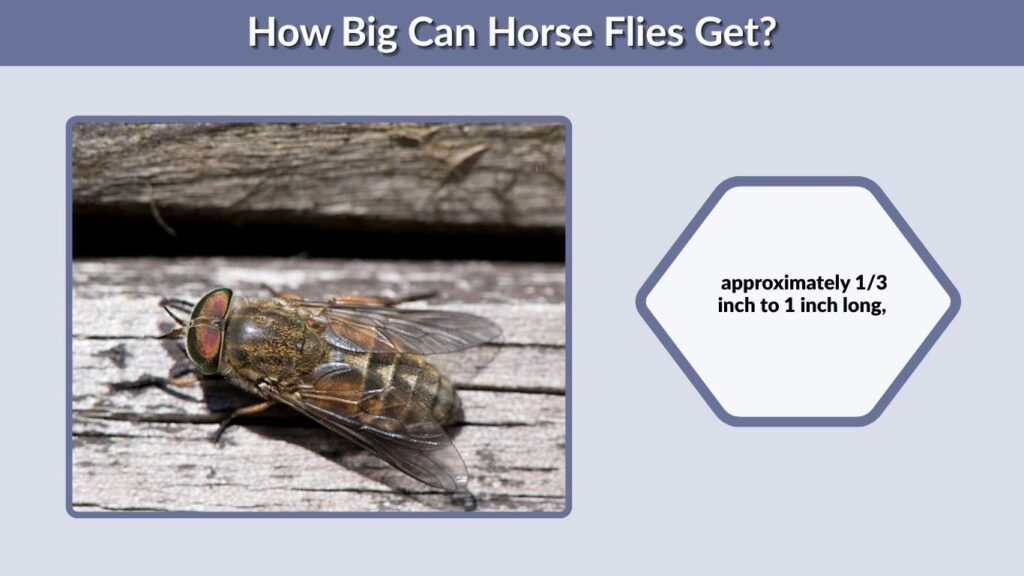
Horse flies are significantly larger and heavier-bodied than common house flies. Their large eyes and strong flight make them particularly noticeable when they circle people or livestock.
Horse Fly Size
Horse and deer flies as a group commonly range from approximately 1/3 inch to 1 inch long, with horse flies generally being the larger members.
Common characteristics include:
- Stout body
- Large compound eyes
- Short antennae
- Broad, powerful wings
- Gray, brown, or black coloration
- Sometimes colorful or striped eyes
Some species appear especially intimidating simply because of their combination of large size and loud flight.
How Fast Can Horse Flies Fly?
Horse flies are strong and persistent fliers capable of traveling away from their breeding sites in search of hosts.
Exact flight speed varies among species and conditions, so a single speed figure does not accurately describe every horse fly. Their mobility allows them to locate animals even when breeding habitats are some distance away.
Why Are Horse Flies Around Your Home?
Horse flies are especially associated with moist habitats because females typically lay eggs on vegetation near wetlands, marshes, ponds, or streams, and larvae develop in wet soil or aquatic environments.
What Attracts Horse Flies?
Horse flies use movement and visual contrast to locate potential hosts. Dark-colored animals can be especially noticeable to them.
They are often abundant near:
- Horses and cattle
- Wetlands
- Ponds
- Streams
- Marshes
- Wooded edges
- Sunny open areas
Unlike many mosquitoes, horse and deer flies are primarily active during daylight hours.
FAQs
1. Can horse flies bite humans?
Yes. Female horse flies bite humans and other mammals to obtain blood needed for egg development. Their cutting mouthparts can make the bite quite painful.
2. Can horse flies bite through clothes?
They may sometimes bite through certain clothing, particularly thin or tightly fitted materials. Thicker, loose-fitting clothing provides better physical protection.
3. Can a horse fly bite make you sick?
Most bites cause only local pain, redness, itching, or swelling. Rarely, allergic reactions, infection, or fly-associated disease transmission can occur.
4. Can a horse fly bite kill you?
A normal horse fly bite is very unlikely to be fatal. However, severe allergic reactions to insect bites can become life-threatening and require emergency treatment.
5. How big can horse flies get?
Horse and deer flies commonly measure roughly 1/3 to 1 inch long, with horse flies generally larger than deer flies.