
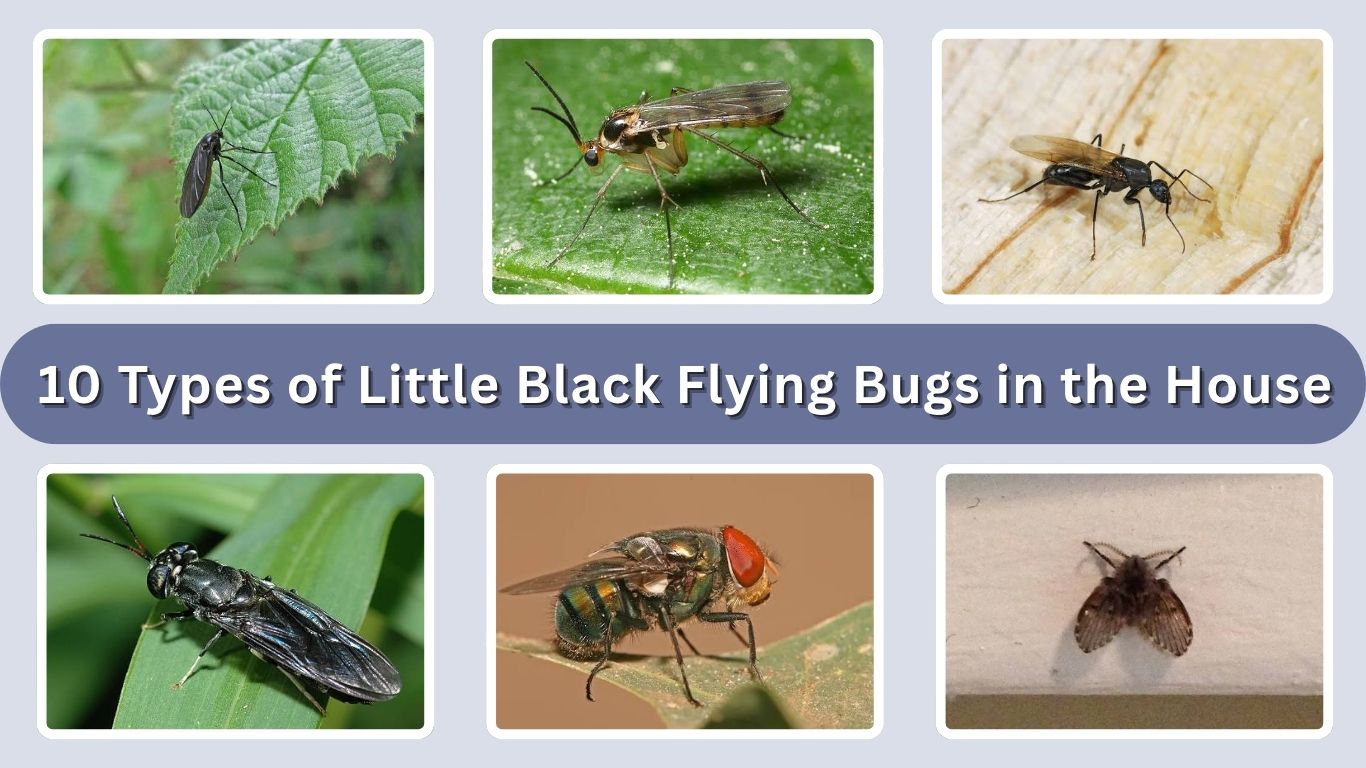
Finding little black flying bugs in the house can be frustrating, especially when you are unsure where they are coming from. These tiny insects may be fungus gnats, drain flies, phorid flies, flying ants, carpet beetles, or even larger flies such as cluster flies and blow flies. Some are attracted to houseplants, while others breed in drains, garbage, decaying material, or hidden spaces. This guide covers 10 common black flying bugs found indoors, how to identify them, why they appear, and the best ways to get rid of them.
1. Fungus Gnats
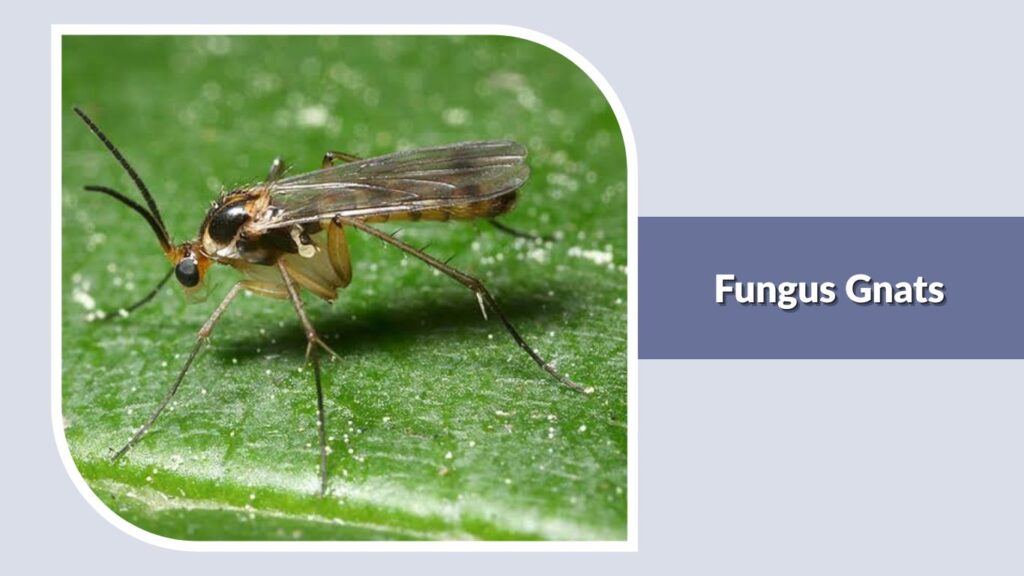
Fungus gnats are among the most common tiny black flying bugs in the house, especially around indoor plants. These small insects are often mistaken for fruit flies because of their size, but they usually stay close to moist potting soil rather than food. If you notice little black flies in house plants, fungus gnats are one of the first insects to check for.
Identification
You can identify fungus gnats by these common features:
- Very small, usually around 1/8 inch long
- Dark gray to black body
- Long, thin legs
- Slender antennae
- Clear or slightly smoky wings
- Mosquito-like appearance
- Often seen walking or flying around houseplant soil
- Adults usually make short, weak flights
Why Are These Small Black Flying Bugs in the House?
Fungus gnats are strongly attracted to damp organic material. Houseplants become a common source when potting soil remains consistently wet. Adult females lay eggs in moist soil, where the larvae feed mainly on fungi, decaying plant material, and sometimes tender plant roots.
This explains why small black flies in house plants may suddenly increase after frequent watering. Organic-rich soil, poor drainage, and water sitting in plant saucers can make the problem worse.
Are Fungus Gnats Harmful?
Adult fungus gnats are mostly a nuisance and do not normally bite people. The bigger concern is their larvae. In small numbers, larvae usually cause little noticeable damage, but heavy infestations may affect seedlings and young plants by feeding around delicate roots.
If you see many tiny black flies in the house along with struggling houseplants, checking the soil for larvae can help confirm that fungus gnats are responsible.
How to Get Rid of Fungus Gnats
Allowing the top layer of potting soil to dry between waterings is one of the easiest ways to make houseplants less attractive to fungus gnats. Improving drainage and removing dead plant material can also reduce breeding conditions.
Yellow sticky traps placed near plants can capture adult gnats and help monitor the infestation. For persistent problems, replacing heavily contaminated soil or treating the larval stage may be necessary. Controlling both adults and larvae is important if you want these little black flying bugs in the house to disappear completely.
2. Black House Flies
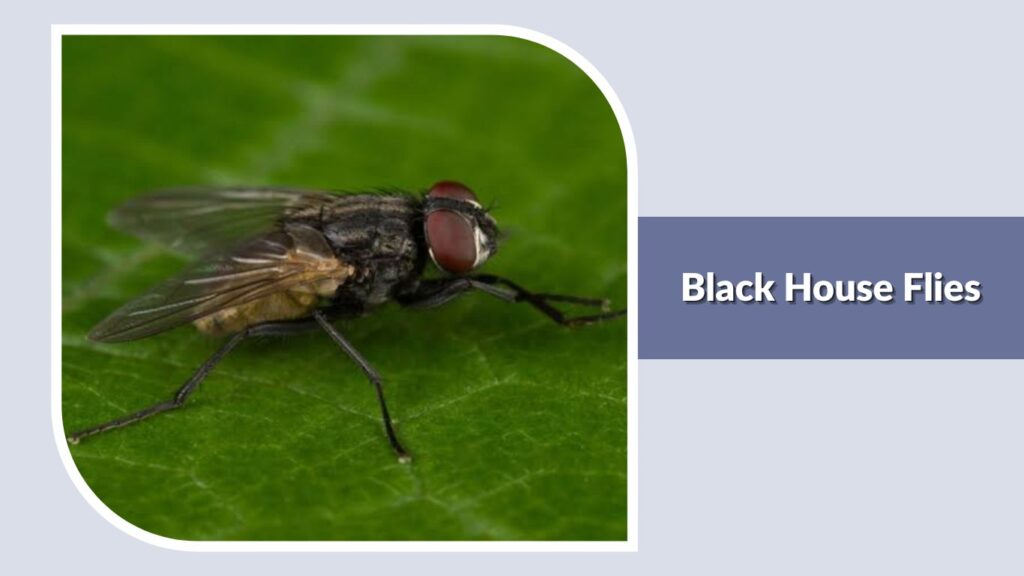
Black house flies are among the more noticeable black flies in the house, especially around kitchens, garbage areas, windows, and doors. A common house fly may appear dark gray or nearly black depending on lighting. If you suddenly notice several large black house flies, the source is often nearby organic waste, garbage, animal waste, or another material where the flies can feed and reproduce.
Identification
You can identify black house flies by these features:
- Medium-sized body, usually around 1/4 inch long
- Gray to dark gray or blackish appearance
- Four darker stripes on the thorax
- Large reddish compound eyes
- One pair of clear wings
- Short antennae
- Fast, direct flight
- Frequently lands on walls, windows, food, and counters
Why Are Black House Flies in Your House?
House flies enter homes through open doors, windows, damaged screens, and other small openings. They are strongly attracted to odors from food, garbage, pet waste, and decomposing organic material.
If black flies in the house appear all of a sudden, check garbage bins, forgotten food, pet areas, and outdoor waste near entrances. Warm indoor conditions can also allow them to remain active even when temperatures outside become cooler.
Are Black House Flies Dangerous?
House flies do not normally bite, but they can contaminate surfaces and food. They frequently move between garbage, animal waste, and food preparation areas, allowing microorganisms to be transferred on their bodies.
A single fly is usually only a nuisance, but large numbers suggest that sanitation or an unseen breeding source needs attention. Keeping food covered and cleaning contaminated surfaces can reduce potential problems.
How to Get Rid of Black House Flies
Start by removing accessible food and breeding material. Empty garbage frequently, clean trash containers, remove pet waste, wipe food spills, and inspect screens for damage.
Fly traps can help reduce adults already indoors, while screens and closed doors prevent more from entering. If big black flies in the house continue appearing despite cleaning, investigate for hidden organic material or another fly species with a different breeding source.
3. Cluster Flies
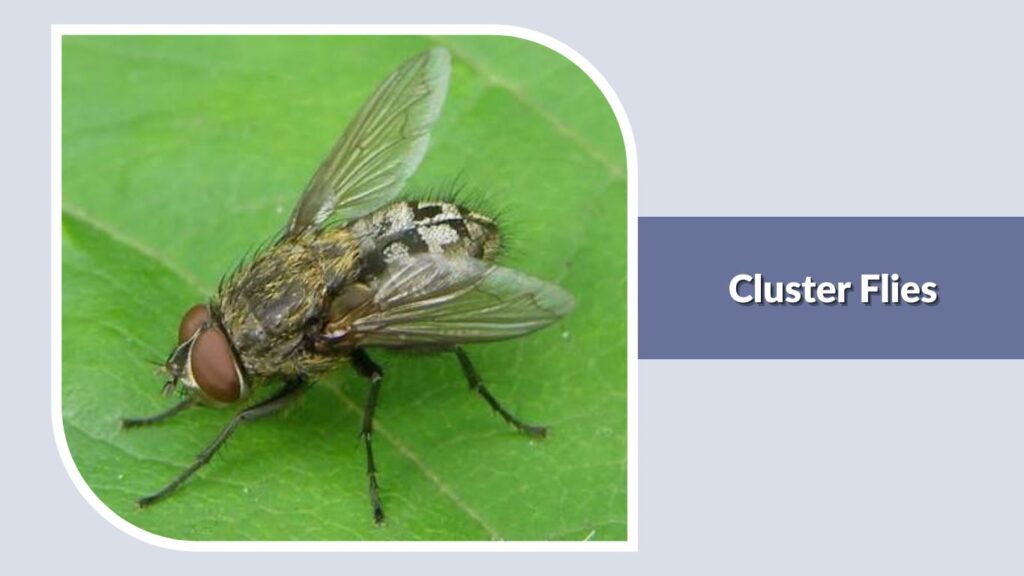
Cluster flies are common large black flies in the house, particularly during fall, winter, and early spring. Unlike ordinary house flies, they do not usually breed in garbage or food inside homes. Instead, adult cluster flies enter buildings to spend the colder months in protected spaces and may suddenly become active around sunny windows when indoor temperatures rise.
Identification
Cluster flies can be recognized by:
- Larger size than many common house flies
- Dark gray or blackish body
- Fine golden or yellowish hairs on the thorax
- Broad, heavy appearance
- Slow, sluggish flight
- Wings overlapping while at rest
- Often found around windows
- Frequently occurs in groups
Why Do Cluster Flies Suddenly Appear Indoors?
Cluster flies usually enter buildings before cold weather begins. They hide inside wall voids, attics, roof spaces, and other sheltered areas where they can remain inactive for long periods.
Warm indoor temperatures or sunlight may wake them temporarily. This is why homeowners sometimes notice big black flies in the house in winter, even when windows have remained closed.
The flies may have entered the building weeks or months earlier.
Do Cluster Flies Breed Inside the House?
Cluster flies generally do not reproduce inside houses. Their larvae develop outdoors as parasites of earthworms.
Adults use buildings mainly as overwintering shelters. Therefore, finding many cluster flies indoors does not necessarily mean there is rotting food or garbage somewhere inside.
The main issue is preventing adults from entering before winter rather than searching for an indoor breeding site.
How to Get Rid of Cluster Flies
Vacuuming visible adults is an easy way to remove cluster flies without creating stains on walls or windows. Avoid crushing large numbers because dead flies can attract other insects.
For long-term prevention, seal gaps around windows, siding, rooflines, vents, and utility openings before fall. Repairing damaged screens and closing cracks can significantly reduce the number entering the building for winter.
4. Black Soldier Flies
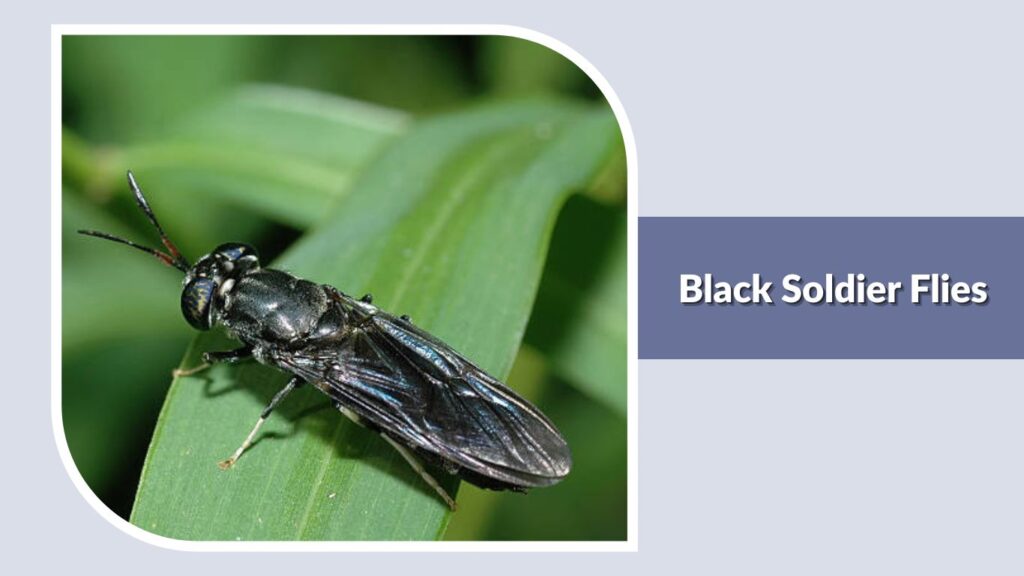
Black soldier flies are dark-colored insects that may occasionally become black flying bugs in the house, especially near compost, garbage, decaying organic waste, or other breeding material. Adults can look intimidating because of their dark bodies and wasp-like appearance, but they are generally harmless to people. Their larvae are much more commonly associated with decomposing organic matter.
Identification
Black soldier flies typically have:
- Dark brown to nearly black body
- Length of roughly 1/2 to 3/4 inch
- Long legs
- Dark wings
- Narrow, wasp-like body
- Two pale or translucent abdominal patches
- Small head with large eyes
- Relatively slow and controlled flight
Why Are Black Soldier Flies in the House?
Adult black soldier flies may enter accidentally through open doors or windows. Larger numbers can indicate that larvae are developing nearby.
Potential breeding sources include compost bins, accumulated food waste, animal manure, garbage containers, and decaying plant or animal material.
If you find black soldier fly larvae in the house, inspect damp organic waste carefully because the larvae usually remain much closer to the breeding source than adults do.
Are Black Soldier Flies Harmful?
Adult black soldier flies do not normally bite or sting people. They also do not behave like house flies that repeatedly land on food.
Their presence can actually be useful outdoors because the larvae rapidly break down decomposing organic material. Indoors, however, a large number of larvae or adults indicates that some type of organic material needs to be cleaned or removed.
How to Get Rid of Black Soldier Flies
Locate and remove their breeding source first. Clean garbage containers, remove decaying organic material, manage compost correctly, and eliminate accumulations of wet food waste.
Adult flies already indoors can usually be removed with a vacuum or captured near windows. Improving screens and sealing openings helps prevent additional adults from entering from outdoor composting or waste areas.
5. Blow Flies
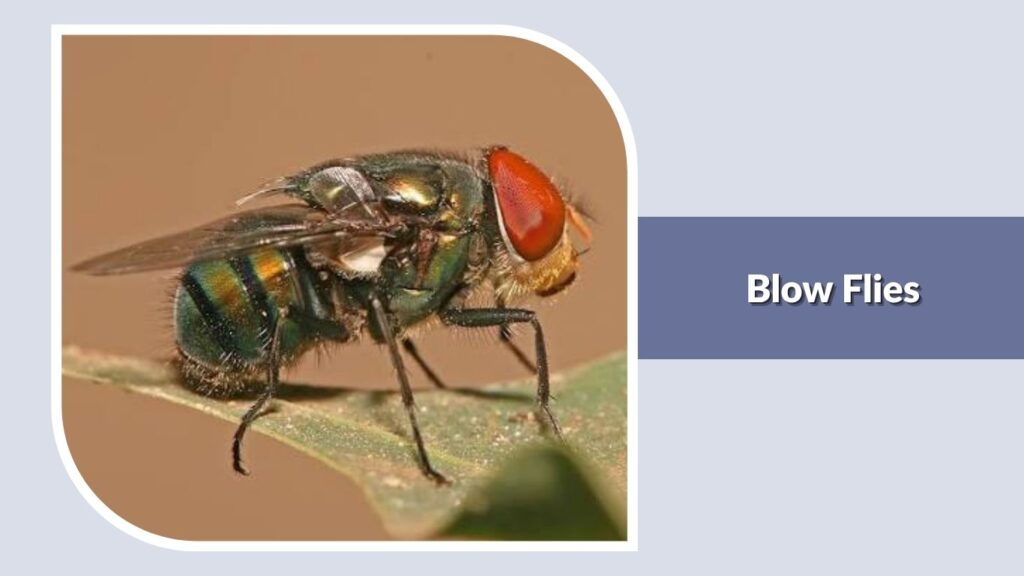
Blow flies are another possible explanation for big black flies in the house all of a sudden. Depending on the species, they may appear black, blue, green, or metallic. Their sudden appearance indoors deserves attention because many blow flies develop in animal remains, meat, garbage, or other decomposing material. A group of adults emerging in one room can sometimes point to a hidden breeding source.
Identification
Common blow fly characteristics include:
- Medium to large fly size
- Thick, robust body
- Black, blue, green, or metallic coloration
- Large reddish eyes
- One pair of clear wings
- Noticeably louder buzzing than tiny flies
- Fast flight
- Often gathers around windows after emerging indoors
Why Are Large Black Flies Suddenly Appearing?
A sudden group of blow flies often means adults have recently emerged from a nearby source.
They may breed in garbage, spoiled meat, animal waste, or dead animals. In homes, a dead mouse or other small animal inside a wall, attic, chimney, or crawl space can occasionally support developing larvae.
Once the larvae finish feeding, they move away from the source, pupate, and later emerge as adult flies.
Are Blow Flies Dangerous?
Blow flies are primarily a sanitation concern rather than a biting threat. Adults may visit decomposing material and then land on other surfaces.
A few flies entering from outdoors are usually not serious. However, suddenly seeing many huge black flies in the house should prompt an inspection for waste or animal remains, particularly if the flies keep emerging from the same room.
How to Get Rid of Blow Flies
Remove adult flies with traps, a vacuum, or other appropriate indoor fly-control methods, but concentrate on finding their source.
Inspect garbage containers, pet waste, attic spaces, crawl spaces, chimneys, and areas where a small animal could have died. Once the breeding material is removed or naturally dries out, the emergence of new flies should decline. Sealing entry gaps afterward can help prevent future problems.
6. Drain Flies
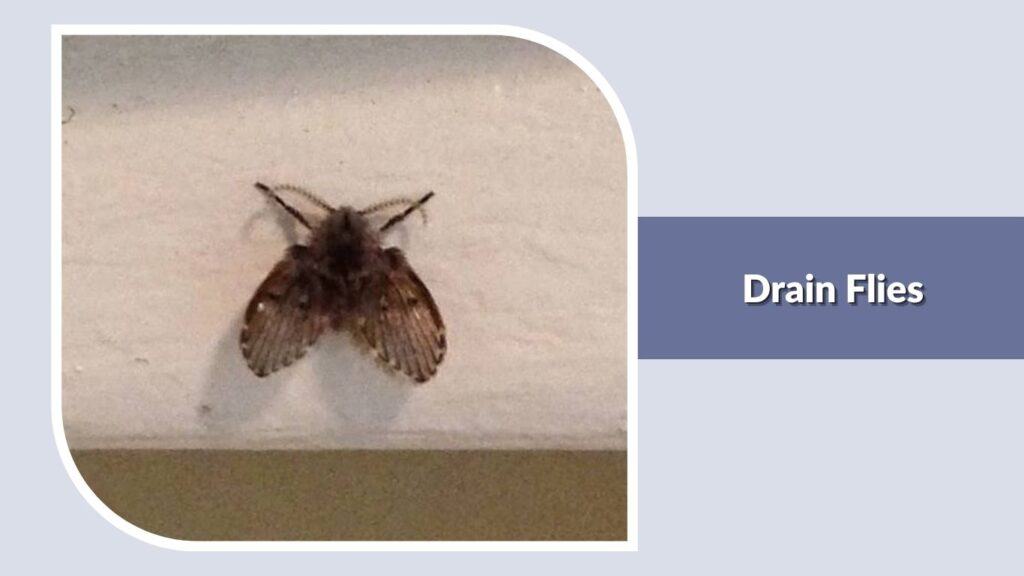
Drain flies are common tiny black flying insects in the house, especially around bathrooms, kitchens, basements, and utility areas. They are sometimes called moth flies because their fuzzy wings give them a moth-like appearance. If you notice very small dark flies resting near sinks, showers, or drains, they may be breeding in the slimy organic material that builds up inside plumbing.
Identification
Drain flies can be identified by:
- Very small body, usually about 1/8 inch long
- Gray, brown, or nearly black coloration
- Broad, fuzzy wings
- Hairy, moth-like appearance
- Wings held roof-like over the body
- Short, weak flight
- Often rests on bathroom or kitchen walls
- Commonly found close to drains
Why Are Tiny Black Flies Appearing Near Drains?
Drain flies breed in moist organic buildup. A thin layer of sludge can develop inside drains, garbage disposals, overflow openings, floor drains, and other damp plumbing areas.
Adults usually remain close to their breeding location, so repeatedly seeing little black flies in the house around the same sink or shower is a strong clue.
Simply pouring water down the drain may not solve the problem because larvae can remain inside the organic film coating the pipe.
Are Drain Flies Harmful?
Drain flies generally do not bite or sting. A few adults are mainly a nuisance, but large numbers indicate that organic material has accumulated somewhere nearby.
They can occasionally emerge from plumbing associated with sewage or contaminated water, making sanitation important. Persistent activity should encourage you to inspect drains, leaks, and other damp areas rather than concentrating only on killing visible adults.
How to Get Rid of Drain Flies
The most effective approach is physically removing the breeding material. Scrub the inside of accessible drains with a stiff drain brush to break up the organic film where eggs and larvae develop.
Clean sink overflows, disposal guards, and floor drains as well. Fix leaks and eliminate standing water. Once the breeding material is removed, the remaining adults usually disappear as their short life cycle ends.
7. Phorid Flies
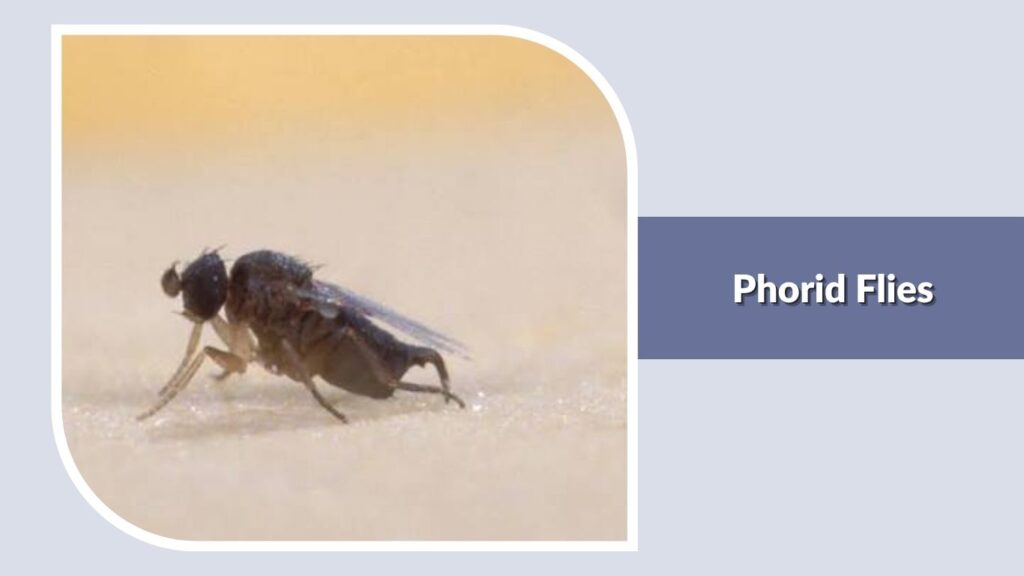
Phorid flies are another possible cause of small black flies in the house. Also known as scuttle flies, they are tiny dark flies that frequently run rapidly across surfaces instead of immediately flying away. They are attracted to moist, decaying organic material and can appear around drains, garbage, spoiled food, plumbing problems, and occasionally hidden animal remains.
Identification
Typical phorid fly features include:
- Tiny body, usually around 1/16 to 1/8 inch long
- Brown, dark brown, or blackish coloration
- Noticeably hump-shaped thorax
- Small head
- Clear wings
- Rapid running or “scuttling” behavior
- Short, erratic flights
- Often found around damp organic material
What Causes Phorid Flies in a House?
Phorid flies require decomposing organic matter for their larvae. Sources can include dirty drains, food trapped underneath appliances, leaking plumbing, garbage, animal waste, or decomposing material hidden in walls.
When many suddenly appear, the breeding source may not be obvious. Repeatedly finding the flies in one particular room can help narrow down the location.
In some cases, persistent phorid flies around floors or plumbing may indicate a moisture or sanitation problem that needs closer inspection.
Phorid Flies vs Fruit Flies
Phorid flies and fruit flies are similar in size but behave differently. Fruit flies are commonly associated with fermenting fruit and sugary liquids and often have noticeable reddish eyes.
Phorid flies are usually darker and have a characteristic hump-backed appearance. They also frequently run quickly across counters and walls before taking flight.
Correct identification is useful because a vinegar trap may catch some adults without solving a phorid fly problem developing in a hidden drain or organic source.
How to Get Rid of Phorid Flies
Find and remove the material supporting their larvae. Clean drains, inspect garbage areas, remove spoiled food, and check for moisture beneath appliances or cabinets.
If the infestation persists despite thorough cleaning, inspect plumbing for leaks or damaged drains. Removing adults can reduce nuisance levels, but new flies will continue emerging until the hidden breeding source is eliminated.
8. Black Flying Ants
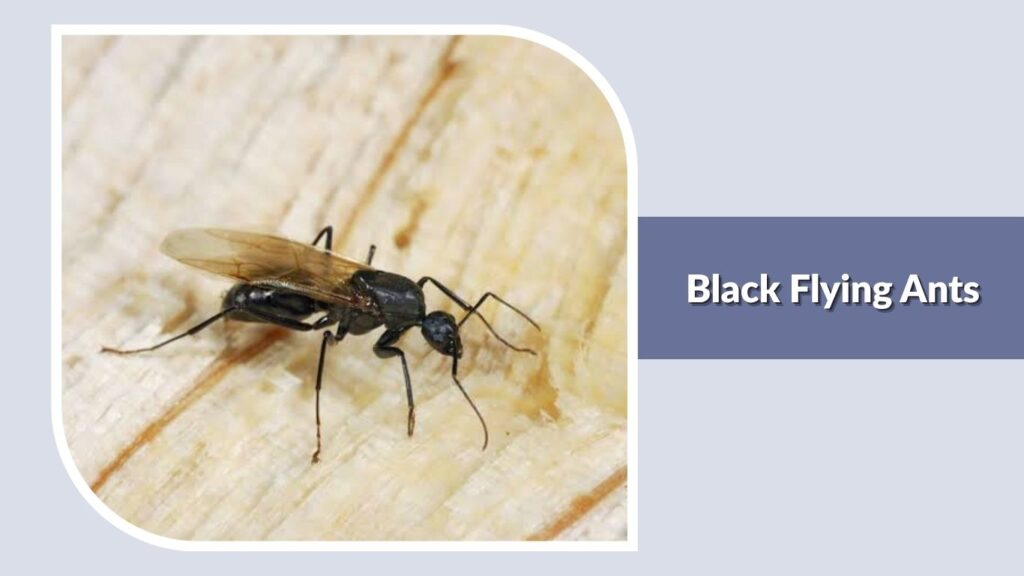
Black flying ants may suddenly appear as black bugs flying in the house, particularly during seasonal mating flights. These insects are winged reproductive ants rather than a separate species. They often emerge in groups, which can make their sudden appearance around windows and lights alarming. Finding many indoors may indicate an ant colony located somewhere inside or close to the building.
Identification
Black flying ants generally have:
- Dark brown or black body
- Clearly narrowed waist
- Elbowed antennae
- Two pairs of wings
- Front wings longer than rear wings
- Defined head, thorax, and abdomen
- Reproductive males or females larger than workers
- Often gathers around windows and lights
Why Are Black Flying Ants in the House?
Winged ants leave mature colonies to mate and establish new colonies. These reproductive flights often occur during warm, humid conditions.
A few individuals may simply enter from outdoors. However, dozens or hundreds appearing inside the same room can suggest that a colony is nesting within a wall, floor, roof space, or another structural cavity.
Once the mating period ends, the visible winged ants may disappear even though the original colony remains.
Flying Ants vs Termites
Flying ants are commonly confused with termite swarmers.
Ants have a narrow waist and bent antennae, whereas termites usually have a broader, more uniform body and straight antennae. Ants also have front wings noticeably longer than their rear wings, while termite wings are generally similar in length.
This difference is important because an indoor termite swarm may indicate a completely different structural pest problem.
How to Get Rid of Black Flying Ants
Vacuum visible winged ants and inspect where they are emerging. Seal obvious gaps around windows and doors if they are entering from outside.
If large numbers repeatedly emerge from a wall, ceiling, or floor opening, controlling the underlying ant colony becomes necessary. The most effective treatment depends on the ant species and nest location, so persistent indoor colonies may require targeted baiting or professional pest control.
9. Black Carpet Beetles
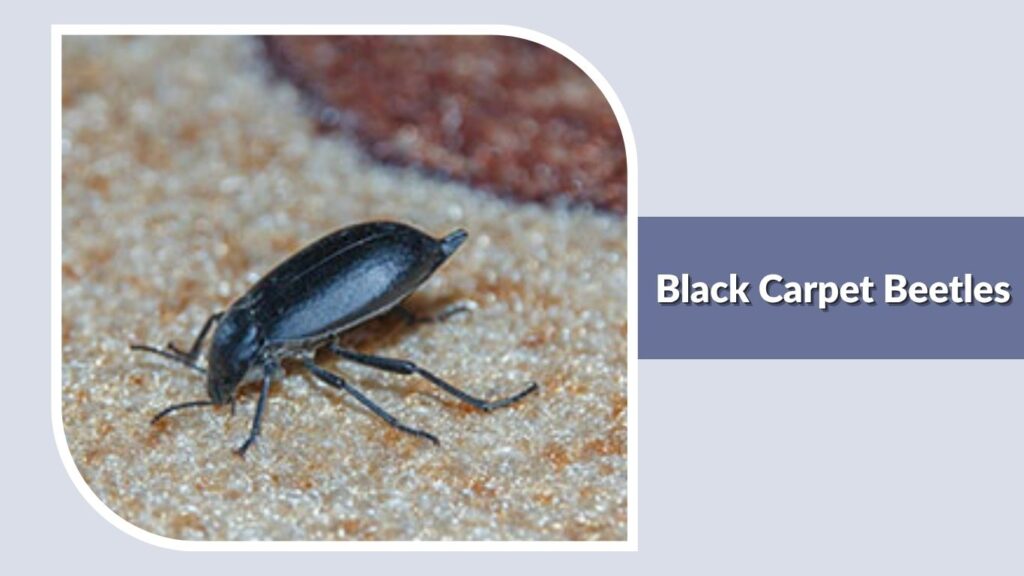
Black carpet beetles can become small black flying beetles in the house, especially around windows during their adult stage. Unlike flies and gnats, they have hard wing covers and a distinctly beetle-shaped body. The adults are often noticed near light, while their hairy larvae remain hidden in carpets, closets, furniture, and other places containing natural fibers or stored animal-based materials.
Identification
Adult black carpet beetles commonly have:
- Small oval or elongated body
- Dark brown to shiny black coloration
- Hard wing covers
- Short antennae
- Usually about 1/8 to 3/16 inch long
- Ability to fly
- Often found near windows
- Clearly beetle-like rather than fly-like appearance
Why Are Black Flying Beetles in the House?
Adult carpet beetles can enter homes through windows, doors, vents, or openings around the building. They may also develop from larvae already feeding somewhere indoors.
Larvae can survive on materials containing animal proteins, including wool, fur, feathers, hair, dead insects, and some stored products.
Seeing one adult does not always mean there is a severe infestation, but repeated adults near windows should prompt an inspection of closets, rugs, stored fabrics, and other possible larval food sources.
Can Black Carpet Beetles Damage Your Home?
The adults themselves generally do not damage clothing or carpets. Their larvae cause most problems.
Larvae may create irregular holes in wool clothing, rugs, blankets, upholstery, or other natural-fiber materials. They can remain hidden in dark, undisturbed areas for long periods.
Unlike clothes moth larvae, carpet beetle larvae are often visibly hairy and may leave shed skins behind as they grow.
How to Get Rid of Black Carpet Beetles
Vacuum carpets, baseboards, closets, furniture edges, and other areas where lint and hair accumulate. Wash or properly clean affected fabrics and inspect stored wool, feathers, and similar materials.
Remove dead insects from window tracks and attic spaces because larvae may use them as food. Regular vacuuming and proper storage of vulnerable fabrics can greatly reduce conditions that allow carpet beetles to persist.
10. Dark-Winged Fungus Gnats
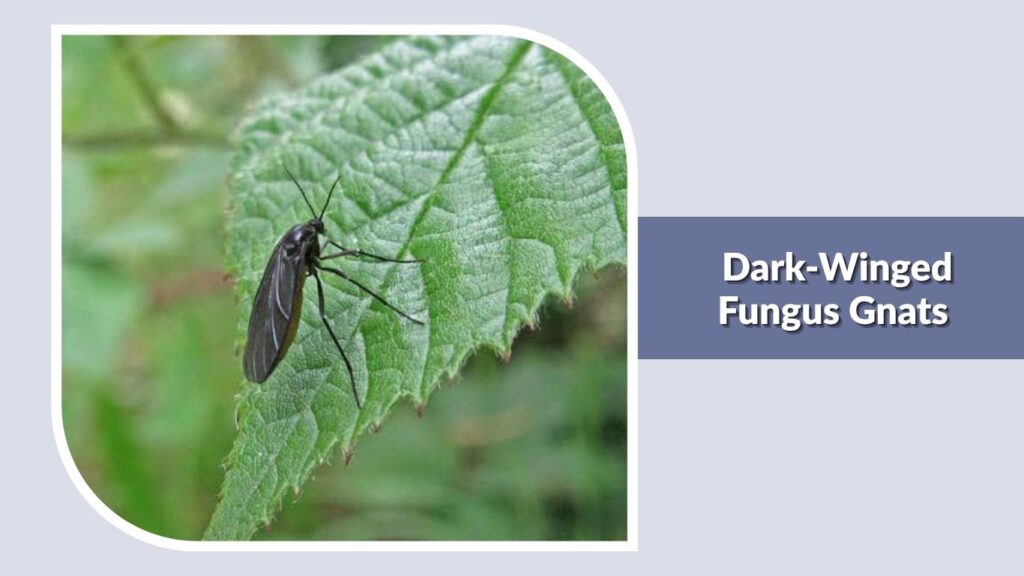
Dark-winged fungus gnats are among the most likely explanations for very tiny black flying bugs in the house, especially when the insects gather around houseplants. They belong to a large group of small gnats whose larvae develop in moist soil rich in fungi and decomposing plant matter. Adults resemble miniature mosquitoes and frequently hover just above potting soil after plants have been watered.
Identification
Dark-winged fungus gnats typically have:
- Very small black or dark gray body
- Long, slender legs
- Long antennae
- Narrow, smoky or darkened wings
- Mosquito-like appearance
- Delicate body shape
- Weak, slow flight
- Strong association with damp houseplant soil
Why Are They in Houseplants?
Overwatered potting soil creates ideal conditions for dark-winged fungus gnat larvae. Damp organic material supports fungi and microorganisms that form much of their food supply.
Adult females lay eggs in moist soil, and the larvae develop near plant roots. A new bag of contaminated potting mix can also introduce gnats into a home.
If numbers increase soon after watering, the soil is probably remaining wet for too long.
Are Dark-Winged Fungus Gnats Bad for Plants?
Adults are mostly harmless nuisance insects. The larvae are more important because they live within the soil and may occasionally feed on fine roots, particularly when populations become large.
Healthy established plants often tolerate small numbers without obvious damage. Seedlings, cuttings, and young plants with delicate root systems can be more vulnerable.
Persistent infestations can therefore be both annoying and potentially harmful to sensitive indoor plants.
How to Get Rid of Dark-Winged Fungus Gnats
Allow the upper layer of potting soil to dry before watering again whenever the plant can tolerate it. Fungus gnat larvae survive best in consistently moist conditions, so changing the watering routine can greatly reduce reproduction.
Yellow sticky traps can capture adults and show whether their numbers are declining. Remove decaying leaves, improve drainage, and avoid leaving water in saucers. Treating both the soil-dwelling larvae and flying adults produces better long-term control.
FAQs
What are the tiny black flying bugs in my house?
Tiny black flying bugs indoors are often fungus gnats, drain flies, phorid flies, or small flying beetles. Their location gives the best clue. Bugs around houseplants are often fungus gnats, while those near sinks and drains may be drain flies.
Why do I suddenly have lots of black flies in my house?
A sudden increase in black flies can indicate a nearby breeding source. Garbage, spoiled food, drains, dead animals, compost, or hidden organic waste may be responsible. In colder months, cluster flies may also suddenly emerge from walls or attic spaces.
How do I get rid of small black flying bugs in the house?
First identify where they are coming from. Remove food waste, clean drains, empty garbage, reduce moisture around houseplants, and vacuum visible adults. Sticky traps can help with small flies, but eliminating the breeding source is the most important long-term solution.
Are small black flying bugs in the house fruit flies?
Not always. Small black flying bugs in the house that are not fruit flies may be fungus gnats, phorid flies, drain flies, flying ants, or small beetles. Fruit flies are usually tan or brownish and are strongly attracted to fermenting fruit and sugary liquids.
Why are little black flies around my houseplants?
Little black flies around indoor plants are usually fungus gnats. Their larvae develop in moist potting soil containing fungi and decaying organic matter. Allowing the upper soil to dry between waterings, improving drainage, and using yellow sticky traps can help reduce them.