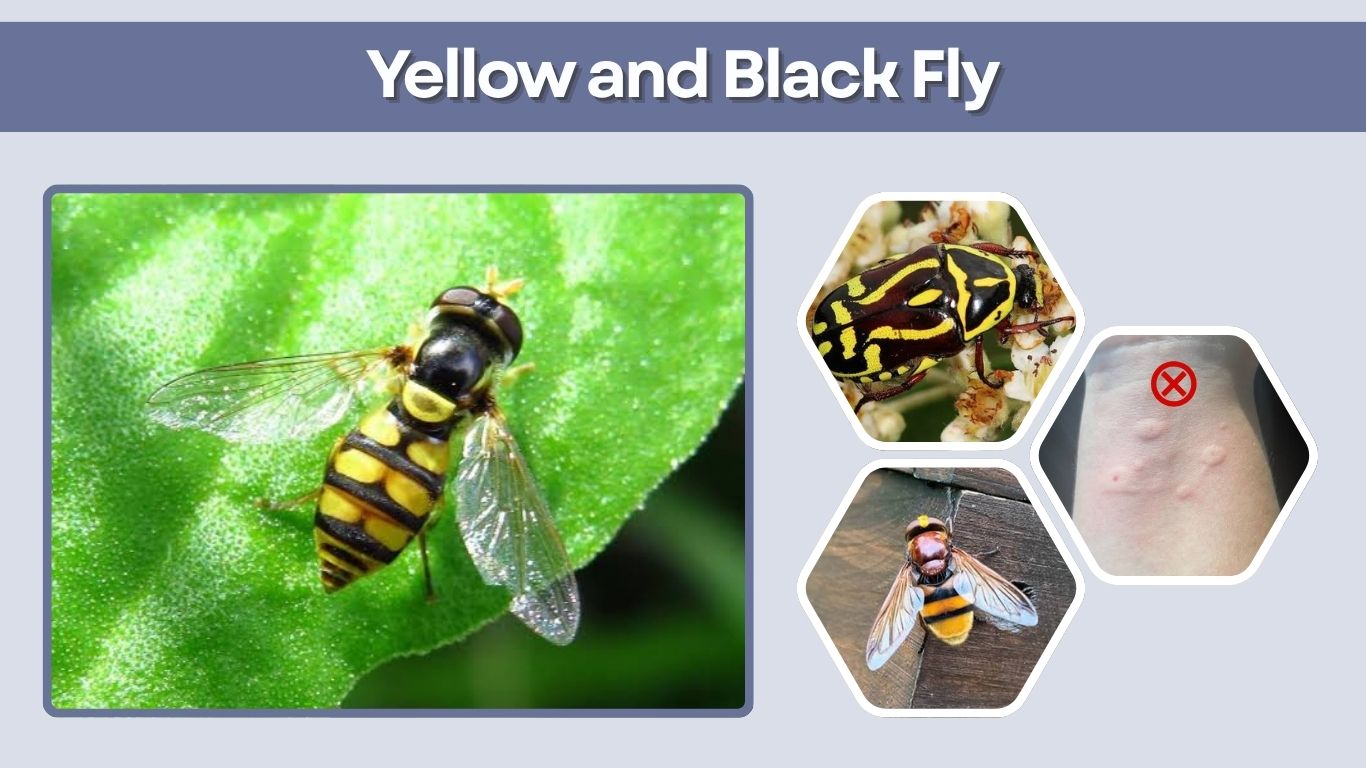
A yellow and black fly seen hovering around flowers is usually a hoverfly rather than a bee or wasp. These harmless flies imitate the warning colors of stinging insects but cannot sting. However, not every black-and-yellow flying insect is a hoverfly. Horse flies may bite, robber flies hunt other insects, and several wasps and beetles share similar markings. Body shape, wings, eyes, antennae, size, and behavior can help you identify the insect correctly.
What Is a Yellow and Black Fly?
“Yellow and black fly” is a descriptive term, not the name of one species. It can refer to several true flies in the order Diptera, particularly hoverflies with black-and-yellow bands.
The most likely identification is a hoverfly, also called a flower fly or syrphid fly. Hoverflies often resemble yellowjackets, paper wasps, honey bees, or bumble bees. This resemblance helps protect them from predators, but the flies themselves do not bite or sting.
| Possible identification | Typical appearance | Bites or stings? |
| Hoverfly | Small or medium with yellow-and-black bands | No |
| Horse or deer fly | Large, stout body and large eyes | Females may bite |
| Robber fly | Long, bristly body with strong legs | May bite if mishandled |
| Crane fly | Slender body with extremely long legs | No |
| Yellowjacket | Compact body with a narrow waist | Can sting repeatedly |
| Paper wasp | Slender body with long hanging legs | Can sting |
| Wasp-mimicking beetle | Hard wing covers and long antennae | Usually harmless |
How to Identify a Yellow and Black Fly
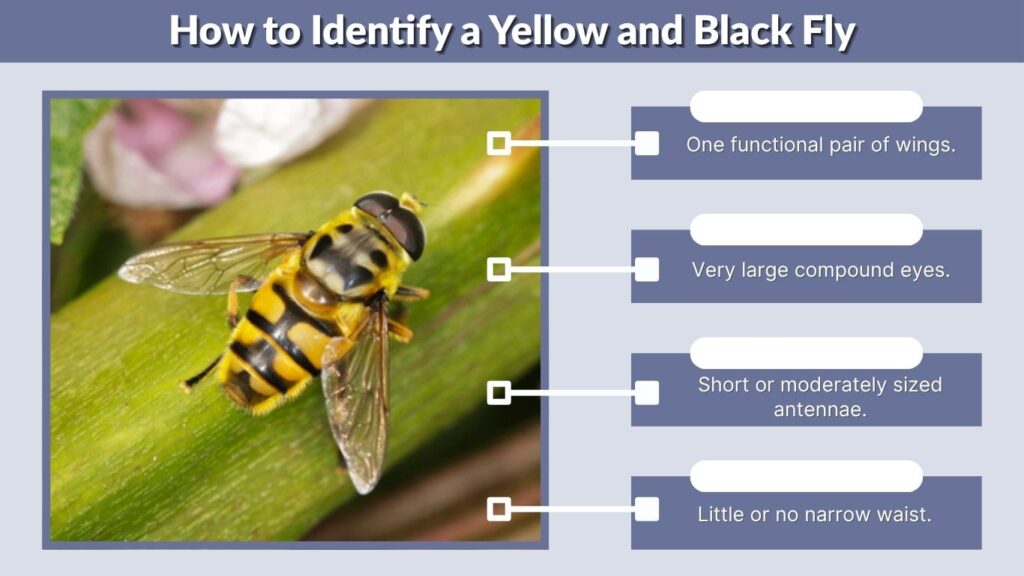
Black-and-yellow colors alone cannot confirm the insect’s identity. Look closely at its wings, eyes, body shape, and movements.
Key Features of a True Fly
- One functional pair of wings
- Very large compound eyes
- Short or moderately sized antennae
- Little or no narrow waist
- Quick, agile flight
- Two small balancing organs behind the wings
- Mouthparts designed for sponging, piercing, or feeding on nectar
Bees and wasps have two pairs of wings, although the smaller rear pair may be difficult to see. They also usually have longer antennae and a more obvious waist between the thorax and abdomen. Hoverflies have one pair of wings and broad fly-like heads dominated by large eyes.
Observe How It Flies
Hoverflies can remain almost motionless in the air before suddenly moving sideways or backward. Wasps generally fly more steadily and often allow their long legs to remain visible beneath the body.
A fly that repeatedly lands on people or livestock and attempts to bite may be a horse fly, deer fly, or stable fly rather than a hoverfly.
Common Types of Yellow and Black Flies
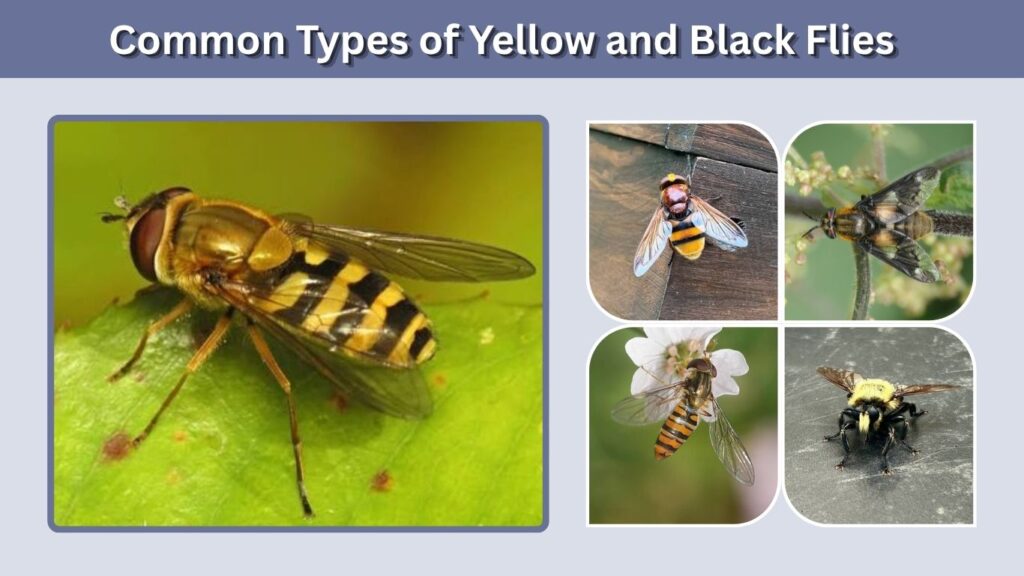
Several fly families contain species with yellow bands, spots, legs, or bodies.
1. Hoverfly
Hoverflies are the most common yellow-and-black flies found around gardens. Depending on the species, their markings may appear as narrow bands, large yellow spots, or broken stripes across the abdomen.
Adults feed primarily on nectar and pollen. Many hoverfly larvae are valuable predators that consume aphids and other soft-bodied garden pests. A single larva may eat dozens of aphids per day.
Hoverflies are harmless to people. They have no stinger and lack the mouthparts needed to bite human skin.
2. Large Hornet Hoverfly
A large yellow and black fly that resembles a hornet may be a hornet hoverfly. These robust flies can reach approximately ¾ inch or more and produce a noticeable buzzing sound.
Despite their intimidating size and markings, hornet hoverflies are harmless. Their single pair of wings, broad connection between the abdomen and thorax, and large fly-like eyes distinguish them from actual hornets.
3. Yellow and Black Horse Fly
Some horse and deer flies have dark bodies with yellow bands, spots, or golden hairs. They are generally stockier than hoverflies and have exceptionally large, often brightly patterned eyes.
Female horse and deer flies use cutting mouthparts to open the skin and drink blood. Their bites can be immediately painful and may cause redness, itching, or swelling. Horse and deer flies commonly occur near wetlands, livestock, woodland edges, and open fields.
4. Yellow and Black Robber Fly
Robber flies are predatory flies with long legs, bristly faces, strong bodies, and piercing mouthparts. Several species imitate bumble bees or wasps with black-and-yellow hairs or markings.
They capture bees, wasps, grasshoppers, moths, and other flying insects. Robber flies are considered beneficial predators, although they may also catch pollinators. They do not seek human blood, but a large individual should not be handled because its defensive bite can be painful.
5. Yellow and Black Crane Fly
Crane flies have extremely long, delicate legs and narrow bodies. Most are brown or gray, but some species have yellow-and-black markings that make them look like slender wasps.
They may appear around windows, porch lights, lawns, and vegetation. Crane flies do not sting, and adults do not bite people.
6. Small Yellow and Black Fruit Fly
Tiny flies with yellowish bodies and dark abdominal bands may be vinegar or fruit flies. These flies are usually found near ripening fruit, drains, recycling containers, or fermenting organic material.
They are much smaller than hoverflies and do not resemble wasps at close range. Fruit flies do not bite or sting, although they can become persistent indoor nuisances.
Yellow and Black Flying Insects That Are Not Flies
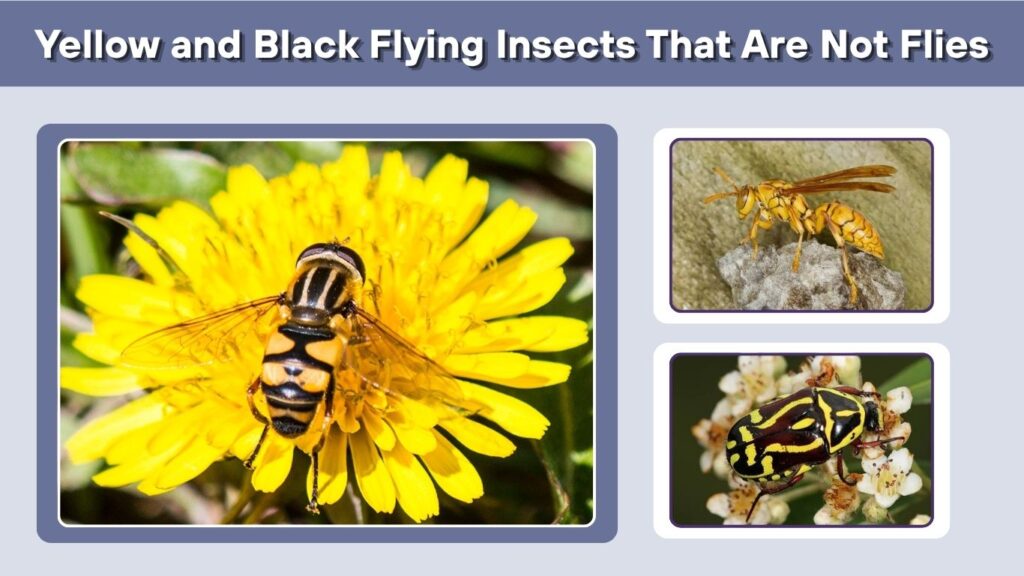
Many insects described as yellow-and-black flies belong to other insect groups.
Yellowjackets and Paper Wasps
Yellowjackets have compact bodies, clearly defined waists, long antennae, and two pairs of wings. They can sting repeatedly and may defend underground or enclosed nests.
Paper wasps are slimmer and have long legs that hang beneath the body during flight. They normally sting only when trapped, threatened, or defending their exposed paper nests.
Yellow and Black Flying Beetles
Longhorn beetles, soldier beetles, and some flower beetles imitate wasps. Beetles have hardened front wings that meet in a straight line down the back. Their long antennae may also help separate them from true flies.
Most wasp-mimicking beetles are harmless and cannot sting.
Flying Insect With a Long Stinger or Tail
A long black-and-yellow insect with what appears to be a stinger may be a horntail or an ichneumon wasp. The long structure is often an ovipositor used to place eggs rather than a stinger designed to attack people.
Horntails can reach one to two inches long but are harmless to humans.
Do Yellow and Black Flies Bite or Sting?
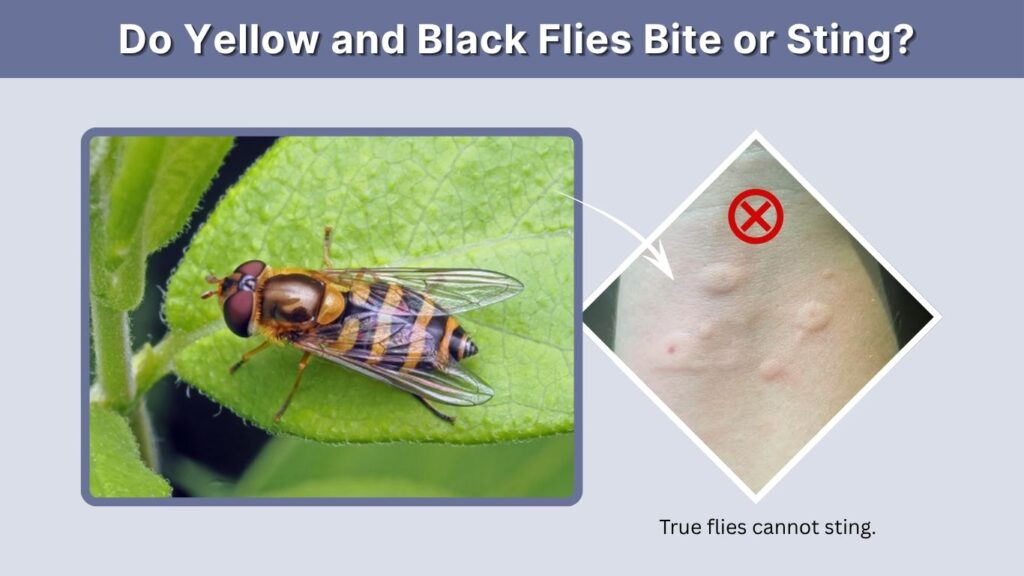
True flies cannot sting. Only certain fly groups possess mouthparts capable of piercing human or animal skin.
Hoverflies, crane flies, fruit flies, and cluster flies do not bite. Female horse flies and deer flies can deliver painful blood-feeding bites. Stable flies also bite and can be recognized by their forward-pointing, bayonet-like mouthparts.
A black-and-yellow insect that stings is probably a bee or wasp, not a fly. Seek emergency medical help after any insect sting or bite that causes breathing difficulty, facial or throat swelling, widespread hives, faintness, or other signs of a severe allergic reaction.
Should You Control Yellow and Black Flies?
Hoverflies should normally be left alone. They pollinate flowers, and the larvae of many species help control aphids. Avoid spraying black-and-yellow insects around flowers until you have confirmed their identity.
For biting horse or deer flies, protective clothing, screens, and suitable traps can reduce contact. Commercial traps often use large dark or black shapes because horse flies are visually attracted to moving dark objects. Such traps target biting flies and are not appropriate for harmless hoverflies.
Indoor yellow-and-black flies should be identified before treatment. Check screens, doors, ripe produce, drains, houseplants, and wall openings to determine where they are entering or breeding.
FAQs
What is the most common yellow and black fly?
The most common identification is a hoverfly. Hoverflies frequently visit flowers and have black-and-yellow bands that imitate bees or wasps. They can hover in place, have only one pair of wings, and cannot bite or sting people.
What is a black and yellow fly that looks like a bee?
It is likely a hoverfly, bee fly, or bee-mimicking robber fly. Hoverflies have smooth bodies, large eyes, short antennae, and one pair of wings. Bee flies are usually hairier, while robber flies have strong legs and a bristly face.
What yellow and black fly bites people?
Horse flies, deer flies, and stable flies are the most likely biting flies. Horse and deer flies are usually large with prominent eyes, while stable flies resemble house flies and have forward-projecting piercing mouthparts.
Can a yellow and black striped fly sting?
No true fly can sting. A striped insect that stings is probably a yellowjacket, paper wasp, hornet, or bee. Count the wings and examine the antennae and waist before approaching or handling it.
What is a large black and yellow flying bug with a long tail?
It may be a horntail or an ichneumon wasp rather than a fly. The long “tail” is often an egg-laying structure called an ovipositor. These insects generally do not use it to sting people and are usually harmless.