
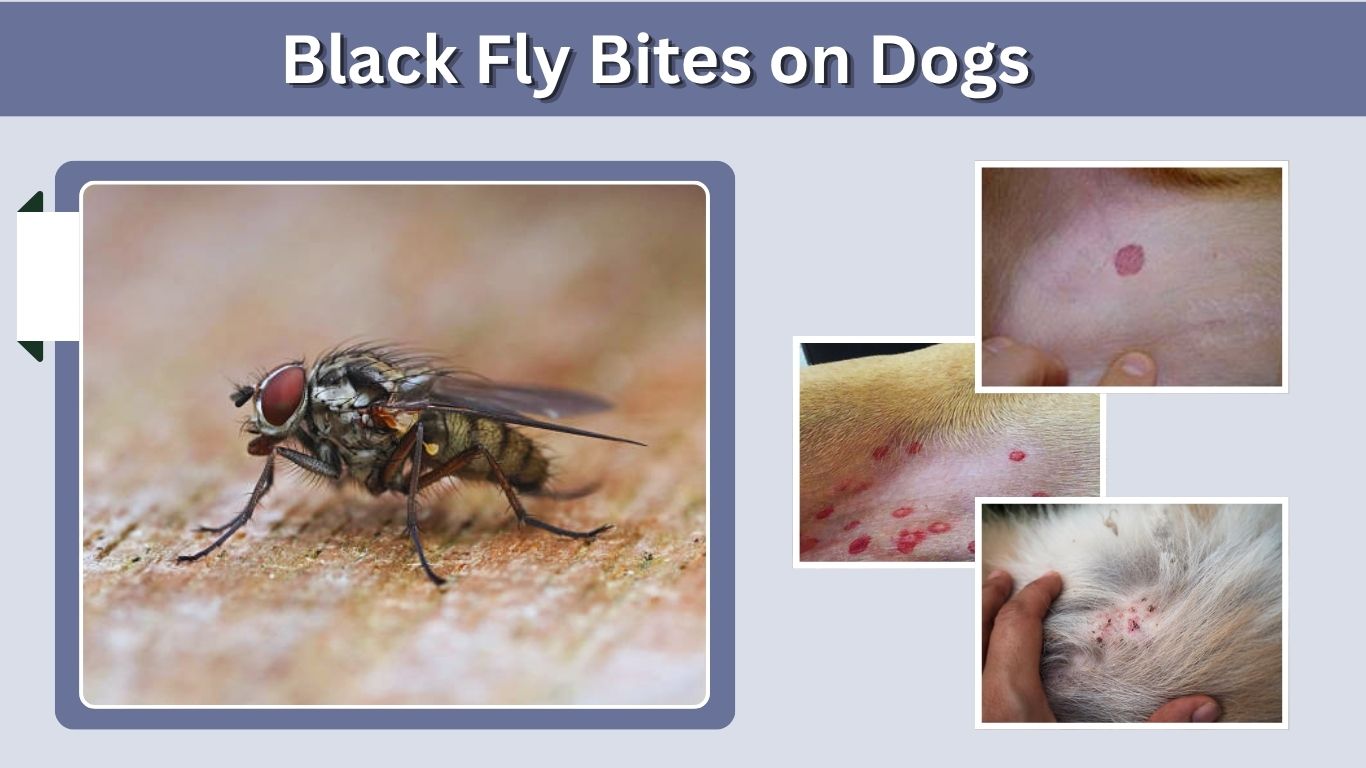
Black fly bites on dogs often appear as bright red circles or bullseye-shaped marks, especially across the belly, groin, inner thighs, and other areas with thin fur. Although these spots can look alarming, most are minor skin reactions that fade within several days. Problems can develop when a dog repeatedly scratches or licks the bites, causing open sores or infection. Facial swelling, vomiting, breathing difficulty, or collapse may indicate a rare but serious allergic reaction requiring emergency veterinary care.
What Are Black Fly Bites?
Black flies, sometimes called buffalo gnats, are small blood-feeding insects. Female black flies cut the skin and feed on the small amount of blood that collects at the surface. They are most active outdoors during daylight and commonly breed near streams and other flowing water.
Dogs may encounter swarms while:
- Walking near rivers or creeks
- Playing in fields or woodland
- Resting on grass
- Swimming or hiking
- Spending time outside during spring and summer
Black flies can land, feed, and leave quickly, so owners rarely see the insects attached to their dogs.
What Do Black Fly Bites Look Like on Dogs?
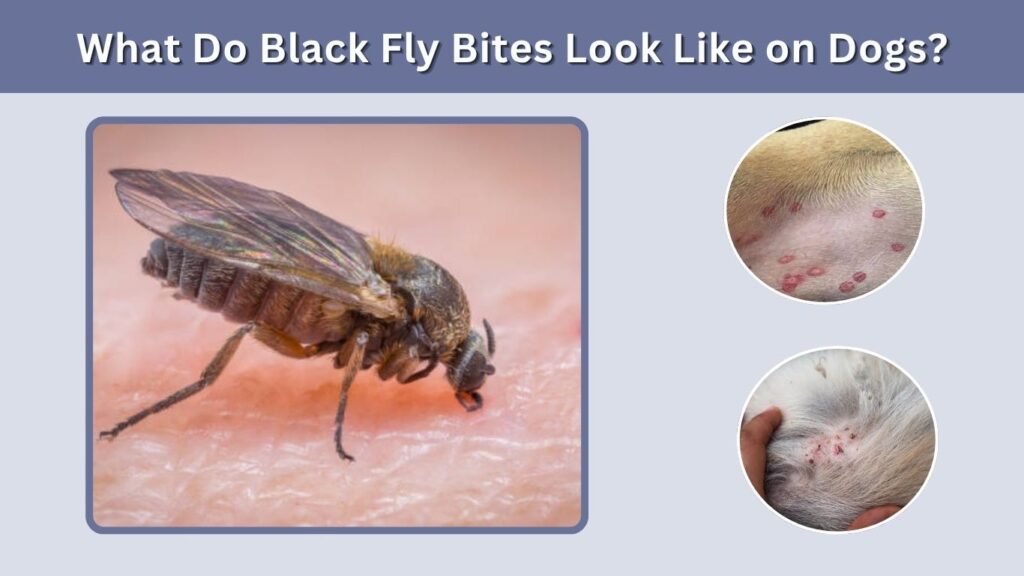
A typical black fly bite has a small puncture in the center, a pale or mildly swollen middle area, and a red outer ring. This creates the characteristic target or bullseye appearance.
Common signs include:
- Flat red circles or rings
- Multiple marks grouped together
- Small bloody spots
- Mild swelling
- Itching or tenderness
- Scabs caused by scratching
- Dark-red or bruised-looking patches
The bites are commonly found on sparsely haired skin, particularly the abdomen, groin, inner legs, ears, and face.
Black Fly Bites on a Dog’s Belly
The belly is the most frequently noticed location because its thin coat provides flies with easy access to the skin. A dog lying on grass may develop several circular spots within a short time.
The marks may look severe even when the dog is behaving normally. However, photographs alone cannot confirm the cause of every belly rash. Allergies, bacterial infections, fungal disease, fleas, mites, and contact irritation can produce similar symptoms.
Black Fly Bite Symptoms
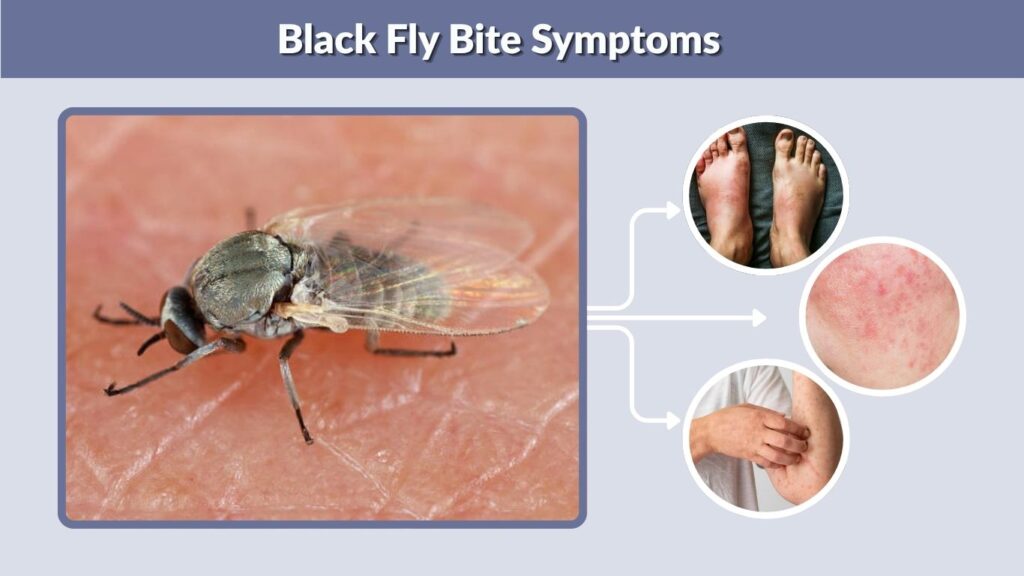
Most dogs experience only a mild local reaction.
Normal Local Reaction
Expected symptoms include:
- Red or purple rings
- Mild itching
- Limited swelling
- Brief discomfort
- Occasional licking
- Small scabs as the skin heals
These lesions often improve without medication and typically disappear within several days to about one week.
Signs of Infection
Scratching and chewing can damage the skin, allowing bacteria to enter. Contact a veterinarian if you notice:
- Yellow, green, brown, or white discharge
- Increasing redness or swelling
- Heat around the lesion
- Significant pain
- Bad odor
- Open or bleeding sores
- Bites that are not healing
- Loss of appetite or unusual tiredness
Infected lesions may require veterinary-prescribed topical treatment, antibiotics, or medicated shampoo. Do not apply human antibiotic creams without veterinary approval.
Allergic Reaction
Some dogs are unusually sensitive to insect bites. Obtain urgent veterinary care for:
- Facial or muzzle swelling
- Hives across the body
- Sudden vomiting or diarrhea
- Excessive drooling
- Breathing difficulty
- Weakness or collapse
These signs may indicate anaphylaxis, which can become life-threatening without immediate treatment.
Black Fly Bite vs Tick Bite on a Dog
A black fly bite may resemble the bullseye rash associated with Lyme disease in humans, but the comparison can be misleading.
| Feature | Black fly bite | Tick bite |
| Number | Often several together | Frequently one or a few |
| Appearance | Flat red ring with pale center | Small bump, scab, or local redness |
| Parasite present | Fly leaves immediately | Tick may remain attached |
| Common location | Belly, groin, inner legs | Anywhere on the body |
| Feeding time | Seconds or minutes | May remain attached for days |
| Disease concern | Usually local skin irritation | Can transmit several canine diseases |
Dogs do not typically develop the expanding human-style Lyme bullseye rash. Lyme disease in dogs is more often associated with signs such as fever, joint pain, stiffness, swollen joints, or lameness. Continue checking the dog for attached ticks even when the skin marks resemble fly bites.
Black Fly Bites vs Ringworm on Dogs
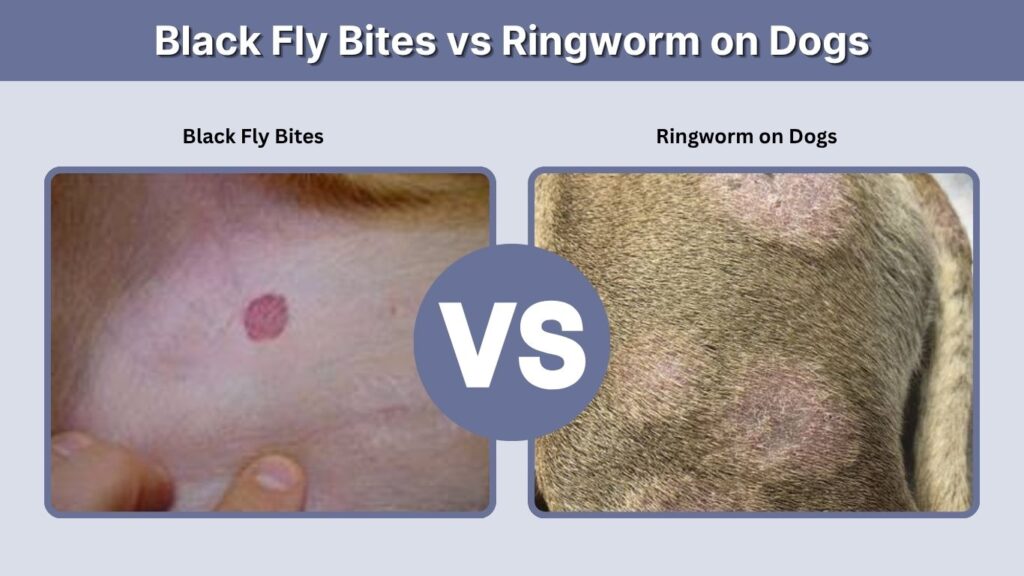
Ringworm is a contagious fungal skin infection, not an insect bite. It can produce circular lesions, making it another common source of confusion.
| Feature | Black fly bites | Ringworm |
| Number | Often numerous and clustered | May begin as one or several patches |
| Texture | Usually flat | Frequently scaly or crusty |
| Hair loss | Uncommon initially | Often present |
| Location | Belly, groin, ears | Face, feet, ears, tail, or body |
| Development | Appears suddenly after outdoor exposure | Gradually enlarges or spreads |
| Contagious | No | Yes |
Ringworm cannot always be identified by appearance. Veterinarians may use fungal culture, microscopy, or other testing to confirm it. Hair loss, scale, crusting, or lesions that continue spreading should be professionally examined.
How to Treat Black Fly Bites on Dogs
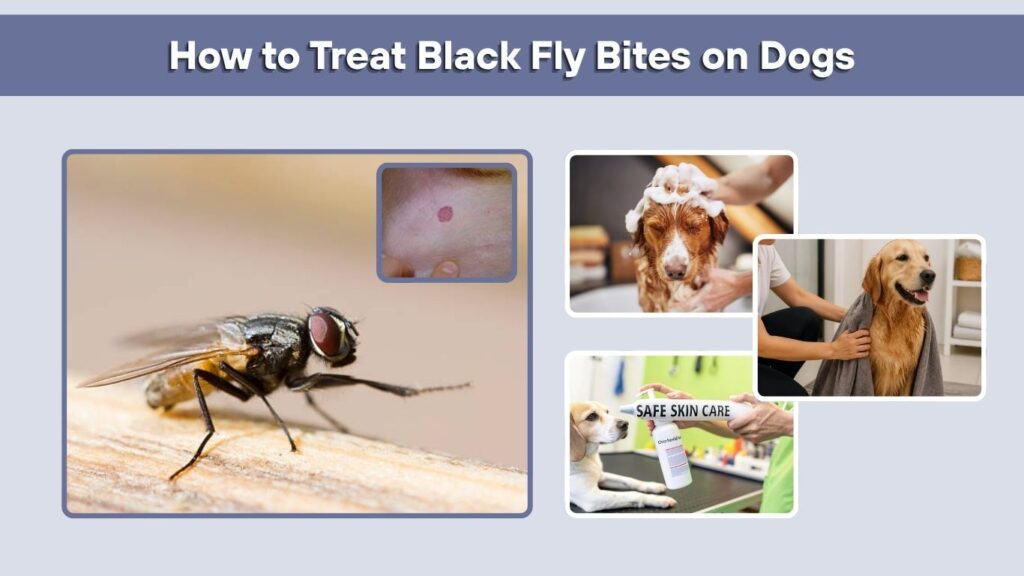
Most uncomplicated bites need only gentle home care and observation.
Basic Home Care
- Bring the dog indoors and away from the flies.
- Rinse the affected skin with cool water and mild soap.
- Gently pat the area dry.
- Apply a cloth-wrapped cold pack for 5–10 minutes.
- Stop the dog from licking or scratching the lesions.
- Check the skin daily for swelling, discharge, or worsening redness.
A recovery cone, soft collar, or clean protective shirt may prevent a dog from damaging belly lesions.
What Can You Put on the Bites?
Avoid applying random household remedies, essential oils, alcohol, peroxide, or human medication. These may irritate the skin or cause poisoning when licked.
A veterinarian may recommend a pet-appropriate hydrocortisone product, antihistamine, medicated spray, or antibiotic treatment depending on the severity. Oral antihistamine doses vary according to the dog’s weight, medical history, and other medications, so do not give Benadryl or another drug without veterinary instructions.
When Should You Call a Veterinarian?
Veterinary advice is recommended when:
- The bites involve the eyes, mouth, or face
- The dog is extremely itchy or painful
- Lesions become open, wet, or infected
- Swelling continues to increase
- The spots do not improve within one week
- The diagnosis is uncertain
- The dog has received numerous bites
- Similar lesions keep returning
Skin conditions can look alike, and an examination may be necessary to distinguish bites from fungal infection, allergy, bacterial disease, or parasites.
How to Prevent Black Fly Bites
Avoidance is more reliable than trying to treat every bite.
Limit Exposure
Black flies breed around flowing water and feed mainly during daylight. Avoid rivers, creeks, woodland edges, and heavily infested fields during peak black fly season. Activity may be greatest during the hours after sunrise and before sunset.
Protect Exposed Skin
A lightweight dog shirt or protective coat can cover the belly and inner thighs. Inspect the dog after walks and bring it indoors when flies begin swarming.
Use Only Dog-Safe Repellents
Ask a veterinarian to recommend an insect repellent labeled specifically for dogs. Never apply a human product containing DEET unless a veterinarian has explicitly directed its use. DEET exposure can cause neurological problems in pets, and products not labeled for animals should not be applied to their skin or coat.
FAQs
Are black fly bites dangerous to dogs?
Most black fly bites are not dangerous and resolve within several days. The main concerns are excessive scratching, secondary infection, and rare allergic reactions. Facial swelling, vomiting, breathing difficulty, weakness, or collapse requires emergency veterinary attention.
How long do black fly bites last on dogs?
Uncomplicated lesions generally fade within a few days and should largely resolve within about one week. Healing may take longer when the dog repeatedly licks the area or when infection develops. Persistent or worsening spots should be examined.
Do black fly bites hurt dogs?
The bites can cause brief pain, irritation, and significant itching, although some dogs appear unaffected. A sensitive dog may lick, bite, scratch, or become restless. Severe discomfort is a reason to contact a veterinarian.
Can black fly bites make a dog swell up?
Mild swelling around each bite is possible. Extensive swelling, hives, or enlargement of the face and muzzle may signal an allergic reaction. Sudden swelling accompanied by breathing problems, vomiting, or weakness is an emergency.
Can black fly bites cause Lyme disease?
No. Lyme disease is transmitted by infected black-legged ticks, not black flies. A black fly lesion may look like a bullseye, but that appearance does not mean the dog has Lyme disease. Regular tick checks and veterinarian-approved tick prevention remain important.