
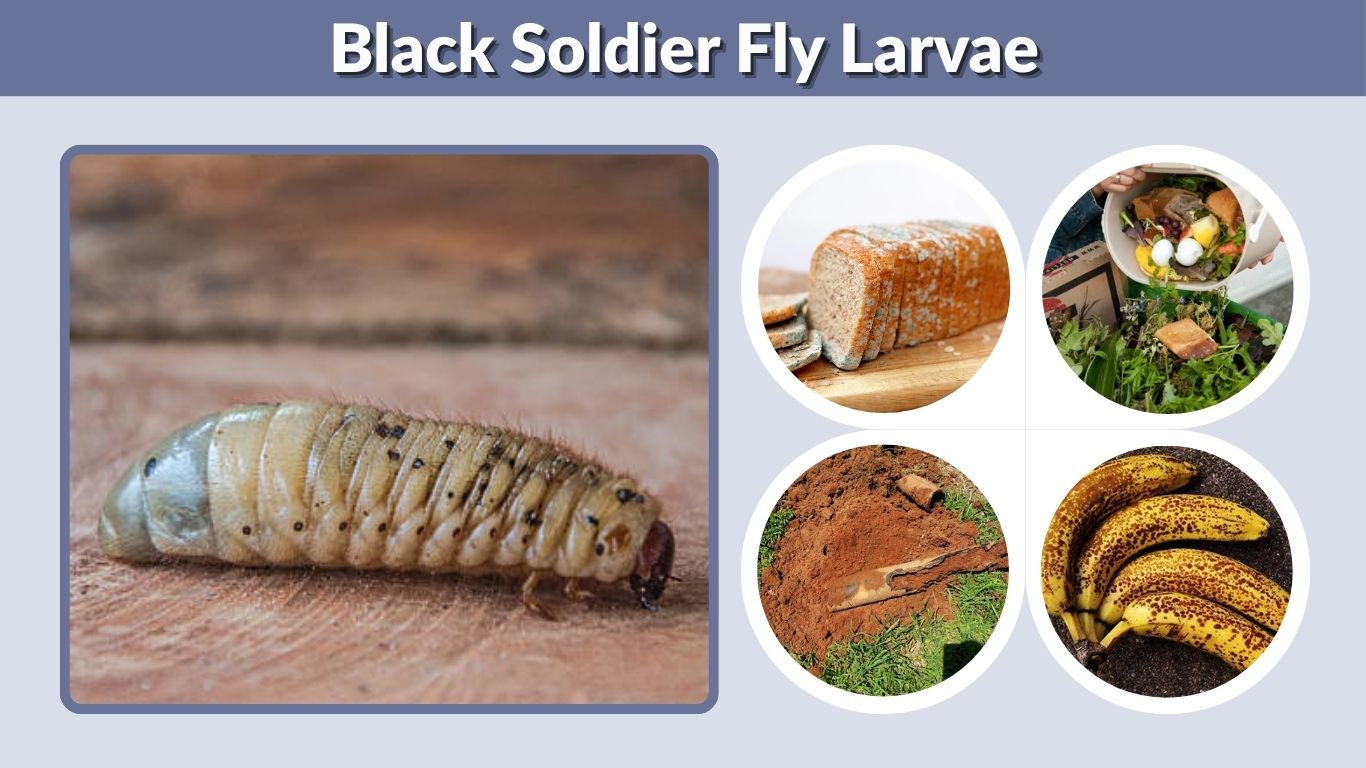
Black soldier fly larvae are the immature stage of the black soldier fly, Hermetia illucens. These pale, segmented grubs consume decomposing organic matter and can turn food scraps into larval biomass and a nutrient-rich residue. They are commonly raised for composting and as an ingredient or treat for chickens, fish, reptiles, and other animals. Although they resemble maggots, black soldier fly larvae are generally useful decomposers rather than household pests.
Black Soldier Fly Larvae Quick Facts
| Feature | Description |
| Scientific name | Hermetia illucens |
| Abbreviation | BSFL |
| Adult family | Stratiomyidae |
| Larval size | Up to about 1 inch |
| Main food | Moist, decomposing organic matter |
| Common uses | Composting and animal feed |
| Mature color | Dark brown to nearly black |
| Dangerous to people | No biting or stinging |
| Next stage | Pupa |
Young larvae are usually cream or gray-white. As they mature, they become darker, flatter, and more heavily textured. Mature larvae leave their wet feeding material and search for a dry, protected place to pupate.
What Do Black Soldier Fly Larvae Look Like?
Black soldier fly larvae resemble thick, leathery maggots. Their bodies are divided into visible segments and taper slightly toward the head.
Identification Features
- Cream, gray, tan, or dark brown body
- Clearly segmented, ridged surface
- Small head narrower than the body
- No visible true legs
- Flattened or torpedo-shaped appearance
- Tough-looking outer skin
- Length reaching approximately 1 inch
- Dark coloration before pupation
Housefly maggots are usually smoother, softer, and more uniformly pale. Black soldier fly larvae become darker and more heavily textured as they approach the prepupal stage.
The adult black soldier fly is black or blue-black and resembles a wasp. However, it has only one functional pair of wings, lacks a stinger, and is not dangerous to people. Two pale, translucent patches on the abdomen are useful adult identification features.
Black Soldier Fly Life Cycle
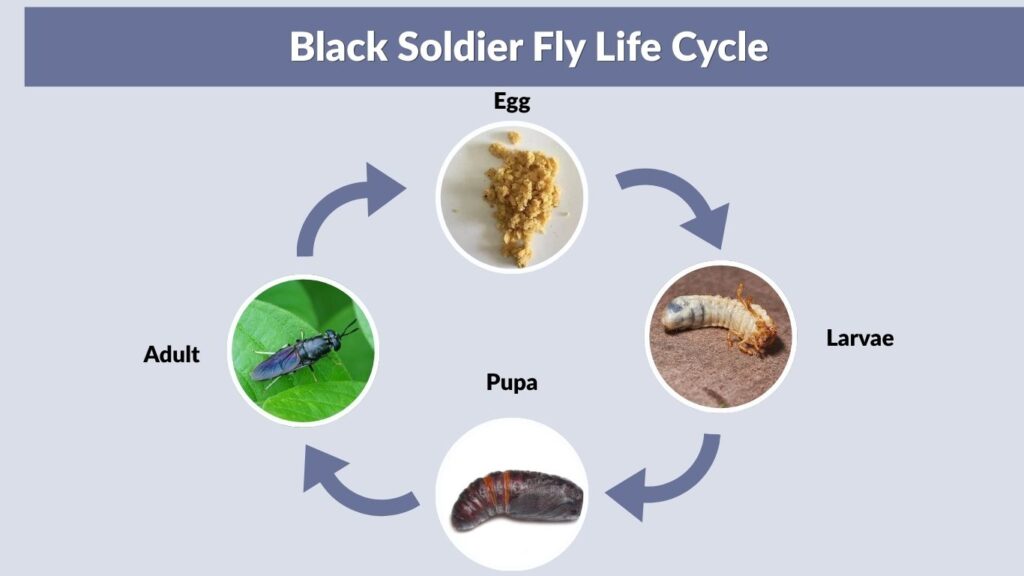
Black soldier flies undergo complete metamorphosis through egg, larva, pupa, and adult stages.
Eggs
A female places a cluster of several hundred eggs inside cracks near moist organic matter. She usually avoids placing them directly in extremely wet food. The eggs may hatch in approximately four days under favorable conditions.
Larvae
After hatching, the larvae feed intensively and pass through six growth stages. University of Florida guidance reports that larval development can take roughly 14 days under suitable conditions, although temperature, food quality, moisture, and crowding can lengthen the process.
Prepupae and Pupae
Mature larvae stop feeding, darken, and crawl away from the food source. They seek dry, sheltered material where they form pupae. Pupation may require about two weeks under warm conditions.
Adults
Adults mainly focus on mating and reproduction. They do not bite or sting and are rarely considered serious household pests.
What Do Black Soldier Fly Larvae Eat?
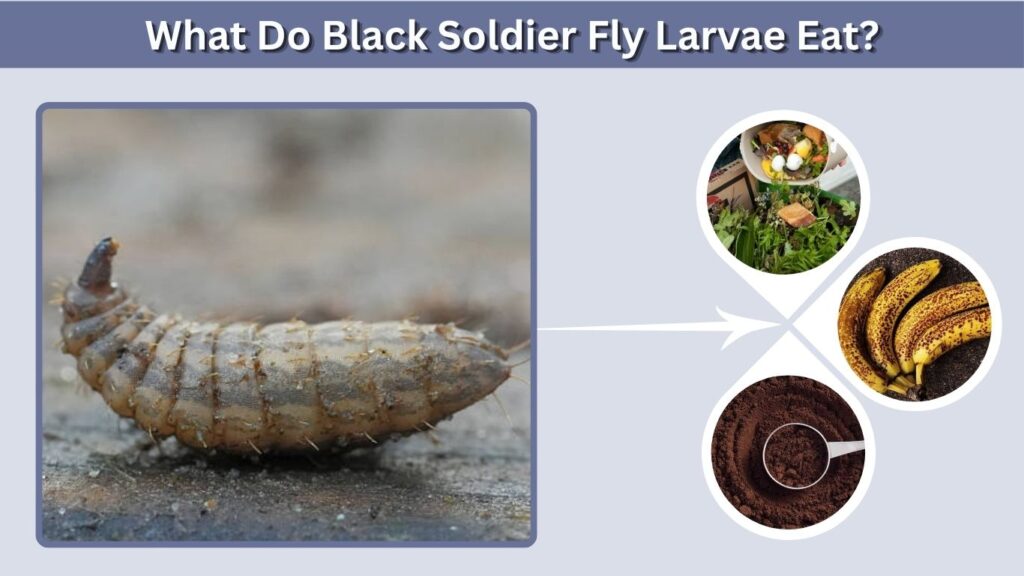
Black soldier fly larvae consume moist, decomposing organic material, including:
- Fruit and vegetable scraps
- Overripe produce
- Coffee grounds
- Grain and food-processing leftovers
- Livestock manure
- Spoiled animal feed
- Other biodegradable agricultural materials
Their growth and nutritional composition depend heavily on the substrate. Larvae raised on different foods can contain substantially different amounts of protein, fat, minerals, and energy.
Avoid feeding a small home colony large amounts of salt, oil, highly acidic waste, chemicals, plastic, or non-biodegradable material. Add food gradually so the bin does not become waterlogged, anaerobic, or excessively smelly.
Black Soldier Fly Larvae Composting
Black soldier fly larvae are especially effective at processing nitrogen-rich scraps. Their movement and feeding accelerate the breakdown of food waste and manure. They can also reduce the moisture and volume of the material inside a composting system.
Setting Up a Larvae Compost Bin
A simple bin should contain:
- Drainage holes for excess liquid
- Ventilation protected with screening
- A lid that keeps out rain and pests
- Moist but not flooded feeding material
- Shade to prevent overheating
- A ramp leading to a collection container
The ramp allows mature prepupae to crawl away from the food and fall into a harvesting bucket. This self-harvesting behavior makes black soldier fly larvae convenient for small farms and backyard poultry keepers.
A healthy substrate should feel moist but should not contain standing liquid. Adding shredded cardboard, dry leaves, or other absorbent carbon-rich material helps control excess moisture and odor.
Are Larvae Good for Regular Compost?
Yes. They help consume food scraps and do not normally damage a compost pile. However, a large population may indicate that the pile is wetter and richer in food waste than a traditional hot compost system.
To reduce them, bury scraps and cover them with 2–4 inches of dry leaves, shredded paper, or grass. Turning the pile and adding dry material also makes conditions less favorable.
How to Raise Black Soldier Fly Larvae
Begin with live larvae or attract local adult flies to an outdoor bin containing moist food scraps. Place corrugated cardboard or small wooden gaps close to the food so females have dry crevices in which to lay eggs.
Maintain the colony by:
- Adding small amounts of fresh organic material regularly.
- Keeping the substrate damp rather than soupy.
- Providing drainage and airflow.
- Protecting the bin from direct sun and heavy rain.
- Harvesting mature larvae before they pupate.
- Allowing some prepupae to become adults when maintaining a breeding colony.
Commercial farming requires more precise control of temperature, humidity, airflow, breeding light, substrate safety, and harvesting time. Both larval age and processing temperature can significantly affect the resulting feed’s fat content and amino-acid digestibility.
Black Soldier Fly Larvae for Chickens
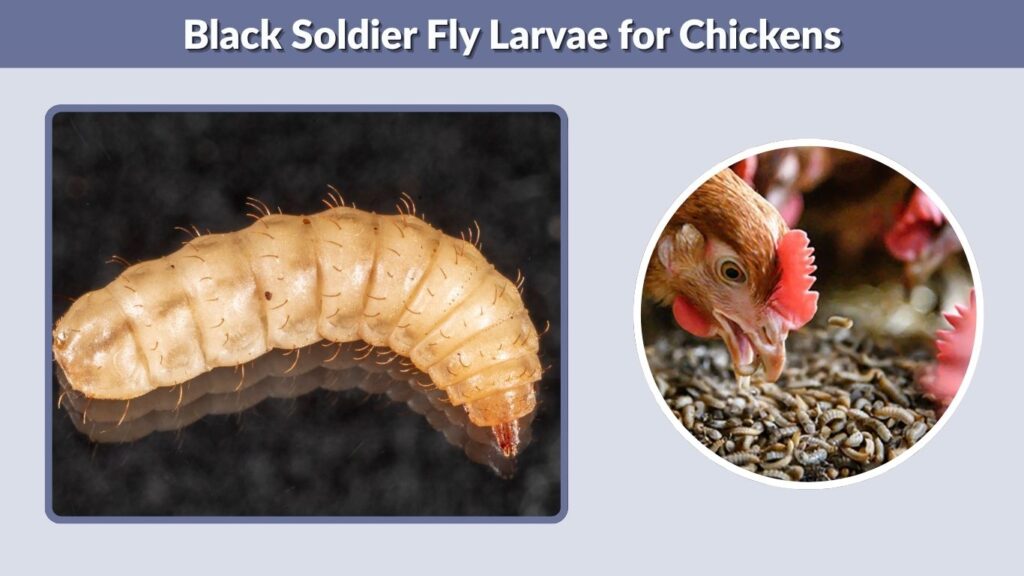
Chickens readily consume live or dried black soldier fly larvae. The larvae provide protein, fat, amino acids, and minerals, making them useful as a treat or professionally formulated feed ingredient.
Research from the University of Georgia found that broiler starter diets containing 6% or 12% dried black soldier fly larvae supported weight gains comparable to a control diet in the study. However, nutritional composition varies, and larvae should not automatically replace a complete poultry ration.
For backyard chickens:
- Use larvae as a supplement or treat.
- Continue providing nutritionally complete poultry feed.
- Choose products manufactured for animal consumption.
- Do not feed larvae raised on manure, chemicals, moldy waste, or unknown materials.
- Provide laying hens with appropriate calcium according to poultry guidance.
Ducks and insect-eating birds may also consume them, but portion size and the animal’s complete diet still matter.
Black Soldier Fly Larvae for Reptiles
Live BSFL are sold as feeder insects for bearded dragons, leopard geckos, frogs, and other insect-eating pets. They are valued for their moisture, protein, and comparatively favorable mineral profile.
They should still be part of a varied feeding program. A study involving leopard geckos found that most nutrients were digested well, but calcium digestibility was lower than the larvae’s total calcium content might suggest. The larvae were also not naturally complete sources of several fat-soluble vitamins.
Use properly sized, commercially raised feeder larvae and follow species-specific veterinary guidance on feeding frequency, supplementation, and variety.
Live vs Dried Black Soldier Fly Larvae
| Feature | Live Larvae | Dried Larvae |
| Moisture | High | Low |
| Animal enrichment | Encourages hunting | Easy to scatter or mix |
| Storage | Shorter and temperature-sensitive | Longer when kept dry |
| Weight | Heavier because of water | Nutrients more concentrated by weight |
| Best use | Reptiles, fish, poultry treats | Poultry, birds, formulated feeds |
Store live larvae according to the supplier’s instructions in a ventilated container away from direct heat. Refrigerating them too aggressively may kill them, while excessive warmth encourages rapid development into prepupae.
Keep dried larvae sealed in a cool, dry location. Discard products that become wet, moldy, rancid-smelling, or contaminated.
Black Soldier Fly Larvae in the House
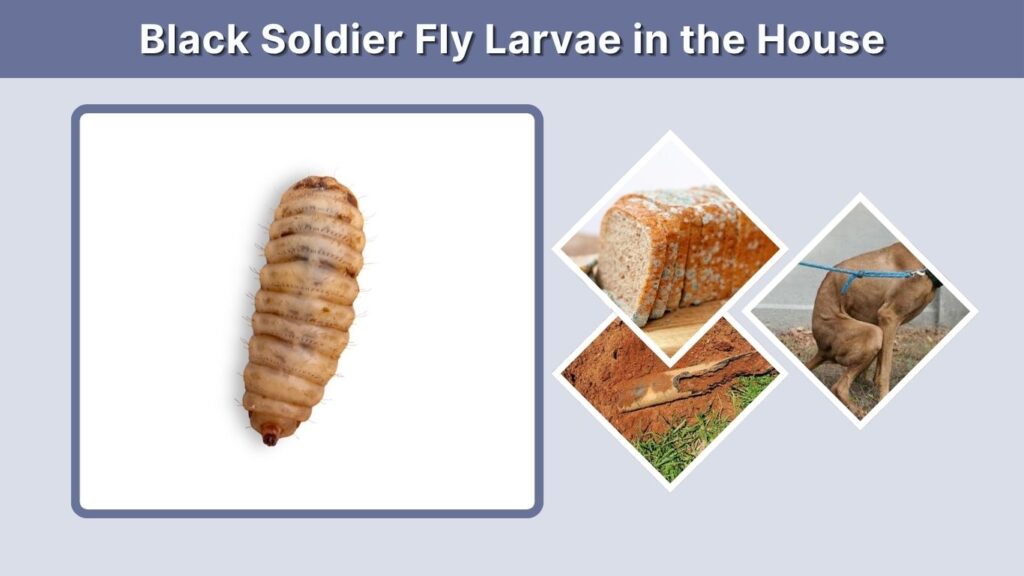
These larvae rarely breed inside clean, dry living spaces. Indoor sightings usually indicate nearby wet organic material, such as a leaking garbage container, spoiled food, pet waste, or an outdoor compost bin close to a door or window.
Remove the moisture and decomposing material, clean the affected container, seal cracks, and repair window screens. Wandering dark larvae can be vacuumed or swept up. Routine indoor insecticide treatment is rarely necessary once the breeding source is removed.
Are Black Soldier Fly Larvae Dangerous?
Black soldier fly larvae do not sting, bite people, infest living tissue, or behave like parasites. Their presence in compost is usually beneficial.
However, larvae can contact bacteria, pesticides, heavy metals, or other contaminants in their feeding substrate. Compost-grown larvae should not automatically be considered safe animal or human food. Use feed-grade larvae produced for the intended animal, and follow applicable feed regulations. The FDA evaluates black soldier fly ingredients according to the specific product and intended animal use rather than treating every home-raised larva as equivalent.
FAQs
Are black soldier fly larvae maggots?
Yes. “Maggot” is a general name for the larval stage of a fly. Black soldier fly larvae are therefore technically maggots, although they differ in appearance and behavior from common housefly larvae.
Are black soldier fly larvae good for compost?
Yes. They rapidly process moist, nitrogen-rich organic matter such as food scraps and manure. Their presence is usually helpful, although very large numbers may indicate that the compost is excessively wet.
Can chickens eat black soldier fly larvae every day?
Small amounts can be offered regularly, but they should not displace a nutritionally complete poultry ration. Treat portions should be adjusted according to the chickens’ age, health, and total diet.
Are black soldier fly larvae better than mealworms?
BSFL often provide more calcium than mealworms, while mealworms may differ in protein, fat, and digestibility. Neither feeder is nutritionally complete, and actual values depend on diet, age, and processing.
Can people eat black soldier fly larvae?
Only products specifically produced, approved, and labelled for human consumption should be considered. Never eat larvae collected from compost, manure, garbage, or an unknown growing substrate.