
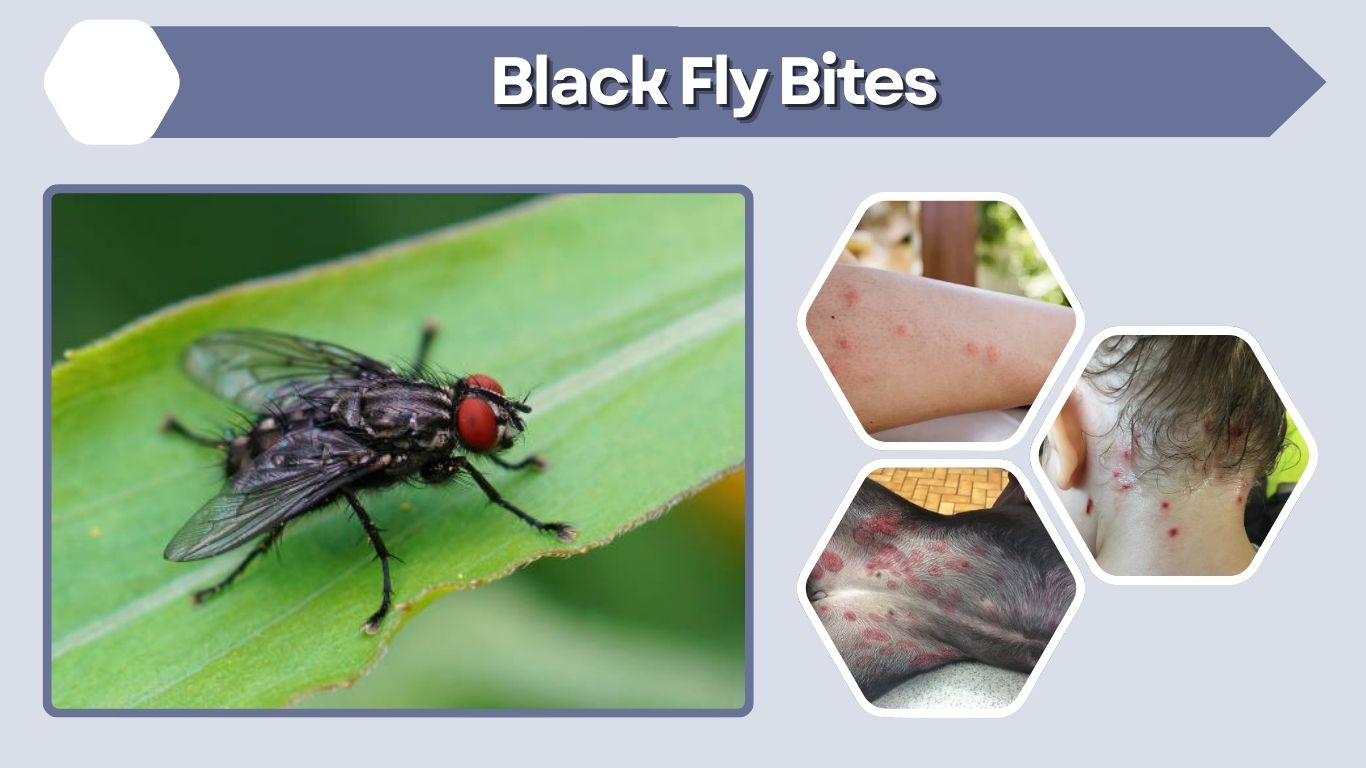
Black fly bites can leave painful, itchy, and swollen marks on people and animals. These tiny insects, also called buffalo gnats, are most active during daylight near clean, fast-moving rivers and streams. Female black flies cut the skin and feed on the resulting blood, while males do not bite. Most reactions improve with basic care, but severe swelling, infection, or an allergic reaction requires medical attention. Dogs commonly develop distinctive red, target-shaped marks on their bellies and inner legs.
What Are Black Flies?
Black flies are small, hump-backed insects belonging to the family Simuliidae. Adults are usually dark gray or black and considerably smaller than houseflies. Their immature stages develop in flowing water, so adult swarms are often found near rivers, creeks, and streams during spring and early summer.
Only female black flies take blood meals. They attack people, dogs, livestock, birds, and wildlife during the day. Unlike mosquitoes, which pierce the skin, black flies cut or scrape the skin and drink from the small pool of blood that forms. Their saliva helps keep the blood flowing and can trigger itching, soreness, and swelling.
What Do Black Fly Bites Look Like?
Black fly bites do not look identical on everyone. The initial mark may be small, but inflammation can become more noticeable over the following hours.
Common Appearance
A black fly bite may cause:
- A tiny bleeding or puncture-like spot
- A red, itchy bump or welt
- Swelling around the bite
- A burning or painful sensation
- A small scab after the bleeding stops
- Several bites clustered on exposed skin
Black flies often bite around the hairline, neck, ears, arms, ankles, and lower legs. They may also crawl underneath collars, sleeves, hat rims, or trouser cuffs before feeding.
How Long Do Black Fly Bites Last?
Mild reactions usually begin improving within several days. Itching, tenderness, or discoloration can last longer in people who are sensitive to insect saliva. Repeated scratching may reopen the skin, prolong healing, and introduce bacteria.
Increasing pain, warmth, spreading redness, pus, or symptoms that continue worsening may indicate infection or another condition that needs professional assessment.
Black Fly Bite Symptoms
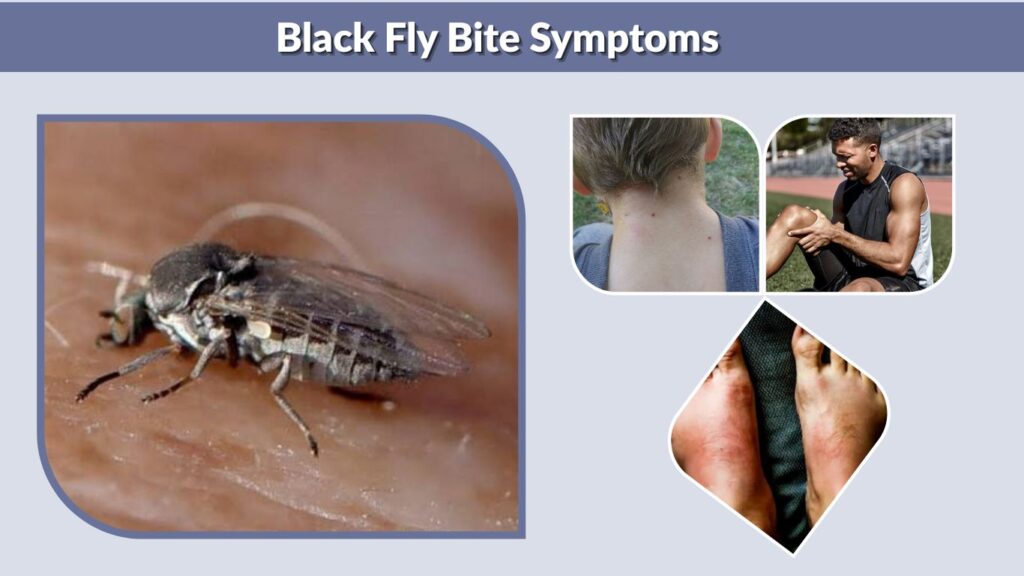
Most people experience a localized skin reaction. The severity depends on the number of bites and the person’s sensitivity.
Mild to Moderate Symptoms
Common symptoms include redness, itching, localized swelling, soreness, warmth, and mild bleeding. Some bites develop a small blister or firm lump.
People exposed to a large swarm may experience many bites at once. This can produce extensive swelling and discomfort, particularly around the face, eyes, scalp, or neck.
Allergic Reaction to Black Fly Bites
A stronger reaction may produce unusually large swelling, widespread hives, dizziness, nausea, or generalized weakness. Rarely, an insect bite can trigger anaphylaxis.
Seek emergency help for:
- Difficulty breathing or wheezing
- Swelling of the lips, mouth, tongue, or throat
- Difficulty swallowing
- Fainting, confusion, or severe dizziness
- Widespread hives accompanied by other symptoms
- Repeated vomiting or sudden collapse
Anaphylaxis can become life-threatening quickly and requires immediate emergency treatment.
How to Treat Black Fly Bites
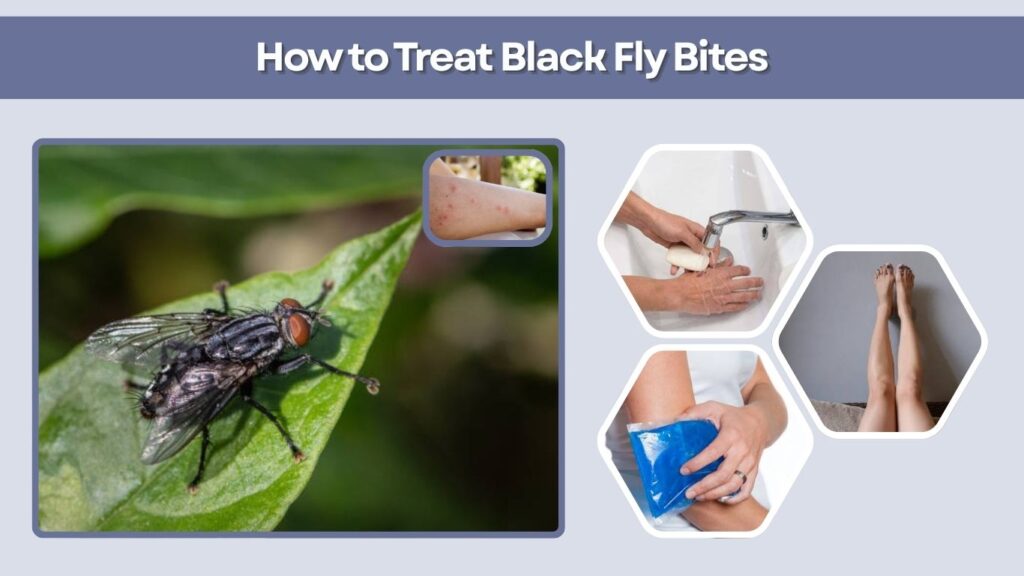
Most uncomplicated bites can be managed at home. Treatment focuses on cleaning the wound, limiting swelling, controlling itching, and preventing infection.
Immediate Treatment
Wash the bitten area gently with soap and water. Apply a cold compress or an ice pack wrapped in cloth for about 20 minutes to reduce swelling. Elevate the affected limb when practical.
Avoid scratching, squeezing, or breaking blisters. Scratching can damage the skin and raise the risk of bacterial infection.
Relief for Itching and Swelling
A pharmacist or healthcare professional may recommend an oral antihistamine or a mild hydrocortisone cream for itching and inflammation. Follow the product label and check with a professional before treating young children, pregnant people, or anyone who takes other medicines.
Some antihistamines, including diphenhydramine, can cause drowsiness. Do not drive or operate machinery when a medicine makes you sleepy.
When to See a Doctor
Contact a medical professional when:
- Redness or swelling continues spreading
- The skin becomes increasingly hot or painful
- Pus, drainage, or red streaks develop
- The bite is close to an eye or inside the mouth
- Symptoms are worsening instead of improving
- You develop fever or feel generally unwell
- Numerous bites cause extensive swelling
Black flies can transmit the parasite responsible for onchocerciasis in certain regions, primarily rural parts of sub-Saharan Africa and limited areas elsewhere. Infection usually requires repeated exposure to infectious flies, making it uncommon among short-term travelers. Tell a doctor about recent travel when unusual symptoms develop after repeated black fly bites.
Black Fly Bites on Dogs
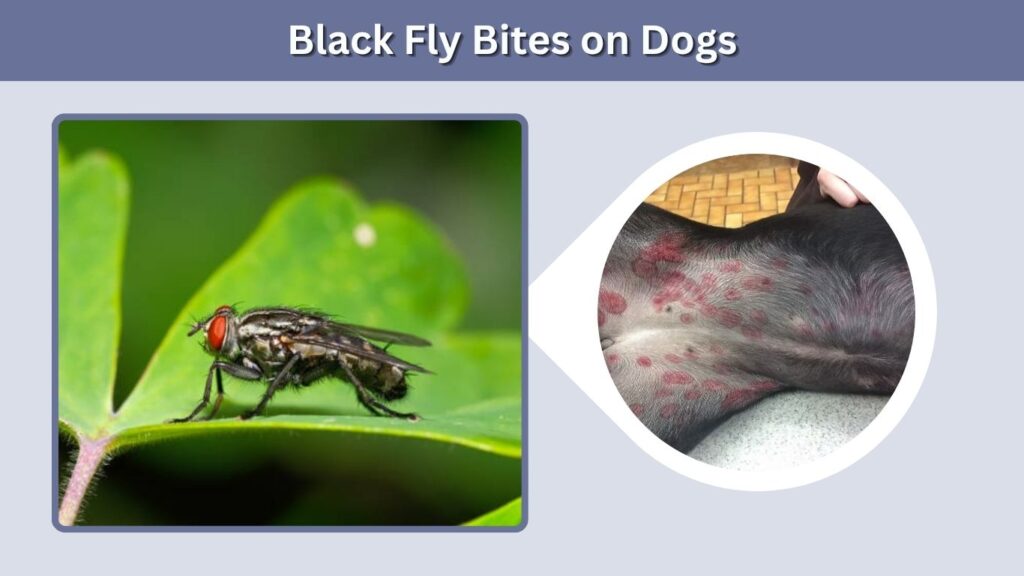
Dogs frequently receive black fly bites on areas where the coat is thin. Common sites include the belly, groin, inner thighs, ears, and face.
What They Look Like on a Dog
A typical bite may resemble a bullseye. It can have a dark central puncture, a pale swollen area around the center, and a red outer ring. Several circular marks may appear across the dog’s abdomen following outdoor exposure.
These marks can look alarming but often improve naturally within a few days. Some dogs experience considerable itching and may lick, chew, or scratch the affected skin.
Black Fly Bite vs. Tick Bite or Ringworm
| Feature | Black fly bite | Tick-related mark | Ringworm |
| Number | Often several at once | Frequently one or a few | May gradually multiply |
| Location | Belly, groin, ears, inner legs | Anywhere a tick attaches | Face, legs, body, or paws |
| Appearance | Sudden red target-like marks | Small attachment site or scab | Expanding patch with hair loss |
| Timing | Appears after outdoor exposure | Develops after tick contact | Usually spreads more gradually |
| Itching | Possible | Variable | Often itchy or scaly |
Appearance alone cannot confirm the cause. Ringworm is a fungal infection and can spread to people and other pets, while ticks may transmit disease. Consult a veterinarian when lesions spread, cause hair loss, persist, or are associated with illness.
Treating a Dog’s Black Fly Bites
Prevent the dog from excessively licking or scratching the area and keep the skin clean. A cool compress may help with mild irritation.
Do not give a dog diphenhydramine, hydrocortisone, pain relievers, insect repellents, or human skin products unless a veterinarian confirms the product and dose are safe. Products containing DEET should not be applied to dogs.
Contact a veterinarian when the bites are near the eyes or mouth, appear infected, do not improve, or cause severe discomfort. Vomiting, diarrhea, heavy drooling, facial swelling, breathing difficulty, weakness, or collapse may indicate a severe allergic reaction and require emergency veterinary care.
How to Prevent Black Fly Bites
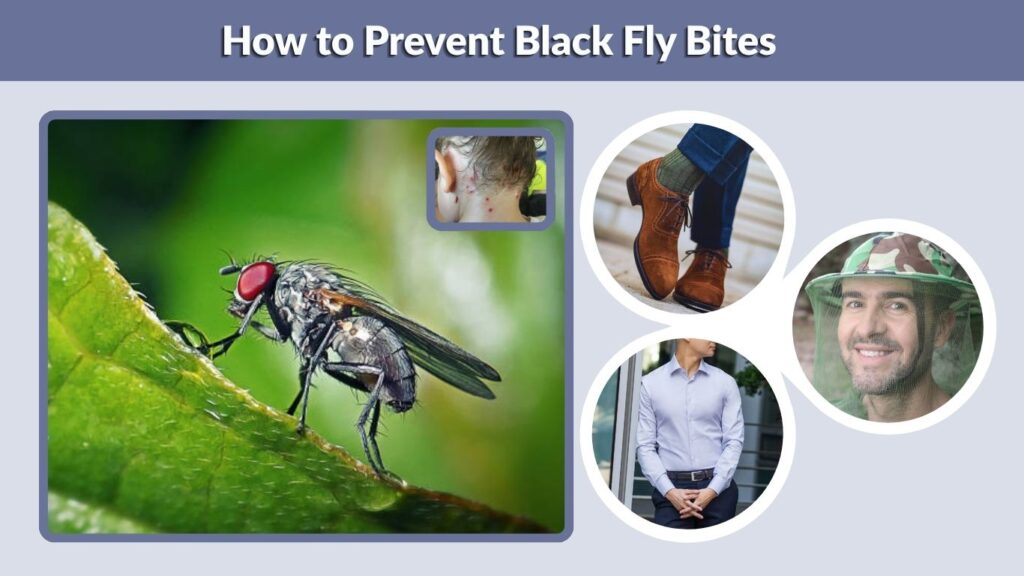
Black flies are active during daylight and may be especially troublesome during warm, calm periods near moving water.
Reduce exposure by:
- Wearing long sleeves, trousers, socks, and closed shoes
- Tucking shirts and trousers to block access to skin
- Using an approved repellent according to its label
- Wearing a head net in heavily infested areas
- Avoiding streamside areas during severe outbreaks
- Keeping dogs indoors when swarms are most active
- Using pet-safe protective clothing for a dog’s belly
Use only repellents registered for human use on people and products specifically labeled for dogs on pets. Never assume a human insect repellent is safe for an animal.
Small Black Flying Bugs That Bite
Not every tiny dark insect is a black fly. Other possibilities include biting midges, stable flies, fleas, mosquitoes, deer flies, and horse flies.
Black soldier flies are an important exception. Although they resemble dark wasps, they do not feed on blood and do not bite or sting people. Correctly identifying the insect helps determine where it breeds and which prevention method will work.
FAQs
Why do black flies bite?
Female black flies need blood to support egg production. They cut the skin and consume the blood that collects at the wound. Male black flies feed on plant-derived substances and do not bite people or animals.
Are black fly bites dangerous?
Most bites cause only temporary itching, pain, and swelling. However, numerous bites, bacterial infection, or an allergic reaction can become serious. Black flies also transmit onchocerciasis in specific regions where the parasite occurs.
Can Benadryl help black fly bites?
Diphenhydramine, commonly sold as Benadryl, can reduce allergic itching, but it may cause significant drowsiness and interact with other medicines. Ask a pharmacist or doctor whether it is appropriate. Never give it to a dog without veterinary dosing instructions.
Do black fly bites leave a bullseye?
They can produce target-shaped marks, especially on a dog’s belly. However, a bullseye-like lesion is not exclusive to black flies. Tick exposure, fungal infection, and other skin conditions may cause circular marks.
How do you know if a black fly bite is infected?
Possible signs include increasing pain, warmth, swelling, expanding redness, pus, drainage, or red streaks. Fever or feeling unwell can also indicate a complication. Seek medical care rather than continuing to treat a worsening lesion at home.