
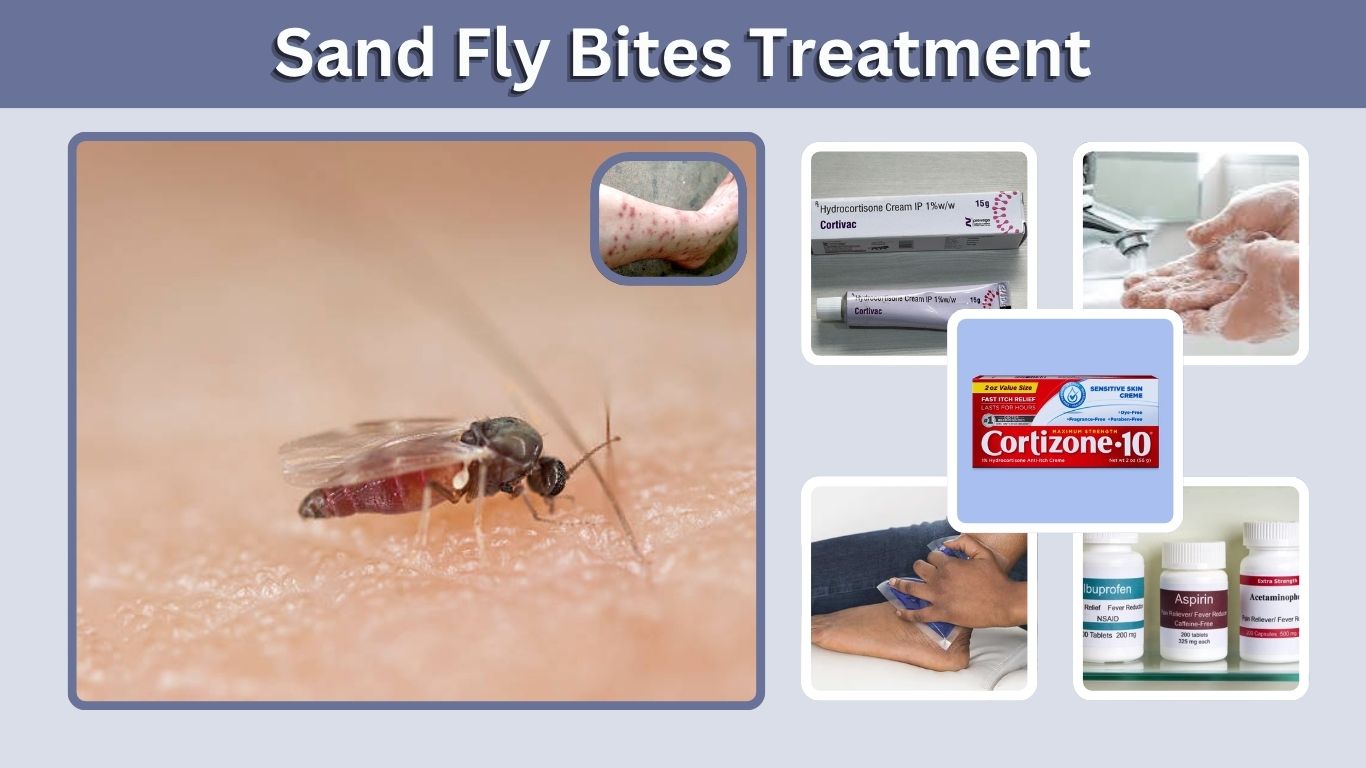
Sand fly bites commonly cause small, raised bumps that may become intensely itchy, red, swollen, or uncomfortable. Several bites can appear close together, especially after time near beaches, wetlands, forests, or other outdoor areas.
Most uncomplicated bites can be treated at home with washing, cooling, and appropriate anti-itch medicine. However, bites that become infected, cause a serious allergic reaction, or develop into persistent sores after travel require medical attention.
How to Treat Sand Fly Bites Immediately
Early care can reduce itching, swelling, and the risk of infection. Begin treatment as soon as you notice the bites.
- Wash your hands before touching the area.
- Clean the bites gently with soap and water.
- Pat the skin dry with a clean towel.
- Apply a cold compress wrapped in cloth for about 20 minutes.
- Avoid rubbing, squeezing, or scratching the bumps.
- Use an appropriate anti-itch treatment when necessary.
Washing removes dirt and lowers the chance that bacteria will enter damaged skin. A wrapped ice pack or cold cloth can help control swelling and discomfort. Never place ice directly against the skin.
Best Treatment for Sand Fly Bites
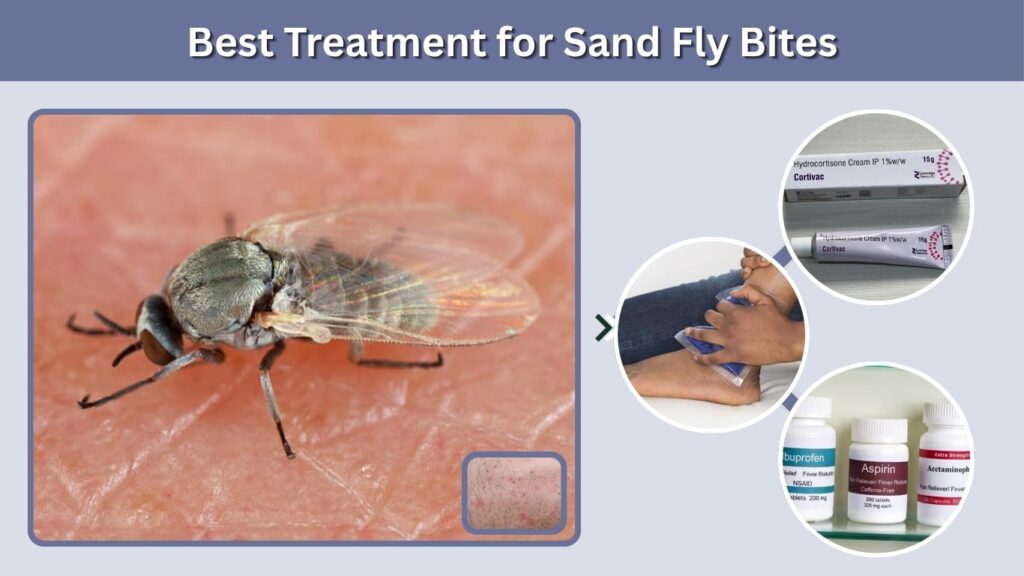
The best treatment depends on whether itching, swelling, or pain is the main problem. Most people need only simple symptom relief while the skin heals.
Cold Compress
Apply a clean cold cloth or an ice pack wrapped in fabric to the affected area. Leave it in place for approximately 20 minutes when swelling is present.
The cold temperature can temporarily reduce itching, inflammation, and discomfort. Repeat the treatment when needed, allowing the skin to return to its normal temperature between applications.
Hydrocortisone Cream
A pharmacist may recommend a mild hydrocortisone cream to reduce itching and swelling. Apply it only as directed on the product label or by a healthcare professional.
Ask a pharmacist before using steroid cream on young children, broken skin, the face, or sensitive areas. Avoid applying it directly to an open, bleeding, or infected wound unless instructed by a clinician.
Oral Antihistamines
An oral antihistamine may help when the bites are extremely itchy or when several bites cause a larger local reaction. Some antihistamines cause drowsiness, while others are less sedating.
Ask a pharmacist which option is appropriate, especially for children, pregnancy, breastfeeding, medical conditions, or use alongside other medications.
Pain Relief
Sand fly bites are usually itchier than they are painful. However, an appropriate over-the-counter pain reliever may help when the area feels sore.
Paracetamol or ibuprofen may be suitable for some people, but they are not appropriate for everyone. Follow the label and consult a pharmacist when uncertain about medical conditions, allergies, pregnancy, or drug interactions.
Elevating the Area
When bites are concentrated on an arm, hand, foot, or leg, keeping the affected limb elevated may help reduce swelling.
Remove tight jewelry, socks, or clothing if swelling is increasing. Seek medical advice if the swelling becomes extensive, painful, or continues spreading beyond the bite area.
Sand Fly Bite Treatment at Home
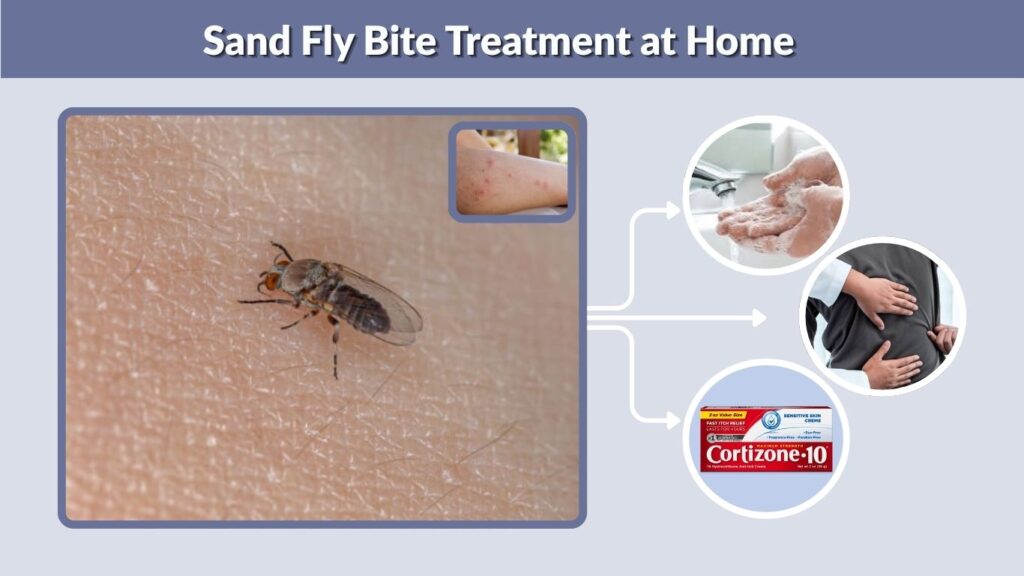
The safest home treatment combines gentle cleaning, cooling, and protection from scratching.
You can:
- Wash the skin with soap and clean water.
- Use a wrapped cold pack.
- Keep fingernails short and clean.
- Cover scratched bites with a clean dressing.
- Wear loose clothing over irritated skin.
- Ask a pharmacist about anti-itch medicine.
Avoid applying bleach, disinfectant concentrate, toothpaste, vinegar, essential oils, or other irritating substances. Health guidance also advises against relying on bicarbonate-of-soda paste for insect bites. These remedies may irritate damaged skin without treating the underlying inflammation.
How to Stop Sand Fly Bites from Itching
Scratching provides brief relief but can damage the skin and introduce bacteria. Repeated scratching may cause bleeding, scabbing, discoloration, or infection.
To control itching:
- Apply a cold compress.
- Use pharmacist-approved hydrocortisone cream.
- Consider an appropriate oral antihistamine.
- Cover the area during sleep.
- Keep the skin clean and dry.
- Avoid hot showers directly over the bites.
Seek professional advice when itching is severe, prevents sleep, covers a large area, or continues despite appropriate treatment.
How Long Do Sand Fly Bites Last?
A simple insect bite commonly improves within several days. Itching or discoloration may sometimes last longer, particularly when the person has many bites, a strong local reaction, or has scratched the skin repeatedly.
The bites should gradually become less swollen, less itchy, and less noticeable. A lesion that enlarges, becomes increasingly painful, develops pus, or fails to improve should be assessed by a healthcare professional.
Treatment for Infected Sand Fly Bites
Scratching can break the skin and allow bacteria to enter. Infection may develop several days after the original bite.
Possible signs include:
- Increasing redness or swelling
- Skin that feels hot
- Worsening pain or tenderness
- Pus or cloudy fluid
- A red line extending from the bite
- Swollen glands
- Fever or flu-like symptoms
Do not squeeze an infected bite. Keep it clean and obtain medical advice promptly, as antibiotics may be required when a bacterial skin infection develops.
When Sand Fly Bites Need Medical Attention
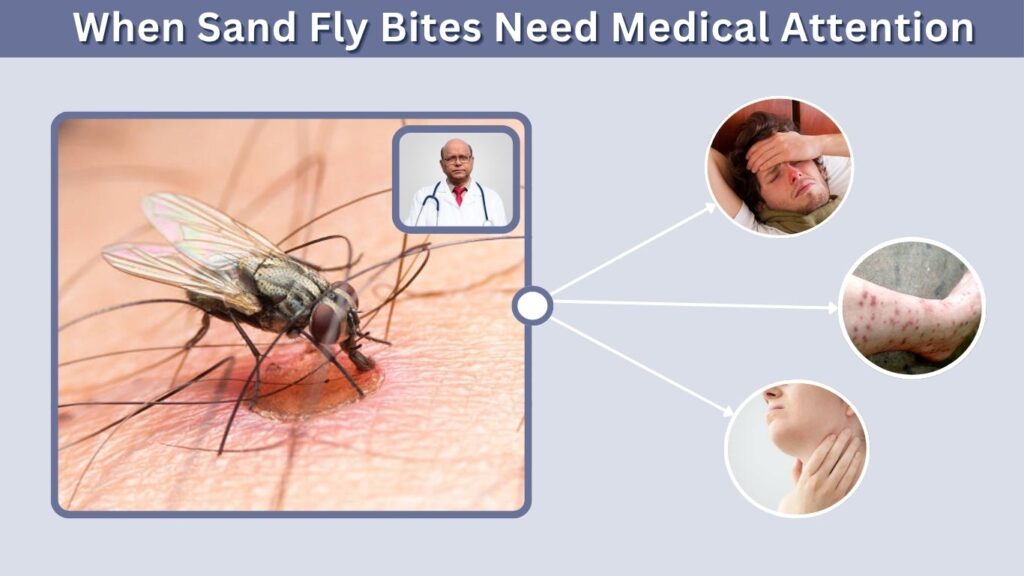
Seek urgent medical advice when symptoms continue worsening, the bites are close to the eyes, mouth, or throat, or you experience fever, swollen glands, vomiting, dizziness, or extensive swelling.
Call your local emergency service immediately if the lips, mouth, tongue, or throat suddenly swell; breathing becomes difficult; the throat feels tight; swallowing becomes difficult; or the person becomes confused, severely dizzy, unresponsive, or unconscious. These may indicate a serious allergic reaction.
Sand Fly Bites and Leishmaniasis
Most itchy insect bites do not indicate leishmaniasis. However, some true sand flies can transmit Leishmania parasites in parts of the world where the disease occurs.
Cutaneous leishmaniasis may begin as a bump or nodule weeks or months after an infected bite. It can slowly develop into a persistent skin sore or ulcer, sometimes with raised edges and a central crater. The sore may be painless and can remain for months without proper assessment.
Contact a healthcare provider if you develop a sore that does not heal after living in or traveling to an area where leishmaniasis occurs. Tell the clinician exactly where and when you traveled. Ordinary anti-itch creams cannot cure leishmaniasis; diagnosis and treatment require medical care.
How to Prevent More Sand Fly Bites
Preventing further bites is important while the first group is healing. Sand flies that transmit leishmaniasis are particularly active from dusk through nighttime.
Helpful precautions include:
- Wear long sleeves, long pants, and socks.
- Apply an approved insect repellent to exposed skin.
- Stay in screened or air-conditioned rooms.
- Use fine-mesh bed nets where necessary.
- Tuck bed nets beneath the mattress.
- Treat nets or clothing with an appropriate insecticide when recommended.
- Limit outdoor exposure from dusk to dawn in affected areas.
Sand flies can be smaller than mosquitoes and may pass through ordinary mosquito netting, so fine mesh provides better protection.
FAQs
What is the fastest treatment for sand fly bites?
Wash the bites with soap and water, then apply a cold compress wrapped in cloth for about 20 minutes. A pharmacist-approved hydrocortisone cream or oral antihistamine may provide additional relief when itching or swelling is troublesome.
Can I use antihistamine cream on sand fly bites?
Some topical anti-itch products may help, but oral antihistamines or mild hydrocortisone cream are often recommended for uncomplicated insect bites. Ask a pharmacist which product suits your age, medical history, medications, and the location of the bites.
Why do sand fly bites itch so much?
The itching is caused by the body’s inflammatory response to substances introduced into the skin during feeding. People react differently, so one person may develop tiny bumps while another experiences intense itching, redness, or substantial local swelling.
Should I pop a sand fly bite?
No. Popping, squeezing, or repeatedly scratching a bite damages the protective skin barrier and increases the risk of bacterial infection. Clean the area, cool it, control the itching, and allow the bump to heal naturally.
Can sand fly bites leave scars?
Most uncomplicated bites heal without permanent scarring. Scars or dark marks are more likely when bites are deeply scratched, infected, or associated with a persistent condition such as cutaneous leishmaniasis. A nonhealing sore should be medically evaluated.