
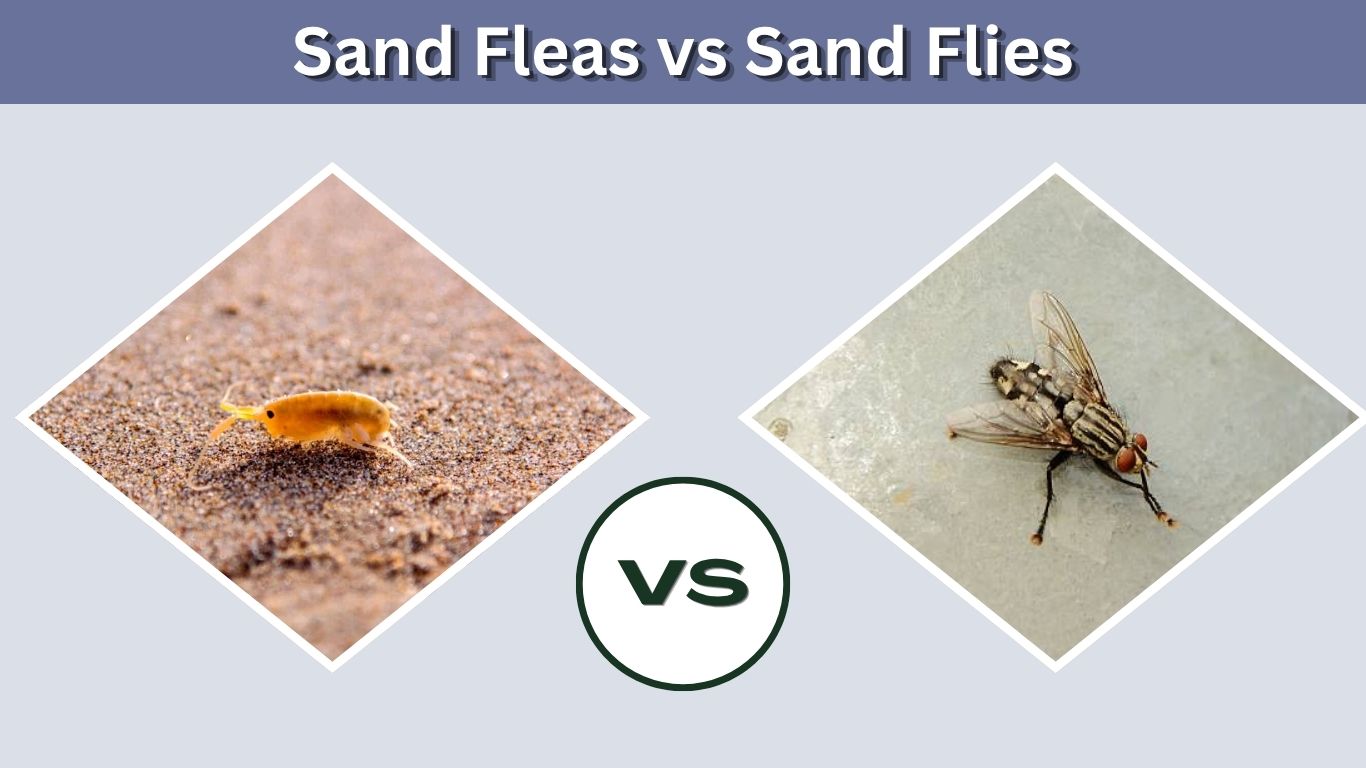
Sand fleas and sand flies are not the same creatures. Sand flies are tiny winged insects, while most animals called sand fleas are jumping crustaceans or actual fleas found in warm, sandy regions. Sand flies can bite and may transmit disease in certain parts of the world. Common beach hoppers and mole crabs are generally harmless and do not feed on human blood.
The confusion comes from regional names. People often call biting midges, no-see-ums, beach hoppers, mole crabs, and chigoe fleas “sand fleas” or “sand flies,” even though they belong to very different animal groups.
Sand Fleas vs Sand Flies at a Glance
The easiest distinction is movement: sand flies have wings and fly, while sand fleas jump, crawl, or burrow.
| Feature | Sand Fly | Sand Flea |
| Animal group | Insect | Usually a crustacean or true flea |
| Wings | Yes | No |
| Movement | Flies or hops briefly | Jumps, crawls, or burrows |
| Typical size | About 1–3 mm | Varies by the animal |
| Common habitat | Damp soil, vegetation, burrows, and coastal areas | Beach debris, wet sand, animal hosts, or warm sandy soil |
| Human blood feeding | Females of biting species feed on blood | Only true parasitic fleas feed on blood |
| Main concern | Itchy bites and disease in some regions | Usually harmless, except chigoe fleas |
The term “sand fly” itself can refer either to true phlebotomine sand flies or, informally, to biting midges such as no-see-ums. University of Florida guidance notes that this common name is frequently applied to more than one group of biting flies.
What Are Sand Flies?
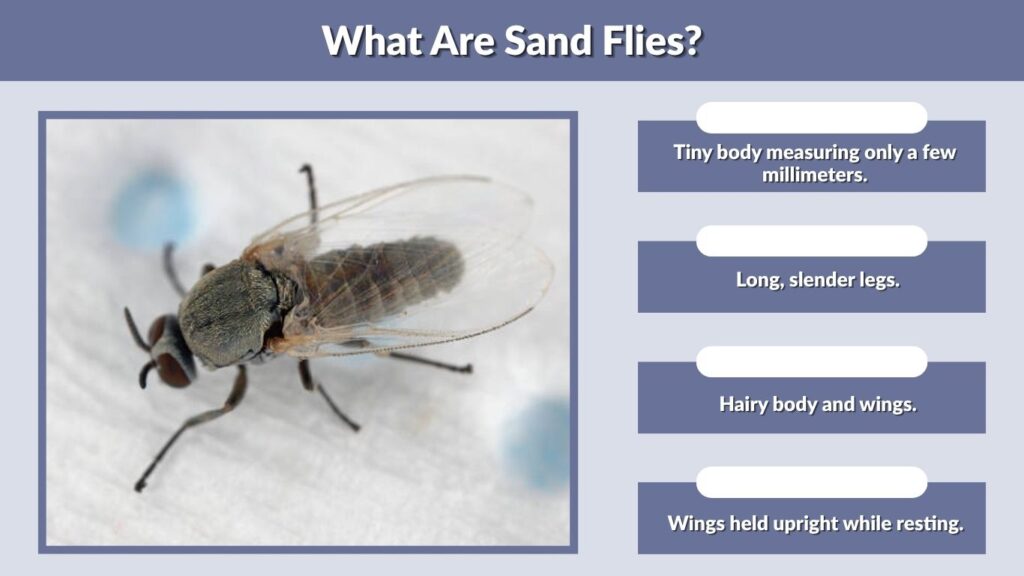
True sand flies are tiny insects in the subfamily Phlebotominae. They have long legs, hairy bodies, narrow wings, and a delicate appearance. Their wings are usually held in a raised V shape while resting.
Female sand flies bite animals and people because they need blood to produce eggs. Males feed on plant sugars and do not take blood meals.
Sand Fly Identification
- Tiny body measuring only a few millimeters
- Long, slender legs
- Hairy body and wings
- Wings held upright while resting
- Pale yellow, tan, or light brown coloring
- Quiet, weak flight
- Most active from dusk through dawn
Their small size and silent movement mean people may not notice them before being bitten. True sand fly bites can also be painless initially, with skin irritation appearing later.
Where Do Sand Flies Live?
Sand flies are not limited to ocean beaches. Depending on the species, they may live around animal burrows, cracks in walls, forests, rocky areas, farms, caves, deserts, damp soil, and organic debris.
Their larvae develop in protected places containing moisture and decaying organic material. Adults usually remain near suitable resting and breeding environments rather than living in clean, exposed beach sand.
What Are Sand Fleas?
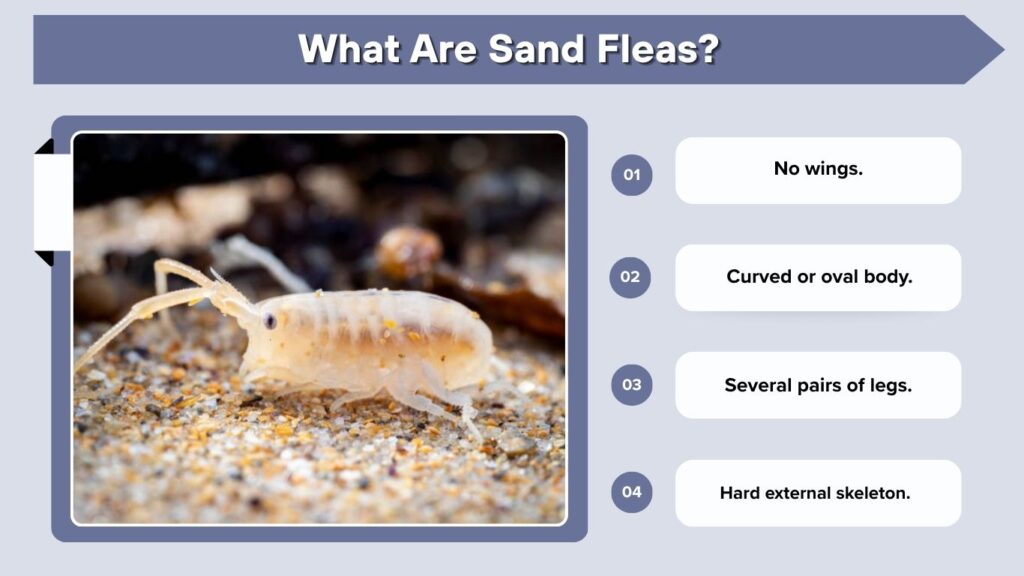
“Sand flea” has several meanings. On many beaches, it refers to small crustaceans such as beach hoppers, sand hoppers, or mole crabs. These animals are more closely related to shrimp and crabs than to insect fleas.
Beach hoppers commonly shelter beneath seaweed, stones, driftwood, and decaying vegetation. Mole crabs burrow in wet sand along the surf line. University of Florida sources describe beach fleas as amphipods and explain that mole crabs are clawless and harmless to people.
Sand Flea Identification
- No wings
- Curved or oval body
- Several pairs of legs
- Hard external skeleton
- Jumps or burrows when disturbed
- Common beneath seaweed and beach debris
- Usually gray, tan, brown, or translucent
These common shoreline animals do not normally produce clusters of itchy human bites. When people develop bites after visiting a beach, biting midges, mosquitoes, fleas associated with animals, or true sand flies may be responsible.
The Parasitic Chigoe Sand Flea
The chigoe flea, Tunga penetrans, is a true insect flea and is very different from harmless beach hoppers. It occurs in parts of the Caribbean, South America, and sub-Saharan Africa.
A fertilized female chigoe flea can burrow into human skin, often around the toes, feet, or beneath the toenails. The condition is called tungiasis. The embedded flea expands as its eggs develop, producing an itchy or painful lesion with a central dark opening.
A chigoe flea should not be dug out with an unsterilized needle or sharp object. Suspected tungiasis requires medical evaluation because improper removal can cause infection or leave flea material inside the skin.
Sand Fly Bites vs Sand Flea Bites
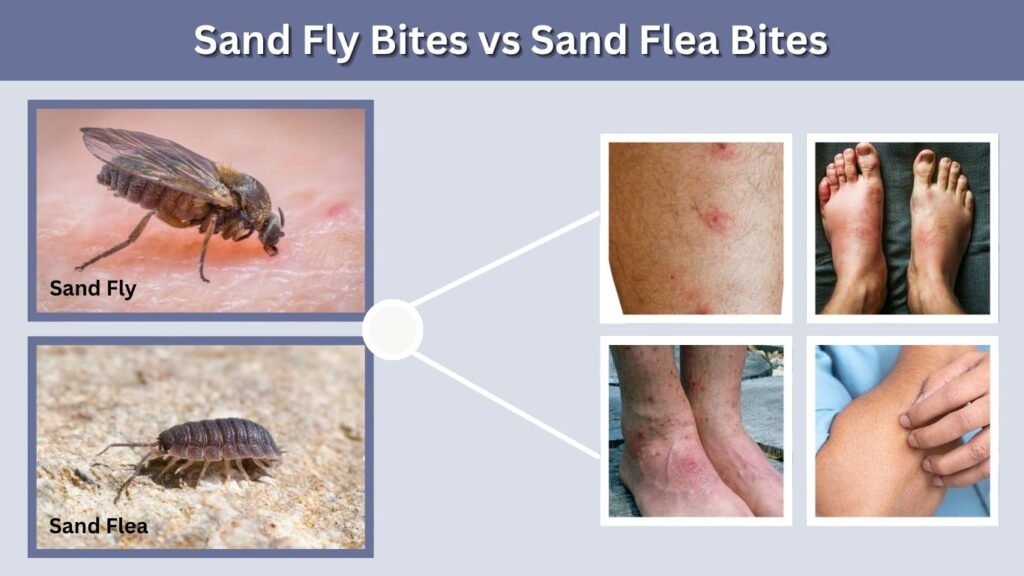
The appearance of a bite alone may not identify the exact cause, but location and symptoms provide useful clues.
| Feature | Sand Fly Bite | Chigoe Sand Flea Infestation |
| Number | Often several bites | Commonly one or several embedded lesions |
| Common location | Exposed arms, legs, neck, and face | Feet, toes, soles, and nail edges |
| Early appearance | Small red bump | Small spot that gradually enlarges |
| Main symptom | Itching, redness, and swelling | Itching, pain, inflammation, or pressure |
| Central opening | Not normally obvious | Often has a dark central point |
| Duration | Usually improves within days | Can worsen until the flea is removed |
| Disease concern | Leishmaniasis in endemic areas | Tungiasis and secondary infection |
Ordinary insect bites generally cause temporary itching and redness. A persistent enlarging lump, visible central opening, severe pain, drainage, or skin lesion that does not heal should be examined by a healthcare professional.
Can Sand Flies Spread Disease?
Infected female phlebotomine sand flies can transmit Leishmania parasites, which cause leishmaniasis. The disease occurs in parts of Africa, Asia, the Middle East, southern Europe, Mexico, Central America, and South America. Risk depends on the destination, sand fly species, and local transmission.
Cutaneous leishmaniasis commonly causes one or more skin sores that may appear weeks or months after exposure. Anyone who develops a persistent sore following travel to an affected region should tell a healthcare professional where and when the travel occurred.
Common beach hoppers and mole crabs do not transmit leishmaniasis because they are crustaceans, not sand flies.
Why Do People Confuse Their Bites?
People may use “sand flea bites” as a general description for any itchy bumps acquired at the beach. However, several creatures can bite in coastal areas:
| Possible Source | Helpful Clue |
| Biting midges or no-see-ums | Tiny clustered bites, often around ankles and exposed skin |
| True sand flies | Mainly nighttime or twilight exposure in affected regions |
| Mosquitoes | Raised itchy bumps after evening exposure |
| Animal fleas | Clusters around ankles, especially near pets or wildlife |
| Chigoe fleas | Embedded lesion, commonly affecting the feet |
| Beach hoppers or mole crabs | Visible jumping or burrowing crustaceans; usually not the bite source |
Identifying the actual cause may require considering the travel destination, time of day, nearby animals, habitat, and whether an insect was observed.
How to Treat the Bites
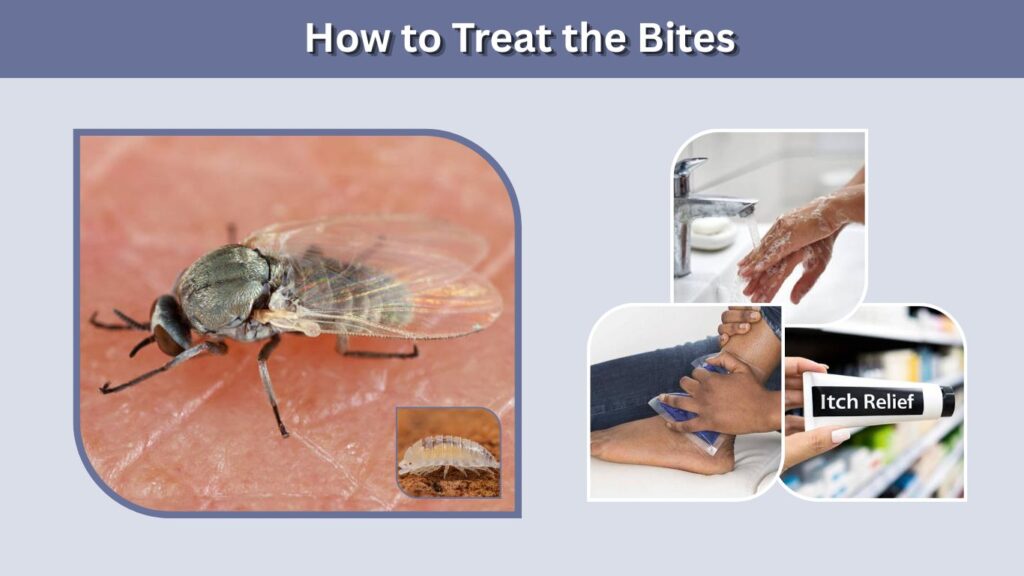
Wash ordinary bites gently with soap and water. Apply a cold compress for 10–15 minutes to reduce itching and swelling. Avoid scratching because broken skin can become infected.
A pharmacist may recommend a suitable anti-itch cream or oral antihistamine. Seek medical care when redness spreads, pain increases, pus appears, or symptoms include fever or feeling unwell.
Emergency treatment is necessary for difficulty breathing, faintness, widespread hives, or swelling of the face, mouth, or throat.
A growing lesion, embedded object, dark central opening, or persistent sore after international travel requires professional examination rather than routine home treatment.
How to Prevent Sand Fly and Sand Flea Problems
Wear long sleeves, trousers, socks, and closed shoes in areas with biting flies. True sand flies are most active between dusk and dawn, so limiting outdoor exposure during these periods can reduce bites. Fine-mesh screens and insecticide-treated bed nets may be helpful because sand flies can pass through larger screening.
Apply an insect repellent registered for human skin and follow its label. EPA-listed active ingredients include DEET and picaridin, although the product label should confirm protection against biting flies.
Wear shoes rather than walking barefoot in regions where tungiasis occurs. Avoid sitting directly on potentially contaminated sand or soil, particularly in communities where animals roam freely.
FAQs
Are sand fleas and sand flies the same?
No. Sand flies are winged insects. Animals called sand fleas may be beach-dwelling crustaceans or true fleas such as the chigoe flea. Their appearance, behavior, bite risks, and life cycles are completely different.
Do common beach sand fleas bite people?
Beach hoppers and mole crabs are generally harmless shoreline crustaceans and are not typical human blood feeders. Itchy beach bites are more commonly associated with biting midges, mosquitoes, true fleas, or sand flies.
Which is more dangerous?
True sand flies can transmit leishmaniasis in affected regions. Chigoe fleas can burrow into the skin and cause tungiasis. Ordinary beach hoppers and mole crabs present little risk to people.
Can sand flies or sand fleas enter a house?
Sand flies and biting midges may enter through open doors or fine screens. Animal fleas may enter on pets. Beach hoppers normally remain around damp outdoor debris and do not establish household infestations.
How can you tell what bit you?
Consider where the exposure occurred, the time of day, the lesion’s location, and whether it continues growing. A bite cannot always be identified from appearance alone. Persistent, infected, embedded, or unusual lesions should be examined by a healthcare professional.