
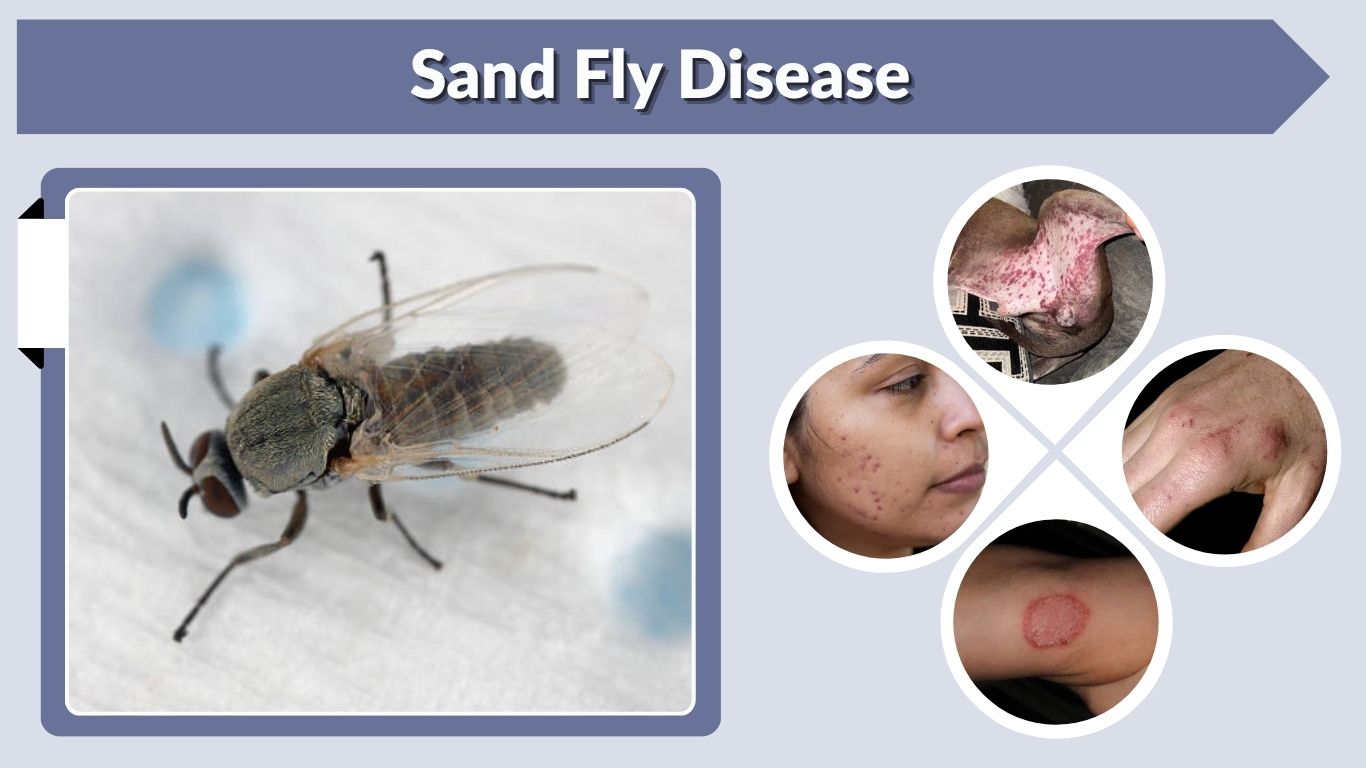
Sand flies can transmit parasites, viruses, and bacteria, although most bites cause only temporary redness and itching. The best-known sand fly disease is leishmaniasis, which may affect the skin, mucous membranes, or internal organs. Certain sand flies can also spread sand fly fever viruses and a rare bacterial infection called South American bartonellosis. Disease risk depends on the sand fly species, geographic location, and whether the insect is infected.
What Disease Do Sand Flies Carry?
True disease-carrying sand flies are tiny phlebotomine flies belonging mainly to the genera Phlebotomus in the Eastern Hemisphere and Lutzomyia and related genera in the Americas.
The insects commonly called “sand flies” at beaches may instead be biting midges or no-see-ums. These are different insects and should not automatically be associated with leishmaniasis.
| Disease | Cause | Main effects |
| Leishmaniasis | Leishmania parasites | Skin ulcers, mucosal damage, or internal-organ disease |
| Sand fly fever | Phleboviruses | Fever, headache, fatigue, and muscle pain |
| Toscana virus infection | Toscana virus | Fever and, occasionally, meningitis or encephalitis |
| South American bartonellosis | Bartonella bacilliformis | Severe fever and anemia or wart-like skin lesions |
| Canine leishmaniosis | Usually Leishmania infantum | Skin, eye, kidney, and systemic disease in dogs |
Not every sand fly carries disease. Transmission occurs only when a competent female sand fly is infected with a particular pathogen.
1. Leishmaniasis
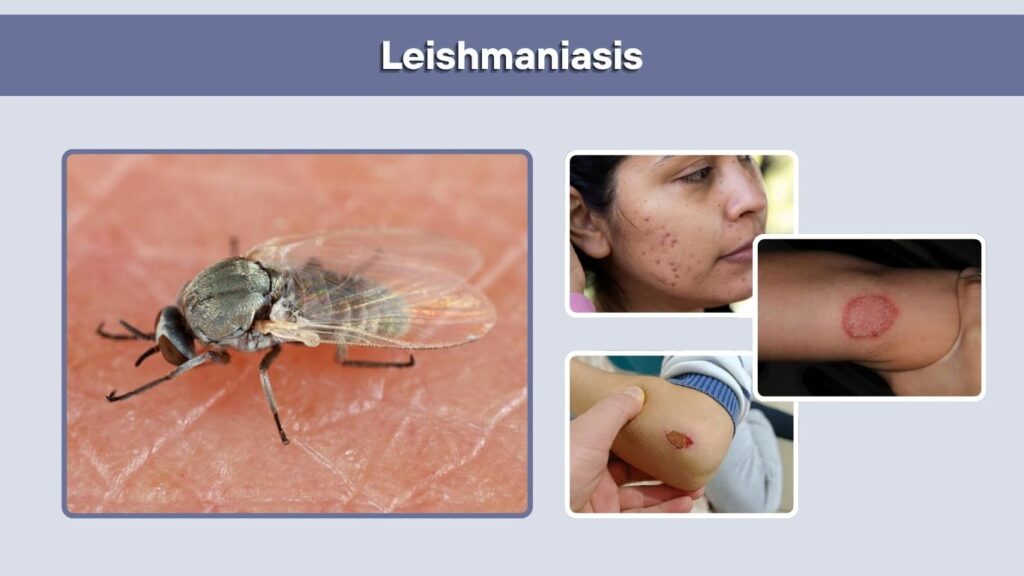
Leishmaniasis is the principal disease associated with sand flies. It is caused by protozoan parasites of the genus Leishmania and transmitted mainly through bites from infected female phlebotomine sand flies. More than 20 Leishmania species can cause disease in people.
Cutaneous Leishmaniasis
Cutaneous leishmaniasis is the most common form. It affects the skin and may begin as a small bump or lump several weeks or months after the bite.
The lesion may gradually develop into an ulcer with raised edges and a central crater. It is often painless, although secondary bacterial infection can make it painful. A sore may heal eventually but leave a permanent depressed scar.
Possible signs include:
- One or more persistent skin bumps
- A slowly enlarging sore
- Raised edges around an ulcer
- Crusting or scabbing
- Swollen glands near the lesion
- Permanent scarring after healing
Mucosal Leishmaniasis
Mucosal leishmaniasis can damage tissues inside the nose, mouth, or throat. It may develop after an earlier skin infection, sometimes months or years later.
Symptoms can include nasal blockage, nosebleeds, sores, difficulty swallowing, or progressive destruction of mucosal tissue. This form can become life-threatening and requires medical treatment.
Visceral Leishmaniasis
Visceral leishmaniasis, also called kala-azar, affects internal organs, particularly the spleen, liver, and bone marrow.
Common symptoms include prolonged or irregular fever, weight loss, weakness, anemia, and enlargement of the liver and spleen. It is the most serious form and is almost always fatal when symptomatic disease is left untreated.
2. Sand Fly Fever
Sand fly fever is caused by viruses in the phlebovirus group. Several related viruses can produce a short febrile illness sometimes called three-day fever.
Symptoms may include sudden fever, severe headache, pain behind the eyes, muscle aches, joint pain, fatigue, and sensitivity to light. Most uncomplicated cases improve with supportive medical care, but symptoms can resemble other viral diseases.
Sand fly-borne phleboviruses occur particularly in the Mediterranean region, parts of Europe, North Africa, the Middle East, and Asia.
Toscana Virus
Toscana virus is an important sand fly-borne virus in Mediterranean countries. Many infections produce few or mild symptoms, but the virus can sometimes invade the nervous system.
Serious cases may cause meningitis or encephalitis, producing severe headache, neck stiffness, confusion, vomiting, or altered consciousness. Death is uncommon, but suspected nervous-system infection requires urgent medical evaluation.
3. South American Bartonellosis
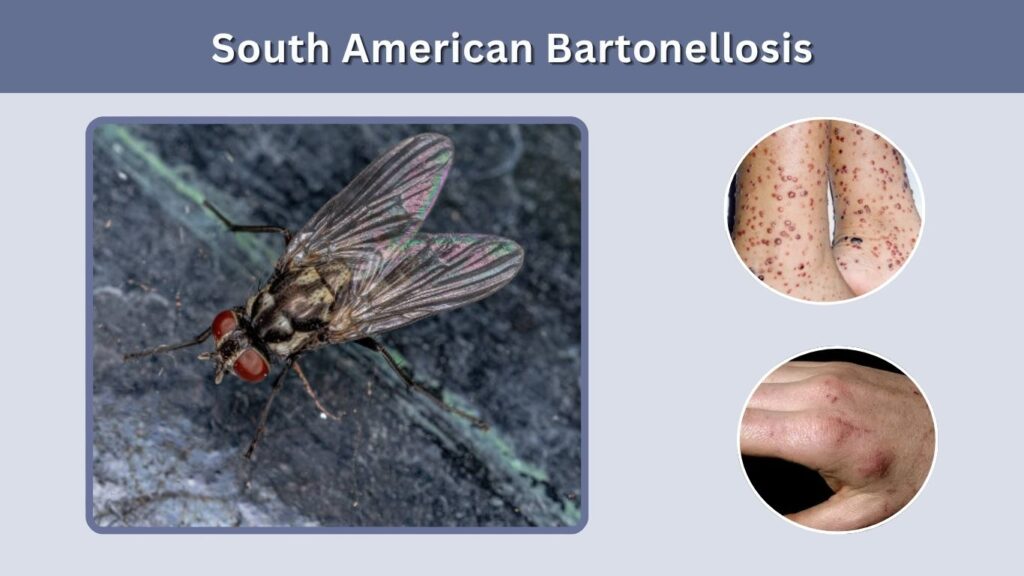
Certain sand flies in parts of the Andes transmit Bartonella bacilliformis, the bacterium responsible for South American bartonellosis, also called Carrion’s disease.
The infection occurs in specific areas of Peru, Colombia, and Ecuador and may develop in two distinct forms.
Oroya Fever
The acute phase can cause fever, headache, abdominal pain, muscle aches, and severe destruction of red blood cells. This may result in serious anemia and other complications.
The illness can be life-threatening and requires antibiotic treatment under medical supervision.
Verruga Peruana
The later skin phase causes red or purple wart-like growths called verrugas. These lesions may bleed easily and can appear weeks or months after the initial infection.
A person does not necessarily experience both phases, and the stages may occur separately.
Sand Fly Disease in Dogs
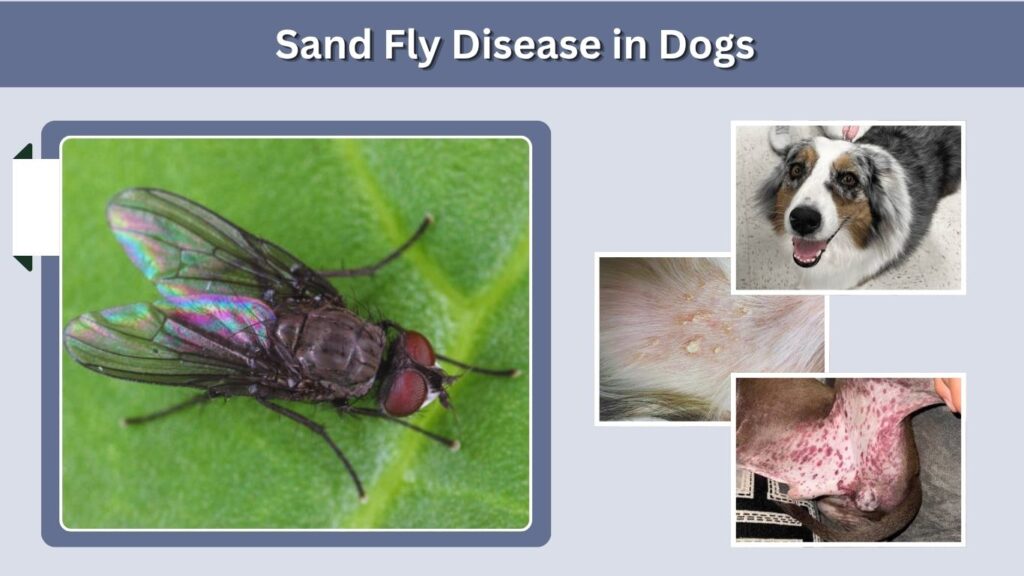
Dogs can develop leishmaniosis, most commonly from Leishmania infantum. Infected dogs are important reservoir hosts in several regions, meaning sand flies can acquire the parasite from them and later transmit it to another host.
Signs may not appear for months or even years. Possible symptoms include hair loss, scaly skin, chronic sores, weight loss, tiredness, swollen lymph nodes, eye problems, nosebleeds, lameness, excessive thirst, and kidney disease.
Treatment may control the illness but does not always eliminate every parasite. Relapses can occur, and infected dogs may remain capable of passing parasites to sand flies. Dogs living in or traveling to affected regions should receive veterinarian-recommended protection against sand fly bites.
Is Sand Fly Disease “Flesh-Eating”?
Leishmaniasis is sometimes inaccurately called a flesh-eating disease because cutaneous and mucosal forms can produce ulcers or tissue damage.
However, it is not the same as necrotizing fasciitis, the rapidly progressing bacterial infection commonly described as flesh-eating disease. Cutaneous leishmaniasis usually develops gradually, and many sores are painless. It still requires professional assessment because the responsible species influences the risk of complications and the appropriate treatment.
How Is Sand Fly Disease Diagnosed?
A sand fly bite alone cannot confirm disease. Many bites cause ordinary itchy bumps that disappear without further problems.
Leishmaniasis diagnosis may require samples from a skin lesion, bone marrow, blood, or other tissue. Laboratory methods can include microscopy, molecular testing, culture, and antibody testing. The required tests depend on the suspected form and where the exposure occurred.
Tell the healthcare provider:
- Where you lived or traveled
- When the bites or symptoms began
- Whether you slept outdoors
- How the lesion has changed
- Whether you have fever or weight loss
- Whether you have a weakened immune system
How Is Sand Fly Disease Treated?
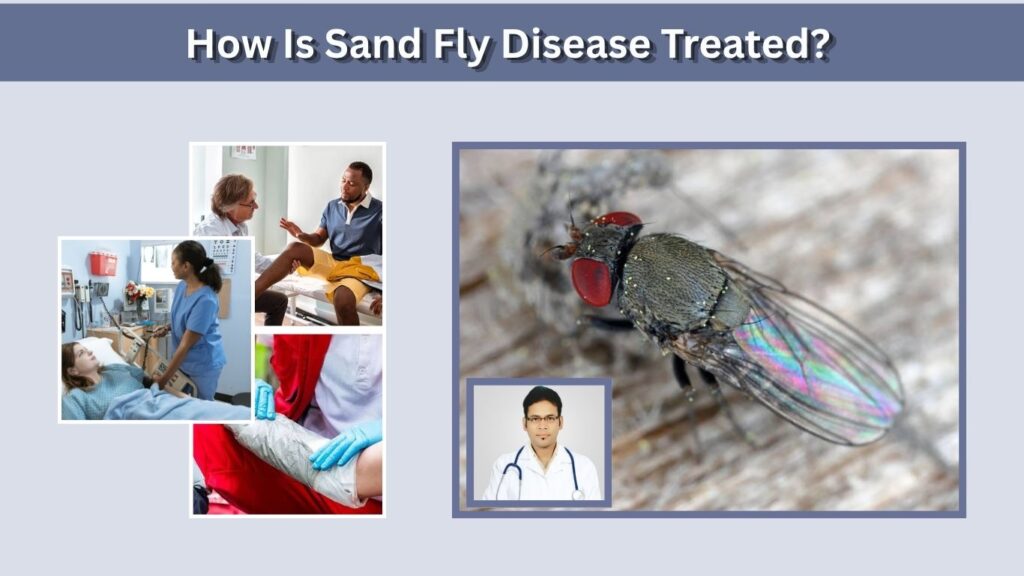
Treatment depends on the disease, parasite species, affected organs, geographic source, immune status, and severity.
All clinically apparent visceral and mucosal leishmaniasis cases generally require treatment. Some uncomplicated cutaneous infections may heal without systemic therapy, but others require local or systemic treatment to accelerate healing, reduce scarring, or prevent mucosal complications. Treatment decisions should be individualized by a clinician experienced with the disease.
Sand fly fever usually receives supportive care unless complications develop. Toscana virus involving the nervous system may require hospital assessment. South American bartonellosis requires antibiotics.
How to Prevent Sand Fly Diseases
No vaccine or preventive medication is currently available for human leishmaniasis. Avoiding infected sand fly bites is therefore the primary preventive measure.
Personal Protection
Wear long sleeves, long pants, socks, and closed shoes, particularly from dusk to dawn. Apply an appropriate registered insect repellent to exposed skin according to its label.
Sand flies are weak fliers, so fans may reduce their ability to land. Air-conditioned or well-screened rooms provide additional protection.
Bed Nets and Screens
Sand flies measure only about 2–3 millimeters and may pass through ordinary mosquito netting. Use fine-mesh screens or bed nets, preferably treated with an approved pyrethroid insecticide where recommended. Tuck the net securely beneath the mattress.
When to Seek Medical Care
Consult a healthcare provider after possible sand fly exposure when a skin bump does not heal, gradually enlarges, or becomes ulcerated. Medical assessment is also important for prolonged fever, unexplained weight loss, severe fatigue, abdominal swelling, nose or mouth sores, or symptoms developing after travel to an affected region.
Seek urgent care for breathing difficulty, facial swelling, confusion, neck stiffness, severe weakness, uncontrolled bleeding, or other rapidly worsening symptoms.
FAQs
Do all sand flies carry diseases?
No. Only certain species can transmit particular pathogens, and the individual fly must already be infected. Most sand fly bites do not result in leishmaniasis or another serious disease.
What disease is most commonly associated with sand flies?
Leishmaniasis is the most recognized sand fly-borne disease. Its three principal forms are cutaneous, mucosal, and visceral leishmaniasis.
Can sand fly bites leave scars?
Ordinary bites usually heal without scarring. Cutaneous leishmaniasis can produce ulcers that leave permanent scars, particularly when lesions are large, infected, or untreated.
Can a person catch leishmaniasis directly from a dog?
Ordinary contact with a dog is not the usual transmission route. In most affected regions, a sand fly acquires the parasite while feeding on an infected dog and later transmits it through another bite.
How long after a sand fly bite can disease appear?
Cutaneous leishmaniasis commonly appears within weeks or months, while other forms can take longer. Canine leishmaniosis may remain unnoticed for months or years. Timing varies with the pathogen and the person’s immune response.