
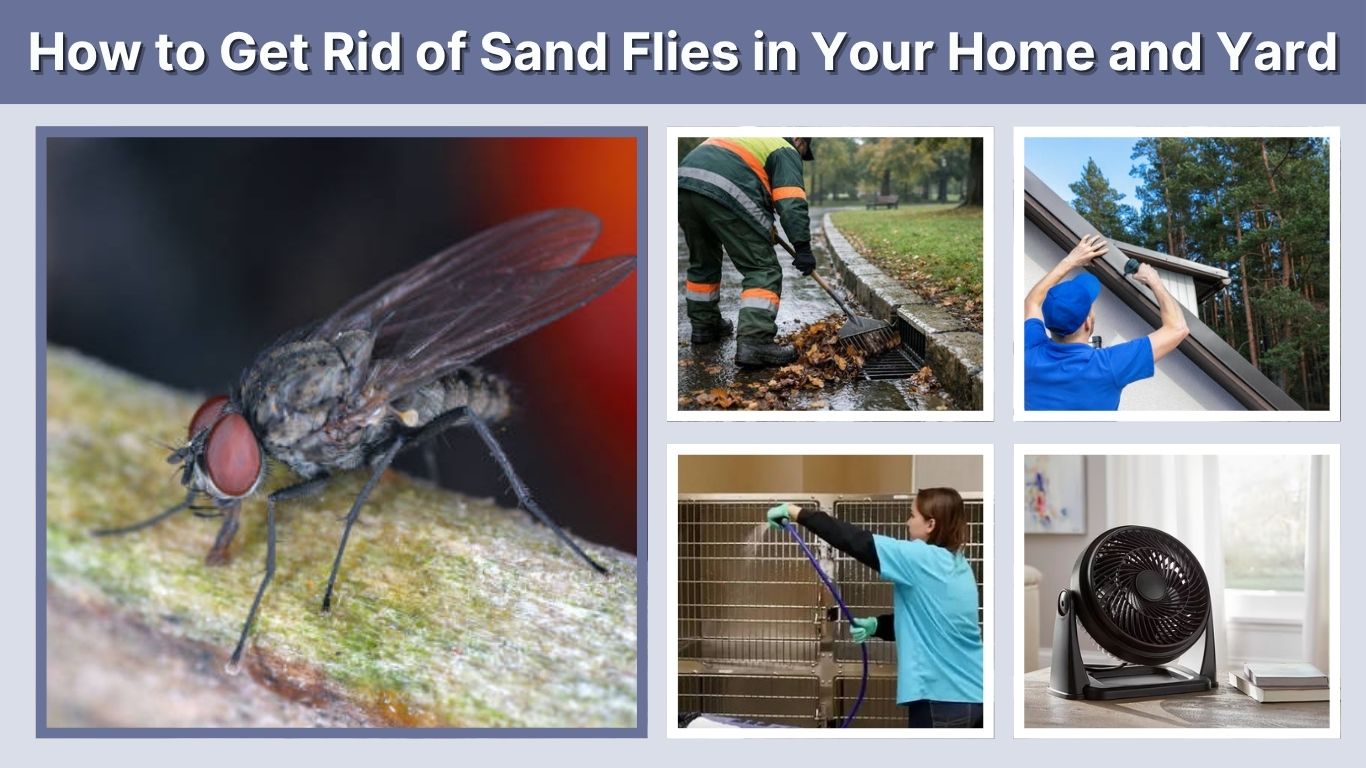
Sand flies are tiny biting insects that are most active around dusk, evening, and nighttime. However, the name may describe either true phlebotomine sand flies or biting midges—also called no-see-ums—commonly encountered near beaches, marshes, and damp coastal areas. Effective control requires reducing suitable breeding and resting sites, blocking entry into buildings, and protecting exposed skin. Because these insects are extremely small, ordinary window screens and mosquito nets may not always stop them.
Identify the Insect Before Treatment
Before applying a spray or changing your yard, make sure the insects are actually sand flies. Mosquitoes, drain flies, fungus gnats, black flies, and biting midges may be mistaken for them.
True phlebotomine sand flies are only about 2–3 millimeters long. They have hairy bodies, long legs, and wings usually held upright in a V shape while resting. Only females bite because they require blood to develop their eggs. They are most active from dusk to dawn.
Sand Flies vs. Beach No-See-Ums
At many beaches, insects called “sand flies” are actually biting midges. These nearly invisible flies breed around wet sand, mud, salt marshes, and decaying coastal vegetation.
| Feature | True sand fly | Biting midge or no-see-um |
| Size | About 2–3 mm | Often 1–3 mm |
| Common habitat | Cracks, animal shelters and organic debris | Marshes, damp sand and muddy areas |
| Active time | Mainly dusk to dawn | Often dawn, dusk and cloudy periods |
| Bite | Small, itchy bumps | Painful or intensely itchy welts |
| Disease concern | Some transmit leishmaniasis | Risk varies by species and region |
Correct identification matters because sand flies do not generally reproduce in open containers of water like mosquitoes.
How to Get Rid of Sand Flies in the House
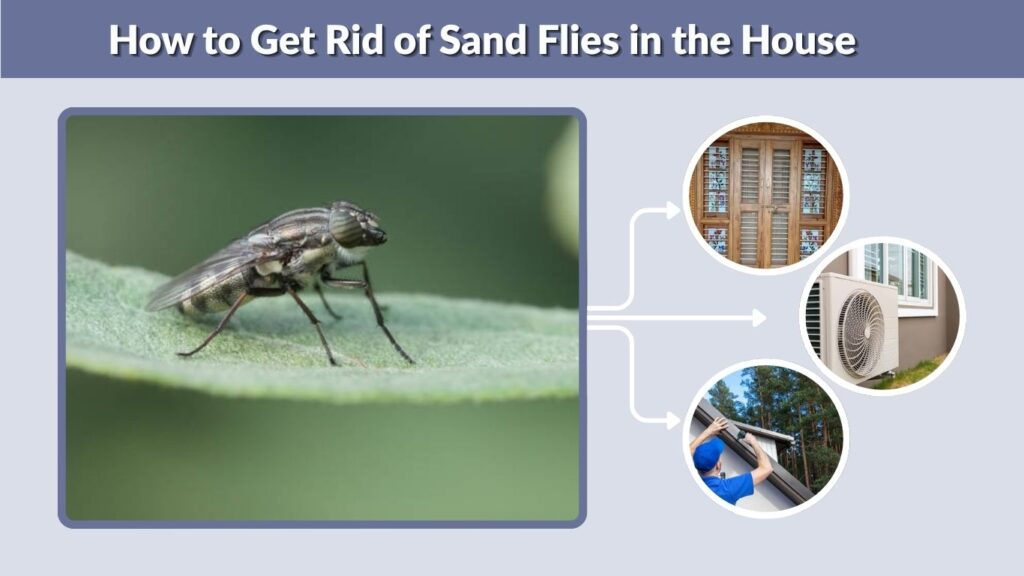
Sand flies may enter through open doors, damaged screens, wall cracks, vents, or gaps around pipes. Because they are smaller than mosquitoes, they can pass through holes in ordinary insect screens.
Install Fine-Mesh Screens
Replace damaged window and door screens with fine insect mesh designed to block very small biting flies. Check the edges carefully because gaps around the frame may provide an easier entrance than the screen itself.
Seal openings around:
- Window and door frames
- Air-conditioning units
- Pipes and utility cables
- Wall vents
- Roof edges
- Baseboards and foundations
A small-mesh bed net can provide additional protection while sleeping. Tuck it completely beneath the mattress and consider an insecticide-treated net in areas where disease-carrying sand flies are present.
Use Air Conditioning and Fans
Sand flies are weak fliers. Air conditioning helps by keeping rooms closed, while a strong fan creates air movement that can make it difficult for the insects to land and bite.
Position a fan near beds, seating areas, doors, or windows. Fans are particularly useful when screens cannot be replaced immediately. The CDC notes that fans or ventilators may interfere with sand fly movement.
Remove Indoor Resting Places
Clean dark, humid areas where adult flies may rest. Vacuum around curtains, furniture, window frames, pet sleeping areas, and wall cracks.
Dispose of the vacuum contents outside. Repair plumbing leaks and reduce excessive indoor humidity, especially in poorly ventilated rooms.
Use Indoor Insecticide Carefully
A product labeled for indoor flying insects may kill adults temporarily. Follow the label exactly, ventilate the treated room, and keep the product away from food, children, pets, aquariums, and exposed surfaces.
Spraying visible adults will not provide lasting control if flies continue entering from outside or breeding close to the building.
How to Get Rid of Sand Flies in the Yard
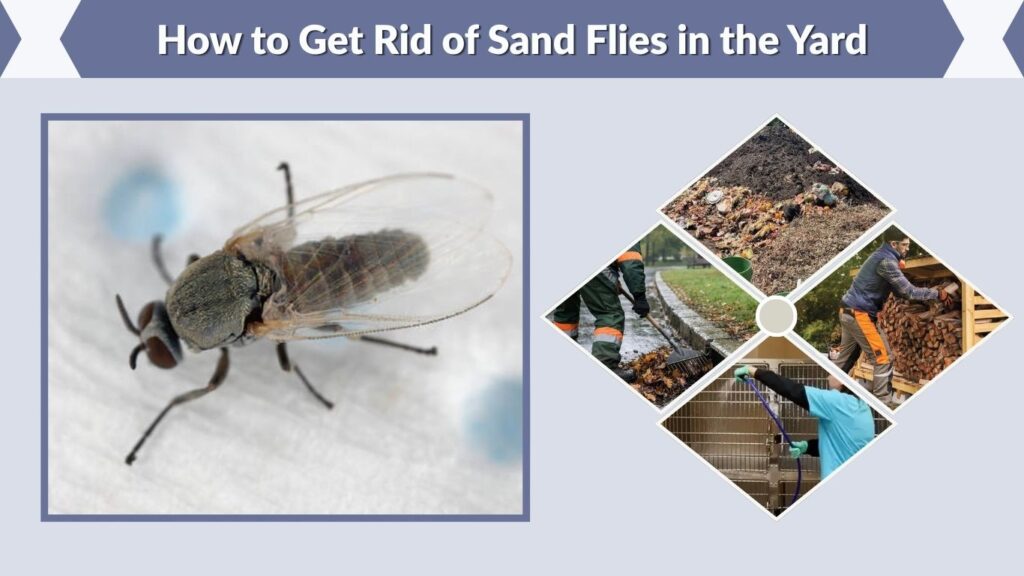
Complete elimination from a large outdoor area may be difficult. The practical goal is to reduce breeding and resting conditions around entrances, patios, play areas, and animal shelters.
Remove Damp Organic Material
Sand fly larvae can develop in humid terrestrial materials containing organic matter. Depending on the species and region, suitable locations may include wall cracks, rubbish, animal shelters, rodent burrows, old tree bark, and decaying vegetation.
Reduce these conditions by:
- Removing piles of wet leaves
- Cleaning animal pens and shelters
- Disposing of rotting vegetation
- Moving firewood away from the house
- Clearing rubbish and unnecessary debris
- Improving drainage near foundations
- Repairing cracks in outdoor walls
- Keeping compost properly contained
Removing buckets of standing water helps control mosquitoes, but it may not solve a true sand fly or no-see-um problem because their larvae often develop in damp soil, mud, or organic material rather than open water.
Trim Dense Vegetation
Cut back heavy vegetation near windows, doors, patios, and paths. Remove weeds and low branches that create shaded, humid resting places.
Avoid stripping the entire yard bare. Focus on improving airflow and reducing dense growth immediately around frequently used spaces.
Consider Professional Treatment
A licensed pest-control professional may apply a residual insecticide to suitable exterior resting areas. Treatment must be selected according to the insect, property, local regulations, and product label.
Broad spraying of beaches, wetlands, ponds, or flowering plants is not appropriate. It may harm pollinators and aquatic life without providing lasting relief.
How to Avoid Sand Flies at the Beach
Beach and coastal infestations are often caused by biting midges. You usually cannot remove them from the entire beach, but you can reduce your exposure.
Choose the Right Time and Place
Biting activity is commonly highest around dawn and dusk. True sand flies are also most active from twilight through nighttime. Plan beach walks and outdoor meals for brighter, windier parts of the day when possible.
Sit away from muddy margins, marsh vegetation, piles of seaweed, and other damp organic material. An open, breezy location is often more comfortable than a sheltered area beside vegetation.
Wear Protective Clothing
Wear long sleeves, long pants, socks, and closed footwear when sand flies are abundant. Tuck shirts and pant legs when practical.
Because the insects are small, loose openings around cuffs, collars, and waistbands may allow them to reach the skin.
Apply an Effective Repellent
Use an EPA-registered repellent according to the label. Common active ingredients include DEET, picaridin, IR3535, and oil of lemon eucalyptus or PMD.
Apply repellent to exposed skin and around the edges of clothing. Do not spray directly onto the face; apply it to your hands first and then spread it carefully, avoiding the eyes and mouth.
Can You Get Rid of Sand Flies Naturally?
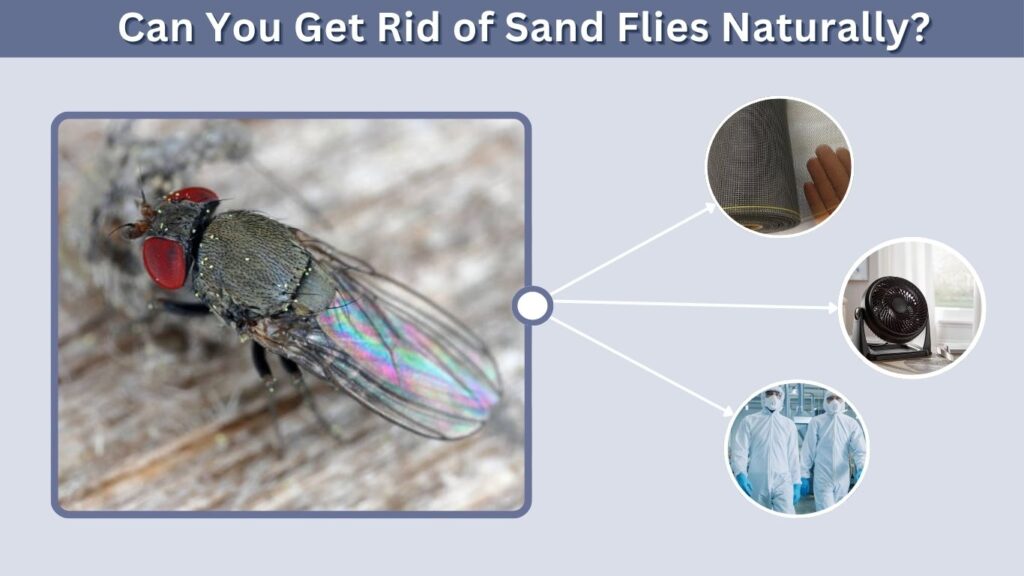
Physical barriers and environmental changes are the most dependable nonchemical methods.
Useful approaches include fine-mesh screens, bed nets, fans, protective clothing, vegetation management, better drainage, and removal of damp organic debris.
Plants, candles, smoke, vinegar, and homemade essential-oil sprays are not reliable enough to protect someone in an area with heavy biting activity. Some homemade mixtures may also irritate skin, damage plants, or harm pets.
How to Treat Sand Fly Bites
Wash the affected skin gently with soap and water. Apply a cold compress for approximately 10–15 minutes to reduce itching and swelling.
Calamine lotion or an over-the-counter hydrocortisone cream may help mild reactions. An oral antihistamine may also reduce itching, but it should be used according to its label or a healthcare professional’s advice. Avoid scratching because broken skin can become infected.
When to Seek Medical Care
Get urgent help for breathing difficulty, widespread hives, facial or throat swelling, dizziness, or another severe allergic reaction.
Consult a healthcare provider when a bite becomes increasingly painful, warm, swollen, or filled with pus. Medical advice is also important if a persistent bump or ulcer develops weeks or months after exposure in an area where leishmaniasis occurs. Infected sand flies can transmit Leishmania parasites, and cutaneous disease may begin as a bump before developing into a skin sore.
FAQs
What is the fastest way to get rid of sand flies?
Use fans and fine-mesh screens for immediate relief, apply a registered repellent, and remove damp organic material around the building. Long-term control requires blocking entry and reducing nearby breeding or resting sites.
How do I stop sand flies from biting me?
Wear clothing that covers the skin, use a registered repellent, avoid heavily affected areas around dusk and dawn, and sit where there is strong airflow. A fine-mesh bed net provides protection while sleeping.
Can sand flies live inside a house?
Adult sand flies can enter and rest indoors, especially in dark, humid rooms. Their breeding behavior varies by species, but continuing indoor activity often means they are entering through small openings or developing in suitable organic material nearby.
Will vinegar kill sand flies?
Vinegar may attract or trap a few unrelated small flies, but it is not a dependable treatment for biting sand flies. Screens, fans, repellents, sanitation, and targeted pest management are more effective.
How long does it take to eliminate sand flies?
Indoor activity may decline within several days after entry points and nearby sources are corrected. Outdoor control can take longer, especially near marshes, beaches, animal shelters, or extensive damp habitats that cannot be removed.