
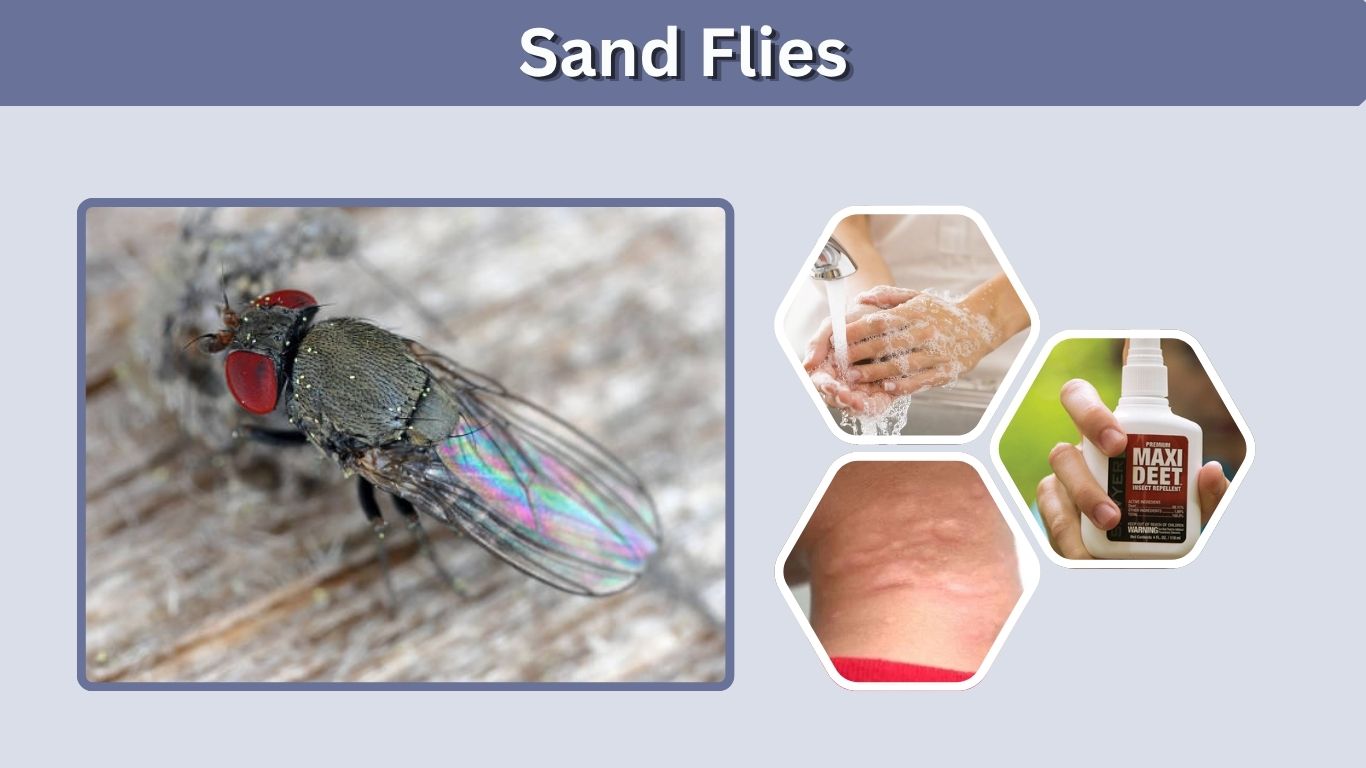
Sand flies are tiny biting insects found in warm, humid, wooded, coastal, and sandy environments. Their bites commonly produce small, intensely itchy bumps. However, “sand fly” is a broad common name that can refer to different insects depending on the country. True phlebotomine sand flies can transmit leishmaniasis in certain regions, while New Zealand sandflies are primarily black flies. Understanding the insect involved helps you choose the right bite treatment and prevention method.
What Are Sand Flies?
True sand flies are small members of the subfamily Phlebotominae. They are usually only about 2–3 millimeters long, making them difficult to notice before they bite. Their bodies and wings are covered with fine hairs, and they often hold their wings upright in a V-shaped position while resting.
Only females take blood meals because they need additional nutrients for egg production. Males generally feed on plant sugars and nectar.
What Do Sand Flies Look Like?
Common identification features include:
- Very small, pale-yellow, tan or brown body
- Hairy body and wings
- Long, thin legs
- Narrow wings held above the body
- Short, hopping flight
- Quiet movement without an obvious buzzing sound
True sand flies are weaker fliers than mosquitoes. They usually remain close to sheltered breeding and resting areas.
Where Do Sand Flies Live?
Sand flies are associated with warm areas, but they do not necessarily breed in open, dry sand. Their immature stages often develop in protected places containing moisture and decaying organic material.
Possible habitats include:
- Cracks in soil and walls
- Rodent burrows
- Animal shelters
- Leaf litter
- Tree-root cavities
- Caves and rocky crevices
- Shaded areas around buildings
Adults frequently rest in dark, humid spaces during the day and become more active around dusk and during the night.
The Name “Sand Fly” Can Be Confusing
Different insects are called sand flies in different regions:
| Common name | What it may refer to | Can it fly? |
| True sand fly | Phlebotomine fly | Yes |
| New Zealand sandfly | A type of black fly | Yes |
| No-see-um | Biting midge | Yes |
| Sand flea | Small crustacean or beach flea | No |
| Delhi Sands flower-loving fly | A nectar-feeding fly from California | Yes |
The Delhi Sands flower-loving fly is not the blood-feeding sand fly responsible for typical sand fly bites.
Do Sand Flies Bite?
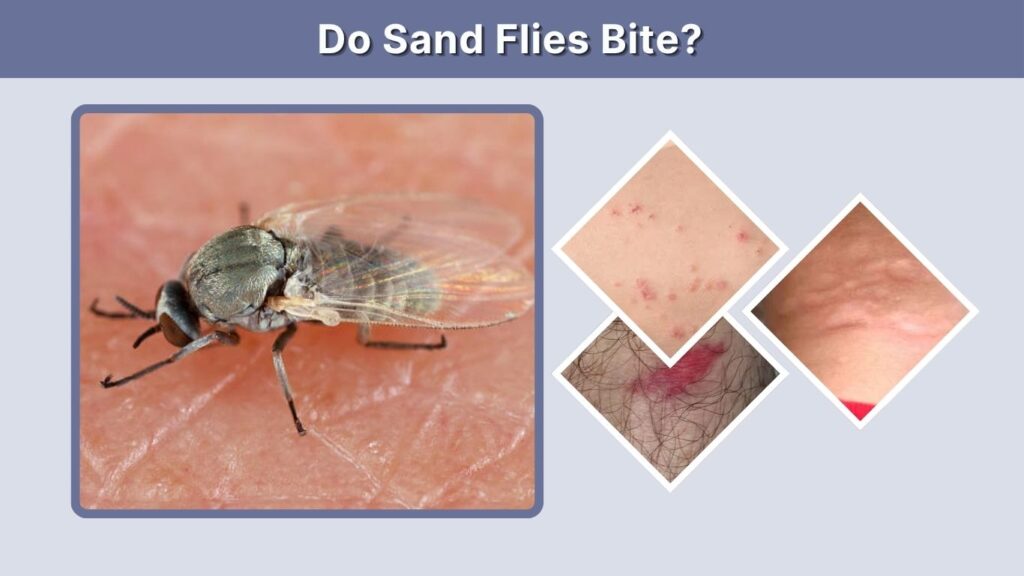
Female sand flies bite humans and other animals to obtain blood. They cut the skin with specialized mouthparts and feed from the small pool of blood that forms.
People often receive several bites without seeing the insects because sand flies are extremely small.
What Do Sand Fly Bites Look Like?
A typical bite may appear as:
- A small red bump
- A raised, itchy welt
- Redness surrounding the bite
- Mild to moderate swelling
- Several bumps grouped on exposed skin
- A tiny central mark
Sand fly bites commonly affect the ankles, lower legs, feet, arms, neck and face. Reactions vary considerably. Some people develop only mild marks, while others experience significant itching and swelling. Symptoms can last from several days to a few weeks.
Can Sand Fly Bites Have a Delayed Reaction?
Marks may become more noticeable several hours after exposure. Sensitive individuals can develop increasing redness or swelling over the following day.
Bites do not normally “spread” across the body. New marks may appear because the reaction was delayed, additional bites went unnoticed, or scratching irritated the surrounding skin.
A persistent sore that develops weeks or months after travel in an area where leishmaniasis occurs requires medical evaluation. Cutaneous leishmaniasis can begin as a bump or lump and later develop into an ulcer.
Sand Fly Bites vs. Bed Bug Bites
| Feature | Sand fly bites | Bed bug bites |
| Common setting | Outdoors near vegetation, beaches or humid areas | Indoors near beds and furniture |
| Bite timing | Often evening or nighttime outdoors | Usually while a person sleeps |
| Pattern | Scattered or clustered | Clusters, rows or irregular groups |
| Common locations | Ankles, legs, arms and face | Any exposed skin |
| Other evidence | Tiny flies near the area | Dark bed spots, shed skins or live bugs |
Appearance alone cannot always identify the cause because both insects can produce itchy red bumps. Bed bug marks may also take several days to become visible.
How to Treat Sand Fly Bites
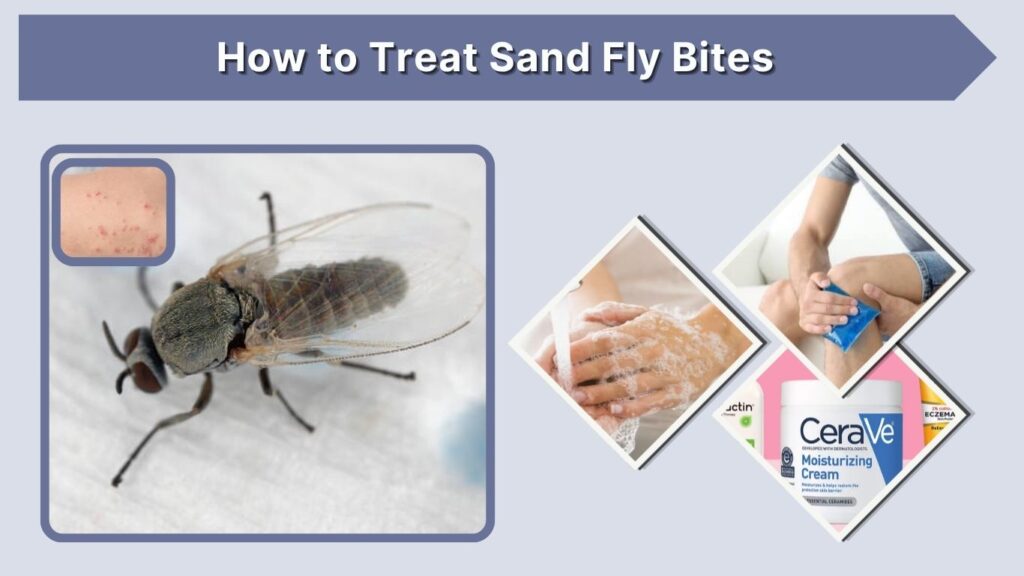
Most uncomplicated bites can be managed at home. The main goals are reducing itching, controlling swelling and preventing infection from scratching.
Immediate Bite Treatment
Follow these steps:
- Wash the affected skin gently with soap and water.
- Apply a cool compress for 10–15 minutes.
- Avoid scratching or breaking the skin.
- Consider an anti-itch lotion or cream according to its label.
- Ask a pharmacist about an oral antihistamine when itching is troublesome.
- Keep fingernails short to reduce skin damage.
Do not squeeze, cut or repeatedly scrub the bites. Sand fly larvae do not normally develop beneath human skin simply because a person has been bitten.
How Long Do Sand Fly Bites Last?
Mild reactions may improve within a few days. Larger or more sensitive reactions can remain itchy for one or more weeks. Health New Zealand notes that symptoms may last from a few days to a few weeks depending on the individual reaction.
When to Seek Medical Care
Get medical advice when:
- Redness, warmth, pain or swelling continues to worsen
- Pus or red streaks develop
- You experience fever or feel unwell
- A sore fails to heal
- A painless ulcer develops after international travel
- The bites cause severe swelling
- Symptoms persist for several weeks
Seek emergency help for difficulty breathing, faintness, facial or throat swelling, or another sign of a serious allergic reaction.
Diseases Transmitted by Sand Flies
Most itchy bites do not mean that a disease was transmitted. However, infected phlebotomine sand flies can carry Leishmania parasites.
Leishmaniasis
Leishmaniasis is transmitted through the bites of infected female phlebotomine sand flies. The important human disease vectors mainly belong to Phlebotomus in the Old World and Lutzomyia in the New World.
The major forms include:
- Cutaneous leishmaniasis: Causes skin lesions or ulcers
- Mucocutaneous leishmaniasis: Can affect tissues of the nose, mouth and throat
- Visceral leishmaniasis: Affects internal organs and can become life-threatening without treatment
Risk depends heavily on location. People who live in or travel to areas where leishmaniasis occurs should tell a healthcare professional about their travel history when unexplained sores or illness develop. There is currently no preventive vaccine or medication for travelers, so avoiding bites is the primary protection.
How to Repel Sand Flies
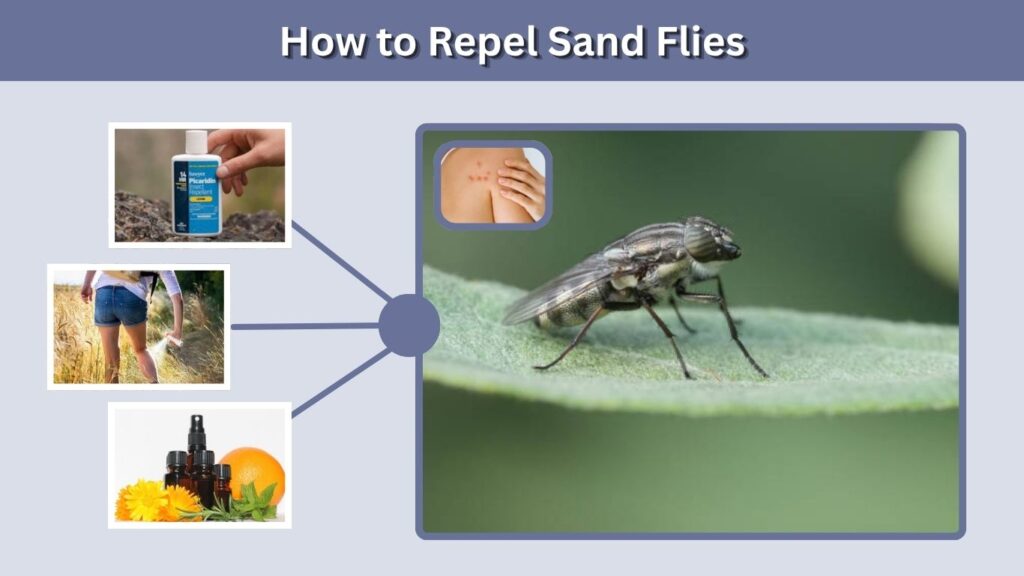
The best protection combines repellent, clothing, screens and changes in outdoor activity.
Best Repellents for Sand Flies
Look for a registered insect repellent with an established active ingredient, such as:
- DEET
- Picaridin
- IR3535
- Oil of lemon eucalyptus or PMD
- Other locally registered insect-repellent ingredients
Always read the product label because suitable ingredients, ages, application intervals and precautions vary. EPA guidance emphasizes applying repellents only as directed and following special restrictions for children.
Additional Bite Prevention
To reduce exposure:
- Wear long sleeves, trousers, socks and closed shoes.
- Apply repellent to exposed skin according to the label.
- Limit outdoor exposure from dusk through dawn in risk areas.
- Use fine-mesh screens and properly tucked mosquito nets.
- Sleep in air-conditioned or well-screened rooms.
- Use a fan because these insects are weak fliers.
- Treat clothing or nets only with products approved for that purpose.
Standard mosquito netting may have openings large enough for some sand flies, so fine-mesh netting is preferable. CDC travel guidance recommends protective clothing, repellent, screened accommodations and reducing dusk-to-dawn exposure.
How to Get Rid of Sand Flies
Long-term control requires reducing sheltered resting and breeding areas rather than treating open beach sand alone.
Helpful measures include:
- Remove damp leaves and decaying organic debris.
- Repair cracks in walls, foundations and animal shelters.
- Keep animal areas clean and dry.
- Improve ventilation around humid spaces.
- Install fine screens around windows and doors.
- Reduce dense vegetation touching buildings.
- Use fans around patios and seating areas.
- Contact a licensed pest professional for persistent infestations.
Control methods must match the actual insect. Treatments for phlebotomine sand flies may not solve problems caused by black flies, biting midges or fleas.
FAQs
What attracts sand flies to humans?
Female sand flies locate hosts using body heat, movement, carbon dioxide and other odors associated with people and animals. Dark, humid and wind-protected environments may also support greater activity. Sweat and exposed skin can make it easier for them to land and feed.
Can sand fleas fly?
No. True sand fleas are not flying insects. The name may describe small jumping crustaceans or fleas associated with beaches and animals. Flying insects around beaches are more likely to be biting midges, black flies or insects locally called sand flies.
Why do sand fly bites itch so much?
During feeding, the insect introduces saliva into the skin. The immune system reacts to proteins in that saliva, causing itching, redness and swelling. People who are particularly sensitive may develop larger, longer-lasting reactions.
Are sand flies found in Florida?
Several small biting insects in Florida may be called sand flies, especially biting midges or no-see-ums. True phlebotomine species also occur in parts of the United States, but identifying the insect is important because local names frequently refer to different groups.
How can I stop sand fly bites from itching?
Wash the skin, apply a cool compress and avoid scratching. An appropriate anti-itch product or antihistamine may help when used according to professional or label guidance. Seek medical advice when the reaction becomes severe, infected or unusually persistent.