
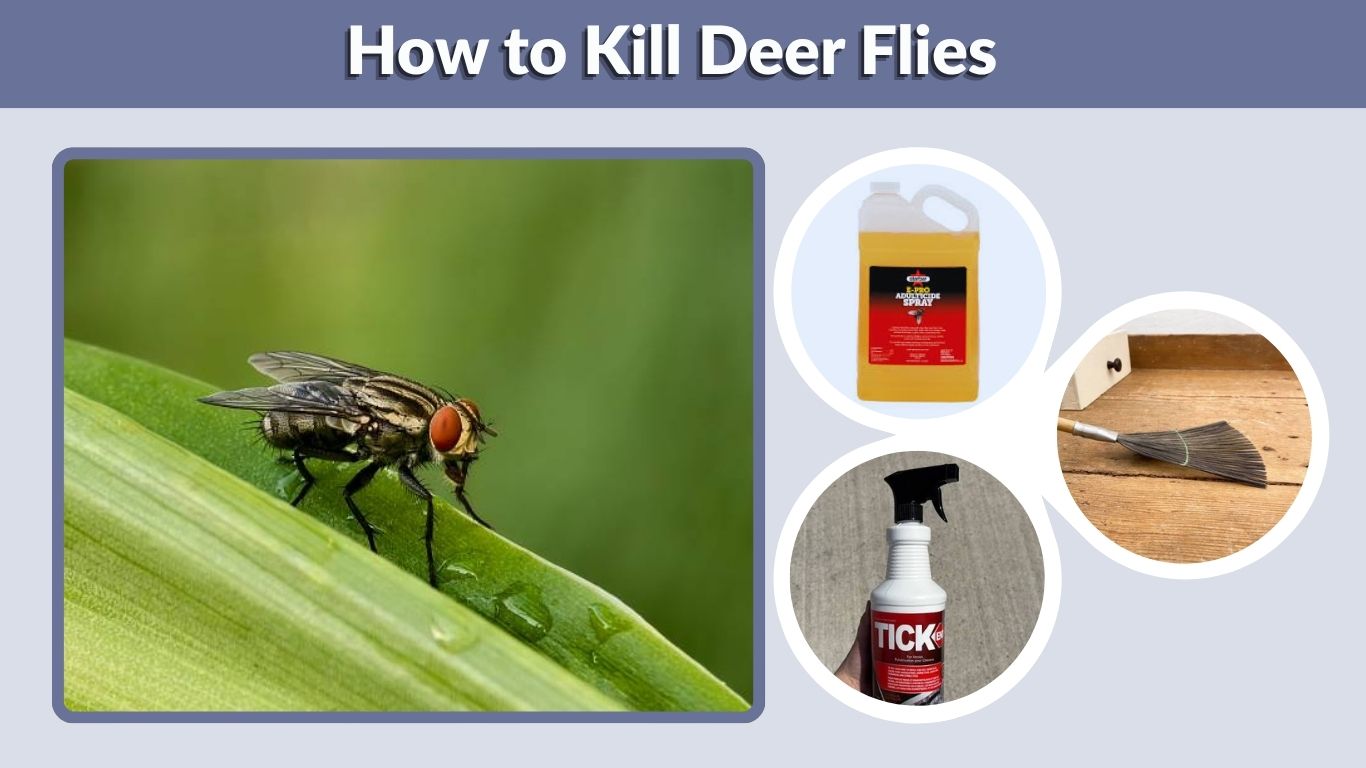
Deer flies are aggressive daytime pests that repeatedly circle people and animals before delivering painful bites. Killing one fly is easy, but controlling a large outdoor population is difficult because adults are strong fliers and their larvae develop in wetlands, muddy soil, pond edges, and other moist habitats. The most effective approach combines sticky traps, protective clothing, targeted insecticides, and changes to outdoor activity rather than relying on one spray.
What Is the Best Way to Kill Deer Flies?
The best way to kill deer flies around a home is to place visual sticky traps where the flies actively search for hosts. Contact sprays may kill individual flies, but they usually provide only temporary relief because new adults can quickly fly into the treated area.
Use a Moving Dark-Object Trap
Deer flies are attracted to large, dark, moving objects. A dark ball trap, sometimes called a Manning-style trap, uses this behavior to draw flies away from people and animals.
The trap usually contains:
- A black or dark blue ball suspended from a frame
- A funnel or clear collection chamber above the ball
- Sticky material or a container that captures flies
- Enough space for the ball to move in the wind
When a deer fly approaches the moving ball and discovers that it cannot feed, it tends to fly upward into the trap. Place the trap in a sunny, open location along the edge of a yard, pasture, trail, pond, or wooded area.
Make a Simple Blue Sticky Trap
A simple homemade deer fly trap can be made with a bright blue cup, plastic container, or small ball coated with a non-toxic insect-trapping adhesive. Attach it to a stake or movable object and place it several yards away from patios, play areas, and animal shelters.
Check the trap regularly and replace the adhesive when it becomes covered with insects, leaves, or dust. Keep sticky traps where children, pets, birds, and beneficial wildlife cannot touch them.
Wear a Sticky Deer Fly Patch
Deer flies frequently circle the head and land on the back of a hat. Sticky patches designed for deer flies can be attached to the rear or top of a cap. They capture individual flies before the flies find exposed skin.
University of Wisconsin guidance notes that sticky hat patches can reduce both the number of flies and the annoyance caused by flies hovering around the head.
What Sprays Kill Deer Flies?
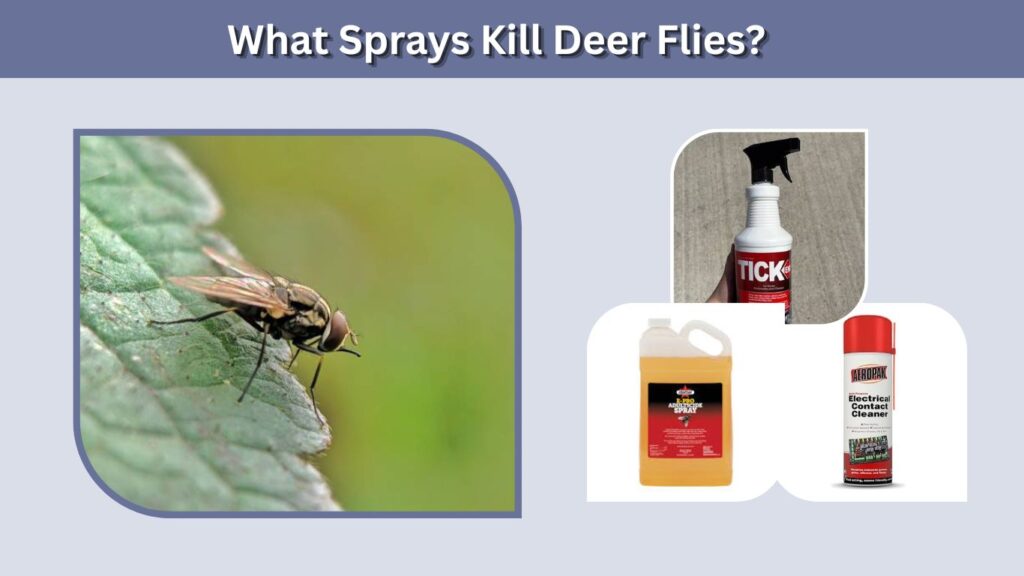
Some insecticides kill deer flies when the spray contacts them directly. However, treating an entire yard rarely produces lasting control because adults do not remain on treated surfaces for long and may arrive from breeding sites far beyond the property.
| Control product | Expected result |
| Direct-contact aerosol | Kills individual flies that are hit |
| Permethrin product labeled for deer flies | May kill or repel flies on approved animals, clothing or sites |
| Residual yard insecticide | Usually limited because adults rarely rest on surfaces |
| Fogger | Briefly kills flies present during treatment |
| Skin repellent | Helps prevent bites but does not eliminate the population |
Does Permethrin Kill Deer Flies?
Permethrin can kill or repel many biting insects, and some permethrin products specifically list deer flies on their labels. Nevertheless, permethrin formulations are not interchangeable. A product made for clothing must not automatically be used on skin, lawns, pets, livestock, or around water.
Read the complete label and confirm that it lists both deer flies and the intended treatment location. Never apply more than directed or use an agricultural or livestock product on people. EPA guidance emphasizes following the label and using products only on approved surfaces or animals.
Do Bifenthrin, Malathion or Carbaryl Kill Deer Flies?
These active ingredients may kill exposed insects, but effectiveness and permitted uses depend on the exact product label. Brand names such as Talstar or Sevin may contain different ingredients or concentrations depending on the formulation and country.
Do not spray wetlands, pond margins, streams, flowering plants, or broad areas of vegetation unless the current label specifically allows it. Treating deer fly breeding sites is generally impractical and may harm aquatic organisms, pollinators, predators, and other wildlife.
Do Outdoor Foggers Work?
Foggers and aerosol treatments kill only the deer flies contacted during application. Their effect is normally brief because strong-flying adults can return within minutes. Fogging may provide temporary relief before an outdoor event, but it should not be considered permanent control.
How to Kill Deer Flies Outside
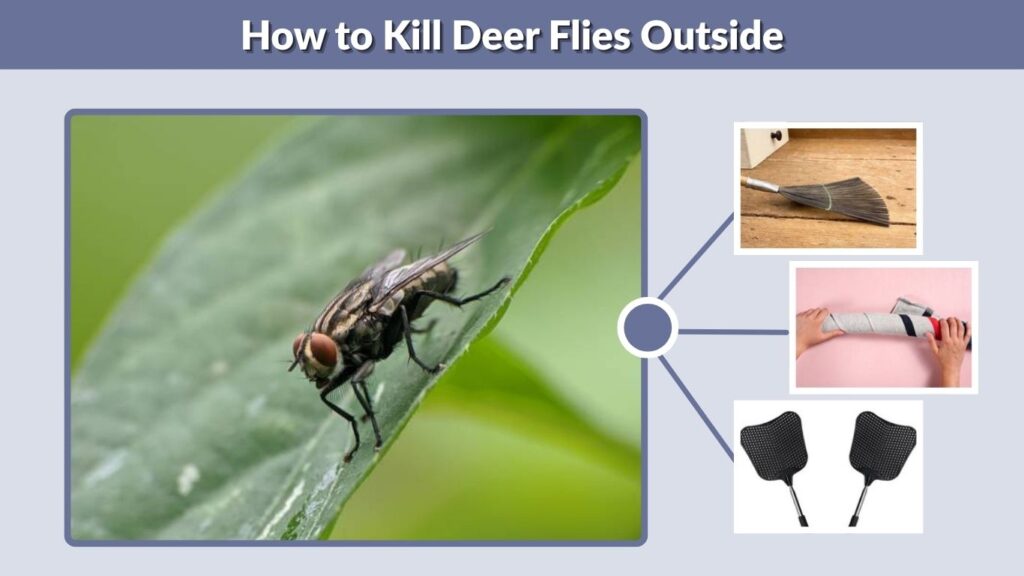
Outdoor control works best when traps and personal protection are used together. Concentrate control efforts around the places where people or animals spend time rather than attempting to treat an entire property.
Place Traps in the Correct Areas
Locate traps:
- Along sunny woodland edges
- Near paths used by people or livestock
- Between wet areas and the protected space
- Several yards away from patios and entrances
- Where a suspended ball can move freely
Do not place an attractive trap directly beside a chair, doorway, kennel, or play area. It could draw flies closer before capturing them.
Provide Shade and Shelter
Deer flies are daytime insects commonly associated with sunny woodland edges and wet areas. Animals may obtain relief inside barns, sheds, screened shelters, doghouses, or areas of deep shade. Keep doors and windows screened and repair tears that allow flies to enter.
Kill Individual Flies Immediately
A fly swatter, rolled towel, or handheld insect-catching device works for isolated deer flies. Wait until the fly lands instead of continuously swinging at it. Deer flies are attracted to movement, so frantic swatting or running can cause them to continue pursuing a person.
Can You Kill Deer Fly Larvae?
Controlling deer fly larvae is usually not practical for homeowners. The larvae live in wet organic material, marshes, muddy pond edges, streams, and similar natural habitats. Their breeding areas may be large, difficult to locate, or located outside your property.
Applying pesticides to these habitats can contaminate water and harm insects, amphibians, fish, and other organisms. University extension guidance therefore advises against attempting broad chemical treatment of deer fly breeding sites.
Improving drainage may help when the moisture comes from a leaking pipe, blocked gutter, or artificial puddle. Do not drain or chemically treat a natural wetland solely to control deer flies.
What Does Not Work Well?
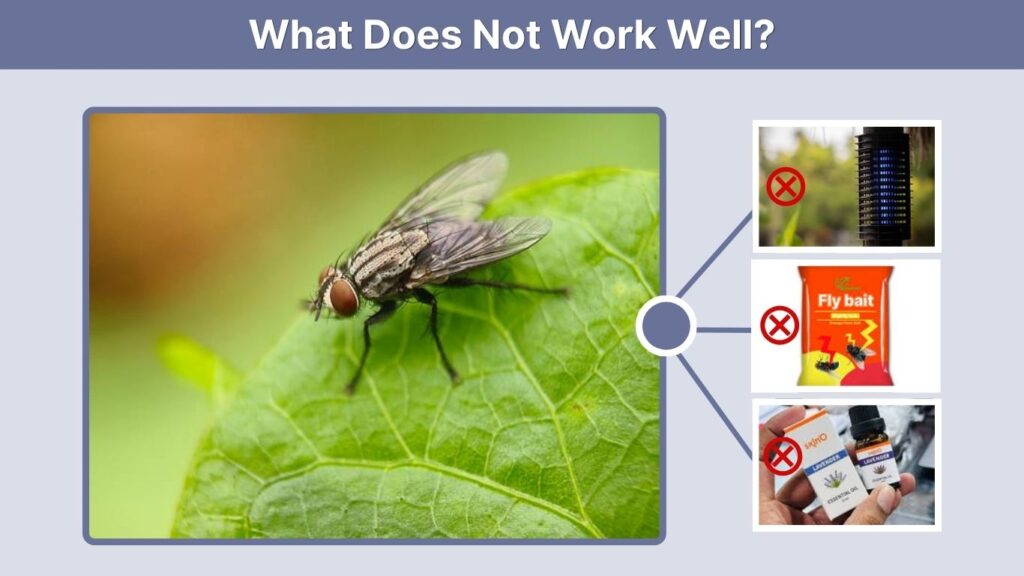
Several common fly-control methods offer disappointing results against deer flies.
Bug Zappers
Bug zappers mainly attract insects that respond to light. Deer flies locate hosts using movement, dark shapes, carbon dioxide, and other cues, so a zapper is unlikely to control a significant outdoor population. This is an inference from their documented host-seeking behavior.
Ordinary Fly Bait
House-fly baits are designed for flies attracted to food odors, garbage, or sugary material. Deer flies are blood-feeding host seekers, so mixtures involving fly bait, soda, or sugar are unlikely to provide dependable control. Never create pesticide mixtures that are not permitted by the product label.
Essential Oils Alone
Citronella, peppermint, eucalyptus, and similar products may provide brief personal relief, but they should not be expected to kill an established deer fly population. EPA-registered repellents have clearer directions and supporting safety and effectiveness information.
How to Prevent Deer Fly Bites While Controlling Them
Killing flies becomes easier when you also make yourself a less accessible target. Wear long sleeves, long pants, socks, and a hat when working near wetlands or wooded edges. CDC guidance recommends EPA-registered repellents containing ingredients such as DEET, picaridin, IR3535, oil of lemon eucalyptus, PMD, or 2-undecanone.
Apply repellents only as directed. Do not spray directly onto the face, irritated skin, wounds, food, or animals unless the label permits that use.
FAQs
Can deer flies be completely eliminated from a yard?
Complete elimination is rarely possible when nearby wetlands, streams, ponds, or woods support their development. Sticky traps and personal protection can noticeably reduce encounters, but new adult flies may continue arriving from surrounding land.
What is the fastest way to kill one deer fly?
Allow the fly to land and use a fly swatter or direct-contact insect spray labeled for flying insects. Avoid spraying people, pets, food, or plants unless the product specifically permits that use.
Do deer fly traps really work?
Properly designed traps can capture deer flies by imitating the dark, moving shape of an animal. They work best in sunny travel corridors and along woodland or wetland edges, although no single trap will remove every fly.
Can deer fly bites kill you?
Most insect bites cause temporary pain, itching, redness, or swelling. A serious allergic reaction can be life-threatening. Seek emergency help for breathing difficulty, faintness, widespread hives, or swelling of the face, lips, tongue, or throat.
What time of day are deer flies most active?
Adult female deer flies feed during daylight and are especially common around sunny woodland edges and wet habitats. Reducing outdoor activity in heavily infested locations and using shaded or screened shelters can lower exposure.