
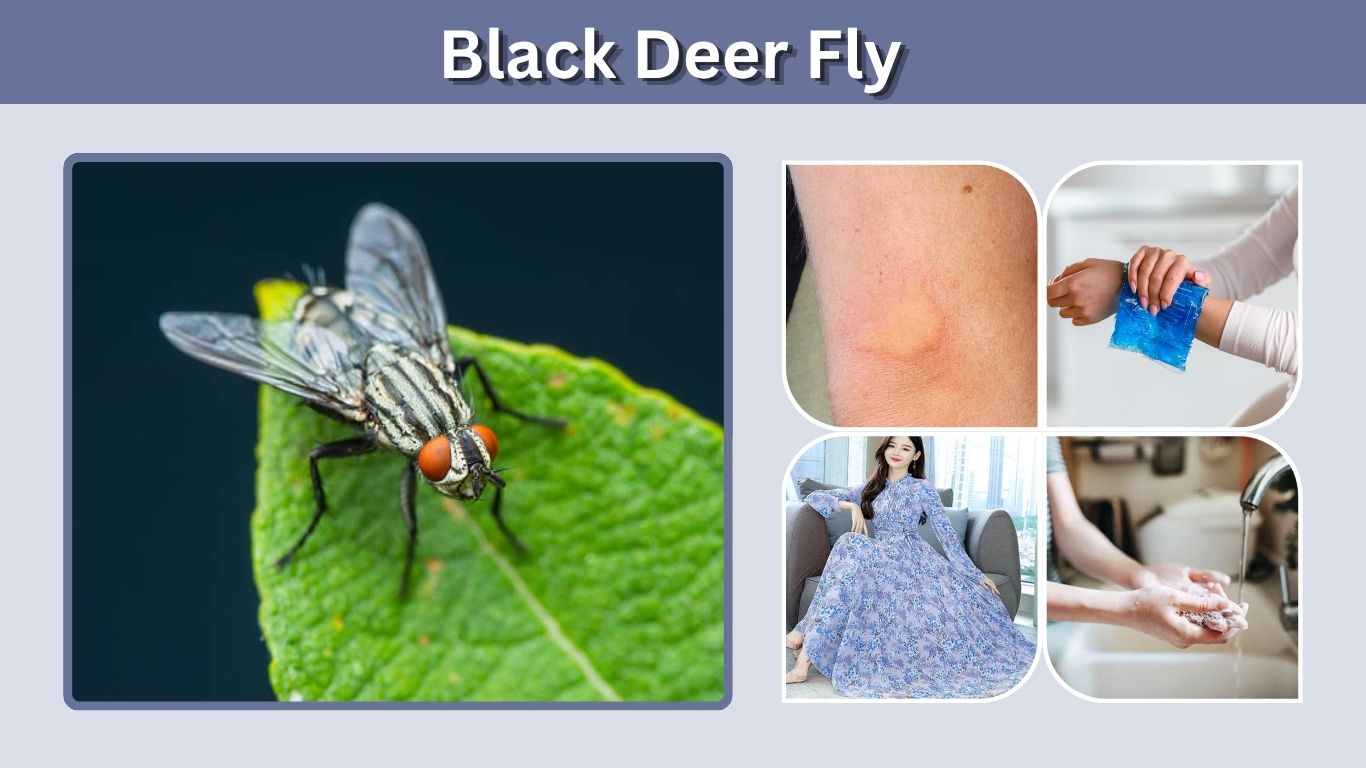
A black deer fly is generally a dark-colored biting fly belonging to the horse-and-deer-fly family, Tabanidae. However, the phrase is not always used consistently and may describe a dark deer fly, a smaller horse fly, or another similar-looking species. These flies are often confused with true black flies because both bite people and may appear dark from a distance. This guide explains how to identify a black deer fly, distinguish deer flies from black flies and horse flies, treat their bites, and reduce encounters outdoors.
What Is a Black Deer Fly?
“Black deer fly” is an informal common name rather than a reliable identification for every dark biting fly. Color alone is not enough because members of the deer-fly and horse-fly family vary from yellowish brown to gray or nearly black.
Identifying a Deer Fly
Typical deer flies belong mainly to the genus Chrysops. Common identification features include:
- A moderately small but sturdy body
- Large, brightly colored or patterned eyes
- Dark spots or bands across the wings
- Short antennae projecting from the head
- Gray, brown, yellow, or dark body coloring
- Fast, persistent flight around people and animals
Deer flies are usually active during the day. Females cut the skin to obtain blood, while males feed mainly on plant sugars and pollen. Their patterned eyes and dark wing bands are among the most useful identification features.
Where Black Deer Flies Live
Deer flies are especially common around ponds, marshes, stream edges, damp woodlands, and other wet environments. Females deposit eggs on vegetation near water, and the larvae develop in wet soil, mud, or aquatic habitats. Adult activity is often greatest during warm weather.
Are Black Flies and Deer Flies the Same?
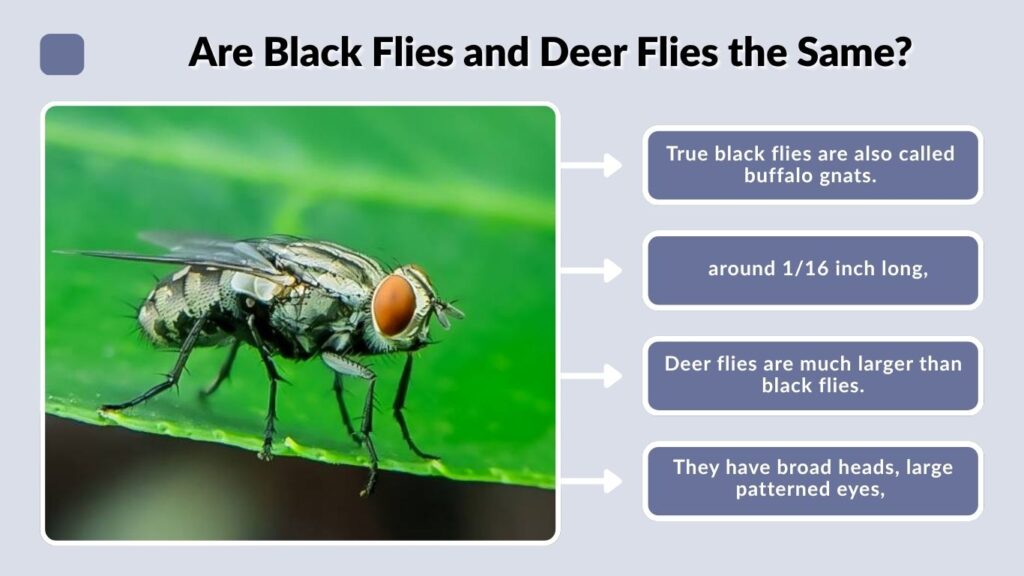
No. A black fly is not simply a deer fly with black coloring. The two belong to different insect families and have noticeably different sizes, shapes, breeding habitats, and behavior.
Black Fly Identification
True black flies are also called buffalo gnats. They are extremely small, commonly around 1/16 inch long, with dark bodies, broad wings, short legs, and rounded or humpbacked backs. Their larvae require running water and attach themselves to underwater rocks, vegetation, or other surfaces in rivers and streams.
Deer Fly Identification
Deer flies are much larger than black flies. They have broad heads, large patterned eyes, and wings that commonly display dark bands or spots. Their larvae are associated mainly with mud and vegetation around ponds, wetlands, and slow-moving water rather than the flowing-water habitats required by black flies.
Black Fly vs. Deer Fly vs. Horse Fly
These three flies can all bite, but their physical appearance provides several useful clues. Deer flies and horse flies are closely related, whereas black flies belong to a separate family.
| Feature | Black fly | Deer fly | Horse fly |
| General size | Extremely small | Small to medium | Medium to very large |
| Body shape | Compact and humpbacked | Sturdy with a broad head | Large, heavy and robust |
| Wings | Broad and usually unpatterned | Often dark-banded or spotted | Usually clear or smoky |
| Eyes | Small compared with deer flies | Large and often patterned | Very large, sometimes patterned |
| Breeding habitat | Running streams and rivers | Wet soil and pond edges | Wetlands, mud and damp soil |
| Bite | Small but irritating | Sharp and immediately painful | Strong, cutting and painful |
| Typical behavior | May swarm around the head | Often circles and repeatedly returns | Pursues people and large animals |
Horse flies tend to be substantially larger and more robust than deer flies. Their wings are commonly clear, while deer flies usually have visible dark wing patterns. Both are members of Tabanidae and are associated with damp habitats.
Black Fly Bite vs. Deer Fly Bite
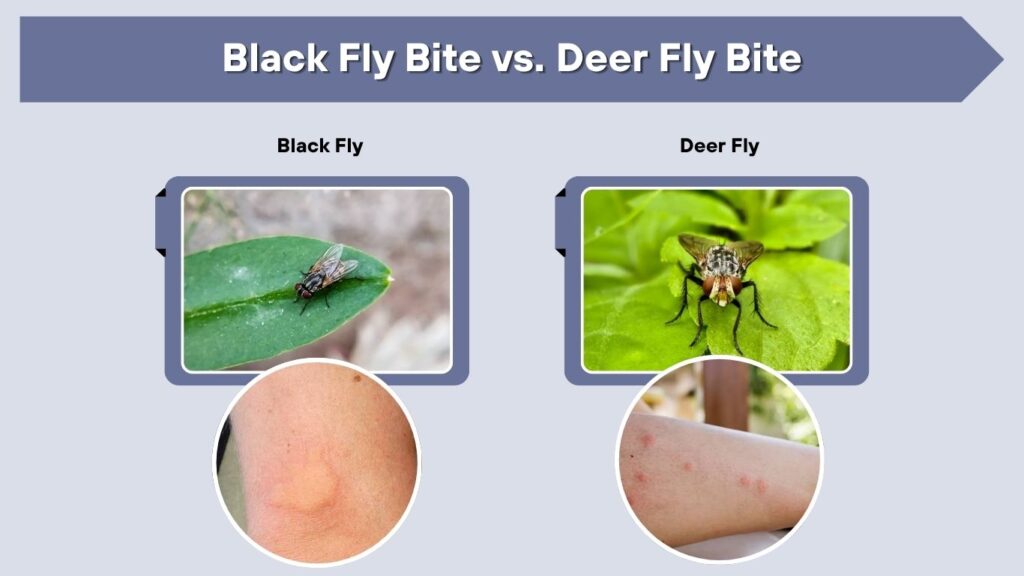
Both insects cut the skin and feed on blood, but the experience can be different because of their size and feeding behavior.
What Does a Deer Fly Bite Feel Like?
A deer fly bite commonly causes immediate sharp or burning pain. The fly’s mouthparts cut the skin rather than inserting a delicate needle-like tube. The wound may bleed slightly and later develop:
- Redness
- Swelling
- Itching
- Tenderness
- A raised welt
- A small central cut or scab
Female deer flies bite because they require blood for egg production. Their saliva can cause pain, itching, and occasionally a significant allergic reaction.
What Does a Black Fly Bite Feel Like?
Black fly bites may not always be noticed immediately. They commonly occur around the hairline, ears, neck, arms, ankles, and other exposed areas. Reactions range from small red marks to pronounced itching, irritation, and swelling. Black flies can also appear in swarms, leading to several bites within a small area.
Deer Fly vs. Horse Fly Bite
Both bites can be painful and may bleed. A horse fly’s larger size often allows it to create a wider wound, but individual reactions vary. The appearance of a bite alone is not always enough to identify the insect because both can cause redness, swelling, itching, and soreness.
What Should You Do After a Bite?
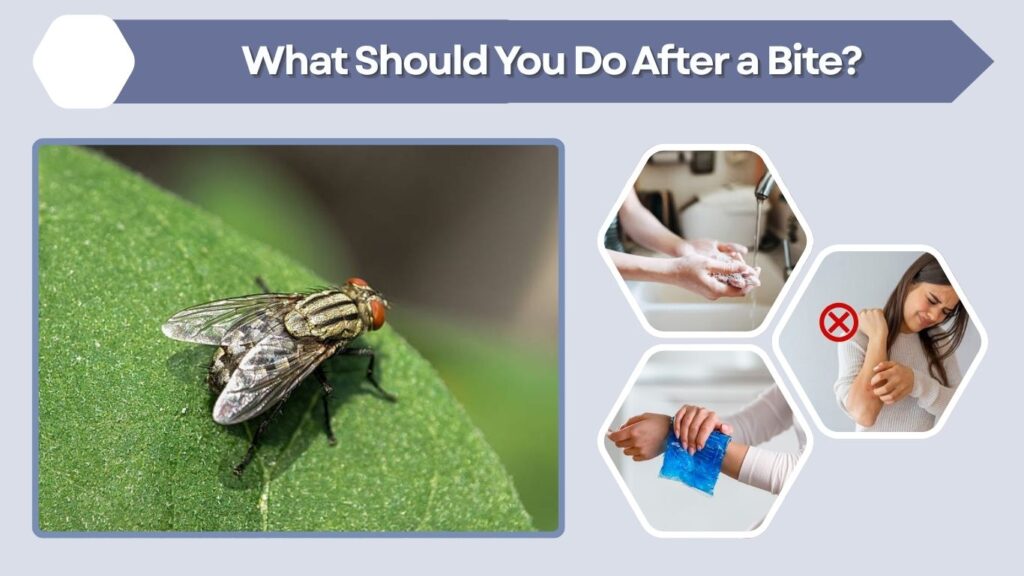
Most uncomplicated bites can be managed with basic first aid. The goal is to clean the damaged skin, reduce swelling, and prevent scratching.
Immediate Bite Care
Wash the area gently with soap and clean water. Apply pressure with clean gauze if it is bleeding, and then use a wrapped cold pack for approximately 10 to 20 minutes. Avoid applying ice directly to the skin.
Do not squeeze, cut, or repeatedly scratch the wound. An oral antihistamine, calamine lotion, or nonprescription hydrocortisone cream may help itching, provided it is appropriate for the person and used according to its label.
When to Seek Medical Attention
Get medical advice if redness continues spreading, pain becomes worse, pus develops, red streaks appear, or the person develops fever or swollen lymph nodes. Breathing difficulty, facial or throat swelling, widespread hives, dizziness, or fainting requires emergency help.
Deer flies can transmit tularemia in some locations. Medical assessment is important if fever, a persistent skin ulcer, or enlarged lymph nodes develop after a suspected deer fly bite. Tell the clinician about the bite and where it occurred.
Are Deer Flies Attracted to Black?
Dark objects can be attractive to several biting-fly species. Horse-and-deer-fly traps often use a large, dark, heat-absorbing object to imitate a potential host. Movement, body heat, carbon dioxide, and contrast may also help these flies locate animals or people.
Black flies are specifically known to be attracted to dark shades such as navy blue. Wearing white or brightly colored clothing may therefore make a person less visually attractive to them.
Clothing color alone will not prevent every bite. Dark hair, exposed skin, movement, heat, and breath can still attract biting flies.
How to Prevent Black and Deer Fly Bites
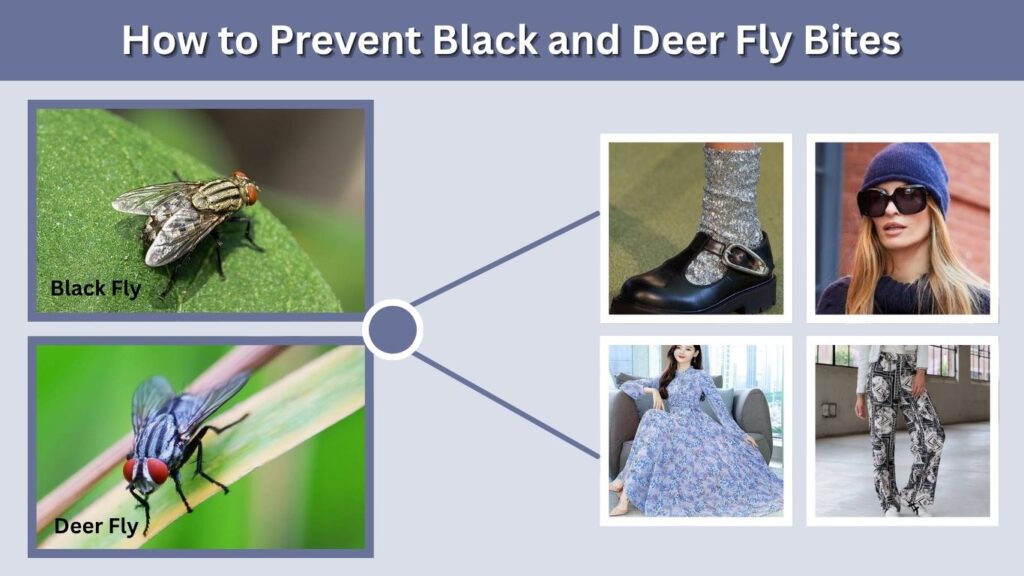
Complete control is difficult because adult flies can travel from distant breeding areas. Personal protection is generally more practical than treating an entire property.
Wear Protective Clothing
Wear long sleeves, long trousers, closed shoes, socks, and a hat. Light-colored clothing is particularly helpful where black flies are common. A hat can also protect the scalp and make circling deer flies easier to notice.
Apply an Appropriate Repellent
Use an EPA-registered repellent labeled for biting flies and follow all directions. Repellents may help, although university guidance notes that they are sometimes less dependable against persistent deer flies than against mosquitoes.
Change Your Location
Black flies are generally less troublesome in windy, open areas. Moving away from sheltered vegetation, wetlands, pond edges, or streams may reduce attacks. Enter a screened building or vehicle when flies repeatedly circle or land.
FAQs
Is a big black deer fly actually a horse fly?
It may be. Horse flies are generally larger, darker, and more robust than typical deer flies. Clear wings suggest a horse fly, while patterned or dark-banded wings are more characteristic of deer flies.
Can an all-black fly be a deer fly?
Some members of the horse-and-deer-fly family appear very dark. However, identification should also consider the fly’s size, eyes, antennae, wings, and body shape rather than color alone.
Which bite is worse, a black fly or deer fly bite?
A deer fly bite is usually more immediately painful because the larger fly cuts a noticeable wound. Black fly bites may cause intense itching and swelling, particularly when numerous flies bite at once.
Do black deer flies bite dogs and horses?
Female deer flies feed on mammals and may bite dogs, horses, cattle, deer, and humans. Thick fur offers some protection, but exposed areas such as ears, faces, legs, and bellies may be attacked.
How do you get rid of black flies and deer flies?
Large-scale adult control is difficult because the insects are mobile and their larvae develop in aquatic or wet environments. Protective clothing, repellents, avoiding peak activity areas, and correctly designed traps are generally more practical approaches.