
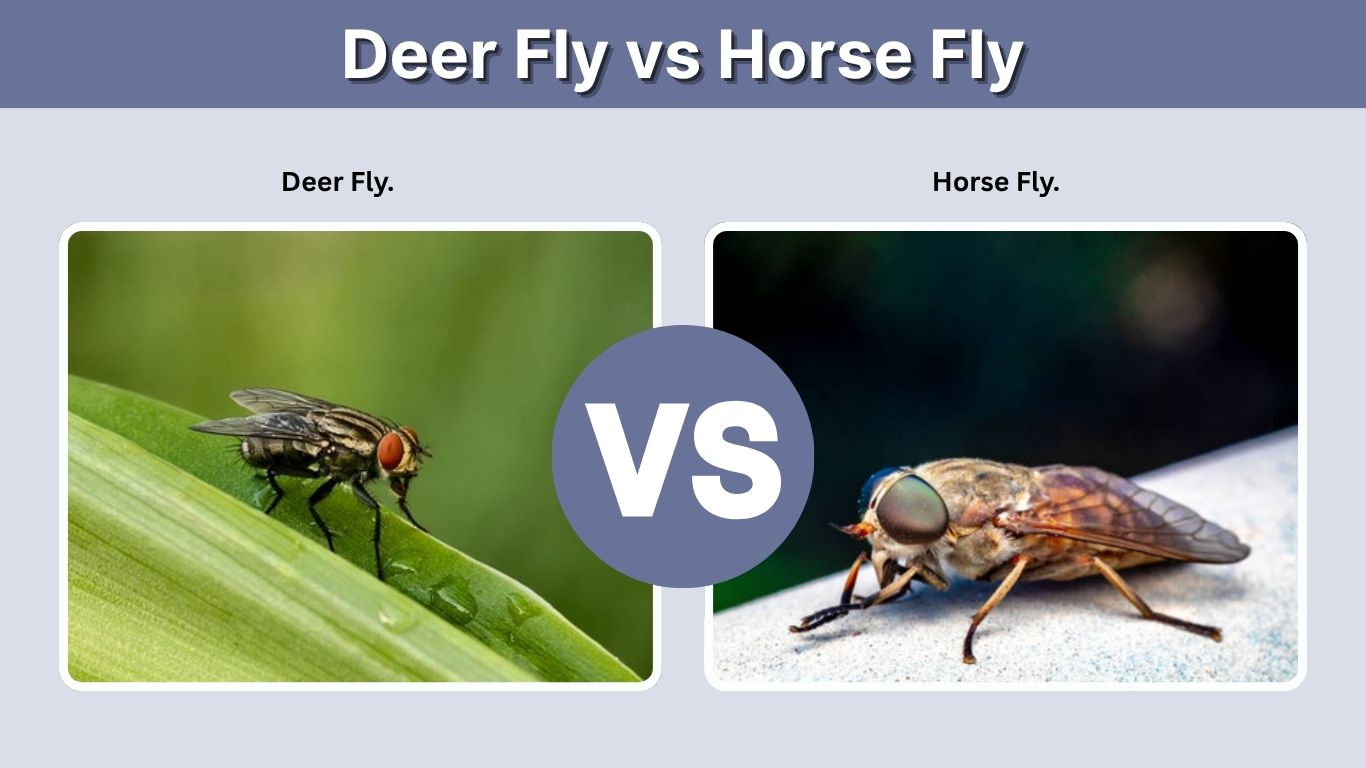
Deer flies and horse flies are closely related biting insects that can quickly turn an outdoor trip into an uncomfortable experience. Both are strong daytime fliers, and females of both groups feed on blood. Their painful bites, buzzing flight, and persistence often cause people to confuse them.
Despite their similarities, deer flies and horse flies differ in size, coloration, behavior, preferred hosts, and appearance. Understanding the differences between a deer fly and a horse fly can help you identify the insect, respond to a bite, and take practical steps to avoid future encounters.
Deer Fly vs Horse Fly at a Glance
Deer flies and horse flies belong to the family Tabanidae. Members of this family are sometimes collectively called tabanid flies. The females require blood to develop their eggs, while males generally feed on nectar and other plant-based sugars.
The quickest way to tell them apart is usually by looking at their size and body pattern.
| Feature | Deer Fly | Horse Fly |
|---|---|---|
| Typical size | About ¼ to ½ inch | About ½ to more than 1 inch |
| Body shape | Smaller and more slender | Larger, heavier, and robust |
| Wing pattern | Often has dark bands or spots | Usually clear, smoky, or evenly shaded |
| Body color | Yellow, brown, black, or patterned | Gray, black, brown, or dark-colored |
| Eyes | Large and often brightly colored | Large and sometimes colorful |
| Bite | Sharp and painful | Often stronger and more painful |
| Common hosts | Deer, humans, pets, and livestock | Horses, cattle, humans, and other mammals |
These descriptions are general because many species exist. Some large deer flies may resemble small horse flies, making closer inspection necessary.
What Is a Deer Fly?
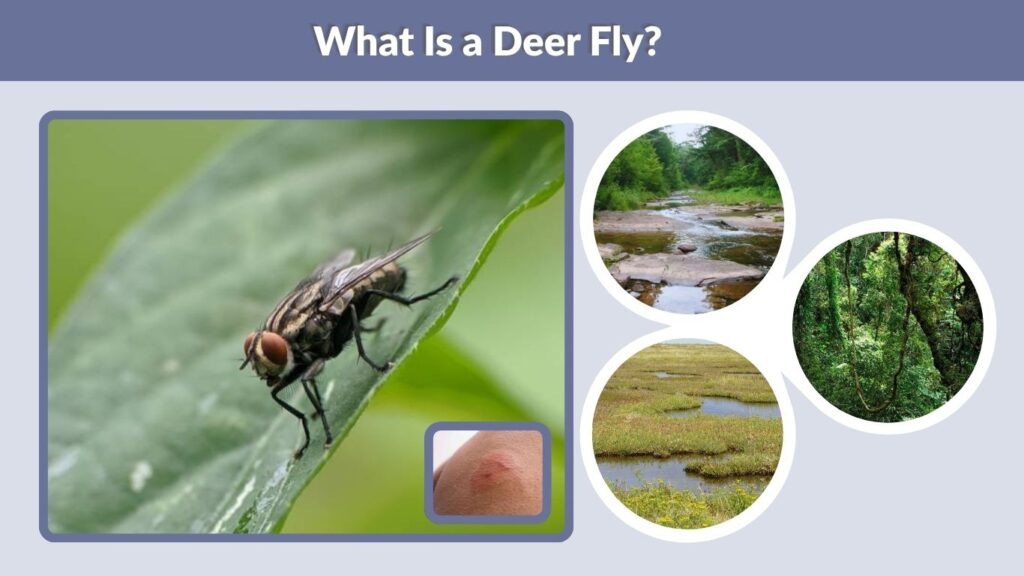
Deer flies are medium-sized biting flies commonly found around forests, streams, ponds, marshes, and other damp habitats. They are especially active on warm, sunny days.
Many deer flies have distinctive patterned wings with dark bands, patches, or spots. Their bodies may be yellowish, brown, orange, or black. Some species have a yellow and black appearance that makes them look somewhat wasp-like while flying.
Deer flies are fast and persistent. They often circle around a person’s head before landing on exposed skin. They commonly target the scalp, neck, shoulders, arms, and legs.
Although deer are common hosts, these insects also feed on humans, horses, cattle, dogs, and other mammals.
What Is a Horse Fly?
Horse flies are generally larger and heavier than deer flies. Some species can exceed an inch in length, making them among the largest commonly encountered biting flies.
Their bodies are typically dark gray, black, or brown, with broad heads and very large eyes. The wings are usually clear, grayish, or smoky rather than boldly patterned.
Horse flies are often found around livestock, farms, ponds, wetlands, wooded areas, and open fields. Their name comes from their tendency to feed on horses and other large mammals.
A horse fly may produce a noticeable buzzing sound as it approaches. Because of its larger mouthparts, its bite can create a painful wound that may bleed briefly.
Deer Fly vs Horse Fly Size
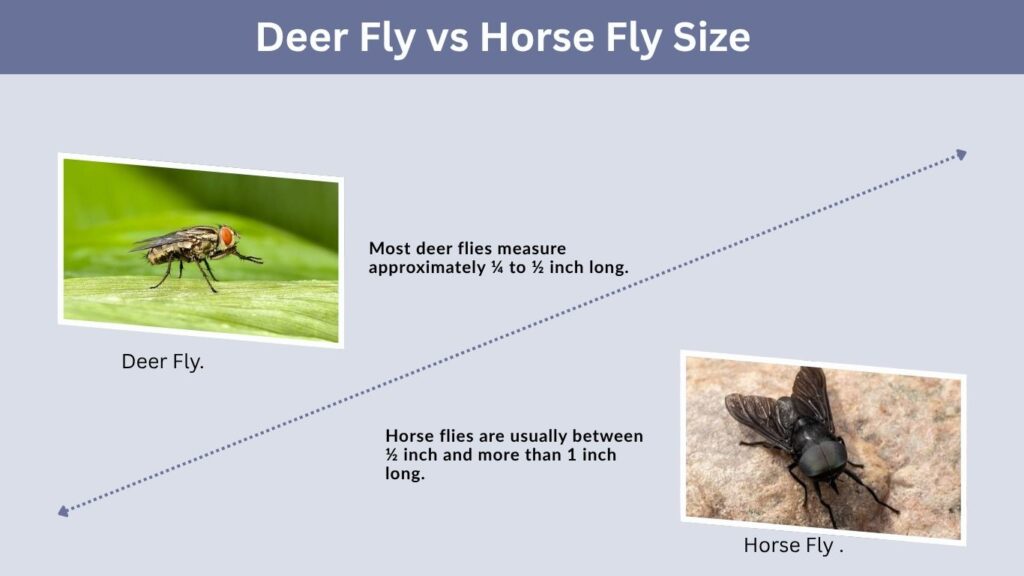
Size is one of the most useful identification features.
Deer fly size
Most deer flies measure approximately ¼ to ½ inch long. They are compact but usually appear lighter and slimmer than horse flies.
Their smaller size allows them to move quickly around the head and shoulders. They can be difficult to swat because they often land briefly and take off again.
Horse fly size
Horse flies are usually between ½ inch and more than 1 inch long. Their broad bodies and large heads give them a powerful appearance.
Some horse flies are several times larger than common house flies. When viewed up close, their large compound eyes are particularly noticeable.
Size alone is not always enough for identification, but a very large, heavy-bodied biting fly is more likely to be a horse fly.
Appearance and Wing Differences
Wing patterns provide another useful way to compare deer flies vs horse flies.
Deer fly appearance
Deer flies commonly have:
- Dark markings across the wings
- Yellow, orange, brown, or black bodies
- Large, colorful eyes
- A smaller, narrower build
- Dark bands or patches on the abdomen
Some deer flies have transparent wings with one or more dark bands. This feature can make them easier to identify when they are resting.
Horse fly appearance
Horse flies usually have:
- Broad, heavy bodies
- Large heads
- Clear, gray, or smoky wings
- Dark brown, gray, or black coloration
- Large, prominent eyes
Horse fly eyes may be green, bronze, purple, or striped when viewed closely. Their body colors are often less patterned than those of deer flies.
Deer Fly Bite vs Horse Fly Bite
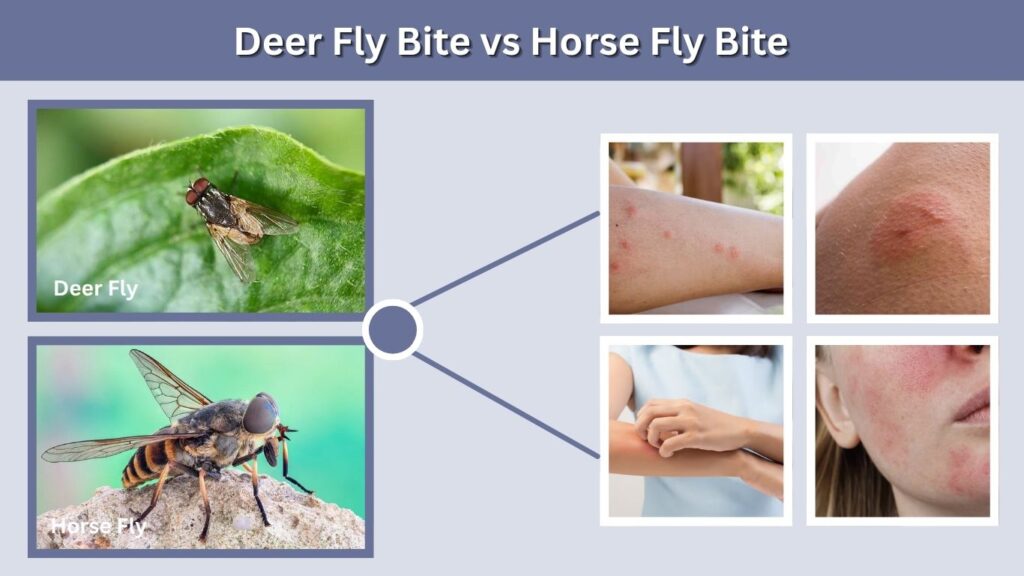
Both insects produce painful bites because they do not pierce the skin gently like mosquitoes. Instead, the females use cutting mouthparts to open the skin and feed on the blood that pools around the wound.
What does a deer fly bite feel like?
A deer fly bite often causes an immediate sharp or burning sensation. The area may quickly become red, itchy, swollen, and tender.
Common symptoms include:
- Sudden pain
- A red raised bump
- Minor bleeding
- Local swelling
- Itching
- A small central cut
The bite may remain sore for several days, especially when it occurs on a sensitive area.
What does a horse fly bite feel like?
A horse fly bite is often described as more forceful because the insect is larger and has stronger mouthparts. It may cause significant pain, bleeding, swelling, or bruising.
Possible symptoms include:
- Intense immediate pain
- A larger skin wound
- Redness
- Firm swelling
- Warmth around the bite
- Persistent tenderness
However, reactions vary. A person with greater sensitivity to deer fly saliva may experience a stronger reaction to a deer fly than to a horse fly.
Which Bite Is More Painful?
Horse fly bites are generally considered more painful because horse flies are larger and create a wider skin injury. Their bites may also bleed more noticeably.
Still, deer fly bites can be extremely painful. The location of the bite, the size of the fly, and the individual’s immune response all affect the level of discomfort.
A bite near the eyes, lips, scalp, ankles, or hands may feel worse than one on a less sensitive part of the body.
Both bites can become infected if the skin is repeatedly scratched or exposed to bacteria. Washing the wound and avoiding scratching can reduce this risk.
Deer Fly vs Horse Fly Behavior
Both flies are active during the day, but their behavior around people may differ.
Deer flies are famous for repeatedly circling the head. They are strongly attracted to movement, warmth, carbon dioxide, and dark colors. They may follow a person for a considerable distance.
Horse flies may fly more directly toward a host. They often target large animals and can be especially troublesome around horses and cattle. A horse fly may land on the body, feed quickly, and move to another location if disturbed.
Both types are persistent. Simply waving them away may not stop them from returning.
Habitat and Seasonal Activity
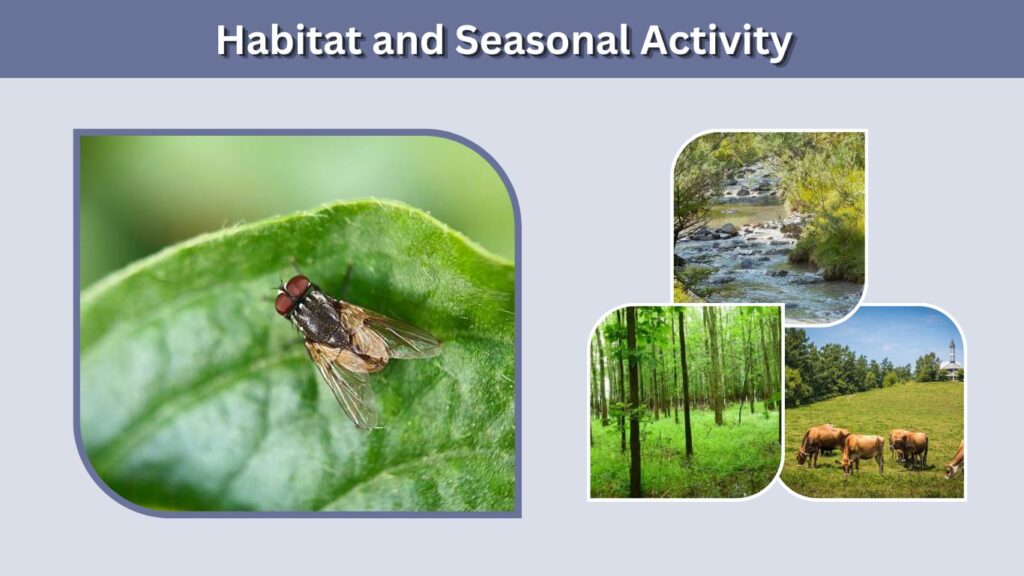
Deer flies and horse flies develop in moist environments. Their larvae may live in wet soil, mud, marshes, stream edges, ponds, or other damp habitats.
Deer fly habitat
Deer flies are frequently associated with:
- Wooded wetlands
- Streams and rivers
- Marshes
- Lakeshores
- Shaded forest paths
- Damp rural areas
Horse fly habitat
Horse flies are commonly found near:
- Farms and pastures
- Livestock areas
- Ponds and lakes
- Wetlands
- Forest edges
- Open fields
Both groups are most troublesome during warm months. Activity often peaks on sunny, humid days with little wind.
Deer Fly vs Horse Fly vs Black Fly
Black flies are another group of biting flies, but they are much smaller than deer flies and horse flies.
| Feature | Deer Fly | Horse Fly | Black Fly |
|---|---|---|---|
| Size | Medium | Large | Very small |
| Body shape | Slender to compact | Broad and heavy | Hump-backed |
| Wing appearance | Often patterned | Usually clear or smoky | Clear and short |
| Bite sensation | Sharp and painful | Strong and painful | Small but irritating |
| Feeding behavior | Often circles the head | Approaches people and livestock | May attack in groups |
| Common habitat | Wetlands and woods | Farms, wetlands, and fields | Near flowing water |
Black flies often occur in swarms and may crawl into hair or under clothing. Their bites can produce intense itching and swelling, but the insects themselves are far smaller than deer flies or horse flies.
Horse Fly vs Deer Fly vs House Fly
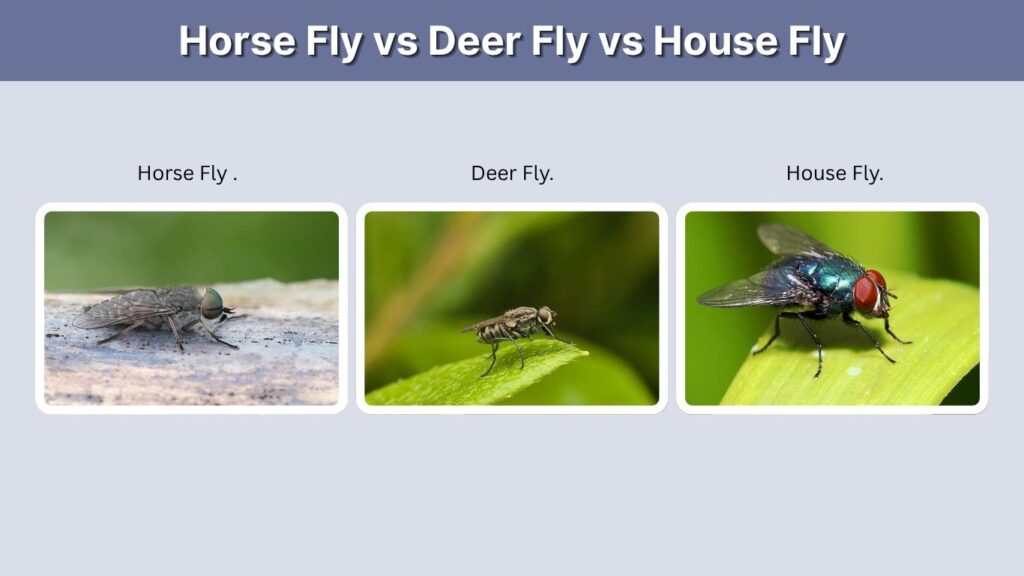
A house fly differs from both deer flies and horse flies because it does not normally bite humans. House flies have soft, sponging mouthparts that allow them to feed on liquids rather than blood.
House flies are usually gray, about ¼ inch long, and commonly found around homes, garbage, food, and animal waste.
By contrast, female deer flies and horse flies have cutting mouthparts and actively seek mammals for blood meals. A fly that lands and produces an immediate painful bite is unlikely to be a typical house fly.
Are Deer Flies or Horse Flies Dangerous?
Most bites cause temporary pain, redness, itching, or swelling rather than serious illness. However, both flies can mechanically carry microorganisms between animals, and their bites create open wounds that may become infected.
Deer flies are also associated with transmission of tularemia in some regions. Warning signs after a bite may include fever, swollen lymph nodes, severe fatigue, or a persistent skin ulcer.
A severe allergic reaction is possible after almost any insect bite. Emergency care is needed for breathing difficulty, throat swelling, faintness, or widespread hives.
Medical attention may also be appropriate when:
- Swelling continues to spread
- The bite produces pus
- Pain becomes more severe
- Red streaks appear
- Fever develops
- Symptoms do not improve
How to Prevent Deer Fly and Horse Fly Bites
Preventing these bites can be challenging because the flies are strong fliers and may continue pursuing moving people or animals.
Helpful prevention methods include:
- Wearing long sleeves and long pants
- Choosing light-colored clothing
- Wearing a hat or neck covering
- Using a suitable insect repellent
- Avoiding wet or wooded areas during peak activity
- Staying indoors or behind screens when flies are abundant
- Checking pets and livestock regularly
- Using fans around patios or animal shelters
Deer flies and horse flies are less effective at flying in strong air currents. A powerful fan may provide some protection in a small outdoor seating area.
FAQs
Are deer flies and horse flies the same?
No. They belong to the same insect family, but they represent different groups. Deer flies are generally smaller and often have patterned wings, while horse flies are larger, heavier, and usually have clear or smoky wings.
Which is bigger, a deer fly or a horse fly?
Horse flies are usually bigger. Deer flies are commonly around ¼ to ½ inch long, while horse flies may range from about ½ inch to more than 1 inch, depending on the species.
Do deer flies and horse flies bite or sting?
They bite rather than sting. Female flies cut the skin with sharp mouthparts and drink the blood that collects around the wound. They do not have stingers and do not leave one in the skin.
How can I identify a deer fly bite vs a horse fly bite?
Both bites can look red, swollen, and painful. Horse fly bites may create a larger wound or more bleeding, but bite appearance alone is not always reliable. Seeing the insect provides the best identification.
Why do deer flies circle your head?
Deer flies are attracted to movement, warmth, carbon dioxide, and visual contrast. They commonly target the head and upper body, which is why they often circle around the face, scalp, and shoulders before landing.