
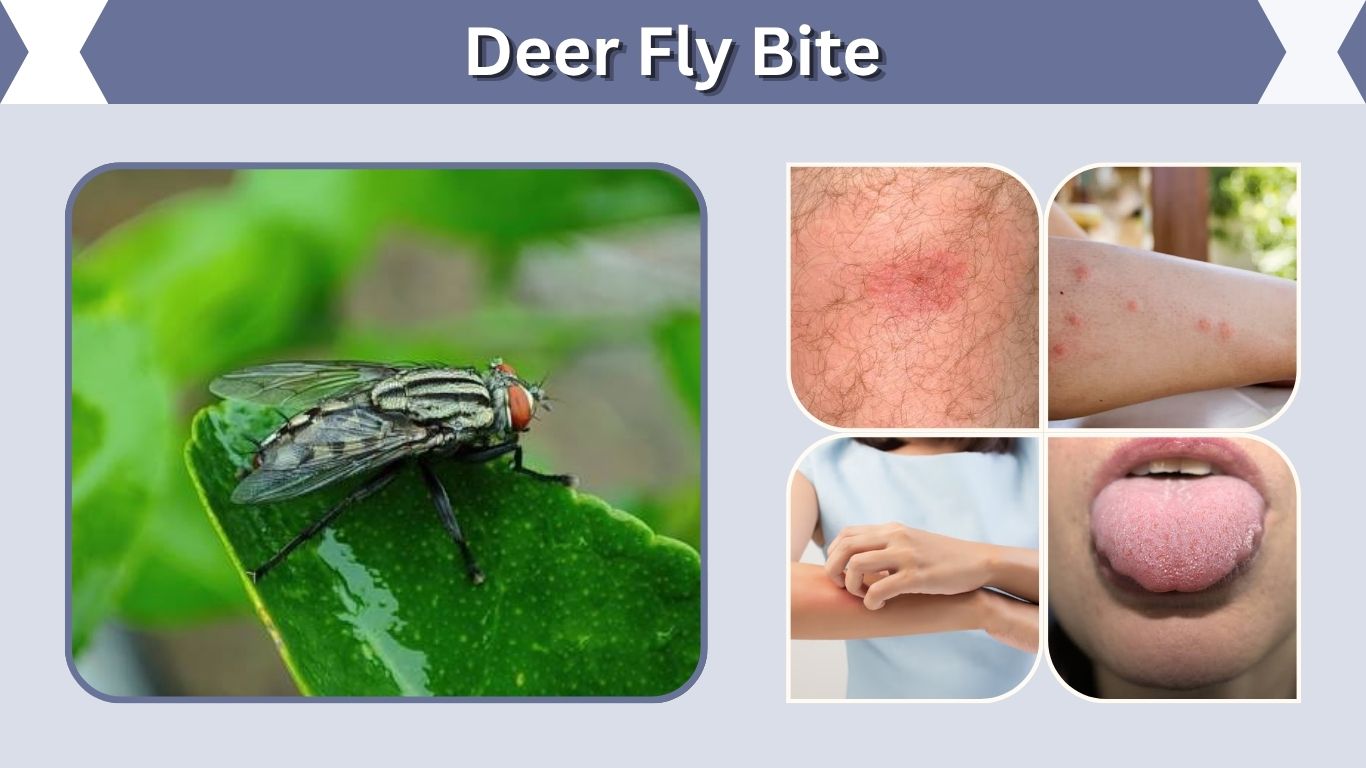
A deer fly bite can be surprisingly painful for such a small insect. Unlike mosquitoes, deer flies do not gently pierce the skin. Female deer flies use sharp mouthparts to cut the skin and feed on the blood that pools around the wound. This often causes immediate pain, redness, itching, and swelling.
Most deer fly bites can be managed at home with basic wound care. However, some people experience significant swelling, an allergic reaction, infection, or symptoms of an uncommon insect-borne illness. Knowing what a deer fly bite looks like and how to treat it can help reduce discomfort and prevent complications.
Do Deer Flies Bite Humans?
Yes, deer flies bite humans as well as deer, horses, cattle, dogs, and other mammals. Only female deer flies take blood meals because they need protein to produce eggs. Male deer flies primarily feed on nectar and other plant sugars.
Deer flies are generally active during daylight hours. They are especially common around wetlands, forests, ponds, streams, marshes, and other moist environments. They may repeatedly circle a person’s head before landing on exposed skin.
A deer fly does not sting or leave a stinger behind. Instead, it bites by cutting the skin with blade-like mouthparts. This feeding method explains why deer fly bites often hurt more than ordinary mosquito bites.
What Does a Deer Fly Bite Look Like?
A deer fly bite may initially appear as a small puncture, cut, or red spot. Because the fly damages the skin while feeding, the bite may bleed slightly.
Common visual signs include:
- A red, raised bump
- A small central cut or puncture
- Swelling around the bite
- A red patch surrounding the wound
- Mild bruising or discoloration
- A small scab after the bite begins healing
Some people develop a much larger swollen area. The reaction may feel warm, firm, sore, or intensely itchy. A blister can occasionally develop, especially when the skin reaction is strong.
Pictures of deer fly bites can provide a general reference, but insect bites often look similar. Mosquitoes, horse flies, black flies, fleas, ticks, and other insects can all produce red, swollen lesions. The insect’s appearance, the location of the bite, and how the bite occurred may be more useful than the skin mark alone.
Deer Fly Bite Symptoms
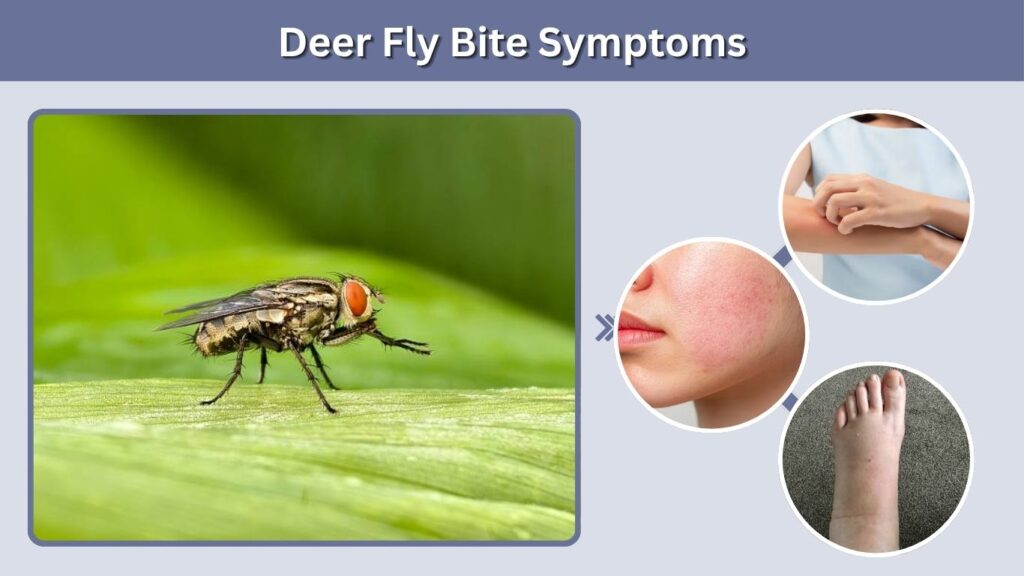
The first symptom is often a sudden, sharp or burning pain. The discomfort occurs because the fly physically cuts the skin rather than inserting a narrow feeding tube.
Common symptoms
A typical reaction may include:
- Immediate pain
- Redness
- Itching
- Tenderness
- Localized swelling
- Minor bleeding
- A burning or throbbing sensation
The itching may become more noticeable after the initial pain fades. Scratching can reopen the wound and introduce bacteria, increasing the chance of a secondary skin infection.
How long do deer fly bites last?
Mild pain may improve within several hours, while redness, itching, and swelling can remain for a few days. Larger local reactions may take a week or longer to disappear completely.
Healing time depends on the person’s sensitivity, the location of the bite, the amount of skin damage, and whether the bite has been scratched. A bite that becomes more painful or swollen rather than gradually improving should be monitored carefully.
Why Do Deer Fly Bites Hurt So Much?
Deer fly bites hurt because the insect’s mouthparts slice the skin. The female then releases saliva that helps keep the blood flowing while she feeds.
The physical injury and the body’s immune response to the saliva can produce:
- Sharp pain at the moment of the bite
- Inflammation
- Swelling
- Itching
- Lingering tenderness
A bite on a sensitive area, such as the scalp, neck, ankle, hand, or face, may feel especially uncomfortable. Multiple bites can also create more noticeable pain and inflammation.
How to Treat a Deer Fly Bite
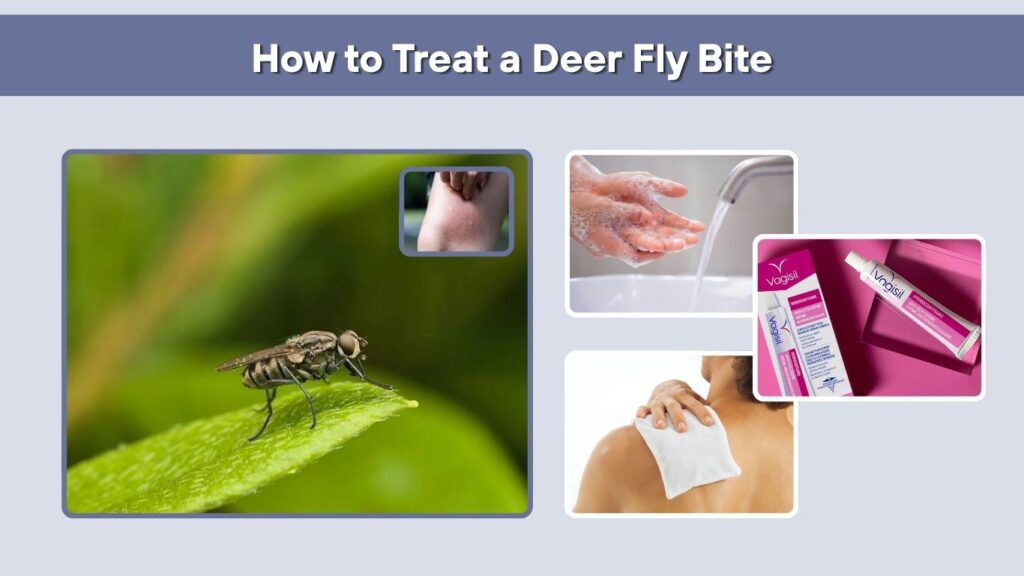
Most uncomplicated deer fly bites can be treated at home. The main goals are to clean the wound, control swelling, relieve discomfort, and prevent scratching.
1. Wash the bite
Clean the area gently with soap and water. This removes blood, dirt, insect saliva, and surface bacteria. Pat the skin dry with a clean towel rather than rubbing it.
Routine cleaning is an important part of insect-bite care because deer flies leave a small open wound. Medical guidance for arthropod bites recommends cleaning the affected skin and using appropriate topical treatment for itching.
2. Apply a cold compress
Place a cold, damp cloth or an ice pack wrapped in a towel over the bite. Use it for approximately 10 to 15 minutes at a time.
Cold therapy may reduce:
- Swelling
- Pain
- Burning
- Itching
Do not place ice directly on bare skin because prolonged direct contact can damage the tissue.
3. Relieve itching and irritation
An over-the-counter hydrocortisone cream, anti-itch lotion, or topical antihistamine may provide relief. Oral antihistamines may also help some people with significant itching or swelling, although they should be used according to the product instructions and any advice from a healthcare professional. Cold compresses and nonprescription anti-itch treatments are commonly recommended for itchy insect reactions.
4. Avoid scratching
Scratching may damage the skin, delay healing, and introduce bacteria. Keep fingernails short and consider covering the bite with a clean, breathable bandage when scratching is difficult to control.
5. Monitor the bite
Check the area over the following several days. Mild redness and swelling should gradually improve. Expanding redness, drainage, worsening pain, or fever may indicate a complication requiring medical attention.
Deer Fly Bite Swelling
Localized swelling is common after a deer fly bite. It develops when the immune system reacts to tissue damage and substances in the fly’s saliva.
A mild swollen area is generally not dangerous when it remains close to the bite and begins improving. Some individuals, however, develop a large local reaction that spreads several inches from the original wound.
Seek medical advice when swelling:
- Continues expanding
- Interferes with movement
- Affects the eye, mouth, or throat
- Is accompanied by severe pain
- Does not begin improving
- Occurs with fever or swollen lymph nodes
Facial bites deserve particular attention because even moderate swelling around the eyes or mouth can become concerning.
Allergic Reaction to a Deer Fly Bite
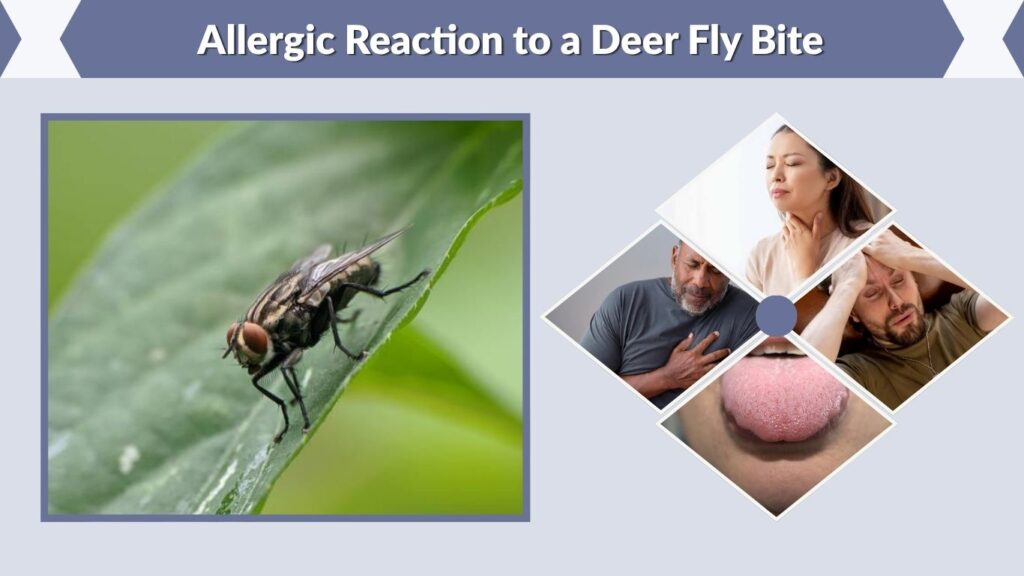
An allergic reaction may cause more extensive redness, itching, hives, or swelling than an ordinary bite. Severe whole-body reactions are uncommon but require emergency treatment.
Warning signs of anaphylaxis include:
- Difficulty breathing
- Wheezing
- Throat or tongue swelling
- Trouble swallowing
- Widespread hives
- Dizziness or fainting
- Rapid worsening of symptoms
Anaphylaxis is life-threatening and can be triggered by insect bites or stings. Anyone experiencing breathing difficulty, throat swelling, faintness, or other severe symptoms should receive emergency medical help immediately.
People with a known history of severe insect allergies should follow their emergency plan and use prescribed epinephrine when directed.
Can a Deer Fly Bite Become Infected?
A deer fly bite creates an open skin wound, so infection is possible. The risk increases when the bite is repeatedly scratched or exposed to dirty water, soil, or unclean hands.
Possible signs of infection include:
- Redness that keeps spreading
- Increasing warmth
- Worsening pain
- Pus or cloudy drainage
- Red streaks extending from the wound
- Fever
- Swollen lymph nodes
Do not attempt to squeeze or drain an infected-looking bite. A healthcare provider may need to examine the area and determine whether antibiotics or other treatment are necessary.
Are Deer Fly Bites Dangerous?
Most deer fly bites are painful but not dangerous. The primary concerns are a strong allergic response, secondary bacterial infection, and rare disease transmission.
In parts of the United States, certain deer flies can transmit tularemia, an illness caused by the bacterium Francisella tularensis. The Centers for Disease Control and Prevention states that deer fly bites are one possible route of tularemia infection, particularly in the western United States.
Possible warning signs after a bite include:
- Fever
- Chills
- A persistent skin ulcer
- Significant fatigue
- Headache
- Painful or enlarged lymph nodes
Tularemia associated with a deer fly or tick bite may cause an ulcer at the entry site and swollen nearby lymph glands. It is treatable with antibiotics, but professional diagnosis is necessary.
These symptoms do not mean every deer fly bite causes disease. Tularemia is uncommon, but unexplained fever, an ulcer, or swollen lymph nodes following a suspected deer fly bite should be evaluated promptly.
Deer Fly Bite vs. Horse Fly Bite
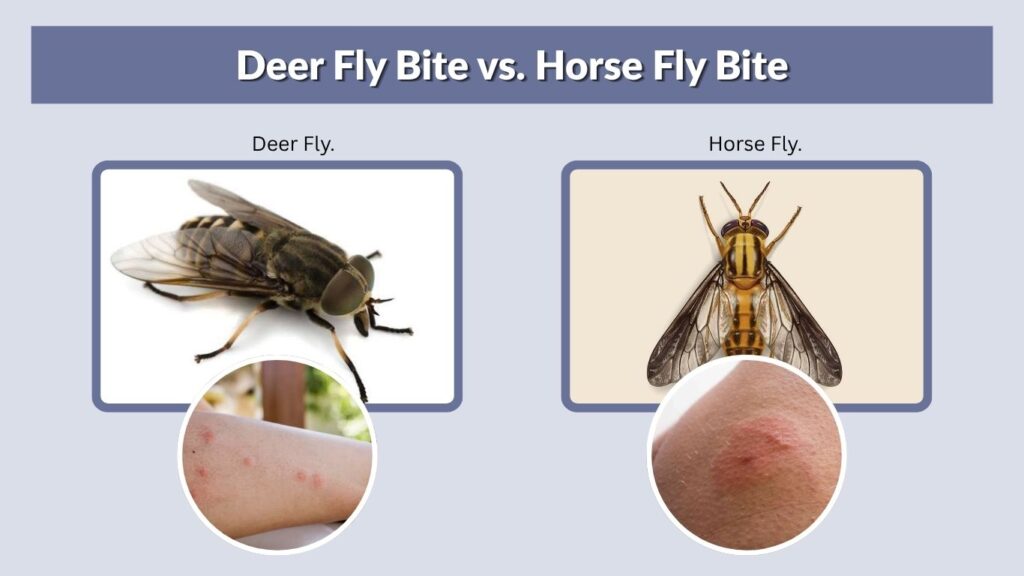
Deer flies and horse flies belong to the same insect family, and their bites are similar. Both use cutting mouthparts and can produce immediate pain, bleeding, redness, and swelling.
| Feature | Deer Fly Bite | Horse Fly Bite |
|---|---|---|
| Fly size | Usually smaller | Usually larger |
| Pain | Sharp and immediate | Often intense and immediate |
| Bite appearance | Red bump with a small cut | Larger red or swollen wound |
| Common activity | Daytime near moist or wooded areas | Daytime around livestock and water |
| Reaction | Itching, tenderness, swelling | Pain, swelling, itching, possible bruising |
The bite alone may not clearly identify which fly was responsible. Seeing the insect is the most reliable clue.
Deer Fly Bites on Dogs
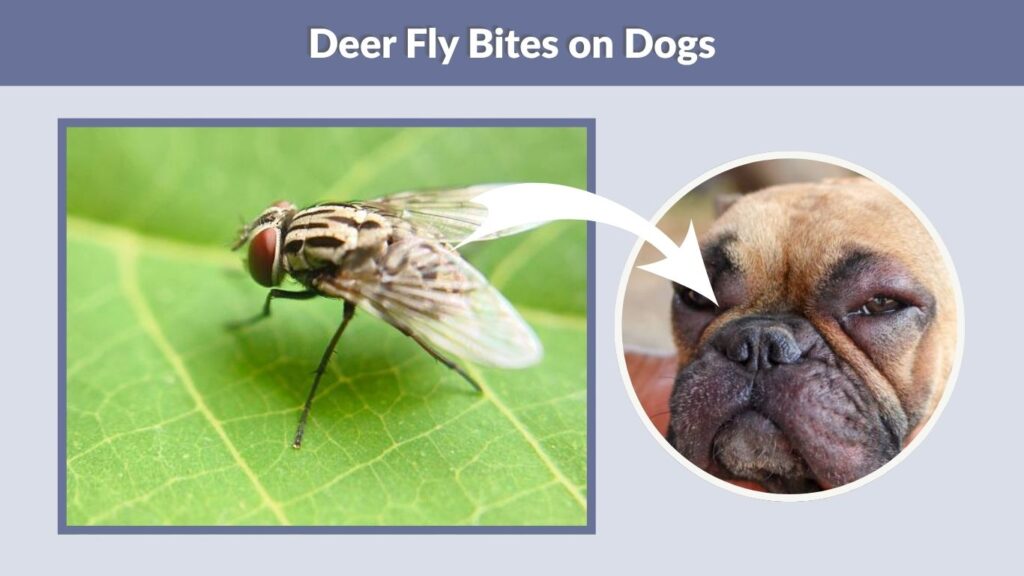
Dogs can also be bitten, particularly around the ears, nose, belly, legs, and other areas with thin fur. A dog may scratch, lick, or chew the affected area.
Gently clean the bite and discourage excessive licking. Contact a veterinarian when the dog develops major swelling, breathing problems, weakness, widespread hives, signs of infection, or persistent discomfort. Never apply human medication to a dog unless a veterinarian confirms that it is safe.
How to Prevent Deer Fly Bites
Avoiding deer flies completely can be difficult because they are strong, persistent daytime fliers.
Helpful precautions include:
- Wearing long sleeves and long pants
- Choosing light-colored clothing
- Wearing a hat that protects the head and neck
- Using an appropriate registered insect repellent
- Avoiding wetlands and wooded edges during peak activity
- Staying in screened or enclosed spaces when flies are abundant
- Checking pets after outdoor activity
The CDC recommends preventing deer fly bites as part of tularemia prevention, along with avoiding contact with sick or dead wild animals.
FAQs
Do deer flies bite or sting?
Deer flies bite; they do not sting. Female deer flies cut the skin with sharp mouthparts and feed on the blood that collects around the wound. They do not leave a stinger behind.
Do deer fly bites itch?
Yes. A deer fly bite may initially feel painful or burning and later become itchy. The itching develops as the immune system reacts to tissue damage and the fly’s saliva.
Can deer flies bite through clothing?
Deer flies commonly target exposed skin, but thin or loose clothing may not provide complete protection. Tightly woven long sleeves and pants generally offer better coverage than lightweight, open-weave fabrics.
When should I see a doctor for a deer fly bite?
Seek medical advice for worsening swelling, spreading redness, pus, fever, an ulcer, swollen lymph nodes, or symptoms that do not improve. Breathing difficulty, throat swelling, faintness, or widespread hives require emergency care.
Can a deer fly bite make you sick?
Most bites cause only a local skin reaction. Rarely, deer flies can transmit tularemia in certain regions. Fever, a persistent sore, or enlarged lymph nodes after a bite should be assessed by a healthcare professional.