
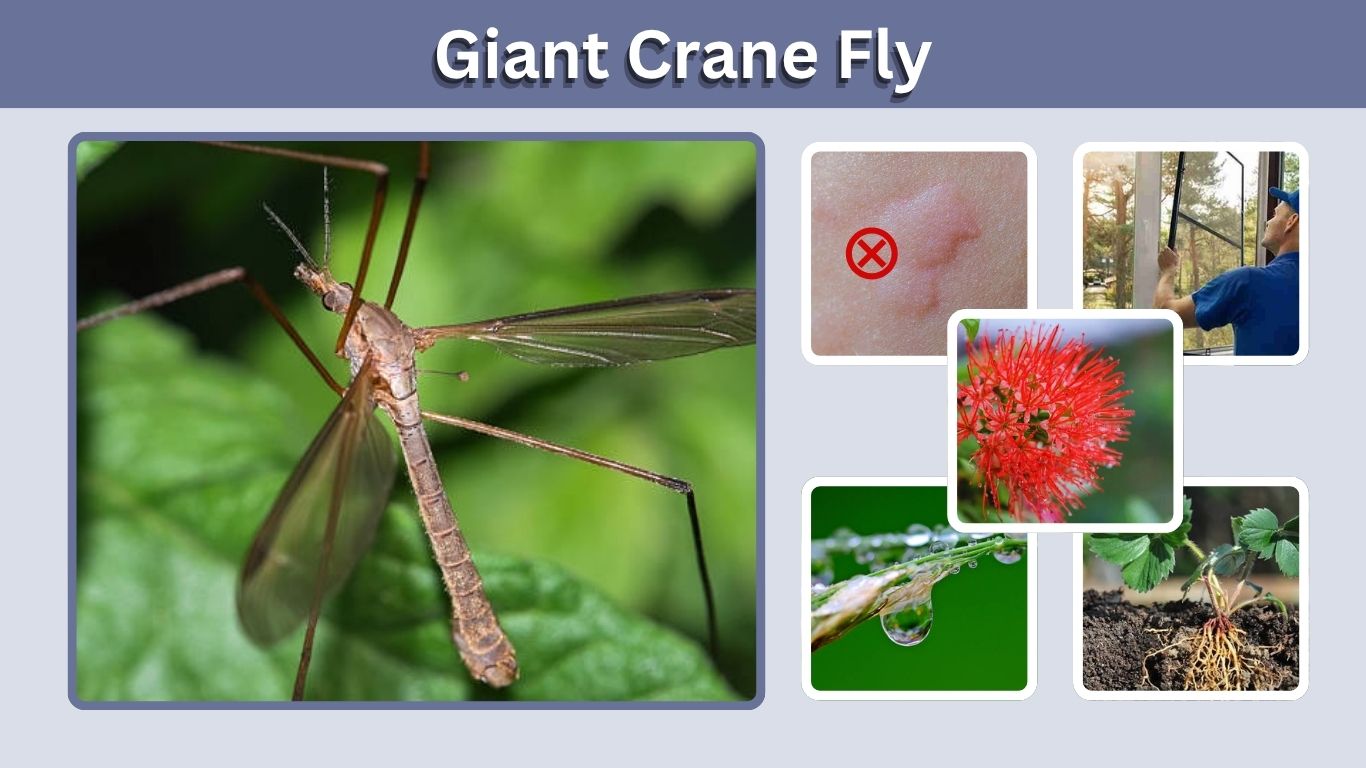
A giant crane fly is a large, long-legged fly that many people mistake for a giant mosquito. Despite its alarming size, it is not a mosquito and does not bite people. These insects have slender bodies, delicate wings, and extremely long legs that make them look fragile and awkward in flight. Some species, such as the giant eastern crane fly and giant western crane fly, can look especially large around homes, forests, streams, and lights. This guide explains how to identify them, what they eat, and whether they are harmful.
What Is a Giant Crane Fly?
A giant crane fly is a large member of the crane fly group. Crane flies belong to the fly order Diptera, meaning adult crane flies have one pair of functional wings. They often look like oversized mosquitoes, but they are a different type of insect and are generally harmless to humans. Orange County Vector Control notes that the giant western crane fly can reach about 35 mm, or 1.4 inches, making it one of the largest flies in its region.
Adult giant crane flies are usually seen resting on walls, windows, vegetation, tree trunks, or near porch lights. Their long legs and slow, clumsy flight make them easy to notice. They may seem intimidating indoors, but they are usually short-lived adults focused on mating and reproduction.
Giant Crane Fly Identification
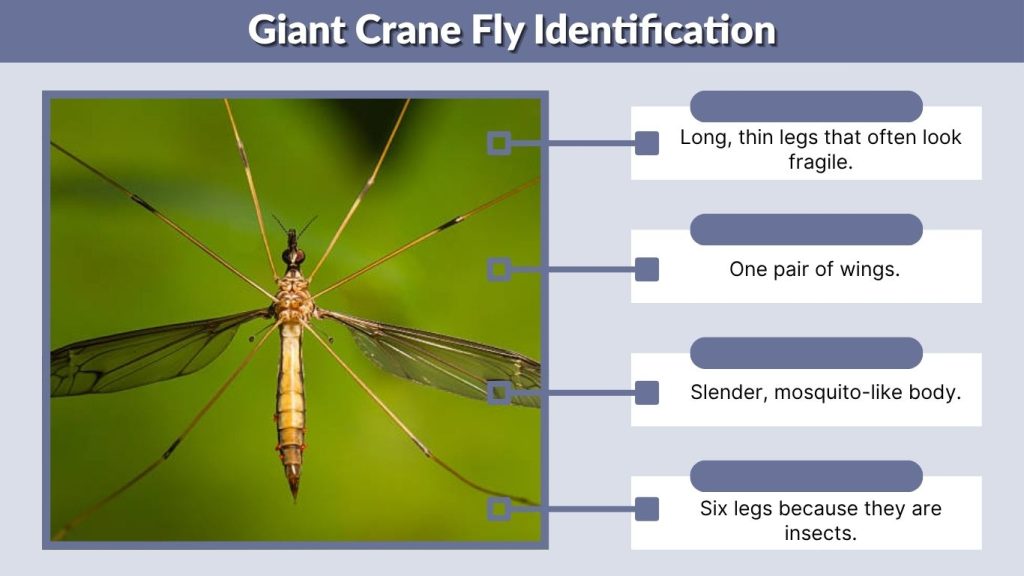
Giant crane flies can be identified by their long legs, narrow body, and mosquito-like appearance. Their wings are usually clear, smoky, or patterned with visible veins. The abdomen may be gray, brown, orange, or banded depending on the species.
Identification Features
- Long, thin legs that often look fragile
- One pair of wings
- Slender, mosquito-like body
- Six legs because they are insects
- Large size compared with common house flies
- Weak, drifting, or clumsy flight
- Often found near lights, damp areas, lawns, woods, or streams
- No biting mouthparts like mosquitoes
- No spider-like body or web-building behavior
A giant crane fly may look frightening because of its size, but size alone does not mean it is dangerous.
Giant Crane Fly vs Giant Mosquito
The phrase “giant mosquito” is one of the biggest reasons people search for giant crane flies. Crane flies are often called mosquito hawks, skeeter eaters, or giant mosquitoes, but these names are misleading. The University of California Agriculture and Natural Resources explains that crane flies are commonly called mosquito eaters or mosquito hawks, but they are actually crane flies and do not eat mosquitoes.
| Feature | Giant Crane Fly | Mosquito |
| Body size | Often larger and more delicate | Usually smaller |
| Legs | Very long and fragile | Long but less exaggerated |
| Bite humans? | No | Some female mosquitoes bite |
| Feeds on blood? | No | Some species do |
| Flight style | Weak and clumsy | More controlled |
| Common nickname | Mosquito hawk, giant mosquito | Mosquito |
Is a Crane Fly a Giant Mosquito?
No, a crane fly is not a giant mosquito. It only looks similar because both are long-legged flies. A mosquito is adapted to feed in ways crane flies are not. Crane flies do not suck human blood and are not considered a biting pest.
Do Giant Crane Flies Bite?
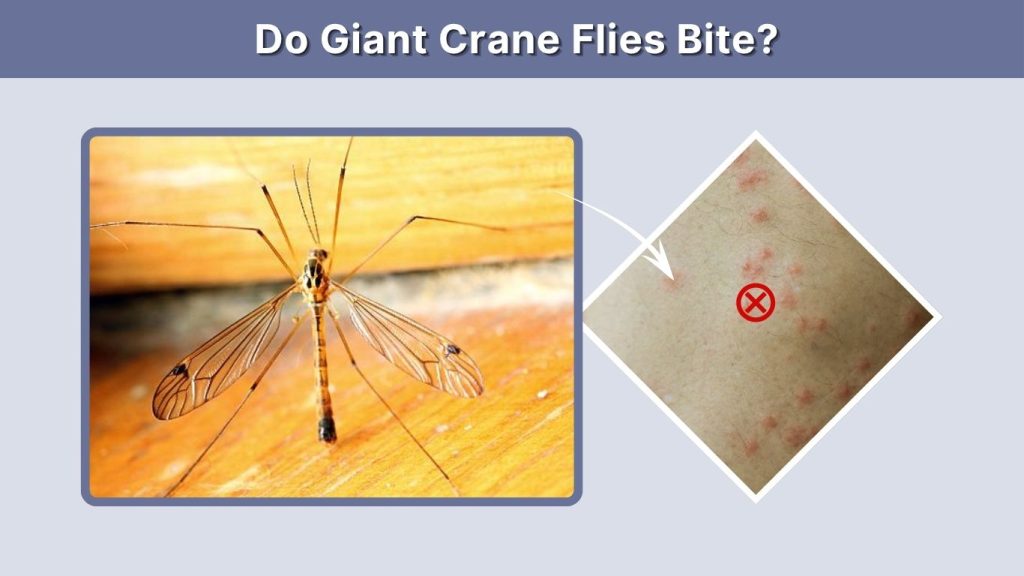
Giant crane flies do not bite people. Their scary appearance causes confusion, but they are harmless to humans. Reports from extension and vector-control sources consistently describe adult crane flies as non-biting insects, even though they are often mistaken for mosquitoes.
Are Giant Crane Flies Harmful?
Adult giant crane flies are not harmful to people, pets, or homes. They do not sting, bite, or spread disease like mosquitoes. If one enters your house, it is usually attracted by light or comes inside through an open door or window.
The only real concern is with some crane fly larvae. Certain larvae can damage lawns by feeding on roots and shoots, especially in damp turf. Oregon State University Extension explains that larvae may eat lawn roots and shoots and can cause bare patches in affected yards.
Giant Eastern Crane Fly
The giant eastern crane fly is commonly associated with Tipula abdominalis, a large North American crane fly. BugGuide records this species under the common name “giant crane fly,” with one photographed female listed at a body length of 45 mm.
This species is often recognized by its large body, long legs, patterned wings, and orange or brownish abdomen. It may be found in eastern North America, especially around wooded, moist, or streamside habitats. Like other crane flies, the adult is not a biting insect.
Giant Eastern Crane Fly Bite
A giant eastern crane fly does not bite humans. Its size may make people think it is dangerous, but it is not built like a mosquito. If it lands on a wall, ceiling, or window, it can be gently guided outside.
Giant Western Crane Fly
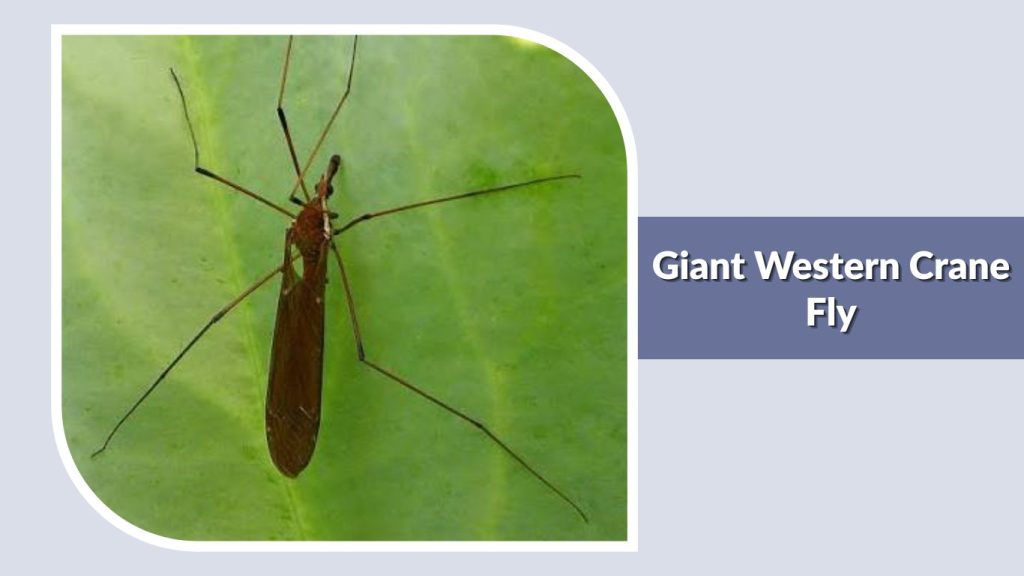
The giant western crane fly is commonly associated with Holorusia hespera. It is known from western North America and is one of the largest crane flies in the West. BugGuide notes that Holorusia hespera has been reported from British Columbia to California and Arizona, and that its larvae are aquatic in streams, creeks, and ponds.
This species is often seen near damp habitats. Its long legs, large wings, and stretched body can make it look like a giant mosquito, but it is still a harmless crane fly.
Giant Western Crane Fly Size
The giant western crane fly can be large enough to startle people indoors or around outdoor lights. Orange County Vector Control describes it as reaching around 35 mm long, or about 1.4 inches.
Giant Crane Fly Larvae
Giant crane fly larvae look very different from the adults. They are legless or nearly legless, worm-like larvae that live in soil, mud, decaying vegetation, or aquatic habitats, depending on the species. Some crane fly larvae are called leatherjackets because of their tough-looking skin.
Where Larvae Live
Some species develop in wet soil or lawns, while others live in streams, creeks, ponds, or damp organic matter. The giant western crane fly has aquatic larvae, while turf-damaging crane fly species are more associated with lawns and moist soil.
Do Giant Crane Fly Larvae Damage Lawns?
Some crane fly larvae can damage lawns, but not every giant crane fly is a lawn pest. Lawn damage is usually linked to larvae feeding on roots and shoots in wet turf. If you see adult crane flies around your home, that does not automatically mean your lawn has a problem.
What Do Giant Crane Flies Eat?
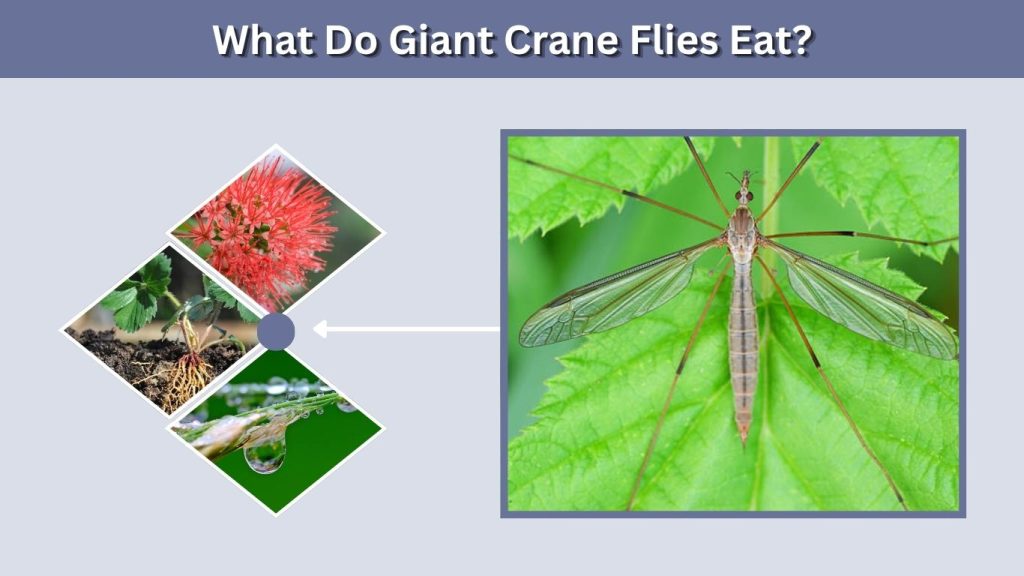
Adult crane flies may feed on nectar, moisture, or very little food, depending on the species. Many adult crane flies live briefly and are mostly focused on reproduction. Their larvae usually feed on decaying organic matter, plant roots, algae, or aquatic material depending on their habitat.
Crane flies are also useful in the food chain. Birds, bats, frogs, fish, spiders, and other predators may eat adults or larvae.
Why Are Giant Crane Flies Around My House?
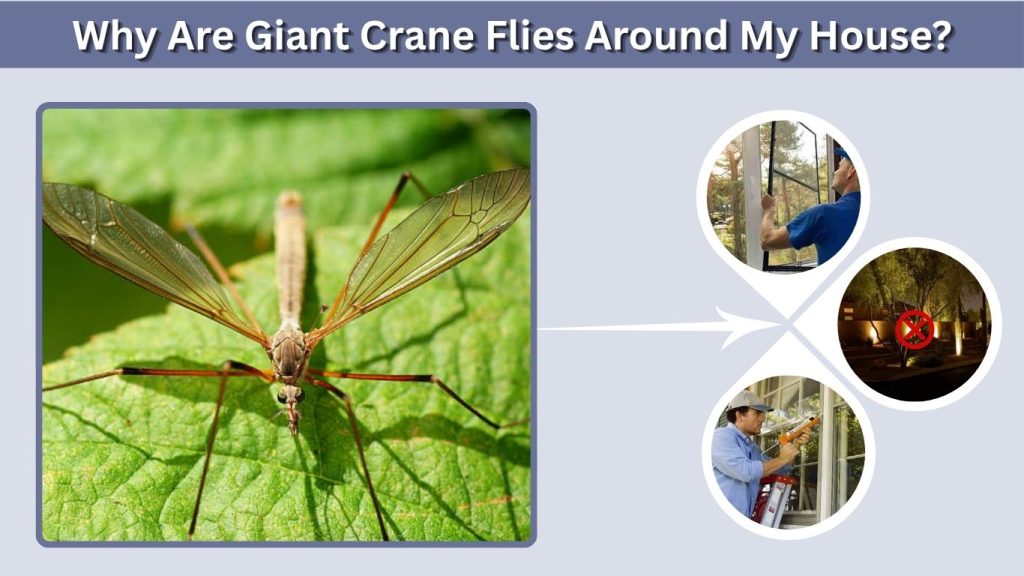
Giant crane flies often appear around homes because they are attracted to lights and may wander indoors through open doors, windows, vents, or gaps. They are most common near damp areas, lawns, gardens, wooded edges, ponds, creeks, or wet soil.
How to Keep Them Out
- Turn off unnecessary porch lights at night
- Use tight window and door screens
- Seal gaps around doors and windows
- Avoid overwatering lawns
- Improve drainage in soggy areas
- Remove adults gently with a cup or vacuum
Most adult crane flies do not require chemical control. They usually die naturally within a short time.
Giant Crane Fly in Different Places
Searches for giant crane flies often include places such as California, Oregon, Washington, Texas, Pennsylvania, Ontario, British Columbia, Australia, New Zealand, and the UK. These searches usually come from people seeing a large mosquito-like insect and trying to identify it.
The exact species depends on location. In western North America, Holorusia hespera may be involved. In eastern North America, Tipula abdominalis is a common giant crane fly name. In the UK, “daddy long legs” is often used for crane flies, while “leatherjackets” usually refers to crane fly larvae.
FAQs
Are giant crane flies harmful?
Adult giant crane flies are not harmful to people. They do not bite, sting, or feed on blood. Some crane fly larvae can damage lawns by feeding on roots and shoots, but adults flying around lights or windows are usually harmless.
Do giant crane flies bite?
No, giant crane flies do not bite humans. They may look like giant mosquitoes, but they are not mosquitoes and do not have the same blood-feeding behavior. If one lands indoors, it can be safely removed.
Is a giant crane fly a giant mosquito?
No, a giant crane fly is not a giant mosquito. It is a separate kind of fly. People call them giant mosquitoes because of their long legs and slender bodies, but crane flies do not suck blood or attack people.
What is a giant eastern crane fly?
The giant eastern crane fly usually refers to Tipula abdominalis, a large crane fly found in eastern North America. It has long legs, patterned wings, and a slender body. Despite its size, it is harmless to people.
What is a giant western crane fly?
The giant western crane fly usually refers to Holorusia hespera, a large western North American crane fly. It is known from areas including British Columbia, California, and Arizona, and its larvae are associated with aquatic habitats such as streams and ponds.