
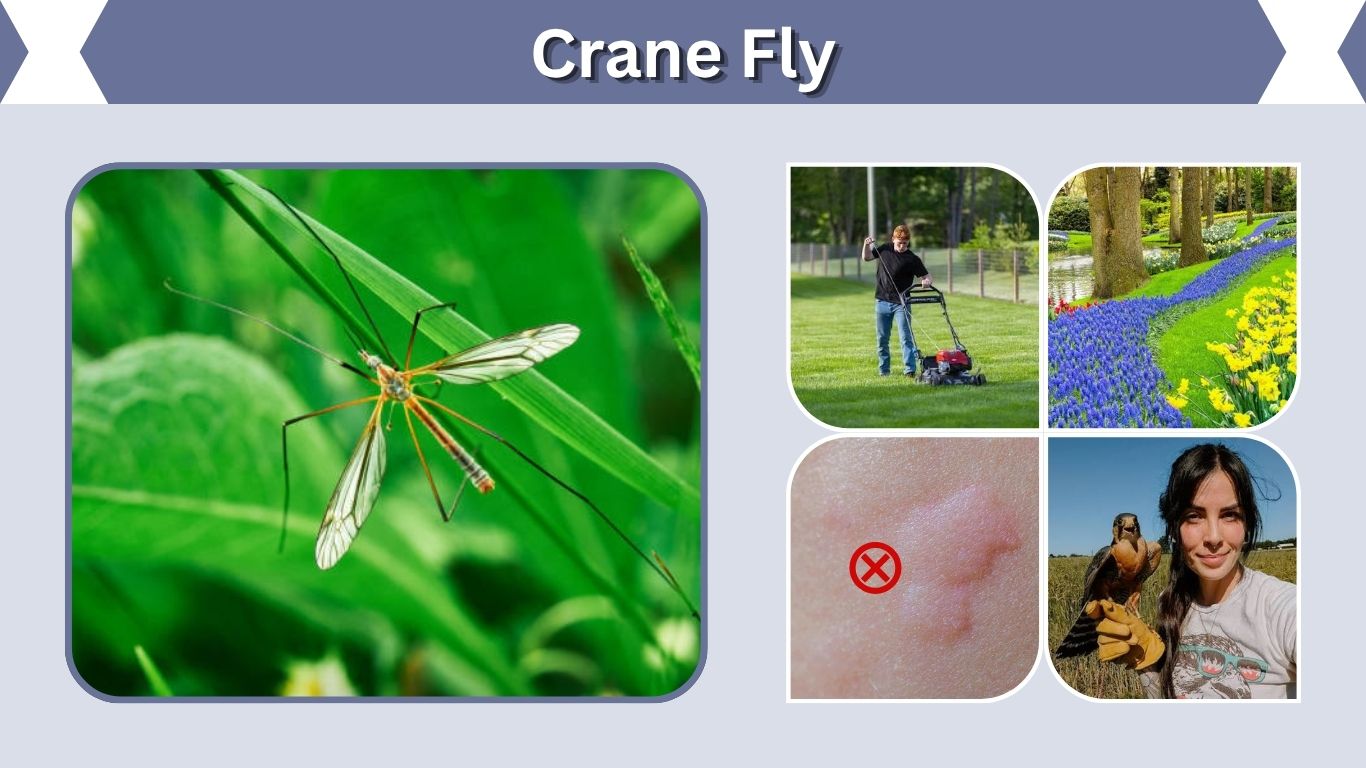
A crane fly is a long-legged flying insect that many people mistake for a giant mosquito. It has a thin body, delicate wings, and very long legs, but it does not bite or suck blood. Adult crane flies are usually harmless and short-lived, while their larvae live in soil, water, or decaying plant material. Some crane fly larvae can damage lawns when populations are high, but most species play a useful role in nature by helping break down organic matter.
What Is a Crane Fly?
A crane fly is an insect that belongs to the order Diptera, the same insect order as flies and mosquitoes. However, crane flies are not mosquitoes. They are sometimes called mosquito hawks, daddy longlegs flies, or giant mosquitoes, but these common names can be misleading.
Adult crane flies are known for their fragile bodies and slow, awkward flight. They are often seen around porch lights, windows, lawns, damp soil, and garden areas. Even though they look scary to some people, they are not dangerous to humans or pets.
Crane Fly Scientific Classification
Crane flies belong to the family Tipulidae and related families within the crane fly group. There are thousands of crane fly species around the world, and they vary in size, color, habitat, and larval behavior.
Basic classification:
- Order: Diptera
- Group: True flies
- Common family: Tipulidae
- Common name: Crane fly
Why Are They Called Crane Flies?
They are called crane flies because their long, thin legs look somewhat like the legs of a crane bird. These legs help them rest on plants, walls, grass, and other surfaces. However, their legs are fragile and can break off easily if handled.
Crane Fly Identification
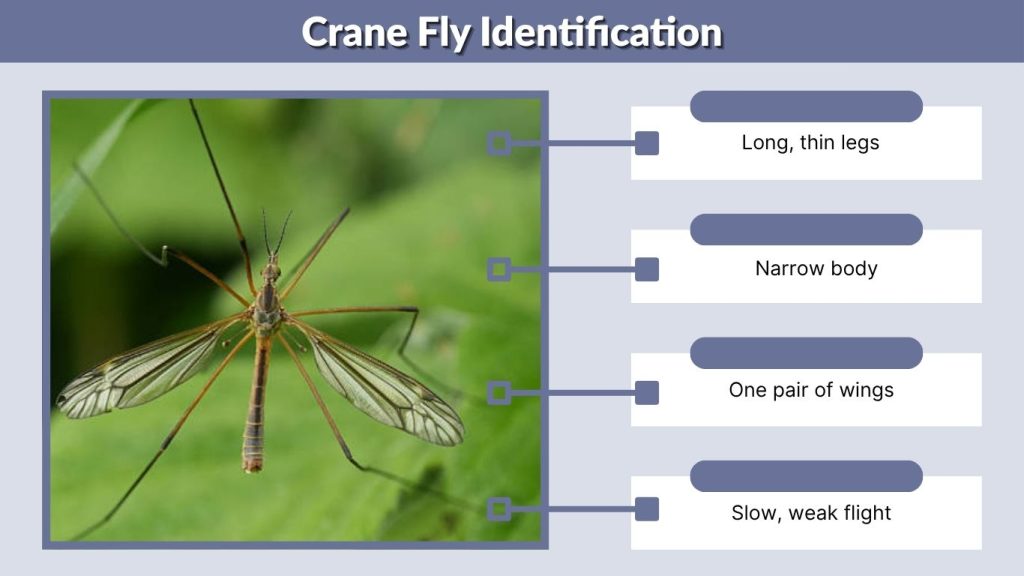
Crane flies are usually easy to recognize because of their long legs and mosquito-like shape. However, they are much larger than most mosquitoes and do not have the same biting behavior.
What Does a Crane Fly Look Like?
Adult crane flies have a slim body, one pair of wings, long legs, and short antennae. Their bodies are often gray, brown, tan, or yellowish. Some species may have patterned wings or darker markings on the body.
Common identification features include:
- Long, thin legs
- Narrow body
- One pair of wings
- Slow, weak flight
- Mosquito-like appearance
- No biting mouthparts
- Fragile body and legs
Most crane flies are between 1/4 inch and 1 inch long, but some species can be larger. Their legs make them look bigger than they really are.
Crane Fly vs Mosquito
Crane flies are often confused with mosquitoes, but they are very different. Mosquitoes can bite and feed on blood, while adult crane flies do not bite people.
| Feature | Crane Fly | Mosquito |
|---|---|---|
| Size | Usually larger | Usually smaller |
| Legs | Very long and fragile | Long but shorter than crane fly legs |
| Bite | Does not bite | Some females bite |
| Flight | Weak and clumsy | Faster and more controlled |
| Body shape | Thin and delicate | Thin but more compact |
| Human risk | Harmless | Some species can spread disease |
Are Crane Flies Giant Mosquitoes?
No, crane flies are not giant mosquitoes. They may look like oversized mosquitoes, but they are a different type of fly. They do not drink blood, do not sting, and do not spread mosquito-borne diseases.
Crane Fly Habitat
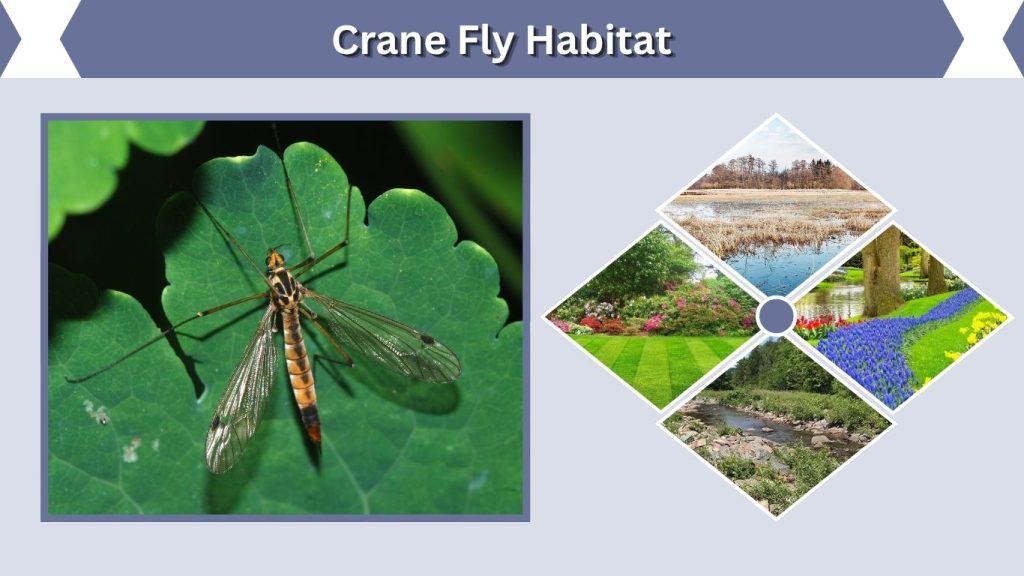
Crane flies live in many habitats, especially moist places. Their larvae need damp conditions, so adults are often found near lawns, wetlands, streams, gardens, compost, and shaded soil.
Common habitats include:
- Lawns
- Gardens
- Wet meadows
- Forest edges
- Streamsides
- Marshes
- Compost areas
- Leaf litter
- Damp soil
- Decaying wood
Adult crane flies may enter homes by accident, especially when they are attracted to lights at night. They usually do not survive long indoors.
Why Are Crane Flies Around My House?
Crane flies may gather around homes because of outdoor lights, moist lawns, or nearby vegetation. If you see many crane flies near doors or windows, they are probably being attracted by light. If you see many in your yard, the soil may be moist and suitable for larvae.
Crane Fly Life Cycle
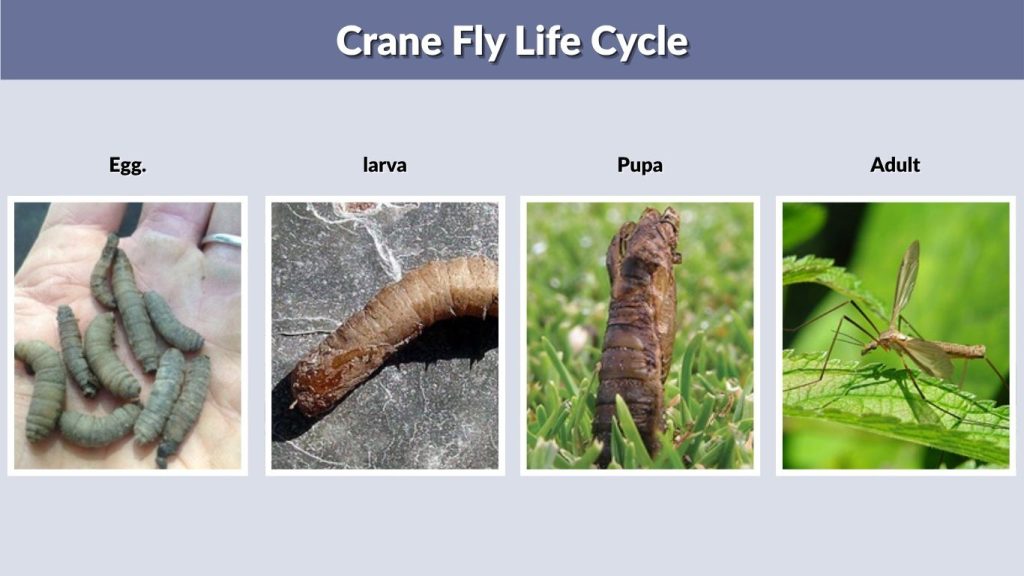
Crane flies have a complete life cycle with four stages: egg, larva, pupa, and adult. The larval stage usually lasts much longer than the adult stage.
Eggs
Female crane flies lay eggs in moist soil, mud, water, moss, leaf litter, or decaying vegetation, depending on the species. The eggs are small and dark. Moisture is important because the larvae can dry out if conditions are too dry.
Larvae
Crane fly larvae are often called leatherjackets because some species have tough, grayish-brown skin. They usually live in soil or wet organic matter. Some aquatic species live in water or muddy habitats.
Larvae may feed on:
- Decaying leaves
- Grass roots
- Plant stems
- Algae
- Fungi
- Organic debris
Some crane fly larvae are harmless decomposers, while others can damage turfgrass when present in large numbers.
Pupae
After feeding and growing, the larva changes into a pupa. The pupal stage is a resting transformation stage. During this time, the insect develops into an adult crane fly.
Adults
Adult crane flies emerge from the pupal case, mate, and lay eggs. Many adults live only a short time. Their main purpose is reproduction. Some adult crane flies feed on nectar, while others feed very little or not at all.
What Do Crane Flies Eat?
Crane fly diet depends on the life stage. Adults and larvae do not eat the same things.
Adult Crane Fly Diet
Many adult crane flies feed on nectar or other plant fluids. Some adults do not feed much at all because they live for a short time. They are not predators and do not eat mosquitoes.
This is important because many people call crane flies “mosquito hawks,” believing they hunt mosquitoes. In most cases, adult crane flies do not eat mosquitoes.
Crane Fly Larvae Diet
Crane fly larvae eat a wider range of material. Many feed on decaying plant matter and help recycle nutrients into the soil. Some species feed on roots and can damage lawns, golf courses, pastures, and garden beds.
Are Crane Flies Dangerous?
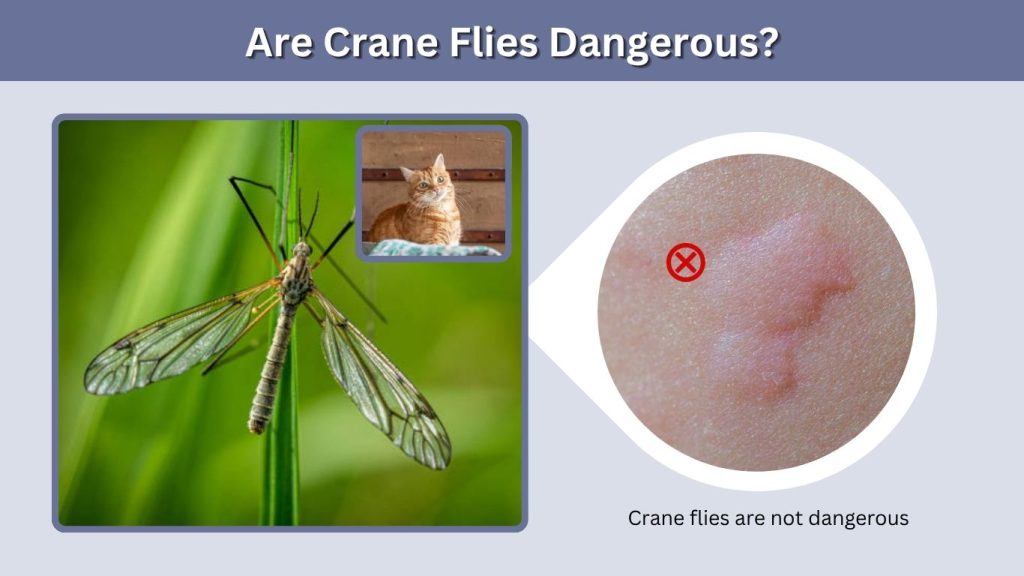
Crane flies are not dangerous to people. They do not bite, sting, or carry venom. Their scary appearance comes mostly from their size and long legs.
Do Crane Flies Bite?
No, crane flies do not bite humans. Adult crane flies do not have the mouthparts needed to pierce skin. If one lands on you, it is harmless and can be gently brushed away.
Are Crane Flies Poisonous?
Crane flies are not poisonous to humans or pets. A dog or cat may chase or eat one, but a crane fly is not toxic. However, eating many insects may cause mild stomach upset in some pets.
Do Crane Flies Eat Mosquitoes?
Most adult crane flies do not eat mosquitoes. This is one of the most common myths about them. Although they are sometimes called mosquito hawks, they are not reliable mosquito predators. Their larvae and adults usually feed on plant material, organic matter, or nectar depending on the species.
Crane Fly Damage in Lawns
Adult crane flies are harmless, but their larvae can sometimes damage lawns. This is most common when many larvae feed on grass roots and crowns.
Signs of Crane Fly Larvae Damage
Crane fly lawn damage may look similar to other turf problems. The grass may become thin, yellow, brown, or weak. Birds, skunks, raccoons, or other animals may dig in the lawn to eat the larvae.
Common signs include:
- Brown patches in grass
- Thin or weak turf
- Loose grass roots
- Birds feeding heavily in the lawn
- Small gray-brown larvae in soil
- Damage in damp or poorly drained areas
Not every crane fly in the yard means there is a lawn problem. A few crane flies are normal and usually do not need control.
When Are Crane Fly Larvae a Problem?
Crane fly larvae become a problem when their numbers are high enough to damage turf. Healthy lawns can usually tolerate some larvae. Lawns that are already stressed by poor drainage, overwatering, compacted soil, or weak roots are more likely to show damage.
How to Get Rid of Crane Flies
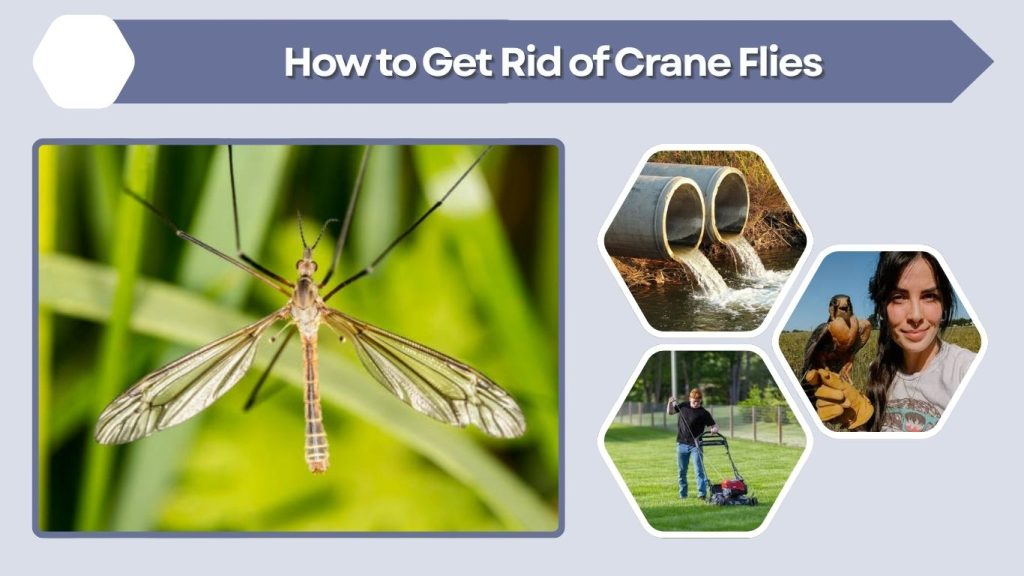
The best way to manage crane flies is to focus on the larvae, not the adults. Adult crane flies live briefly and do not cause direct damage.
Natural Crane Fly Control
For most homes, natural control is enough. Improving lawn health can reduce serious problems.
Helpful steps include:
- Avoid overwatering the lawn.
- Improve drainage in wet areas.
- Remove excess thatch.
- Keep grass healthy with proper mowing.
- Encourage birds and natural predators.
- Rake damaged patches and reseed if needed.
- Reduce outdoor lighting when adults are active.
Crane Fly Control in Lawns
If crane fly larvae are damaging your lawn, inspect the soil before treating. Dig a small section of turf and look for gray-brown leatherjacket larvae near the roots. If you find many larvae and the lawn is clearly damaged, control may be needed.
For severe infestations, local pest control advice may be useful because timing and treatment options vary by region. Treating adults usually does little because they are not the stage causing lawn damage.
Crane Fly Benefits
Crane flies are not just pests. Many species are beneficial parts of the ecosystem. Their larvae help break down decaying plant material, and adults can serve as food for birds, bats, spiders, frogs, fish, and other wildlife.
Role in the Ecosystem
Crane flies help nature in several ways:
- Larvae recycle organic matter.
- Aquatic larvae support freshwater food chains.
- Adults provide food for birds and bats.
- Some adults may visit flowers.
- Larvae help move nutrients through soil.
Because of these benefits, crane flies should not be killed unless they are causing real damage.
Crane Fly vs Mayfly vs Mosquito
Crane flies are sometimes confused with other flying insects. Mayflies, mosquitoes, and crane flies may all appear around lights or water, but they are different.
| Insect | Main Feature | Does It Bite? | Common Habitat |
|---|---|---|---|
| Crane Fly | Long legs, mosquito-like body | No | Lawns, damp soil, gardens |
| Mosquito | Small body, biting females | Yes | Standing water, shade |
| Mayfly | Upright wings, short adult life | No | Near rivers, lakes, streams |
FAQs
What is a crane fly?
A crane fly is a long-legged fly that looks like a large mosquito. It is harmless to humans and is commonly found near lawns, damp soil, gardens, and lights.
Do crane flies bite?
No, crane flies do not bite. They do not have the mouthparts needed to pierce human skin, and they do not feed on blood.
Are crane flies mosquitoes?
No, crane flies are not mosquitoes. They may look similar, but crane flies are larger, weaker fliers, and harmless to people.
Do crane flies eat mosquitoes?
Most crane flies do not eat mosquitoes. The name “mosquito hawk” is misleading because adult crane flies are not active mosquito predators.
Why are there so many crane flies in my yard?
Many crane flies may appear in your yard if the soil is moist, the lawn is healthy enough for larvae, or outdoor lights are attracting adults. Large numbers do not always mean there is damage, but brown lawn patches may indicate larvae feeding in the soil.