
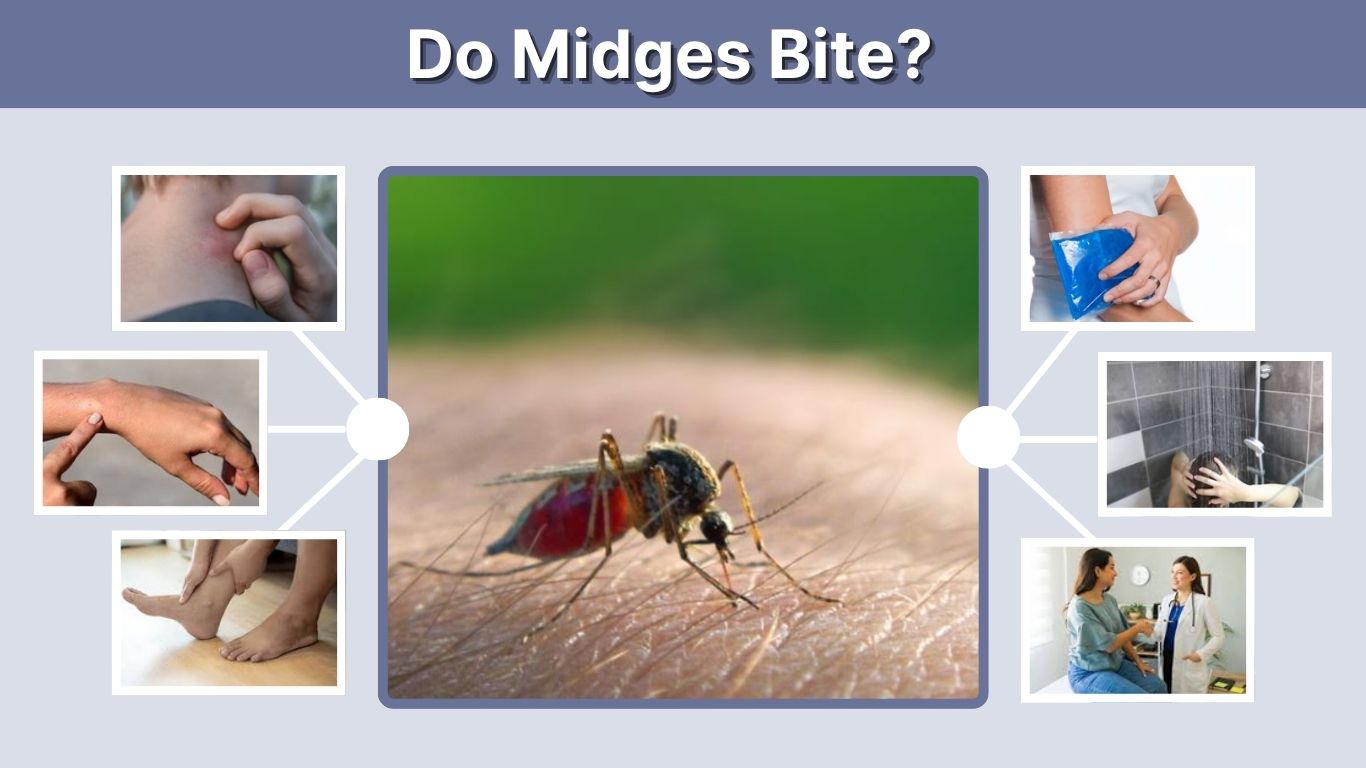
Do midges bite? Yes, some midges do bite humans, and their bites can be itchy, red, swollen, and uncomfortable. However, not every midge bites. The ones that cause skin reactions are usually called biting midges or no-see-ums. Their tiny size makes them hard to spot, so many people only notice the bites after itching, bumps, or swelling appear.
What Are Midges?
Midges are tiny flying insects that are often found near water, damp soil, grass, woodland, and humid outdoor areas. Some midges are harmless and do not bite at all. Others, especially biting midges, feed on blood and can bite humans, pets, livestock, and wildlife.
Biting midges are much smaller than mosquitoes. The CDC describes biting midges as tiny flies, often called “no-see-ums,” and notes that they are usually less than one-eighth of an inch long. Because they are so small, they can be difficult to see before they bite.
Do All Midges Bite?
No, all midges do not bite. Many midge species are non-biting and only become annoying when they gather in large swarms around lights, windows, lakes, or gardens. The problem comes from biting midges. Female biting midges need blood for egg development, which is why they bite humans and animals.
This is why people often ask questions like “do green midges bite,” “do buzzer midges bite,” or “do lake midges bite.” The answer depends on the type of midge. Some are harmless, while biting midges can leave itchy marks on the skin.
Do Midges Bite Humans?
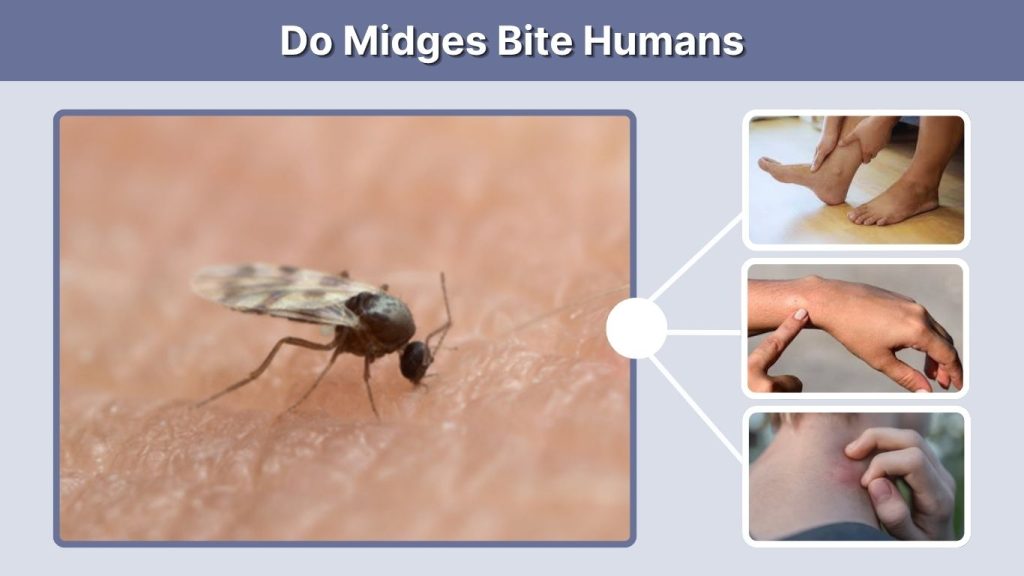
Yes, biting midges do bite humans. They usually bite exposed skin, especially when people are outdoors in areas where midges are active. Bites often happen near rivers, lakes, beaches, marshes, campsites, farms, and damp gardens.
Where Do Midges Bite You?
Midges usually bite areas that are easy to reach. Common places include:
- Ankles and lower legs
- Arms and wrists
- Neck and shoulders
- Face and ears
- Hands and fingers
- Skin around cuffs, collars, and socks
Because midges are tiny, they may also reach skin through loose clothing gaps. This is why some people feel bitten even when they were partly covered outdoors.
Do Midges Bite at Night?
Midges can bite at different times depending on the species and environment, but many are most active around dawn, dusk, and calm humid periods. Some may also be active at night, especially near lights or damp outdoor areas. If you wake up with bites, however, do not assume they are from midges. Bed bugs, mosquitoes, fleas, and other insects can also bite overnight.
Why Do Midges Bite?
Midges bite because female biting midges need blood to help produce eggs. When they bite, their saliva enters the skin. Your immune system reacts to that saliva, which causes itching, redness, swelling, and irritation.
Why Do Midges Bite Some People More Than Others?
Some people seem to get bitten more than others. This can happen because insects may respond to body scent, sweat, carbon dioxide, heat, clothing, and where someone is sitting or standing. Skin reaction also varies. Two people may receive similar bites, but one person may develop large itchy welts while the other only gets tiny red marks.
People often search “why do midges bite me and not my husband” or “why do midges bite me more than others.” The answer is usually a mix of exposure, scent, body chemistry, and immune response rather than one simple reason.
What Do Midge Bites Look Like?
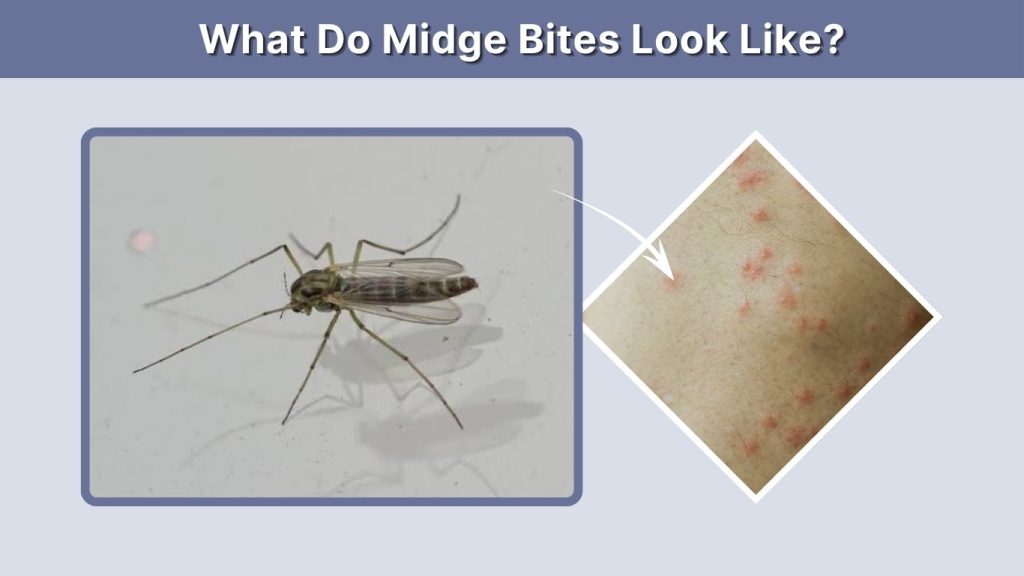
Midge bites usually look like small red bumps, raised spots, or itchy welts. They may appear alone, but they often show up in clusters because several midges can bite the same area. Some bites look like a rash, especially if the skin becomes inflamed from scratching.
Common Signs of Midge Bites
Midge bites on humans may cause:
- Small red or pink bumps
- Itchy raised welts
- Swelling around the bite
- A burning or stinging feeling
- Clusters of bites on exposed skin
- Red patches from scratching
- Blisters in sensitive people
Most insect bites cause mild itching, redness, swelling, or pain, and these symptoms often last a few days. NHS Inform notes that insect bite symptoms commonly include pain, a small swollen lump, redness, and itching.
Do Midge Bites Itch?
Yes, midge bites often itch a lot. The itch happens because your body reacts to the insect’s saliva. For some people, the itching is mild. For others, it can be intense and last several days.
Why Do Midge Bites Itch So Much?
Midge bites can itch strongly because the immune system releases chemicals in response to the bite. Scratching makes the skin more inflamed, which can make the itching feel worse. Warm skin, tight clothing, sweating, and repeated rubbing can also increase irritation.
Why Do Midge Bites Itch More at Night?
Many people notice itching more at night because there are fewer distractions, the skin may be warmer in bed, and clothing or bedding may rub against the bites. Scratching during sleep can also make bites look worse in the morning.
Do Midge Bites Hurt, Blister, or Swell?
Midge bites can hurt, sting, blister, or swell, but the reaction depends on the person. Some people only get tiny itchy bumps. Others develop larger swollen areas or small blisters.
Do Midge Bites Blister?
Yes, midge bites can blister in sensitive people. Blisters may also form if the bite is scratched heavily or becomes irritated. A small blister is not always dangerous, but it should be kept clean. Do not pop it, because broken skin can increase the risk of infection.
Why Do Midge Bites Swell Up?
Swelling happens because the immune system reacts to the bite. Mild swelling is common. Large swelling may be a stronger local reaction. If swelling spreads quickly, becomes painful, or feels hot, it may be a sign of infection or a stronger reaction.
How Long Do Midge Bites Last?
Midge bites usually last a few days, but they can last longer depending on your skin reaction. Mild bites may improve within 24 to 72 hours. More irritated bites may stay itchy for a week or more, especially if you scratch them.
How Long Do Midge Bites Itch For?
The itching may last from a couple of days to about a week. In people with sensitive skin, itching can last longer. Cleveland Clinic explains that bug bites happen when saliva or venom enters the skin and can cause itchiness and other symptoms; antihistamines and hydrocortisone may help ease itching.
When Do Midge Bites Go Away?
Most midge bites gradually fade as the immune reaction settles. They may take longer to go away if:
- You scratch the bite repeatedly
- The bite becomes infected
- You have an allergic-type reaction
- The bite is rubbed by clothing
- You received many bites at once
- The skin is already sensitive or irritated
If a bite keeps getting worse instead of better, it is wise to seek medical advice.
How Do You Get Rid of Midge Bites?
You cannot remove midge bites instantly, but you can reduce itching, swelling, and discomfort. Most bites can be managed at home with simple care.
Midge Bites Treatment at Home
To treat midge bites:
- Wash the bite area with soap and water.
- Apply a cold compress to reduce swelling and itching.
- Avoid scratching the bite.
- Use an over-the-counter anti-itch cream if suitable.
- Consider an oral antihistamine if itching is strong.
- Keep the bite clean and dry.
- Cover the bite lightly if you keep scratching it.
The NHS recommends washing insect bites with soap and water, applying a cold compress, avoiding scratching, and using pharmacy treatments such as antihistamines or steroid creams when appropriate.
What Do You Put on Midge Bites?
Common options include a cold compress, calamine lotion, hydrocortisone cream, or an antihistamine product. Mayo Clinic also lists calamine lotion, over-the-counter hydrocortisone cream, and cold compresses as common ways to ease itching from mosquito bites, and similar itch-relief principles are often used for other mild insect bites.
Always follow the product label. For children, pregnancy, sensitive skin, or bites near the eyes, ask a pharmacist or doctor before using medicated creams.
How Do You Stop Midge Bites Itching?
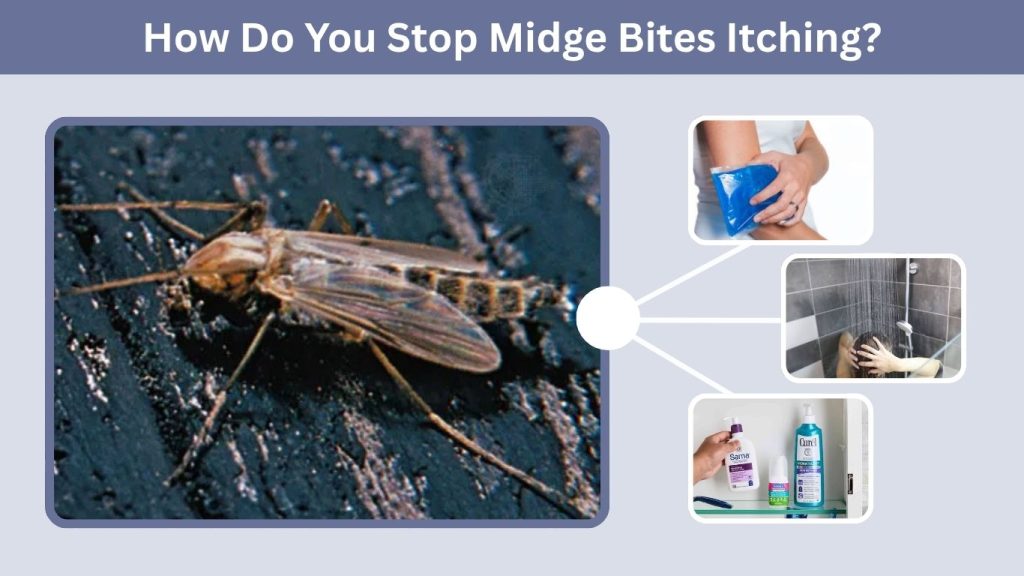
The best way to stop midge bites itching is to calm the skin and avoid scratching. Scratching may feel good for a moment, but it can make the bite more inflamed and increase the risk of infection.
Itch Relief Tips
Try these steps:
- Hold a cold cloth on the bite for 10 to 20 minutes.
- Keep the skin cool.
- Avoid hot showers on the irritated area.
- Use a suitable anti-itch cream.
- Take an antihistamine if appropriate.
- Keep fingernails short.
- Wear loose clothing over the bites.
If the itching is severe or spreading, ask a pharmacist for advice.
Do Midge Bites Spread?
Midge bites themselves do not usually “spread” across the body. However, new bites can appear if you remain exposed to midges. Redness around one bite can also expand if the skin is irritated or infected.
When Spreading Redness Is a Warning Sign
Spreading redness, warmth, increasing pain, pus, or fever may suggest infection. NHS guidance says to get medical help if bite symptoms worsen, show signs of infection, or if there are symptoms of a serious allergic reaction.
Do Midge Bites Scar?
Most midge bites do not scar. However, scars or dark marks can happen if bites are scratched deeply, become infected, or heal slowly. People with sensitive skin may also notice temporary discoloration after inflammation.
How to Reduce Marking
To lower the chance of marks:
- Do not scratch or pick the bites.
- Keep the skin clean.
- Treat itching early.
- Avoid popping blisters.
- Protect healing skin from irritation.
- Seek help if infection develops.
Do Midges Bite Through Clothing?
Midges may bite through very thin fabric, but more often they reach skin through loose gaps in clothing. Areas around ankles, cuffs, collars, and waistbands are common targets.
Clothing That Helps Prevent Bites
Wear:
- Long sleeves
- Long trousers
- Tightly woven fabrics
- Socks that cover the ankles
- Closed shoes in grassy areas
- A head net in heavy midge areas
Lightweight protective clothing is useful when hiking, camping, fishing, gardening, or visiting midge-heavy areas.
Do Midges Bite Dogs and Cats?
Yes, biting midges can bite pets, including dogs and cats. Pets may scratch, lick, or chew irritated areas. Bites may appear around the ears, belly, legs, or areas with thinner fur.
What to Do for Pets
If your dog or cat seems irritated after insect bites, avoid using human bite creams unless a vet recommends them. Some human products are unsafe for pets. Contact a vet if your pet has swelling, open sores, repeated scratching, or signs of discomfort.
Do Midges Bite in Scotland, the UK, and Iceland?
Yes, biting midges can bite in places like Scotland, parts of the UK, Iceland, and other damp or coastal areas. Scotland is especially known for midges in summer, particularly in the Highlands and near lochs, woodland, and sheltered damp areas.
When Are Midges Most Active?
Midges are often worse in:
- Warm weather
- Humid conditions
- Calm air with little wind
- Dawn and dusk
- Damp woodland
- Areas near water
- After rainfall
Windy, dry, and bright conditions usually reduce midge activity.
How to Prevent Midge Bites
Prevention is the best strategy, especially if you are going outdoors in a midge-prone area. Since midges are tiny, you need to cover skin, reduce exposure, and use barriers.
Practical Prevention Tips
To reduce midge bites:
- Use insect repellent on exposed skin.
- Wear long sleeves and trousers.
- Tuck trousers into socks in grassy areas.
- Avoid damp, sheltered areas at peak times.
- Use fine mesh screens or nets.
- Keep windows and doors screened.
- Use fans on patios or outdoor seating areas.
- Remove standing water where possible.
- Avoid camping near still water if midges are heavy.
Purdue Extension notes that biting midges are extremely annoying and encourages learning their biology to avoid being bitten. It also notes that in the United States, biting midges are not known to transmit disease agents to humans, though they can affect animals.
When Should You See a Doctor?
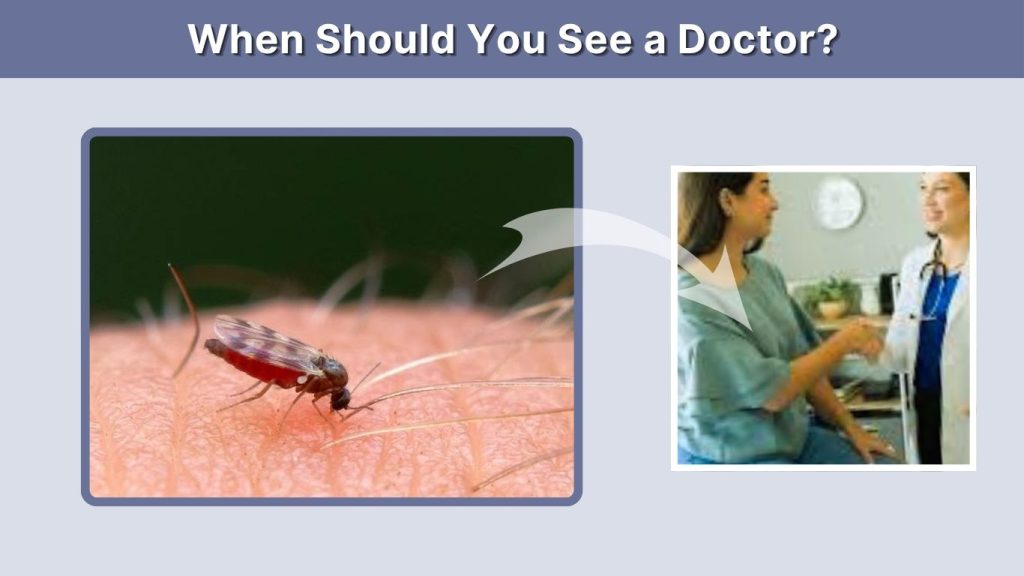
Most midge bites are mild and clear with home care. However, some reactions need medical attention.
Get Medical Advice If:
- The bite becomes increasingly painful
- Redness spreads around the bite
- The skin feels hot or swollen
- Pus or fluid appears
- You develop a fever
- The bite is near the eye or mouth
- Itching is severe and not improving
- Swelling is large or worsening
- You feel generally unwell
Seek emergency help if you have trouble breathing, swelling of the face or throat, dizziness, fainting, or widespread hives after a bite. These can be signs of a serious allergic reaction.
FAQs
Do midges bite humans?
Yes, biting midges can bite humans. Not all midges bite, but female biting midges feed on blood and can leave itchy red bumps. They often bite exposed skin such as ankles, arms, neck, face, and hands, especially in damp outdoor areas near water or woodland.
What do midge bites look like?
Midge bites usually look like small red bumps, raised welts, or itchy clusters on the skin. Some people may also develop swelling, redness, or small blisters. The bites often appear on exposed areas after outdoor activity, especially in humid or midge-heavy locations.
How long do midge bites last?
Most midge bites last a few days. Mild bites may improve within 24 to 72 hours, while stronger reactions can itch for a week or longer. Scratching, infection, sensitive skin, or repeated bites can make them last longer and feel more uncomfortable.
How do you get rid of midge bites?
Wash the area with soap and water, apply a cold compress, avoid scratching, and use suitable anti-itch treatment such as hydrocortisone cream or an antihistamine. You cannot remove bites instantly, but these steps can reduce itching, swelling, and irritation while the skin heals.
Why do midge bites itch so much?
Midge bites itch because your immune system reacts to substances in the insect’s saliva. This reaction can cause redness, swelling, and irritation. Scratching can make the itch worse and may break the skin, so cooling the area and using anti-itch treatment is usually better.