
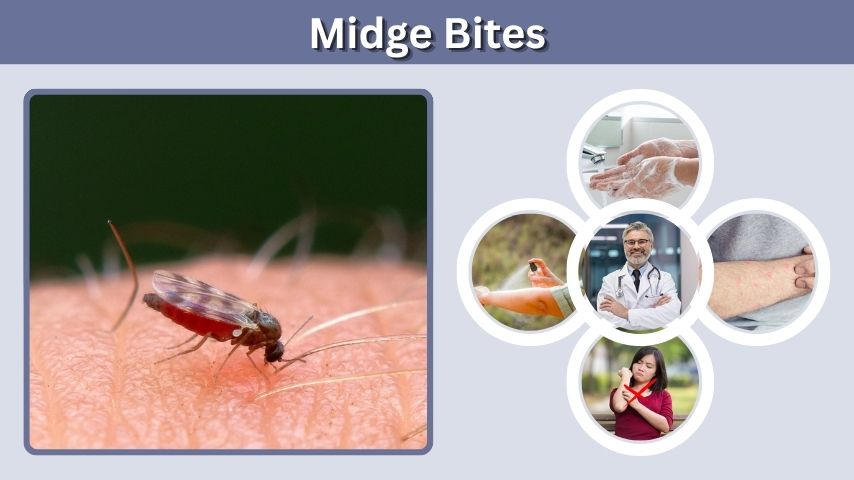
Midge bites can be small, itchy, and surprisingly irritating, especially when they appear in clusters after time outdoors. Many people confuse them with mosquito, flea, or bed bug bites because the marks can look similar. This guide explains what midge bites look like, why they itch, how long they usually last, and the best ways to treat and prevent them safely.
What Are Midge Bites?
Midge bites are tiny skin reactions caused by biting midges, also called no-see-ums in some regions. These insects are very small, so people often notice the bite before they notice the insect. Not all midges bite, but biting midges feed on blood and can leave itchy red bumps on exposed skin.
Why Biting Midges Target Humans
Female biting midges usually bite because they need blood for reproduction. Their mouthparts pierce the skin, and their saliva can trigger itching, redness, swelling, or a burning feeling. The reaction depends on your skin sensitivity, immune response, and how many bites you receive.
Midges are often active in damp, warm, and shaded environments. They are commonly found near lakes, rivers, marshes, gardens, forests, and coastal areas. In places like Scotland and parts of the UK, midge bites are a common outdoor nuisance during warmer months.
Do Midges Bite Humans?
Yes, some midges bite humans. The confusing part is that “midge” is a broad term for tiny flies, and many species do not bite at all. The ones that cause problems are biting midges. These insects can bite people, pets, livestock, and wildlife.
Common Places Midges Bite
Midge bites usually appear on exposed areas of skin. They are more likely to affect:
- Ankles and lower legs
- Arms and wrists
- Neck and face
- Hands and fingers
- Areas where clothing is loose or thin
Because midges are very small, they may get through gaps in clothing or bite around cuffs, collars, socks, and sleeves. Some people also report bites after sitting outside during early morning or evening, when biting insects are often more active.
What Do Midge Bites Look Like?
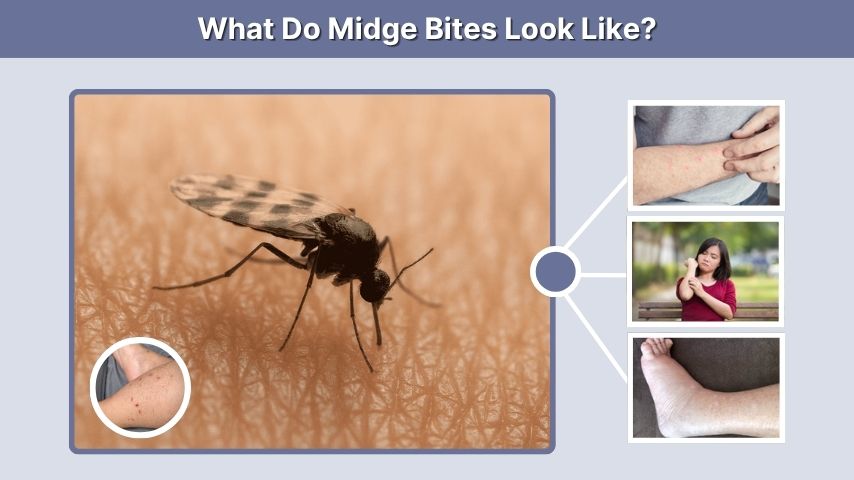
Midge bites often look like small red bumps, raised welts, or itchy spots on the skin. They may appear alone, but they often show up in groups or clusters because several midges can bite in the same area. In sensitive people, the skin may become more swollen, warm, or irritated.
Usual Signs on the Skin
The most common signs of midge bites include:
- Small red or pink bumps
- Itching that may feel intense
- Mild swelling around the bite
- A burning or stinging sensation
- Tiny marks in clusters
- Rash-like irritation after repeated bites
Some people develop blisters or larger swollen patches, especially if they are allergic or if they scratch the bites repeatedly. Scratching can break the skin and increase the risk of infection.
Midge Bites vs Other Bug Bites
Midge bites can look similar to mosquito bites, flea bites, and bed bug bites. The location, pattern, and timing can help you guess what caused them, but it is not always easy to identify bites by appearance alone.
| Bite Type | Common Appearance | Usual Pattern | Common Clue |
| Midge bites | Tiny red itchy bumps or welts | Clusters on exposed skin | Often after outdoor time near water or damp areas |
| Mosquito bites | Larger raised itchy bumps | Scattered spots | Usually noticed soon after dusk or outdoor exposure |
| Flea bites | Small red bumps | Often around ankles or legs | May happen indoors with pets nearby |
| Bed bug bites | Red itchy bumps | Lines or grouped marks | Often noticed after sleeping |
How to Tell the Difference
Midge bites are usually smaller than mosquito bites and may appear in dense clusters. Flea bites commonly affect the ankles and lower legs, while bed bug bites often appear after sleeping and may form lines. However, bite reactions vary from person to person, so the pattern is only a clue, not a definite diagnosis.
Symptoms of Midge Bites
Most midge bites are mild and improve with basic care. The main symptom is itching, but some people experience more uncomfortable reactions. The stronger the immune reaction, the more noticeable the swelling and redness may become.
Mild to Moderate Reactions
Common symptoms may include:
- Itchy red bumps
- Small raised welts
- Tenderness around the bite
- Mild swelling
- Warmth near the bite
- Temporary skin irritation
These symptoms usually stay around the bite area. They may feel worse at night or after scratching, sweating, or wearing tight clothing over the bite.
Allergic-Like Reactions
Some people are more sensitive to midge saliva and may develop stronger reactions. These can include larger welts, spreading redness, blisters, or intense itching. A local allergic reaction can be uncomfortable but is not always dangerous.
You should watch the bite closely if the swelling keeps increasing, the area becomes painful, or the skin starts leaking pus or fluid. Those signs may suggest infection rather than a normal bite reaction.
Midge Bites Treatment
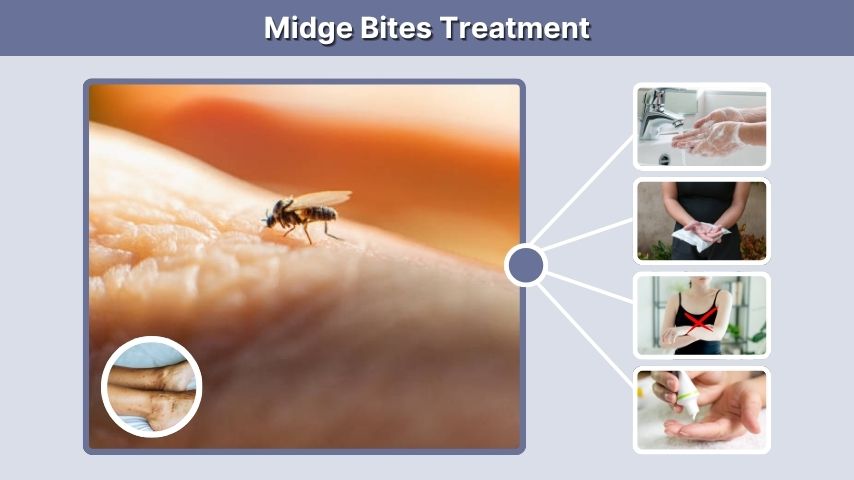
Most midge bites can be treated at home with simple steps. The goal is to reduce itching, swelling, and irritation while preventing infection. Avoid scratching whenever possible, because broken skin can allow bacteria to enter.
Home Care Steps
Try these basic treatment steps:
- Wash the bite area gently with soap and water.
- Apply a cold compress for 10 to 20 minutes.
- Keep the area clean and dry.
- Avoid scratching or picking at the bite.
- Use an over-the-counter antihistamine for itching if suitable.
- Apply hydrocortisone cream to reduce itch and swelling if appropriate.
- Use pain relief such as paracetamol or ibuprofen if the area is sore.
Cold compresses can calm swelling and reduce the urge to scratch. If the bites are on your leg or arm, raising the area may also help reduce swelling.
What Not to Do
Avoid harsh home remedies that can irritate the skin. Do not apply strong chemicals, undiluted essential oils, or abrasive mixtures to open or inflamed bites. If the skin is broken, avoid creams that are not meant for damaged skin unless a pharmacist or healthcare professional recommends them.
How Long Do Midge Bites Last?
Midge bites usually improve within a few days, but the exact healing time depends on your reaction. Mild bites may settle in 24 to 72 hours. More irritated bites can last a week or longer, especially if they are scratched or if you have a stronger allergic response.
Why Some Bites Last Longer
Midge bites may take longer to heal when:
- You scratch them often
- The bites become infected
- You have sensitive skin
- You receive many bites at once
- Clothing rubs against the area
- You react strongly to insect saliva
If a bite is still worsening after several days, becomes very painful, or shows signs of infection, it is better to ask a pharmacist or healthcare provider for advice.
Infected Midge Bites
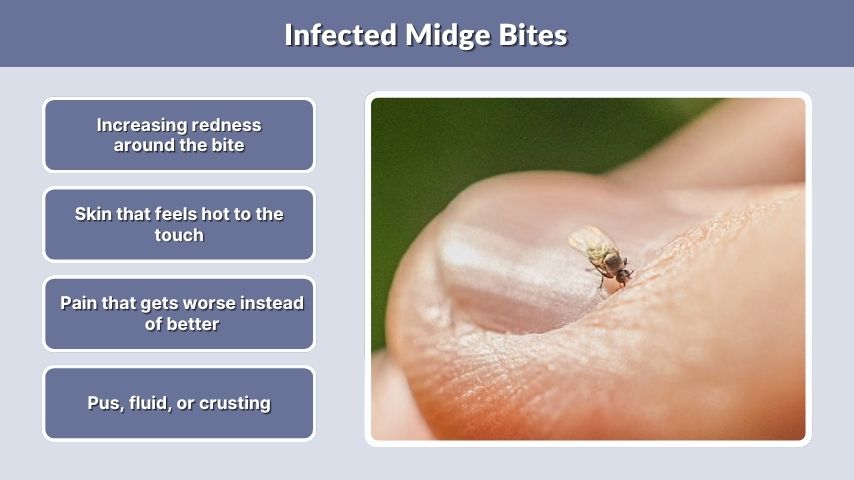
An infected midge bite can happen when bacteria enter broken skin, often after scratching. Infection is not the usual outcome, but it can occur if bites are irritated repeatedly.
Warning Signs of Infection
Look for these signs:
- Increasing redness around the bite
- Skin that feels hot to the touch
- Pain that gets worse instead of better
- Pus, fluid, or crusting
- Swelling that spreads
- Fever or feeling unwell
If these symptoms appear, seek medical advice. Infected bites may need professional treatment, especially if redness spreads quickly or the bite is near the eye, mouth, or a joint.
Midge Bites Allergic Reaction
Some people develop a stronger reaction to midge bites than others. This does not always mean a dangerous allergy, but it can cause large itchy welts, swelling, or blistering. Children and people with sensitive skin may react more noticeably.
When a Reaction Is Serious
Get urgent medical help if a bite is followed by symptoms such as trouble breathing, swelling of the lips, face, eyelids, or throat, dizziness, fainting, widespread hives, or a fast heartbeat. These can be signs of a serious allergic reaction and should not be ignored.
For most people, midge bites cause local discomfort rather than a severe reaction. Still, it is important to monitor symptoms, especially if you have a history of strong allergic responses to insect bites or stings.
How to Prevent Midge Bites
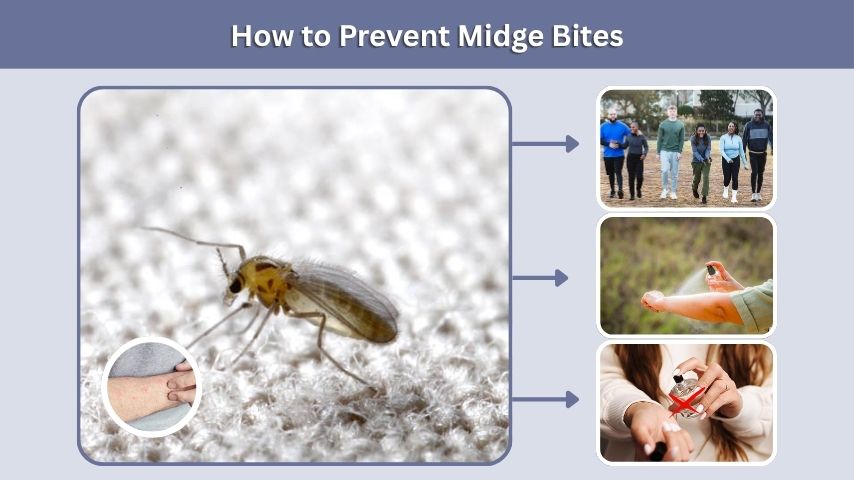
Prevention is often easier than treatment, especially in areas where biting midges are common. Since midges are tiny, they can be hard to avoid completely, but you can reduce exposure with the right habits.
Outdoor Protection Tips
Use these practical steps:
- Wear long sleeves and long trousers outdoors.
- Choose tightly woven clothing when possible.
- Use insect repellent on exposed skin.
- Avoid sitting near still water at dawn or dusk.
- Keep doors and windows screened.
- Use fine mesh nets in high-midge areas.
- Avoid strong fragrances that may attract insects.
- Cover ankles, wrists, and neck when walking in damp areas.
Midges are weak fliers compared with many larger insects, so fans and breezy areas may help reduce bites around patios, campsites, and outdoor seating areas.
Clothing and Timing
Clothing can make a big difference. Loose openings at cuffs, collars, and ankles allow insects to reach the skin, so tuck trousers into socks when walking through grassy or damp areas. If you are visiting a known midge-heavy location, plan outdoor activities for breezier times of day when possible.
Midge Bites in the UK and Scotland
Midge bites are often discussed in relation to the UK, especially Scotland, where the Highland midge is well known. Damp landscapes, lochs, woodland, and mild weather can create ideal conditions for midges. Outdoor workers, hikers, campers, anglers, and tourists may be more exposed.
Why Scotland Gets So Many Midges
Parts of Scotland offer the moisture, shelter, and breeding conditions midges prefer. They are especially troublesome in calm, humid weather. Wind, bright sun, and dry conditions usually make them less active.
If you are planning a trip to Scotland or another midge-prone area, pack repellent, long clothing, and a head net for hiking or camping. These small steps can prevent a large number of bites.
Best Relief for Itchy Midge Bites
The best relief depends on the severity of your symptoms. For mild itching, cold compresses and simple anti-itch creams may be enough. For stronger itching, an oral antihistamine may help, but always follow the label and check with a pharmacist if you are unsure.
Practical Itch-Control Tips
To reduce itching:
- Keep nails short to reduce skin damage from scratching.
- Cover bites with breathable clothing if you keep touching them.
- Use a cold cloth when itching flares.
- Avoid hot showers, which may worsen itching.
- Do not repeatedly apply multiple creams at once.
- Ask a pharmacist before using treatments on children.
Itching often feels worse when the skin is warm. Keeping the area cool and protected can make the healing process more comfortable.
When to Get Medical Advice
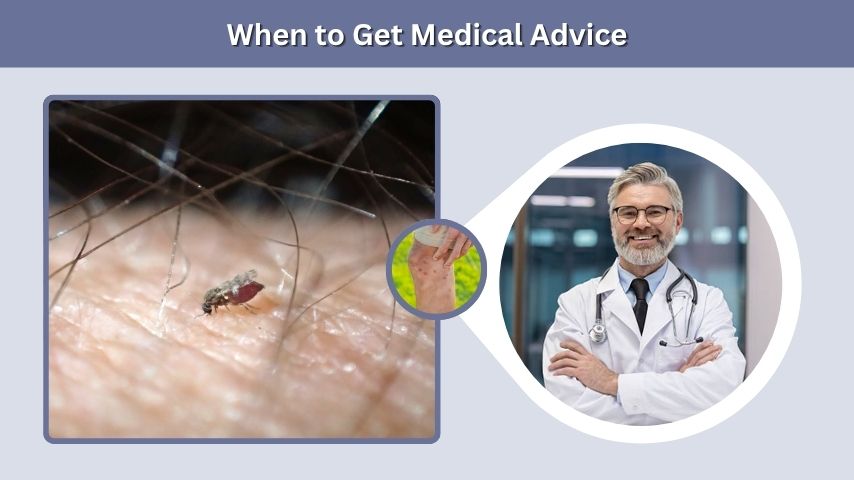
Most midge bites do not need medical treatment, but some situations require extra care. You should seek advice if the bite looks infected, symptoms are getting worse, or you have a strong reaction that does not improve.
Seek Help If You Notice
Get medical advice if:
- Redness spreads around the bite
- The area becomes hot, swollen, or painful
- Pus or fluid appears
- You develop fever or feel unwell
- Bites are near the eye or mouth
- Swelling is severe
- Symptoms last longer than expected
Call emergency services if there are signs of a severe allergic reaction, such as breathing difficulty, facial or throat swelling, fainting, or widespread hives.
FAQs
Are midge bites dangerous?
Midge bites are usually not dangerous and mainly cause itching, redness, and swelling. The biggest risks are scratching too much, developing a skin infection, or having a stronger allergic reaction. If a bite becomes painful, hot, swollen, or leaks pus, it is best to seek medical advice.
How do you get rid of midge bites fast?
You cannot make midge bites disappear instantly, but you can reduce discomfort. Wash the area, apply a cold compress, avoid scratching, and use suitable anti-itch treatment such as hydrocortisone cream or an antihistamine. Healing is usually faster when the skin stays clean and unbroken.
What do midge bites look like on humans?
Midge bites on humans often look like tiny red bumps, raised welts, or itchy clusters on exposed skin. They may appear on the arms, legs, neck, face, ankles, or hands. In sensitive people, the bites can become larger, swollen, blistered, or rash-like.
Why do midge bites itch so much?
Midge bites itch because your immune system reacts to substances in the insect’s saliva. This reaction can cause redness, swelling, and irritation. Scratching may make the itch worse by inflaming the skin and increasing the chance of infection, so cooling and anti-itch care are better options.
Can midges bite through clothing?
Midges may bite through very thin or loose clothing, and they can reach skin through gaps around sleeves, collars, cuffs, and socks. Tightly woven clothing gives better protection. In midge-heavy areas, long sleeves, trousers, tucked cuffs, repellent, and fine mesh nets can reduce bites.