
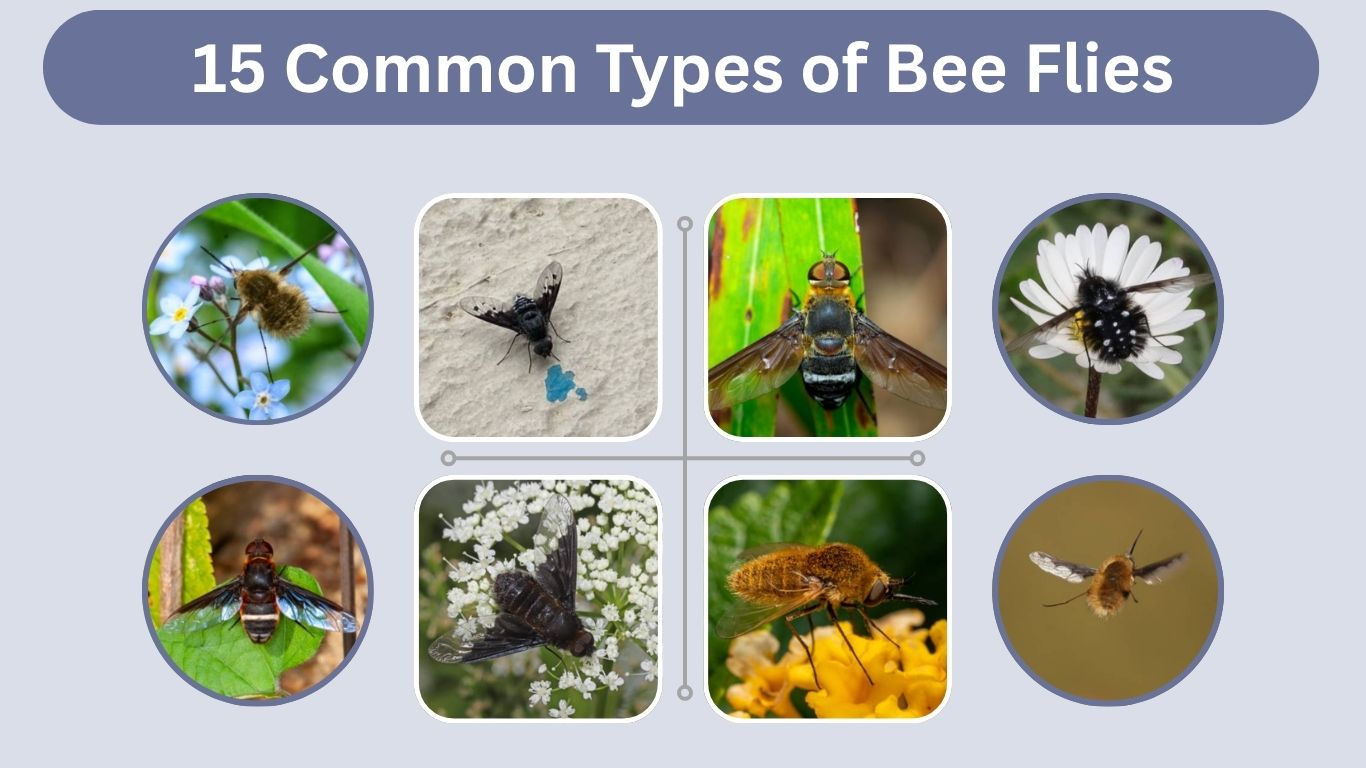
Bee flies are fascinating insects belonging to the family Bombyliidae, a diverse group with more than 5,000 species found worldwide. These insects are best known for their fuzzy, bee-like appearance, remarkable hovering abilities, and long proboscises used for feeding on flower nectar. Despite resembling bees, bee flies are true flies and play a vital role as pollinators in many ecosystems. Their larvae often develop as parasites of bees, wasps, and other insects, making them important contributors to ecological balance. This guide explores 15 common types of bee flies, highlighting their unique characteristics, habitats, feeding habits, and ecological significance.
1. Greater Bee Fly (Bombylius major)
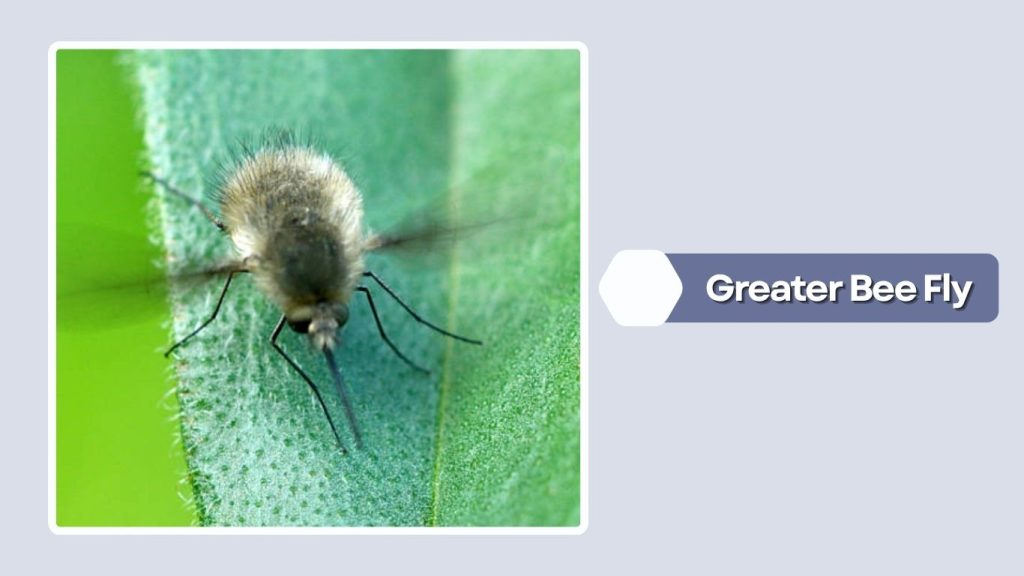
The Greater Bee Fly is one of the most common and recognizable bee fly species found across Europe and parts of Asia. With its furry body, long proboscis, and hovering flight, it closely resembles a bumblebee. This fascinating insect is often seen visiting flowers in spring, feeding on nectar while hovering in front of blooms. Despite its bee-like appearance, the Greater Bee Fly belongs to the family Bombyliidae and plays an important role as a pollinator in many ecosystems.
Characteristics
- Furry body resembling a bumblebee
- Long, straight proboscis for feeding on nectar
- Wings marked with distinctive dark patches
- Body length of approximately 10–14 mm
- Rapid hovering flight similar to hummingbirds
- Brown, black, and yellow coloration
- Large compound eyes
- Excellent pollinating abilities
Habitat and Distribution
The Greater Bee Fly is widely distributed throughout Europe, North Africa, and parts of Asia. It commonly inhabits gardens, meadows, woodland edges, parks, and grasslands. Adults are most active during spring and early summer when flowers are abundant. They are particularly attracted to sunny locations where flowering plants provide a reliable nectar source.
Feeding Behavior
Adult Greater Bee Flies feed primarily on nectar from a variety of flowering plants. Using their long proboscis, they can access nectar from deep tubular flowers without landing. Their hovering ability allows them to feed efficiently while remaining airborne. Larvae, however, have a very different lifestyle and develop as parasites of solitary bees and other ground-nesting insects.
Ecological Importance
Greater Bee Flies contribute significantly to pollination by transferring pollen between flowers while feeding. Their larvae also help regulate populations of certain solitary bee species. As both pollinators and parasites, these insects play a unique role in maintaining ecological balance and supporting biodiversity in natural habitats.
2. Large Bee Fly (Bombylius discolor)
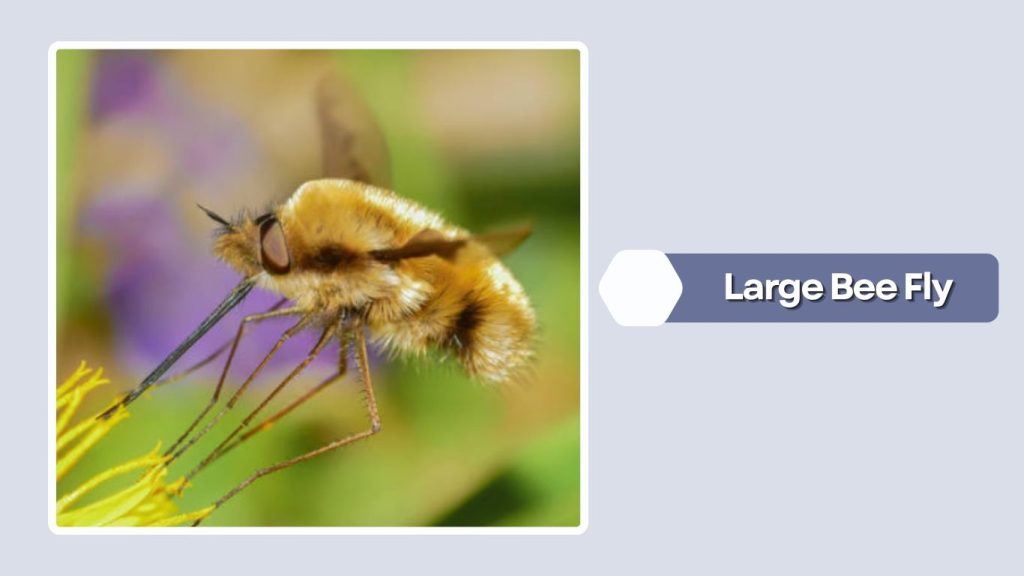
The Large Bee Fly is a striking species known for its dense body hair and bee-like appearance. Often mistaken for a bumblebee, this insect is a skilled flyer that can hover effortlessly while feeding on nectar. It is commonly seen during spring and early summer, visiting flowers in gardens, grasslands, and woodland clearings. Like other bee flies, it serves as both a pollinator and a parasite during different stages of its life cycle.
Characteristics
- Large, furry body resembling a bumblebee
- Long proboscis for feeding on nectar
- Distinctive dark markings on the wings
- Brown, black, and yellow body coloration
- Excellent hovering flight ability
- Large compound eyes
- Body length typically between 10–15 mm
- Active during spring and early summer
Habitat and Distribution
The Large Bee Fly is found throughout much of Europe and parts of western Asia. It prefers sunny habitats such as meadows, gardens, woodland edges, and open grasslands. Adults are frequently observed around flowering plants where nectar is readily available.
Feeding Behavior
Adult flies feed mainly on flower nectar. Their long proboscis allows them to access nectar from deep blossoms while hovering in front of flowers. The larvae develop as parasites of solitary bees and other ground-nesting insects, feeding within host nests.
Ecological Importance
Large Bee Flies are important pollinators that help many flowering plants reproduce. Their larvae also influence populations of certain solitary bee species, contributing to ecological balance within their habitats.
3. Heath Bee Fly (Bombylius minor)
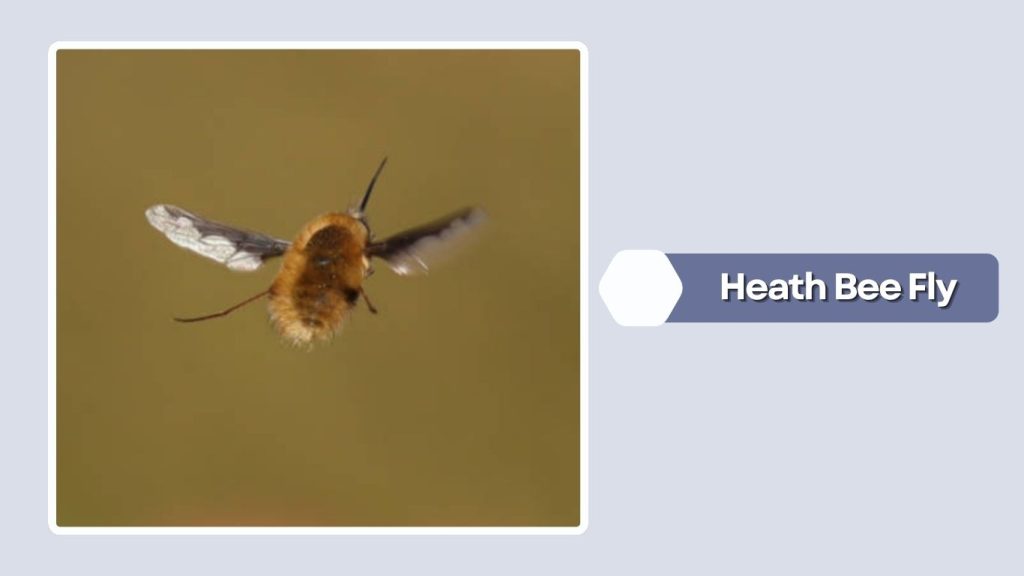
The Heath Bee Fly is a smaller member of the bee fly family that closely resembles a tiny bee. Despite its modest size, it is an efficient pollinator and a fascinating aerial insect. This species is commonly associated with heathlands, grasslands, and sandy habitats where flowering plants and host insects are abundant.
Characteristics
- Small, compact body covered in fine hairs
- Bee-like appearance and coloration
- Long proboscis adapted for nectar feeding
- Darkened wing bases with clear outer sections
- Excellent hovering capability
- Large compound eyes
- Fast and agile flight
- Body length usually between 8–12 mm
Habitat and Distribution
The Heath Bee Fly occurs across Europe and parts of Asia. It is most commonly found in heathlands, dry grasslands, coastal dunes, and open countryside. Adults prefer sunny locations rich in flowering plants and are most active during spring and early summer.
Feeding Behavior
Adult Heath Bee Flies feed on nectar from a variety of wildflowers. They hover in front of flowers while feeding, rarely landing. Their larvae are parasitic and develop in the nests of solitary bees and other ground-nesting insects, where they consume host resources during development.
Ecological Importance
As active flower visitors, Heath Bee Flies play an important role in pollination. Their interactions with solitary bee nests also help regulate host populations. Together, these activities make them a valuable part of many natural ecosystems.
4. Dark-Edged Bee Fly (Bombylius ater)
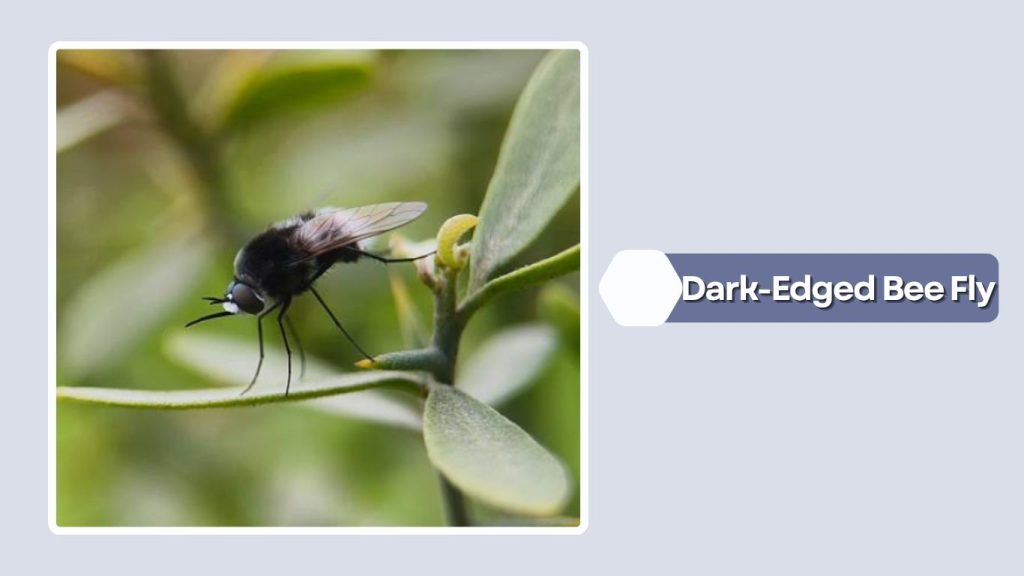
The Dark-Edged Bee Fly is a distinctive species recognized by the dark margins on its wings and its fuzzy, bee-like body. Like many bee flies, it is often mistaken for a small bumblebee while hovering around flowers. This species is an important pollinator and is commonly observed in sunny habitats during the warmer months of the year.
Characteristics
- Furry body resembling a bee
- Dark-edged wings with noticeable markings
- Long proboscis for nectar feeding
- Brown and black body coloration
- Excellent hovering flight ability
- Large compound eyes
- Fast and agile movements
- Medium-sized bee fly species
Habitat and Distribution
The Dark-Edged Bee Fly is found across parts of Europe, North Africa, and western Asia. It inhabits grasslands, meadows, gardens, woodland edges, and open countryside. Adults prefer warm, sunny locations where flowering plants are abundant and nectar sources are readily available.
Feeding Behavior
Adult Dark-Edged Bee Flies feed mainly on nectar from flowers. They typically hover in front of blossoms while extending their long proboscis to reach nectar. Their larvae develop as parasites of solitary bees and other insects, spending their immature stages within host nests.
Ecological Importance
This species contributes to pollination by transferring pollen between flowers during feeding. Its larval parasitism also helps regulate certain insect populations, making it an important part of ecosystem dynamics.
5. Tiger Bee Fly (Xenox tigrinus)
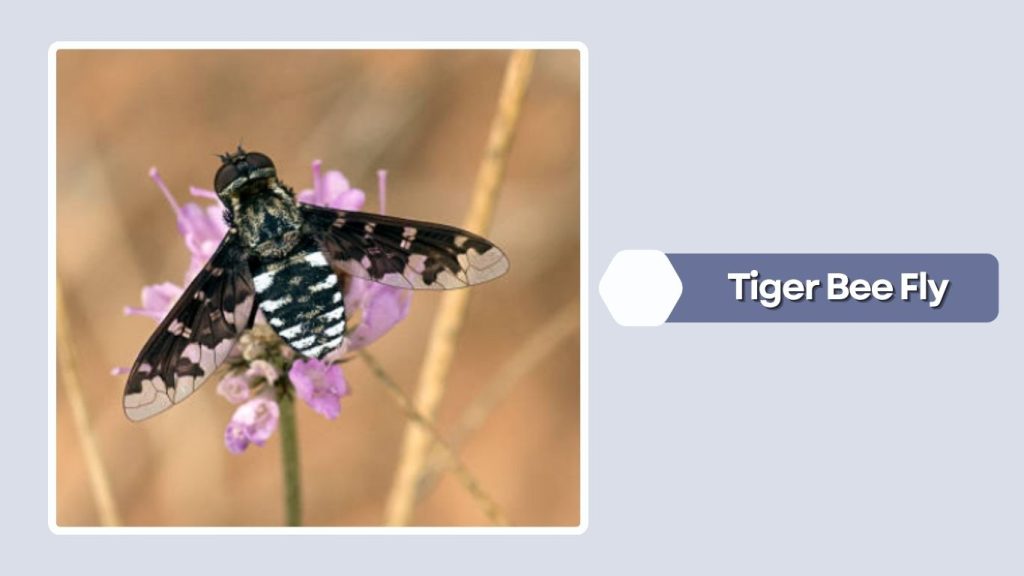
The Tiger Bee Fly is one of the most unusual bee flies due to its striking wing patterns and parasitic lifestyle. Native to North America, this species is known for targeting carpenter bees, whose nests provide a suitable environment for developing larvae. Adults are frequently seen near flowers and wooded areas where carpenter bees are active.
Characteristics
- Distinctive tiger-like wing markings
- Black and yellow body coloration
- Compact, robust body structure
- Large compound eyes
- Long legs and strong flight muscles
- Excellent hovering capabilities
- Bee-mimicking appearance
- Medium-sized bee fly species
Habitat and Distribution
Tiger Bee Flies are found throughout much of North America. They are commonly associated with forests, gardens, parks, and suburban areas where carpenter bees are present. Adults are most active during late spring and summer when host nests and flowering plants are abundant.
Feeding Behavior
Adult Tiger Bee Flies feed on nectar from a wide range of flowering plants. Females lay eggs near carpenter bee nests, and the larvae enter the nest to develop. The developing larvae feed on the host’s provisions and immature stages, completing their life cycle within the nest environment.
Ecological Importance
Tiger Bee Flies serve as pollinators while feeding on nectar and help regulate carpenter bee populations through their parasitic larvae. Their dual ecological role makes them an important component of many North American ecosystems.
6. Sinuate Bee Fly (Villa sinuata)
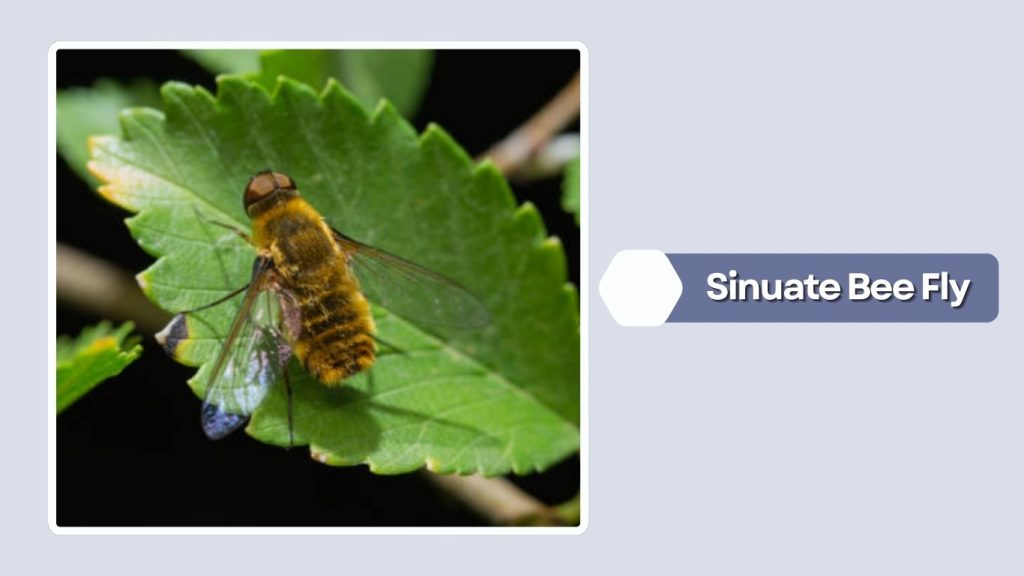
The Sinuate Bee Fly is a graceful and agile member of the bee fly family known for its patterned wings and swift flight. Unlike the heavily furry Bombylius species, this bee fly has a more slender appearance while still displaying the hovering behavior typical of bee flies. It is commonly found in open habitats where flowers and host insects are plentiful.
Characteristics
- Slender body with fine hair covering
- Distinctive patterned wings
- Brown, gray, and black coloration
- Large compound eyes
- Excellent hovering and flight abilities
- Long legs adapted for landing on vegetation
- Medium-sized bee fly species
- Active during warm, sunny weather
Habitat and Distribution
The Sinuate Bee Fly is widely distributed across North America and can be found in grasslands, meadows, woodland edges, and open fields. It thrives in areas with abundant flowering plants and sandy soils where many of its host insects live. Adults are most commonly observed during spring and summer.
Feeding Behavior
Adult Sinuate Bee Flies feed primarily on nectar from wildflowers. They often hover near blossoms while using their proboscis to extract nectar. The larvae are parasitic and develop on the immature stages of various insects, including beetles and solitary bees.
Ecological Importance
This species contributes to pollination while feeding on flowers and helps regulate populations of host insects through its parasitic larvae. These ecological functions make it an important part of many natural habitats.
7. Golden Bee Fly (Anthrax aureus)
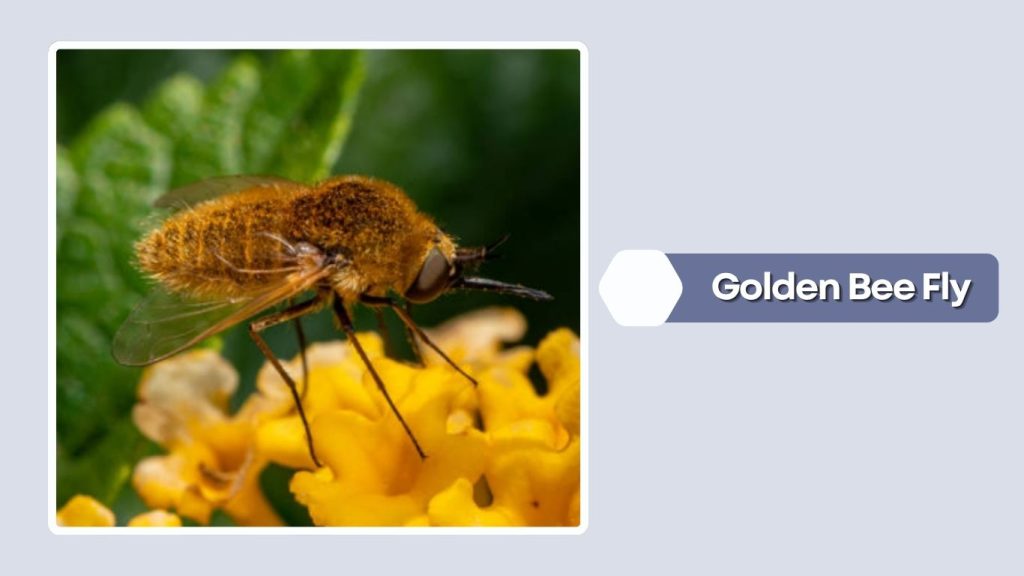
The Golden Bee Fly is a beautiful species recognized for its golden-colored body hairs and striking appearance. It belongs to the genus Anthrax, a group of bee flies known for their patterned wings and parasitic larvae. This species is often seen visiting flowers in sunny environments and is valued for its role as a pollinator.
Characteristics
- Dense golden or yellowish body hairs
- Dark wings with attractive patterns
- Compact and robust body structure
- Large compound eyes
- Strong hovering flight capabilities
- Bee-like appearance
- Medium-sized bee fly
- Active during warm seasons
Habitat and Distribution
Golden Bee Flies are found in various regions of North and Central America. They inhabit grasslands, deserts, meadows, gardens, and open woodland habitats. Adults prefer sunny locations with abundant flowering plants and suitable host insects for reproduction.
Feeding Behavior
Adults feed mainly on nectar and occasionally pollen from flowering plants. They hover skillfully while feeding and can visit many flowers in a short period. Their larvae develop as parasites of solitary bees, wasps, and other insects, completing their development within host nests.
Ecological Importance
Golden Bee Flies play a valuable role in pollination by transferring pollen between flowers. Their parasitic larvae also help regulate populations of certain insects, contributing to ecological balance and biodiversity within their habitats.
8. Black Bee Fly (Anthrax anthrax)
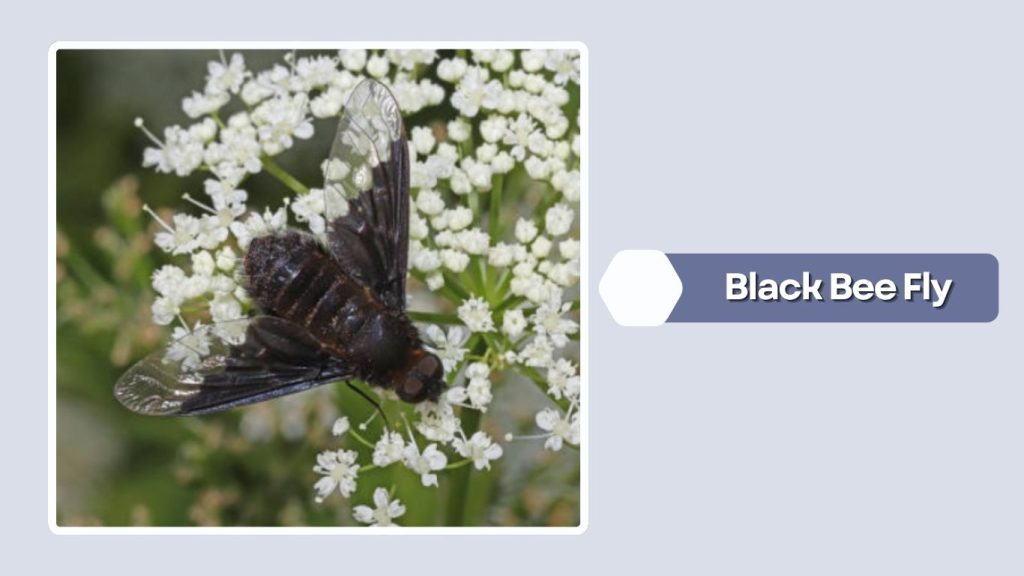
The Black Bee Fly is a distinctive species known for its dark body and boldly patterned wings. Despite its somewhat intimidating name, this bee fly is harmless to humans and spends much of its adult life visiting flowers for nectar. It belongs to the genus Anthrax, one of the largest groups within the bee fly family. The species is commonly found in warm, open habitats where flowering plants and host insects are abundant.
Characteristics
- Predominantly black body coloration
- Dark wings with translucent patches
- Compact and robust body structure
- Large compound eyes
- Short antennae
- Strong hovering flight abilities
- Medium-sized bee fly species
- Bee-like appearance that aids camouflage
Habitat and Distribution
The Black Bee Fly is widely distributed across Europe, North Africa, and parts of Asia. It inhabits grasslands, sandy areas, woodland clearings, gardens, and open countryside. Adults are most active during spring and summer, especially in sunny weather when flowers are plentiful.
Feeding Behavior
Adult Black Bee Flies primarily feed on nectar from flowering plants. They often hover near blossoms before briefly landing to feed. Their larvae are parasitic and typically develop in the nests of solitary bees and wasps, where they consume host resources during development.
Ecological Importance
Black Bee Flies serve as effective pollinators and contribute to the reproduction of many flowering plants. Their parasitic larvae help regulate populations of certain insects, supporting ecological balance in natural habitats.
9. White-Banded Bee Fly (Hemipenthes morio)
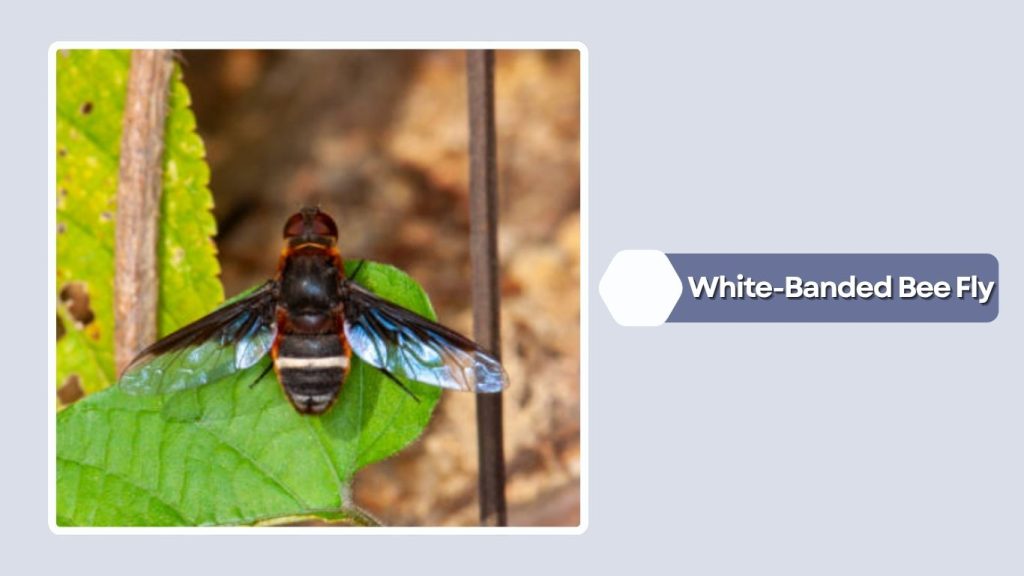
The White-Banded Bee Fly is a striking species recognized by the contrasting white bands across its dark wings. It is an agile flyer that often hovers near flowers in search of nectar. This species belongs to a group of bee flies known for their important roles as pollinators and natural biological control agents.
Characteristics
- Distinct white bands across dark wings
- Black or dark brown body coloration
- Slender yet sturdy body structure
- Large compound eyes
- Excellent hovering and maneuvering abilities
- Fine body hairs covering the thorax
- Medium-sized bee fly species
- Fast and active flight behavior
Habitat and Distribution
The White-Banded Bee Fly is found across North America and parts of Central America. It inhabits meadows, grasslands, woodland edges, gardens, and open fields. Adults are commonly observed in sunny environments where flowering plants provide abundant nectar sources.
Feeding Behavior
Adults feed on nectar from a wide variety of flowers and often hover while feeding. Females lay eggs near the nests of host insects, and the larvae develop as parasites of beetles, solitary bees, or wasps. This parasitic lifestyle helps the species complete its life cycle successfully.
Ecological Importance
White-Banded Bee Flies contribute to pollination by visiting numerous flowers throughout their lives. Their larvae also help regulate populations of certain insect species, making them beneficial components of healthy ecosystems.
10. Spotted Bee Fly (Exoprosopa fasciata)
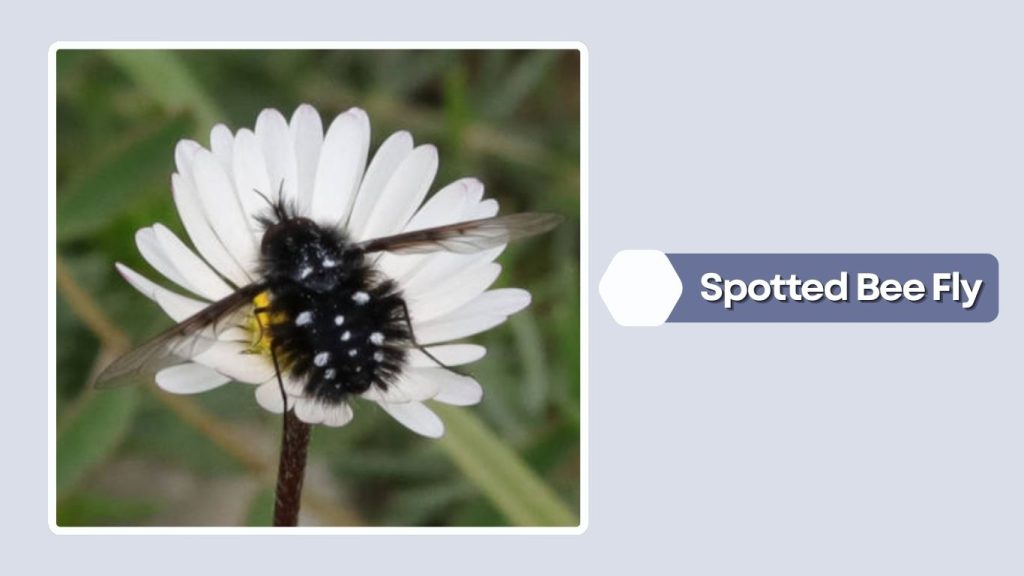
The Spotted Bee Fly is a beautiful and easily recognizable species known for the distinctive spots and bands on its wings. It is a member of the genus Exoprosopa, a group of large bee flies that are often seen hovering around flowers in sunny habitats. This species combines graceful flight with an important ecological role as both a pollinator and a parasite.
Characteristics
- Wings marked with distinct spots and bands
- Robust body covered with fine hairs
- Brown, black, and gray coloration
- Large compound eyes
- Excellent hovering flight ability
- Medium to large body size
- Bee-like appearance
- Fast and agile flyer
Habitat and Distribution
The Spotted Bee Fly is found in parts of Europe, Asia, and North Africa. It commonly inhabits grasslands, meadows, woodland edges, coastal areas, and open countryside. Adults are most active during warm, sunny weather and are frequently observed near flowering plants.
Feeding Behavior
Adult Spotted Bee Flies feed mainly on nectar from a variety of flowers. Their long mouthparts allow them to access nectar efficiently while hovering. The larvae develop as parasites of solitary bees, wasps, and other insects, completing their growth within host nests.
Ecological Importance
This species serves as an effective pollinator, helping flowering plants reproduce. Its parasitic larvae also help regulate populations of host insects, contributing to ecological balance and biodiversity.
11. Dune Bee Fly (Paravilla cinerea)
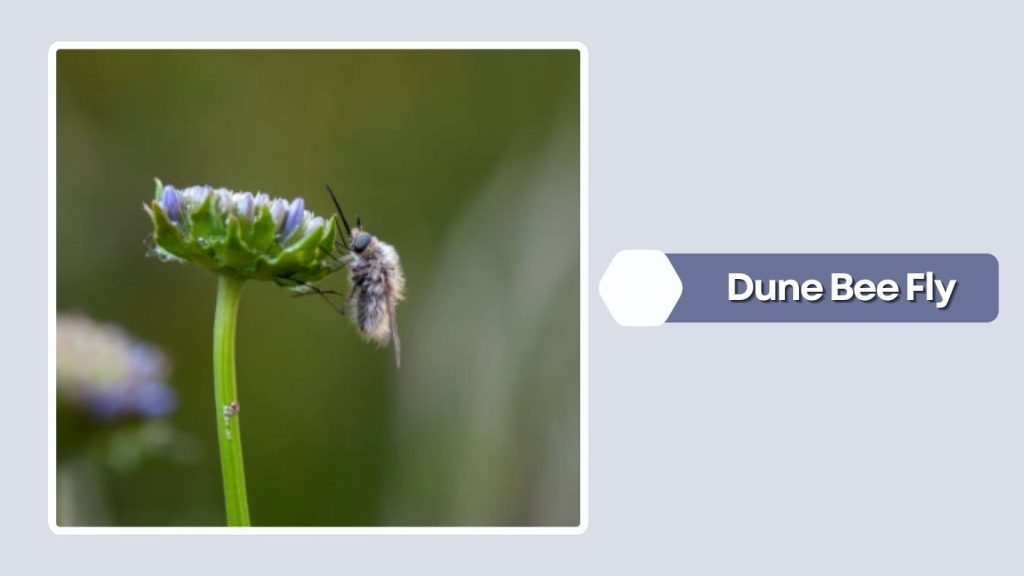
The Dune Bee Fly is a specialized species commonly associated with sandy environments and coastal dunes. Its coloration helps it blend into its surroundings, providing protection from predators. Like many bee flies, it is an agile flyer and an important pollinator in its habitat.
Characteristics
- Grayish or sandy-colored body
- Fine hair covering the body
- Long legs and slender build
- Large compound eyes
- Excellent hovering capabilities
- Adapted to sandy habitats
- Medium-sized bee fly species
- Rapid and maneuverable flight
Habitat and Distribution
The Dune Bee Fly is primarily found in coastal dunes, sandy grasslands, deserts, and other dry habitats. It occurs in parts of North America where suitable sandy environments are available. Adults are commonly seen during warm months visiting flowers that grow in dune ecosystems.
Feeding Behavior
Adults feed on nectar from a variety of flowering plants found in sandy habitats. They hover skillfully while feeding and move rapidly between flowers. Their larvae are parasitic and develop on the immature stages of other insects living within the same environment.
Ecological Importance
Dune Bee Flies contribute to pollination in fragile dune ecosystems where pollinators are especially important. Their larvae also help maintain ecological balance by naturally regulating certain insect populations. As a result, they play a valuable role in supporting biodiversity in sandy habitats.
12. Giant Bee Fly (Exoprosopa grandis)
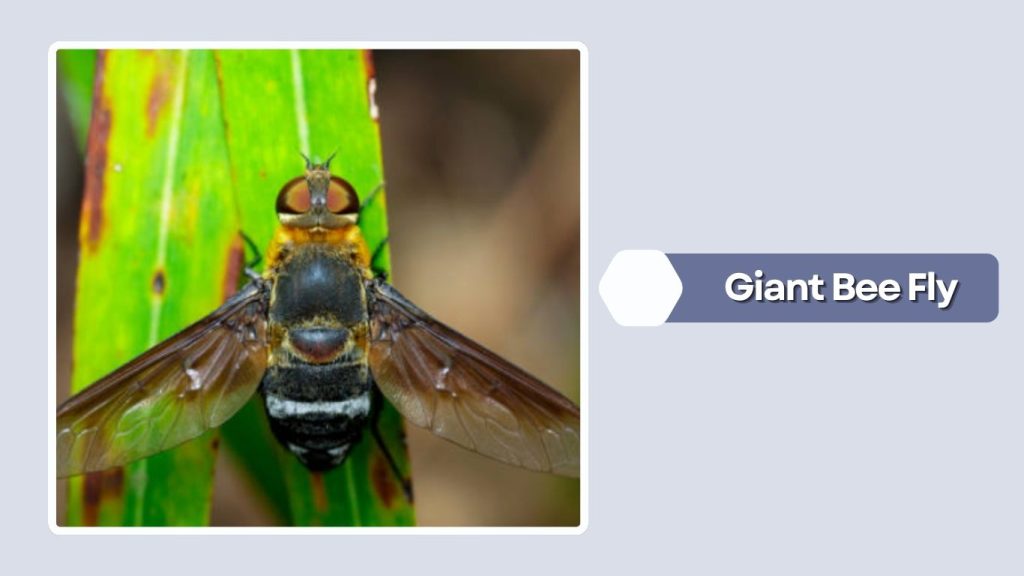
The Giant Bee Fly is one of the largest members of the bee fly family. Its impressive size, patterned wings, and powerful flight make it a striking sight in the wild. Despite its large appearance, it is harmless to humans and spends much of its adult life feeding on nectar from flowers. Like many bee flies, it plays a dual ecological role as a pollinator and a parasite during its larval stage.
Characteristics
- One of the largest bee fly species
- Broad wings with distinctive dark patterns
- Robust and hairy body
- Large compound eyes
- Strong hovering and flight abilities
- Brown, black, and gray coloration
- Long mouthparts for nectar feeding
- Highly active during warm weather
Habitat and Distribution
The Giant Bee Fly is found across parts of Europe, Asia, and North Africa. It inhabits grasslands, meadows, open woodlands, scrublands, and agricultural landscapes. Adults are commonly seen in sunny areas with abundant flowering plants and suitable host insects.
Feeding Behavior
Adult Giant Bee Flies feed primarily on nectar from a variety of flowers. They hover near blossoms and use their mouthparts to extract nectar efficiently. The larvae develop as parasites of solitary bees, wasps, and other insects, utilizing host nests for growth and development.
Ecological Importance
As frequent flower visitors, Giant Bee Flies contribute to pollination and plant reproduction. Their parasitic larvae help regulate populations of host insects, making them an important component of many ecosystems.
13. Painted Bee Fly (Villa panisca)
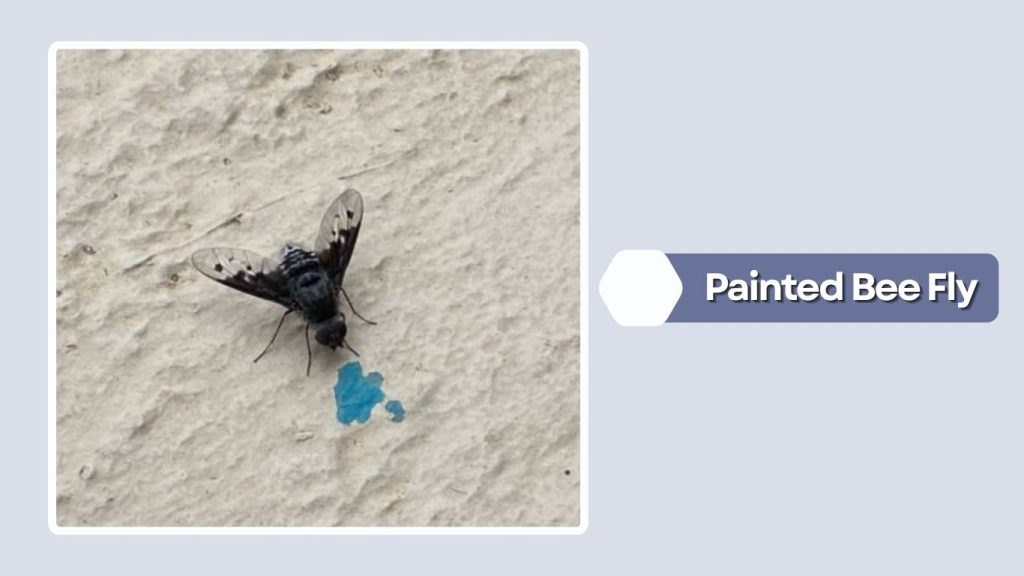
The Painted Bee Fly is a colorful and attractive species known for its beautifully patterned wings and agile flight. It belongs to the genus Villa, a group of bee flies that are commonly found in open habitats. This species is admired for its delicate appearance and its important role in pollination.
Characteristics
- Distinctively patterned and “painted” wings
- Slender body covered with fine hairs
- Brown, gray, and black coloration
- Large compound eyes
- Excellent hovering abilities
- Fast and agile flyer
- Medium-sized bee fly species
- Bee-like appearance
Habitat and Distribution
The Painted Bee Fly occurs across Europe and parts of Asia. It is commonly found in grasslands, meadows, heathlands, woodland edges, and open countryside. Adults prefer sunny habitats rich in flowering plants and are most active during spring and summer.
Feeding Behavior
Adult Painted Bee Flies feed on nectar from a wide range of wildflowers. They often hover while feeding and move rapidly between blossoms. Their larvae are parasitic, developing on the immature stages of various insects, including solitary bees and wasps.
Ecological Importance
Painted Bee Flies are valuable pollinators that assist in the reproduction of many flowering plants. Their larval parasitism also helps maintain ecological balance by naturally regulating certain insect populations. Their presence contributes to biodiversity and ecosystem health.
14. Common Bee Fly (Bombylius medius)
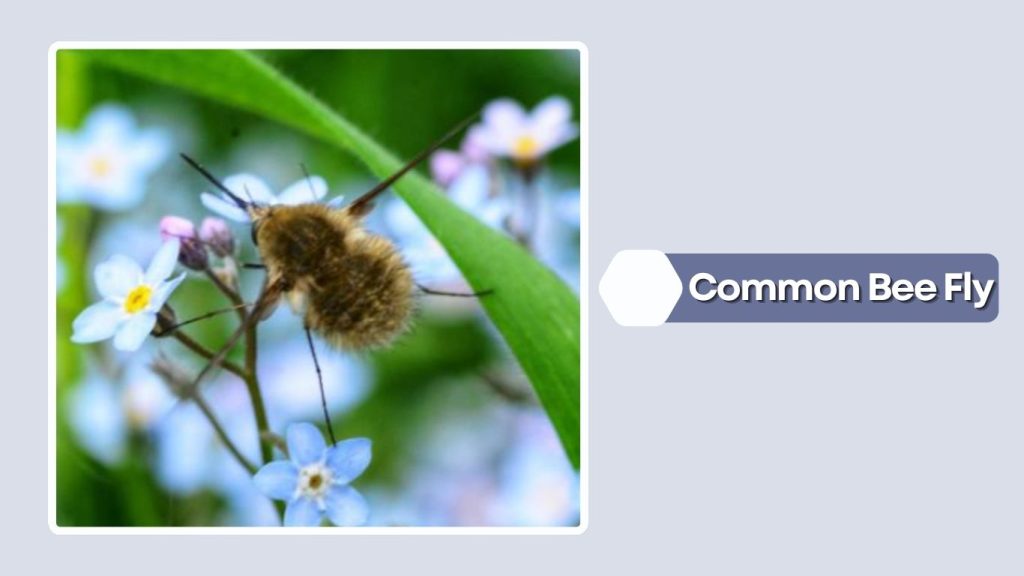
The Common Bee Fly is a widespread and familiar member of the bee fly family. With its furry body, long proboscis, and hovering flight, it closely resembles a small bee. This species is often seen visiting flowers in gardens, meadows, and grasslands during spring and summer. Its ability to pollinate flowers while feeding makes it an important insect in many ecosystems.
Characteristics
- Furry body with a bee-like appearance
- Long proboscis for nectar feeding
- Brown, black, and yellow coloration
- Large compound eyes
- Distinctive dark wing markings
- Excellent hovering flight ability
- Medium-sized bee fly species
- Active during warm months
Habitat and Distribution
The Common Bee Fly is found across Europe, parts of Asia, and neighboring regions. It inhabits gardens, meadows, parks, grasslands, and woodland edges. Adults prefer sunny areas rich in flowering plants, where they can easily find nectar sources and suitable locations for reproduction.
Feeding Behavior
Adult Common Bee Flies feed primarily on nectar and occasionally consume pollen. They hover near flowers while extending their long proboscis into blossoms. Their larvae are parasitic and typically develop in the nests of solitary bees and other ground-nesting insects.
Ecological Importance
Common Bee Flies are important pollinators that help flowering plants reproduce. Their larvae also play a role in regulating populations of certain host insects. Together, these functions contribute to ecosystem balance and biodiversity.
15. Peacock Bee Fly (Thyridanthrax fenestratus)
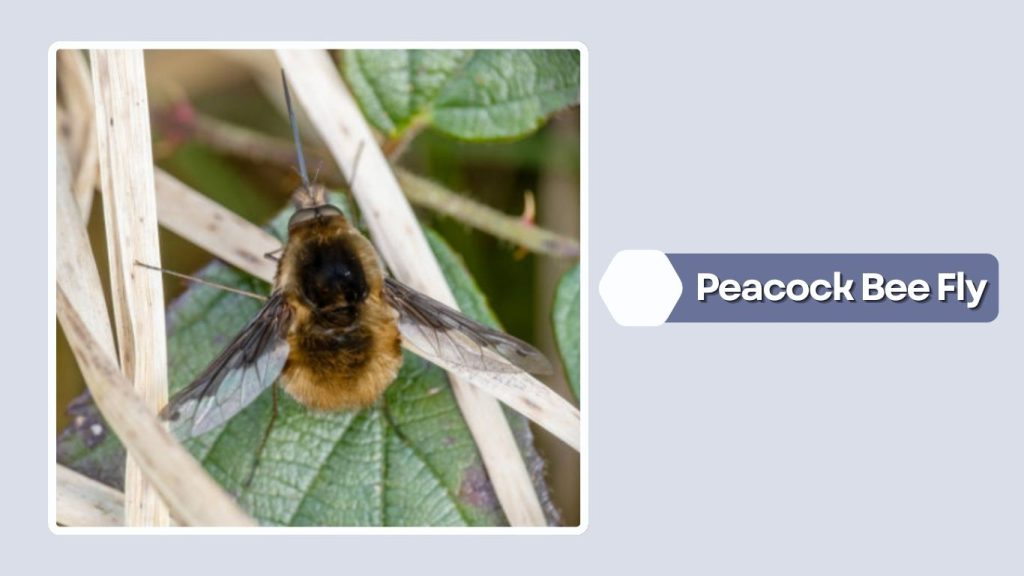
The Peacock Bee Fly is a striking species known for its beautifully patterned wings, which resemble the decorative markings found on a peacock’s feathers. This eye-catching insect is commonly found in warm, open habitats and is admired for its graceful flight and unique appearance. Like many bee flies, it serves as both a pollinator and a parasite during different stages of its life cycle.
Characteristics
- Beautifully patterned wings with decorative markings
- Compact body covered with fine hairs
- Black, brown, and gray coloration
- Large compound eyes
- Strong hovering flight capabilities
- Medium-sized bee fly species
- Bee-like appearance
- Fast and agile flyer
Habitat and Distribution
The Peacock Bee Fly is distributed across North and Central America. It inhabits deserts, grasslands, open woodlands, gardens, and scrub habitats. Adults are most active during warm seasons and are frequently observed around flowering plants.
Feeding Behavior
Adult Peacock Bee Flies feed mainly on nectar from a wide variety of flowers. They hover skillfully while feeding and can move quickly between nectar sources. Their larvae develop as parasites of bees, wasps, and other insects, using host nests as a place to grow and mature.
Ecological Importance
Peacock Bee Flies contribute to pollination by transferring pollen between flowers. Their parasitic larvae help regulate populations of host insects, supporting ecological balance. Their combination of pollination and population control makes them valuable members of many ecosystems.
Frequently Asked Questions (FAQs) About Bee Flies
1. What is a bee fly?
A bee fly is an insect belonging to the family Bombyliidae. These flies are known for their fuzzy, bee-like appearance and their ability to hover while feeding on flower nectar.
2. Are bee flies actually bees?
No. Despite their resemblance to bees, bee flies are true flies. They belong to the order Diptera, while bees belong to the order Hymenoptera.
3. Are bee flies harmful to humans?
No, bee flies are harmless to humans. They do not sting, bite, or spread diseases.
4. What do adult bee flies eat?
Adult bee flies primarily feed on nectar from flowers. Some species may also consume small amounts of pollen.
5. Why do bee flies look like bees?
Bee flies mimic bees as a form of protective camouflage. Predators are less likely to attack insects that resemble stinging bees.
6. Do bee flies pollinate flowers?
Yes. Bee flies are important pollinators and help transfer pollen between flowers while feeding on nectar.
7. Where are bee flies found?
Bee flies occur worldwide and can be found in gardens, meadows, grasslands, woodlands, deserts, and other habitats with flowering plants.
8. How do bee flies hover in the air?
Bee flies have powerful flight muscles that allow them to hover in front of flowers, much like hummingbirds.
9. What do bee fly larvae eat?
Most bee fly larvae are parasites or parasitoids that develop on the eggs, larvae, or nests of bees, wasps, beetles, and other insects.
10. How large do bee flies get?
Bee fly size varies by species. Most range from 5–20 mm in length, although some giant species can grow even larger.
11. When are bee flies most active?
Bee flies are usually most active during spring and summer when flowers are blooming and nectar is readily available.
12. Why are bee flies important to ecosystems?
Bee flies support ecosystems by pollinating flowers and helping regulate populations of other insects through their parasitic larvae. Their activities contribute to biodiversity and ecological balance.