
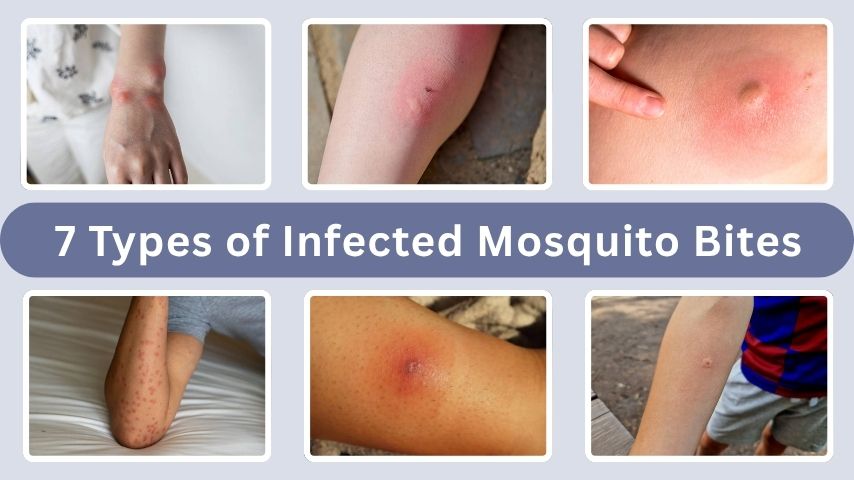
Mosquito bites are usually harmless, causing mild itching and temporary swelling. However, some bites can become infected when bacteria enter the skin through scratching or irritation. Infected mosquito bites may develop redness, pain, swelling, pus, or even serious skin damage if left untreated.
Different types of infected mosquito bites can range from mild bacterial infections to severe conditions requiring medical care. Understanding the warning signs, causes, and treatment options can help prevent complications and protect your skin from worsening infections after mosquito bites.
1. Cellulitis Mosquito Bite
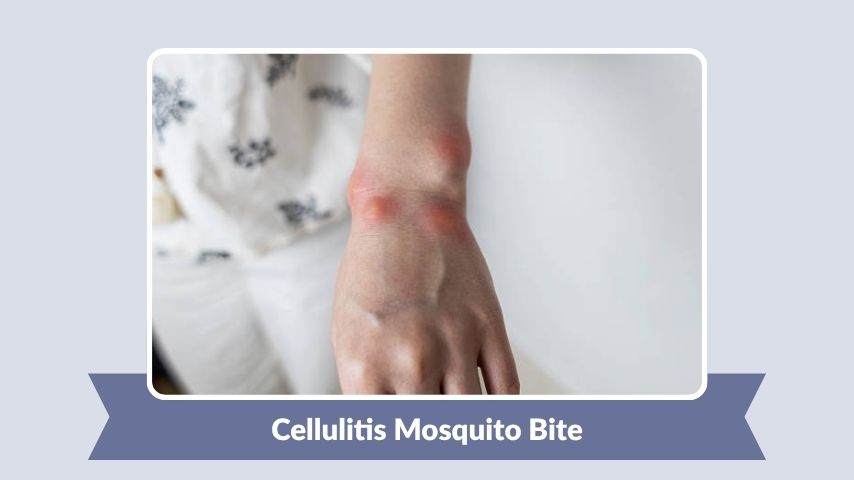
Cellulitis mosquito bites happen when bacteria enter the skin after excessive scratching or irritation from a mosquito bite. This bacterial skin infection can spread quickly and may require medical treatment if symptoms become severe. Unlike a normal mosquito bite, cellulitis causes increasing redness, swelling, warmth, and pain around the affected area.
Identification Signs
- Expanding red or pink skin area
- Swelling around the bite
- Warm or hot skin
- Pain or tenderness
- Pus or drainage in severe cases
- Fever in advanced infections
Causes of a Cellulitis Mosquito Bite
Cellulitis usually develops when bacteria such as Streptococcus or Staphylococcus enter broken skin after scratching a mosquito bite. Poor hygiene, weakened immunity, or repeated scratching can increase the risk of infection.
Treatment and Prevention
Mild cellulitis often requires prescription antibiotics to stop the infection from spreading. Keeping the bite clean, avoiding scratching, and using anti-itch creams can help prevent bacterial infection. Severe cases with fever or rapidly spreading redness should be treated by a healthcare professional immediately.
2. Impetigo Mosquito Bite
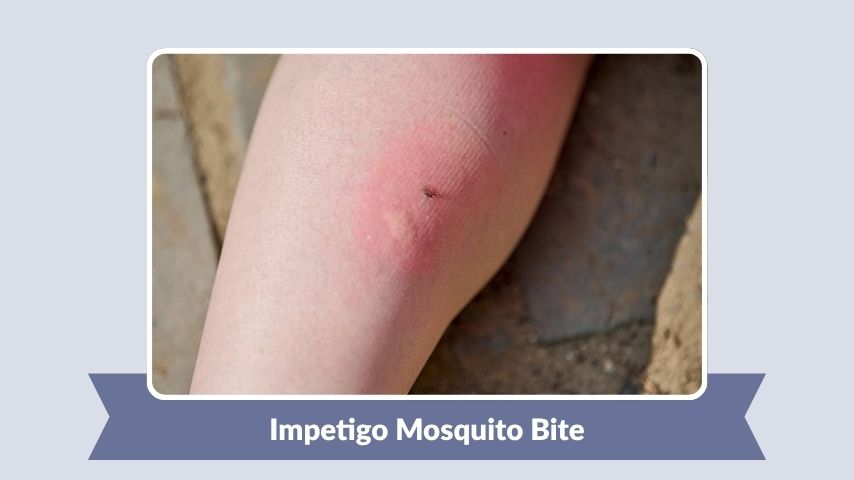
Impetigo mosquito bites develop when bacteria infect the skin after a mosquito bite has been scratched or damaged. This contagious skin infection is common in children but can affect people of any age. Impetigo usually creates crusty sores and fluid-filled blisters around the bite area.
Identification Signs
- Red sores around the bite
- Honey-colored crust formation
- Small fluid-filled blisters
- Itchy or irritated skin
- Oozing or wet-looking sores
- Skin spreading around nearby areas
Causes of an Impetigo Mosquito Bite
Impetigo is usually caused by Staphylococcus aureus or Streptococcus bacteria entering broken skin. Scratching mosquito bites with dirty hands increases the chance of infection and allows bacteria to spread easily.
Treatment and Prevention
Doctors often treat impetigo with antibiotic creams or oral antibiotics depending on severity. Washing bites gently, keeping fingernails clean, and avoiding scratching can reduce the risk of infection. Towels, clothing, and bedding should also remain clean because impetigo spreads through direct contact.
3. Abscessed Mosquito Bite
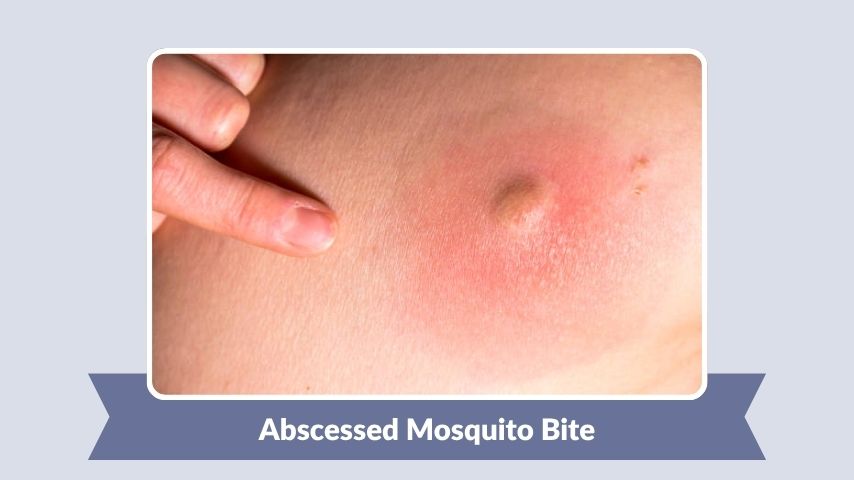
An abscessed mosquito bite occurs when bacteria cause a pocket of pus to form beneath the skin after a mosquito bite becomes infected. This condition is more serious than a normal infected bite and may become painful, swollen, and warm to the touch. Abscesses can grow larger over time if untreated.
Identification Signs
- Painful swollen lump
- Pus-filled center
- Red or darkened surrounding skin
- Warmth around the bite
- Throbbing pain
- Fever in severe infections
Causes of an Abscessed Mosquito Bite
Abscesses usually develop when bacteria enter scratched or broken skin after a mosquito bite. The body responds by trapping the infection inside a pus-filled pocket beneath the skin surface.
Treatment and Prevention
Small abscesses may improve with warm compresses and proper hygiene, but larger infections often require medical drainage and antibiotics. Avoiding excessive scratching and cleaning bites regularly can help prevent bacterial infection from developing into an abscess.
4. MRSA-Infected Mosquito Bite
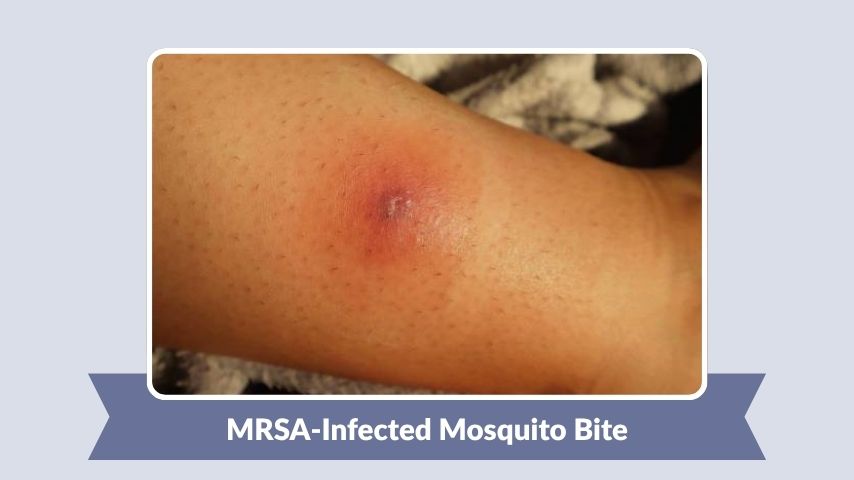
An MRSA-infected mosquito bite happens when a mosquito bite becomes infected with methicillin-resistant Staphylococcus aureus (MRSA), a type of bacteria resistant to many common antibiotics. This infection can become serious if not treated quickly and may spread deeper into the skin or bloodstream.
Identification Signs
- Painful red swelling
- Warm skin around the bite
- Pus or drainage
- Rapidly enlarging bump
- Fever or chills
- Dark or irritated skin tissue
Causes of an MRSA-Infected Mosquito Bite
MRSA bacteria can enter the body through scratched or damaged skin after a mosquito bite. The risk increases in crowded environments, poor hygiene conditions, or among individuals with weakened immune systems.
Treatment and Prevention
MRSA infections usually require medical evaluation and specific antibiotics that can treat resistant bacteria. Doctors may also drain infected areas if pus develops. Keeping mosquito bites clean, avoiding scratching, and washing hands frequently can help lower the risk of MRSA infection.
5. Ulcerated Mosquito Bite
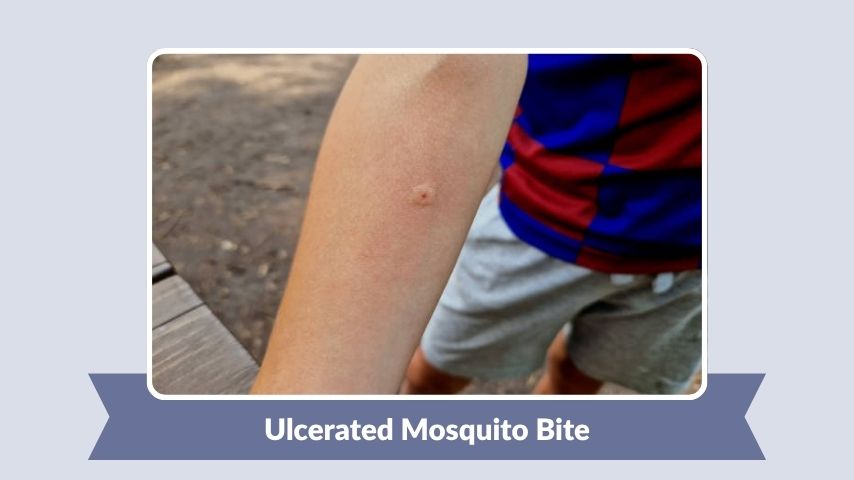
An ulcerated mosquito bite develops when an infected bite breaks down and forms an open sore on the skin. This condition may occur after severe irritation, prolonged scratching, or bacterial infection. Ulcerated bites can become painful and slow to heal if not treated properly.
Identification Signs
- Open sore at the bite site
- Crusted or damaged skin
- Redness around the ulcer
- Pain or burning sensation
- Fluid or pus discharge
- Slow healing skin wound
Causes of an Ulcerated Mosquito Bite
Ulceration often happens when repeated scratching damages the skin deeply enough for bacteria to enter. Poor circulation, weakened immunity, or untreated infections can also increase the risk of skin ulcer formation.
Treatment and Prevention
Proper wound cleaning and medical treatment are important to prevent the ulcer from worsening. Doctors may recommend antibiotics, medicated ointments, or wound care depending on severity. Avoiding scratching and protecting mosquito bites from irritation can help prevent ulcer formation.
6. Infected Skeeter Syndrome Bite
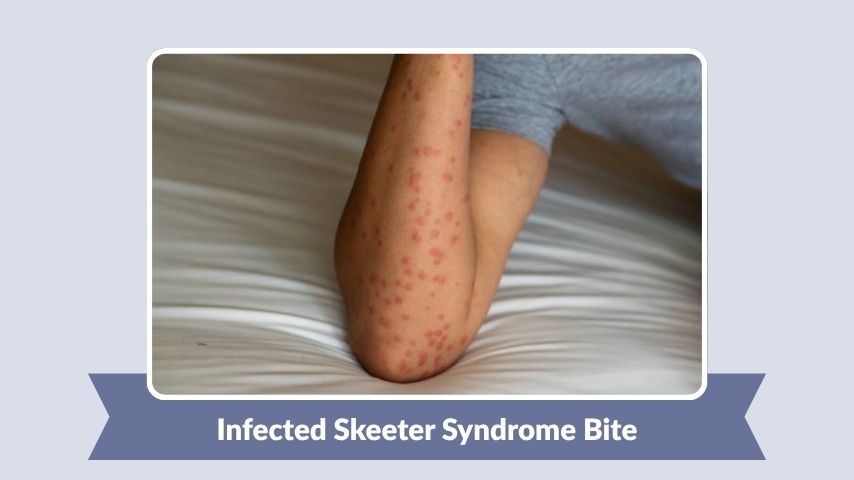
Infected Skeeter syndrome bites occur when a severe allergic reaction to a mosquito bite becomes irritated or infected by bacteria. Unlike a normal mosquito bite, Skeeter syndrome causes extreme swelling, redness, and warmth that can resemble a skin infection. Scratching the swollen area may lead to a secondary bacterial infection.
Identification Signs
- Large swollen bite area
- Intense redness
- Warm or hot skin
- Severe itching
- Pain or tenderness
- Fever in some cases
Causes of an Infected Skeeter Syndrome Bite
Skeeter syndrome happens because the immune system reacts strongly to mosquito saliva. When the swollen bite is scratched repeatedly, bacteria can enter the damaged skin and create an infection.
Treatment and Prevention
Doctors may recommend antihistamines, steroid creams, or antibiotics if infection develops. Applying cold compresses and avoiding scratching can reduce swelling and lower the risk of bacterial complications. Severe reactions or breathing difficulties require immediate medical attention.
7. Necrotic Mosquito Bite
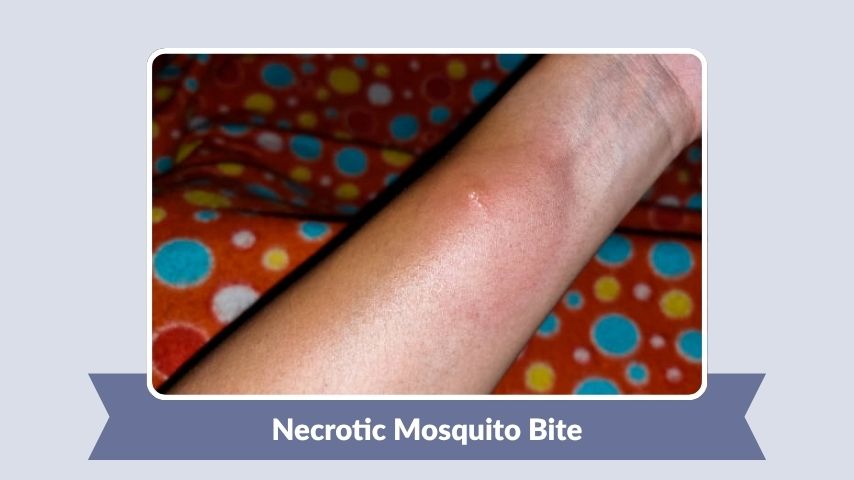
A necrotic mosquito bite is a rare but serious infected bite in which skin tissue begins to die around the affected area. This condition may develop from severe bacterial infection, poor blood circulation, or an extreme immune reaction following a mosquito bite. Immediate medical attention is often necessary.
Identification Signs
- Dark purple or black skin
- Open wound formation
- Severe pain around the bite
- Swelling and redness
- Dead or damaged skin tissue
- Fever or flu-like symptoms
Causes of a Necrotic Mosquito Bite
Necrosis can occur when infection damages skin tissue and reduces blood flow in the affected area. Deep bacterial infections or untreated skin injuries after scratching may increase the risk of tissue death.
Treatment and Prevention
Necrotic bites usually require urgent medical care, including antibiotics, wound treatment, and sometimes removal of damaged tissue. Keeping mosquito bites clean and avoiding scratching can help prevent severe skin infections from developing.
FAQs
What are the signs of an infected mosquito bite?
An infected mosquito bite may become increasingly red, swollen, warm, painful, or filled with pus. Fever, spreading redness, and skin discoloration can also indicate infection rather than a normal mosquito bite reaction.
When should you see a doctor for a mosquito bite?
You should seek medical attention if the bite becomes very swollen, develops pus, causes severe pain, spreads rapidly, or is accompanied by fever, chills, or difficulty breathing.
Can scratching a mosquito bite cause infection?
Yes, scratching can break the skin and allow bacteria to enter the wound. This increases the risk of infections such as cellulitis, impetigo, or abscess formation.
How do you treat an infected mosquito bite at home?
Mild infections may improve with gentle cleaning, cold compresses, anti-itch creams, and keeping the area dry and clean. Serious infections often require prescription antibiotics from a healthcare provider.
How can you prevent mosquito bites from getting infected?
Avoid scratching bites, wash the area regularly, use anti-itch treatments, and keep fingernails clean. Wearing insect repellent and protective clothing can also help prevent mosquito bites altogether.