
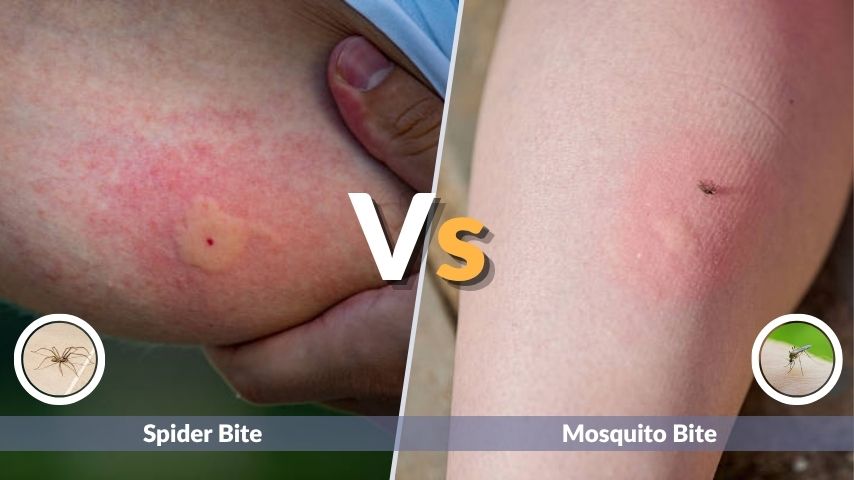
Spider bites and mosquito bites are often confused because both can cause red, swollen, and itchy skin. However, these bites usually have different symptoms, appearances, and levels of severity. Knowing how to identify them correctly can help you choose the right treatment and determine when medical care may be necessary.
Most mosquito bites are harmless and disappear within a few days, while some spider bites can become painful or develop serious reactions. This guide explains the differences between spider bites and mosquito bites, including appearance, symptoms, and common warning signs to watch for.
Spider Bite vs Mosquito Bite Overview
Spider bites and mosquito bites affect the skin differently because spiders inject venom while mosquitoes feed on blood. Although both may cause irritation and swelling, their symptoms and healing patterns are usually not the same. Understanding these differences can help prevent unnecessary panic and improve treatment decisions when dealing with unexplained skin bumps.
What Is a Spider Bite?
A spider bite happens when a spider uses its fangs to inject venom into the skin. Most spider bites are harmless and only cause mild irritation, but some species can trigger stronger reactions. Spider bites are generally less common than mosquito bites because spiders usually bite only when threatened or trapped against the skin.
What Is a Mosquito Bite?
Mosquito bites occur when female mosquitoes pierce the skin to feed on blood. During feeding, the mosquito injects saliva that causes itching and swelling. These bites are extremely common in warm climates and are often noticed after spending time outdoors, especially near standing water or humid environments.
Why People Confuse Them
Both spider bites and mosquito bites can appear as red bumps on the skin. Early swelling, itching, and irritation may look similar at first glance. In some cases, scratching can make mosquito bites resemble more serious insect or spider bites, which creates additional confusion.
Spider Bite vs Mosquito Bite Appearance
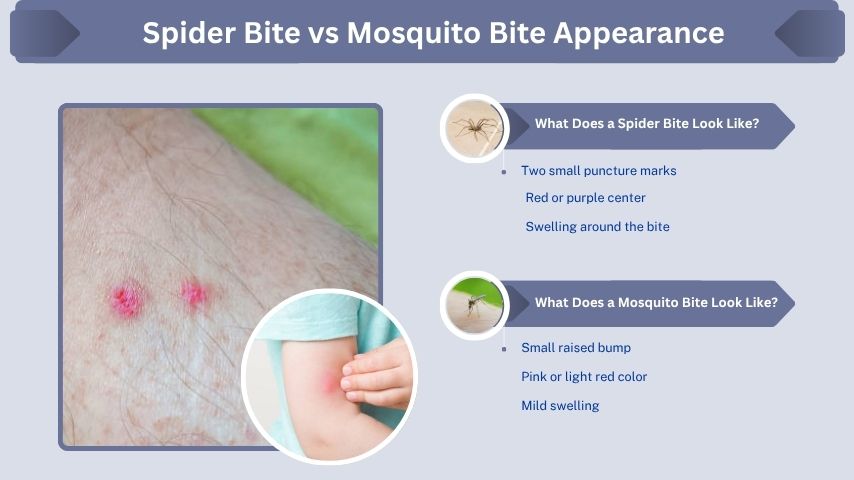
The appearance of a bite is one of the easiest ways to identify whether it came from a spider or mosquito. Spider bites often show more noticeable skin damage, while mosquito bites usually appear as soft, itchy bumps. Careful observation of shape, swelling, and bite marks can help distinguish the two.
What Does a Spider Bite Look Like?
Spider bites may appear more aggressive than mosquito bites and sometimes include visible puncture marks.
Common spider bite features include:
- Two small puncture marks
- Red or purple center
- Swelling around the bite
- Painful or warm skin
- Occasional blister formation
Some spider bites can darken over time if irritation becomes severe.
What Does a Mosquito Bite Look Like?
Mosquito bites are usually softer, rounder, and itchier than spider bites. They often appear shortly after being bitten outdoors.
Typical mosquito bite signs include:
- Small raised bump
- Pink or light red color
- Mild swelling
- Intense itching
- Smooth skin surface
Mosquito bites rarely develop blisters unless a person has an allergic reaction.
Side-by-Side Appearance Comparison
| Feature | Spider Bite | Mosquito Bite |
| Bite Marks | Two punctures | Single bump |
| Itching | Mild to moderate | Very itchy |
| Pain | Sometimes painful | Usually painless |
| Swelling | Can become severe | Mild swelling |
| Blisters | Possible | Rare |
Spider Bite vs Mosquito Bite Pictures
Photos online can help compare common bite appearances, but lighting, skin tone, and scratching may change how bites look. Some skin infections or allergic reactions can also resemble spider bites. Because of this, pictures alone should not be used for medical diagnosis.
Symptoms of Spider Bites vs Mosquito Bites
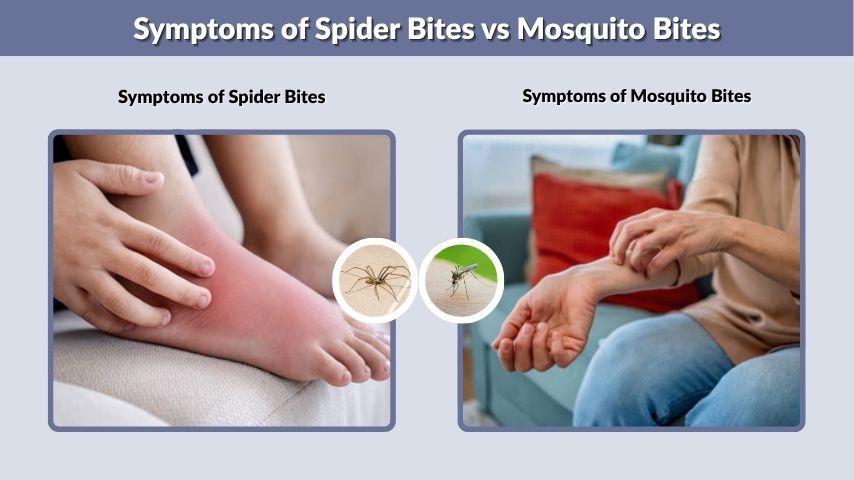
Symptoms vary depending on the insect or spider involved, the person’s skin sensitivity, and whether an allergic reaction occurs. Mosquito bites mainly cause itching, while spider bites are more likely to cause pain or burning sensations. Severe symptoms should always be monitored carefully.
Common Spider Bite Symptoms
Spider bites may produce localized pain and irritation that develops over several hours.
Possible symptoms include:
- Burning sensation
- Swelling and redness
- Muscle pain
- Blistering skin
- Tenderness around the bite
Certain venomous spiders may also cause nausea or cramps in rare cases.
Common Mosquito Bite Symptoms
Mosquito bites are usually mild and disappear within a few days. However, some people experience stronger swelling reactions.
Common mosquito bite symptoms include:
- Strong itching
- Small swollen welt
- Mild redness
- Temporary skin irritation
- Sensitivity from scratching
Children often develop larger swollen bumps because of stronger skin reactions.
Symptoms That Require Medical Attention
Some symptoms may indicate infection, allergic reaction, or a dangerous spider bite. Medical evaluation is important if symptoms rapidly worsen or spread beyond the bite area.
Warning signs include difficulty breathing, severe swelling, fever, spreading redness, or skin discoloration around the bite.
Spider Bite vs Mosquito Bite on Babies and Toddlers
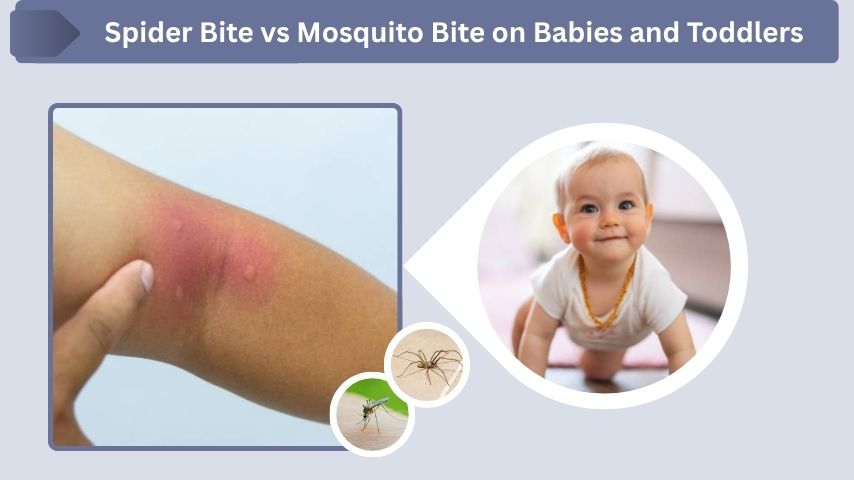
Children may react differently to bites because their skin is more sensitive and they are more likely to scratch irritated areas. Mosquito bites often appear larger on babies, while spider bites may cause noticeable pain or swelling. Parents should monitor all bites carefully for signs of infection or allergic reactions.
Mosquito Bites on Babies
Mosquito bites on babies commonly become swollen and red within a short time. Frequent scratching may irritate the skin further and increase infection risk. Using gentle anti-itch treatments and keeping fingernails trimmed can help reduce skin damage.
Spider Bites on Toddlers
Spider bites on toddlers may appear more painful than mosquito bites and can sometimes develop blisters or bruising. Young children may complain about burning sensations or tenderness around the affected area. Swelling can become more noticeable if the child scratches the bite repeatedly.
When Parents Should Call a Doctor
Parents should seek medical advice if a child develops severe swelling, fever, trouble breathing, or spreading redness around the bite. Medical attention is also important if the bite becomes warm, produces pus, or causes unusual pain that continues worsening over time.
Spider Bite vs Mosquito Bite vs Bed Bug Bite
Bed bug bites are another common skin irritation often mistaken for spider or mosquito bites. Although all three can cause itching and redness, bed bug bites usually appear in groups or straight lines. Recognizing the bite pattern is one of the best ways to identify the likely cause.
Bed Bug Bite Appearance
Bed bug bites usually develop overnight and often appear on exposed skin such as the arms, neck, and legs. The bites are commonly clustered together and may become very itchy after several hours.
How Bed Bug Bites Differ
Unlike spider bites, bed bug bites rarely cause pain or puncture marks. They also differ from mosquito bites because they commonly appear in multiple rows or tight clusters rather than isolated bumps.
Comparison Table
| Feature | Spider Bite | Mosquito Bite | Bed Bug Bite |
| Number of Bites | Usually one | Random single bites | Clusters |
| Itching Level | Moderate | High | High |
| Bite Pattern | Isolated | Scattered | Lines or groups |
| Pain | Possible | Rare | Mild |
Spider Bite vs Flea Bite vs Tick Bite
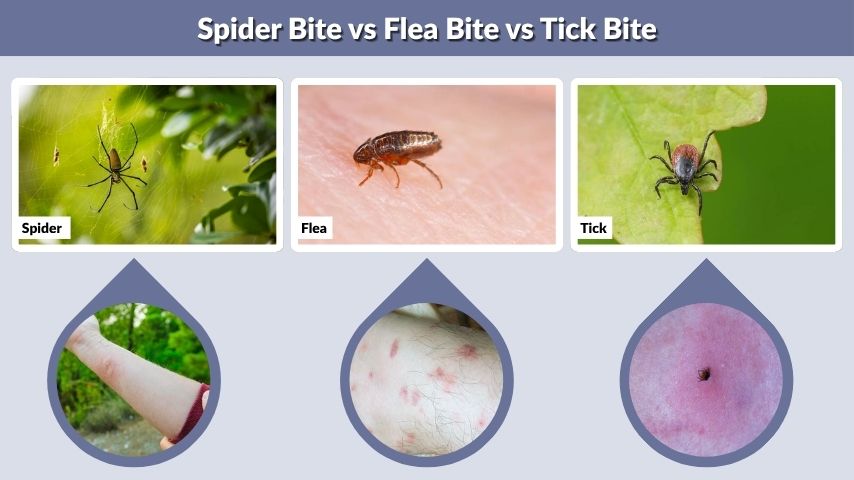
Flea bites and tick bites are also frequently confused with mosquito and spider bites. Each type of bite has unique patterns and symptoms that can help identify the source. Comparing size, location, and skin reactions is useful when determining which insect may be responsible.
Flea Bite Characteristics
Flea bites are tiny, itchy red bumps that often appear around the ankles, feet, or lower legs. They usually occur in groups because fleas bite multiple times while moving across the skin.
Tick Bite Characteristics
Tick bites are often less itchy at first and may go unnoticed until the tick is discovered attached to the skin. Some tick bites develop a circular or bullseye-shaped rash that may signal a serious infection such as Lyme disease.
Mosquito vs Spider vs Tick Bite Differences
Spider bites are more likely to cause pain, while mosquito bites mainly trigger itching. Tick bites may remain attached to the skin and develop slower reactions. Comparing swelling, rash patterns, and bite location can help narrow down the cause.
Infected Mosquito Bite vs Spider Bite
When bites become infected, they can look very similar and become harder to identify. Scratching often introduces bacteria into the skin, causing redness, warmth, and swelling. Monitoring changes in appearance is important because infections may require medical treatment.
Signs of an Infected Mosquito Bite
An infected mosquito bite may become swollen, painful, and unusually warm. In some cases, pus or crusting may develop around the bite area. Persistent scratching is one of the most common reasons mosquito bites become infected.
Signs of a Dangerous Spider Bite
Dangerous spider bites may produce severe pain, blistering, or darkening skin tissue. Some people may also experience sweating, nausea, muscle cramps, or fever depending on the spider species involved.
How Doctors Diagnose Bite Reactions
Doctors usually diagnose bites through physical examination and symptom history. They may ask about outdoor exposure, recent travel, or whether a spider or insect was actually seen during the bite event.
Treatment for Spider and Mosquito Bites
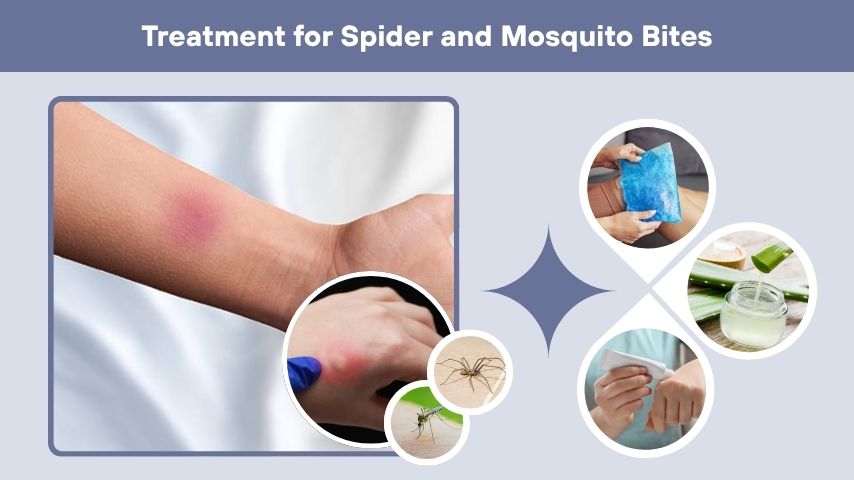
Most mosquito bites and mild spider bites can be treated at home with simple care methods. Reducing swelling, preventing scratching, and monitoring symptoms are the main goals of treatment. Severe reactions or infections may require professional medical attention.
Home Remedies for Mosquito Bites
Several home treatments can help reduce itching and swelling caused by mosquito bites.
Helpful remedies include:
- Ice packs
- Aloe vera gel
- Anti-itch creams
- Oatmeal paste
- Cold compresses
Keeping the skin clean also helps reduce irritation and infection risk.
Home Care for Spider Bites
Spider bites should be washed gently with soap and water soon after discovery. Applying a cold compress can help reduce pain and swelling. Elevating the affected area may also improve comfort if swelling becomes noticeable.
When Medical Treatment Is Needed
Medical care may be necessary if symptoms continue worsening, infection develops, or signs of allergic reaction appear. Emergency care is especially important for difficulty breathing, chest pain, or severe spreading swelling.
FAQs
How can you tell a spider bite from a mosquito bite?
Spider bites often show two small puncture marks and may feel painful or warm. Mosquito bites are usually soft, raised, and extremely itchy without visible punctures. Spider bites may also blister, while mosquito bites typically remain small and swollen.
Are spider bites more dangerous than mosquito bites?
Most spider bites are harmless, but some venomous spiders can cause serious reactions. Mosquito bites are generally mild, though they may spread diseases in certain regions. Severe swelling, fever, or breathing trouble should always be checked by a doctor.
Why do mosquito bites itch more than spider bites?
Mosquitoes itch because the insect injects saliva into the skin while feeding on blood. The body reacts to this saliva with inflammation and itching. Spider bites are more likely to cause pain or tenderness rather than intense itching.
Can mosquito bites become swollen like spider bites?
Yes, some mosquito bites can become very swollen, especially in children or people with sensitive skin. Allergic reactions and scratching may increase redness and swelling, making the bite resemble a mild spider bite.
When should you worry about a spider or mosquito bite?
You should seek medical care if the bite causes severe swelling, fever, spreading redness, pus, muscle cramps, or breathing difficulties. These symptoms may indicate infection, allergy, or a dangerous spider bite reaction.