
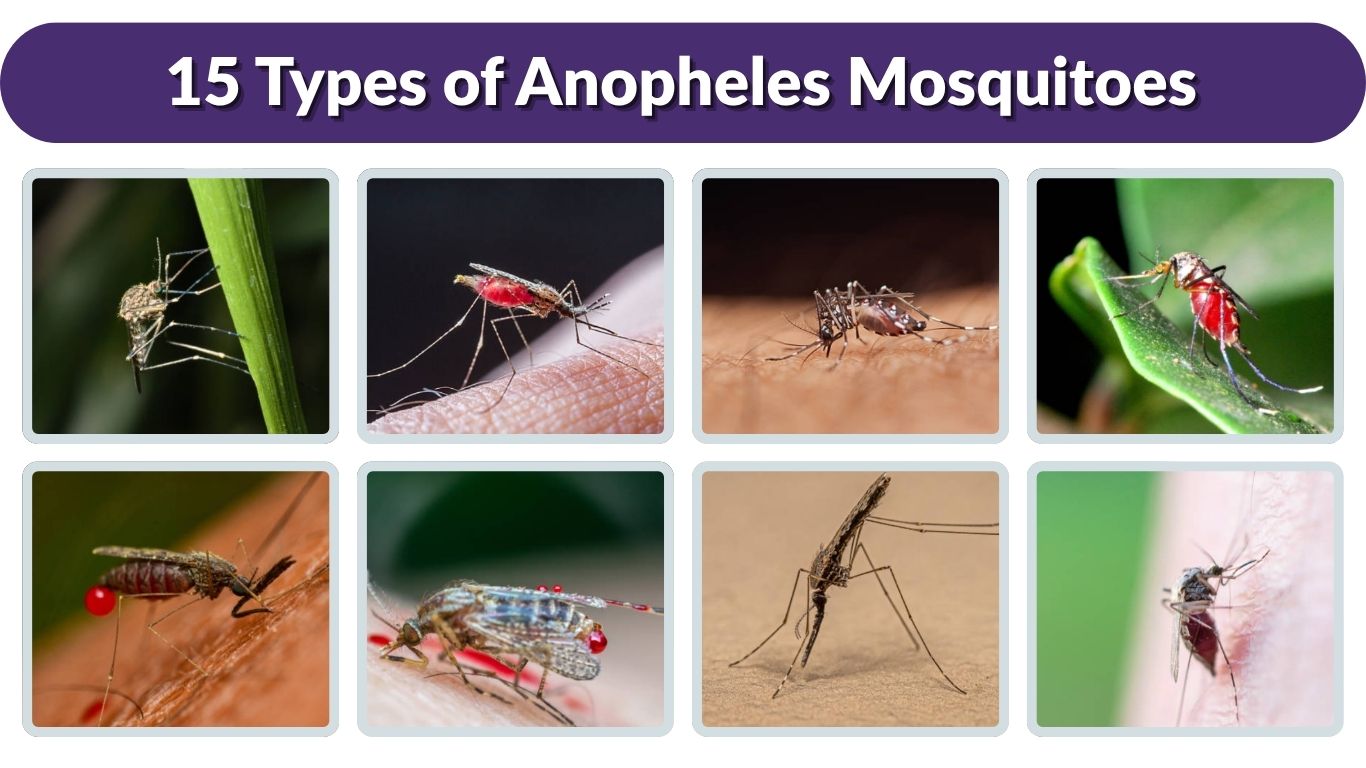
Anopheles mosquitoes are well known for their role in transmitting malaria, making them one of the most important insects in public health. These mosquitoes are found in many parts of the world, especially in tropical and subtropical regions. Each type has unique features, habitats, and behaviors that influence how they survive and spread disease. This guide explores 15 types of Anopheles mosquitoes, highlighting their identification, habitat and distribution, behavior and diet, and lifespan in a clear and easy-to-understand format.
1. African Malaria Mosquito
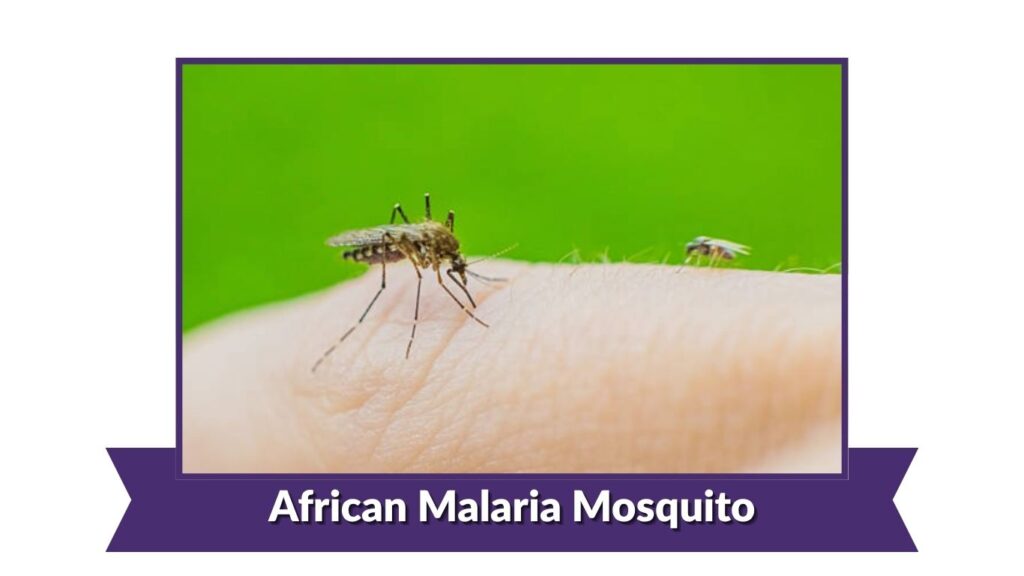
The African malaria mosquito is one of the most well-known disease-carrying mosquitoes, especially in tropical regions. It is closely associated with the transmission of malaria and is commonly found in warm, humid environments. This mosquito is active mainly at night and prefers human blood as its primary food source.
Identification
- Slender body with long legs
- Brown or dark-colored body
- Wings with spotted patterns
- Resting position at an angle to the surface
- Long, straight proboscis
Habitat and Distribution
The African malaria mosquito is found mainly in sub-Saharan Africa. It thrives in tropical and subtropical regions where temperatures are warm and humidity is high. This mosquito prefers habitats with standing water, such as ponds, marshes, puddles, and slow-moving streams, which serve as breeding sites. It is commonly found near human settlements where water sources are available.
Behavior and Diet
This mosquito is most active during nighttime, especially from dusk to dawn. Female mosquitoes feed on human blood, which provides the nutrients needed for egg development. Males, on the other hand, feed mainly on plant nectar. The species is known for its strong preference for human hosts, which makes it an effective transmitter of malaria parasites.
Lifespan
The lifespan of the African malaria mosquito depends on environmental conditions. Females typically live for about 1 to 2 weeks in the wild, although some may survive longer in favorable conditions. Males generally have a shorter lifespan, usually living for about a week.
2. Asian Malaria Mosquito
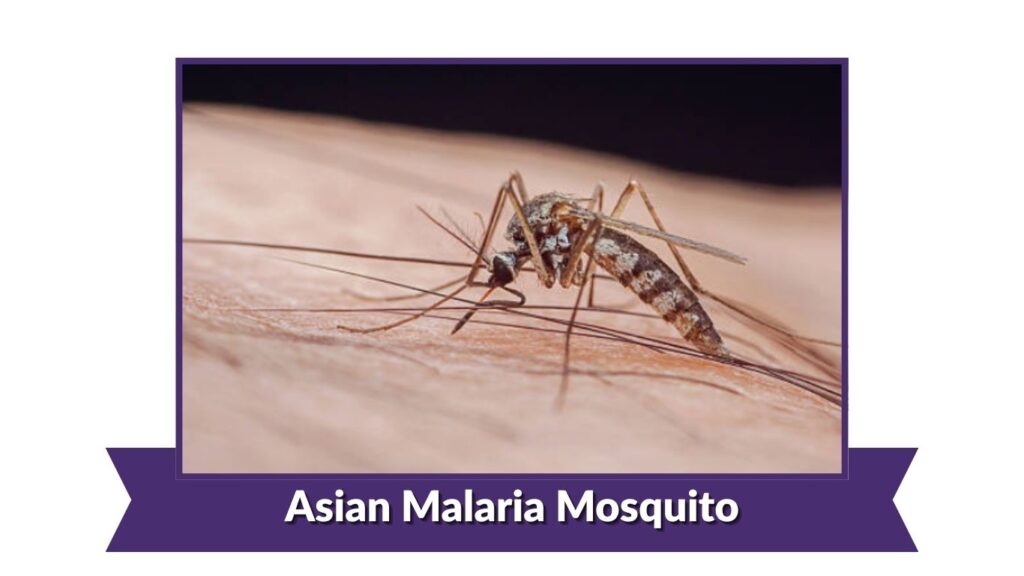
The Asian malaria mosquito is a significant mosquito type found across many parts of Asia. It is known for its role in spreading malaria in tropical and subtropical regions. This mosquito is commonly found near human habitats and is most active during the night.
Identification
- Slender body with long legs
- Light brown or dark-colored body
- Wings with small dark spots
- Resting at an angle rather than flat
- Long, pointed proboscis
Habitat and Distribution
The Asian malaria mosquito is widely distributed across South, Southeast, and East Asia. It prefers warm and humid environments such as forests, rice fields, wetlands, and rural areas. These mosquitoes breed in clean or slightly stagnant water, including ponds, ditches, and irrigated fields. They are often found near villages and agricultural areas where water sources are common.
Behavior and Diet
This mosquito is mainly active from dusk to dawn. Female mosquitoes feed on human and animal blood to support egg production, while males feed on plant nectar. They are known to bite indoors and outdoors, increasing the risk of disease transmission. Their feeding habits make them important vectors of malaria in many regions.
Lifespan
The Asian malaria mosquito typically lives for about 1 to 2 weeks in natural conditions. Females may live slightly longer if environmental conditions are favorable, while males usually have a shorter lifespan of about a week.
3. Indian Malaria Mosquito
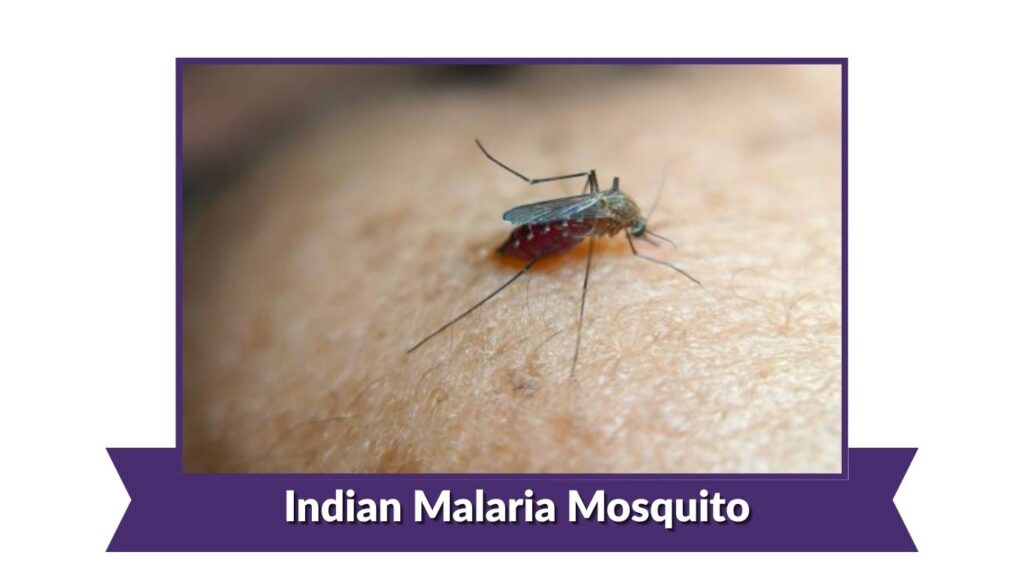
The Indian malaria mosquito is a major mosquito type found across the Indian subcontinent. It is closely linked to malaria transmission in both rural and urban areas. This mosquito adapts well to different environments, especially those with standing water and human activity, making it a significant public health concern.
Identification
- Slender body with long, delicate legs
- Light brown to dark brown coloration
- Wings marked with distinct dark spots
- Resting posture at a sharp angle to surfaces
- Long proboscis used for feeding
Habitat and Distribution
The Indian malaria mosquito is widely distributed across India, Bangladesh, Pakistan, and neighboring regions. It thrives in tropical and subtropical climates, especially in areas with high humidity. Common breeding sites include rice fields, ponds, irrigation canals, ditches, and even small collections of clean water near homes. This species is highly adaptable and can survive in both rural villages and urban environments, especially where water storage practices create breeding opportunities.
Behavior and Diet
This mosquito is primarily nocturnal, with peak biting activity occurring during late evening and early morning hours. Female mosquitoes feed on human blood to obtain proteins needed for egg development, while males rely on plant nectar. It is known for both indoor and outdoor biting behavior, which increases its ability to spread malaria. Its strong attraction to humans makes it an efficient disease vector in densely populated areas.
Lifespan
The Indian malaria mosquito typically lives around 1 to 2 weeks in the wild, depending on environmental conditions such as temperature and humidity. Females may survive slightly longer if conditions are favorable and food sources are available. Males generally live for a shorter period, often less than a week.
4. Common Malaria Mosquito
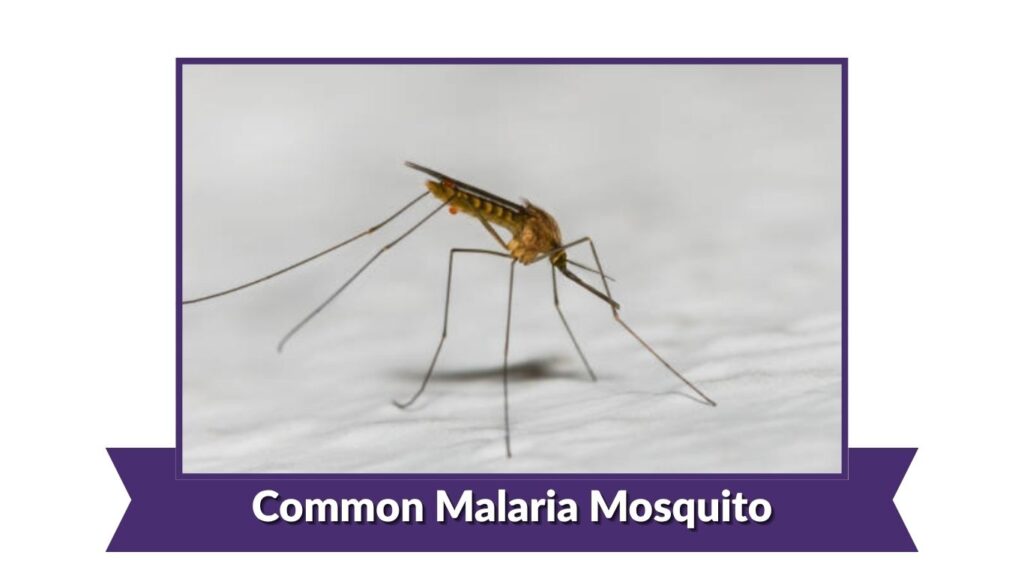
The common malaria mosquito is a widely distributed type known for its role in spreading malaria in many regions. It is often found near human settlements and is well adapted to different environments. This mosquito is most active at night and prefers areas with standing water for breeding.
Identification
- Slender body with long legs
- Brown or grayish body color
- Wings with small dark spots
- Resting at an angled position
- Long, thin proboscis
Habitat and Distribution
The common malaria mosquito is found in many parts of the world, especially in tropical and subtropical regions. It thrives in environments with warm temperatures and access to water. Common breeding sites include ponds, marshes, ditches, and water-filled containers. It is frequently found near homes, farms, and urban areas where stagnant water is present.
Behavior and Diet
This mosquito is mainly active from dusk to dawn. Female mosquitoes feed on human and animal blood to support egg production, while males feed on nectar from plants. It is known for its ability to bite both indoors and outdoors, increasing its chances of survival and reproduction. Its feeding behavior makes it an important carrier of malaria parasites.
Lifespan
The common malaria mosquito usually lives for about 1 to 2 weeks in the wild. Females may live slightly longer under favorable conditions, especially if they have regular access to food and suitable habitats. Males generally have a shorter lifespan, often living for less than a week.
5. Forest Malaria Mosquito
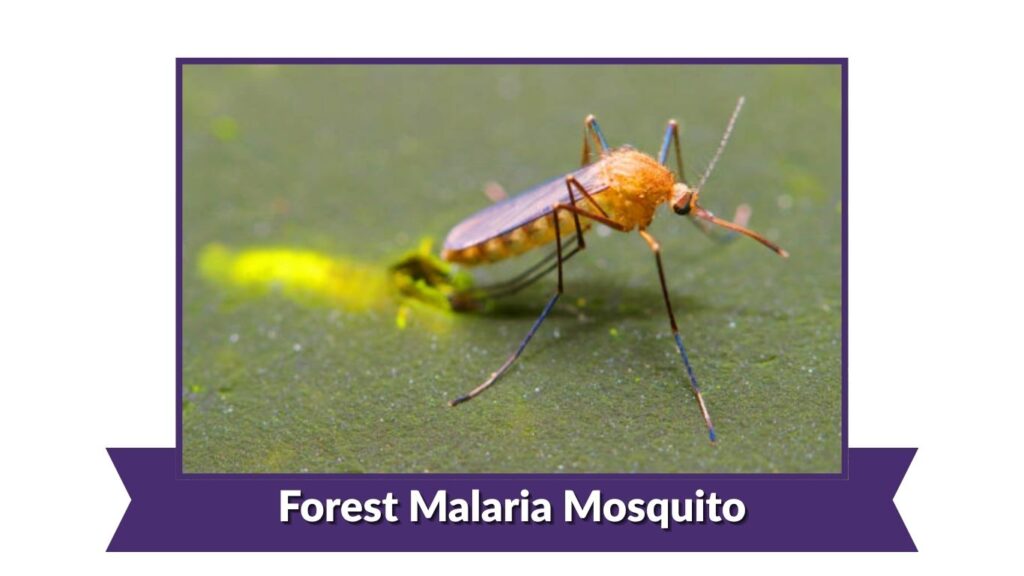
The forest malaria mosquito is commonly found in wooded and forested environments where humidity and shade are high. It is known for its role in maintaining malaria transmission in remote and rural areas. This mosquito thrives in natural habitats with abundant vegetation and water sources.
Identification
- Slender body with long legs
- Dark brown or blackish coloration
- Spotted wings typical of Anopheles species
- Resting posture at an angle
- Long proboscis for feeding
Habitat and Distribution
The forest malaria mosquito is mainly found in tropical and subtropical forests across Africa, Asia, and parts of South America. It prefers dense vegetation, shaded areas, and environments with high humidity. Breeding sites include small pools of water, forest streams, tree holes, and rain-filled ground depressions. It is often found far from urban areas but may come into nearby villages.
Behavior and Diet
This mosquito is primarily active during nighttime, especially from dusk to dawn. Female mosquitoes feed on the blood of humans and animals to support egg development, while males feed on plant nectar. It may bite outdoors more often than indoors, especially in forest environments. Its behavior makes it an important vector in rural and forested regions.
Lifespan
The forest malaria mosquito typically lives around 1 to 2 weeks in the wild, depending on environmental conditions. Females may survive longer if food and habitat conditions are favorable, while males usually live for a shorter period of about a week.
6. Coastal Malaria Mosquito
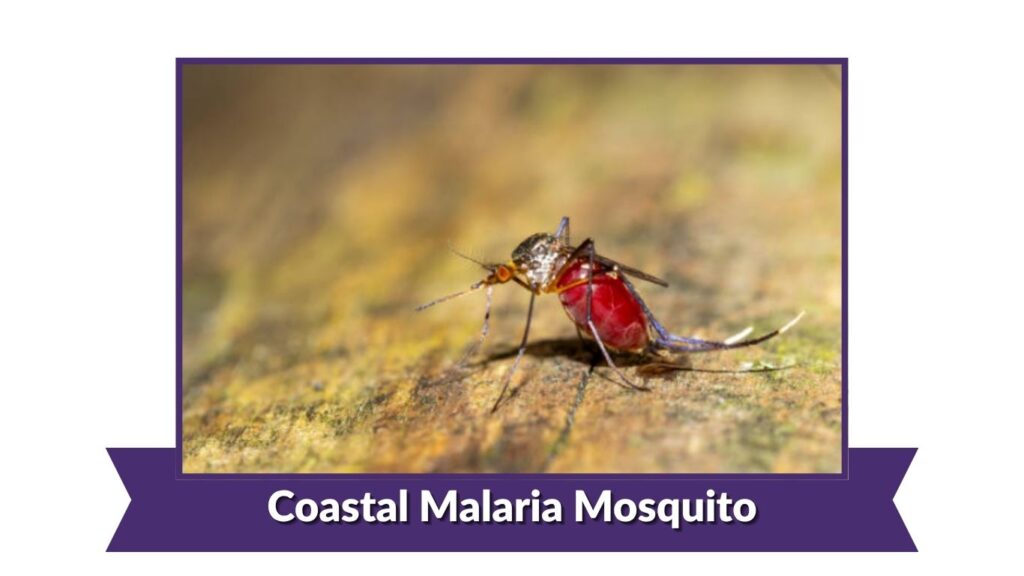
The coastal malaria mosquito is commonly found in regions near coastlines and is adapted to environments with salty or brackish water. It plays a role in malaria transmission in coastal communities and thrives in warm, humid climates with abundant water sources.
Identification
- Slender body with long legs
- Light brown to dark coloration
- Wings with spotted patterns
- Resting at an angled position
- Long, straight proboscis
Habitat and Distribution
The coastal malaria mosquito is found in coastal regions across Africa, Asia, and parts of the Americas. It prefers habitats such as mangroves, estuaries, salt marshes, and coastal wetlands. These mosquitoes can breed in brackish water, which gives them an advantage in areas where freshwater is limited. They are often found near coastal villages and towns.
Behavior and Diet
This mosquito is mainly active during nighttime hours. Female mosquitoes feed on human and animal blood to support egg production, while males feed on plant nectar. They may bite both indoors and outdoors, especially in areas close to breeding sites. Their adaptability to coastal environments makes them important disease carriers in those regions.
Lifespan
The coastal malaria mosquito typically lives for about 1 to 2 weeks in natural conditions. Females may live longer if environmental conditions are favorable, while males generally have a shorter lifespan of around one week.
7. Urban Malaria Mosquito
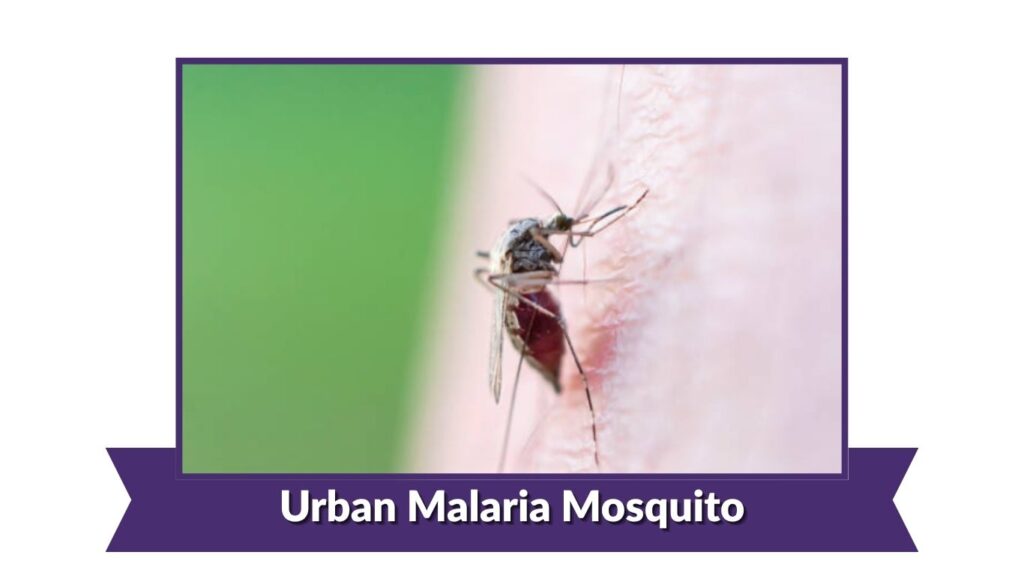
The urban malaria mosquito is adapted to living in cities and densely populated areas. It thrives in human-made environments where water collects in containers, drains, and construction sites. This mosquito plays a role in malaria transmission in urban settings.
Identification
- Slender body with long legs
- Brown or grayish coloration
- Wings with small dark spots
- Resting at an angled position
- Long, thin proboscis
Habitat and Distribution
The urban malaria mosquito is found in cities and towns across tropical and subtropical regions. It prefers environments where standing water is present, such as water tanks, drains, discarded containers, and construction areas. It is commonly found near human dwellings, making it well adapted to urban life.
Behavior and Diet
This mosquito is mostly active during the night, especially from dusk to dawn. Female mosquitoes feed on human blood to support egg production, while males feed on plant nectar. It is known for biting indoors and outdoors, increasing its ability to spread malaria in crowded areas. Its close association with humans makes it an effective disease carrier.
Lifespan
The urban malaria mosquito typically lives around 1 to 2 weeks in the wild. Females may survive slightly longer if conditions are favorable, while males usually live for about a week.
8. Desert Malaria Mosquito
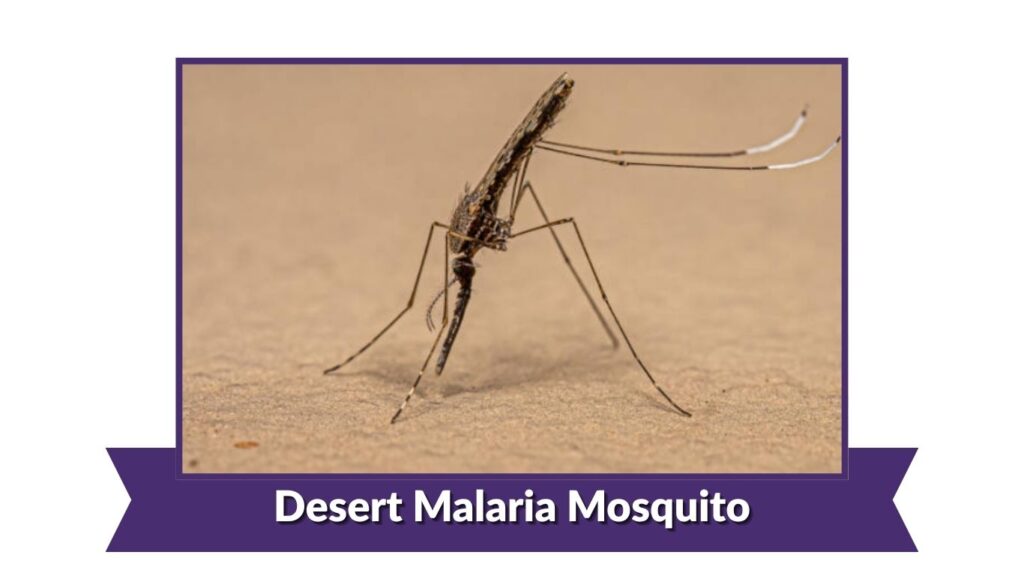
The desert malaria mosquito is adapted to survive in dry and arid environments where water sources are limited. It is less common than other types but can still play a role in malaria transmission in desert and semi-desert regions. This mosquito relies on temporary water sources for breeding.
Identification
- Slender body with long legs
- Light brown or sandy coloration
- Wings with faint spotted patterns
- Resting at an angled position
- Long, thin proboscis
Habitat and Distribution
The desert malaria mosquito is found in arid and semi-arid regions across parts of Africa, the Middle East, and Asia. It prefers environments such as deserts, dry plains, and oasis areas. Breeding usually occurs in temporary water sources like rain pools, irrigation channels, and small puddles formed after rare rainfall. It is often found near human settlements where water is stored.
Behavior and Diet
This mosquito is mainly active during nighttime hours to avoid extreme daytime heat. Female mosquitoes feed on human and animal blood to support egg production, while males feed on plant nectar. It may travel long distances in search of water and hosts. Its ability to survive in harsh conditions makes it unique among mosquito types.
Lifespan
The desert malaria mosquito typically lives around 1 to 2 weeks, depending on environmental conditions. In cooler or more favorable conditions, females may survive slightly longer, while males usually live for a shorter period of about a week.
9. Highland Malaria Mosquito
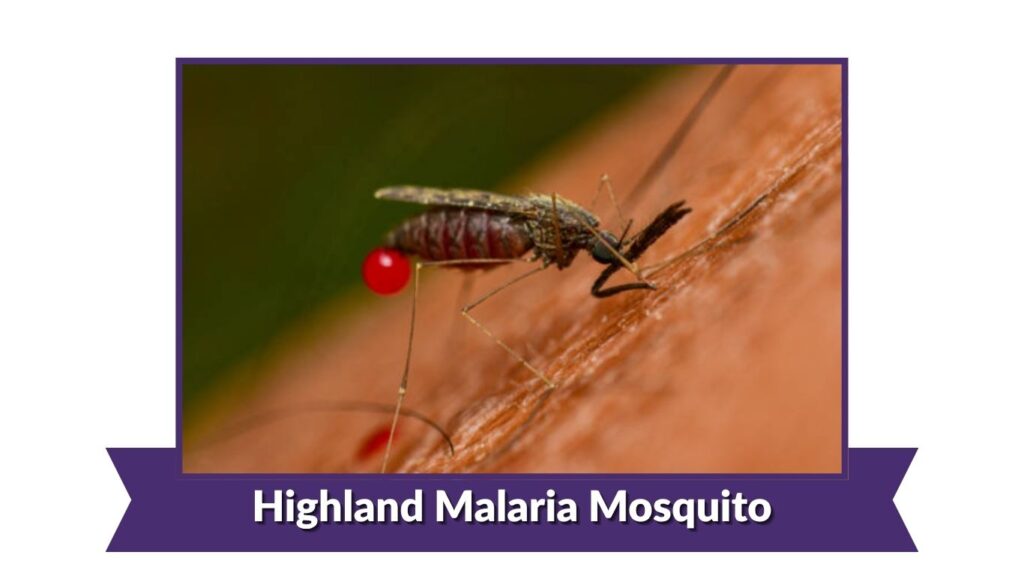
The highland malaria mosquito is found in elevated regions where temperatures are cooler than lowland areas. It is adapted to survive in mountainous environments and can contribute to malaria transmission in high-altitude communities.
Identification
- Slender body with long legs
- Dark brown or gray coloration
- Wings with visible spotted patterns
- Resting posture at an angle
- Long, straight proboscis
Habitat and Distribution
The highland malaria mosquito is found in mountainous and high-altitude regions across Africa, Asia, and parts of South America. It prefers cooler climates with moderate humidity. Breeding sites include small pools of water, slow-moving streams, and rain-filled depressions in hilly areas. It is often found near villages located in elevated regions.
Behavior and Diet
This mosquito is mainly active during the night, especially from dusk to dawn. Female mosquitoes feed on human and animal blood to support egg development, while males feed on plant nectar. It may bite both indoors and outdoors. Its presence in cooler regions makes it important in areas where malaria is less expected.
Lifespan
The highland malaria mosquito generally lives about 1 to 2 weeks in the wild. Cooler temperatures may slightly extend its lifespan compared to species in hotter regions. Females tend to live longer than males, which usually survive for about a week.
10. Rice Field Malaria Mosquito
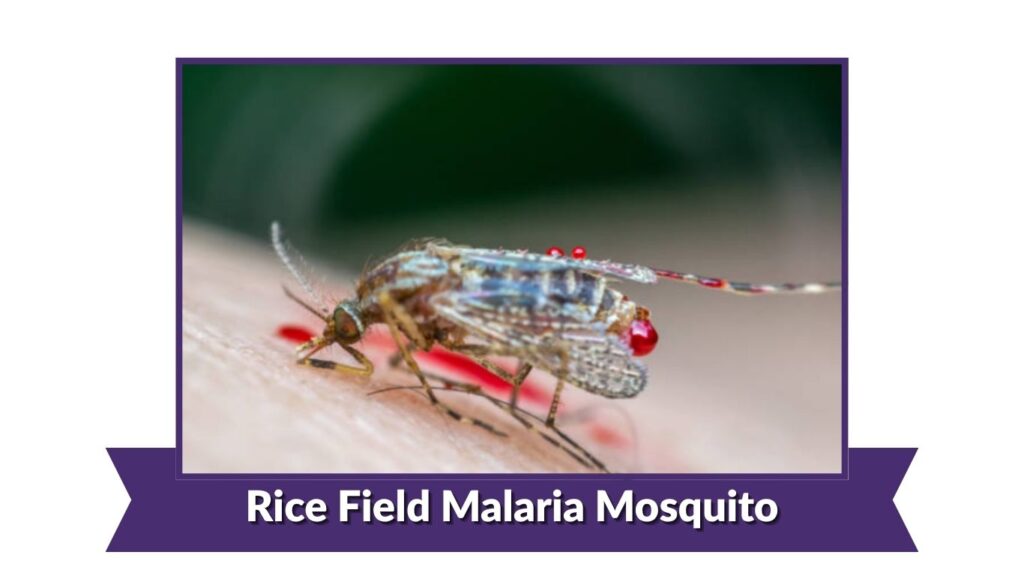
The rice field malaria mosquito is commonly associated with agricultural areas, especially rice-growing regions. It thrives in flooded fields and plays a significant role in malaria transmission in rural farming communities.
Identification
- Slender body with long legs
- Light brown or yellowish coloration
- Wings with distinct dark spots
- Resting at an angled position
- Long, pointed proboscis
Habitat and Distribution
The rice field malaria mosquito is widely found in South and Southeast Asia, as well as parts of Africa. It prefers habitats such as rice paddies, irrigation canals, and flooded agricultural lands. These environments provide ideal breeding conditions due to standing water. It is often found near farming villages where rice cultivation is common.
Behavior and Diet
This mosquito is mainly active at night, especially from dusk to dawn. Female mosquitoes feed on human and animal blood to support egg production, while males feed on plant nectar. It is known to bite both indoors and outdoors, particularly in rural areas close to breeding sites. Its close association with agriculture increases the risk of malaria in farming communities.
Lifespan
The rice field malaria mosquito typically lives around 1 to 2 weeks in natural conditions. Females may live slightly longer if environmental conditions are favorable, while males usually live for about a week.
11. Riverine Malaria Mosquito
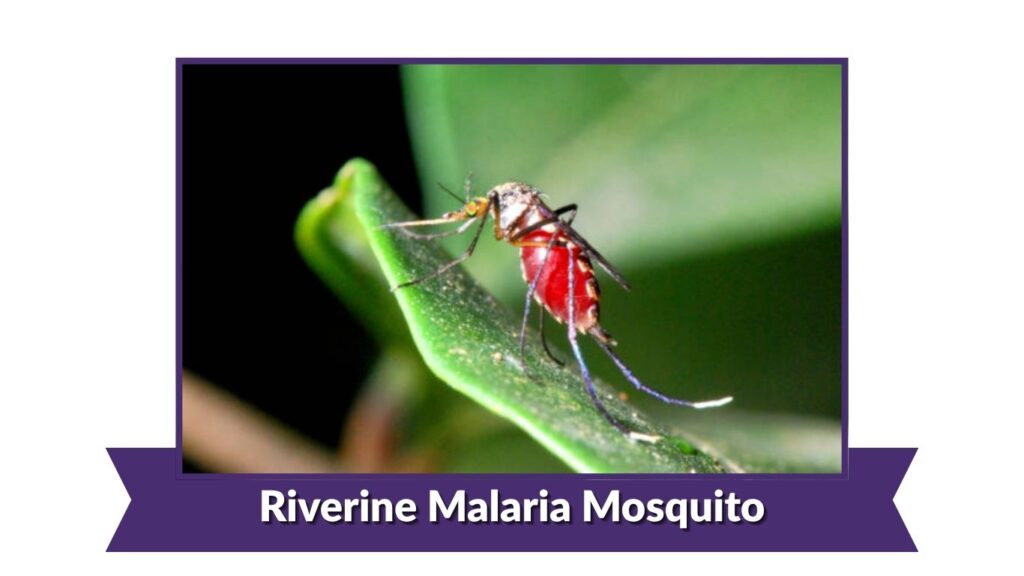
The riverine malaria mosquito is commonly found near rivers and flowing water sources. It is well adapted to environments with постоян water availability and plays a role in malaria transmission in communities located near rivers and streams.
Identification
- Slender body with long legs
- Brown or grayish coloration
- Wings with spotted patterns
- Resting at an angled position
- Long, straight proboscis
Habitat and Distribution
The riverine malaria mosquito is found in regions across Africa, Asia, and South America. It prefers habitats near rivers, streams, floodplains, and wetlands. Breeding occurs in slow-moving or shallow water along river edges. These mosquitoes are often found in villages and settlements located close to water bodies.
Behavior and Diet
This mosquito is mainly active during nighttime hours. Female mosquitoes feed on human and animal blood to support egg development, while males feed on plant nectar. It may bite both indoors and outdoors, especially in areas close to rivers. Its proximity to human settlements increases its importance as a malaria vector.
Lifespan
The riverine malaria mosquito typically lives around 1 to 2 weeks in the wild. Females may survive slightly longer under favorable conditions, while males usually live for about a week.
12. Tropical Malaria Mosquito
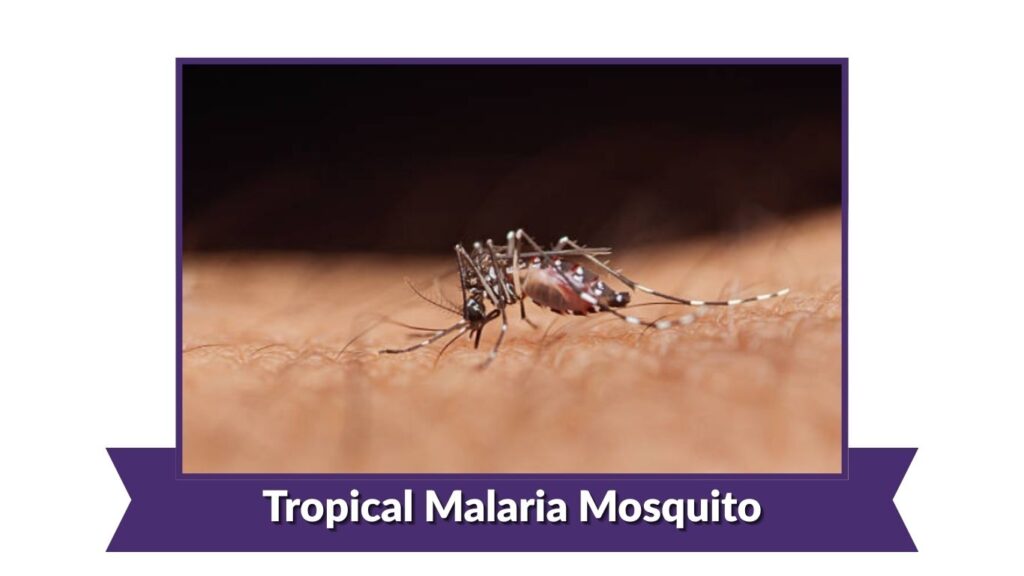
The tropical malaria mosquito is commonly found in warm and humid regions where conditions are ideal for breeding and survival. It is one of the more widespread types and is closely associated with malaria transmission in tropical climates.
Identification
- Slender body with long legs
- Brown or dark-colored body
- Wings with small dark spots
- Resting at an angled position
- Long, thin proboscis
Habitat and Distribution
The tropical malaria mosquito is found across tropical regions of Africa, Asia, and South America. It thrives in warm, humid environments such as forests, wetlands, and rural areas. Breeding sites include ponds, marshes, puddles, and water-filled containers. It is commonly found near human settlements where water sources are easily available.
Behavior and Diet
This mosquito is most active from dusk to dawn. Female mosquitoes feed on human and animal blood to support egg production, while males feed on plant nectar. It is known for both indoor and outdoor biting behavior, increasing its role in malaria transmission. Its strong attraction to human hosts makes it an effective disease carrier.
Lifespan
The tropical malaria mosquito typically lives around 1 to 2 weeks in the wild. Females may survive longer in favorable conditions, especially with regular access to blood meals, while males usually live for about a week.
13. Savanna Malaria Mosquito
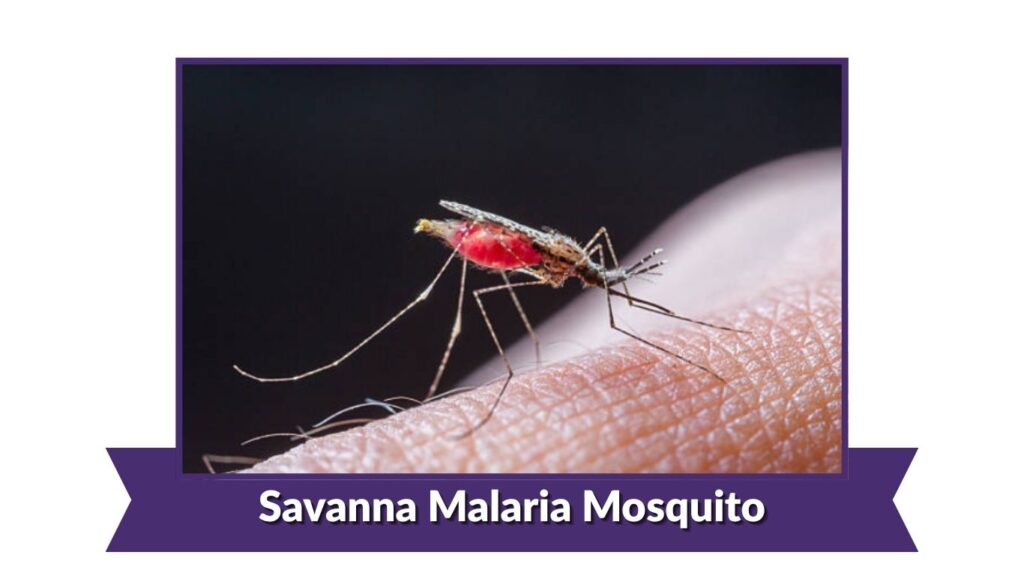
The savanna malaria mosquito is commonly found in open grassland regions known as savannas. It is well adapted to warm climates with seasonal rainfall and plays a role in malaria transmission in rural and semi-rural areas.
Identification
- Slender body with long legs
- Light brown or dark coloration
- Wings with spotted patterns
- Resting at an angled position
- Long, straight proboscis
Habitat and Distribution
The savanna malaria mosquito is found mainly in African savanna regions and parts of tropical Asia. It prefers open grasslands with scattered trees and seasonal water sources. Breeding sites include rain pools, small ponds, and temporary water collections formed during the rainy season. It is often found near villages located in savanna environments.
Behavior and Diet
This mosquito is primarily active at night, especially from dusk to dawn. Female mosquitoes feed on human and animal blood to support egg development, while males feed on plant nectar. It may bite both indoors and outdoors. Its activity often increases during the rainy season when breeding sites are more abundant.
Lifespan
The savanna malaria mosquito typically lives around 1 to 2 weeks in natural conditions. Females may survive slightly longer if environmental conditions are favorable, while males usually live for about a week.
14. Marsh Malaria Mosquito
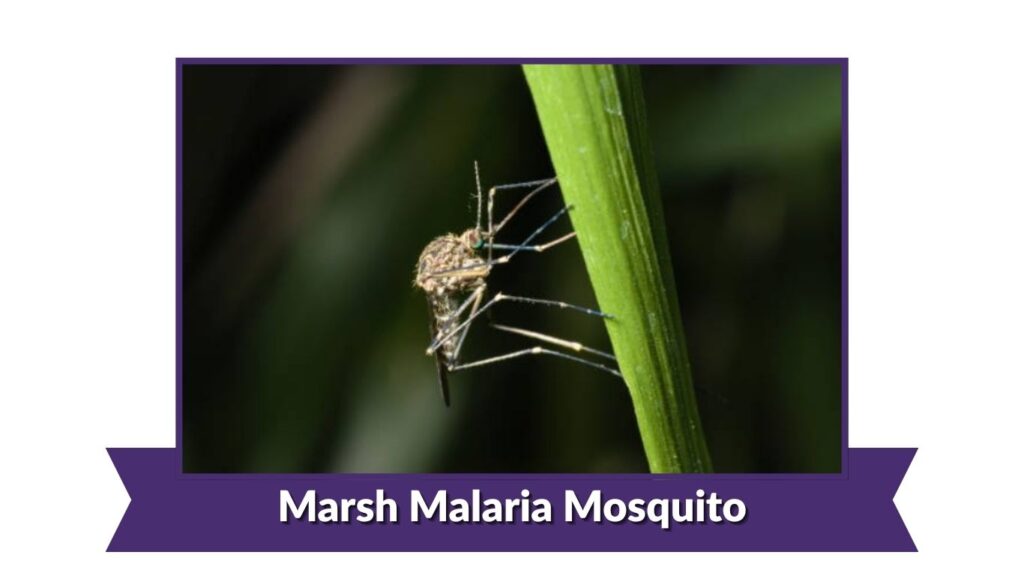
The marsh malaria mosquito is commonly found in wetland environments where standing water is abundant. It thrives in areas with high moisture and vegetation, making marshes ideal breeding grounds. This mosquito plays a role in malaria transmission in regions with extensive wetlands.
Identification
- Slender body with long legs
- Brown or dark-colored body
- Wings with clear spotted patterns
- Resting at an angled position
- Long, thin proboscis
Habitat and Distribution
The marsh malaria mosquito is found in wetlands across Africa, Asia, and parts of the Americas. It prefers habitats such as marshes, swamps, and floodplains where water is slow-moving or stagnant. These environments provide ideal conditions for breeding. It is often found near rural communities located close to wetlands.
Behavior and Diet
This mosquito is mainly active during nighttime hours. Female mosquitoes feed on human and animal blood to support egg production, while males feed on plant nectar. It often bites near water bodies and may enter nearby homes in search of hosts. Its activity is usually higher in areas with dense vegetation and moisture.
Lifespan
The marsh malaria mosquito typically lives around 1 to 2 weeks in the wild. Females may live slightly longer under favorable conditions, especially with access to regular blood meals. Males generally have a shorter lifespan, usually about a week.
15. Jungle Malaria Mosquito
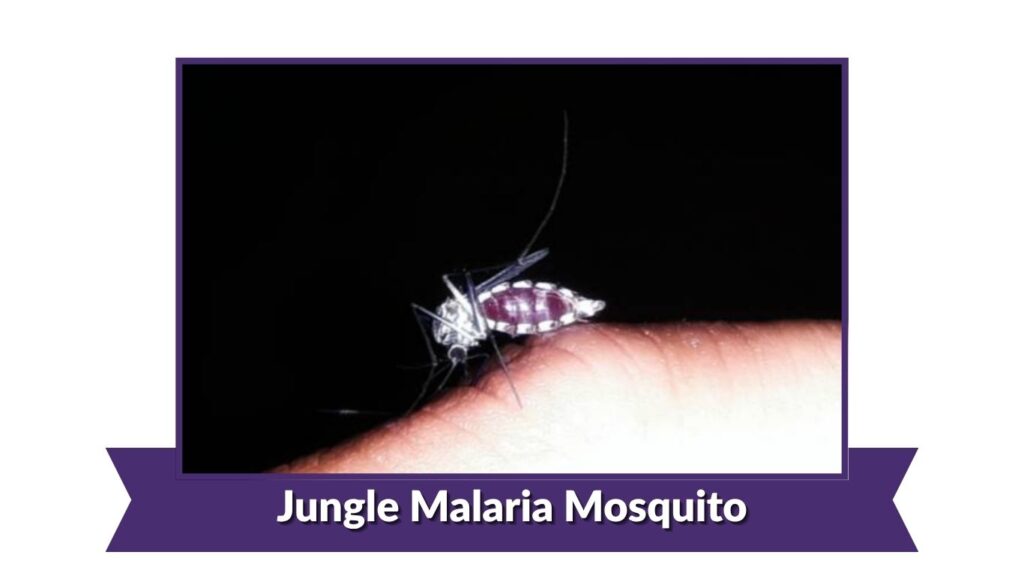
The jungle malaria mosquito is commonly found in dense tropical forests where humidity and vegetation are high. It is adapted to natural environments and plays a role in malaria transmission in remote forest regions.
Identification
- Slender body with long legs
- Dark brown or black coloration
- Wings with spotted patterns
- Resting posture at an angle
- Long, straight proboscis
Habitat and Distribution
The jungle malaria mosquito is found in tropical forests across Africa, Asia, and South America. It prefers dense जंगल areas with high humidity and shade. Breeding sites include small pools of water, tree holes, and rain-filled depressions. It is usually found far from urban areas but may come into nearby forest villages.
Behavior and Diet
This mosquito is mainly active during nighttime hours. Female mosquitoes feed on human and animal blood to support egg development, while males feed on plant nectar. It often bites outdoors and is well adapted to forest environments. Its behavior makes it an important vector in remote areas.
Lifespan
The jungle malaria mosquito typically lives around 1 to 2 weeks in natural conditions. Females may survive slightly longer if environmental conditions are favorable, while males usually live for about a week.
FAQs
What is an Anopheles mosquito?
An Anopheles mosquito is a type of mosquito known for transmitting malaria. Only female Anopheles mosquitoes spread the disease because they feed on blood to develop their eggs. They are found mostly in warm regions around the world.
How can you identify an Anopheles mosquito?
Anopheles mosquitoes can be identified by their resting position, where their body is angled upward rather than parallel to the surface. They also have long legs, spotted wings, and a slender body compared to other mosquito types.
Where do Anopheles mosquitoes breed?
They usually breed in clean or slightly stagnant water such as ponds, puddles, marshes, rice fields, and slow-moving streams. Some species can also breed in man-made water sources like containers and irrigation systems.
What do Anopheles mosquitoes eat?
Male Anopheles mosquitoes feed on plant nectar and sugary liquids. Female mosquitoes feed on blood from humans or animals to obtain nutrients needed for egg production, but they may also consume nectar for energy.
How can Anopheles mosquito bites be prevented?
Prevention includes using mosquito nets, applying insect repellent, wearing long-sleeved clothing, and removing standing water around homes. These steps help reduce contact with mosquitoes and lower the risk of disease transmission.