
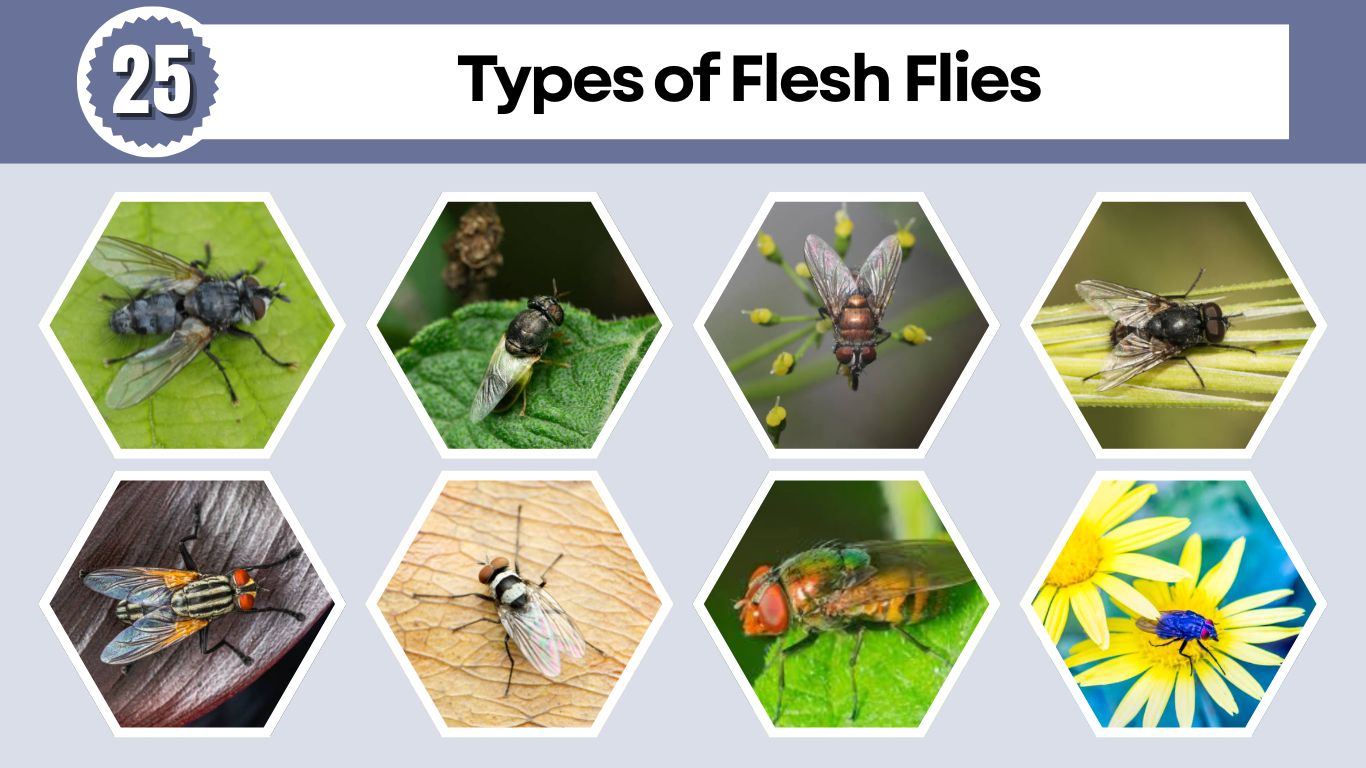
Flesh flies are medium-sized insects belonging to the Sarcophagidae family. They are commonly recognized by their gray-striped bodies, red eyes, and checkerboard-patterned abdomens. These flies are often found near carrion, garbage, animal waste, and other decaying organic materials where they feed and reproduce.
Many flesh fly species play an important ecological role in decomposition and nutrient recycling. Some are also medically and forensically significant because they can spread bacteria or help scientists estimate time since death in investigations. Learning about different types of flesh flies can help with accurate identification and understanding of their behavior and environmental importance.
1. Gray Flesh Fly
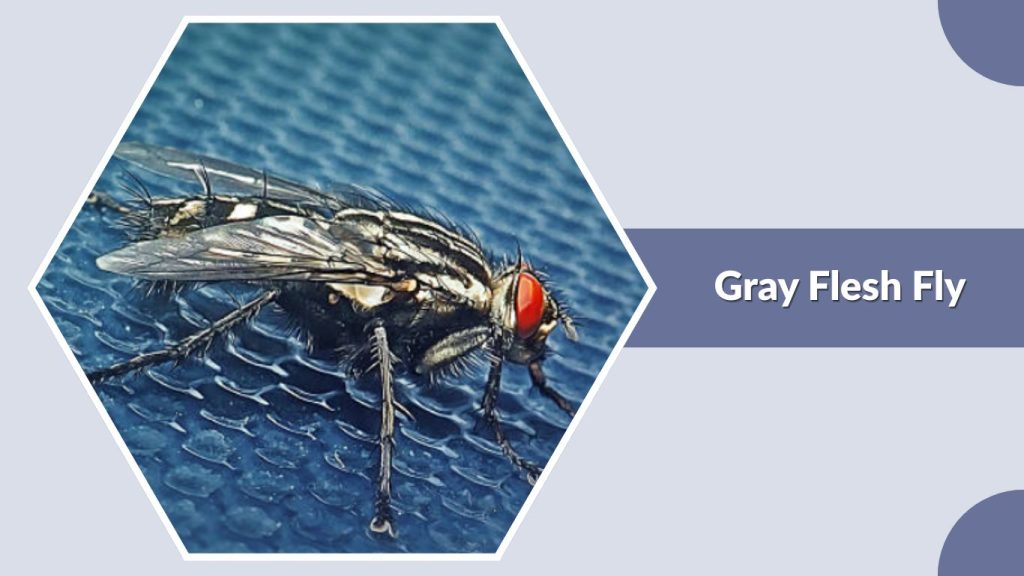
The Gray Flesh Fly is a common species of flesh fly belonging to the Sarcophagidae family. These flies are well known for their gray-striped bodies and their habit of feeding or breeding on decaying organic matter. They are widely distributed and often found near garbage, animal remains, and urban environments.
Identification and Appearance
Gray Flesh Flies are medium-sized flies with gray and black striped thoraxes and checkerboard-patterned abdomens. Their red compound eyes and transparent wings make them easy to recognize. Unlike many other flies, female flesh flies give birth to live larvae instead of laying eggs, which helps them reproduce rapidly.
Characteristics
- Gray body with black longitudinal stripes
- Checkerboard pattern on the abdomen
- Bright red compound eyes
- Transparent wings with visible veins
- Females give birth to live larvae
- Common around decaying organic material
- Fast and active fliers
Habitat and Distribution
Gray Flesh Flies are found worldwide, especially in warm and temperate climates. They commonly inhabit garbage dumps, farms, forests, urban areas, and places with decaying matter. These flies are highly adaptable and can survive in a variety of environmental conditions.
Importance and Behavior
Gray Flesh Flies play a role in decomposition by helping break down dead animals and organic waste. However, they can also spread bacteria and contaminate food if they enter homes or food-processing areas. In forensic science, they are important because their larvae help estimate the time of death in investigations.
2. Red-tailed Flesh Fly
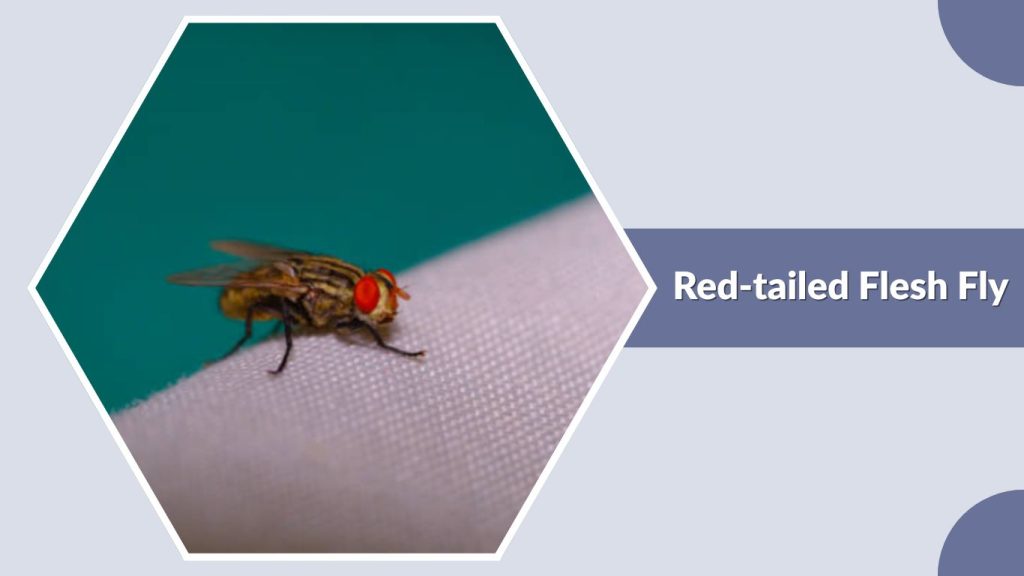
The Red-tailed Flesh Fly is a striking member of the Sarcophagidae family known for its reddish-colored abdominal tip. These flies are commonly associated with decaying organic matter and animal remains. They play an important ecological role in decomposition and nutrient recycling in natural environments.
Identification and Appearance
Red-tailed Flesh Flies are medium-sized insects with gray and black striped thoraxes and a distinctive reddish or orange-colored tail region. They possess large red eyes, short antennae, and transparent wings. Their bodies are covered with fine bristles, giving them a rough appearance.
Characteristics
- Gray thorax with black stripes
- Reddish or orange abdominal tip
- Large red compound eyes
- Transparent wings with fine veins
- Covered in small bristles
- Common near decaying organic matter
- Fast-moving and active during daylight
Habitat and Distribution
These flies are found in forests, grasslands, urban areas, and farms across many temperate and tropical regions. They prefer habitats with carrion, animal waste, or decomposing material where females can deposit larvae. Warm environments are especially favorable for their development.
Importance and Behavior
Red-tailed Flesh Flies assist in breaking down dead organisms and organic waste. Although beneficial in decomposition, they may also carry harmful bacteria from contaminated materials. Their larvae and life cycle are useful in forensic investigations for estimating postmortem intervals.
3. Sarcophaga carnaria
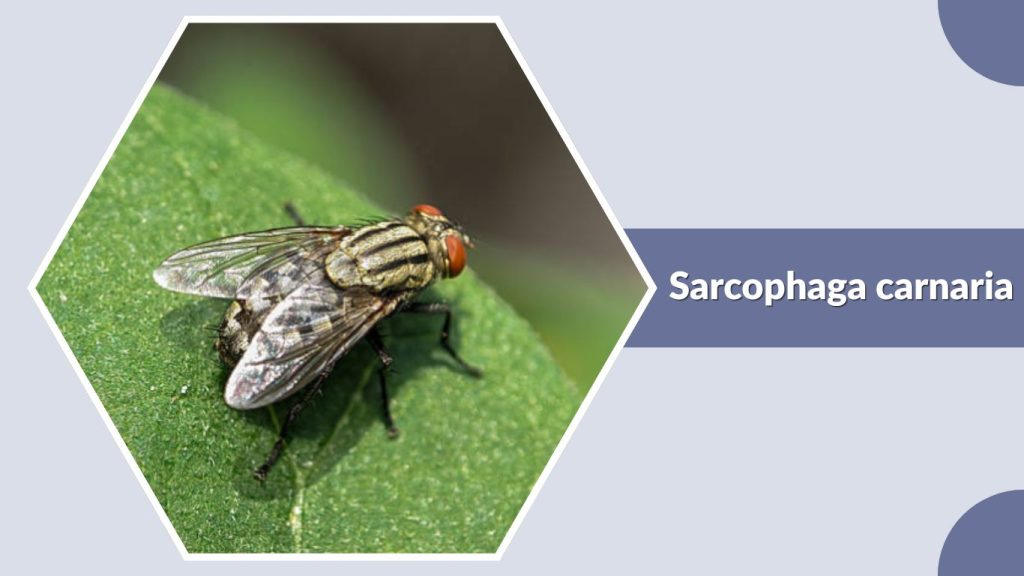
Sarcophaga carnaria is one of the best-known flesh fly species in the Sarcophagidae family. It is commonly found around decaying matter, animal carcasses, and waste materials. This species is important both ecologically and in forensic entomology because of its rapid attraction to decomposing bodies.
Identification and Appearance
Sarcophaga carnaria has a gray body with bold black stripes running along the thorax and a checkerboard-patterned abdomen. Its eyes are bright red, and the wings are transparent. The body is robust and covered with short bristles that help distinguish it from other fly species.
Characteristics
- Gray body with black thoracic stripes
- Checkerboard-patterned abdomen
- Bright red eyes
- Transparent wings
- Robust body covered in bristles
- Females produce live larvae
- Frequently associated with carrion and waste
Habitat and Distribution
This species is widely distributed across Europe, Asia, and other temperate regions. It commonly inhabits urban environments, farms, forests, and garbage sites where decaying organic material is present. The species is highly adaptable to different climates and habitats.
Importance and Behavior
Sarcophaga carnaria contributes to decomposition by consuming dead organic matter. However, it can also spread bacteria when visiting human food or living areas. In forensic science, this species is valuable for estimating time since death because its larvae develop quickly on decomposing remains.
4. Sarcophaga bullata
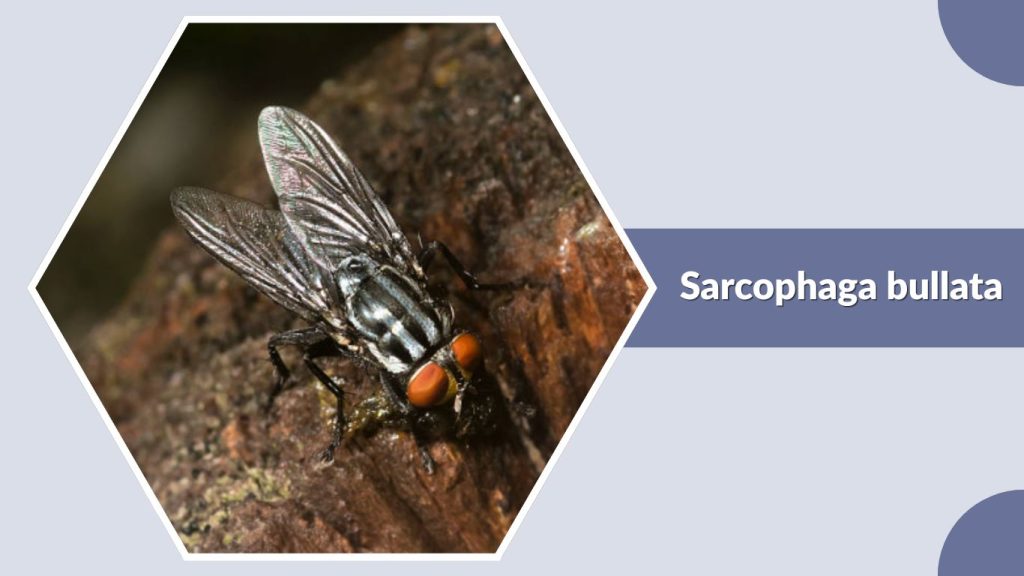
Sarcophaga bullata is a common flesh fly species known for its association with decaying animal matter. It belongs to the Sarcophagidae family and is often studied in forensic entomology due to its predictable life cycle and rapid attraction to carrion.
Identification and Appearance
Sarcophaga bullata has a medium-sized gray body with dark longitudinal stripes on the thorax and a checkerboard abdomen. Its large reddish eyes and transparent wings are typical features of flesh flies. The body is stout and covered with fine black bristles.
Characteristics
- Gray body with black thoracic stripes
- Checkerboard-patterned abdomen
- Large reddish compound eyes
- Transparent wings with visible veins
- Females deposit live larvae
- Strong attraction to carrion and waste
- Commonly used in forensic studies
Habitat and Distribution
This species is widely found in North America and other temperate regions. It inhabits forests, farms, garbage sites, urban areas, and locations containing decaying organic material. Warm conditions and abundant food sources support its rapid population growth.
Importance and Behavior
Sarcophaga bullata helps decompose dead animals and organic waste in natural ecosystems. It is important in forensic science because its larvae can help estimate postmortem intervals during investigations. However, the fly may also spread bacteria if it contacts human food or surfaces.
5. Sarcophaga africa
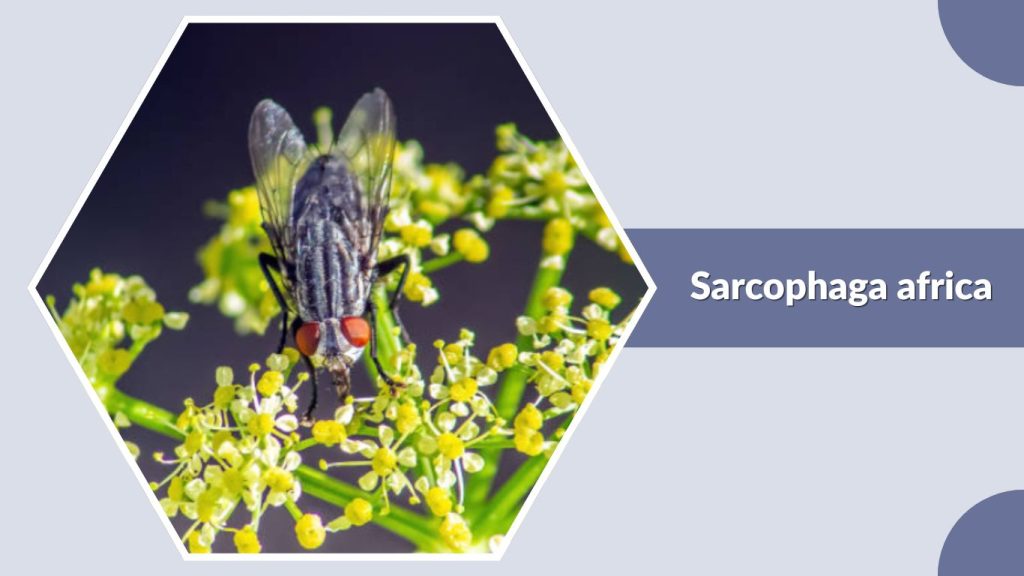
Sarcophaga africa is a flesh fly species commonly found in warm climates and urban environments. It is known for breeding in decaying organic matter and animal remains. This species is considered medically and forensically important due to its close association with human habitats.
Identification and Appearance
Sarcophaga africa has a gray body marked with dark black stripes across the thorax and a patterned abdomen. Its eyes are red, and its wings are transparent with fine venation. The fly has a robust appearance with numerous short bristles covering the body.
Characteristics
- Gray body with dark stripes
- Patterned black-and-gray abdomen
- Bright red eyes
- Transparent wings
- Females produce live larvae
- Frequently found in urban areas
- Associated with decaying organic material
Habitat and Distribution
This species is widely distributed across Africa, Asia, and tropical regions worldwide. It commonly inhabits cities, markets, garbage dumps, farms, and areas with decomposing matter. Warm temperatures and moist conditions are ideal for its survival and reproduction.
Importance and Behavior
Sarcophaga africa plays a useful role in decomposition by helping break down dead organisms and waste. Despite its ecological benefits, it may carry disease-causing bacteria and contaminate food. Its developmental stages are also important in forensic investigations involving decomposing remains.
6. Sarcophaga aldrichi
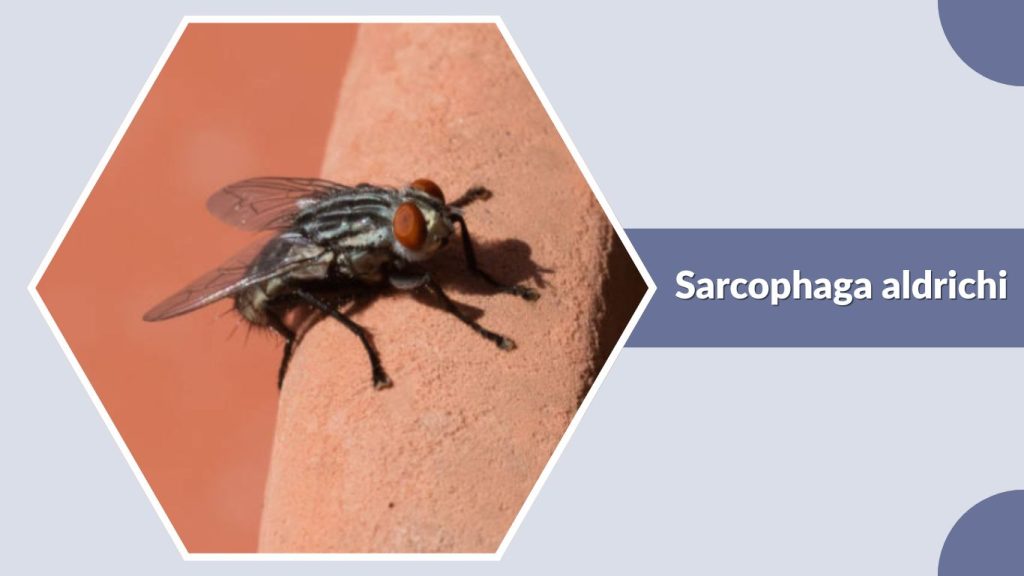
Sarcophaga aldrichi is a flesh fly species commonly associated with decaying insects and organic matter. It is especially known for feeding on forest pest insects, making it beneficial in some ecosystems. This species belongs to the Sarcophagidae family and is widely studied for its ecological importance.
Identification and Appearance
Sarcophaga aldrichi has a gray body with dark longitudinal stripes on the thorax and a checkerboard-patterned abdomen. Its eyes are bright red, and the wings are transparent. The fly has a sturdy body covered with short bristles, giving it a rough texture.
Characteristics
- Gray body with black thoracic stripes
- Checkerboard abdomen pattern
- Bright red compound eyes
- Transparent wings with fine veins
- Covered with short bristles
- Females deposit live larvae
- Often associated with forest environments
Habitat and Distribution
This species is commonly found in forests, woodlands, and rural regions where insect hosts and decaying organic matter are abundant. It occurs mainly in North America and temperate climates. The fly thrives in areas with rich organic debris and insect activity.
Importance and Behavior
Sarcophaga aldrichi contributes to decomposition and can help control pest insect populations naturally. It is sometimes beneficial in forests because it parasitizes harmful insects. However, like other flesh flies, it may also spread bacteria if it contacts contaminated materials.
7. Ravinia querula
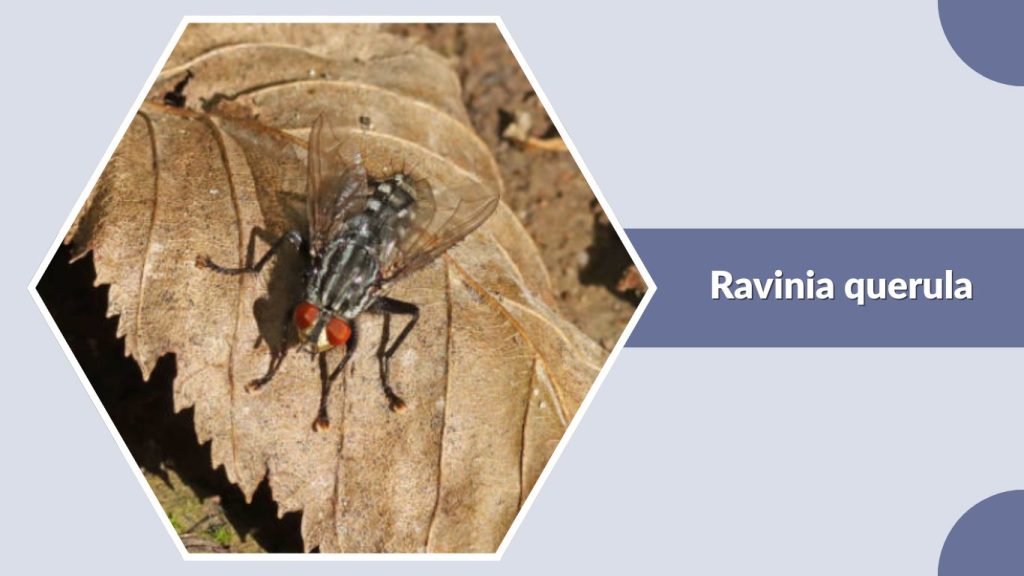
Ravinia querula is a flesh fly species known for its role in decomposition and organic waste recycling. It belongs to the Sarcophagidae family and is commonly found around animal waste, carrion, and decaying materials in warm environments.
Identification and Appearance
Ravinia querula is a medium-sized fly with a gray body marked by dark thoracic stripes and a patterned abdomen. Its eyes are reddish, and the wings are transparent with visible veins. The body is slender compared to some larger flesh fly species.
Characteristics
- Gray body with dark stripes
- Patterned abdomen with checkered markings
- Red compound eyes
- Transparent wings
- Slender body structure
- Common around animal waste and carrion
- Active during warm daylight hours
Habitat and Distribution
This species is widely distributed in tropical and subtropical regions. It is commonly found in farms, grasslands, urban waste sites, and areas containing decomposing matter. Warm climates with abundant organic material provide ideal breeding conditions.
Importance and Behavior
Ravinia querula plays an important ecological role by helping break down waste and dead organic material. Although useful in decomposition, it can also carry pathogens from contaminated sources. In some cases, its presence is valuable in forensic investigations involving decomposing remains.
8. Wohlfahrtia magnifica
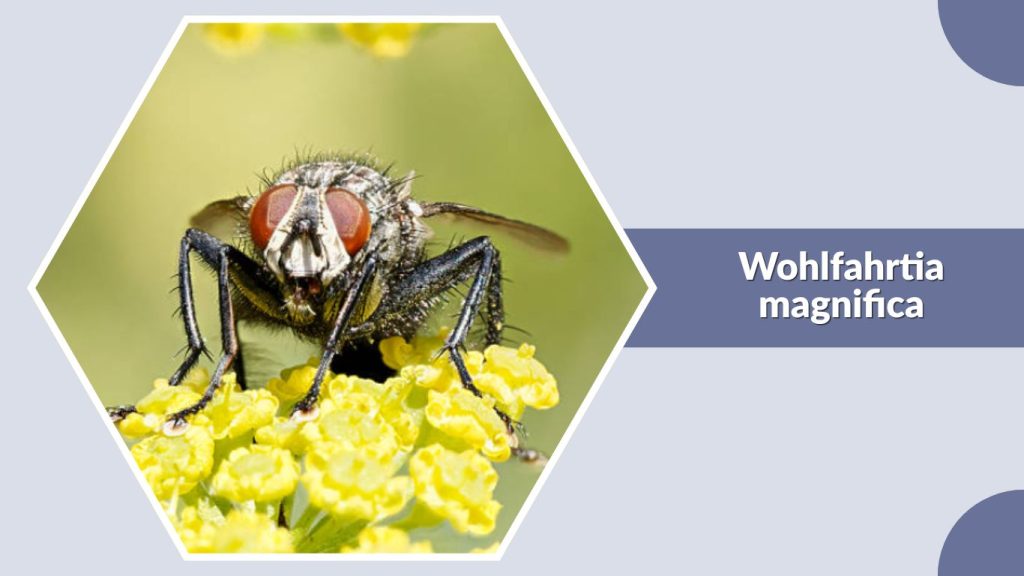
Wohlfahrtia magnifica is a medically important flesh fly species known for causing myiasis in animals and sometimes humans. This species belongs to the Sarcophagidae family and is considered a serious pest in livestock farming because its larvae develop in living tissue.
Identification and Appearance
Wohlfahrtia magnifica has a gray body with distinct black thoracic stripes and a checkered abdomen. Its eyes are reddish-brown, and the wings are transparent. The fly is medium-sized with a sturdy body covered in short bristles, giving it a rough appearance.
Characteristics
- Gray body with black stripes
- Checkerboard-patterned abdomen
- Transparent wings with fine veins
- Reddish compound eyes
- Females deposit live larvae
- Causes myiasis in livestock and humans
- Active in warm climates
Habitat and Distribution
This species is commonly found in parts of Europe, Asia, North Africa, and the Middle East. It prefers warm rural environments, grasslands, and livestock farms where suitable hosts are available. Areas with sheep, cattle, and other domestic animals are especially favorable.
Importance and Behavior
Wohlfahrtia magnifica is important in veterinary medicine because its larvae infest wounds and body openings of animals. These infestations can cause severe tissue damage and economic losses in livestock farming. Despite its harmful nature, the species also contributes to decomposition in natural ecosystems.
9. Wohlfahrtia vigil
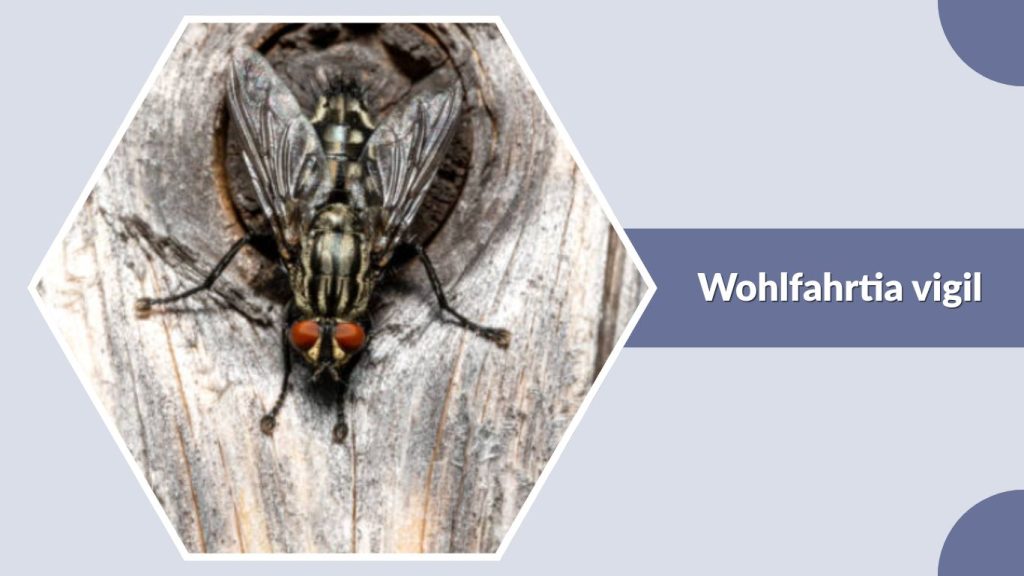
Wohlfahrtia vigil is a flesh fly species recognized for occasionally causing myiasis in mammals, including humans and domestic animals. It belongs to the Sarcophagidae family and is primarily found in North America, where it inhabits both natural and urban environments.
Identification and Appearance
Wohlfahrtia vigil has a gray body with dark stripes running along the thorax and a patterned abdomen. The fly possesses transparent wings, reddish eyes, and a bristly body. Its overall appearance is similar to other flesh flies but slightly more compact in shape.
Characteristics
- Gray body with black thoracic stripes
- Patterned abdomen with checkered markings
- Transparent wings
- Red or reddish-brown eyes
- Covered with fine body bristles
- Females give birth to live larvae
- Can cause myiasis in mammals
Habitat and Distribution
This species is mainly distributed in North America, especially in rural and wooded areas. It is commonly found near animal shelters, farms, forests, and regions with abundant organic matter. Warm seasons provide ideal conditions for breeding and development.
Importance and Behavior
Wohlfahrtia vigil plays a role in decomposition by feeding on dead organic material. However, its larvae can infest wounds or skin tissues of animals and occasionally humans, leading to painful infections. The species is therefore significant in both veterinary and medical entomology.
10. Blaesoxipha plinthopyga
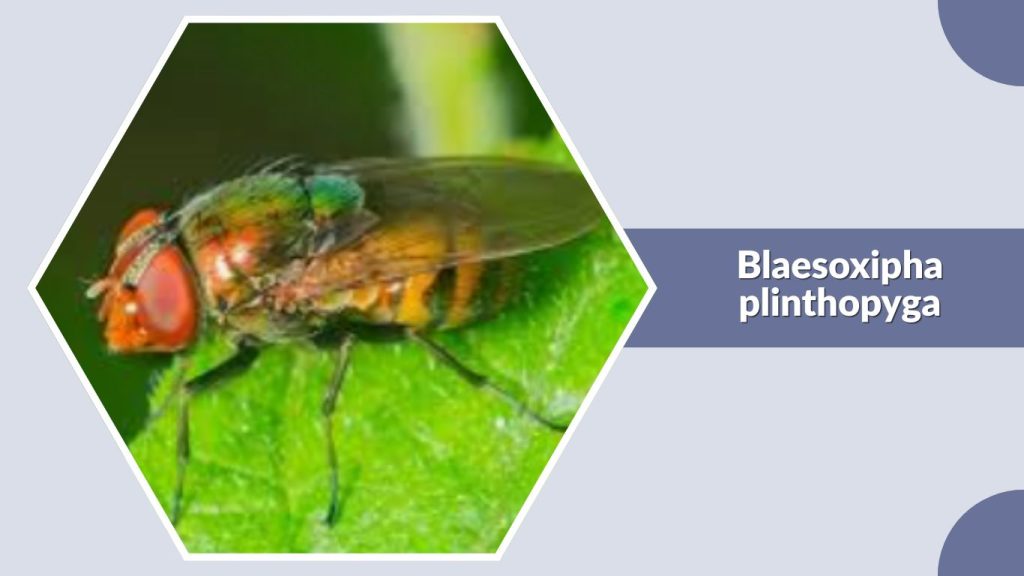
Blaesoxipha plinthopyga is a flesh fly species commonly associated with decaying organic matter and insect hosts. It belongs to the Sarcophagidae family and is often found in warm climates. This species is also important in forensic studies because it frequently appears on decomposing remains.
Identification and Appearance
Blaesoxipha plinthopyga has a gray body with black stripes across the thorax and a checkered abdomen. Its eyes are reddish, and the transparent wings contain clearly visible veins. The body is covered with short bristles, giving the fly a rough texture.
Characteristics
- Gray body with black thoracic stripes
- Checkerboard-patterned abdomen
- Red compound eyes
- Transparent wings with visible veins
- Covered with short body bristles
- Common near decaying matter
- Important in forensic investigations
Habitat and Distribution
This species is commonly found in tropical and subtropical regions, especially around garbage sites, farms, forests, and urban areas. It thrives in places where decomposing organic material and insect hosts are available for breeding and feeding.
Importance and Behavior
Blaesoxipha plinthopyga contributes to decomposition by consuming decaying organic matter. It is also useful in forensic entomology because its developmental stages can help estimate postmortem intervals. However, the fly may spread bacteria if it contaminates food or surfaces.
11. Parasarcophaga crassipalpis
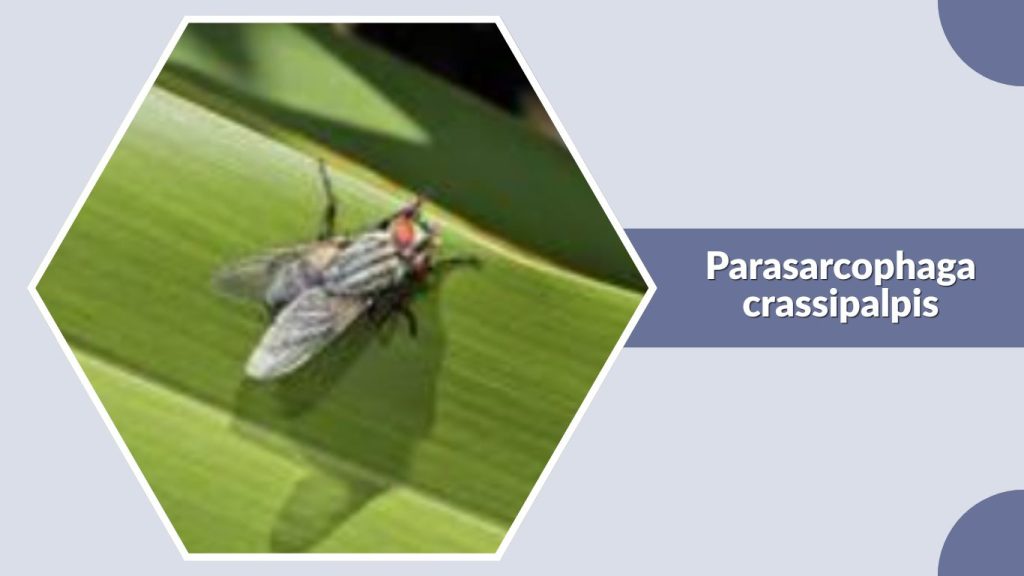
Parasarcophaga crassipalpis is a widely studied flesh fly species known for its adaptability and rapid development. It belongs to the Sarcophagidae family and is commonly used in laboratory and forensic research because of its predictable life cycle.
Identification and Appearance
Parasarcophaga crassipalpis has a medium-sized gray body with bold black stripes on the thorax and a checkered abdomen. Its eyes are bright red, and the wings are transparent. The body appears sturdy and is covered with numerous small bristles.
Characteristics
- Gray body with black stripes
- Checkerboard abdomen pattern
- Bright red compound eyes
- Transparent wings
- Robust bristly body
- Females produce live larvae
- Commonly used in scientific research
Habitat and Distribution
This species is widely distributed across North America and many warm temperate regions. It commonly inhabits urban areas, farms, forests, and locations with decomposing organic material. The species adapts easily to different environmental conditions.
Importance and Behavior
Parasarcophaga crassipalpis plays a major role in decomposition and nutrient recycling. In forensic science, it is highly valuable because researchers use its life cycle to estimate time since death. The species is also frequently used in biological and developmental studies.
12. Helicobia rapax
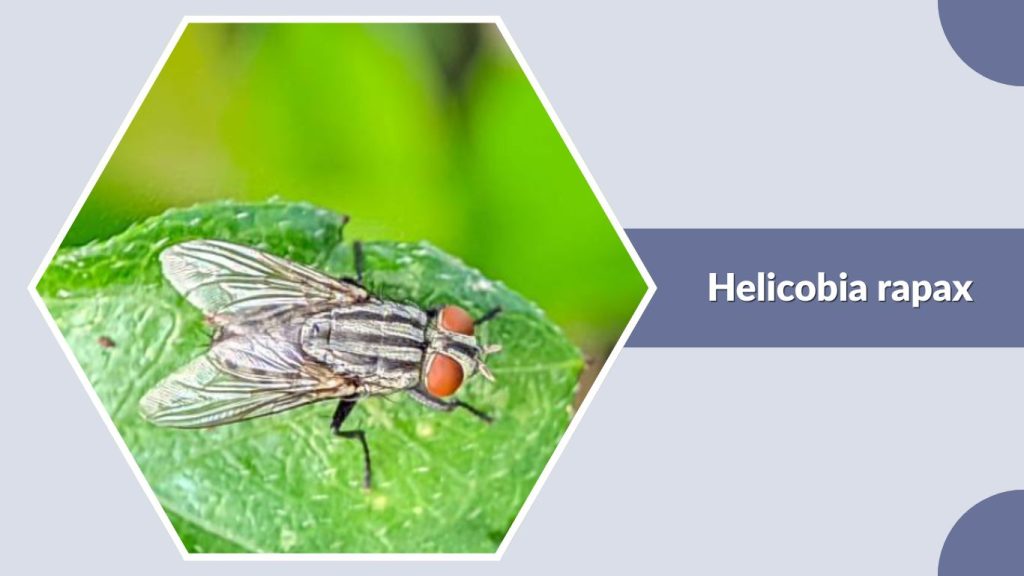
Helicobia rapax is a flesh fly species known for its association with decaying organic matter and animal remains. It belongs to the Sarcophagidae family and is commonly observed in warm environments where decomposition processes are active.
Identification and Appearance
Helicobia rapax has a grayish body with dark longitudinal stripes on the thorax and a patterned abdomen. Its eyes are reddish, and the transparent wings contain visible veins. The body is slender and covered with fine bristles that give it a rough appearance.
Characteristics
- Gray body with dark thoracic stripes
- Patterned abdomen with checkered markings
- Transparent wings
- Red compound eyes
- Slender bristly body
- Common near carrion and waste
- Active in warm climates
Habitat and Distribution
This species is widely distributed in tropical and subtropical regions. It commonly inhabits forests, grasslands, garbage sites, farms, and urban areas where decaying organic material is available. Warm temperatures support its rapid reproduction and development.
Importance and Behavior
Helicobia rapax contributes to decomposition by feeding and breeding on dead organic matter. It is ecologically important for nutrient recycling but can also spread bacteria from contaminated sources. The species is occasionally significant in forensic entomology due to its presence on decomposing remains.
13. Peckia chrysostoma
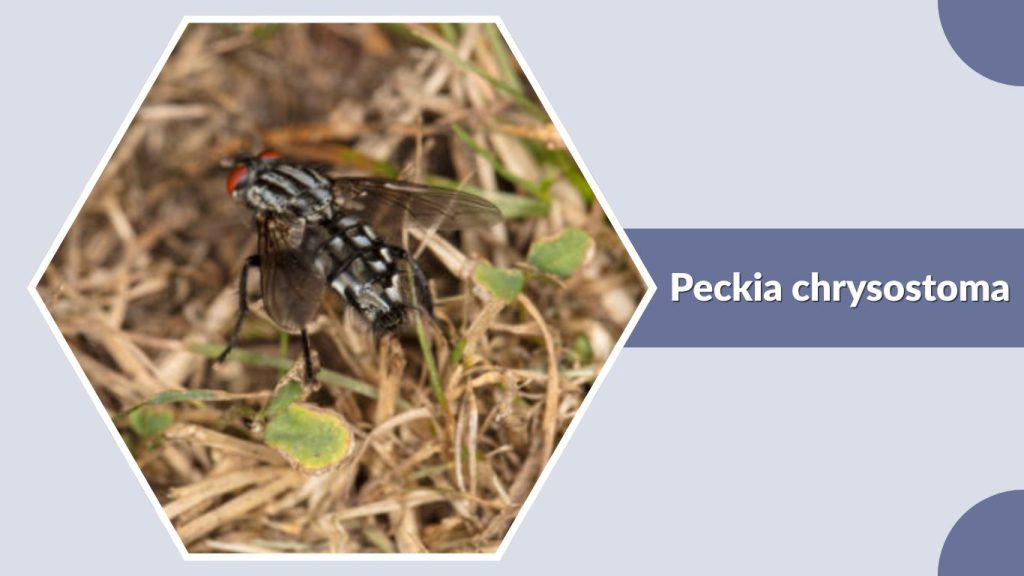
Peckia chrysostoma is a tropical flesh fly species recognized for its role in decomposition and forensic investigations. It belongs to the Sarcophagidae family and is commonly associated with carrion, animal waste, and decaying organic material.
Identification and Appearance
Peckia chrysostoma has a gray body with bold black stripes on the thorax and a checkered abdomen. Its eyes are reddish-brown, and the wings are transparent with fine venation. The fly’s body is robust and densely covered with short bristles.
Characteristics
- Gray body with black stripes
- Checkerboard-patterned abdomen
- Reddish-brown compound eyes
- Transparent wings with visible veins
- Robust body covered with bristles
- Frequently associated with carrion
- Important in forensic studies
Habitat and Distribution
This species is commonly found in tropical and subtropical regions of the Americas. It inhabits forests, urban areas, farms, and garbage sites where decomposing material is abundant. Warm and humid climates are especially favorable for its survival.
Importance and Behavior
Peckia chrysostoma plays an essential role in breaking down dead organisms and recycling nutrients in ecosystems. In forensic science, it is valuable because its larvae develop predictably on decomposing remains. However, it may also act as a carrier of harmful bacteria in unsanitary environments.
14. Peckia intermutans
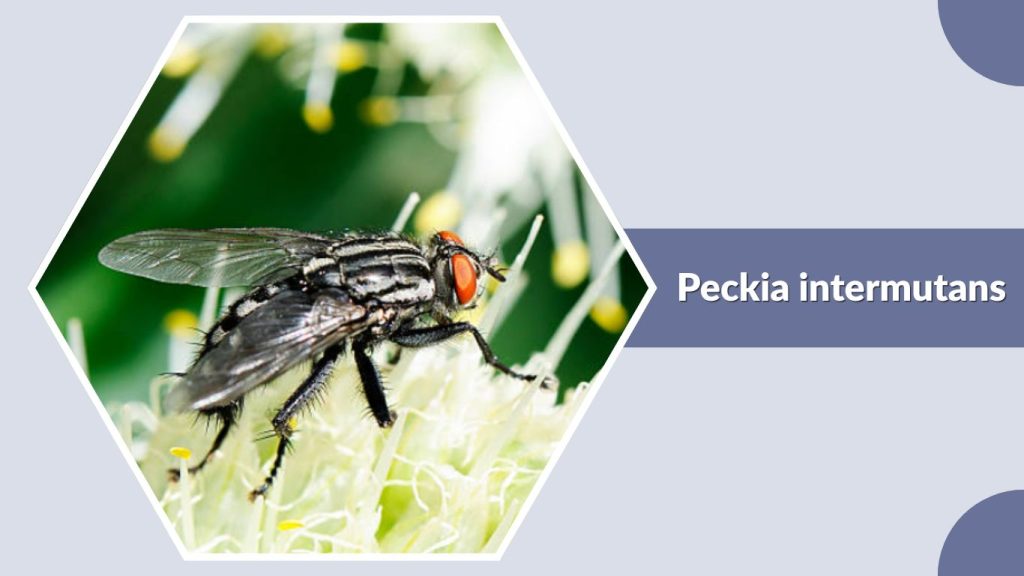
Peckia intermutans is a flesh fly species commonly found in tropical and subtropical regions. It belongs to the Sarcophagidae family and is known for breeding on carrion and decomposing organic matter. This species is also important in forensic entomology because of its association with dead animals and waste.
Identification and Appearance
Peckia intermutans has a gray body with dark black stripes running along the thorax and a checkerboard-patterned abdomen. Its eyes are reddish, and the transparent wings show distinct veins. The body is sturdy and covered with short, dense bristles.
Characteristics
- Gray body with black thoracic stripes
- Checkered abdomen pattern
- Red compound eyes
- Transparent wings with visible veins
- Robust body with fine bristles
- Frequently found near carrion
- Important in forensic investigations
Habitat and Distribution
This species is widely distributed across tropical and subtropical parts of the Americas. It commonly inhabits forests, farms, garbage dumps, and urban environments with abundant decaying organic material. Warm and humid climates are ideal for its reproduction and development.
Importance and Behavior
Peckia intermutans helps decompose dead organic matter and recycle nutrients in ecosystems. It is valuable in forensic science because its life cycle can assist investigators in estimating postmortem intervals. However, it may also spread bacteria if it contaminates food or surfaces.
15. Boettcherisca peregrina
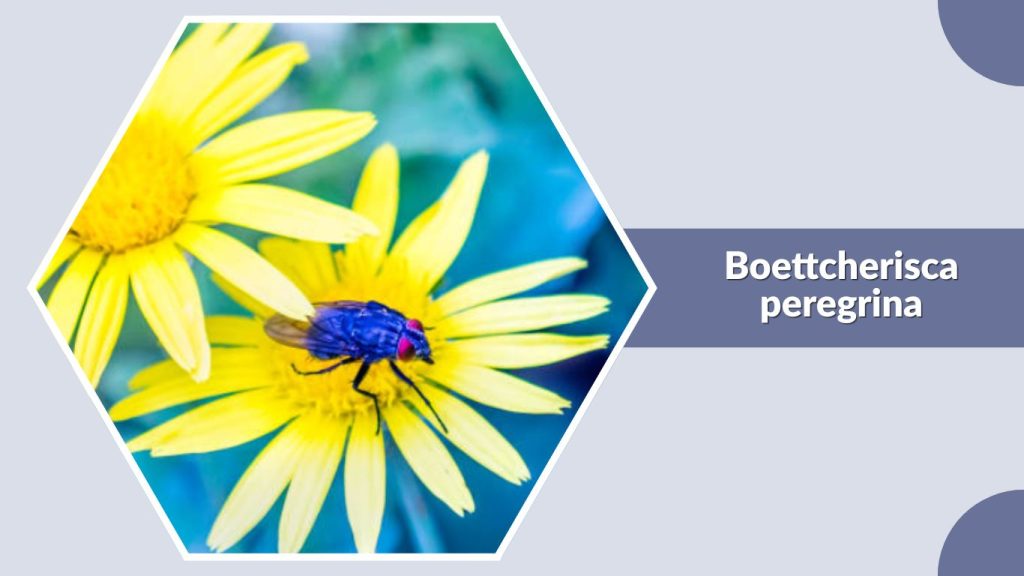
Boettcherisca peregrina is a widely distributed flesh fly species recognized for its medical and forensic importance. It belongs to the Sarcophagidae family and is commonly associated with carrion, garbage, and animal waste in urban and rural environments.
Identification and Appearance
Boettcherisca peregrina has a gray body with bold black longitudinal stripes on the thorax and a patterned abdomen. The eyes are bright red, and the transparent wings contain visible veins. Its body is medium-sized and densely covered with small bristles.
Characteristics
- Gray body with dark thoracic stripes
- Patterned black-and-gray abdomen
- Bright red compound eyes
- Transparent wings
- Body covered with short bristles
- Common around waste and carrion
- Frequently studied in forensic science
Habitat and Distribution
This species is found throughout Asia, Australia, and many tropical and subtropical regions. It commonly inhabits cities, farms, forests, markets, and waste disposal areas where decomposing matter is abundant. Warm climates support its rapid life cycle.
Importance and Behavior
Boettcherisca peregrina plays an important role in decomposition by feeding on dead organic material. In forensic investigations, its larvae are useful for estimating time since death. The species may also carry harmful microorganisms from contaminated environments to human surroundings.
16. Liopygia argyrostoma
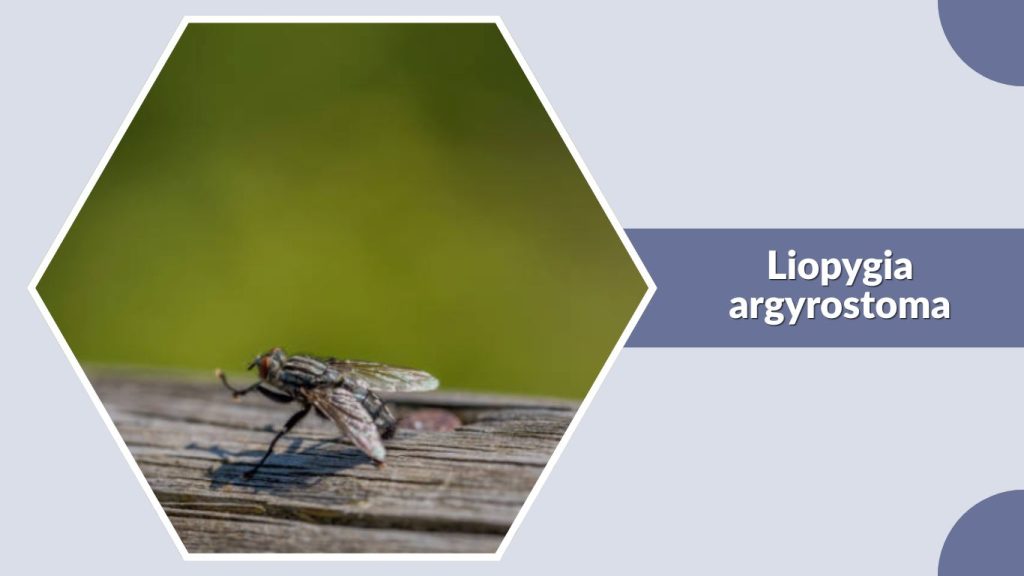
Liopygia argyrostoma is a flesh fly species commonly associated with carrion and decomposing organic matter. It belongs to the Sarcophagidae family and is known for its importance in forensic entomology because it frequently colonizes dead bodies during decomposition.
Identification and Appearance
Liopygia argyrostoma has a gray body with dark black stripes on the thorax and a checkered abdomen. Its eyes are reddish, and its transparent wings show fine veins. The body is medium-sized, stout, and covered with short bristles typical of flesh flies.
Characteristics
- Gray body with black thoracic stripes
- Checkerboard-patterned abdomen
- Red compound eyes
- Transparent wings with visible veins
- Stout body covered in bristles
- Common near carrion and waste
- Important in forensic investigations
Habitat and Distribution
This species is widely distributed in Europe, Asia, Africa, and other warm regions. It commonly inhabits urban environments, forests, farms, and garbage sites where decomposing organic material is abundant. Warm temperatures favor its rapid development and reproduction.
Importance and Behavior
Liopygia argyrostoma contributes to decomposition by feeding on dead organisms and waste materials. It is especially important in forensic science because its larvae help estimate postmortem intervals. However, the species may also spread bacteria when visiting contaminated environments.
17. Oxysarcodexia varia
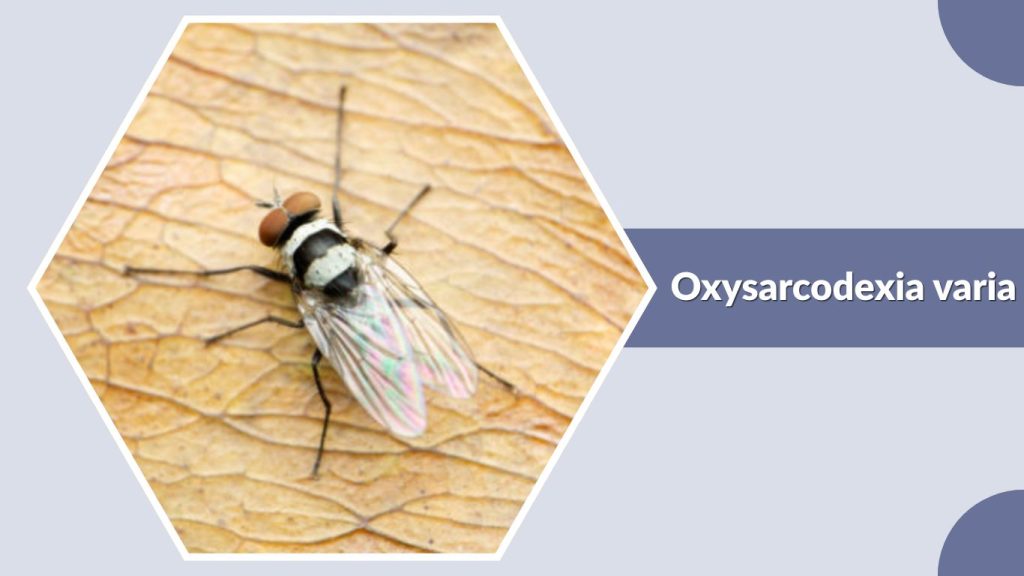
Oxysarcodexia varia is a tropical flesh fly species known for its association with decaying organic matter and animal remains. It belongs to the Sarcophagidae family and is commonly found in warm climates where decomposition occurs rapidly.
Identification and Appearance
Oxysarcodexia varia has a gray body with black longitudinal stripes on the thorax and a patterned abdomen. The eyes are reddish-brown, and the transparent wings display visible veins. Its body is slender and covered with fine bristles.
Characteristics
- Gray body with dark stripes
- Patterned abdomen with checkered markings
- Transparent wings
- Reddish-brown compound eyes
- Slender bristly body
- Frequently associated with carrion
- Active in tropical climates
Habitat and Distribution
This species is commonly distributed across Central and South America in tropical and subtropical regions. It inhabits forests, urban waste sites, farms, and grasslands where decaying material is available for feeding and reproduction.
Importance and Behavior
Oxysarcodexia varia plays an important ecological role by breaking down organic waste and recycling nutrients. It is also relevant in forensic entomology because it often appears on decomposing remains. Like other flesh flies, it can potentially spread bacteria from contaminated areas.
18. Neobellieria citellivora
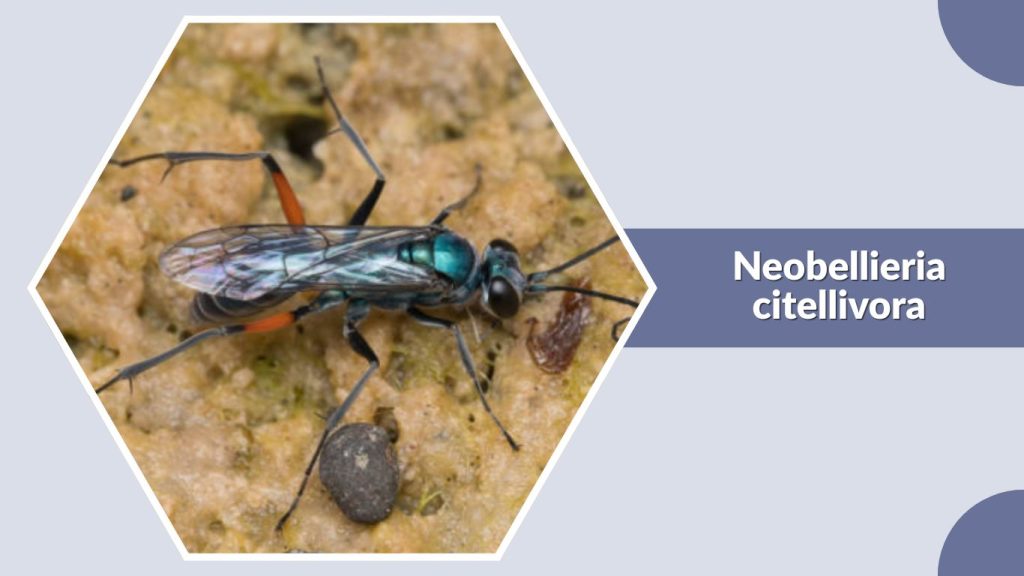
Neobellieria citellivora is a flesh fly species belonging to the Sarcophagidae family. It is commonly associated with small mammals, carrion, and decaying organic matter. This species is known for its ecological role in decomposition and nutrient recycling.
Identification and Appearance
Neobellieria citellivora has a gray body with dark longitudinal stripes across the thorax and a checkered abdomen. Its eyes are reddish, and the transparent wings contain noticeable veins. The body is medium-sized and covered with short bristles that give it a rough texture.
Characteristics
- Gray body with black thoracic stripes
- Checkered abdomen pattern
- Red compound eyes
- Transparent wings with visible veins
- Medium-sized bristly body
- Common near carrion and animal remains
- Active in warm weather conditions
Habitat and Distribution
This species is mainly found in North America, especially in grasslands, forests, and rural environments. It commonly inhabits areas where dead animals, waste, and decomposing matter are present. Warm seasons support its breeding and development cycles.
Importance and Behavior
Neobellieria citellivora contributes to the natural decomposition process by feeding on dead organic material. It also has forensic importance because its larvae can appear on decomposing remains. Like many flesh flies, it may carry bacteria from contaminated environments.
19. Ravinia pernix
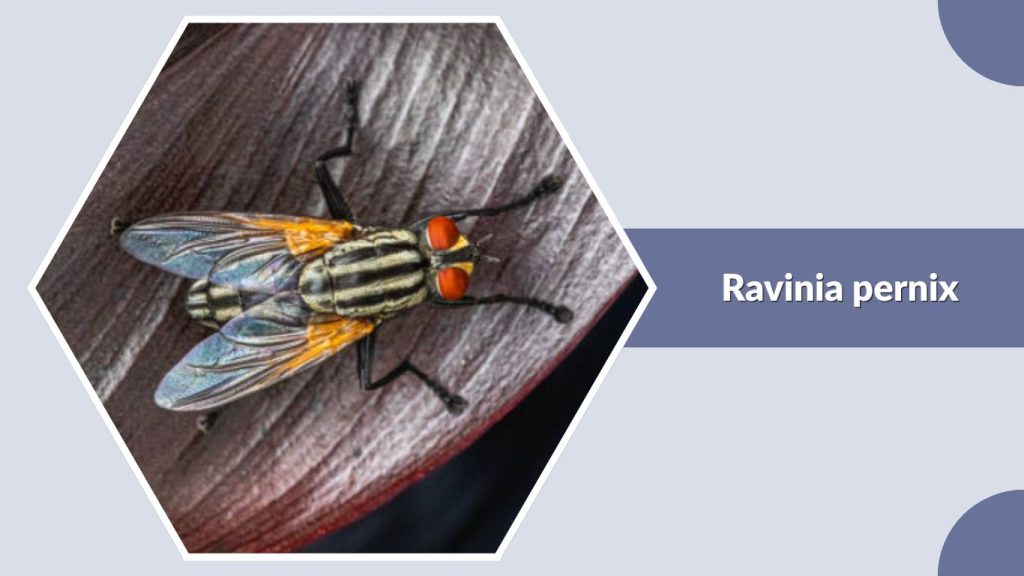
Ravinia pernix is a flesh fly species commonly found around animal waste and decomposing organic matter. It belongs to the Sarcophagidae family and is known for its role in decomposition and waste recycling in natural and urban ecosystems.
Identification and Appearance
Ravinia pernix has a gray body with distinct black stripes on the thorax and a patterned abdomen. Its eyes are reddish, and its transparent wings contain fine veins. The body is relatively slender and covered with fine bristles.
Characteristics
- Gray body with black thoracic stripes
- Patterned checkered abdomen
- Red compound eyes
- Transparent wings with visible veins
- Slender bristly body
- Frequently found near waste and carrion
- Active during warm daytime conditions
Habitat and Distribution
This species is commonly distributed across North and Central America. It inhabits farms, grasslands, urban garbage sites, and areas containing decaying organic matter. Warm climates and moist conditions are ideal for its survival and reproduction.
Importance and Behavior
Ravinia pernix helps break down organic waste and dead material in ecosystems. It supports nutrient recycling and natural decomposition processes. However, because it visits contaminated areas, the fly may also transport bacteria and pathogens to human environments.
20. Sarcodexia lambens
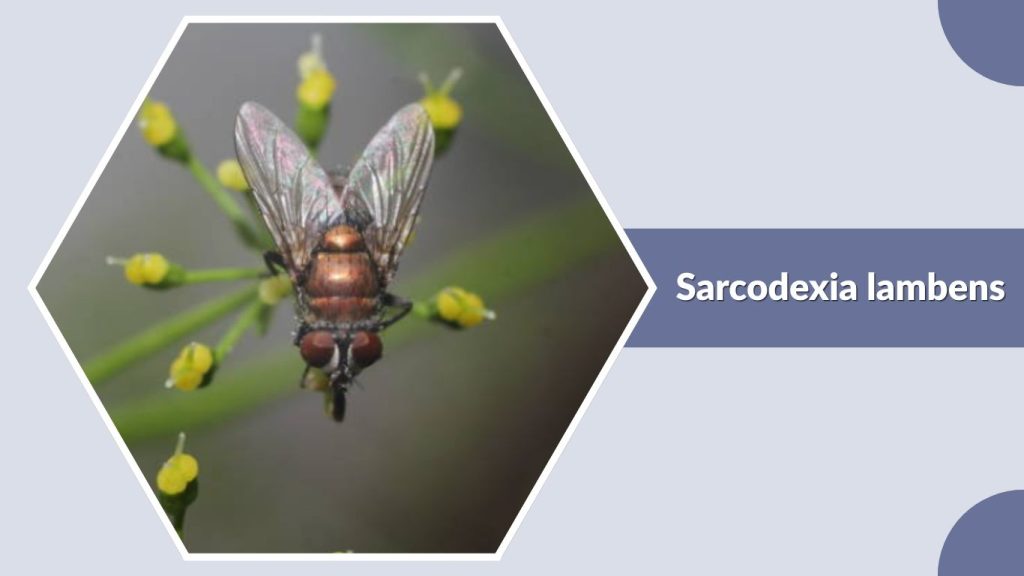
Sarcodexia lambens is a tropical flesh fly species commonly associated with carrion, waste, and decomposing organic matter. It belongs to the Sarcophagidae family and is widely recognized for its ecological and forensic importance in warm climates.
Identification and Appearance
Sarcodexia lambens has a gray body marked with black longitudinal stripes on the thorax and a checkered abdomen. Its eyes are bright red, and the transparent wings contain visible veins. The fly has a robust body covered with short bristles.
Characteristics
- Gray body with black thoracic stripes
- Checkerboard-patterned abdomen
- Bright red compound eyes
- Transparent wings with visible veins
- Robust body covered in bristles
- Common around carrion and waste
- Important in forensic investigations
Habitat and Distribution
This species is commonly found in tropical and subtropical regions of the Americas. It inhabits forests, farms, garbage sites, and urban environments where decomposing organic material is abundant. Warm and humid climates support its rapid reproduction.
Importance and Behavior
Sarcodexia lambens contributes to decomposition and nutrient recycling by feeding on dead organic matter. It is also valuable in forensic science because its larvae can help determine postmortem intervals. However, the fly may spread harmful bacteria from contaminated sources.
21. Euboettcheria collusor
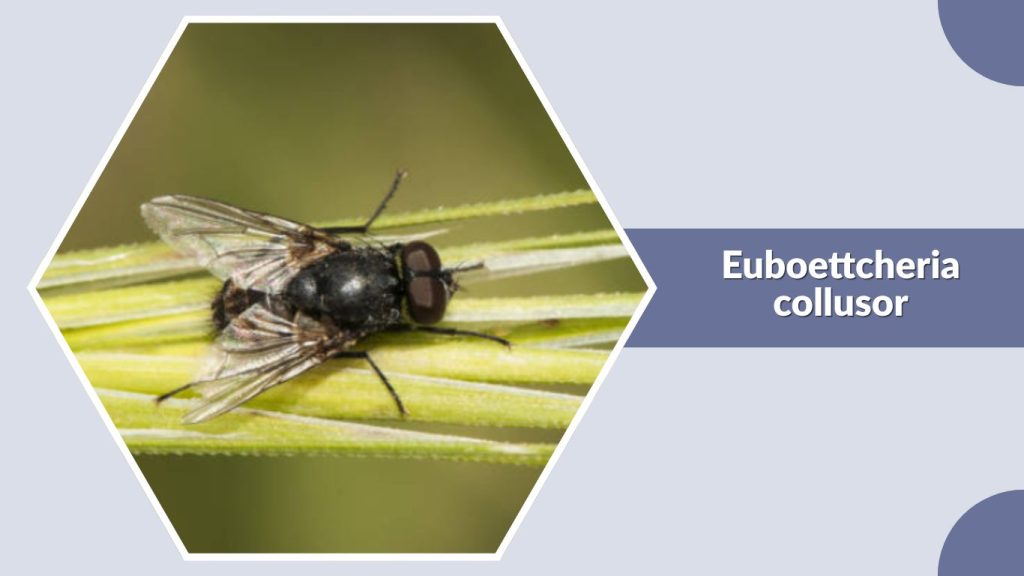
Euboettcheria collusor is a flesh fly species belonging to the Sarcophagidae family. It is commonly found near carrion and decaying organic material, where it plays a role in decomposition and nutrient recycling within ecosystems.
Identification and Appearance
Euboettcheria collusor has a gray body with dark thoracic stripes and a patterned abdomen. Its reddish eyes and transparent wings are typical characteristics of flesh flies. The body is medium-sized and densely covered with fine bristles.
Characteristics
- Gray body with dark black stripes
- Patterned checkered abdomen
- Red compound eyes
- Transparent wings with fine veins
- Medium-sized bristly body
- Frequently associated with carrion
- Active in warm climates
Habitat and Distribution
This species is mainly distributed in North and Central America. It commonly inhabits forests, rural landscapes, urban garbage areas, and places with abundant decomposing material. Warm weather conditions provide ideal environments for breeding and growth.
Importance and Behavior
Euboettcheria collusor assists in breaking down dead organisms and waste, helping recycle nutrients in ecosystems. It may also be important in forensic entomology because it colonizes decomposing remains. Like other flesh flies, it can carry bacteria from unsanitary environments.
22. Titanogrypa larvicida
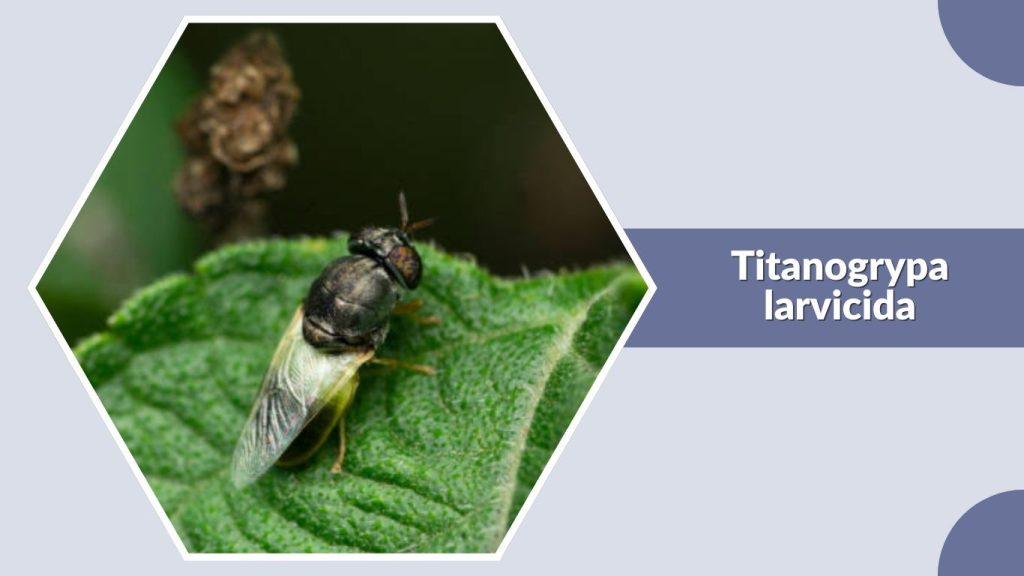
Titanogrypa larvicida is a flesh fly species known for its association with decaying organic matter and insect larvae. It belongs to the Sarcophagidae family and is commonly found in warm environments where decomposition processes occur rapidly.
Identification and Appearance
Titanogrypa larvicida has a gray body with dark black stripes running along the thorax and a patterned abdomen. Its eyes are reddish, and the transparent wings display fine venation. The fly has a sturdy body covered with short bristles.
Characteristics
- Gray body with black thoracic stripes
- Patterned abdomen with checkered markings
- Red compound eyes
- Transparent wings with visible veins
- Robust body covered in bristles
- Common near decaying organic matter
- Active in warm tropical climates
Habitat and Distribution
This species is commonly distributed across tropical and subtropical regions. It inhabits forests, farms, garbage sites, and urban areas where dead organic material and insect larvae are abundant. Warm temperatures support its growth and reproduction.
Importance and Behavior
Titanogrypa larvicida contributes to decomposition by feeding and breeding on decaying matter. It also helps recycle nutrients within ecosystems. In some cases, the species may be relevant in forensic investigations because it appears on decomposing remains.
23. Tricharaea brevicornis
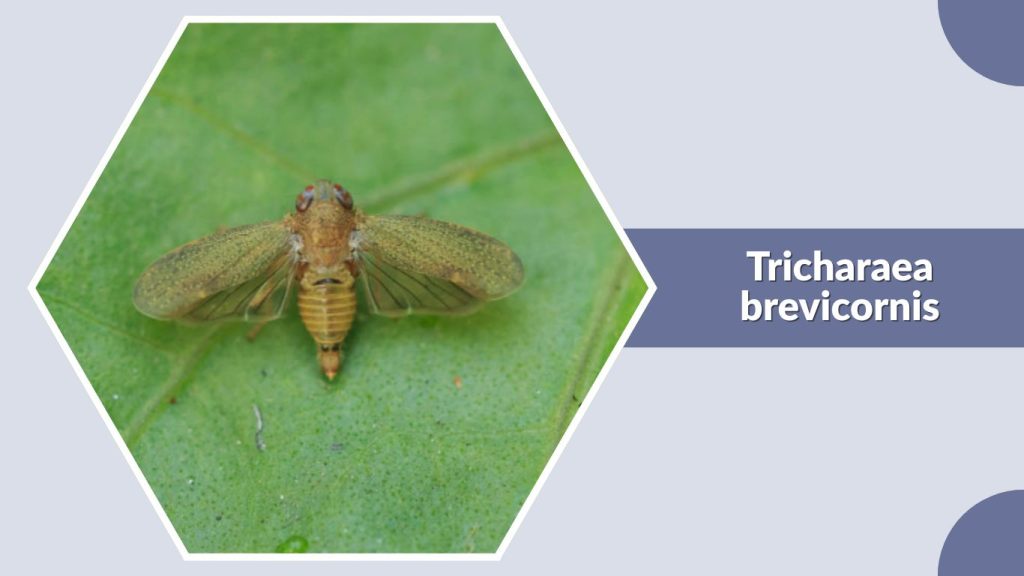
Tricharaea brevicornis is a small flesh fly species belonging to the Sarcophagidae family. It is commonly associated with animal waste, carrion, and decomposing organic materials in both natural and urban habitats.
Identification and Appearance
Tricharaea brevicornis has a grayish body with dark thoracic stripes and a lightly patterned abdomen. Its eyes are reddish-brown, and the transparent wings contain visible veins. The body is relatively small and slender compared to many other flesh flies.
Characteristics
- Gray body with dark thoracic stripes
- Lightly patterned abdomen
- Reddish-brown compound eyes
- Transparent wings
- Small slender body with fine bristles
- Frequently found near waste and carrion
- Active during warm daylight conditions
Habitat and Distribution
This species is distributed across various temperate and tropical regions. It commonly inhabits farms, grasslands, garbage dumps, forests, and urban areas with decomposing material. Warm and moist environments are favorable for its development.
Importance and Behavior
Tricharaea brevicornis plays a role in decomposition and organic waste recycling. By feeding on dead matter, it supports nutrient cycling in ecosystems. However, like many flesh flies, it may carry bacteria from contaminated environments to human surroundings.
24. Fletcherimyia fletcheri
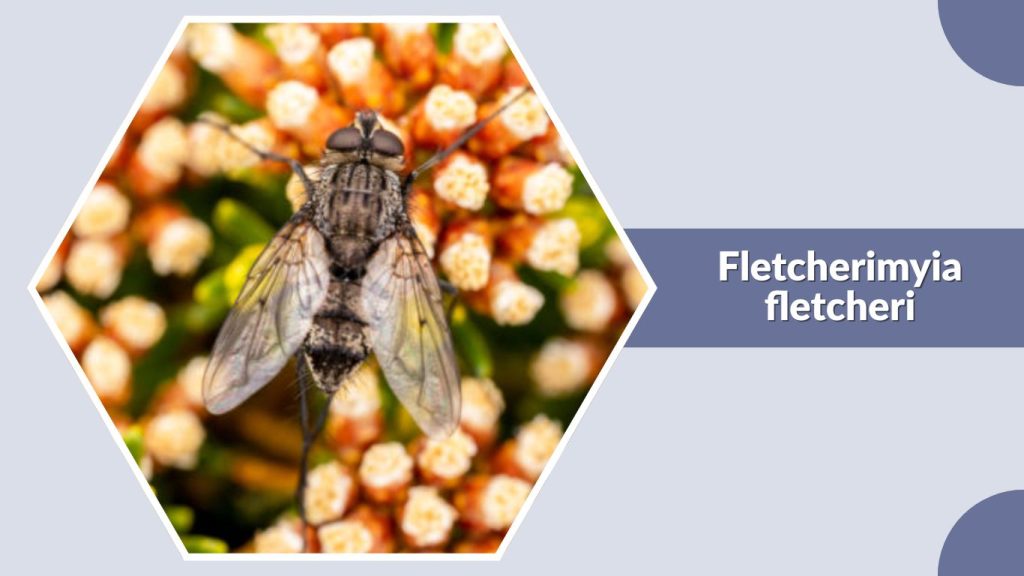
Fletcherimyia fletcheri is a flesh fly species belonging to the Sarcophagidae family. It is commonly associated with decaying organic matter and occasionally parasitic behavior in other insects. This species contributes to decomposition processes within natural ecosystems.
Identification and Appearance
Fletcherimyia fletcheri has a gray body with dark black stripes on the thorax and a patterned abdomen. Its eyes are reddish, and the transparent wings contain fine visible veins. The body is medium-sized and covered with short bristles typical of flesh flies.
Characteristics
- Gray body with dark thoracic stripes
- Patterned abdomen with checkered markings
- Reddish compound eyes
- Transparent wings with visible veins
- Medium-sized bristly body
- Associated with decaying organic matter
- Active in warm environments
Habitat and Distribution
This species is commonly found in forests, grasslands, farms, and areas containing decaying material. It occurs mainly in temperate and subtropical regions where organic waste and insect hosts are abundant. Warm temperatures support its breeding activities.
Importance and Behavior
Fletcherimyia fletcheri helps break down dead organic matter and supports nutrient recycling in ecosystems. In some environments, it may interact with other insects as a parasite or scavenger. Like other flesh flies, it can also transport bacteria from contaminated sources.
25. Microcerella halli
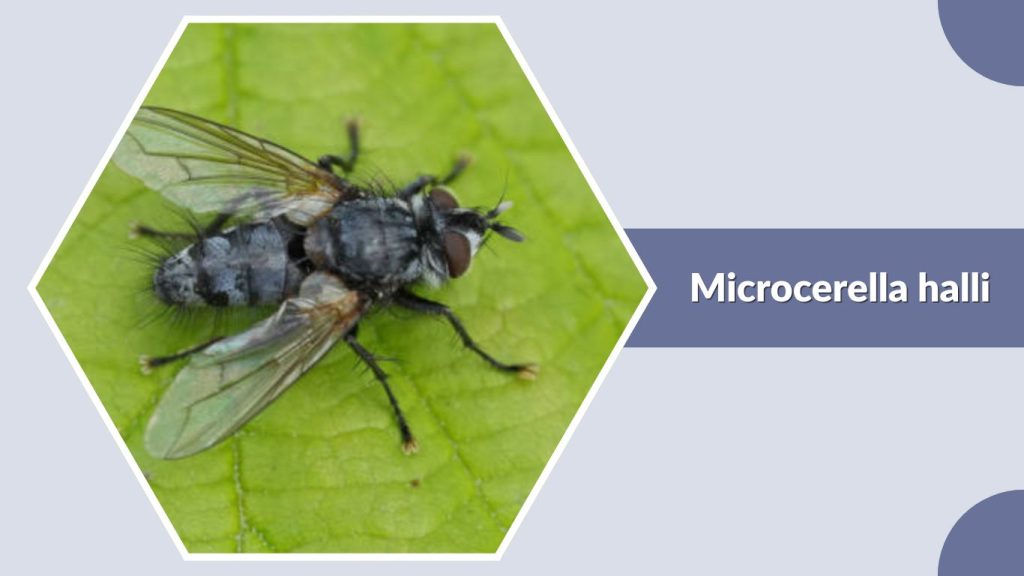
Microcerella halli is a flesh fly species known for inhabiting warm and dry environments. It belongs to the Sarcophagidae family and is commonly associated with carrion and decomposing organic material in natural habitats.
Identification and Appearance
Microcerella halli has a gray body marked with black longitudinal stripes across the thorax and a patterned abdomen. The eyes are reddish-brown, and the transparent wings display delicate veins. Its body is relatively slender and covered with fine bristles.
Characteristics
- Gray body with black thoracic stripes
- Patterned checkered abdomen
- Reddish-brown compound eyes
- Transparent wings with fine veins
- Slender body covered in bristles
- Common near carrion and waste
- Active in warm and dry climates
Habitat and Distribution
This species is mainly distributed in arid and semi-arid regions of the Americas. It inhabits grasslands, deserts, rural landscapes, and areas with decomposing animal material. Warm climates provide ideal conditions for its development and survival.
Importance and Behavior
Microcerella halli contributes to decomposition by feeding on dead organic matter and waste. It plays an important ecological role in nutrient recycling. The species may also be useful in forensic investigations because it can colonize decomposing remains under suitable conditions.