
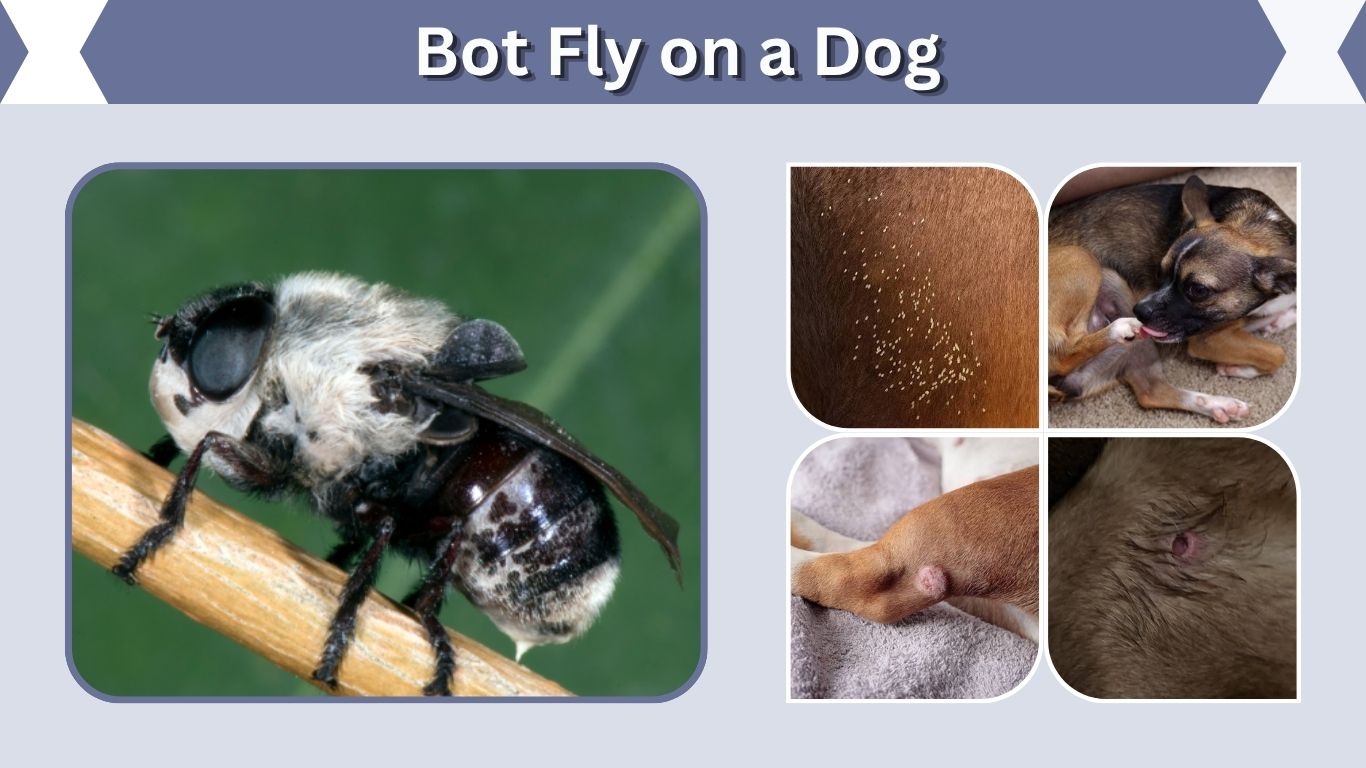
A bot fly on a dog usually appears as a raised skin lump with a small opening in the center. Inside the lump is a developing fly larva, commonly called a warble. Dogs are accidental hosts that become exposed while exploring areas inhabited by rabbits or rodents. Although a single skin warble is usually treatable, squeezing or pulling it out at home can rupture the larva and cause infection or a severe reaction. Safe treatment requires complete removal by a veterinarian.
What Is a Bot Fly on a Dog?
In North America, most canine bot fly cases involve Cuterebra, a group of flies that normally develops in rabbits and rodents. Dogs become accidental hosts after encountering larvae around animal burrows. Other bot fly species or wound-infesting flies may affect dogs in different regions.
What Does It Look Like?
A bot fly warble may have the following features:
- A firm, round lump beneath the skin
- A small opening in the center of the swelling
- Clear, bloody, or pus-like discharge
- Matted or missing hair around the opening
- Movement visible inside the hole
- Pain when the area is touched
- Excessive licking or scratching
- A dark larva occasionally visible near the surface
The central opening allows the larva to breathe. It may become larger as the larva grows and prepares to leave the dog.
Is It Really a Bot Fly Bite?
The phrase “bot fly bite” is commonly used, but the lump is not produced by an adult fly biting the dog. Adult Cuterebra flies generally do not feed on dogs. The lesion develops after a microscopic larva enters the body and grows under the skin.
Ticks, abscesses, cysts, tumors, infected punctures, and other types of myiasis can resemble a bot fly warble. Veterinary examination is necessary for a reliable diagnosis.
How Do Dogs Get Bot Flies?
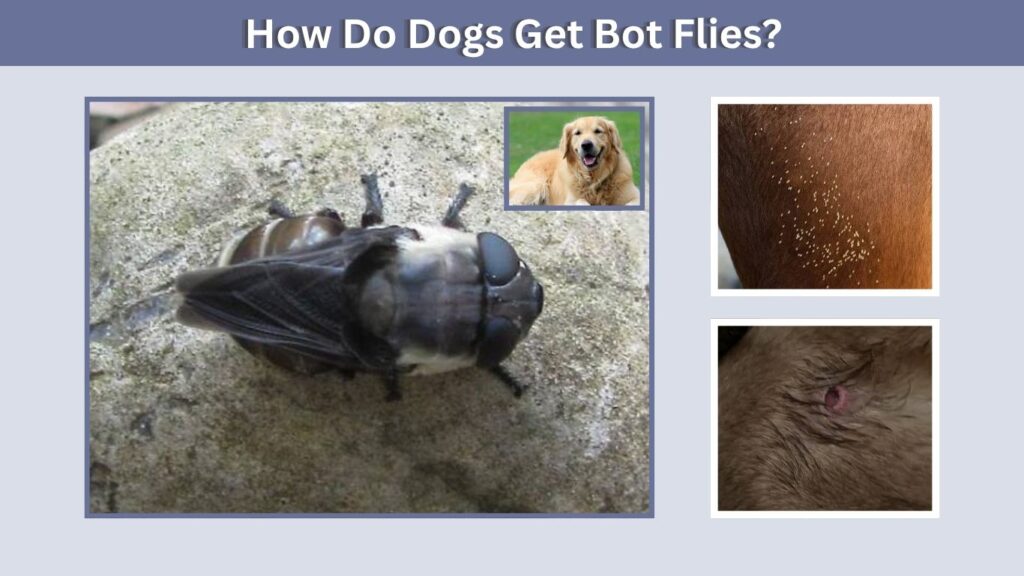
Dogs are most likely to encounter bot fly larvae while hunting, sniffing, or digging near wild rabbit and rodent nests. Exposure is more common in outdoor dogs that investigate burrows or travel through tall grass and brush.
How Larvae Enter a Dog
The process generally occurs as follows:
- An adult bot fly deposits eggs near a rabbit or rodent burrow.
- Warmth or movement from a passing animal stimulates the eggs to hatch.
- Tiny larvae attach to the dog’s coat.
- They enter through the nose, mouth, eyes, or an existing skin wound.
- Larvae migrate through the body before settling beneath the skin.
- A swelling develops around each growing larva.
- The mature larva exits through its breathing hole and pupates in soil.
The adult fly usually does not glue visible eggs directly onto a dog. Therefore, finding a warble does not necessarily mean bot fly eggs are present throughout the coat.
Are Bot Flies Contagious Between Dogs?
Bot flies are not directly contagious. A larva does not normally travel from one dog to another, and a dog with a warble cannot spread the infestation through ordinary contact.
However, multiple dogs exploring the same rodent habitat may be exposed independently. Examine every pet that visits the affected location.
Bot Fly Stages in Dogs
The visible skin lump represents only part of the bot fly’s development. Early infection often produces no external signs, making it difficult to identify until the larva reaches the skin.
Stage 1: Entry and Migration
A newly hatched larva enters through a natural opening or wound. It then migrates through the dog’s tissues. This early stage is rarely visible and may cause no noticeable symptoms.
Stage 2: Developing Skin Lump
The larva settles beneath the skin and creates a gradually enlarging swelling. A small breathing pore forms over the center. The area may initially resemble an insect bite, pimple, cyst, or tick.
Stage 3: Mature Warble
The lump becomes larger as the larva develops. Discharge, inflammation, or movement inside the opening may be noticeable. The dog may lick, scratch, or react painfully when the lump is touched.
Stage 4: Larval Exit
A mature larva eventually leaves through the breathing hole. The remaining cavity can become infected and develop into a deep abscess. Veterinary care may still be necessary even when the larva has already departed.
Symptoms of Bot Flies in Dogs
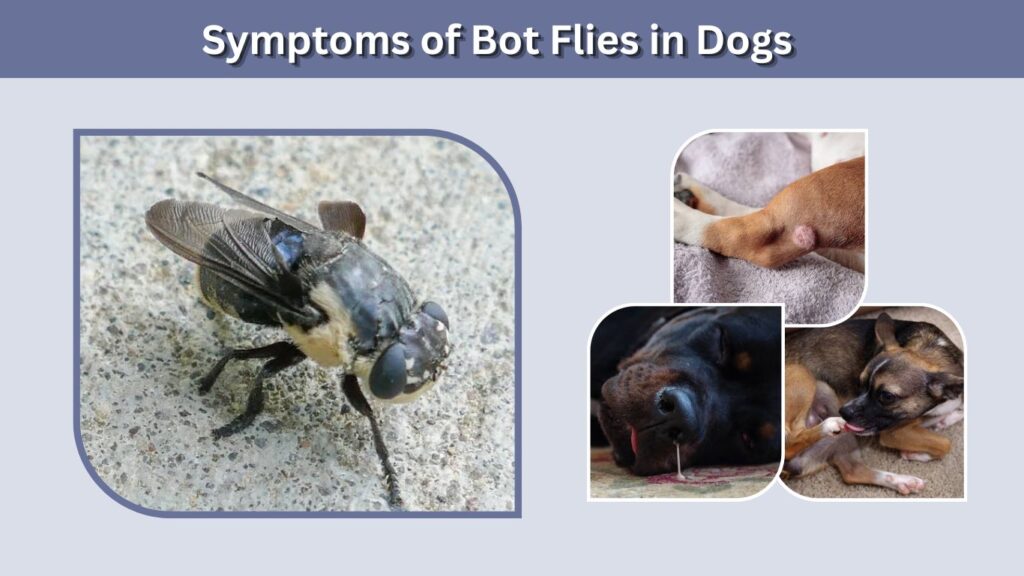
Most cases involve one or several skin warbles. Symptoms depend on the larvae’s number, location, and migration path. A simple skin lesion usually carries a good prognosis when treated early.
Common Skin Symptoms
Watch for:
- A new lump with a central hole
- Swelling beneath the skin
- Bloody or yellow discharge
- Persistent licking or scratching
- Local pain and redness
- Hair loss around the lesion
- Bad odor from an infected cavity
- Fever, lethargy, or reduced appetite
Warbles are often found around the head, neck, shoulders, chest, or legs, but they can occur elsewhere.
Rare Internal Symptoms
A larva occasionally migrates into an abnormal location such as the eye, nose, throat, respiratory tract, or nervous system. Possible warning signs include:
- Coughing or difficulty breathing
- Repeated sneezing or nasal discharge
- Eye pain, swelling, or vision problems
- Loss of coordination
- Circling or unusual behavior
- Weakness or paralysis
- Seizures
- Collapse
These signs require immediate veterinary attention. Internal migration can be much more dangerous than an uncomplicated skin warble.
Are Bot Flies Dangerous to Dogs?
A single superficial warble is not usually fatal, and most dogs recover fully after proper removal. Nevertheless, bot fly larvae can cause tissue damage, inflammation, secondary bacterial infection, and abscess formation.
Possible Complications
Complications can include:
- Rupture of the larva during removal
- Chronic inflammation from larval fragments
- Bacterial infection
- Deep abscess formation
- Allergic or anaphylactic reaction
- Damage to an eye or respiratory structure
- Brain or spinal cord inflammation
- Serious illness from multiple larvae
Small dogs, puppies, elderly dogs, and pets with weakened immune systems may have greater difficulty tolerating infection.
Bot Fly Removal From a Dog
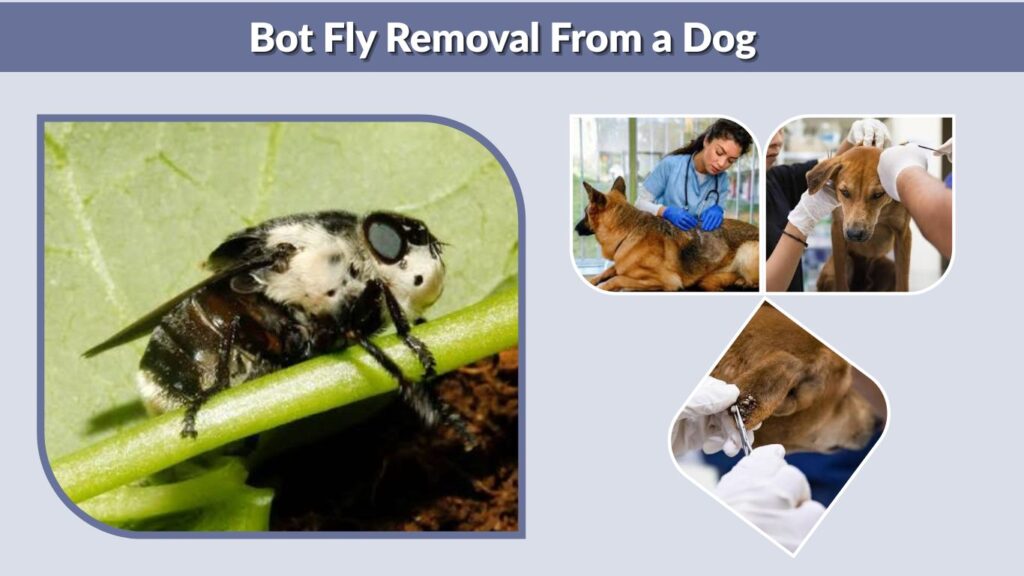
A veterinarian should remove the larva whole and clean the remaining cavity. The opening may need to be carefully enlarged because a mature larva has rows of spines that help anchor it inside the dog’s skin.
Professional Removal
Veterinary treatment may include:
- Clipping and disinfecting the surrounding hair
- Sedation or local anesthesia
- Carefully enlarging the breathing pore
- Removing the larva intact with forceps
- Flushing and cleaning the cavity
- Removing damaged or infected tissue
- Prescribing pain medication
- Treating secondary infection when present
- Closing a large wound when necessary
According to the Merck Veterinary Manual, the larva should be removed in one piece because retained fragments can produce chronic inflammation and infection.
Can You Remove a Bot Fly at Home?
Do not squeeze the lump or pull the larva with ordinary tweezers. Squeezing can rupture it beneath the skin, leaving foreign material behind. Larval rupture has also been associated with severe allergic reactions.
Avoid putting insecticide, bleach, alcohol, essential oil, gasoline, or other chemicals into the hole. Covering the opening with tape or thick substances without veterinary supervision may suffocate or damage the larva without allowing safe removal.
Prevent your dog from licking the area and arrange veterinary care. An Elizabethan collar may help protect the lesion while waiting for the appointment.
Bot Fly Removal Cost
Cost varies according to the clinic, location, number of larvae, need for sedation, and severity of infection. Removing one uncomplicated skin warble is generally less expensive than treating an abscess or surgically managing a larva near an eye, nerve, or internal organ.
Contact a local veterinary clinic for an examination-based estimate rather than delaying treatment while comparing prices.
Caring for the Wound After Removal
The cavity may remain open temporarily so it can drain and heal from the inside. Follow the veterinarian’s cleaning and medication instructions carefully.
Home Care After Treatment
- Keep the wound clean and dry as directed.
- Prevent licking, scratching, and chewing.
- Give every medication at the prescribed dose.
- Do not apply unapproved creams or disinfectants.
- Check daily for swelling, discharge, odor, or bleeding.
- Attend recommended follow-up appointments.
- Contact the veterinarian if the hole does not begin healing.
A recurring lump or abscess may mean part of the larva remains or a secondary infection has developed.
How to Prevent Bot Flies in Dogs
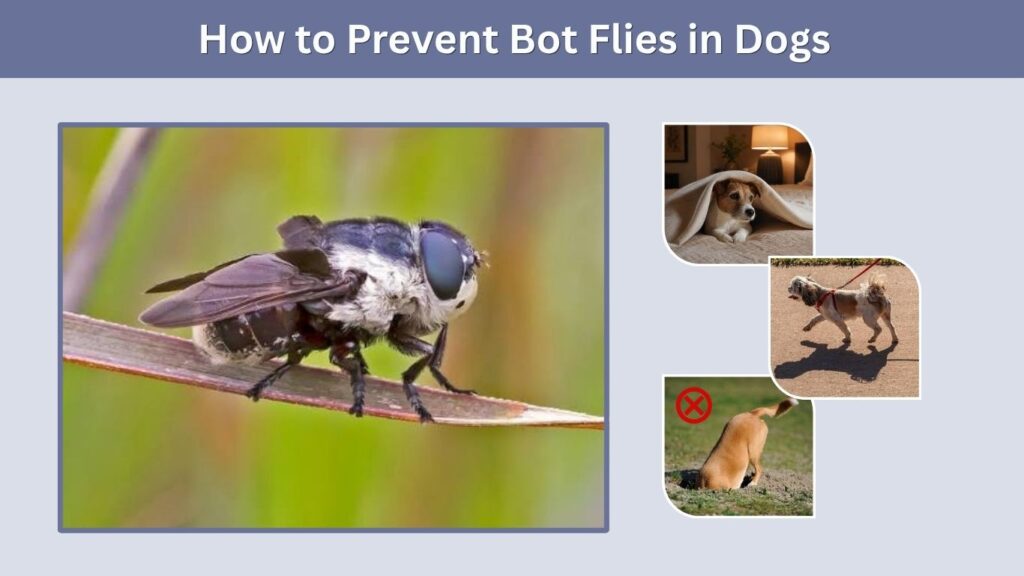
There is no single product guaranteed to prevent every Cuterebra larva. Reducing exposure to wild-animal nesting areas is the most practical strategy.
Prevention Methods
- Prevent dogs from hunting rabbits and rodents.
- Keep pets away from visible burrows.
- Use a leash in high-risk brush or grassland.
- Discourage rodents from living near the home.
- Inspect outdoor dogs regularly for new lumps.
- Treat cuts and punctures promptly.
- Keep sleeping areas and kennels clean.
- Ask a veterinarian about suitable parasite prevention.
Bot fly exposure is often seasonal, with cases becoming more noticeable during summer and early autumn. Timing varies according to region and climate.
FAQs
Can bot flies kill dogs?
Death is unusual with a single skin warble. However, multiple larvae, severe infection, anaphylaxis, or migration into the brain or respiratory system can become life-threatening.
What does a bot fly hole look like on a dog?
It usually appears as a round skin lump with a small central breathing pore. The opening may release clear, bloody, or pus-like fluid, and movement may be visible inside.
Should I squeeze a bot fly out of my dog?
No. Squeezing can rupture the larva, cause severe inflammation, and leave pieces inside the wound. A veterinarian should remove it intact.
How long does a bot fly stay in a dog?
A larva may remain beneath the skin for several weeks while developing. The exact period varies by bot fly species and the stage at which it entered the dog.
Can humans get bot flies from an infected dog?
The larva does not normally transfer directly from a dog to a person. People and dogs can be exposed independently in the same environment, but ordinary contact with an affected dog is not considered contagious.