
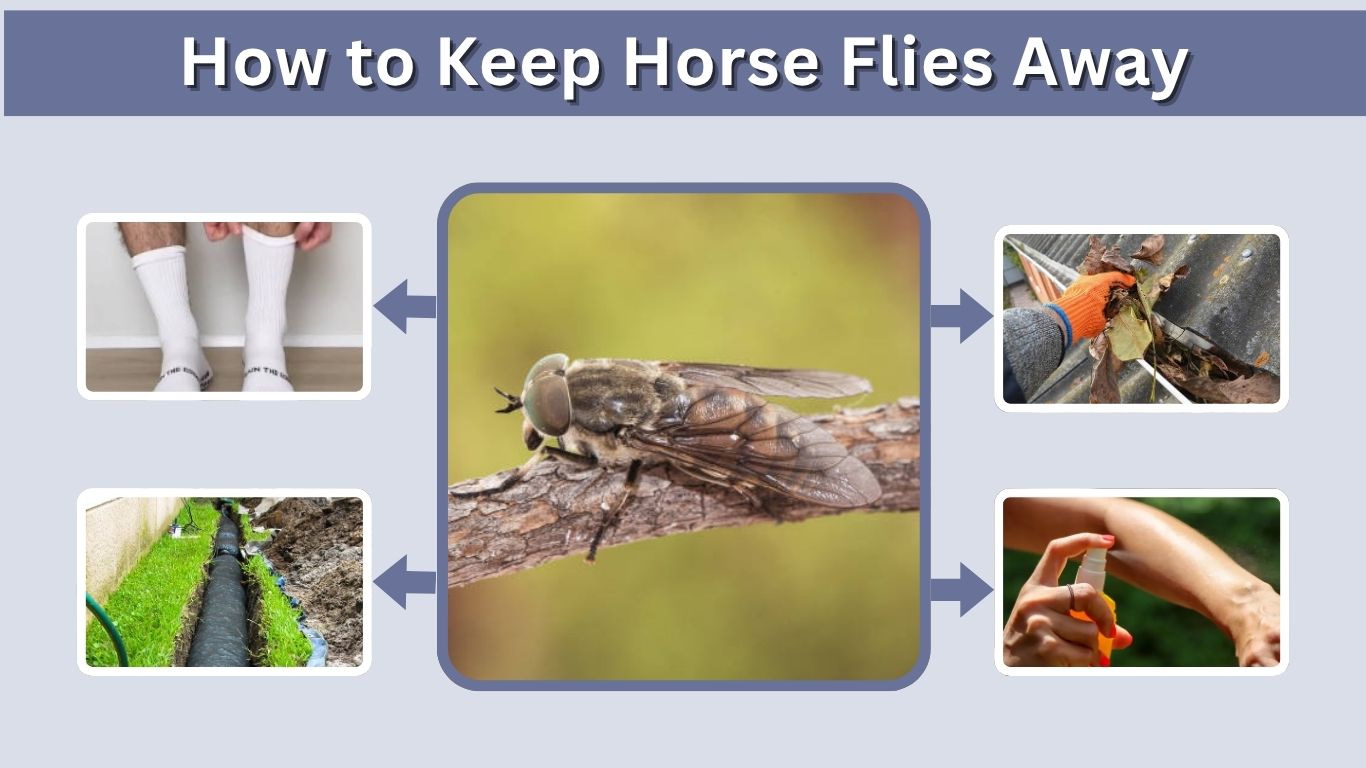
Horse flies can quickly turn time outdoors into an uncomfortable experience because females deliver painful bites while searching for blood meals. They are especially common around horses, livestock, swimming pools, wetlands, beaches, and wooded areas. Fortunately, several practical methods can reduce their numbers and make you less attractive to them. The best approach combines repellents, protective clothing, traps, environmental cleanup, and physical barriers. This guide explains how to keep horse flies away from people, horses, dogs, pools, barns, and outdoor spaces.
What Keeps Horse Flies Away?
Horse flies are strong fliers, so eliminating every individual around a property is difficult. Instead, focus on reducing attraction and making people or animals harder to reach. Repellents, protective clothing, airflow, traps, and removing favorable breeding conditions can all help. Using several methods together usually works better than depending on a single homemade remedy.
Best Ways to Keep Horse Flies Away
Useful methods include:
- Apply an appropriate insect repellent.
- Wear long sleeves and long pants.
- Choose light-colored clothing.
- Install horse fly traps.
- Use fans around patios and barns.
- Keep grass and vegetation maintained.
- Reduce standing water where possible.
- Use screens on windows and doors.
- Protect livestock with fly sheets and masks.
- Avoid areas with heavy fly activity during peak periods.
Horse flies are particularly persistent, so prevention is usually more effective than trying to swat individual flies.
Does Bug Spray Keep Horse Flies Away?
Some insect repellents can reduce horse fly bites, although horse flies may be more persistent than mosquitoes.
Choose a repellent labeled for biting flies and follow the directions carefully. Products intended for human skin should not automatically be used on pets or livestock.
Reapply the product according to its instructions, particularly during long periods outdoors or after swimming and heavy sweating.
Do Fans Keep Horse Flies Away?
Fans can help in smaller areas such as patios, porches, stalls, and outdoor seating spaces.
Horse flies are powerful fliers, but continuous airflow can make landing more difficult. Fans also disperse some of the heat, odor, and carbon dioxide cues that biting insects use when searching for hosts.
Fans work best as part of a broader control strategy.
How to Keep Horse Flies Away From You
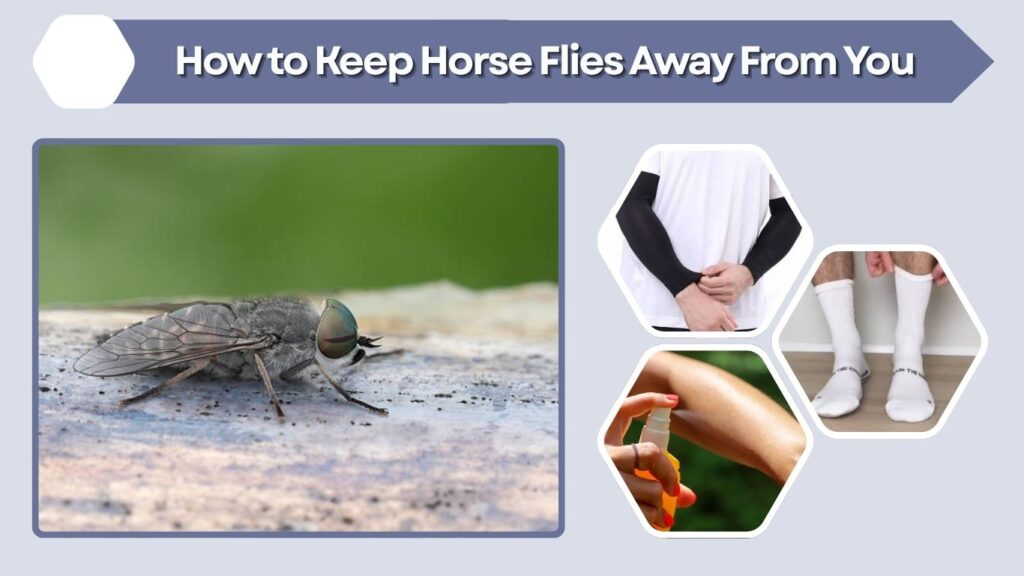
Horse flies are attracted to large moving animals, including people. Dark colors, movement, body heat, and other visual or chemical cues can help them locate potential hosts. If you are hiking, gardening, swimming, or spending time around livestock, covering exposed skin and using repellents can significantly reduce your chances of being bitten.
Protect Yourself From Horse Fly Bites
Try these strategies:
- Wear light-colored clothing.
- Cover arms and legs.
- Wear long socks in heavily infested areas.
- Use insect repellent labeled for biting flies.
- Avoid dark clothing when horse flies are abundant.
- Stay away from marshy areas when activity is especially high.
- Use screened shelters when available.
- Move indoors if flies become extremely aggressive.
Loose-fitting clothing can also provide more protection than thin fabric pressed tightly against the skin.
Can Horse Flies Bite Through Clothing?
Horse flies may occasionally bite through thin or tightly fitted materials.
Thicker clothing provides a stronger physical barrier. Long pants, sturdy shirts, and socks can therefore be useful during outdoor activities in areas where horse flies are abundant.
Covering exposed skin also reduces the number of locations where flies can land and feed.
How to Keep Horse Flies Away While Hiking
Hikers can encounter horse flies near woodland trails, streams, lakes, and wet meadows.
Wear lightweight long sleeves and pants and apply an appropriate repellent before beginning the hike.
Keeping a steady pace may help because horse flies have more difficulty landing on moving targets, although persistent individuals may continue following for some distance.
How to Keep Horse Flies Away From Horses
Horses are major targets for horse flies because their large bodies provide easy blood meals. Persistent biting can cause irritation, stress, tail swishing, stomping, and reduced comfort. Physical barriers combined with appropriate fly-control products are among the most practical ways to protect horses.
Best Ways to Keep Flies Off Horses
Common methods include:
- Fly masks
- Fly sheets
- Leg protection
- Horse-safe fly sprays
- Fans inside barns
- Regular manure removal
- Clean stalls
- Horse fly traps
- Reduced standing water
- Strategic turnout times
Fly masks are particularly useful for protecting the eyes and face.
Fly sheets provide broader body coverage and may reduce the number of places where horse flies can successfully land and bite.
How to Keep Flies Away From Horse Stalls
Barn sanitation plays a major role in controlling many types of flies.
Remove manure regularly and keep bedding as dry as practical. Clean spilled feed and organic waste, and improve ventilation.
Fans can make stalls less comfortable for flying insects while also helping maintain airflow.
Screens and traps may provide additional protection in enclosed areas.
How to Keep Flies Off a Horse’s Face and Eyes
A properly fitted fly mask is one of the easiest solutions.
Fly masks create a physical barrier while allowing the horse to see through the mesh. Some models also cover the ears or extend farther down the nose.
Regularly check the mask for proper fit, dirt, damage, or rubbing that could irritate the horse.
How to Keep Horse Flies Away Naturally
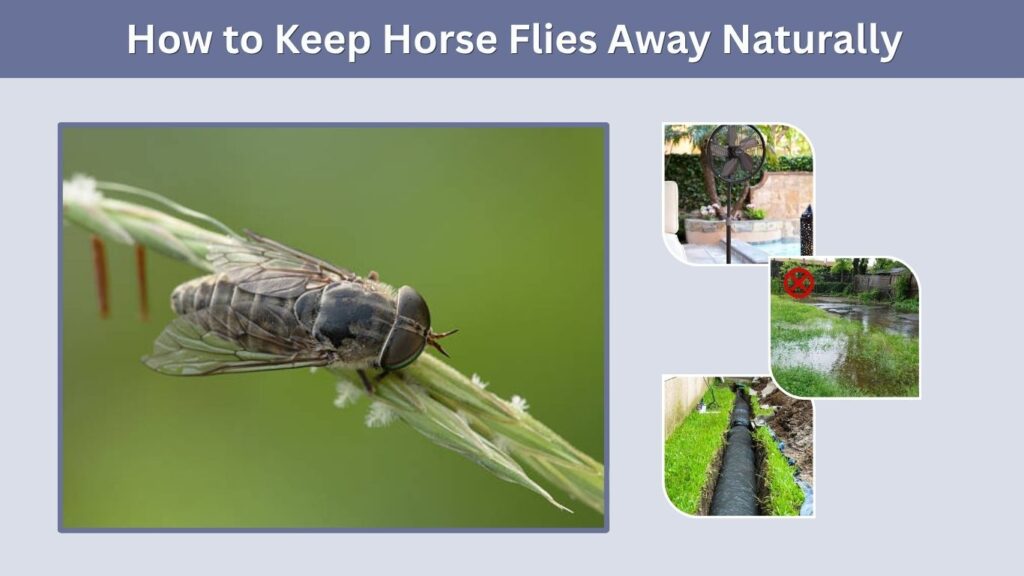
Natural approaches are attractive to people who want to reduce insecticide use. However, homemade remedies vary greatly in effectiveness. Physical barriers and environmental changes are generally more dependable than relying entirely on essential oils or household ingredients.
Natural Horse Fly Control Methods
Consider:
- Install physical traps.
- Use outdoor fans.
- Maintain short vegetation near activity areas.
- Improve drainage.
- Eliminate unnecessary standing water.
- Use fly masks and sheets on horses.
- Keep barns and animal areas clean.
- Use screens around enclosed spaces.
These methods can reduce exposure without requiring frequent chemical applications.
Does Vinegar Keep Horse Flies Away?
Vinegar is frequently included in homemade fly-repellent recipes, but it should not be considered a guaranteed horse fly solution.
Even if the odor temporarily discourages some flies, its effect may be short-lived.
Never apply concentrated or untested mixtures to an animal’s eyes, wounds, or irritated skin.
Does Apple Cider Vinegar Keep Flies Off Horses?
Apple cider vinegar is another commonly suggested home remedy, but results are inconsistent.
It should not replace proven physical barriers or properly labeled fly-control products when horses are experiencing serious biting pressure.
If applying any homemade preparation to a horse, confirm that every ingredient is safe for equine use.
Does Citronella Keep Horse Flies Away?
Citronella is used in some commercial insect-repellent products.
Its odor may discourage certain insects temporarily, but outdoor effectiveness depends on concentration, wind, application method, and fly pressure.
A citronella product specifically formulated and labeled for its intended use is preferable to experimenting with concentrated essential oils.
How to Keep Horse Flies Away From a Pool
Swimming pools can attract horse flies partly because water, movement, people, and surrounding vegetation create favorable conditions. Horse flies do not necessarily breed directly in a clean swimming pool, but nearby moist soil, wetlands, drainage areas, or other water sources may support them.
Keeping Horse Flies Away From Swimming Areas
Try the following:
- Keep surrounding vegetation trimmed.
- Remove unnecessary standing water nearby.
- Install horse fly traps away from seating areas.
- Use fans near patios or lounging areas.
- Keep food and trash covered.
- Use appropriate repellents on exposed skin.
- Cover the pool when it is not being used.
- Maintain proper pool sanitation.
Placing traps slightly away from people can help draw flies toward the trap rather than toward swimmers.
How to Keep Horse Flies Away While Swimming
Because repellents may wash off in water, follow product directions for reapplication.
Spend breaks in shaded or screened areas if flies are intense. Dry off and cover exposed skin when leaving the water.
If horse flies are extremely abundant, moving indoors may be the most effective immediate solution.
How to Keep Horse Flies Away From Dogs
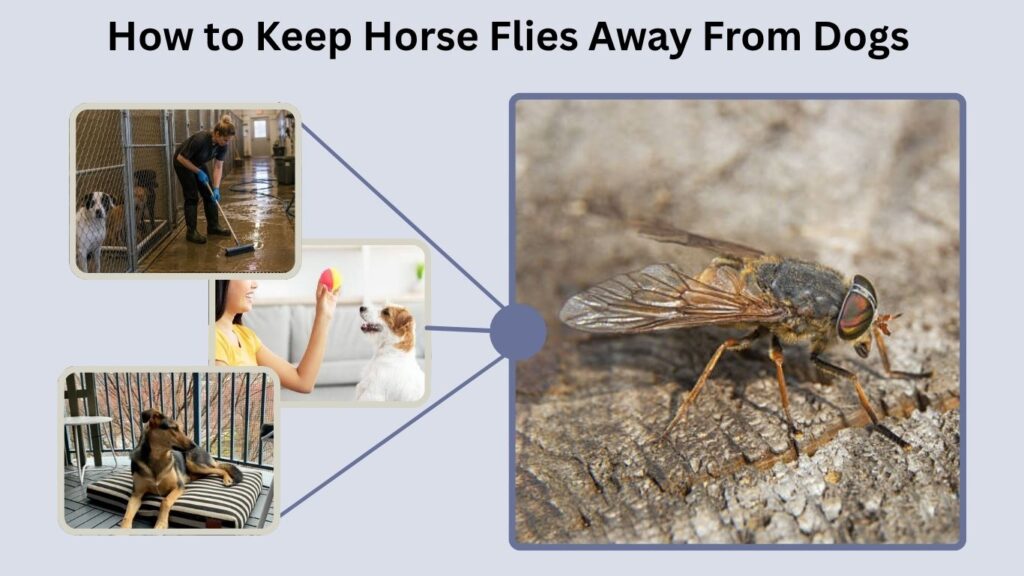
Horse flies can bite dogs, especially around areas where the fur is thin. Dogs spending time near livestock, lakes, fields, and wetlands may experience repeated attacks during heavy fly activity.
Never automatically use horse or livestock fly spray on a dog because ingredients safe for one species may not be safe for another.
Protecting Dogs From Horse Flies
Useful precautions include:
- Keep dogs indoors during intense fly activity.
- Provide screened or protected resting areas.
- Keep outdoor bedding clean.
- Remove standing water nearby.
- Use only veterinarian-approved insect-control products.
- Inspect exposed skin for bites.
- Keep wounds covered according to veterinary guidance.
Speak with a veterinarian if flies repeatedly attack your dog or if bites become swollen, infected, or painful.
Do Dragonflies Keep Horse Flies Away?
Dragonflies are natural predators of many flying insects and may capture flies while hunting. Having dragonflies around wetlands and gardens can contribute to the natural food web.
However, relying on dragonflies alone will not reliably control a significant horse fly problem.
Do Fake Dragonflies Keep Horse Flies Away?
Some people attach artificial dragonflies to hats or outdoor equipment hoping that horse flies will interpret them as predators.
Results are inconsistent, and fake dragonflies should not replace proven measures such as repellents, clothing, physical barriers, and traps.
They may be worth experimenting with as an additional technique, but they should not be your primary defense.
How to Reduce Horse Flies Around Your Property
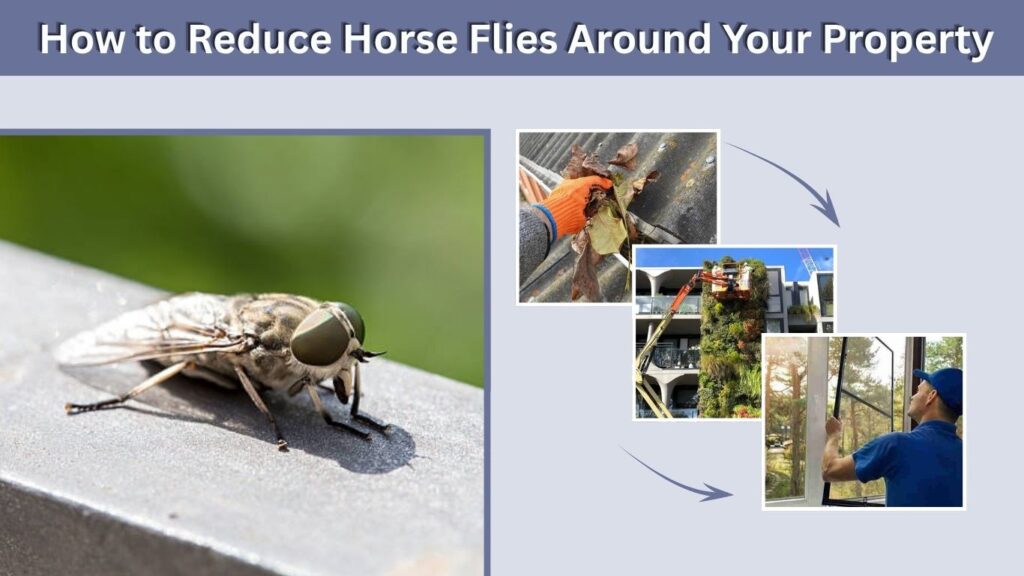
Horse flies often develop around wetlands, damp soil, marshes, stream edges, and other moist environments. Completely eliminating breeding sites may be impossible, especially on rural properties. Still, maintaining the immediate surroundings can make outdoor living areas less attractive and reduce encounters.
Property Management Tips
For long-term control:
- Repair drainage problems.
- Eliminate unnecessary stagnant water.
- Maintain vegetation around buildings.
- Keep gutters clear.
- Clean animal areas frequently.
- Manage manure properly.
- Keep doors and windows screened.
- Position traps away from gathering areas.
- Use fans around high-use outdoor spaces.
- Monitor the property for recurring problem locations.
For large rural properties, professional pest-management advice may be worthwhile when biting flies become severe.
FAQs
1. What is the best way to keep horse flies away?
The most effective approach combines protective clothing, appropriate repellents, physical traps, fans, environmental management, and reducing access to exposed skin.
2. How do you keep horse flies from biting you?
Cover exposed skin with long sleeves and pants, wear light-colored clothing, and use an insect repellent labeled for biting flies.
3. How do you keep horse flies away from horses?
Use properly fitted fly masks and sheets, horse-safe repellents, barn fans, traps, clean stalls, and good manure management.
4. Can essential oils keep horse flies away?
Some essential oils are used in insect-repellent formulations, but homemade preparations have inconsistent effectiveness and can irritate people or animals. Use products formulated for the intended species.
5. Why do horse flies keep following me?
Horse flies locate potential hosts using movement, visual cues, body heat, and other signals. Once a female identifies you as a possible blood meal, she may persistently follow and attempt to land until she feeds or loses track of you.