
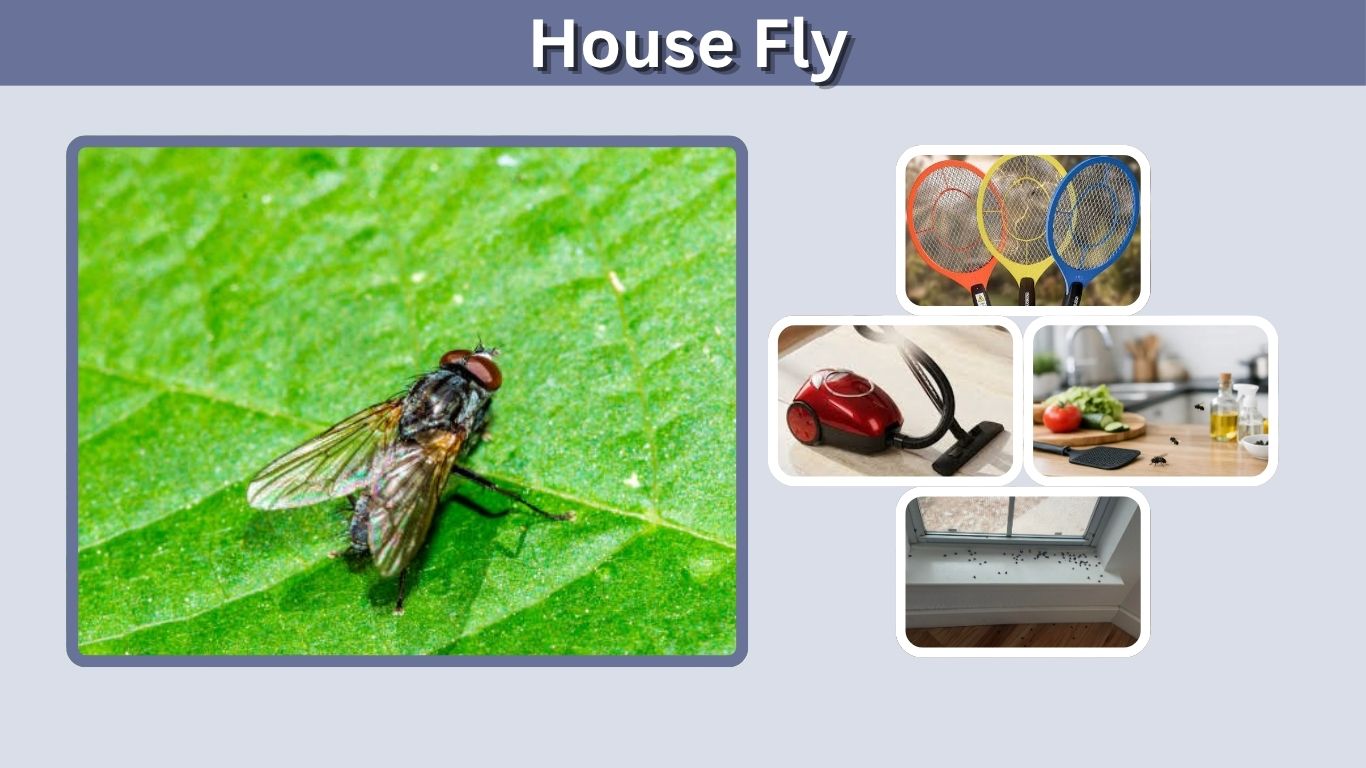
The house fly is one of the most common insects found around homes, restaurants, farms, garbage areas, and other places where food and organic waste are available. Although house flies do not usually bite people, they can become a major nuisance and may carry microorganisms from contaminated surfaces onto food and household surfaces. If you suddenly notice lots of flies in the house, understanding where they come from is the first step toward controlling them. This guide explains house fly identification, lifespan, eggs, larvae, infestations, traps, and practical ways to get rid of house flies.
What Is a House Fly?
The common house fly, Musca domestica, is a widespread fly closely associated with people and human settlements. Adults frequently enter buildings while searching for food, warmth, moisture, or places to rest.
House flies are especially common around garbage, manure, decaying organic material, animal waste, and uncovered food.
House Fly Identification
An adult house fly can usually be recognized by:
- Grayish body
- Four dark stripes on the thorax
- One pair of transparent wings
- Large reddish compound eyes
- Approximately 1/4 inch long
- Soft, sponging mouthparts
- Rapid and highly maneuverable flight
They are different from fruit flies, drain flies, and fungus gnats, which are generally much smaller.
House Fly vs. Fruit Fly
People frequently confuse ordinary house flies with fruit flies.
| Feature | House Fly | Fruit Fly |
| Size | About 1/4 inch | About 1/8 inch |
| Color | Gray or dark gray | Tan to brown |
| Common Location | Garbage, waste, kitchens | Ripe or fermenting fruit |
| Appearance | Larger, robust fly | Tiny rounded fly |
| Breeding Material | Decaying organic waste | Fermenting food and liquids |
Correct identification is important because the best control method depends on which type of fly is present.
How Long Do House Flies Live?
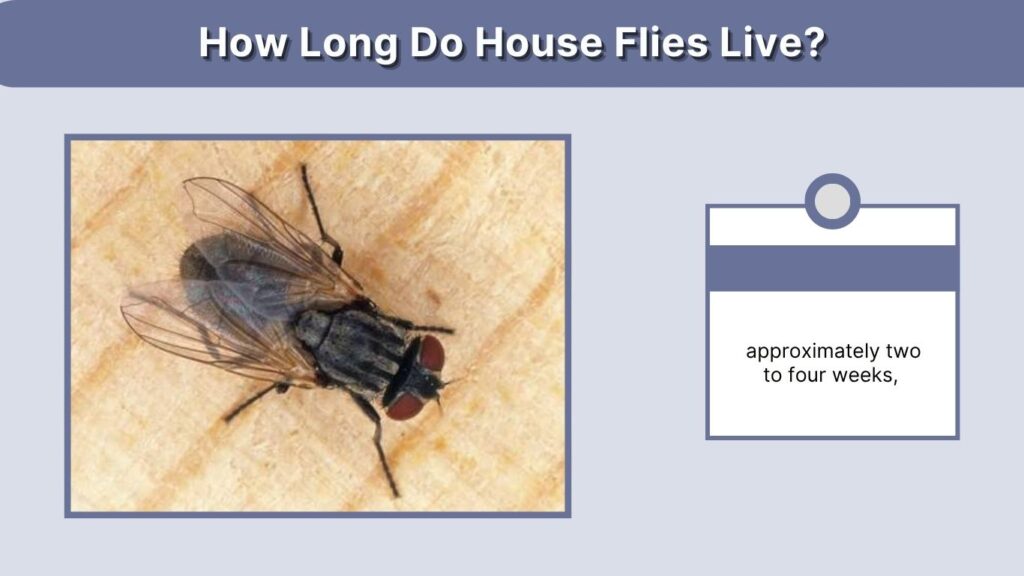
The house fly lifespan is generally relatively short. Under favorable conditions, an adult house fly may live for approximately two to four weeks, although temperature, food availability, humidity, and other environmental factors affect survival.
Despite their short lives, house flies reproduce rapidly.
House Fly Life Cycle
House flies pass through four main stages:
- Egg
- Larva
- Pupa
- Adult fly
Warm temperatures can accelerate development, allowing multiple generations to develop within a relatively short period.
House Fly Eggs
Female house flies usually deposit their eggs in moist, decomposing organic material where newly hatched larvae will immediately have food available.
Common breeding materials include:
- Animal manure
- Rotting garbage
- Compost
- Decaying food
- Organic waste
- Soiled animal bedding
House fly eggs are tiny, pale, and difficult to notice without close inspection.
House Fly Larvae and Maggots
House fly larvae, commonly called maggots, are pale, legless, wormlike organisms.
They feed on decomposing organic matter before eventually moving toward a somewhat drier location where they pupate.
Finding house fly maggots indoors can indicate that flies have located a hidden breeding source such as spoiled food, garbage, animal waste, or a dead animal.
Why Are There So Many Flies in My House?
A sudden increase in flies usually means that adults are either repeatedly entering from outside or developing from a nearby breeding source.
Finding the source is more effective than simply killing individual adult flies.
Common Reasons Flies Enter Houses
House flies may enter through:
- Open doors
- Open windows
- Damaged window screens
- Gaps around doors
- Ventilation openings
- Cracks around windows
- Frequently opened entrances
They are attracted by food odors, garbage, animal waste, and decomposing organic matter.
Lots of Flies in the House Suddenly
If lots of flies appear in the house suddenly, inspect areas that could contain decaying organic material.
Possible sources include:
- Forgotten garbage
- Spoiled vegetables or meat
- Dirty trash cans
- Pet waste
- Compost containers
- Food beneath appliances
- Animal carcasses in walls, chimneys, or attics
Large flies appearing repeatedly near one room may sometimes indicate a concealed dead animal rather than a normal house fly breeding problem.
House Fly Infestation Signs
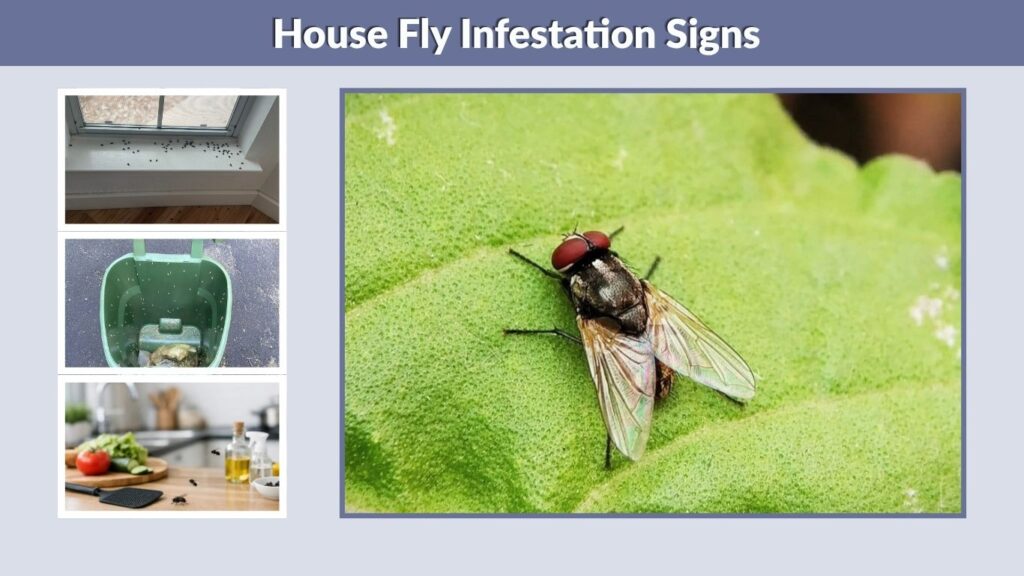
A few flies entering through a door does not necessarily mean there is an infestation.
However, repeated or increasing activity can indicate a breeding source nearby.
Common Signs of a Fly Infestation
Look for:
- Numerous adult flies
- Flies repeatedly gathering around windows
- Maggots near garbage or organic waste
- Dark fly spots on walls or ceilings
- Persistent flies around kitchens
- Flies appearing soon after others are killed
- Clusters around pet waste or trash areas
The presence of larvae provides stronger evidence that flies are reproducing nearby.
Do House Flies Bite?
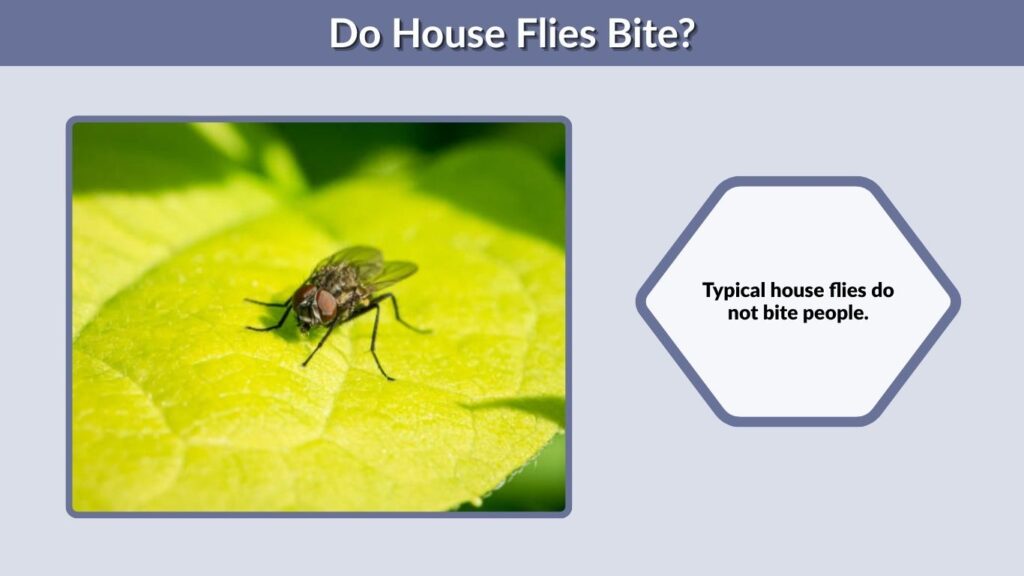
A common question is, do house flies bite?
Typical house flies do not bite people. Their mouthparts are designed for sponging and absorbing liquid food rather than piercing skin.
House flies can land on people, which may feel irritating, but they are not feeding on blood.
What Fly Might Be Biting You?
If a fly-like insect is biting, it could instead be:
- Stable fly
- Horse fly
- Deer fly
- Black fly
- Biting midge
Stable flies can look somewhat similar to house flies but possess piercing mouthparts and can deliver painful bites.
Are House Flies Dangerous?
House flies are primarily considered sanitation pests.
They often visit garbage, feces, manure, decaying material, and other contaminated surfaces before landing on food, countertops, utensils, or eating areas.
Because of this behavior, reducing fly activity around food preparation areas is important.
Keep food covered and clean surfaces where flies have been active.
How to Get Rid of House Flies
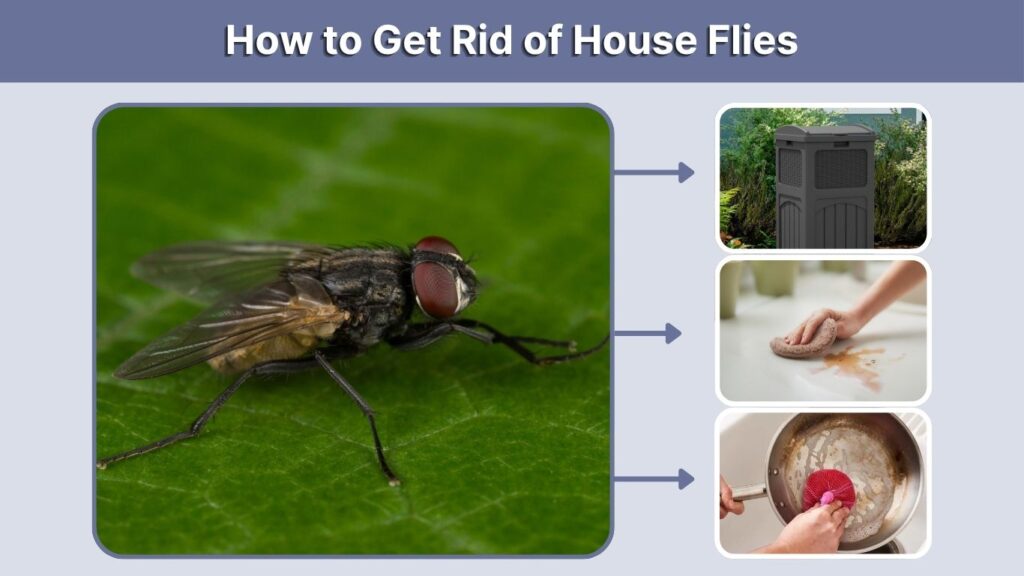
If you want to get rid of flies in the house quickly, combine sanitation, exclusion, and fly-control methods.
Killing adult flies without removing their breeding source usually provides only temporary relief.
1. Remove Breeding Sources
Start by eliminating materials where flies can reproduce.
Check:
- Kitchen garbage
- Outdoor trash cans
- Compost
- Pet waste
- Spoiled food
- Animal bedding
- Organic debris
Clean garbage containers regularly and keep lids tightly closed.
2. Keep Food Covered
Store food in sealed containers or inside the refrigerator.
Clean:
- Food spills
- Drink residue
- Dirty dishes
- Grease
- Crumbs
- Pet food
Do not leave ripe or spoiled food exposed for long periods.
3. Block Entry Points
Preventing flies from entering reduces the number you need to control indoors.
Repair:
- Torn window screens
- Gaps around doors
- Damaged weather stripping
- Openings around vents
Keep doors closed when possible.
4. Use a House Fly Trap
A house fly trap can help reduce adult populations, especially after sanitation problems have already been corrected.
Common options include:
- Sticky fly strips
- Window traps
- Light traps
- Disposable bag traps
- Indoor fly-catching devices
Place traps where flies are active while keeping them away from food-preparation surfaces.
5. Use a Homemade House Fly Trap
A simple homemade trap can sometimes catch individual flies.
One approach is to place a small amount of sweet bait inside a container with an opening that allows flies to enter but makes escape more difficult.
Homemade traps may reduce adult numbers, but they will not solve an infestation if breeding material remains nearby.
How to Kill House Flies Quickly
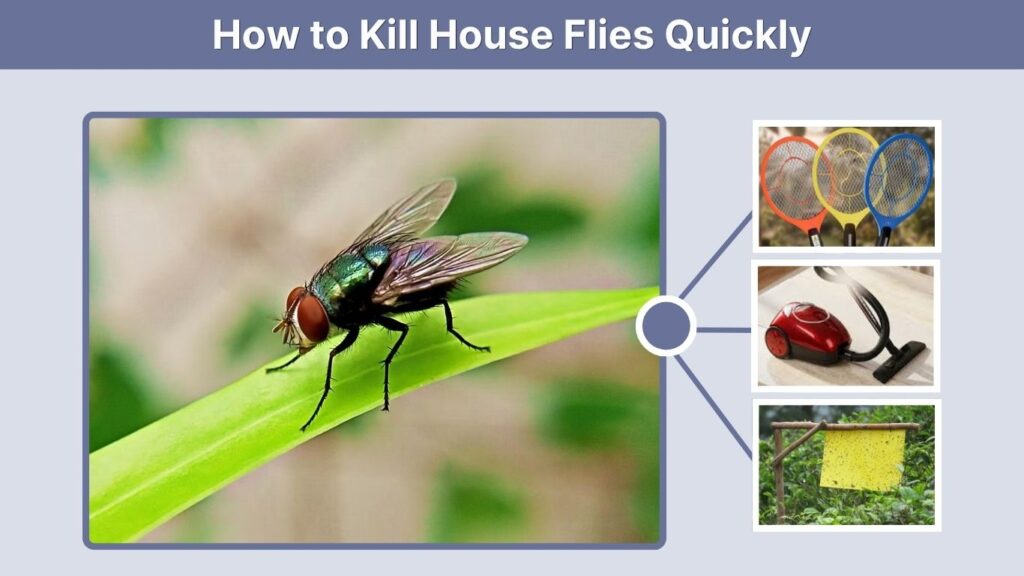
For a few flies indoors, mechanical methods are often sufficient.
Options include:
- Fly swatter
- Vacuum cleaner
- Sticky traps
- Window traps
- Electric fly-catching devices
Vacuuming can be particularly useful when several flies gather around windows because flies often move toward natural light.
For persistent infestations, focus on finding the breeding source before relying heavily on insecticides.
How to Keep Flies Out of Your House
Prevention is easier than dealing with a large fly infestation.
Good habits include:
- Keep trash cans covered.
- Remove garbage frequently.
- Wash trash containers.
- Clean pet waste quickly.
- Repair window and door screens.
- Keep outdoor doors closed.
- Store food in sealed containers.
- Clean spills immediately.
- Avoid allowing organic waste to accumulate.
- Keep compost properly contained.
Outdoor sanitation is especially important because house flies developing outside can continually enter nearby buildings.
Small Flies in the House May Not Be House Flies
Not every fly indoors is a house fly. Tiny flying bugs in the house may belong to several different groups.
| Small Flying Insect | Common Source |
| Fruit flies | Ripe fruit and fermenting liquids |
| Fungus gnats | Moist houseplant soil |
| Drain flies | Organic buildup in drains |
| Phorid flies | Decaying organic material |
| House flies | Garbage, manure, food waste |
If you are dealing with very small black flies rather than normal-sized house flies, identifying the insect before treatment can save considerable time.
FAQs
Why are there suddenly so many flies in my house?
A sudden increase can occur when flies discover garbage, spoiled food, animal waste, compost, or another breeding source. It may also happen when numerous flies enter through open doors or windows. Inspect nearby organic material and hidden areas where something may be decomposing.
How long does a house fly live?
An adult house fly commonly lives for several weeks under favorable conditions. Its total development from egg to adult can occur rapidly during warm weather, which is why populations can increase quickly when suitable food and breeding material are available.
Do house flies bite humans?
No. Common house flies do not have piercing mouthparts capable of biting humans. They feed using sponging mouthparts. If a similar-looking fly repeatedly bites your skin, it could be a stable fly, deer fly, horse fly, or another biting species.
What is the fastest way to get rid of house flies?
Remove garbage and other breeding sources first, clean food residue, repair entry points, and then use traps or mechanical control to remove remaining adults. Eliminating the breeding source is usually much more effective than simply killing the adult flies you can see.
Where do house flies lay eggs?
House flies typically lay eggs in moist, decomposing organic materials such as garbage, animal manure, spoiled food, compost, and similar waste. The larvae hatch into maggots and feed on this material before pupating and eventually becoming adult flies.