
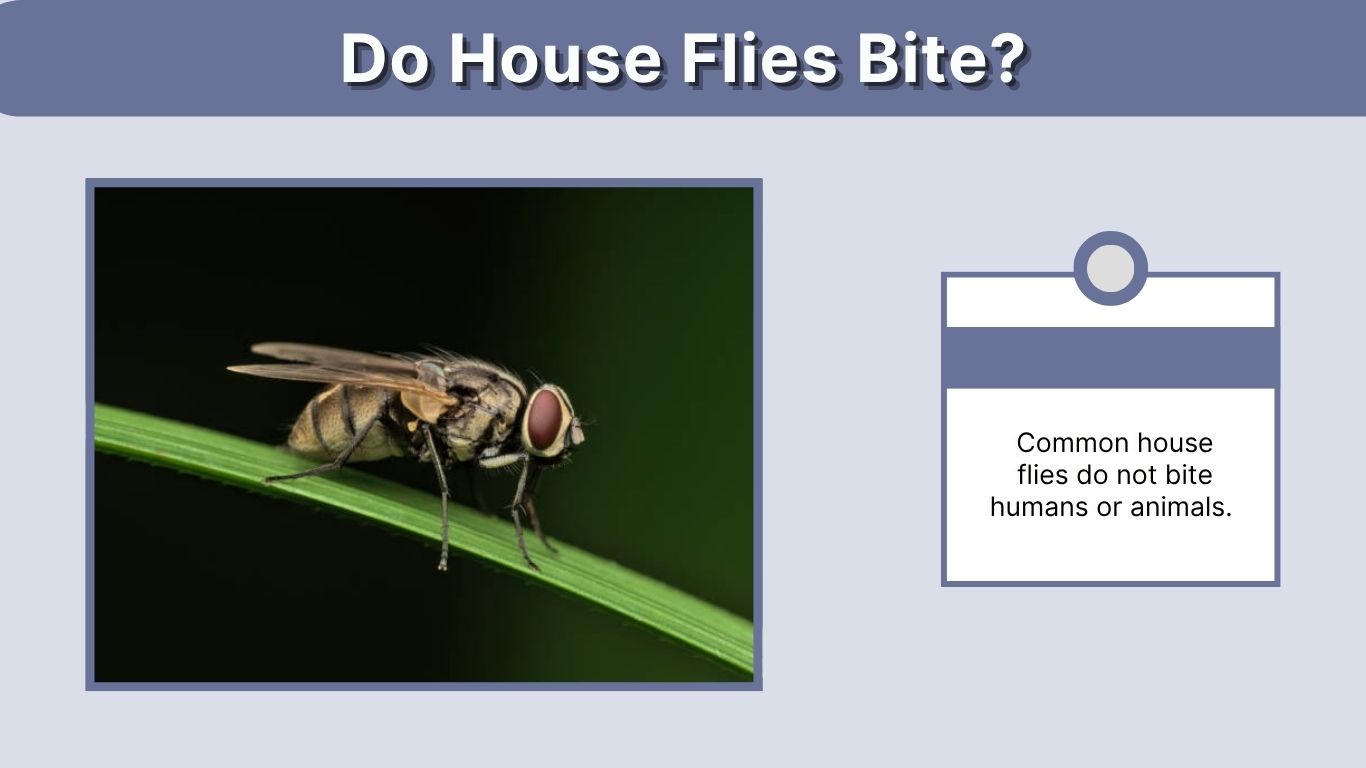
Common house flies do not bite humans or animals. Their mouthparts are designed to sponge up liquid food rather than pierce skin. The phrase “house fly bites” is still widely used, but a painful bite blamed on a house fly usually comes from a similar-looking insect, particularly a stable fly. Correct identification matters because house flies and stable flies differ greatly in feeding behavior and health risks.
Do House Flies Bite Humans?
The common house fly, scientifically known as Musca domestica, cannot bite humans. It has soft, sponging mouthparts that absorb liquid or dissolved food. It lacks the sharp, piercing structures required to break skin and drink blood.
House flies may land on people because they are attracted to moisture, sweat, food odors, wounds, or other organic material. Their mouthparts may create a light tickling sensation, but they cannot produce a true bite wound.
| Question | Answer |
| Do house flies bite people? | No |
| Can they pierce skin? | No |
| Do they drink blood? | No |
| Do they have a stinger? | No |
| Can similar flies bite? | Yes |
| Most common biting lookalike | Stable fly |
| Main house-fly risk | Food and surface contamination |
Why Can’t House Flies Bite?
House flies feed through a structure called a proboscis. The end contains sponge-like pads that collect liquids.
When feeding on solid material, a house fly may release digestive fluid onto the food. This softens or dissolves the material, allowing the fly to absorb it through its sponging mouthparts. These mouthparts are effective for feeding on liquids, waste, decaying matter, and softened food but cannot cut human skin.
This feeding method separates house flies from blood-feeding flies with sharp mouthparts.
How to Identify a House Fly
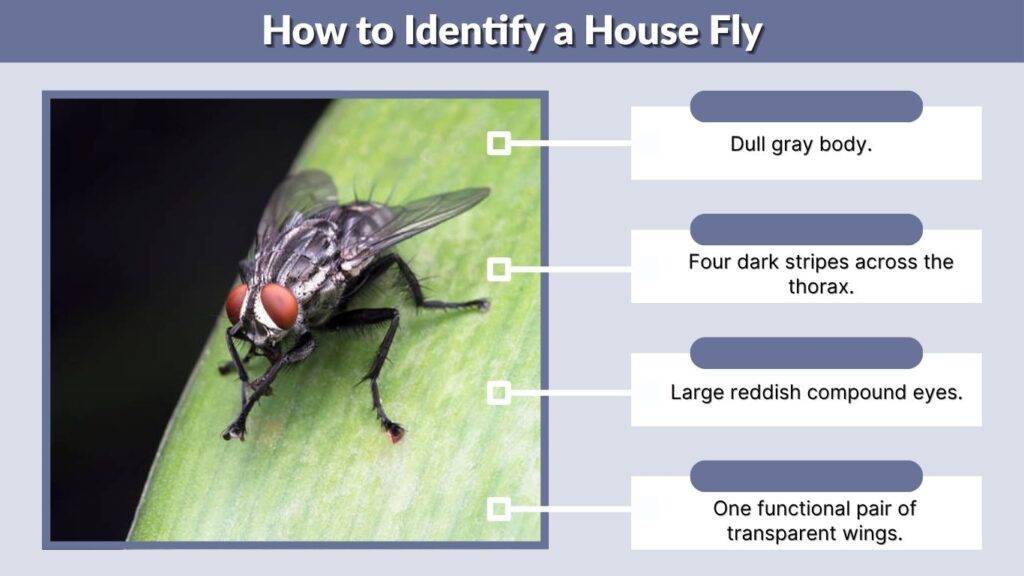
Adult house flies are dull gray and usually measure approximately 1/6–1/4 inch long. Four narrow, dark stripes run lengthwise across the thorax, while the sides of the abdomen may appear pale or yellowish.
Identification Features
- Dull gray body
- Four dark stripes across the thorax
- Large reddish compound eyes
- One functional pair of transparent wings
- Pale areas along the abdomen’s sides
- Soft, downward-pointing mouthparts
- No long, pointed proboscis
- Common around garbage, food, manure, and buildings
A true house fly does not have an obvious needle-like mouthpart projecting from the front of its head.
Which Fly Looks Like a House Fly but Bites?
The most common culprit is the stable fly, Stomoxys calcitrans. Stable flies are sometimes called biting house flies because their size and gray coloring closely resemble those of ordinary house flies.
Both male and female stable flies drink blood. Their rigid, bayonet-shaped mouthpart projects forward from the head and pierces the skin of people, dogs, horses, cattle, and other warm-blooded animals.
House Fly vs Stable Fly
| Feature | House fly | Stable fly |
| Scientific name | Musca domestica | Stomoxys calcitrans |
| Bites people | No | Yes |
| Mouthpart | Soft and sponging | Long and piercing |
| Abdomen | Pale sides, less distinct pattern | Dark checkerboard pattern |
| Feeding | Liquid food and organic matter | Blood |
| Common behavior | Lands on food and waste | Attacks ankles and lower legs |
| Bite sensation | None | Sharp and painful |
Stable flies commonly target ankles and lower legs and may sometimes bite through thin clothing. Their bites can feel like a sudden needle prick.
Other Flies That Bite Humans
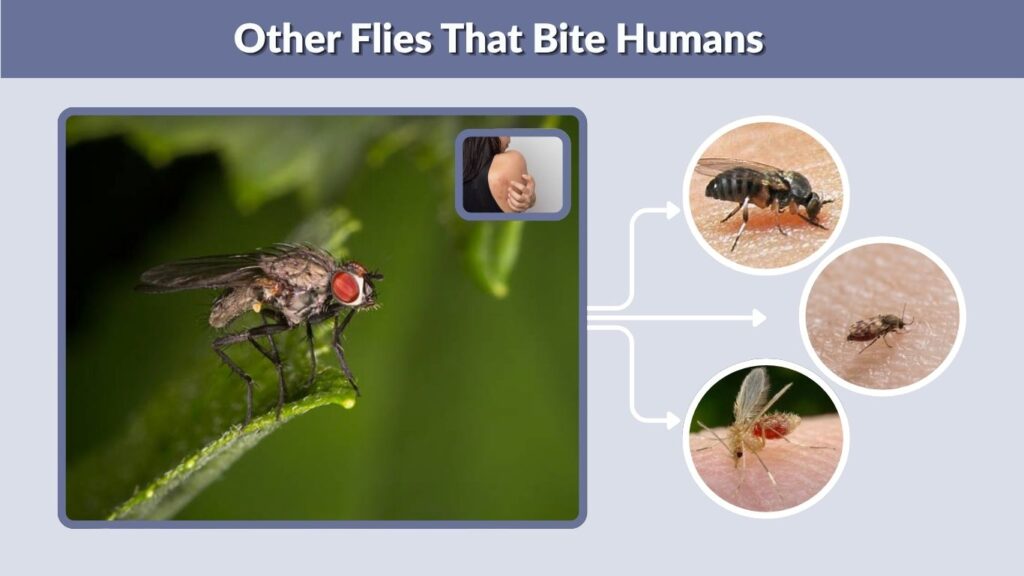
A bite attributed to a house fly may come from several other insects.
Horse Flies and Deer Flies
Female horse and deer flies use cutting mouthparts to open the skin and feed on blood. Their bites are usually immediately painful and may leave a relatively large, swollen mark.
These flies are generally larger and more powerful than house flies. Deer flies often have patterned wings, while horse flies may have large, brightly colored eyes.
Black Flies
Black flies are small, hump-backed flies associated with rivers and rapidly flowing streams. Females of biting species cut the skin and feed from the resulting blood.
Their bites may become red, swollen, sore, and intensely itchy. Black flies often target the head, neck, ears, and exposed limbs.
Biting Midges
Biting midges, also called no-see-ums, are extremely small flies. Their bites may cause burning, itching, and small red welts. They are frequently active near wetlands, beaches, marshes, and other damp habitats.
Sand Flies
Female sand flies possess piercing mouthparts and drink blood from humans and animals. They are generally found in warm regions and should not be confused with non-biting household drain flies.
What Does a Biting Fly Bite Look Like?
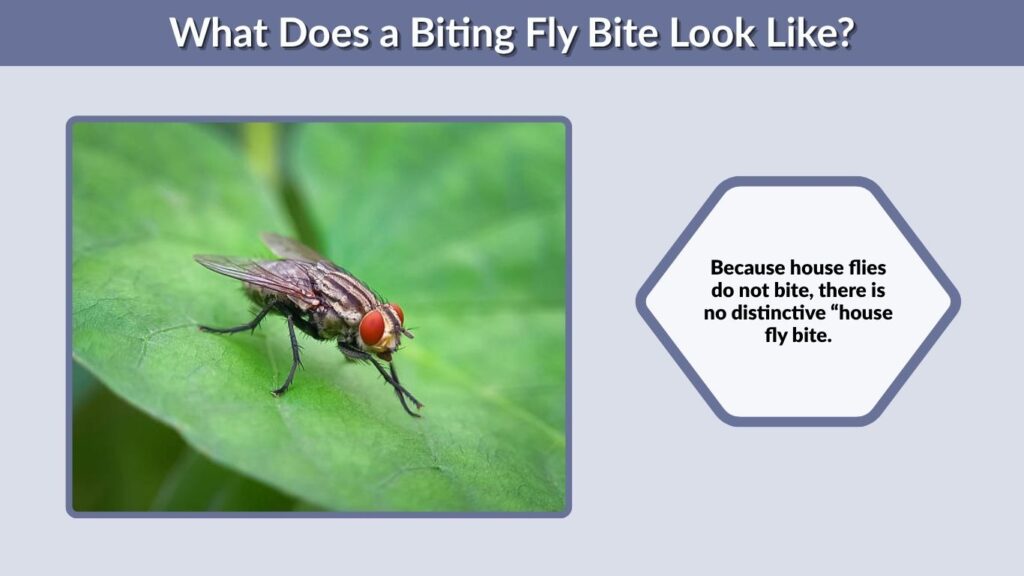
Because house flies do not bite, there is no distinctive “house fly bite.” A suspected mark may have been caused by a stable fly or another biting insect.
A biting-fly reaction may include:
- A painful or burning sensation
- A small red or darker raised bump
- Local itching
- Swelling around the bite
- A visible central puncture
- Minor bleeding or a small scab
- Several bites around exposed skin
Stable-fly bites often occur around the ankles and lower legs. Black flies may bite around the head, neck, ears, and arms, while horse-fly bites can produce larger, more painful swellings.
Bite appearance alone cannot always identify the insect because mosquitoes, fleas, bed bugs, and other pests may produce similar skin reactions.
How to Treat a Fly Bite
A mild insect bite can usually be managed at home. Wash the affected skin with soap and water, then apply an ice pack wrapped in cloth for approximately ten minutes. Avoid scratching because broken skin can become infected.
A pharmacist or healthcare professional may recommend an appropriate antihistamine or anti-itch cream when itching and swelling are troublesome.
Seek medical attention when the area develops increasing redness, warmth, pain, pus, red streaks, or worsening swelling. Difficulty breathing, throat tightness, fainting, widespread hives, or swelling of the lips, face, tongue, or throat requires emergency help.
Are House Flies Dangerous Without Biting?
Although they do not bite, house flies can still create health concerns. They visit garbage, manure, animal waste, decaying organic matter, and human food.
Germs can be carried mechanically on their external body surfaces or transferred through regurgitated material and fecal spots. The CDC describes house flies as possible mechanical carriers of organisms that cause diarrheal illness.
This does not mean that every fly landing on food will cause illness. However, uncovered food that has been exposed to flies should be discarded when contamination is likely, particularly in kitchens, restaurants, farms, and healthcare environments.
Why Are House Flies Landing on Me?
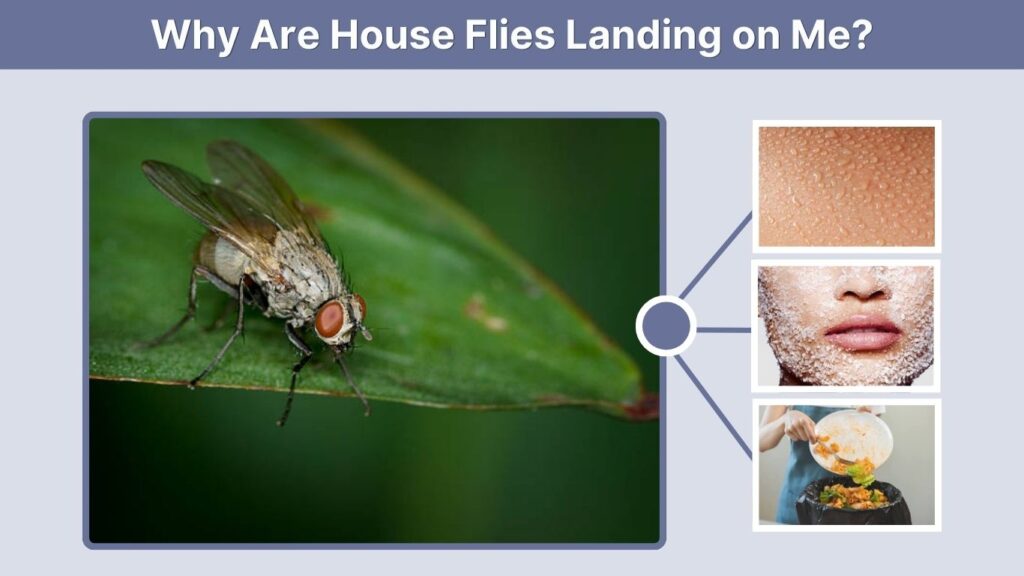
A house fly may land on a person because it is attracted to:
- Sweat and skin moisture
- Salt on the skin
- Food residue
- Body odors
- Open drinks
- Wounds or drainage
- Warm surfaces
Its sponge-like mouthparts may touch the skin while it investigates moisture. This can feel annoying or ticklish, but it is not biting.
How to Prevent House Flies Indoors
Long-term house-fly control depends primarily on removing breeding and feeding sources. House flies commonly reproduce in garbage, manure, decaying vegetation, and other moist organic material.
Remove Food and Breeding Sources
Keep garbage in tightly closed bags and containers. Clean trash cans regularly, dispose of spoiled food, remove animal waste promptly, and clean spills and food residue.
Block Entry Points
Install properly fitting window and door screens. Repair holes and seal gaps around windows, vents, pipes, and doors.
Use Mechanical Controls
Flyswatters, sticky traps, and screened light traps may help reduce adult flies. Traps should be positioned away from food-preparation surfaces and placed where children and pets cannot reach them.
Use Pesticides Carefully
Insecticides offer temporary control but will not solve an infestation when breeding material remains. Integrated pest management emphasizes identification, prevention, sanitation, trapping, and targeted treatment before widespread pesticide use.
FAQs
Can a house fly bite you?
No. The common house fly has soft, sponging mouthparts and cannot pierce human skin. A painful bite from a house-fly-shaped insect is more likely caused by a stable fly.
Why does it feel like a house fly is biting me?
A house fly may be touching sweat or moisture with its mouthparts, creating a tickling sensation. It may also be a biting stable fly, especially when the sensation is sharp and occurs around the ankles.
What does a house fly bite look like?
True house flies do not leave bite marks. Red, painful, or itchy bumps blamed on house flies may come from stable flies, black flies, horse flies, biting midges, fleas, mosquitoes, or other pests.
Do house flies bite dogs?
House flies do not bite dogs. Stable flies, black flies, mosquitoes, and other blood-feeding insects can bite dogs, particularly around the ears, belly, and legs.
Are house flies harmful?
They cannot sting or bite, but they may contaminate food and surfaces after contacting waste or decaying material. Sanitation, covered food, sealed garbage, and intact screens are the most important preventive measures.