
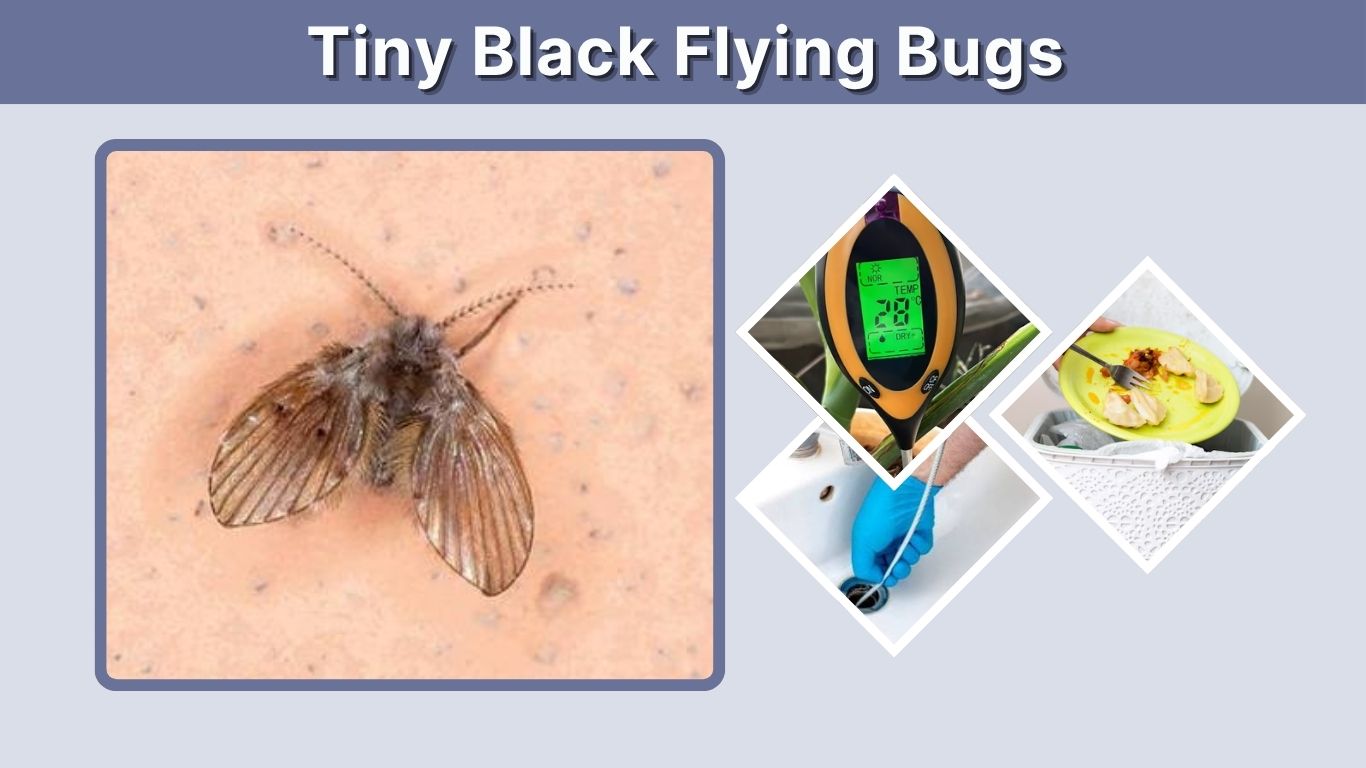
Tiny black flying bugs inside a home are usually fungus gnats, drain flies, phorid flies, fruit flies, or small beetles. Most common indoor species do not bite, although black flies, biting midges, and minute pirate bugs may bite outdoors and occasionally enter buildings. The fastest way to eliminate them is to identify where they are breeding—such as houseplant soil, drains, spoiled food, plumbing leaks, or stored materials—rather than relying only on insect sprays.
Quick Identification Chart
| Bug | Appearance | Common location | Does it bite? |
| Fungus gnat | Slender, black, mosquito-like | Houseplants and windows | No |
| Drain fly | Fuzzy with broad, moth-like wings | Bathrooms and drains | No |
| Fruit fly | Tan to dark brown with rounded body | Kitchens and trash | No |
| Phorid fly | Small with a hump-shaped back | Drains, rubbish, sewage leaks | No |
| Carpet beetle | Tiny, round, hard-shelled beetle | Windows, carpets, closets | No |
| Biting midge | Extremely small, dark fly | Outdoors near damp areas | Yes |
| Black fly | Small, dark, hump-backed fly | Outdoors near flowing water | Yes |
| Minute pirate bug | Black or black-and-white oval bug | Gardens and windows | Sometimes |
1. Fungus Gnats
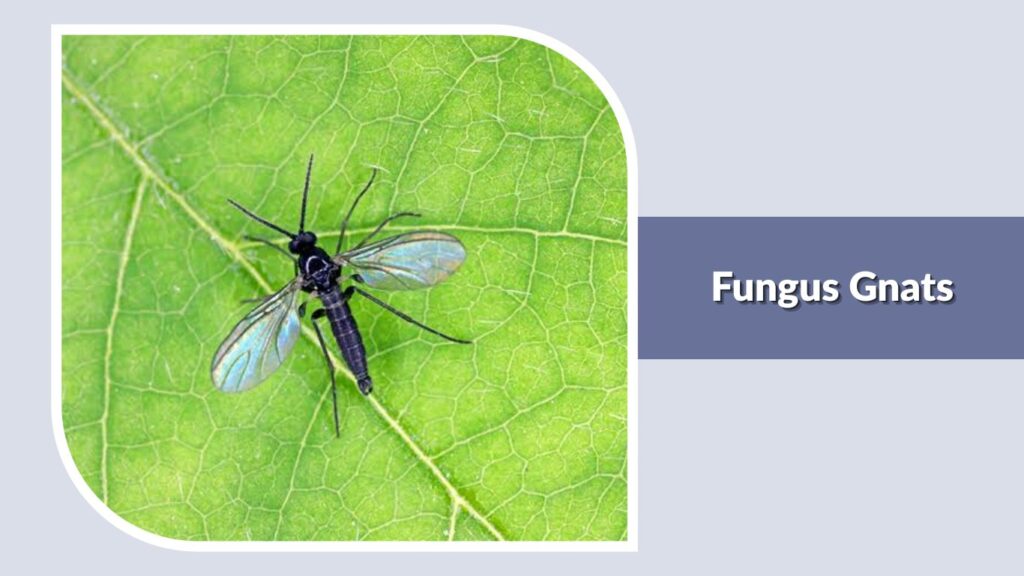
Fungus gnats are among the most common tiny black flying bugs found around indoor plants. Adults measure approximately 1/16–1/8 inch and have slender bodies, clear wings, long legs, and medium-length antennae.
They usually fly weakly around plant pots, windows, lamps, and people’s faces. Their larvae develop in damp potting soil, where they feed mainly on fungi and decaying organic material. Adult fungus gnats do not bite people.
How to Get Rid of Them
Allow the upper layer of potting soil to dry before watering again. Empty water-filled saucers, improve drainage, and remove dead leaves from pots. Yellow sticky cards capture adults but should be combined with soil management. Products containing Bacillus thuringiensis israelensis, or Bti, can target larvae when used according to their labels.
2. Drain Flies
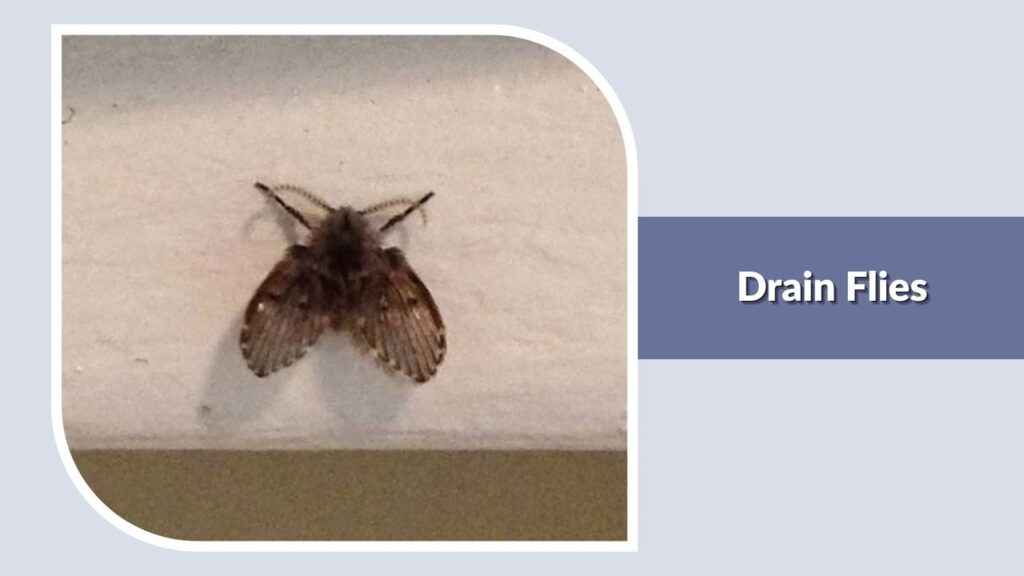
Drain flies, also called moth flies, are tiny gray or black insects covered with fine hairs. Their broad wings give them a fuzzy, moth-like appearance when resting on bathroom walls, sinks, showers, or tiles.
They reproduce in the gelatinous organic film that develops inside drains, sewage lines, floor traps, and other persistently wet places. Drain flies are nuisance insects and do not normally bite. A heavy infestation can sometimes indicate a leaking or broken sewage pipe.
How to Get Rid of Them
Place clear tape loosely over a suspected drain overnight, with the sticky side facing downward. Flies caught beneath the tape suggest that the drain is a breeding source.
Remove the drain cover and scrub the pipe walls with a stiff brush. A biological drain cleaner may help break down remaining organic material. Pouring bleach, boiling water, or ordinary chemical drain cleaner into the opening may kill some insects but often fails to remove the film where larvae develop.
3. Fruit Flies
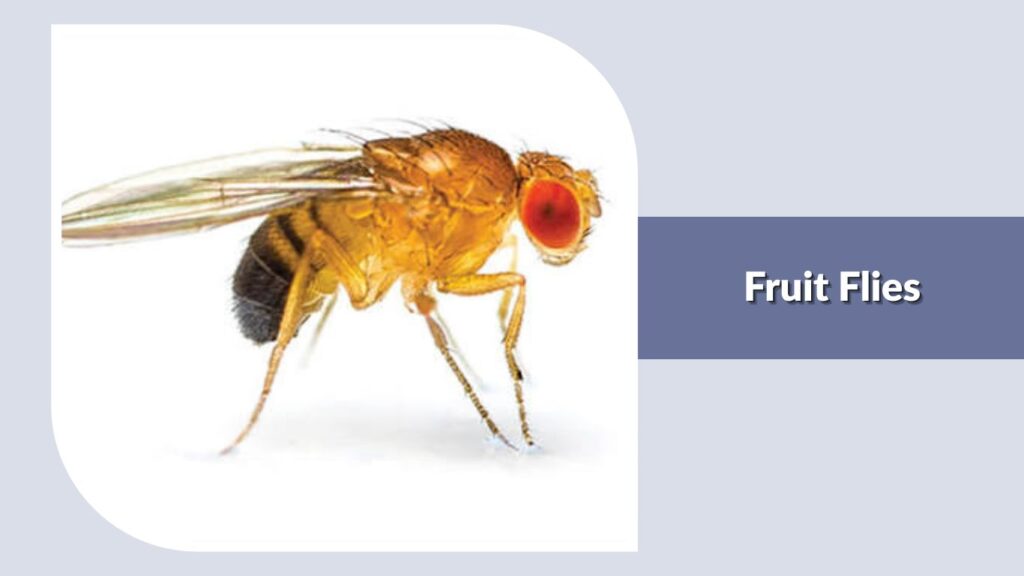
Fruit flies are generally tan or brown rather than truly black, but their dark abdomens can make them appear black at a distance. They measure about 1/16–1/8 inch and often have noticeable red eyes.
They gather around overripe fruit, vegetables, rubbish bins, recycling containers, beer, wine, juice, and sugary residue.
Discard spoiled produce, refrigerate ripe fruit, rinse beverage containers, clean spills beneath appliances, and wash rubbish bins. A vinegar trap may catch adults, but the infestation will continue until all fermenting material is removed.
4. Phorid Flies
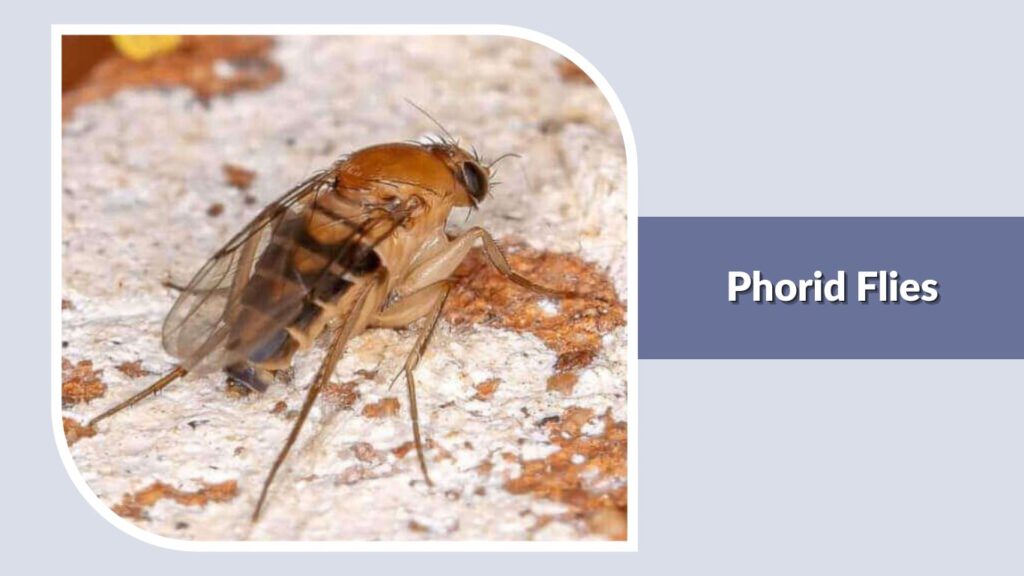
Phorid flies are tiny brown or dark flies with a distinctive hump-shaped back. Instead of immediately flying away, they frequently run rapidly and erratically across counters, floors, and walls. This behavior gives them the name “scuttle flies.”
They can develop in rubbish, drains, decaying plant or animal material, plumbing leaks, contaminated soil, and sewage. Persistent phorid flies in a bathroom or basement may indicate hidden moisture or damaged plumbing.
Clean suspected breeding areas and investigate leaks. When flies continue emerging after visible drains and rubbish areas have been cleaned, a plumber or pest-management professional may be needed to locate the concealed source.
5. Carpet Beetles
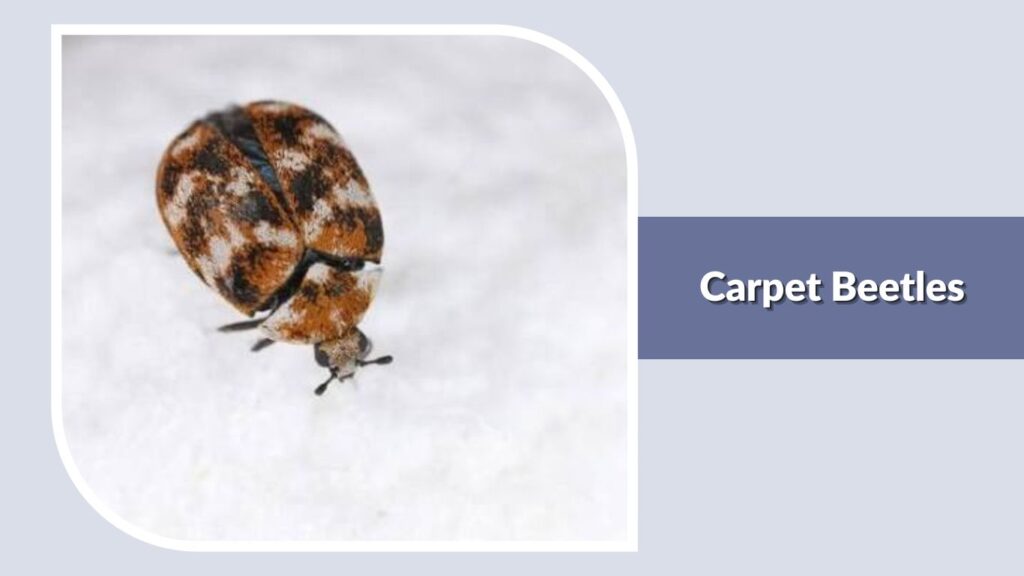
A tiny round black bug with a hard shell that flies is more likely to be a carpet beetle than a gnat. Adult carpet beetles are approximately 2–5 millimeters long and may be black, brown, or patterned with white, yellow, and brown scales.
Adults often fly toward windows and feed on pollen outdoors. Their hairy larvae can damage wool, feathers, fur, natural-fiber carpets, stored foods, and accumulated pet hair.
Vacuum carpet edges, closets, heating vents, furniture, and areas beneath beds. Inspect wool clothing, pet bedding, dried foods, feathers, and stored fabrics. Wash or heat-treat washable materials and discard heavily infested items.
Tiny Black Flying Bugs That Bite
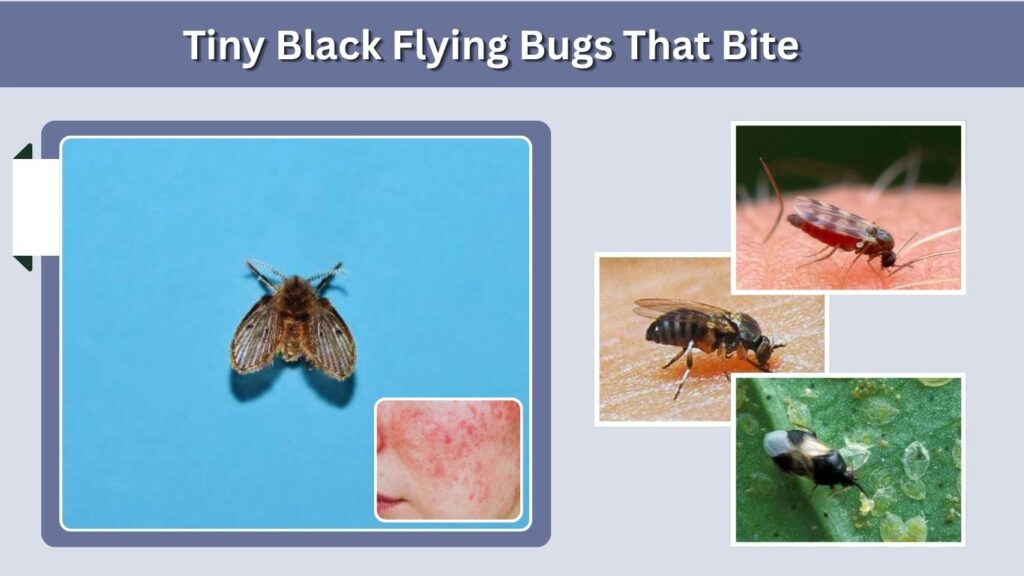
Most fungus gnats, fruit flies, drain flies, and phorid flies do not bite. When itchy bites accompany tiny flying insects, consider outdoor biting midges, black flies, mosquitoes, or minute pirate bugs.
Biting Midges
Biting midges, commonly called no-see-ums or punkies, are often less than 1/8 inch long. They are small enough to pass through ordinary porch screens and may cause sharp, itchy bites. They are most common outside around damp soil, marshes, ponds, and other moist environments.
Black Flies
Black flies, or buffalo gnats, are small dark flies that commonly swarm around the head and face. Females cut the skin and feed on blood, sometimes causing redness, swelling, and intense itching. Their immature stages develop in flowing water, and adults may travel miles from their breeding sites.
Minute Pirate Bugs
Minute pirate bugs are oval, approximately 0.2 inches long, and black or black-and-white. They are beneficial predators of thrips, mites, aphids, and insect eggs. During fall, some probe human skin and cause a surprisingly painful bite, although they do not feed on blood.
Identifying Bugs by Location
Around Houseplants
Fungus gnats are the leading suspect. Thrips and winged aphids may also fly from plants, especially when leaves show spotting, distortion, sticky residue, or tiny dark droppings.
In the Bathroom
Drain flies suggest organic buildup in drains. Phorid flies may indicate decaying material, a plumbing leak, or sewage contamination. Fungus gnats may also appear when plants are kept in the bathroom.
In the Kitchen
Check for fruit flies around produce and beverages, phorid flies around rubbish or drains, and small stored-product beetles inside flour, spices, cereals, pet food, and dried goods.
Around Windows and Lights
Fungus gnats are attracted to windows and lights. Adult carpet beetles also commonly appear on windowsills. Outdoor midges, small moths, and harmless parasitoid wasps may enter through damaged screens.
In the Bedroom
Flying insects in a bedroom may have come from plants, windows, an attached bathroom, or nearby lights. Bed bugs do not fly, and fleas jump rather than fly. Springtails can also jump but are wingless and cannot bite.
How to Eliminate Tiny Flying Bugs
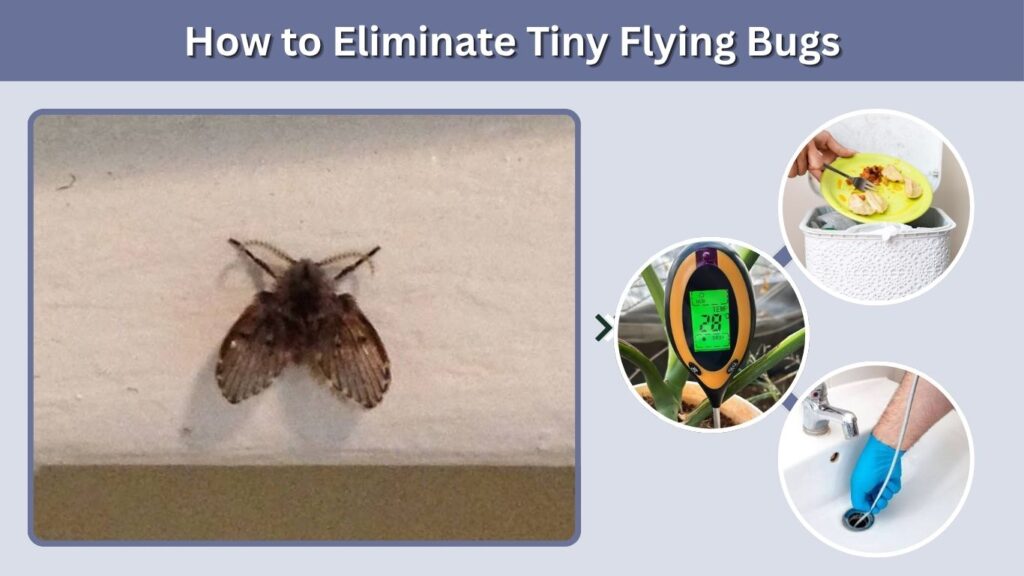
Begin by locating the breeding source:
- Inspect every houseplant for damp soil.
- Clean the organic film from drains.
- Discard spoiled food and clean rubbish containers.
- Check for leaks beneath sinks and appliances.
- Vacuum windowsills, carpet edges, and closets.
- Inspect stored foods and natural-fiber materials.
- Repair window screens and seal gaps around doors.
- Reduce unnecessary outdoor lighting near entrances.
Sticky traps can help identify where adults are most active, but traps alone rarely eliminate an infestation. Long-term control requires removing the food, moisture, or organic material supporting the larvae. The EPA similarly recommends targeting larval breeding sources rather than depending on repeated chemical treatment of adult flies.
Treating Bites and Preventing Outdoor Bugs
Wash mild bites with soap and water and apply a cold compress. Calamine lotion or nonprescription hydrocortisone may help reduce itching when used according to the label. Seek medical attention for worsening swelling, infection, widespread hives, dizziness, facial swelling, or difficulty breathing.
When visiting areas with biting flies, wear long sleeves and trousers and use an EPA-registered insect repellent according to its directions. Fine-mesh screening may be needed to exclude no-see-ums.
FAQs
What are the most common tiny black flying bugs indoors?
Fungus gnats are most common around plants, while drain flies occur near sinks and showers. Fruit flies gather around produce, and phorid flies develop around decaying matter or plumbing problems. Tiny hard-shelled bugs near windows may be carpet beetles.
Why are tiny black bugs flying around my head?
Fungus gnats may be attracted to moisture, carbon dioxide, and nearby light, causing them to fly around the face indoors. Outdoors, black flies and biting midges may deliberately approach people to obtain a blood meal.
Are tiny black flying bugs dangerous?
Most indoor species are only nuisances and do not bite. Biting midges, black flies, and mosquitoes can cause itchy reactions. Drain or phorid fly infestations may also reveal sanitation, moisture, or sewage problems that should be corrected.
Why do tiny black bugs keep appearing after spraying?
Spray may kill exposed adults without affecting eggs and larvae. New adults continue emerging from wet soil, drain buildup, spoiled food, rubbish, or hidden decaying material. Finding and removing that breeding source is necessary for permanent control.
What are tiny black bugs that fly and jump?
Fleas can jump but cannot fly. Springtails also jump and are wingless. Fungus gnats can make short, hopping movements before flying, while phorid flies frequently run across surfaces. Close inspection or a clear magnified photograph may be necessary for confirmation.