
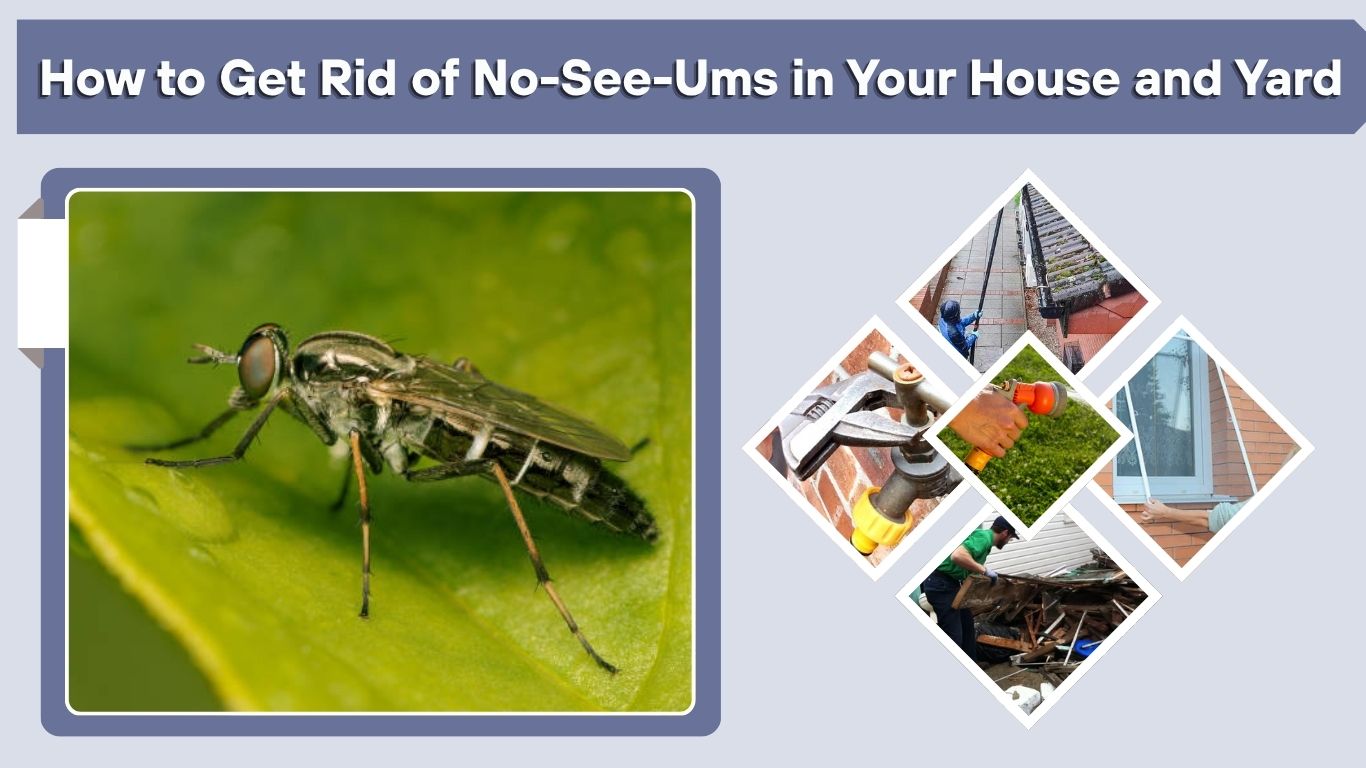
No-see-ums are tiny biting midges that can make patios, gardens, beaches, and even indoor rooms uncomfortable. Their extremely small bodies allow them to pass through ordinary window screens, while females produce painful, itchy bites when seeking blood for egg development. Complete elimination may be difficult near marshes or wetlands, but fine-mesh screens, moisture control, air movement, repellents, and targeted pest treatment can greatly reduce their numbers.
No-See-Um Control at a Glance
The most effective approach combines several methods instead of relying on one spray or home remedy.
| Problem area | Best control method |
| Inside the house | Fine-mesh screens, air conditioning, fans, and sealed gaps |
| Yard | Reduce unnecessary moisture and wet organic debris |
| Patio or deck | Strong fans, protective clothing, and repellent |
| Around doors | Repair seals and reduce nearby outdoor lighting |
| On the skin | EPA-registered repellent labeled for biting midges |
| Existing bites | Washing, cold compresses, and anti-itch treatment |
| Severe outdoor activity | Professional inspection and targeted treatment |
How to Get Rid of No-See-Ums in the House
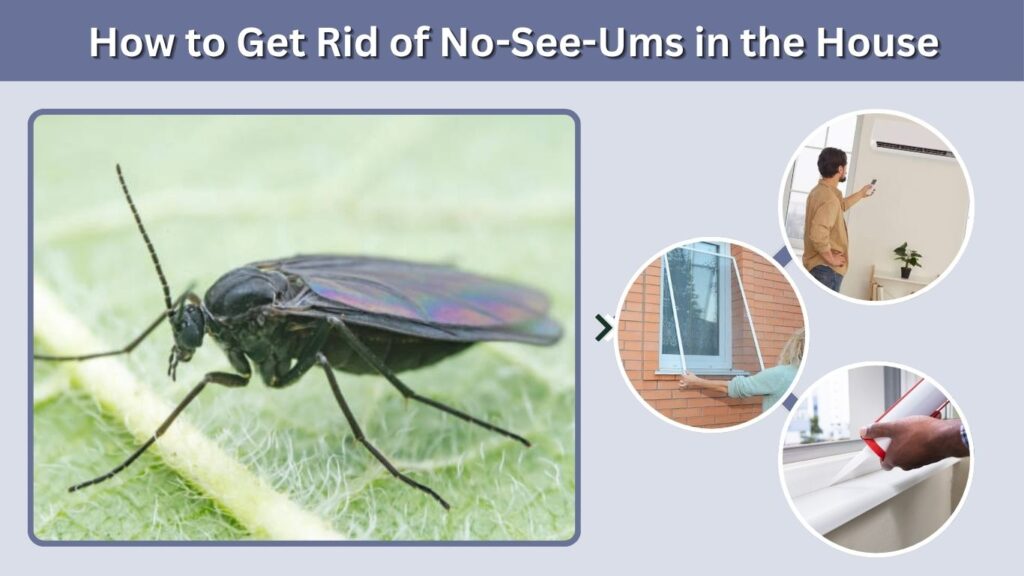
No-see-ums generally develop outdoors in moist soil, mud, marshes, tree holes, pond margins, and similar wet environments. When they appear indoors, they have usually entered through screens, open doors, or small structural gaps rather than established a permanent breeding population inside the bedroom.
Install No-See-Um Screens
Ordinary insect screens often have openings large enough for biting midges to pass through. Replace damaged screening with fine no-see-um mesh. CDC guidance recommends approximately 20-by-20 mesh for excluding biting midges.
Check and repair:
- Window screens
- Screen doors
- Porch enclosures
- Air-conditioner openings
- Gaps around sliding doors
- Openings around pipes and cables
Fine screening can reduce airflow, so rooms may require better ventilation or air conditioning after installation.
Use Fans and Air Conditioning
Increase air movement in rooms where no-see-ums are entering. Place a fan so that it blows across beds, seating areas, doors, or windows rather than toward an open part of the room. The EPA includes increasing air movement among practical measures for reducing biting-midge problems.
Air conditioning also allows doors and windows to remain closed and makes indoor conditions less suitable for these moisture-loving insects.
Seal Entry Points
Apply suitable weatherstripping beneath doors and seal cracks around windows, siding, utility lines, and foundations. Keep exterior doors closed during periods of heavy activity.
Because no-see-ums may be attracted to lights, reducing unnecessary lighting beside windows and entrances can also limit the number gathering near the house.
Do No-See-Ums Live in Beds?
No-see-ums do not normally infest mattresses like bed bugs. They may enter a bedroom, land on bedding, and bite a sleeping person, but their immature stages generally require moist outdoor habitats.
Wash bedding and vacuum the room when bites occur, but focus on screens, windows, fans, and outdoor entry points. Persistent unexplained bites may come from bed bugs, fleas, mosquitoes, mites, or another source, so finding an actual insect is important.
How to Get Rid of No-See-Ums in the Yard
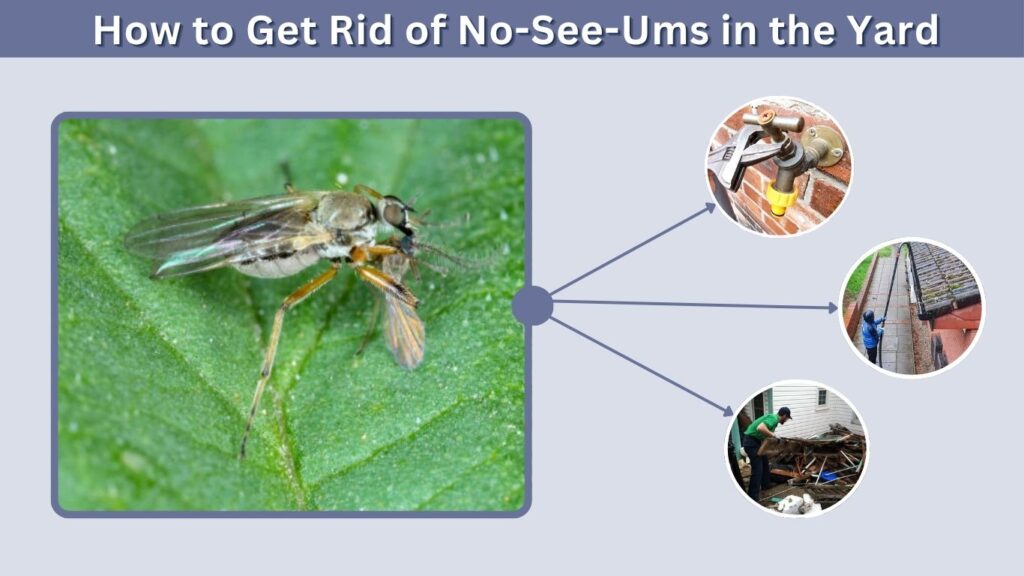
Outdoor control can be challenging because adults may arrive from marshes, ponds, muddy shorelines, wetlands, or surrounding properties. Large natural breeding areas cannot realistically or responsibly be eliminated.
Reduce Unnecessary Moisture
No-see-um larvae require moisture for development. Inspect the property for avoidable damp areas, especially close to patios and entrances.
Practical steps include:
- Repairing leaking outdoor taps
- Correcting excessive lawn irrigation
- Clearing blocked gutters
- Emptying containers that collect water
- Improving drainage in persistently soggy areas
- Removing wet, decaying debris near the house
- Allowing overwatered soil to dry appropriately
Do not drain, fill, or apply pesticides to protected wetlands, mangroves, streams, or natural shorelines. Habitat alteration may be ineffective, environmentally damaging, or unlawful.
Keep Vegetation Maintained
Trim dense vegetation around patios, doors, and sitting areas so the soil receives more sunlight and airflow. Remove unnecessary piles of wet leaves and decomposing plant material near the home.
This will not eliminate insects arriving from surrounding habitats, but it may reduce suitable resting and development conditions immediately around the property.
Use Outdoor Fans
Position strong fans so air blows across people seated on a patio, deck, or porch. Increasing air movement provides localized relief and can reduce the ability of tiny midges to approach and land.
Fans are particularly useful around:
- Outdoor dining tables
- Poolside chairs
- Porch seating
- Barbecue areas
- Children’s play spaces
- Doorways used frequently
Consider Professional Treatment
A pest-control professional may apply a labeled residual product to selected resting areas or use other treatments suitable for the property. However, outdoor insecticide applications often provide only temporary relief when adults continually arrive from nearby breeding habitats.
Never spray wetlands, ponds, flowering plants, or other sensitive locations unless the product label specifically allows it. Broad, repeated spraying may also harm pollinators and other beneficial insects.
How to Prevent No-See-Um Bites
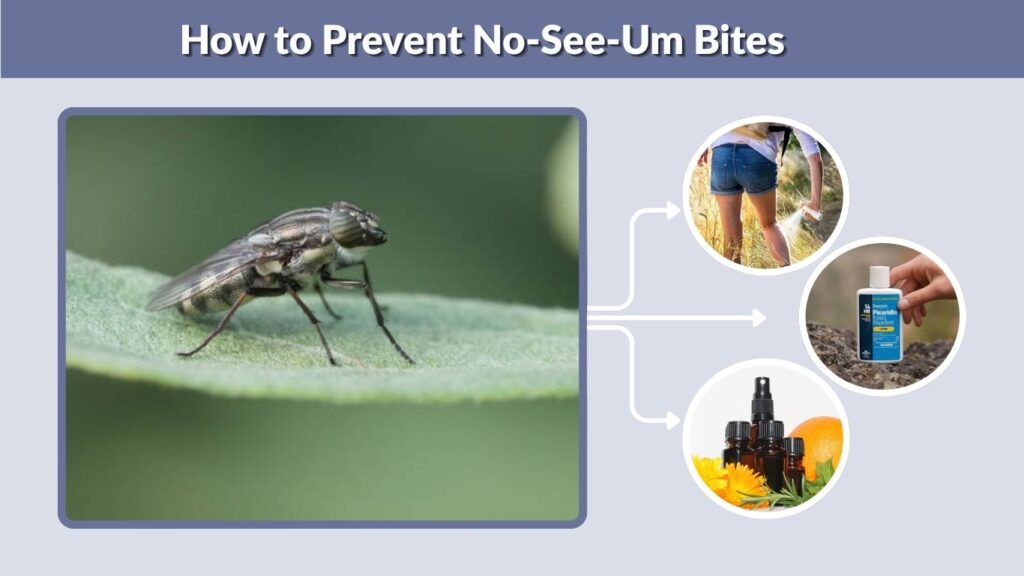
Avoiding bites is usually easier than eliminating every adult from a large outdoor area.
Apply the Right Repellent
Use an EPA-registered repellent specifically labeled for flies, biting flies, no-see-ums, or Culicoides. CDC guidance emphasizes checking the label because a product registered for mosquitoes may not necessarily claim protection against biting midges.
Registered active ingredients available in skin-applied repellents include:
- DEET
- Picaridin
- IR3535
- Oil of lemon eucalyptus or PMD
- 2-undecanone
- Citronella in certain products
Always follow the product label, especially when applying repellent to children. Do not apply it beneath clothing, over cuts, or directly onto the face.
Cover Exposed Skin
Wear long trousers, socks, closed shoes, and loose-fitting long sleeves. Protect ankles, wrists, necklines, and other gaps where biting midges can reach the skin. Clothing provides an important physical barrier when visiting beaches, wetlands, mangroves, or campsites.
Avoid Peak Activity
Many biting midges are most troublesome during the morning, evening, and calm, humid conditions. Some species also bite during daylight, so adjust outdoor activities according to local activity rather than assuming they appear only after sunset.
Can You Get Rid of No-See-Ums Naturally?
The most dependable non-chemical methods are fine screening, fans, protective clothing, air conditioning, drainage improvement, and removal of avoidable damp debris.
Some essential oils have shown repellent effects in studies, but performance varies by ingredient, concentration, formulation, and species. Homemade mixtures may provide limited or short-lived protection and can irritate the skin. An EPA-registered product labeled for biting midges offers more dependable instructions regarding effectiveness and safe application.
How to Get Rid of No-See-Um Bites
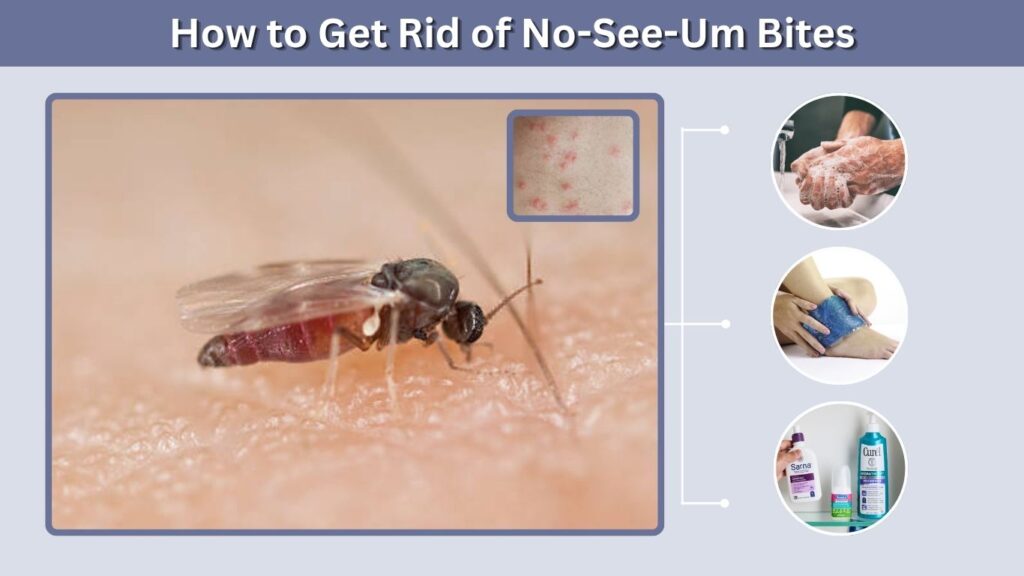
You cannot remove a bite immediately, but you can reduce itching and inflammation.
- Wash the area gently with soap and water.
- Apply a cold compress for 10–20 minutes.
- Use calamine lotion or low-strength hydrocortisone when appropriate.
- Avoid scratching or breaking the skin.
- Ask a pharmacist or healthcare professional about an antihistamine when itching is significant.
Seek urgent medical care for trouble breathing, throat or facial swelling, faintness, or widespread hives. Increasing redness, warmth, pain, or pus may indicate a secondary infection.
FAQs
What is the fastest way to get no-see-ums out of a house?
Close windows and doors, turn on air conditioning, and direct strong fans across occupied rooms. Repair ordinary screens or replace them with fine no-see-um mesh. Indoor sprays alone will not provide lasting control when insects continue entering through openings.
Can no-see-ums get through window screens?
Yes. Many biting midges are small enough to pass through standard insect screens. Fine mesh with openings around 20-by-20 provides better exclusion, although it may reduce ventilation and require increased use of fans or air conditioning.
What spray gets rid of no-see-ums?
For skin, choose an EPA-registered repellent labeled for biting flies or no-see-ums. For property treatment, use only an insecticide whose label permits application against biting midges in the intended area. Outdoor sprays may provide temporary rather than permanent control.
Why do no-see-um bites keep appearing in my bed?
Adults may be passing through a window screen or entering when doors open. They do not normally reproduce in a dry mattress. Install finer screening, run a fan across the bed, inspect window seals, and consider other pests if no insects are found.
How long does it take to eliminate no-see-ums?
Indoor activity may decline quickly after entry points are sealed and fine screens are installed. Yard populations can take longer to reduce and may return whenever adults emerge from nearby wet habitats. Ongoing moisture management and personal protection are often necessary.