
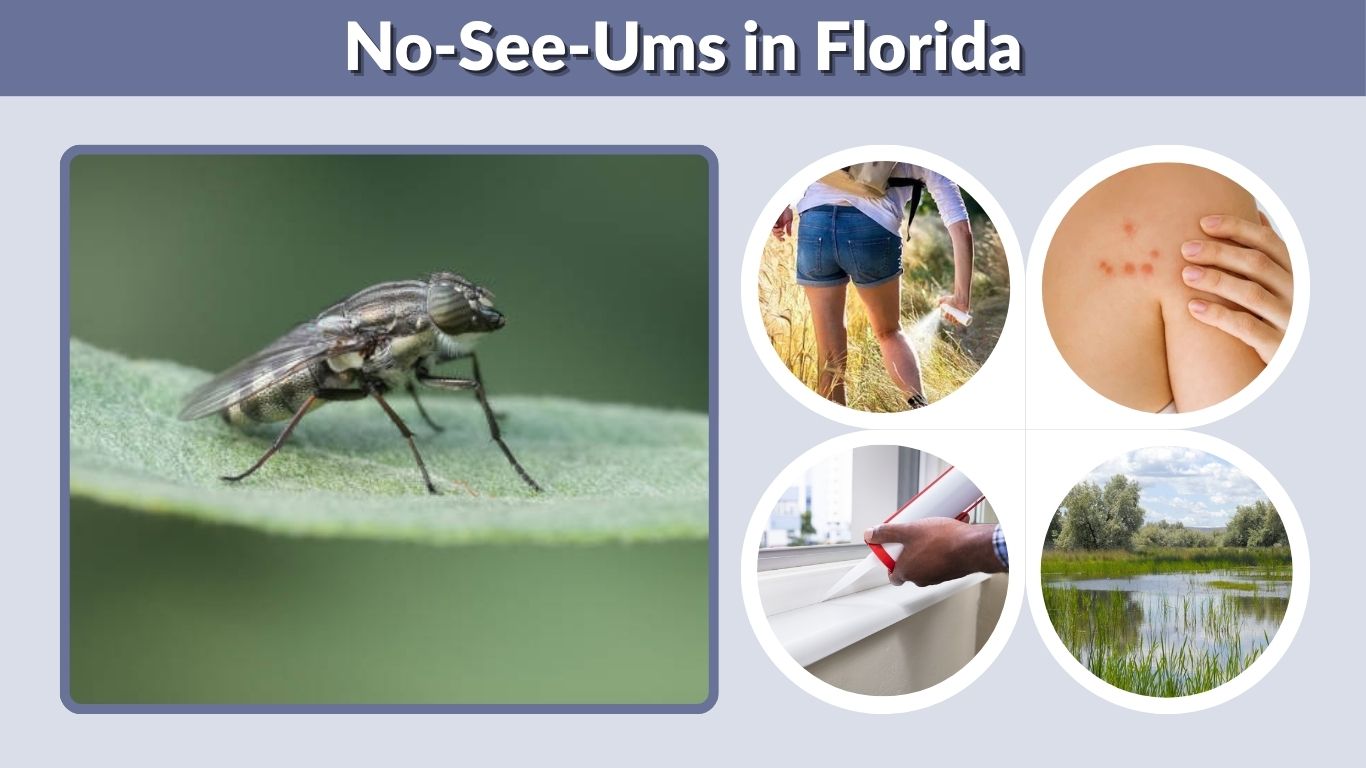
No-see-ums in Florida are tiny blood-feeding flies commonly found near beaches, mangroves, marshes, wetlands, canals, and other humid environments. Also called biting midges, sand gnats, or punkies, they are so small that people often notice the painful, itchy bites before seeing the insects. Florida’s warm climate and extensive coastal wetlands make encounters common, particularly around sunrise, sunset, and calm outdoor areas.
What Are No-See-Ums in Florida?
No-see-ums are biting midges, usually belonging to the genus Culicoides. Florida has around 50 Culicoides species, although not all regularly bite people. Adults average roughly 1–2 millimeters long, making them much smaller than mosquitoes and capable of passing through ordinary window screens.
| Feature | Description |
| Insect type | Biting midge |
| Scientific group | Mainly Culicoides species |
| Typical size | About 1–2 millimeters |
| Main habitats | Marshes, mangroves, wetlands and damp soil |
| Most active times | Morning, dusk and night |
| Biting sex | Females |
| Common reaction | Burning, redness, swelling and itching |
| Indoor breeding | Uncommon in normal household conditions |
Male and female midges feed on plant nectar, but females of most biting species require blood to develop their eggs. Their mouthparts cut the skin and allow them to take a small blood meal.
Where Are No-See-Ums Found in Florida?
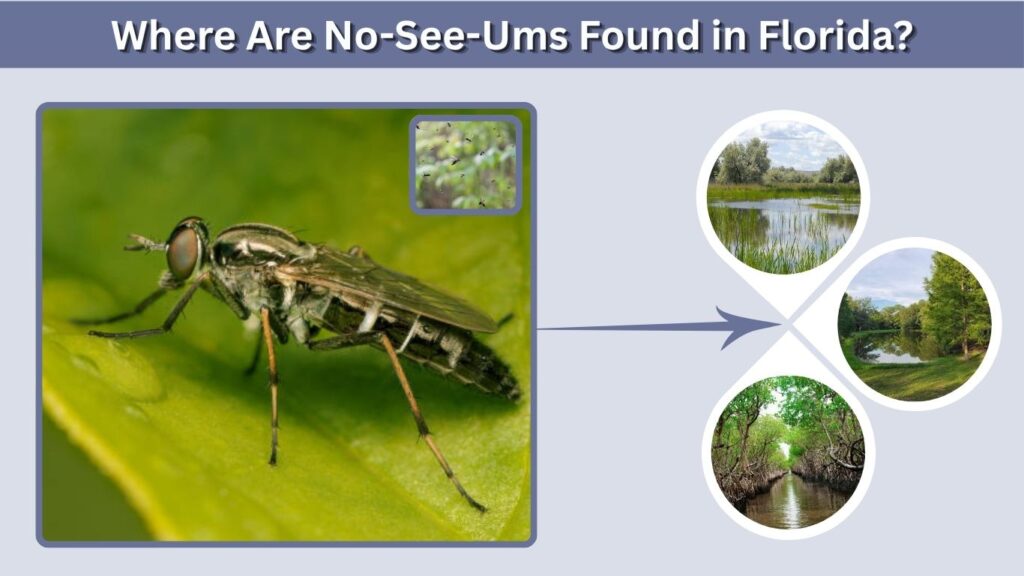
No-see-ums occur throughout Florida, but the species and population density vary by location. They are especially troublesome where damp organic material provides suitable larval habitat.
Coastal Florida and Beaches
Several Florida species breed in coastal marshes, mangroves and swamps. These species can become extremely abundant and create serious problems for beachgoers, anglers, campers and waterfront residents.
A windy, open beach may have fewer biting midges than a protected area behind dunes or beside mangroves. The insects are weak fliers, so calm patios, shaded vegetation and sheltered waterfront locations often produce more bites.
Florida Keys and South Florida
The Florida Keys and southern coastal areas provide warm temperatures, mangroves, wet soil and tidal habitats. Activity can therefore continue for much of the year, although abundance changes with rainfall, wind, temperature and local breeding conditions.
Central and Northern Florida
Northern and north-central Florida have a greater overall diversity of biting midges, partly because tree-hole habitats are more common there. Other species develop in wet pastures, stream edges, pond margins and low grasslands.
When Is No-See-Um Season in Florida?
Florida does not have one exact statewide no-see-um season. Conditions in the Panhandle differ considerably from those in Miami, Naples or the Florida Keys.
Activity is generally strongest during warm, humid periods when breeding substrates remain moist. For many areas, problems become more noticeable from spring through fall. In warmer parts of South Florida, adults may remain active during mild winter weather.
Most species bite during the morning, evening or night. However, coastal species may also bite during daylight, particularly under cool, cloudy or calm conditions.
When Do No-See-Ums Go Away?
Populations usually decline when conditions become consistently cold or dry, but a single cold night may not eliminate them. Eggs can remain dormant while waiting for suitable temperature and moisture, and some larvae survive extended periods when development slows.
There is no dependable outdoor temperature at which every Florida no-see-um suddenly dies. Activity may temporarily disappear after a cold front and return when warmer weather arrives.
What Do Florida No-See-Um Bites Look Like?
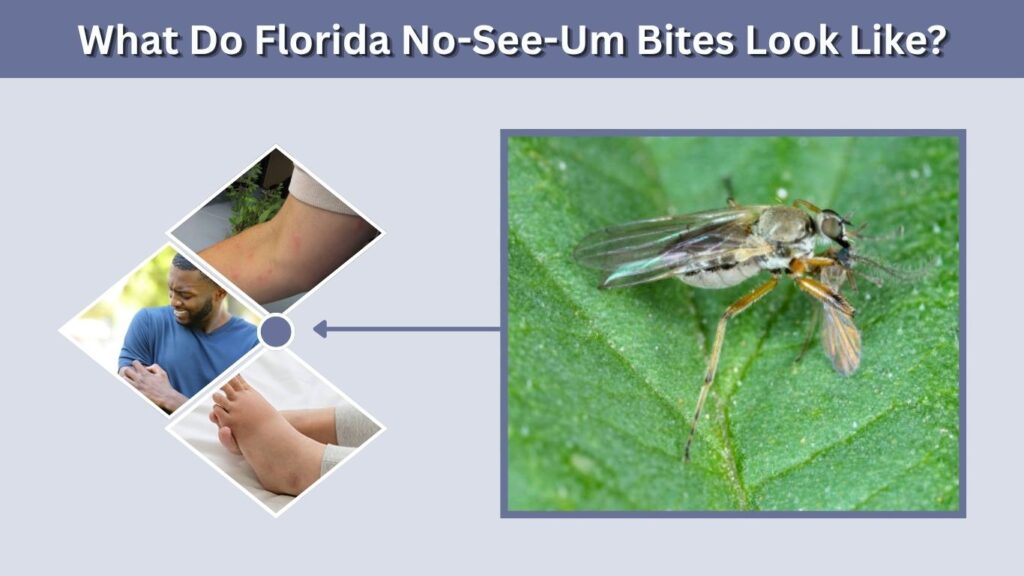
The actual bite may produce a sharp prick, burning sensation or immediate irritation. Reactions can become more noticeable several hours later.
Common symptoms include:
- Small red bumps or welts
- Intense itching
- Burning or stinging
- Localized swelling
- Clusters of bites on exposed skin
- Irritation around ankles, wrists, legs and neck
UF/IFAS reports that reactions generally include localized burning or stinging surrounded by defined red areas. The discomfort may last from minutes to hours, while sensitive individuals can itch for two or three days.
No-see-um bites can resemble mosquito, flea or chigger bites. The location and circumstances provide useful clues: numerous itchy spots appearing after time near a Florida beach, mangrove, marsh or waterfront at dusk may indicate biting midges.
How to Treat No-See-Um Bites
Most bites can be managed at home. Avoid scratching because broken skin may allow a secondary bacterial infection to develop.
Basic Bite Treatment
- Wash the affected skin gently with soap and water.
- Apply a wrapped cold pack or cool compress.
- Use calamine lotion or a low-strength hydrocortisone product when appropriate.
- Ask a healthcare professional about an oral antihistamine if itching is significant.
- Keep fingernails short and avoid opening the bumps.
Cold compresses and over-the-counter anti-itch treatments such as hydrocortisone can help reduce mild itching and swelling from insect bites.
Seek medical attention for difficulty breathing, facial or throat swelling, faintness, widespread hives or another severe allergic reaction. Also consult a healthcare professional if the bites become increasingly painful, hot, swollen or filled with pus.
Are Florida No-See-Ums Dangerous?
For most people in Florida, no-see-ums are irritating biting pests rather than a source of serious illness. Their saliva can produce significant itching or allergic skin reactions, but ordinary local reactions generally improve with basic care.
Some Culicoides species transmit pathogens affecting livestock and wildlife. Biting midges also spread Oropouche virus in parts of South America, Central America and the Caribbean. That should not be interpreted as evidence that ordinary no-see-um bites in Florida commonly transmit Oropouche locally.
How to Prevent No-See-Um Bites in Florida
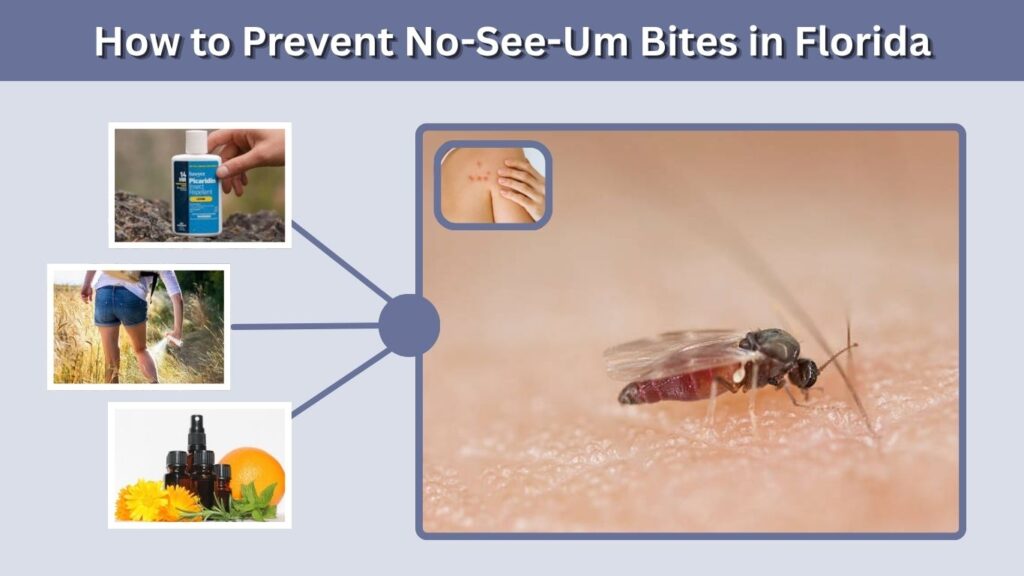
Personal protection is usually more practical than trying to eliminate every midge from a coastal or wetland environment.
Choose an Appropriate Repellent
Use an EPA-registered repellent whose label includes flies, biting flies, biting midges or Culicoides. Available skin-applied active ingredients include:
- DEET
- Picaridin
- IR3535
- Oil of lemon eucalyptus or PMD
- 2-undecanone
Follow the product label, especially when applying repellent to children. Do not spray repellent in enclosed spaces or directly onto the face.
DEET is one of the main repellents used against biting midges, but product effectiveness depends on the formulation, concentration, application and individual midge species.
Cover Exposed Skin
Wear long sleeves, long trousers, socks and closed shoes when spending time near mangroves, marshes or waterfront vegetation. Pay special attention to ankles, wrists, necklines and other areas where clothing leaves gaps.
Create Air Movement
Use a strong outdoor fan near chairs, tables or patios. No-see-ums are tiny fliers, and direct air movement can make it more difficult for them to land. Position the fan so air moves across the people being protected rather than simply circulating above them.
Change Your Outdoor Schedule
Avoid calm outdoor areas during the most active periods, particularly around sunrise and sunset. Moving activities to breezier locations or brighter midday periods may reduce exposure, although some coastal species also bite during daylight.
How to Keep No-See-Ums Out of the House
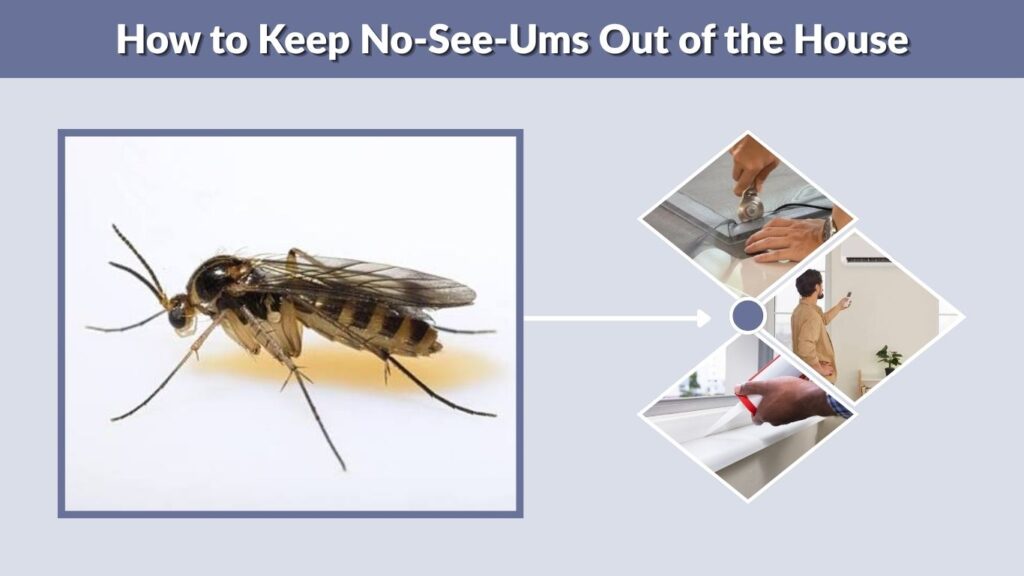
Ordinary window screens may not stop these tiny insects. No-see-um screens use much finer mesh, while CDC guidance recommends looking for approximately 20-by-20 mesh where biting-midge exclusion is necessary.
Other indoor prevention measures include:
- Repairing damaged screens
- Keeping doors closed
- Sealing gaps around windows
- Using air conditioning
- Running indoor fans
- Reducing unnecessary outdoor lights near entrances
- Checking sliding-door and window seals
No-see-ums do not normally establish a major breeding colony in a dry bedroom. Repeated indoor sightings usually indicate that adults are entering from nearby outdoor habitats.
How to Reduce No-See-Ums Around Your Property
Larvae require moist environments and may develop around marshes, wet grasslands, pond edges, stream banks, puddles and tree holes. Improving drainage and allowing persistently wet areas to dry may reduce some local breeding, although control is difficult when insects originate from protected wetlands or surrounding properties.
Practical steps include fixing leaks, preventing overwatering, clearing blocked gutters and improving drainage in low areas. Do not drain or disturb natural wetlands, mangroves or protected habitats.
Professional barrier treatments may temporarily reduce adults around patios and vegetation, but they cannot permanently eliminate midges arriving from large nearby breeding areas. Any pesticide must be applied according to its label and Florida regulations.
FAQs
Are no-see-ums everywhere in Florida?
They occur across Florida, but abundance varies considerably. Coastal marshes, mangroves, wetlands, damp tree holes and low grasslands provide suitable habitat. Dry, windy inland sites may experience fewer problems than protected waterfront locations.
What months are no-see-ums worst in Florida?
They are generally most troublesome during warm, humid periods, commonly from spring through fall. In South Florida and the Keys, mild winters can allow continued activity. Local rainfall, tides, temperature and wind may be more important than the calendar month.
What is the best repellent for Florida no-see-ums?
Choose an EPA-registered product labeled for biting flies, biting midges or Culicoides. DEET and picaridin are common choices, while IR3535 and oil of lemon eucalyptus or PMD are available in some registered products. Always follow the label.
Can no-see-ums live inside a Florida house?
Adults can enter through ordinary screens and small gaps, but they usually originate outdoors. Fine-mesh screening, closed doors, air conditioning and fans can reduce indoor problems. Persistent indoor activity may indicate an opening near a large outdoor population.
Why are no-see-um bites so itchy?
The female introduces saliva while feeding, and the immune system reacts to substances in that saliva. Some people develop only small red spots, while sensitive individuals experience pronounced swelling and itching lasting several days.