
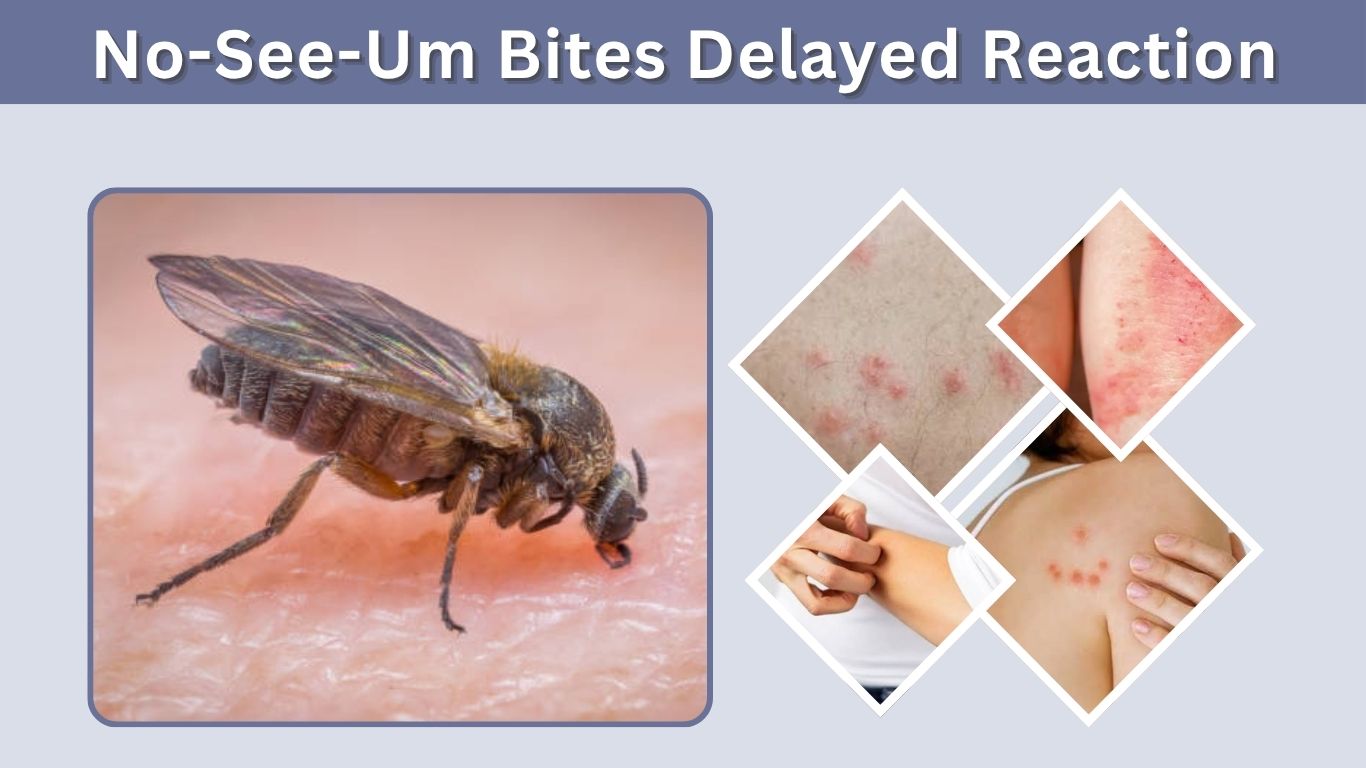
A delayed reaction to no-see-um bites may develop several hours after exposure, sometimes becoming most noticeable the following day. The affected skin can develop intensely itchy bumps, swelling, redness or discoloration, and occasional small blisters. Sensitive people may experience a stronger or longer-lasting response than others. Most reactions remain limited to the skin and improve with home care, but breathing problems, facial swelling, faintness, spreading infection, or rapidly worsening symptoms require immediate medical attention.
Why Do No-See-Um Bites Cause a Delayed Reaction?
No-see-ums are tiny biting midges, often from the genus Culicoides. Female midges cut the skin and feed on blood, introducing salivary substances that can trigger inflammation. Typical reactions include localized burning or stinging followed by a defined irritated area. People who are particularly sensitive may itch for two or three days or longer.
A delayed reaction happens because the immune system does not always respond immediately. Symptoms may gradually intensify as inflammatory cells react to the insect’s saliva. This can make bites received outdoors during the evening appear more obvious overnight or the following morning.
Some people develop a persistent hypersensitivity reaction known as papular urticaria. It causes groups of itchy bumps that may remain for days or weeks. New insect bites can sometimes make older marks become inflamed again.
What Does a Delayed Reaction Look Like?
No-see-um bite reactions vary considerably. Skin color, sensitivity, the number of bites, and scratching can all influence their appearance.
Common Symptoms
A delayed reaction may include:
- Small, raised, intensely itchy bumps
- Red, pink, purple, or darker discoloration
- Swelling around individual bite sites
- A visible central puncture mark
- Groups of bumps on exposed skin
- Burning, warmth, or tenderness
- Small clear or blood-filled blisters
- Crusting where the skin has been scratched
The marks commonly affect uncovered areas such as the ankles, legs, arms, neck, and face. Redness can be less noticeable on brown or black skin, making swelling, warmth, pain, and texture changes more useful warning signs.
Pictures alone cannot confirm that no-see-ums caused a reaction. Mosquitoes, fleas, bed bugs, mites, and several skin conditions can produce similar-looking bumps.
How Long Can the Delayed Reaction Take to Appear?
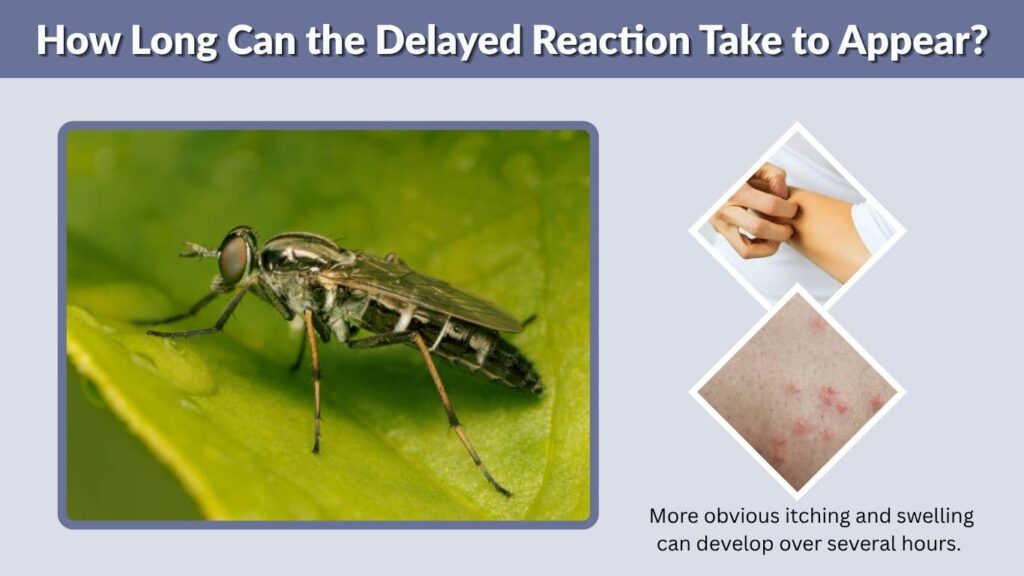
Some people feel the bite immediately, while others notice only mild irritation at first. More obvious itching and swelling can develop over several hours.
A strong localized allergic reaction may continue enlarging for several hours before gradually improving over several days. Papular urticaria can produce new groups of bumps every few days, and individual spots may remain visible for days or weeks.
Delayed marks do not necessarily mean the bites are spreading. Possible explanations include:
- Different bites becoming inflamed at different times
- A new bite reactivating older lesions
- Continued exposure to biting midges
- Scratching that increases inflammation
- A secondary skin infection
Normal Reaction vs. Severe Reaction
Most no-see-um bite reactions are uncomfortable but remain localized. A larger reaction can still be limited to the skin without being life-threatening.
| Reaction type | Possible signs | Recommended response |
| Mild local reaction | Small itchy bumps and limited swelling | Home treatment and observation |
| Large local reaction | Swelling extending beyond each bite | Pharmacist or medical advice |
| Persistent reaction | Bumps lasting for days or repeatedly returning | Medical assessment if severe |
| Skin infection | Increasing pain, heat, pus, or spreading redness | Prompt medical care |
| Serious allergic reaction | Breathing trouble, throat tightness, facial swelling, or fainting | Emergency care immediately |
Large Local Reaction
A large local reaction may cause swelling across a substantial area, occasionally involving much of an arm or leg. It usually develops over several hours and slowly improves over the following days. Although alarming, it is different from a systemic allergic emergency when breathing and circulation remain normal.
Severe Allergic Reaction
Call the local emergency service immediately when someone develops:
- Swelling of the lips, tongue, mouth, or throat
- Difficulty breathing, wheezing, or gasping
- Throat tightness or trouble swallowing
- Sudden severe dizziness or confusion
- Fainting or inability to wake normally
- Pale, blue, or gray lips or skin
- Widespread hives accompanied by other symptoms
These can indicate anaphylaxis and require immediate hospital treatment. A person with a prescribed epinephrine auto-injector should use it according to their emergency plan while help is being called.
Treatment for a Delayed No-See-Um Bite Reaction
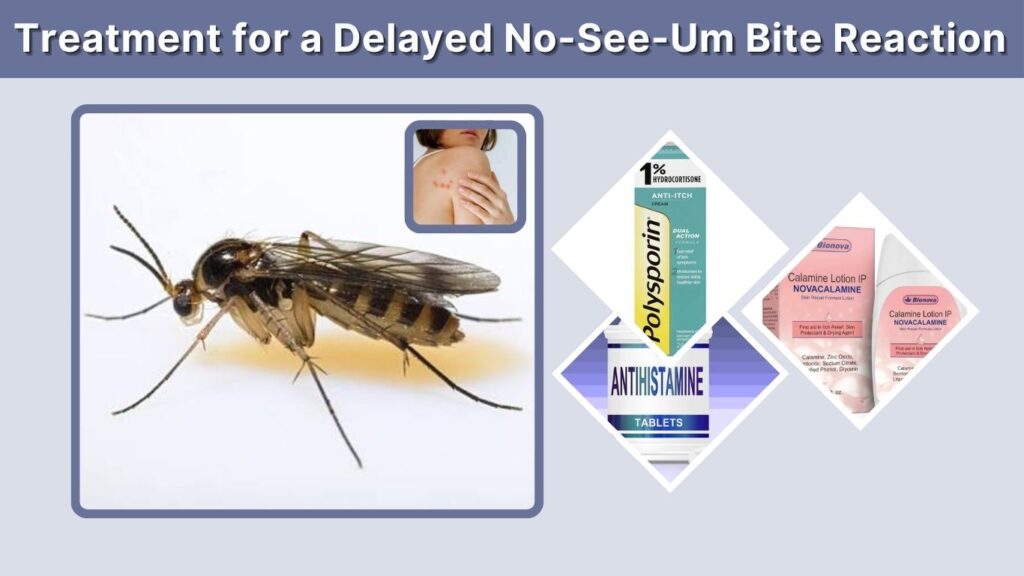
Treatment aims to control itching and inflammation while protecting the skin from infection.
Wash the Affected Skin
Clean the bites gently with soap and water. Pat the area dry without rubbing. Washing removes dirt and reduces the chance of bacteria entering skin damaged by scratching.
Apply a Cold Compress
Wrap an ice pack in a clean cloth and apply it for approximately 10–20 minutes. Repeat when necessary, allowing the skin to warm between applications. Elevating a badly swollen arm or leg may also help. Never place ice directly against the skin.
Use an Appropriate Anti-Itch Treatment
A pharmacist may recommend:
- Calamine lotion
- A suitable topical corticosteroid, such as hydrocortisone
- An oral antihistamine
- An appropriate pain reliever when the bites are painful
Topical corticosteroids can reduce inflammation, while antihistamines may reduce itching and swelling. Medicine selection depends on age, pregnancy, existing conditions, other medications, and whether the skin is broken or infected.
Avoid Scratching
Scratching can open the skin, prolong inflammation, and cause infection. Keep fingernails short and consider covering damaged areas with a clean, breathable dressing.
Avoid clear nail polish, bleach, concentrated alcohol, undiluted essential oils, and other harsh remedies. These products do not remove insect saliva and may cause additional irritation.
Signs the Bites May Be Infected
A skin infection can develop several days after an insect bite, particularly when repeated scratching breaks the surface.
Seek medical advice for:
- Rapidly increasing redness or discoloration
- Skin that becomes hot and increasingly painful
- Pus, cloudy fluid, or yellow crusting
- A red line extending away from the affected area
- Fever or swollen glands
- Swelling that continues to worsen
- An open sore that does not heal
Antibiotics do not treat an ordinary allergic bite reaction, but they may be needed when a healthcare professional diagnoses a bacterial infection.
Why Do Some People React More Severely?
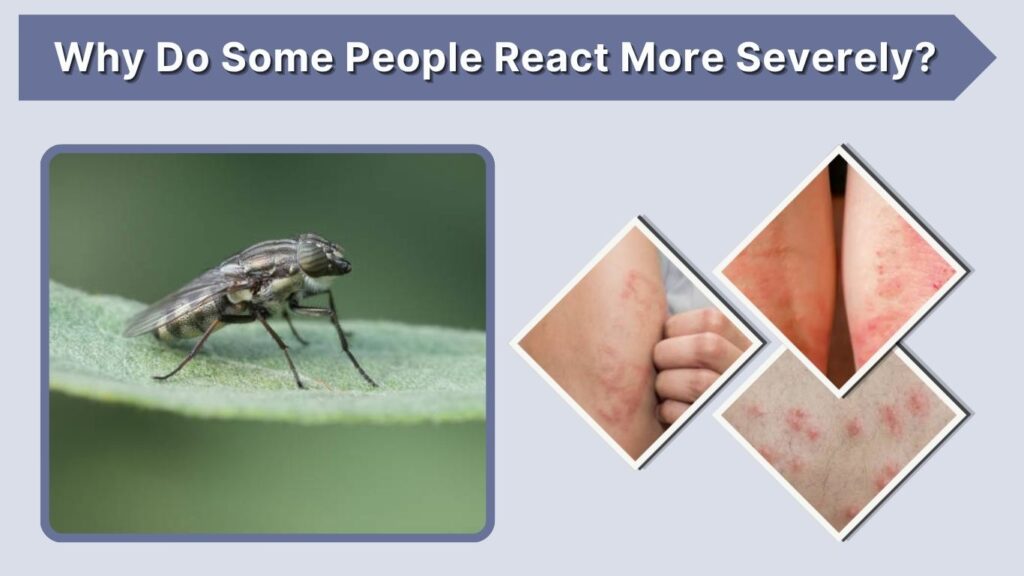
Individual immune sensitivity varies. Children may be more prone to persistent insect-bite reactions because they have not yet developed tolerance. Adults exposed to unfamiliar insects while traveling can also develop unusually strong reactions.
Reaction severity may also be influenced by:
- Receiving many bites at once
- Previous sensitivity to biting insects
- Repeated exposure over several days
- Scratching or damaging the skin
- Eczema or another underlying skin condition
- Exposure to a new species of biting midge
A strong reaction does not necessarily mean every future bite will cause an emergency. However, anyone who has experienced generalized hives, facial swelling, breathing difficulty, or faintness should discuss the episode with a healthcare professional.
How to Prevent Another Reaction
Wear long sleeves, long trousers, socks, and closed footwear in places where biting midges are active. Apply an appropriate insect repellent according to its label, and limit exposure around wetlands, coastal areas, and other damp habitats when midges are abundant.
No-see-ums are extremely small and can pass through ordinary window screening. Fine-mesh screens, closed windows, air conditioning, and fans can help reduce indoor exposure.
FAQs
Can no-see-um bites appear the next day?
Yes. The immune response can intensify gradually, making bumps and swelling more noticeable several hours later or the following day. Continued exposure can also produce genuinely new bites.
Can old no-see-um bites become itchy again?
Yes. Persistent insect-bite reactions can cause older lesions to become inflamed when new bites occur. This is sometimes associated with papular urticaria.
How long does an allergic reaction last?
A mild reaction may improve within several days. Large local reactions and papular urticaria can last longer, especially after numerous bites or repeated scratching. Symptoms that worsen or fail to improve should be medically assessed.
Are blisters a sign of a severe reaction?
Small localized blisters can occur with insect-bite hypersensitivity and do not automatically indicate an emergency. Large blisters, severe pain, rapidly spreading swelling, infection signs, or symptoms elsewhere in the body require professional assessment.
When should I seek emergency care?
Seek emergency help for breathing difficulty, throat tightness, swelling of the face or tongue, fainting, confusion, or widespread hives with other symptoms. These may indicate a life-threatening allergic reaction.