
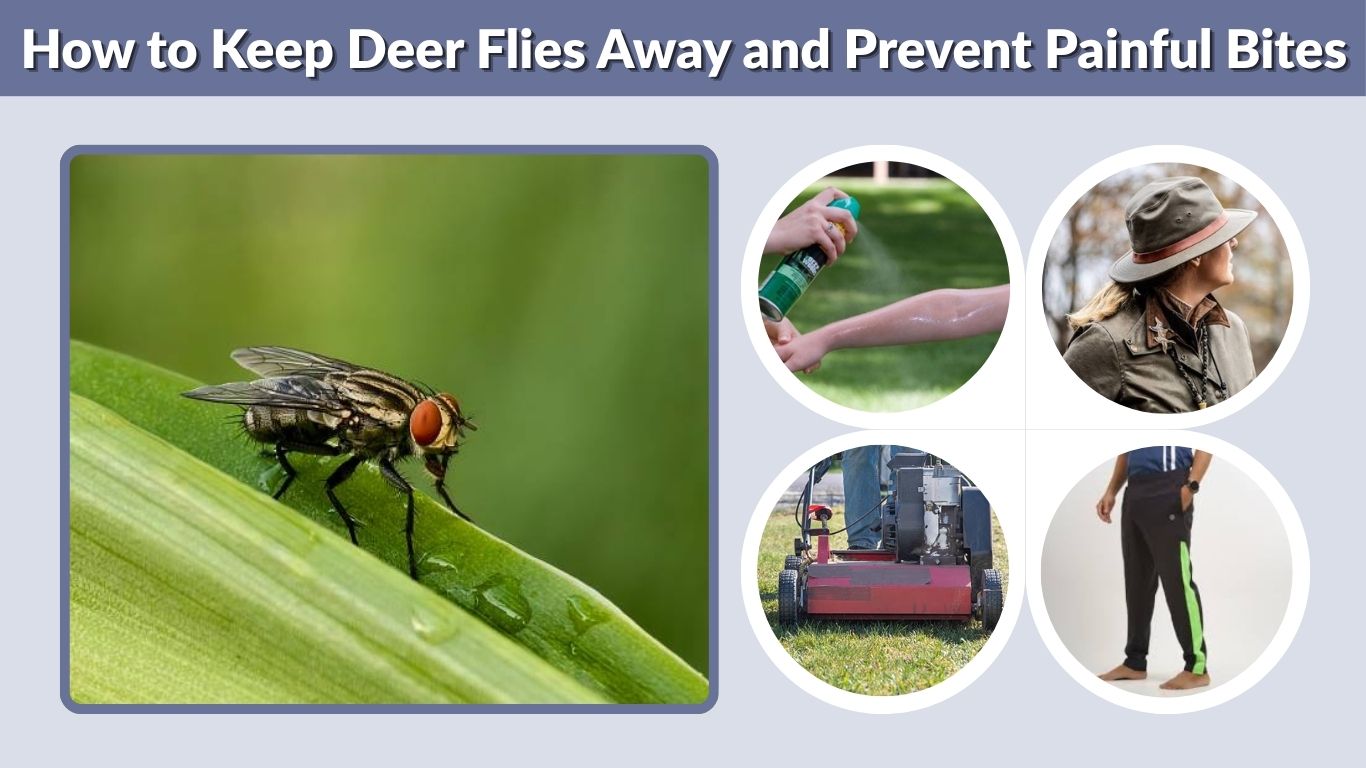
Deer flies can turn a peaceful walk, pool day, or afternoon in the yard into an uncomfortable experience. These fast-moving flies frequently circle the head before landing and delivering a painful bite. Although completely eliminating them outdoors is difficult, you can greatly reduce bites by combining protective clothing, suitable repellents, strategic timing, airflow, traps, and habitat management. The following methods explain how to keep deer flies away from people, dogs, pools, yards, and outdoor activity areas.
What Keeps Deer Flies Away?
No single product provides perfect protection against deer flies. They are strong, persistent fliers, and their larvae often develop across large areas of damp soil, marshes, woodland edges, and wetlands. Treating these breeding habitats is generally impractical and may harm sensitive environments.
The best protection combines several methods:
- Cover exposed skin with light-colored clothing.
- Apply an appropriate insect repellent.
- Avoid highly infested areas during peak activity.
- Use strong fans around patios and pools.
- Place visual traps away from gathering areas.
- Provide screened or shaded shelter for animals.
- Reduce unnecessary moisture around the property.
Best Ways to Keep Deer Flies Away from Humans
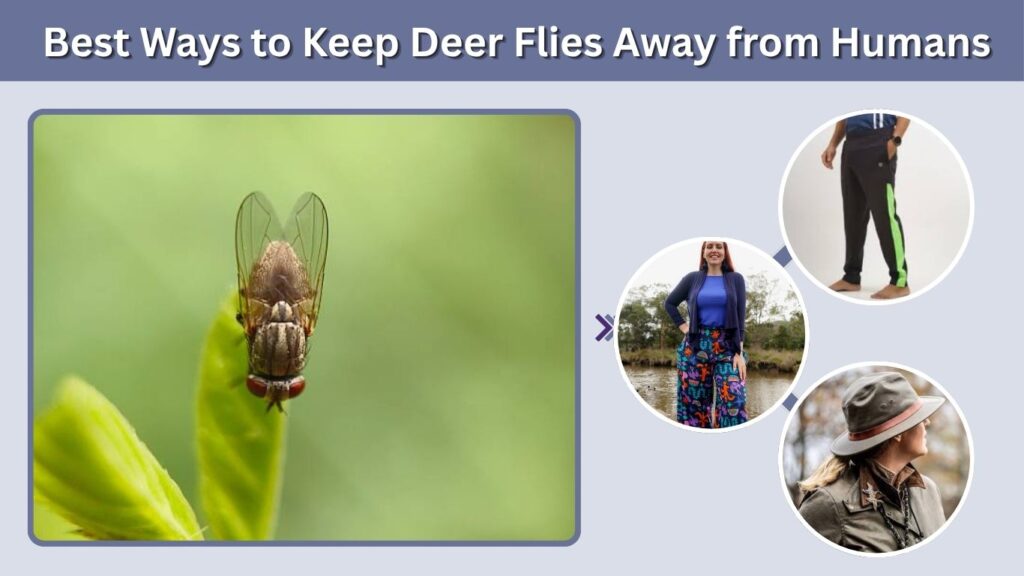
Deer flies are mainly outdoor pests. They locate potential hosts through movement, visual contrast, body odors, and exhaled carbon dioxide. Personal protection is therefore more reliable than attempting to spray an entire property.
Wear Light-Colored Protective Clothing
Wear a long-sleeved shirt, long pants, closed shoes, and a hat when entering wooded, marshy, or lakeside areas. Choose white, beige, light gray, or other pale colors instead of black, navy, or dark brown.
Tightly woven material gives better protection than thin, loose fabric through which a determined fly may bite. Tuck your shirt into your pants and your pant legs into your socks when deer flies are especially aggressive.
A wide-brimmed hat also protects the scalp, ears, forehead, and neck—areas frequently targeted by circling flies.
Apply an EPA-Registered Repellent
Repellents containing DEET, picaridin, IR3535, oil of lemon eucalyptus, PMD, or 2-undecanone are recognized options for protecting exposed human skin from biting arthropods. Always select a product labeled for the intended use and follow its application instructions.
However, deer flies can be harder to repel than mosquitoes. Extension guidance notes that ordinary commercial fly repellents may provide limited protection against deer and horse flies. Repellent should therefore be combined with clothing, traps, and avoidance rather than treated as a complete solution.
Apply the product evenly to exposed skin without spraying it directly onto your face. Spray it into your hands first, then carefully spread it over the face while avoiding the eyes and mouth. Reapply only as directed on the label.
Treat Clothing with Permethrin
Permethrin-treated clothing can add another layer of protection. Permethrin is intended for fabric, footwear, tents, and gear when the product label permits—it should not be applied directly to human skin.
You can purchase factory-treated garments or treat clothing with an approved product. Allow treated items to dry fully before wearing them. EPA guidance identifies permethrin as the insect repellent used for factory-treated clothing.
Protection against deer flies may still be incomplete, so continue using suitable skin repellent on uncovered areas.
Avoid Peak Deer Fly Activity
Deer flies are generally most troublesome during warm, bright daytime conditions. Reschedule running, walking, gardening, or yard work for cooler periods when possible.
Avoid trails that pass beside:
- Marshes and swamps
- Muddy woodland areas
- Lakes and slow-moving streams
- Wet fields
- Dense vegetation beside standing water
Changing your route may make a greater difference than applying more repellent.
Quick Comparison of Deer Fly Prevention Methods
| Method | Best use | Expected benefit |
| Light-colored long clothing | Walking, hiking and yard work | Reduces exposed skin and visual attraction |
| DEET or picaridin repellent | Exposed human skin | May reduce landings and bites |
| Permethrin-treated clothing | Hiking and outdoor work | Adds fabric-based protection |
| Strong outdoor fan | Patio, deck or pool | Makes landing more difficult |
| Blue sticky trap | Yard, trail or campsite | Captures flies attracted to moving objects |
| Screened shelter | Dogs, horses and people | Creates a protected resting area |
How to Keep Deer Flies Away While Running or Walking
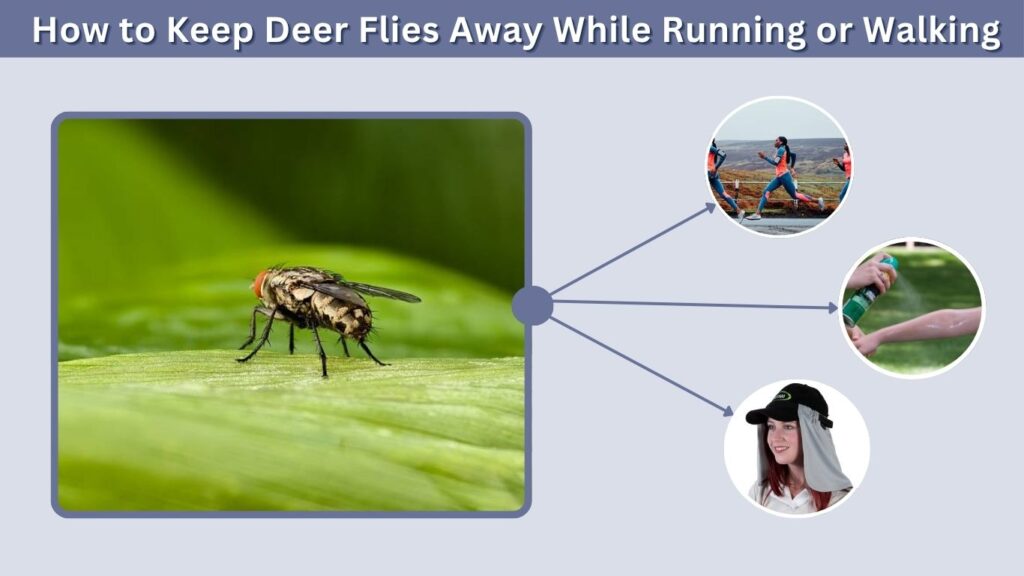
Runners are especially attractive because constant movement makes them easy for deer flies to follow.
Protect Your Head and Neck
Wear a light-colored hat with a neck flap or breathable head net. Deer flies often circle above the head and land on the scalp, ears, or back of the neck.
Apply repellent to exposed skin before leaving, but avoid overspraying. Carry a small container when the product label requires reapplication during longer outings.
Choose open, breezy roads rather than shaded trails beside wetlands. A slightly longer dry route may be much more comfortable than a shorter wooded path.
Use a Hat-Mounted Deer Fly Trap Carefully
Deer flies are visually attracted to moving objects, and blue cups or buckets covered with a sticky trapping material have shown some success.
Some walkers attach a small blue cup coated with insect-trapping adhesive to the top or back of a hat. The moving cup attracts pursuing flies, which become stuck before reaching the wearer.
Use only adhesive labeled for insect trapping, keep it away from skin and hair, and remove the device before entering a vehicle or building. A hat trap can look unusual, but it may be useful in severely infested areas.
How to Keep Deer Flies Away from a Pool
Pools do not necessarily produce deer flies, but nearby vegetation, damp ground, ponds, streams, and woods can support populations. The pool area may then become an attractive place for flies to find active people.
Create Strong Airflow
Position high-powered outdoor fans so that air moves across seating areas, tables, and frequently used sections of the pool deck. Deer flies are stronger than many small flies, but continuous turbulent airflow can still make controlled landing more difficult.
Fans work best when directed horizontally across people rather than upward.
Place Traps Away from Swimmers
Put blue sticky traps along the outer boundary of the property or between the pool and the suspected source of the flies. Do not place traps directly beside chairs or doors because the visual attractant may draw flies toward people before capturing them.
Inspect traps regularly and replace them when they become dusty, full, or no longer sticky. Position them where children, pets, birds, and beneficial insects are unlikely to touch the adhesive.
Maintain the Pool Area
Trim thick vegetation around the deck and repair leaking hoses, faucets, or irrigation equipment. Clear clogged drains and improve drainage in persistently muddy sections of the yard.
These measures may not eliminate flies arriving from distant wetlands, but they make the immediate pool area less sheltered and easier to manage.
How to Keep Deer Flies Out of Your Yard
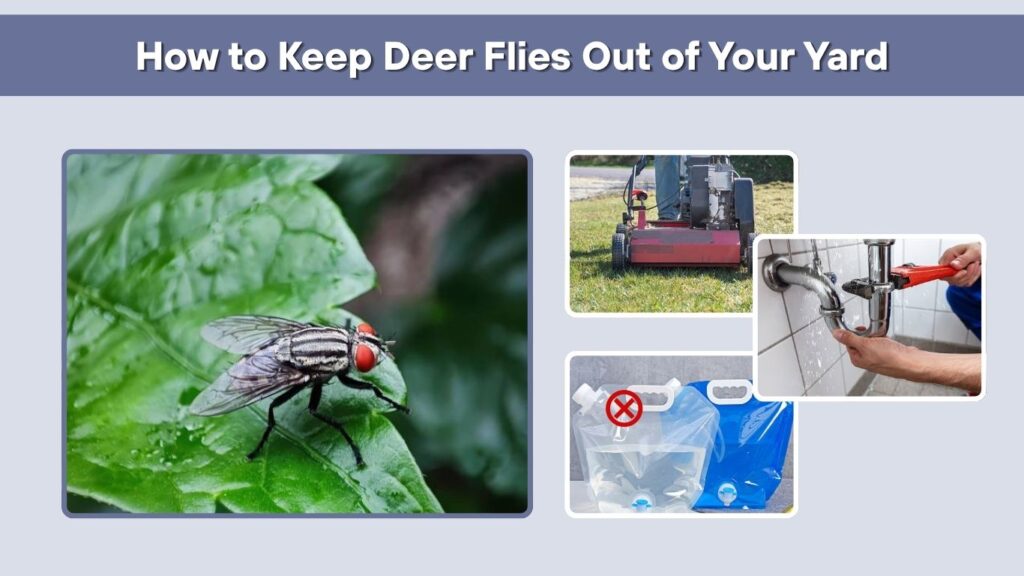
Large-scale yard spraying rarely provides lasting relief because new adult flies can arrive from surrounding habitats. Broad insecticide applications may also affect pollinators and other beneficial insects.
Improve Yard Conditions
Focus on the areas closest to patios, doors, play spaces, and animal shelters:
- Mow tall grass regularly.
- Thin dense vegetation near sitting areas.
- Remove water-filled containers.
- Repair outdoor plumbing leaks.
- Improve drainage around low spots.
- Move compost and wet organic debris away from patios.
- Keep frequently used spaces open and breezy.
Deer fly larvae may be widely dispersed in natural wet habitats, which is one reason direct population control is so difficult.
Install Visual Traps
Blue sticky traps can capture deer flies because the insects respond to shape, color, contrast, and movement. Larger canopy-style traps may use a dark moving ball to draw flies upward into a collection chamber.
Traps are most useful when several are positioned between the breeding habitat and the protected area. They should supplement personal protection rather than replace it.
How to Keep Deer Flies Off Dogs
Dogs may be bitten on the ears, nose, belly, and other areas with thin fur. Repeated bites can lead to bleeding, swelling, scratching, and secondary skin irritation.
Never Apply Human DEET Products to Dogs
Do not spray human insect repellent on a dog unless the product is specifically labeled for that animal. Veterinary guidance states that DEET exposure in pets has been associated with weakness, paralysis, liver problems, and seizures.
The ASPCA similarly recommends never applying an insect repellent to a pet unless it is specifically designed and labeled for animal use.
Ask a veterinarian about an appropriate canine fly-repellent product, especially for puppies, pregnant dogs, senior dogs, or animals with sensitive skin.
Limit Outdoor Exposure
Walk your dog during cooler periods and avoid wet woodland trails during severe deer fly activity. Provide a screened porch, indoor room, or shaded shelter where the dog can escape persistent flies.
Protective dog shirts may cover the back and abdomen, although the garment must fit correctly and should not cause overheating. Check the ears, face, and belly after outdoor activity and clean any bite wounds gently.
Do Natural Remedies Keep Deer Flies Away?
Essential oils, dryer sheets, citrus peels, citronella candles, and strongly scented plants are frequently recommended online. Their effects tend to be inconsistent and short-lived.
Oil of lemon eucalyptus or PMD should not be confused with homemade eucalyptus essential oil. EPA-registered products have standardized ingredients, tested formulations, and specific label directions.
Undiluted essential oils can irritate skin and may be unsafe around pets. Plants such as mint, lavender, basil, and marigold may smell pleasant, but planting them around a patio is unlikely to create a reliable barrier against deer flies.
Fake dragonflies and dryer sheets have limited evidence supporting their use. They may appear to help in some situations, but clothing, registered repellents, airflow, route changes, and sticky traps are more dependable.
FAQs
Does DEET keep deer flies away?
DEET may discourage some deer flies, but it does not always provide complete protection against these persistent insects. Use a labeled product correctly and combine it with long clothing, a hat, lighter colors, and avoidance of heavily infested wet areas.
What color keeps deer flies away?
No color guarantees protection, but light colors are generally preferable to dark, high-contrast clothing. Wear white, beige, pale gray, or similar colors. Dark moving objects are commonly used in tabanid traps because they can attract biting flies.
Do fake dragonflies keep deer flies away?
There is little reliable evidence that fake dragonflies consistently repel deer flies. Movement from a hanging model might temporarily disturb some insects, but it should not replace proven measures such as protective clothing, appropriate repellent, outdoor fans, and traps.
How can I keep deer flies from biting my head?
Wear a light-colored wide-brimmed hat, neck flap, or fine-mesh head net. Apply an appropriate repellent to exposed areas according to its label. In severely infested places, a carefully constructed blue sticky-cup hat trap may capture flies circling overhead.
Can plants keep deer flies away naturally?
Scented plants may contribute fragrance around a patio, but they do not provide dependable deer fly control. Deer flies can travel from nearby wetlands and wooded areas. Strong airflow, physical barriers, traps, suitable repellents, and protective clothing usually offer better results.