
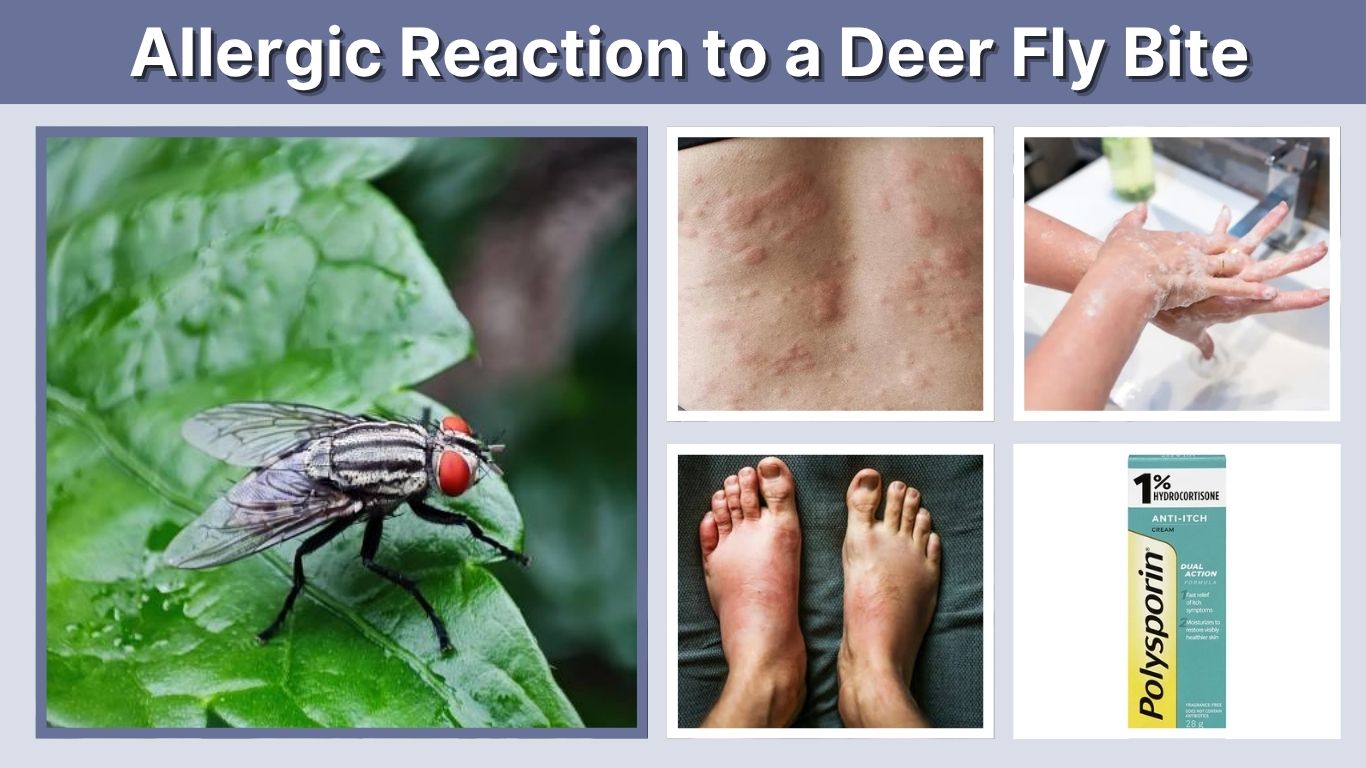
An allergic reaction to a deer fly bite can cause more than ordinary pain and redness. Some people develop significant swelling, widespread hives, dizziness, breathing difficulty, or other symptoms requiring urgent care. Deer flies cut the skin and release saliva while feeding, which may trigger an immune response in sensitive individuals. Recognizing the difference between a normal bite, a large local reaction, and anaphylaxis helps you choose the right treatment and know when to seek emergency medical assistance.
Why Can Deer Fly Bites Cause Allergic Reactions?
Only female deer flies bite because they need blood to produce eggs. Instead of puncturing the skin like a mosquito, a deer fly uses blade-like mouthparts to cut the skin and then laps up the blood.
The fly releases salivary secretions while feeding. These substances help blood continue flowing but may cause an allergic response in some people. Deer fly bites are often immediately painful because the skin is physically cut rather than gently pierced.
Is Every Swollen Bite an Allergy?
Not necessarily. Pain, redness, itching, and mild swelling around the wound are common responses to a deer fly bite. These symptoms usually remain close to the bitten area.
An allergic reaction is more likely when the swelling becomes unusually large, hives appear away from the bite, or symptoms affect the breathing, digestive, or circulatory systems. However, it can be difficult to judge a reaction from appearance alone.
Allergic Reaction Deer Fly Bite Symptoms
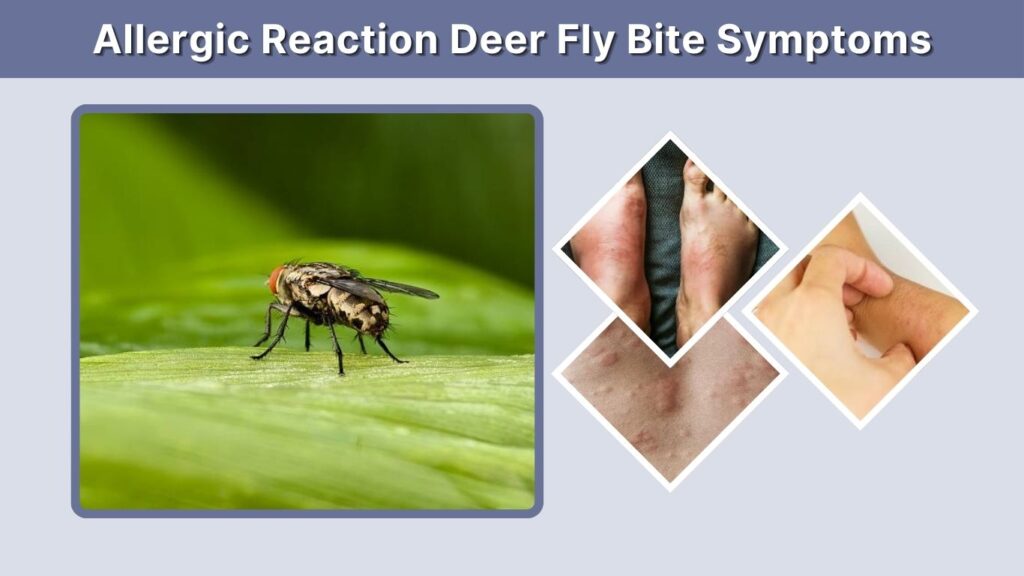
Symptoms can range from a localized skin reaction to anaphylaxis affecting the entire body. A reaction may begin soon after the bite or become more noticeable over the following hours.
Mild Local Reaction
A mild reaction usually remains limited to the area around the bite. Symptoms may include:
- Redness around the wound
- Mild or moderate swelling
- Itching or burning
- Tenderness
- A raised red bump or welt
- A small cut, scab, or bloody center
- Warmth around the bite
These symptoms are uncomfortable but are generally manageable with basic home care.
Large Local Allergic Reaction
A large local reaction causes swelling that extends well beyond the original bite. For example, a bite on the hand may cause much of the hand or lower arm to swell.
The area may become hot, firm, itchy, red, and painful. Large local reactions can look alarming, but they do not automatically mean the person is experiencing anaphylaxis. Medical advice is appropriate when swelling continues expanding, becomes severely painful, affects movement, or involves the face or eyes.
Severe Allergic Reaction Symptoms
Anaphylaxis is a severe, potentially life-threatening allergic reaction that can develop quickly. Warning signs include:
- Trouble breathing or shortness of breath
- Wheezing, coughing, or chest tightness
- Swelling of the lips, tongue, face, mouth, or throat
- Difficulty speaking or swallowing
- Widespread hives or intense itching
- Dizziness, confusion, or fainting
- Weak or rapid pulse
- Nausea, vomiting, diarrhea, or abdominal cramps
- Pale, bluish, or unusually flushed skin
- Sudden weakness or loss of consciousness
A person can have anaphylaxis without obvious hives or other skin symptoms. Breathing difficulty, throat swelling, fainting, or rapidly worsening symptoms should always be treated as an emergency.
Normal Bite vs. Allergic Reaction
| Type of reaction | Common symptoms | Recommended response |
| Normal local reaction | Pain, small red bump, mild itching and swelling | Clean and monitor at home |
| Large local reaction | Extensive swelling, redness, warmth and itching | Contact a healthcare professional if worsening |
| Systemic allergic reaction | Hives away from the bite, facial swelling, nausea or dizziness | Obtain urgent medical advice |
| Anaphylaxis | Breathing problems, throat swelling, fainting or weak pulse | Use prescribed epinephrine and call emergency services |
Symptoms can overlap. When you are uncertain whether a reaction is becoming serious, obtaining professional medical advice is safer than waiting for it to worsen.
Deer Fly Bite Allergic Reaction Treatment
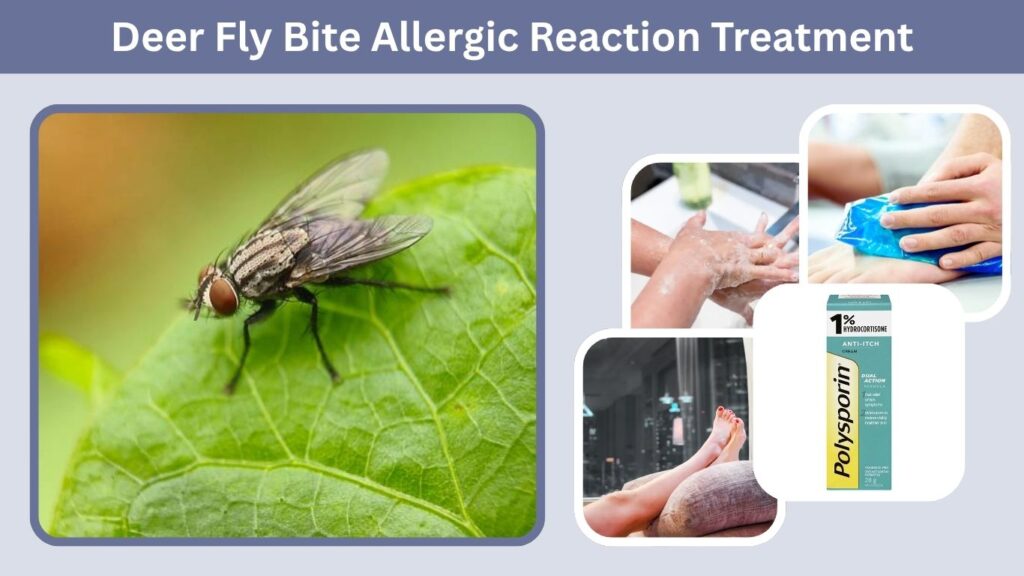
Treatment depends on whether symptoms are limited to the skin or involve other parts of the body.
Treating a Mild Reaction at Home
Move away from the area first because deer flies may attempt to bite repeatedly. Then:
- Wash the wound gently with soap and water.
- Apply a cold, damp cloth or wrapped ice pack for 10 to 20 minutes.
- Elevate the affected arm or leg when swelling is present.
- Avoid scratching, squeezing, or picking at the bite.
- Apply calamine lotion or low-strength hydrocortisone cream for itching.
- Consider an oral antihistamine after checking the label and confirming that it is safe for you.
Never apply ice directly to bare skin. Children, pregnant people, older adults, and anyone taking other medicines should ask a pharmacist or healthcare professional before using an antihistamine or medicated cream.
Treatment for a Severe Allergic Reaction
Call the local emergency number immediately when symptoms suggest anaphylaxis. Do not wait to see whether breathing difficulty, throat swelling, dizziness, or fainting improves.
When the person has a prescribed epinephrine auto-injector, use it immediately according to their emergency plan. Epinephrine is used with emergency medical treatment and does not replace evaluation at a hospital. Symptoms can continue or return after the injection.
While emergency assistance is on the way:
- Keep the person calm and remain with them.
- Loosen tight clothing.
- Do not give food, drinks, or oral medicine if swallowing or breathing is difficult.
- Help the person lie flat unless this worsens breathing or causes discomfort.
- Place an unconscious but breathing person on their side if vomiting is possible.
- Begin CPR if the person stops breathing and you are trained to do so.
Deer flies do not leave a stinger in the skin, so there is no stinger to scrape out.
When Should You See a Doctor?
Arrange medical care when:
- Swelling continues to enlarge.
- Pain, redness, or warmth becomes worse.
- The bite is close to the eye or inside the mouth.
- A blister, open sore, or unusual rash develops.
- Symptoms do not begin improving.
- You have previously experienced a serious insect-bite reaction.
- The wound develops pus or red streaks.
- Fever, chills, headache, fatigue, or swollen lymph nodes appear.
A healthcare professional can determine whether the problem is an allergic reaction, infection, or another condition.
Signs of an Infected Deer Fly Bite
Because a deer fly cuts the skin, the wound can become infected, especially when scratched. Increasing redness, warmth, swelling, pain, drainage, or red streaking may indicate a secondary infection.
An infection is different from an allergy. Antihistamines may reduce allergic itching but will not treat a bacterial infection. Antibiotics should only be used when prescribed by a qualified healthcare professional.
Allergic Reaction or Tularemia?
Tularemia is a bacterial illness that can occasionally be transmitted through an infected deer fly bite, particularly in parts of the United States. It is not an allergic reaction.
Possible tularemia symptoms include fever, chills, fatigue, headache, a skin ulcer at the bite site, and swollen lymph nodes near the affected area. Symptoms generally develop after the original bite rather than as an immediate allergic response. Tell your healthcare provider about the deer fly exposure when these symptoms occur.
Preventing Another Allergic Reaction
People who have experienced a serious reaction should discuss future protection with a healthcare professional or allergist. A provider may recommend carrying emergency epinephrine and wearing medical identification.
You can also reduce your exposure by wearing long sleeves, long pants, closed shoes, and a hat in areas with heavy deer fly activity. Apply an appropriate insect repellent according to its label and avoid heavily infested wetlands, wooded trails, and livestock areas when possible.
FAQs
Can You Be Allergic to Deer Fly Bites?
Yes. Some people develop an allergic reaction to salivary secretions released by the fly while it feeds. Reactions may range from extensive swelling near the bite to widespread hives or, rarely, life-threatening anaphylaxis.
How Long Does an Allergic Reaction to a Deer Fly Bite Last?
A mild local reaction may improve within several days. Larger areas of swelling can take longer to disappear. Seek medical advice if symptoms continue worsening, fail to improve, or are accompanied by fever, spreading redness, breathing difficulty, or facial swelling.
Can a Deer Fly Bite Cause Anaphylaxis?
A severe whole-body allergic reaction is possible after an insect bite. Symptoms such as difficulty breathing, throat or tongue swelling, fainting, weak pulse, or rapidly spreading hives require immediate emergency treatment.
Does an Antihistamine Treat a Deer Fly Bite Allergy?
An oral antihistamine may help relieve mild itching, hives, and swelling. It cannot replace epinephrine or emergency medical treatment during anaphylaxis. Ask a pharmacist or doctor which product is suitable, particularly for children or people taking other medicines.
When Should I Go to the Hospital After a Deer Fly Bite?
Seek emergency care for breathing difficulty, throat tightness, facial swelling, dizziness, fainting, widespread hives, or vomiting combined with other allergic symptoms. Medical evaluation is also needed for spreading redness, pus, fever, severe pain, or a skin ulcer with swollen lymph nodes.