
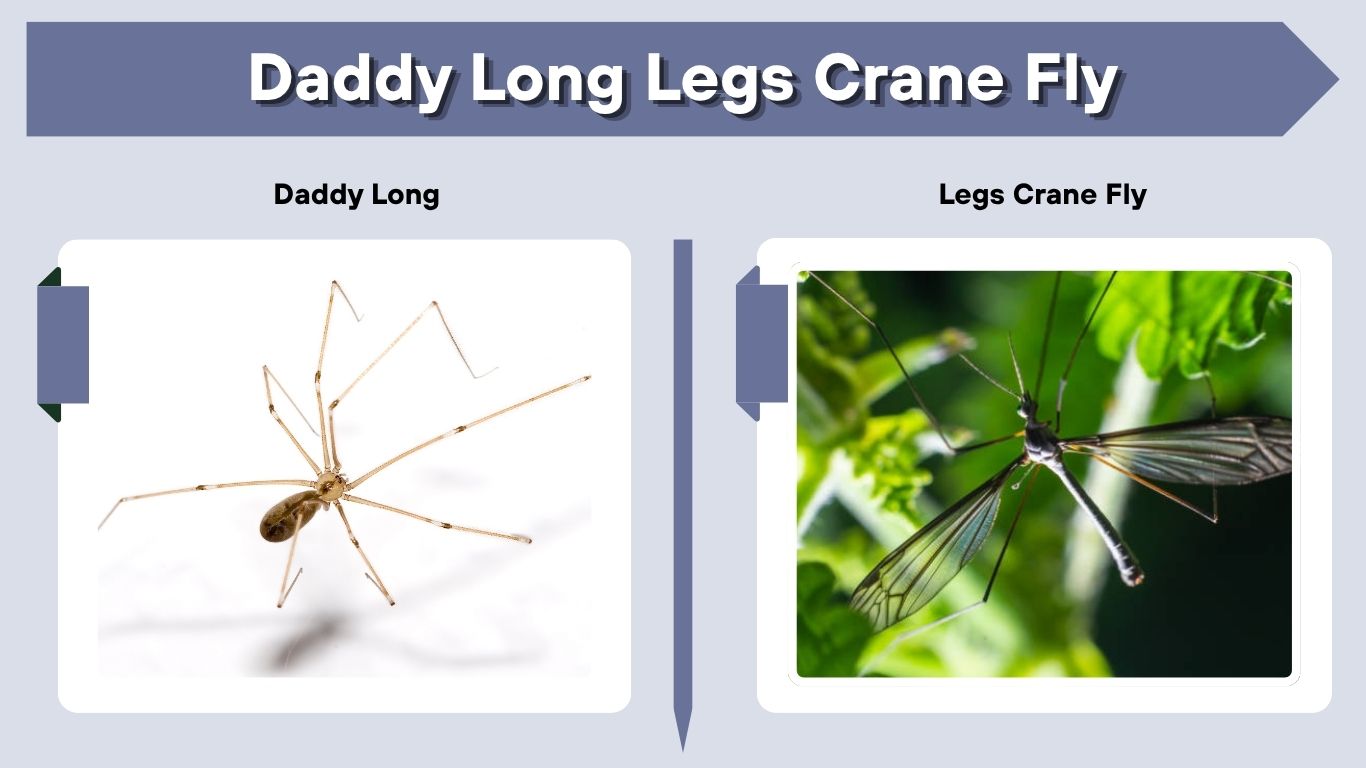
The name “daddy long legs” can be confusing because people use it for different creatures. In some places, especially the UK, a daddy long legs usually means a crane fly. In other places, the same name may refer to harvestmen or cellar spiders. A crane fly is a true fly with long, thin legs, narrow wings, and a mosquito-like body. This guide explains the difference between crane flies and daddy long legs, how to identify them, and why their legs are so fragile.
What Is a Daddy Long Legs Crane Fly?
A daddy long legs crane fly is a long-legged flying insect from the crane fly family. It looks like a giant mosquito, but it is not the same as a mosquito and does not feed on human blood. Adult crane flies are usually harmless and are often seen around lights, windows, lawns, damp soil, and garden areas.
Why Are Crane Flies Called Daddy Long Legs?
Crane flies are called daddy long legs because of their very long, thin legs. The name is informal and regional. In the UK, “daddy long legs” often means a crane fly. In North America, many people use “daddy long legs” for harvestmen, which are arachnids, or for cellar spiders, which are true spiders.
This is why the phrase can cause confusion. A crane fly, harvestman, and cellar spider can all be called daddy long legs, but they are not the same animal.
Crane Fly vs Daddy Long Legs: The Main Difference
The difference depends on what someone means by “daddy long legs.” If they mean a crane fly, then the two names can refer to the same insect. If they mean a harvestman or cellar spider, then a crane fly is completely different.
| Name People Use | What It Usually Means | Main Group | Wings? | Number of Legs |
| Crane fly | Long-legged flying insect | Insect | Yes | 6 |
| Daddy long legs in UK | Often a crane fly | Insect | Yes | 6 |
| Daddy long legs in US | Often harvestman | Arachnid | No | 8 |
| Cellar spider | Long-legged house spider | Spider | No | 8 |
Is a Crane Fly a Daddy Long Legs?
Yes, in some regions, a crane fly is called a daddy long legs. However, the name is not scientific. If someone says “daddy long legs,” they may be talking about a crane fly, harvestman, or cellar spider. The easiest way to tell is to check for wings. Crane flies have wings. Spiders and harvestmen do not.
Is a Daddy Long Legs a Spider or Crane Fly?
It can be either, depending on local usage. A crane fly is an insect. A cellar spider is a true spider. A harvestman is an arachnid but not a true spider. This is why “daddy long legs” is better treated as a nickname, not a precise identification.
How to Identify a Crane Fly
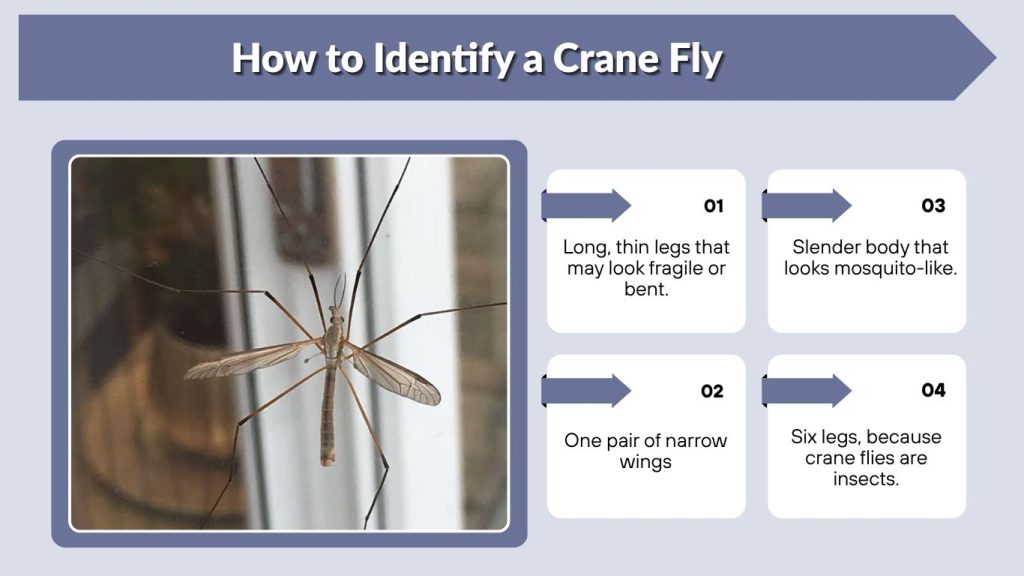
Crane flies are easy to recognize once you know what to look for. They have a delicate body, long legs, and a clumsy flying style. Many people mistake them for giant mosquitoes, but crane flies are usually harmless to people.
Identification Features
- Long, thin legs that may look fragile or bent
- One pair of narrow wings
- Slender body that looks mosquito-like
- Six legs, because crane flies are insects
- Often seen near porch lights, windows, grass, or damp areas
- Weak, wobbly flight compared with many other flies
- No spider-like body shape
- No web-building behavior
Crane Fly With Black and White Legs
Some crane flies may appear to have black, white, striped, or banded legs. This depends on the species, lighting, and angle of view. Leg patterns can help with close identification, but most homeowners only need to know whether the insect is a crane fly, mosquito, or spider.
Crane Fly With Short Legs
A crane fly with short legs may simply have lost some leg sections. Their legs break off easily. Some species also look shorter-legged than others. If the insect has one pair of wings and a slender fly-like body, it is still likely a crane fly.
How Many Legs Does a Crane Fly Have?
A crane fly has six legs. This is because it is an insect, and all adult insects have six legs. However, many crane flies are seen with fewer than six legs because their legs are delicate and can fall off when grabbed, trapped, or attacked by predators.
Why Do Crane Fly Legs Fall Off?
Crane fly legs are thin and fragile. They can break off when a bird, spider, person, or other predator catches them. Losing a leg may help the crane fly escape. This is one reason people often see crane flies with four or five legs instead of six.
Can Crane Flies Survive Without Legs?
Yes, a crane fly can sometimes survive after losing one or more legs. Adult crane flies usually live for a short time, so losing a leg does not always stop them from flying, mating, or moving around. However, losing too many legs can make it harder for them to land, cling to surfaces, or escape danger.
Do Crane Flies Grow Their Legs Back?
Adult crane flies do not grow their legs back. Once a crane fly becomes an adult, it no longer molts into another adult stage. Because regrowth usually requires another molt, an adult crane fly cannot replace a lost leg.
Do Daddy Long Legs Turn Into Crane Flies?
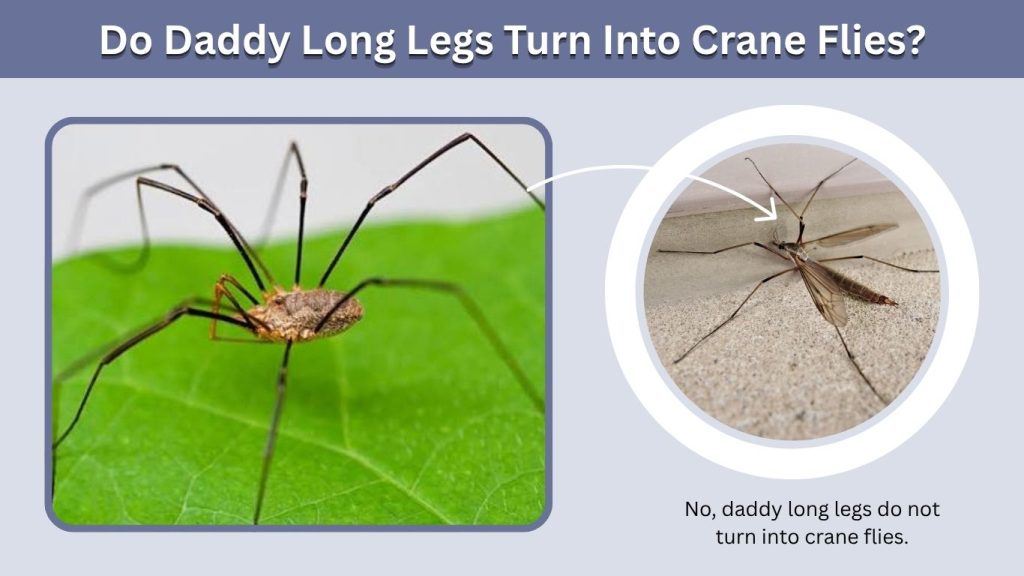
No, daddy long legs do not turn into crane flies if you are talking about harvestmen or cellar spiders. Harvestmen and cellar spiders are arachnids, while crane flies are insects. They belong to different animal groups and have different life cycles.
A crane fly starts as an egg, then becomes a larva, then a pupa, and finally an adult fly. A spider or harvestman does not go through the same fly-like life cycle and will never turn into a crane fly.
Crane Fly vs Cellar Spider vs Harvestman
Because all three may be called daddy long legs, it helps to compare them clearly. They look similar only because they have long legs. Their bodies, behavior, and biology are very different.
Crane Fly
A crane fly has wings, six legs, and a fly-like body. It may rest on walls, windows, grass, or outdoor lights. It does not build webs and is not a spider.
Cellar Spider
A cellar spider has eight legs, a small body, and often lives in corners, basements, garages, and ceilings. It builds messy webs and may shake rapidly when disturbed.
Harvestman
A harvestman has eight legs and a rounded body that looks like one fused section. It does not spin webs like spiders and does not have wings. It is often found outdoors in gardens, leaf litter, and damp places.
Are Crane Flies Dangerous?
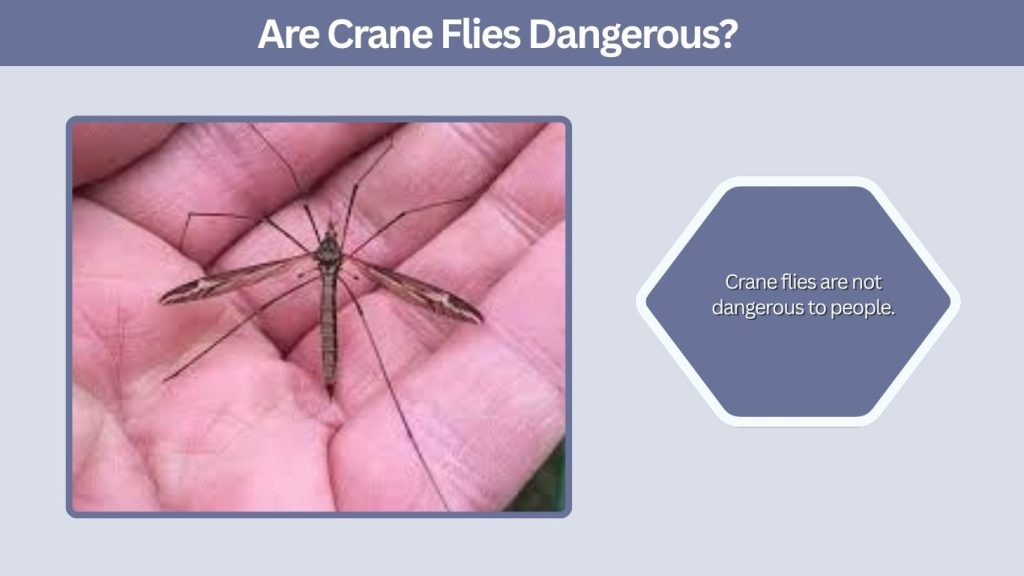
Crane flies are not dangerous to people. They do not attack humans, and they are not venomous like spiders. Many adult crane flies do not feed much at all. Some may drink nectar or liquids, but they are not blood-feeding insects.
Do Daddy Long Legs Crane Flies Bite?
Crane flies do not bite people like mosquitoes. Their mosquito-like appearance causes confusion, but they are not built to pierce skin and suck blood. If one lands on you, it is usually harmless and can be brushed away gently.
Are Crane Flies Poisonous or Venomous?
Crane flies are not poisonous or venomous to humans. The common myth that daddy long legs are highly venomous is usually linked to spiders or harvestmen, not crane flies. Even then, the myth is widely misunderstood. Crane flies should not be treated as a venom threat.
What Do Crane Flies Eat?
Adult crane flies may feed on nectar, moisture, or very little food, depending on the species. The larvae are more important because they live in soil, decaying plant matter, wet areas, or lawns. Some crane fly larvae feed on roots and organic material.
Why Are Crane Flies in My Yard?
Crane flies are often found in damp lawns, gardens, and areas with moist soil. The larvae can live underground or in wet organic matter. Adult crane flies may appear around lights when they emerge, especially during mild, damp seasons.
Do Crane Flies Have a Purpose?
Yes. Crane flies are part of the food chain. Birds, bats, spiders, frogs, fish, and other animals may eat them. Their larvae also help break down organic material, although some species can damage lawns when larvae feed heavily on roots.
How to Get Rid of Daddy Long Legs Crane Flies
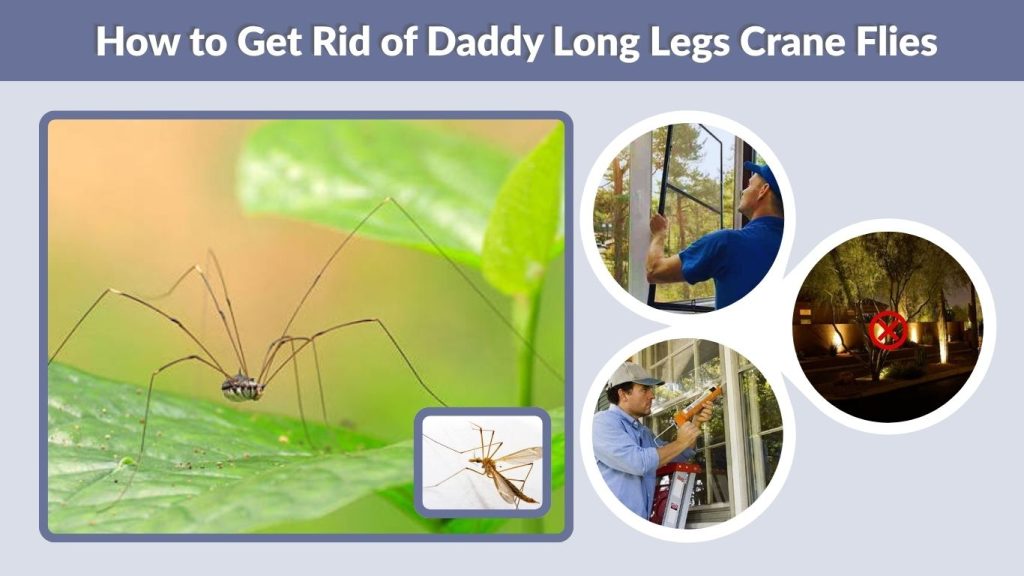
Most adult crane flies do not need control. They are short-lived and harmless indoors. If they enter your home, they usually come in through doors, windows, or gaps while attracted to light.
Indoor Control Tips
- Turn off unnecessary outdoor lights at night
- Use screens on windows and doors
- Seal gaps around doors and windows
- Gently remove adults with a cup or vacuum
- Reduce indoor moisture where possible
Lawn Control Tips
If crane fly larvae are damaging your lawn, focus on lawn health first. Avoid overwatering, improve drainage, and remove excess thatch if needed. If damage is severe, identify the larvae before using any treatment. Not every crane fly species is a lawn pest, and many are harmless.
FAQs
Are crane flies and daddy long legs the same?
Sometimes. In the UK, daddy long legs often means a crane fly. In other places, daddy long legs may mean a harvestman or cellar spider. A crane fly is an insect with wings and six legs, while harvestmen and cellar spiders have eight legs and no wings.
How many legs do crane flies have?
Crane flies have six legs because they are insects. However, they often appear to have fewer legs because their long, thin legs break off easily. A crane fly with four or five legs may simply have lost some.
Can crane flies regrow their legs?
Adult crane flies cannot regrow lost legs. Once they reach the adult stage, they do not molt again. Since leg regrowth usually requires another molt, a lost adult crane fly leg is permanent.
Do daddy long legs crane flies bite?
No, crane flies do not bite people. They may look like large mosquitoes, but they do not suck blood or attack humans. If one flies indoors, it is usually harmless and only trying to escape or find light.
Why do crane flies have such long legs?
Crane flies have long legs as part of their natural body shape. The legs help them rest on vegetation and surfaces, but they are also fragile. If grabbed by a predator, a leg may break off, giving the crane fly a chance to escape.