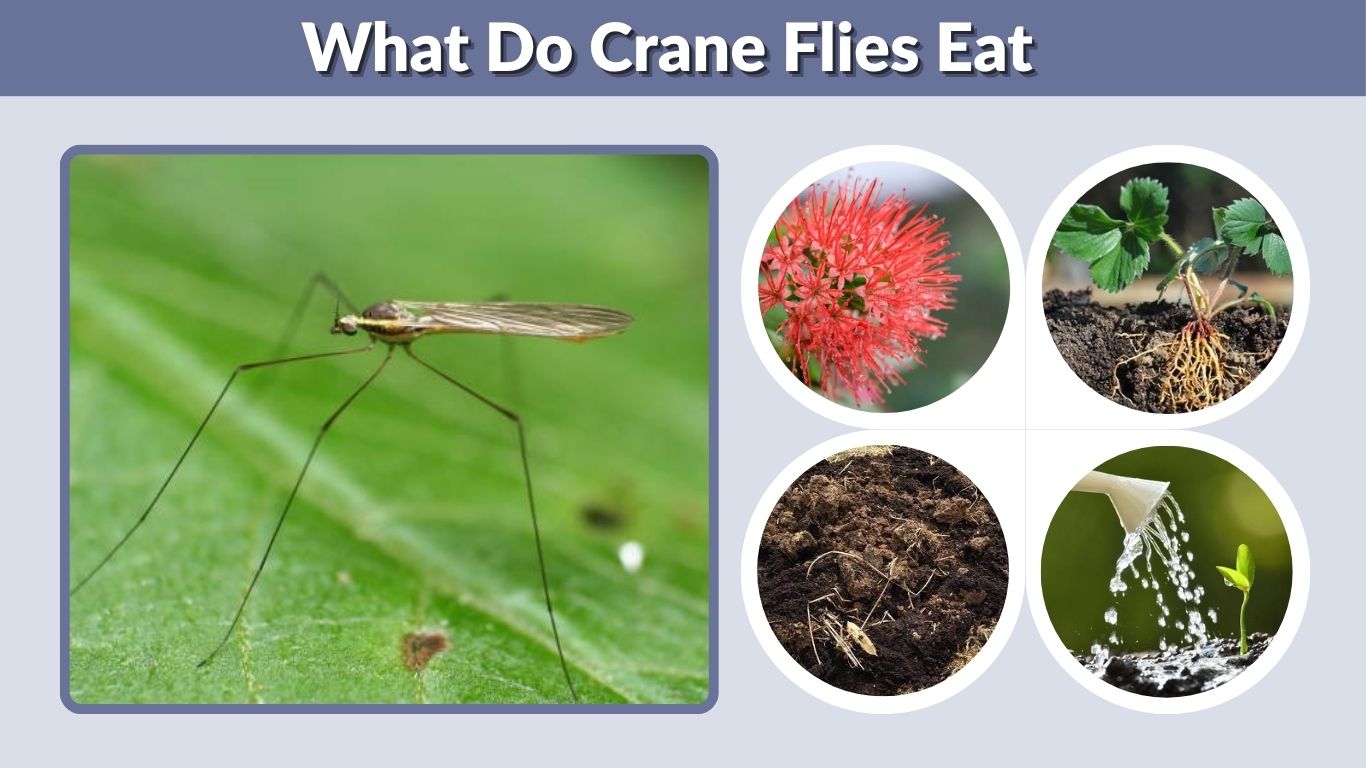
Crane flies look like giant mosquitoes, but their diet is very different. Most adult crane flies eat very little, and many do not feed much at all during their short adult life. Their larvae are the main feeding stage. Crane fly larvae live in soil, mud, leaf litter, rotting vegetation, or water, where they eat organic material, plant roots, fungi, and sometimes small aquatic organisms. Understanding what crane flies eat helps explain whether they are harmless visitors or possible lawn pests.
What Do Crane Flies Eat?
Crane flies eat different foods depending on whether they are adults or larvae. Adult crane flies usually feed very little. Some drink nectar or moisture, while others may not eat at all. Crane fly larvae, often called leatherjackets, are much more active feeders.
In simple terms, adult crane flies may drink nectar or water, but crane fly larvae eat decaying plant matter, roots, fungi, algae, and organic material. Some aquatic larvae may also feed on small organisms in water.
| Crane Fly Stage | Main Food | Where They Feed |
| Adult crane fly | Nectar, water, or little/no food | Flowers, damp areas, outdoor lights |
| Larva/leatherjacket | Roots, decaying plants, fungi, organic matter | Soil, lawns, mud, leaf litter |
| Aquatic larva | Algae, leaf debris, organic matter, small organisms | Streams, ponds, wetlands |
| Phantom crane fly | Nectar or little adult feeding; larvae feed in water | Damp woodland, wetlands, shaded water |
What Do Adult Crane Flies Eat?
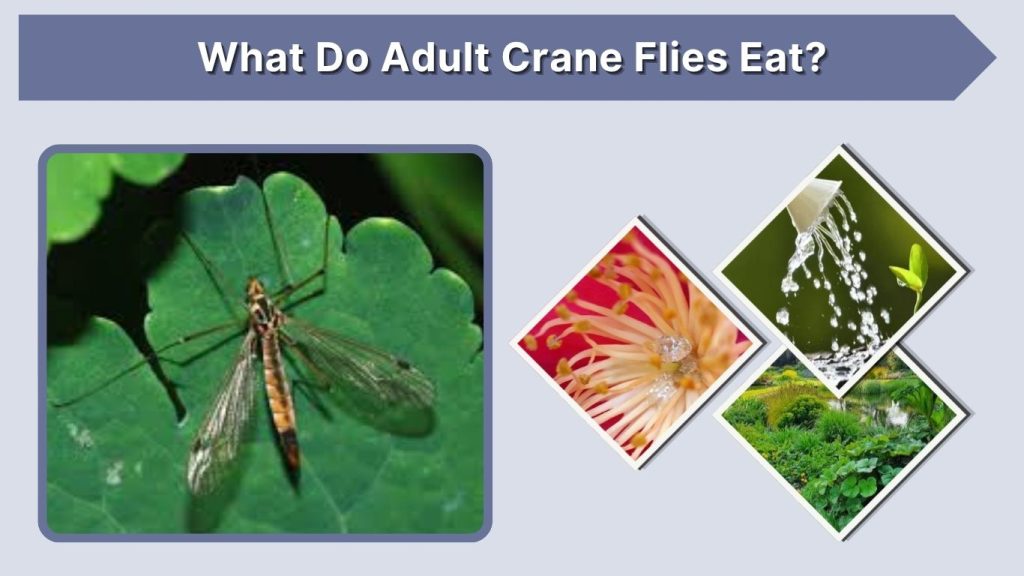
Adult crane flies are not strong feeders. Their adult stage is mainly for mating and laying eggs. This is why adult crane flies often live only a short time.
Some adult crane flies may feed on:
- Flower nectar
- Water droplets
- Moisture from plants
- Plant fluids in small amounts
Many adult crane flies have weak or reduced mouthparts. They do not have the mouthparts needed to bite people or suck blood. This means they are not dangerous like biting mosquitoes.
Do Adult Crane Flies Eat Mosquitoes?
Adult crane flies do not eat mosquitoes. This is a common myth. Because crane flies look like large mosquitoes, many people think they are mosquito predators. In reality, adult crane flies usually eat nectar, moisture, or nothing at all.
Some crane fly larvae may eat small aquatic organisms, but adult crane flies are not mosquito hunters.
Do Adult Crane Flies Eat Plants?
Adult crane flies do not usually damage plants. They may visit flowers for nectar, but they do not chew leaves like caterpillars or beetles. If you see adult crane flies around your garden, they are usually harmless.
The larvae are more important when talking about plant damage because some species feed on grass roots.
What Do Crane Fly Larvae Eat?
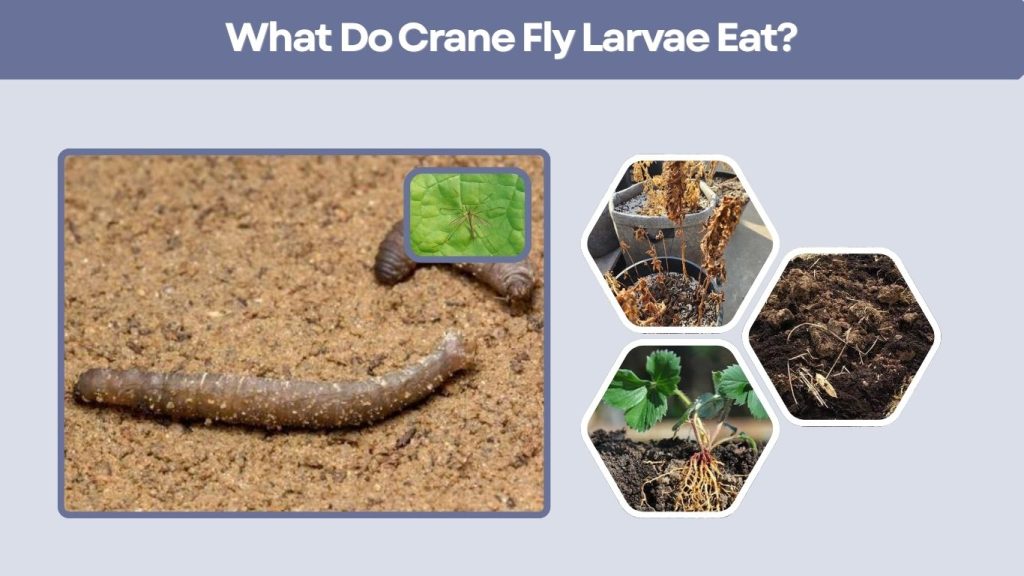
Crane fly larvae eat much more than adults. They are the main feeding stage in the crane fly life cycle. These larvae are often called leatherjackets, especially when they live in lawns and soil.
Crane fly larvae may eat:
- Decaying leaves
- Dead grass
- Plant roots
- Fungi
- Algae
- Soil organic matter
- Rotting vegetation
- Small aquatic organisms in some species
Larvae are important decomposers in many habitats. They help break down dead plant material and return nutrients to the soil. However, some larvae can become lawn pests when they feed heavily on grass roots.
What Do Juvenile Crane Flies Eat?
Juvenile crane flies are the larvae. They do not look like adult crane flies. Instead, they look like thick, soft, legless grubs or maggots. Juvenile crane flies eat organic material, decaying plants, roots, and fungi.
In wet habitats, juvenile crane flies may feed on algae, soft plant debris, and tiny organisms in the water.
What Do Crane Fly Grubs Eat?
Crane fly grubs are another name for crane fly larvae. They are commonly found in lawns, garden soil, compost-rich areas, and damp fields.
Crane fly grubs eat:
- Grass roots
- Dead plant material
- Soft stems
- Organic debris
- Fungi in soil
- Decomposing leaves
When only a few grubs are present, they usually do not cause serious damage. But when there are many larvae in one lawn, they may weaken grass by feeding on the roots. This can create yellow or brown patches.
What Do Crane Flies Eat in the UK?
In the UK, crane flies are often called daddy long legs. The adult insects are usually seen in late summer and autumn, often flying into homes or gathering around lights.
Adult crane flies in the UK usually eat little or nothing. Some may drink nectar or moisture. Their larvae, known as leatherjackets, live in soil and feed on grass roots, decaying vegetation, and organic matter.
This is why UK gardeners often hear about crane flies as lawn pests. The adults are harmless, but the larvae can damage grass if their numbers are high.
What Do Daddy Long Legs Crane Flies Eat?
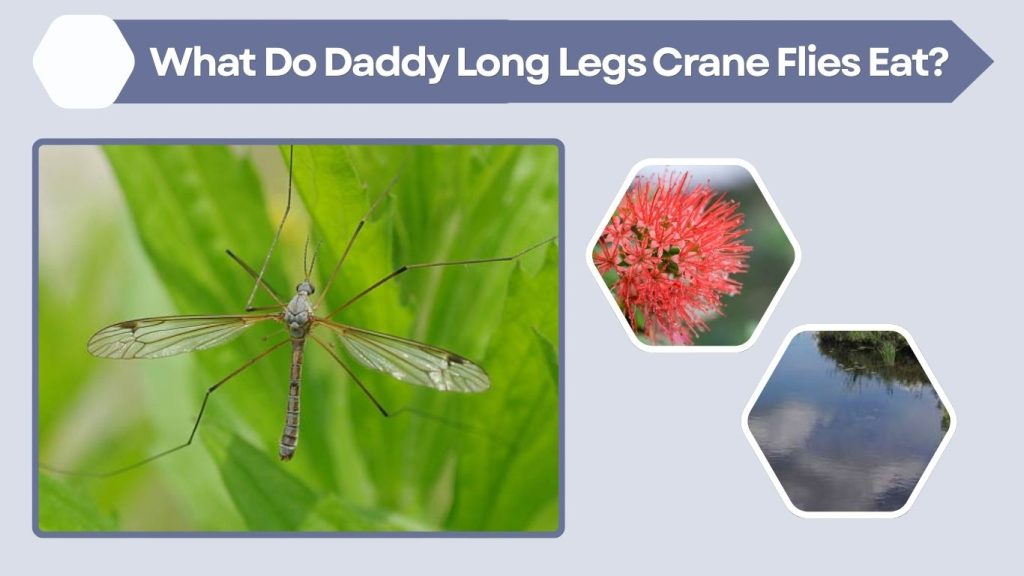
The name “daddy long legs” can be confusing because it is used for different animals in different places. In the UK, daddy long legs often means crane flies. In other places, it may mean harvestmen or cellar spiders.
Daddy long legs crane flies eat very little as adults. They may drink nectar or water, but many adults do not feed much. Their larvae eat plant roots, decaying vegetation, fungi, and organic matter in damp soil.
What Do Giant Crane Flies Eat?
Giant crane flies have the same general feeding pattern as other crane flies. The adults are usually harmless and may feed on nectar or moisture. Many do not feed much as adults.
Giant crane fly larvae may live in damp soil, rotting wood, leaf litter, mud, or near water. They often eat decaying plant material and other organic matter. Some species may also feed on roots or fungi.
Size does not mean they are dangerous. Even large crane flies do not bite humans.
What Do Phantom Crane Flies Eat?
Phantom crane flies are delicate, long-legged flies often found in shaded, damp habitats. Their larvae are usually associated with wet places, such as muddy edges, shallow water, or decaying organic matter near water.
Adult phantom crane flies may drink nectar or moisture, but they are not strong feeders. Their larvae may eat:
- Algae
- Decaying leaves
- Soft organic debris
- Microorganisms in wet habitats
- Fine plant material
Phantom crane flies are not dangerous and do not bite people.
Do Crane Flies Eat Organic Materials?
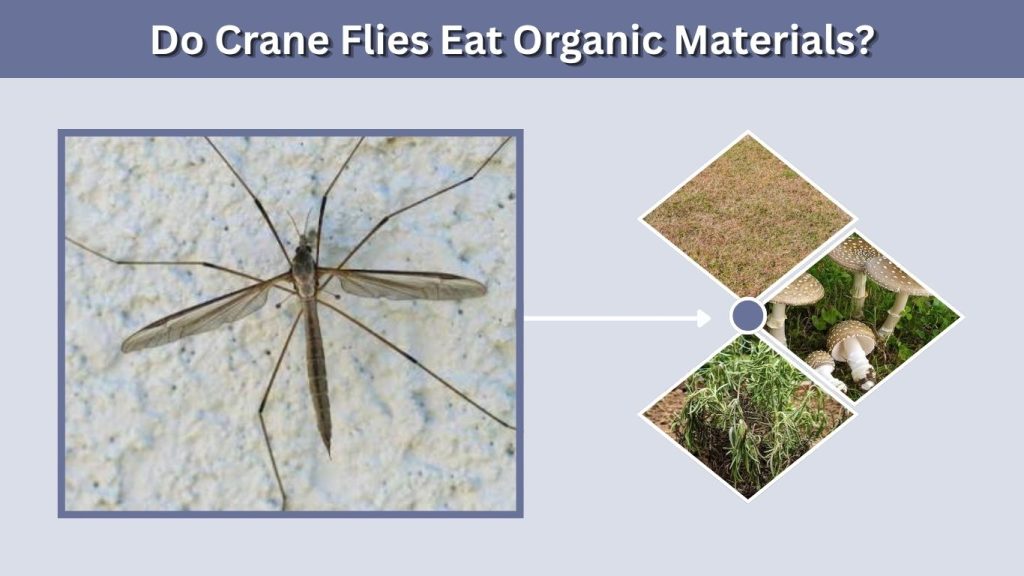
Yes, crane fly larvae often eat organic materials. This is one of their most important roles in nature. Organic materials include dead leaves, rotting plants, dead grass, fungi, and decomposing plant matter.
By feeding on these materials, larvae help recycle nutrients. This makes them useful in forests, wetlands, gardens, and stream edges. In lawns, however, root-feeding larvae can become a problem if they are too abundant.
Organic Foods Crane Fly Larvae May Eat
- Dead leaves
- Rotting grass
- Compost-like soil material
- Fungi
- Decaying roots
- Wet plant debris
- Algae in aquatic habitats
Crane Fly Diet by Habitat
Crane flies live in many damp habitats, and their food changes based on where the larvae develop.
| Habitat | What Larvae Eat |
| Lawns | Grass roots, dead grass, soil organic matter |
| Wet soil | Roots, fungi, rotting vegetation |
| Leaf litter | Dead leaves, fungi, plant debris |
| Streams | Algae, leaf fragments, aquatic organic matter |
| Wetlands | Decaying plants, soft vegetation, microbes |
| Rotting wood | Fungi and decomposing plant material |
Do Crane Flies Eat Blood?
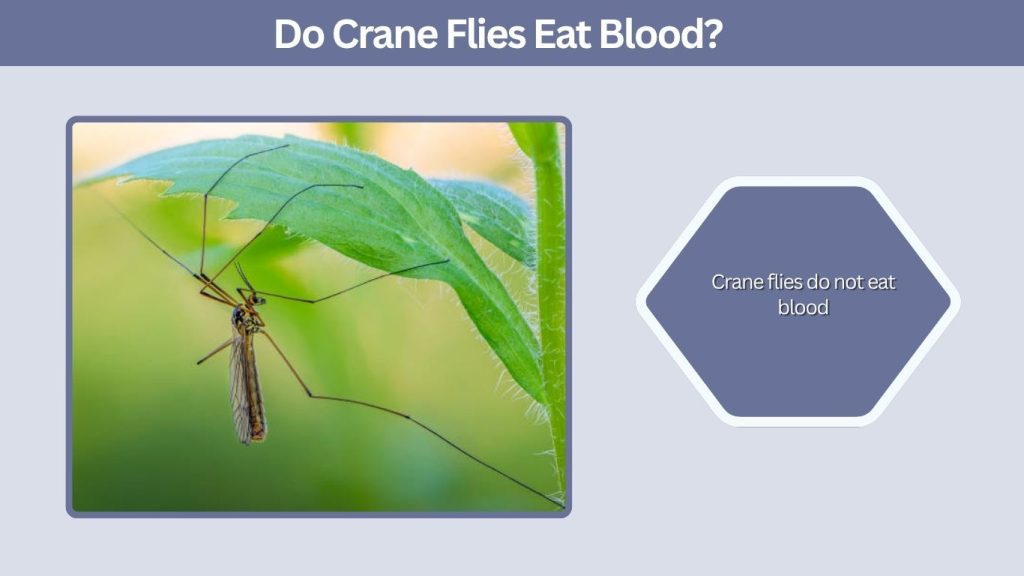
Crane flies do not eat blood. They are often mistaken for mosquitoes, but they cannot bite people or animals. Their mouthparts are not designed for piercing skin.
This is one of the biggest differences between crane flies and mosquitoes. Female mosquitoes of some species drink blood, but crane flies do not.
Do Crane Flies Eat Clothes, Wood, or Food in Homes?
Crane flies do not eat clothes, furniture, stored food, or wood inside homes. If one enters your house, it is usually attracted to light or came in by accident.
Adult crane flies inside a house are harmless. They are not pantry pests, fabric pests, or wood-boring insects. You can simply catch and release them outside.
Are Crane Flies Helpful or Harmful?
Crane flies can be both helpful and harmful depending on the situation. Most crane flies are harmless and beneficial because their larvae help break down dead plant material. They also become food for birds, fish, frogs, beetles, spiders, and other animals.
They become harmful mainly when soil-living larvae feed heavily on lawn roots. In that case, grass may become weak, patchy, or easy to pull up.
| Situation | Helpful or Harmful? | Why |
| Adult crane fly indoors | Harmless | Does not bite or damage things |
| Larvae in forest leaf litter | Helpful | Breaks down dead plants |
| Larvae in streams | Helpful | Part of aquatic food webs |
| Many larvae in lawns | Potentially harmful | May eat grass roots |
| Crane flies in gardens | Usually harmless | Adults do not damage plants |
FAQs
What do crane flies eat?
Adult crane flies usually eat nectar, water, or very little food. Some may not feed at all. Crane fly larvae eat more actively and feed on decaying plants, grass roots, fungi, algae, and organic matter in soil or water.
What do crane fly larvae eat?
Crane fly larvae eat decaying vegetation, roots, fungi, algae, dead leaves, and organic material. Some aquatic larvae may also feed on tiny organisms in water. Soil-living larvae can sometimes damage lawns by feeding on grass roots.
Do crane flies eat mosquitoes?
Adult crane flies do not eat mosquitoes. This is a common myth. Some aquatic larvae may eat small organisms, but crane flies are not major mosquito predators. Adult crane flies mostly drink nectar, moisture, or do not feed much.
What do crane flies eat in the UK?
In the UK, adult crane flies, often called daddy long legs, usually eat little or nothing. Some drink nectar or moisture. Their larvae, known as leatherjackets, feed on grass roots, decaying vegetation, fungi, and organic matter in soil.
Do crane flies eat plants?
Adult crane flies do not usually eat or damage plants. Some may drink nectar from flowers. Crane fly larvae may feed on plant roots, especially grass roots, but many larvae mainly eat dead plant material and organic matter.