
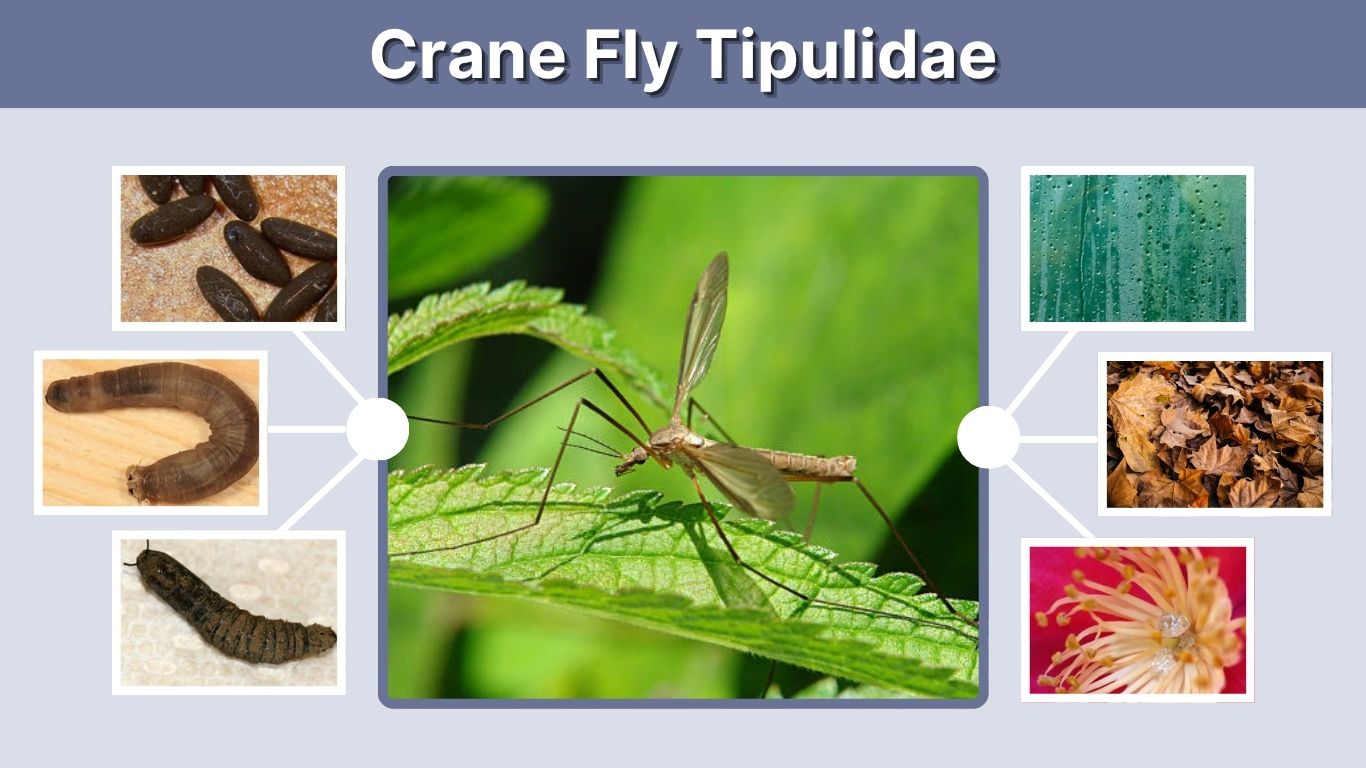
Crane flies in the family Tipulidae are often mistaken for giant mosquitoes because of their long legs, narrow bodies, and weak flying style. However, these delicate flies are not mosquitoes, and they do not bite people. Most adult crane flies live briefly, mainly to mate and lay eggs. Their larvae, often called leatherjackets, are more important in nature because they live in soil, mud, wet leaves, streams, and other damp places where they feed, grow, and recycle organic matter.
What Is a Crane Fly in the Family Tipulidae?
Crane flies are true flies in the order Diptera, and Tipulidae is one of the best-known crane fly families. They are usually seen around lawns, gardens, wetlands, porch lights, and damp vegetation.
Adult crane flies have one pair of wings, long thin legs, and a slender body. Like other true flies, they also have halteres, which are small balancing organs behind the wings. Tipulidae crane flies are commonly recognized by their fragile legs, long body shape, and a V-shaped groove on the top of the thorax.
Quick Identification
- Long, mosquito-like body
- Very long, delicate legs
- One pair of clear or patterned wings
- Weak, drifting flight
- No biting mouthparts
- Often found near damp soil, lawns, streams, or vegetation
- Larvae may live in soil, leaf litter, mud, or water
Are Crane Flies Mosquitoes?
Crane flies are not mosquitoes. They may look like oversized mosquitoes, but they do not suck blood and do not spread mosquito-borne diseases. Adult crane flies are harmless to humans. Some adults may drink nectar, while many do not feed at all during their short adult stage.
Crane Fly Tipulidae Identification Table
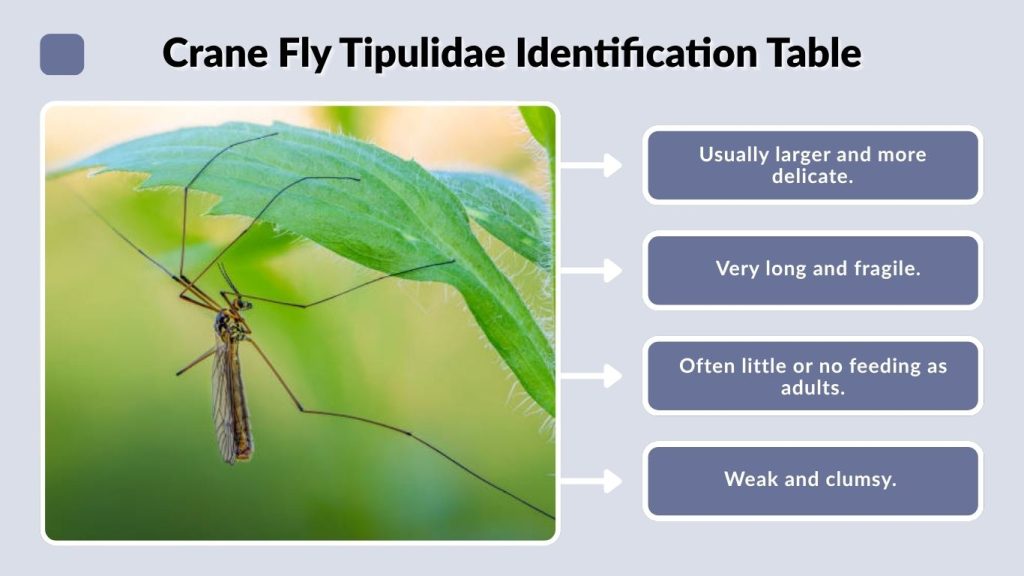
This table gives a simple way to separate crane flies from mosquitoes and other small flying insects.
| Feature | Crane Fly Tipulidae | Mosquito |
| Body size | Usually larger and more delicate | Usually smaller |
| Legs | Very long and fragile | Long but less fragile |
| Bite humans? | No | Some females do |
| Feeding | Often little or no feeding as adults | Nectar; females of many species take blood |
| Flight | Weak and clumsy | More controlled |
| Larvae habitat | Soil, water, mud, leaf litter | Mostly aquatic or semi-aquatic |
What Do Tipulidae Crane Flies Eat?
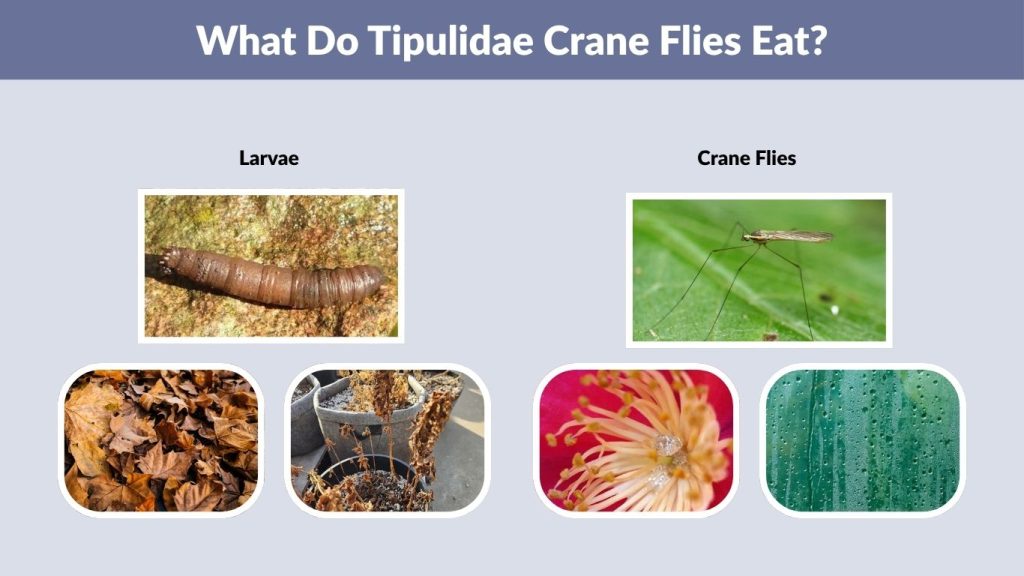
Crane fly feeding depends strongly on the life stage. Adults and larvae do not always eat the same things.
Adult crane flies often eat very little. Many adult crane flies focus mainly on reproduction. Some species drink nectar or water, but they are not aggressive feeders. Their adult life is usually short, so mating and egg-laying are more important than feeding.
Crane fly larvae are more active feeders. Depending on the species and habitat, they may eat decaying vegetation, leaf debris, roots, fungi, microbes, or small aquatic organisms. Aquatic larvae often feed on decaying plant matter and leaf debris, while some species may eat other insects, including mosquito larvae.
Adult Crane Fly Diet
Adult Tipulidae crane flies may feed on:
- Nectar from flowers
- Water or moisture
- Little or nothing at all
Most adults are not pests. They do not chew furniture, bite people, or attack pets. Their main role is reproduction.
Crane Fly Larvae Diet
Larvae may feed on:
- Decaying leaves
- Dead plant material
- Organic matter in soil
- Plant roots in some species
- Fungi and microbes
- Small aquatic organisms in some habitats
Some soil-living larvae can damage lawns when they feed heavily on grass roots. However, many crane fly larvae are beneficial decomposers because they help break down dead plant material.
Mouth Type of Crane Flies Tipulidae
The mouth type of adult crane flies is very different from mosquitoes. Crane flies do not have piercing mouthparts for biting humans or animals. Many adult crane flies have reduced mouthparts and may not feed much at all. When they do feed, they usually take liquid food such as nectar or water. WebMD notes that many crane flies have no functional mouthparts, and those that do usually drink nectar.
This is why the “giant mosquito” idea is misleading. A crane fly may look alarming when it flies near lights or windows, but it cannot bite like a mosquito.
Crane Fly Larvae: What Do They Look Like?
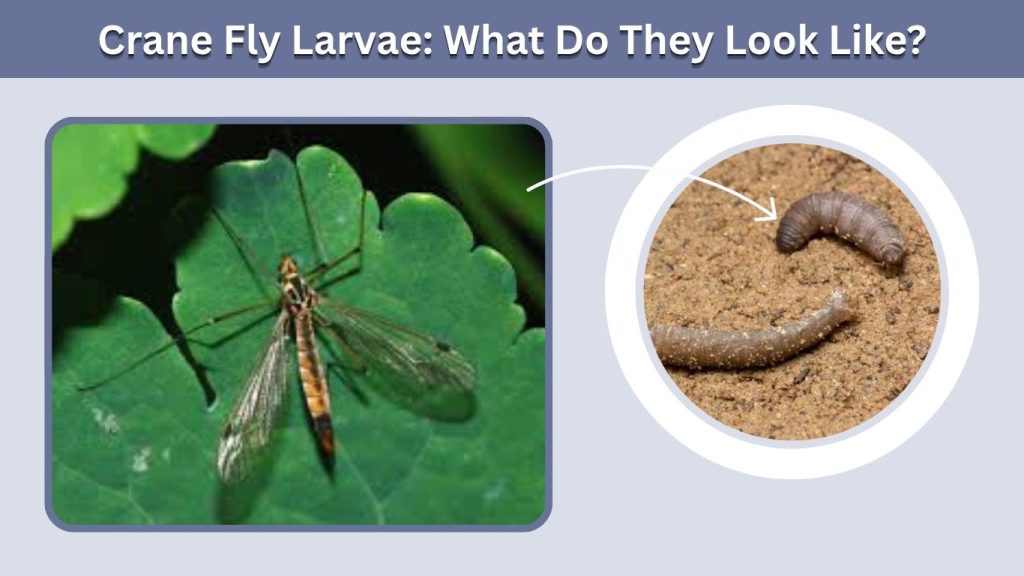
Crane fly larvae are soft-bodied, wormlike insects. They are often gray, brown, greenish, or dull-colored. Many terrestrial larvae are known as leatherjackets because of their tough outer skin.
They do not look like adult crane flies. Instead, they look more like thick maggots or grubs. They may be found under wet grass, in damp soil, under rotting leaves, in muddy stream edges, or in aquatic habitats.
Larvae Identification
- Soft, wormlike body
- No obvious long legs
- Gray, brown, or greenish color
- Often found in damp soil or wet organic matter
- Some have a tough, leathery appearance
- Aquatic larvae may move through water or wet debris
Swimming Tipulidae Crane Fly Larvae
Some Tipulidae crane fly larvae live in aquatic or semi-aquatic habitats. These larvae may be found in streams, ponds, marshes, wet ditches, or saturated leaf litter. They may move through water, mud, or soft debris while feeding on decaying plant material.
Aquatic crane fly larvae are part of freshwater food webs. Fish, amphibians, birds, and other animals may eat them. Some species also help break down leaves that fall into streams and wetlands.
Not all crane fly larvae swim, though. Many species live in soil or wet ground instead. The exact habitat depends on the species.
Crane Fly Life Cycle
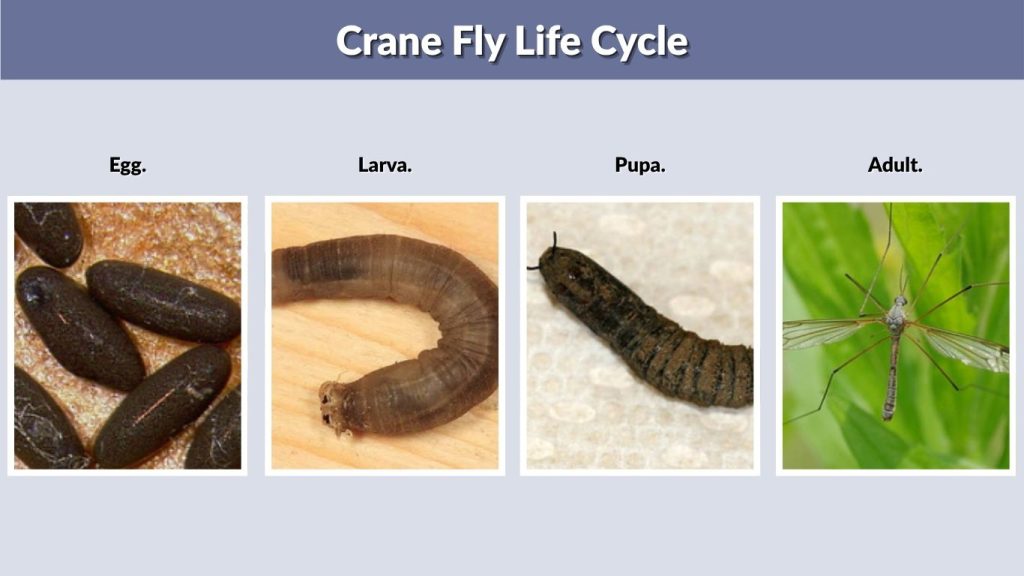
Crane flies have a complete life cycle with four stages: egg, larva, pupa, and adult. The larval stage is usually the longest and most important feeding stage.
| Life Stage | What Happens |
| Egg | Female lays eggs in damp soil, mud, moss, or wet plant material |
| Larva | Larvae feed and grow in soil, water, or organic matter |
| Pupa | Larva changes into an adult form |
| Adult | Adult emerges, mates, and lays eggs |
Egg Stage
Female crane flies usually lay eggs in moist places. Damp soil, wet grass, mud, and rotting vegetation are common egg-laying sites. Moisture is important because young larvae can dry out easily.
Larval Stage
The larval stage may last weeks or months, depending on the species and climate. This is the stage when crane flies do most of their feeding. Larvae may help decompose organic matter, but some root-feeding species can become lawn pests.
Adult Stage
Adult crane flies are usually short-lived. Their long legs may break off easily, and their weak flight makes them vulnerable to predators. Adults often appear in spring, summer, or fall, depending on the local species.
Are Crane Flies Dangerous?
Crane flies are not dangerous to people. They do not bite, sting, or suck blood. They are also not poisonous to pets. If a crane fly enters a house, it is usually just attracted to light or accidentally trapped indoors.
The larvae can sometimes be a problem in lawns, especially when large numbers feed on grass roots. In most natural habitats, however, larvae are useful decomposers and prey for wildlife.
Where Do Tipulidae Crane Flies Live?
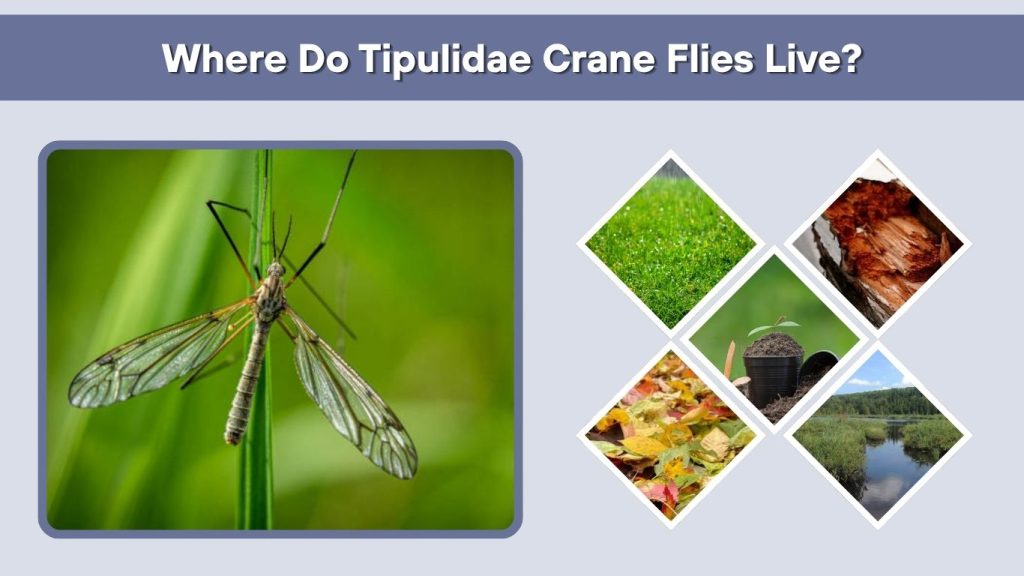
Crane flies are strongly connected to moisture. They are commonly found in damp environments such as wetlands, gardens, lawns, forests, stream banks, and areas with thick vegetation.
Larvae may live in many habitats, including moist soil, leaf litter, decaying wood, marshes, streams, fungi, and wet vegetation.
Common Habitats
- Wet lawns
- Garden soil
- Marshes and wetlands
- Stream edges
- Leaf litter
- Damp forests
- Rotting wood
- Pond margins
- Moist fields
Why Are Crane Flies Attracted to Lights?
Adult crane flies often appear around porch lights, windows, and outdoor lamps at night. Like many flying insects, they may become confused by artificial light. This is one reason people often notice them indoors or near doors.
A crane fly inside the house is not a sign of danger. It usually entered by accident. You can remove it gently with a cup and paper or simply open a window and let it escape.
Crane Fly Benefits in Nature
Although some lawn-feeding larvae can be pests, crane flies are also beneficial insects in many ecosystems. Their larvae help break down dead leaves and plant material. This process returns nutrients to soil and water habitats.
Crane flies are also food for many animals. Birds, fish, frogs, spiders, beetles, and other predators may eat the larvae or adults. This makes them an important part of both land and freshwater food chains.
Crane Fly vs Mosquito: Key Differences
Crane flies and mosquitoes are both true flies, but their behavior is very different. The biggest difference is that crane flies do not bite.
| Question | Crane Fly | Mosquito |
| Does it bite? | No | Some females bite |
| Does it drink blood? | No | Some species do |
| Is it harmful indoors? | No | Some may be disease vectors |
| What does it look like? | Large, long-legged, fragile | Smaller and more compact |
| What is the adult role? | Mostly mating and egg-laying | Feeding, mating, and egg-laying |
FAQs
Are Tipulidae crane flies harmful?
Tipulidae crane flies are not harmful to people. Adults do not bite, sting, or drink blood. Some larvae may damage lawns if they feed heavily on grass roots, but many species are beneficial because they recycle decaying plant material.
Do crane flies eat mosquitoes?
Adult crane flies do not usually eat mosquitoes. However, some aquatic crane fly larvae may eat small insects, including mosquito larvae, depending on the species and habitat. Most larvae feed on decaying vegetation, roots, fungi, or organic matter.
Why do crane flies look like giant mosquitoes?
Crane flies look like giant mosquitoes because they have long legs, narrow bodies, and wings. However, they are different insects. Crane flies do not have biting mouthparts and cannot suck blood from humans or animals.
What are crane fly larvae called?
Crane fly larvae are often called leatherjackets, especially the soil-living types found in lawns and damp ground. They look like soft, thick maggots and may be gray, brown, or greenish depending on the species and habitat.
Should I remove crane flies from my yard?
You usually do not need to remove crane flies unless larvae are damaging your lawn. A few crane flies are normal and often beneficial. If grass has brown patches and many larvae are present, lawn care or targeted pest management may be needed.