
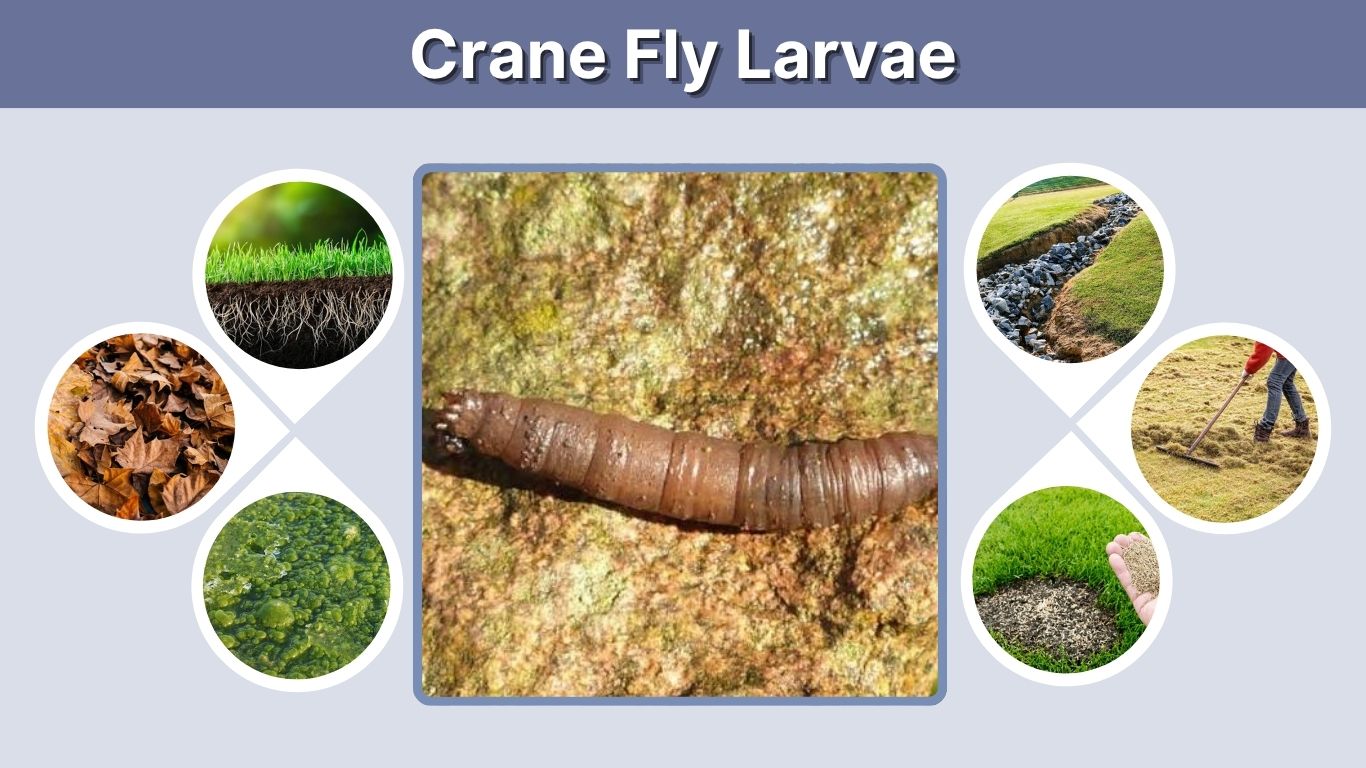
Crane fly larvae are the immature stage of crane flies, the long-legged insects often called “daddy longlegs,” “mosquito hawks,” or “mosquito eaters.” The larvae are also known as leatherjackets because many species have a tough, grayish-brown, leathery body. Some crane fly larvae live in soil and can damage lawns by feeding on grass roots, while others live in water, compost, mud, or decaying plant material. This guide explains what crane fly larvae look like, where they live, what they eat, and how to control them.
What Are Crane Fly Larvae?
Crane fly larvae are the worm-like young stage of crane flies. Adult crane flies look like large mosquitoes, but they do not bite people. The larvae are more important to gardeners and homeowners because some species feed on grass roots and can damage lawns.
In turf and gardens, crane fly larvae are commonly called leatherjackets. They may stay hidden in soil for much of the year, especially in damp lawns. Oregon State University notes that some crane fly larvae can live underground for about 11 months of the year, depending on species and climate.
Crane Fly Larvae Scientific Name
Crane flies belong to the family Tipulidae and related crane fly families within the order Diptera, the true flies. The exact scientific name depends on the species. Common turf-damaging species include:
- Tipula paludosa — European crane fly
- Tipula oleracea — marsh crane fly
- Other Tipula species
- Aquatic crane fly species from related groups
Not every crane fly larva is a lawn pest. Many species are harmless decomposers in wet soil, streams, ponds, compost, and leaf litter.
What Do Crane Fly Larvae Look Like?
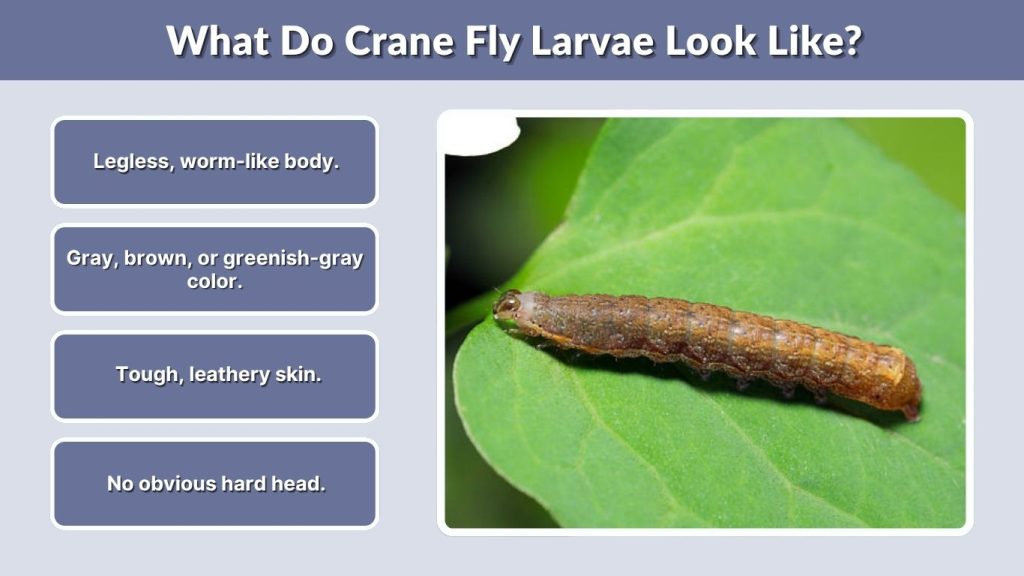
Crane fly larvae usually look like thick, legless grubs or maggots. They are not white like many beetle grubs. Instead, they are often gray, brown, olive, or greenish-gray. Their body is soft but tough-looking, with a leathery surface.
The Royal Horticultural Society describes leatherjackets as crane fly larvae that can damage lawns and young plants by eating roots, especially after wet autumns.
Crane Fly Larvae Identification
You can identify crane fly larvae by these features:
- Legless, worm-like body
- Gray, brown, or greenish-gray color
- Tough, leathery skin
- No obvious hard head
- Blunt body shape
- Often found in damp soil or turf
- May curl or move slowly when disturbed
- Rear end may have small finger-like lobes
Crane fly larvae are sometimes mistaken for caterpillars, beetle grubs, cutworms, or mosquito larvae. The easiest clue is where you find them. If they are in damp lawn soil and look like gray-brown legless grubs, they may be crane fly larvae.
Crane Fly Larvae Face
Crane fly larvae do not have a clear face like caterpillars or beetle grubs. Their head is small and partly hidden inside the front of the body. That is why many people describe them as having “no head.” The rear end is often more noticeable because it may have small lobes or breathing structures.
Crane Fly Larvae Size
Crane fly larvae vary in size depending on species and age. Young larvae are small and easy to miss, while mature leatherjackets can become quite large.
| Stage | Approximate Size | Appearance |
| Newly hatched larvae | Very small | Pale, soft, difficult to see |
| Growing larvae | ¼–¾ inch | Grayish, legless, worm-like |
| Mature larvae | Up to about 1–1.5 inches | Thick, leathery, gray-brown |
| Giant crane fly larvae | Can be larger in some species | Usually found in wet soil, mud, or aquatic habitats |
Bayer Crop Science describes leatherjackets as grayish-brown larvae that may reach up to about 40 mm long, with no legs and no obvious head.
Crane Fly Larvae Life Cycle
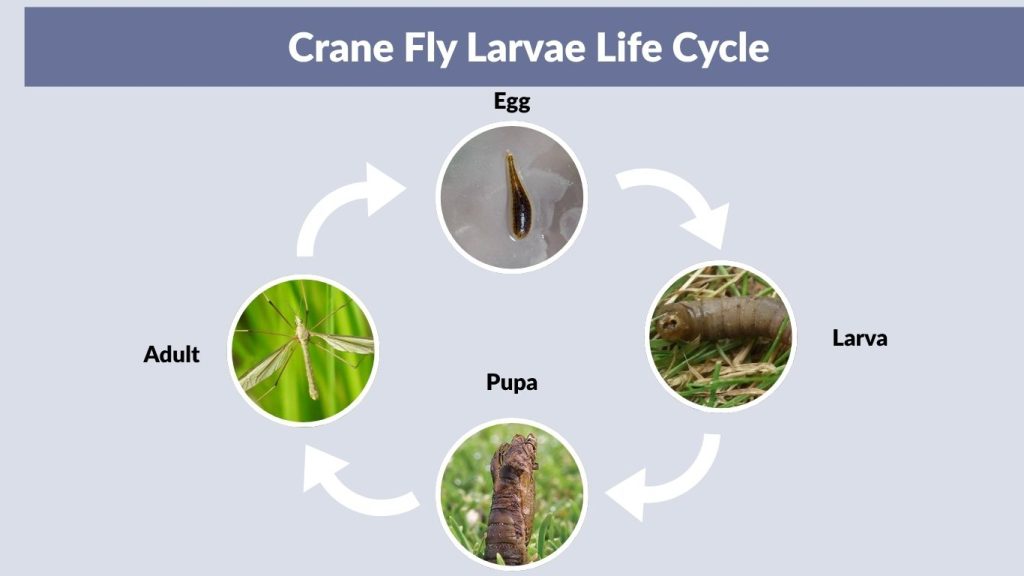
The crane fly life cycle has four main stages: egg, larva, pupa, and adult. The larval stage is the longest and most damaging stage for lawns.
Adult crane flies usually emerge, mate, and lay eggs in moist soil or turf. Eggs hatch into larvae, and the larvae feed through fall, winter, and spring. When they are mature, they pupate in the soil before becoming adult crane flies.
Crane Fly Life Cycle Stages
- Egg: Laid in moist soil, lawns, or wet organic matter
- Larva: Leatherjacket stage; feeds on roots, organic matter, or aquatic material
- Pupa: Resting transformation stage in soil or wet habitat
- Adult: Long-legged crane fly that mates and lays eggs
Some crane fly species have one generation per year, while others may have two. NC State Extension notes that leatherjackets may pupate when mature, and adults can emerge around late August or early September in some species, then mate and lay eggs soon after.
When Do Crane Fly Larvae Hatch?
Crane fly larvae often hatch in fall after adult crane flies lay eggs in damp soil. In many lawn-damaging species, eggs hatch within about two weeks. The Pacific Northwest Pest Management Handbook states that eggs may hatch in about 11 to 15 days, and young larvae need moist conditions to survive.
In the UK and similar climates, crane fly larvae are often most noticeable from autumn through spring. Wet autumn weather can increase survival because eggs and young larvae dry out easily.
Where Do Crane Fly Larvae Live?
Crane fly larvae live in many different habitats. Some species live in lawns and feed on grass roots. Others live in water, mud, compost piles, wet leaves, rotting wood, streams, ponds, and marshy soil.
Common Crane Fly Larvae Habitats
- Damp lawns
- Turfgrass soil
- Garden beds
- Compost piles
- Wet leaf litter
- Muddy stream edges
- Ponds and wetlands
- Decaying plant material
- Saturated soil near drainage areas
Crane fly larvae usually prefer moisture. Dry soil can reduce survival, especially for eggs and young larvae.
Crane Fly Larvae in Lawns
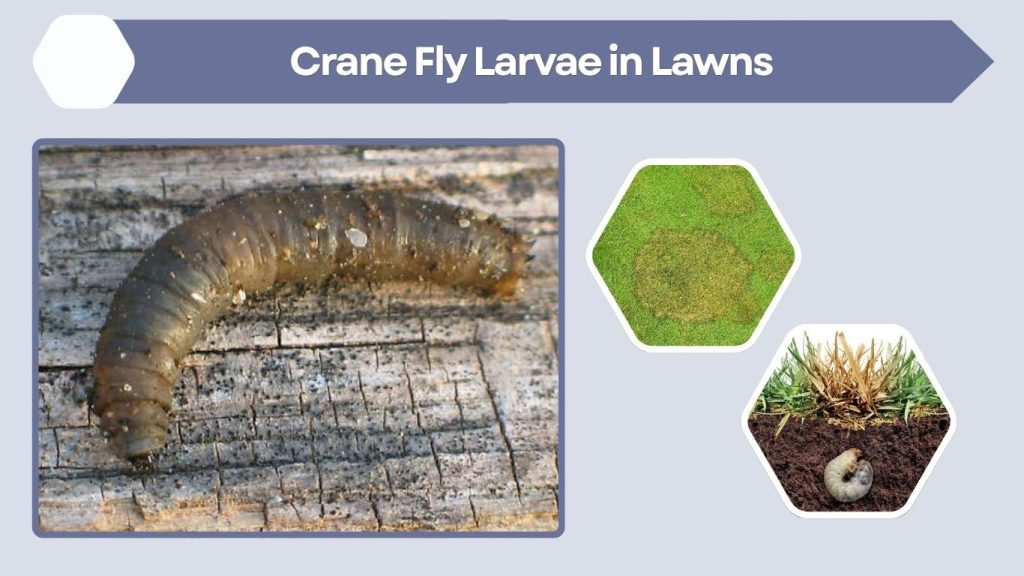
Crane fly larvae in lawns can be a problem when populations become high. The larvae feed on grass roots, crowns, and sometimes lower grass blades. This weakens turf and may create yellow, brown, or bare patches.
Lawn damage is often worst in spring because larvae have been feeding through winter and are larger by that time. The Pacific Northwest Pest Management Handbook notes that leatherjackets feed on turfgrass through winter into spring, with damage often appearing in April and May.
Signs of Crane Fly Larvae Lawn Damage
Look for these signs:
- Thin or weak grass
- Brown or yellow patches
- Turf that pulls up easily
- Birds pecking at the lawn
- Skunks, raccoons, or other animals digging for larvae
- Gray-brown larvae in the soil
- Damage in damp or poorly drained areas
Crane fly larvae damage can look similar to damage from drought, fungal disease, chafer grubs, cutworms, or poor soil. To confirm the problem, lift a small section of turf and check the root zone for leatherjackets.
Crane Fly Larvae in Grass
Crane fly larvae in grass usually stay near the root zone during the day. At night or during damp weather, some may move closer to the surface and feed on grass crowns or blades.
If your lawn has crane fly larvae, you may notice birds feeding heavily in one area. Birds can actually help reduce larvae numbers, but heavy bird activity may also tear up already weakened turf.
Do Crane Fly Larvae Eat Grass Roots?
Yes, some crane fly larvae eat grass roots and crowns. This is why they can damage lawns, sports fields, golf courses, and pastures. However, not all crane fly larvae are root feeders. Many species feed on decaying organic matter instead.
Crane Fly Larvae in Water
Some crane fly larvae are aquatic or semi-aquatic. These larvae live in streams, ponds, marshes, wet mud, or waterlogged organic matter. Aquatic crane fly larvae are part of freshwater ecosystems and may help break down leaves and plant debris.
Aquatic crane fly larvae should not be confused with mosquito larvae. Mosquito larvae usually live near the surface of still water and wiggle actively. Crane fly larvae are often larger, thicker, and may be found in mud, vegetation, or stream debris.
Are Crane Fly Larvae Aquatic?
Some are aquatic, but not all. Crane fly larvae can be:
- Fully aquatic
- Semi-aquatic
- Soil-dwelling
- Compost-dwelling
- Turf-dwelling
- Leaf-litter decomposers
So, if you find crane fly larvae in water, it is possible they are an aquatic crane fly species rather than a lawn pest.
What Do Crane Fly Larvae Eat?
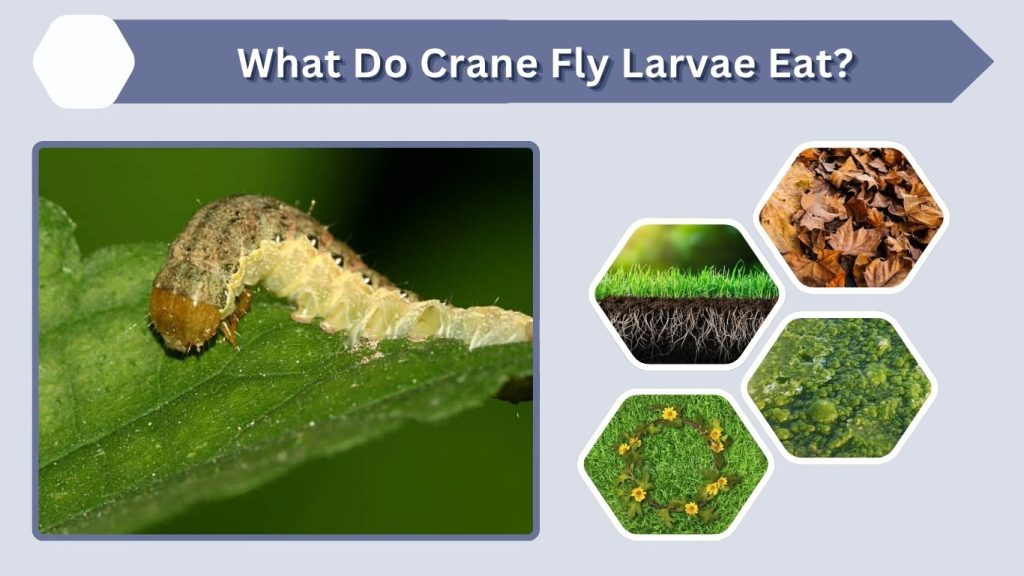
Crane fly larvae have different diets depending on species and habitat. Some feed on living plant roots, while others eat decaying organic matter. Aquatic species may feed on algae, plant debris, or organic particles.
Crane Fly Larvae Diet
Crane fly larvae may eat:
- Grass roots
- Grass crowns
- Young plant roots
- Decaying leaves
- Compost material
- Algae
- Fungi
- Rotting vegetation
- Organic matter in mud or water
In lawns, the most concerning species are the root-feeding leatherjackets. In compost or wetlands, many larvae are helpful decomposers.
Do Crane Fly Larvae Eat Mosquito Larvae?
Most crane fly larvae do not eat mosquito larvae. This is a common misunderstanding caused by names like “mosquito hawk” and “mosquito eater.” Adult crane flies usually do not eat mosquitoes either.
Some aquatic crane fly larvae may live in the same habitats as other small aquatic organisms, but they are not reliable mosquito predators. If you want to control mosquitoes, removing standing water is much more effective.
Do Crane Fly Larvae Bite?
No, crane fly larvae do not bite humans. They do not sting and are not dangerous to people or pets. If you pick one up, it may wiggle, but it will not bite.
However, it is still better to handle unknown larvae gently or with gloves, especially if they are from soil, compost, or dirty water.
Crane Fly Larvae Damage
Crane fly larvae damage is mostly a lawn and garden issue. The larvae may weaken grass by feeding below the surface. In heavy infestations, turf can become thin, patchy, and easy to pull up.
| Damage Type | What It Looks Like | Likely Cause |
| Yellow patches | Grass loses color | Root feeding |
| Brown patches | Turf dies in sections | Heavy larval feeding |
| Loose turf | Grass pulls up easily | Damaged roots |
| Bird pecking | Birds dig for larvae | Predator activity |
| Spring thinning | Lawn looks weak after winter | Mature larvae feeding |
Crane fly larvae damage is more likely in wet lawns, compacted soil, poor drainage areas, and regions where European crane flies or marsh crane flies are established.
How to Check for Crane Fly Larvae in Lawn
Before applying any treatment, confirm that crane fly larvae are actually present. Lawn damage alone is not enough because many problems can cause brown grass.
Simple Lawn Inspection Method
- Choose a damaged or thinning patch.
- Cut a small square of turf.
- Lift the grass and soil layer carefully.
- Look in the root zone for gray-brown leatherjackets.
- Check several spots, not just one.
- Count how many larvae you find.
If you find only a few larvae, treatment may not be necessary. A healthy lawn can usually tolerate low numbers. If you find many larvae and the lawn is thinning badly, control may be needed.
How to Get Rid of Crane Fly Larvae
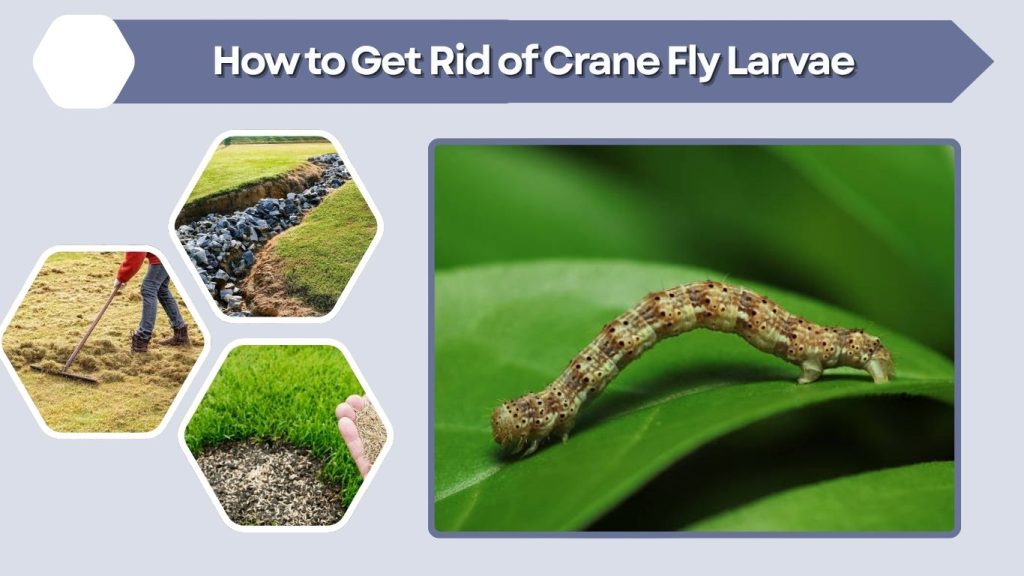
The best way to get rid of crane fly larvae depends on the severity of the infestation, the season, and whether you prefer natural or chemical control. Good lawn care is often the first step because healthy turf can recover better.
Natural Crane Fly Larvae Control
Natural control methods include:
- Improve lawn drainage
- Avoid overwatering
- Rake out thatch
- Aerate compacted soil
- Encourage healthy root growth
- Overseed thin areas
- Remove larvae by hand in small areas
- Let birds feed naturally where damage is minor
Moist conditions help crane fly eggs and young larvae survive, so reducing excess moisture can lower future problems.
Nematodes for Crane Fly Larvae
Beneficial nematodes are a popular biological treatment for crane fly larvae. They are microscopic organisms that attack soil-dwelling pests. They work best when soil is moist, temperatures are suitable, and larvae are young.
Nematodes are often applied in late summer or autumn when young larvae are present. They may be less effective if conditions are too cold, too dry, or if larvae are already large. Some extension sources note that nematode results can be limited or variable depending on timing and conditions.
Crane Fly Larvae Insecticide
Insecticides may be used for serious turf infestations, but they should be used carefully and according to local label directions. NC State Extension lists several insecticide options for crane fly larvae in turf and notes that timing can depend on larval stage.
For home lawns, always check your local rules and product label. Some products are not allowed in every country or region. Avoid applying pesticides unless you have confirmed larvae are present and damage is significant.
Best Time to Treat Crane Fly Larvae
The best time to treat crane fly larvae is usually when larvae are young and actively feeding. In many regions, this means autumn. Spring treatment may help in some cases, but older larvae can be harder to control.
| Season | What Happens | Control Notes |
| Late summer/fall | Adults lay eggs; larvae hatch | Best time for many treatments |
| Winter | Larvae feed slowly in soil | Monitor damage |
| Spring | Larger larvae feed heavily | Damage becomes visible |
| Late spring/summer | Larvae pupate; adults emerge | Repair lawn and prepare prevention |
Treatment timing varies by region and species. For example, European crane fly and marsh crane fly may have different emergence patterns.
Crane Fly Larvae in House
Crane fly larvae are not common indoor pests. If you find a larva inside, it may have come in with potted plants, damp soil, compost, or outdoor material. Adult crane flies are much more likely to enter houses because they are attracted to lights.
If you find crane fly larvae indoors:
- Remove the larva with tissue or gloves.
- Check potted plant soil.
- Avoid overwatering indoor plants.
- Remove damp organic debris.
- Seal gaps near doors and windows.
Crane fly larvae indoors are usually accidental and do not infest clean, dry indoor spaces.
Crane Fly Larvae in Compost and Garden Beds
Crane fly larvae in compost are not always bad. Many larvae feed on decaying organic matter and help break down plant material. However, if they are in vegetable beds or around seedlings, some species may feed on roots and damage young plants.
If you find many leatherjackets in garden beds, reduce excess moisture, turn compost regularly, and inspect seedlings for root damage.
Are Crane Fly Larvae Dangerous?
Crane fly larvae are not dangerous to humans. They do not bite, sting, or spread disease. The main concern is plant damage, especially in lawns and young garden plants.
For pets such as dogs, cats, chickens, or reptiles, crane fly larvae are not usually considered dangerous, but feeding wild-caught larvae to pets is not recommended. Wild larvae may carry soil contaminants, parasites, pesticides, or bacteria.
Crane Fly Larvae vs Other Lawn Grubs
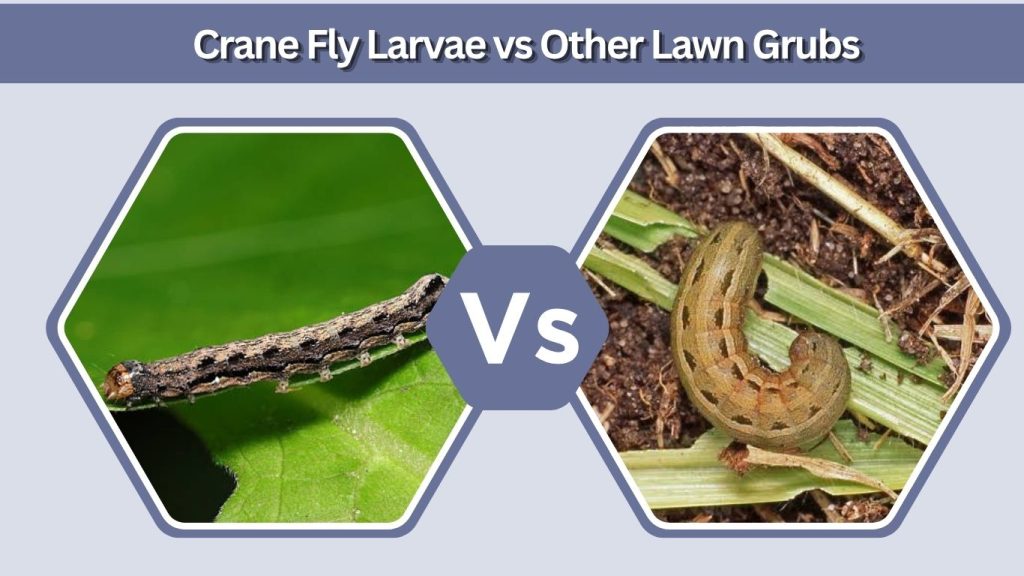
Crane fly larvae are often confused with other lawn pests. Correct identification matters because treatment timing and control methods can differ.
| Pest | Appearance | Main Difference |
| Crane fly larvae | Gray-brown, legless, leathery | No legs, no obvious head |
| White grubs | White, C-shaped, brown head | Have legs and curved body |
| Cutworms | Caterpillar-like, smooth body | Have small legs/prolegs |
| Armyworms | Caterpillar-like, striped | Feed on grass blades |
| Mosquito larvae | Small aquatic wigglers | Live in standing water |
If the insect has legs and a hard brown head, it is probably not a crane fly larva.
FAQs
What do crane fly larvae look like?
Crane fly larvae look like gray, brown, or greenish-gray legless grubs. They have a soft but leathery body and usually no obvious head. Mature larvae can be over an inch long and are often found in damp soil, grass roots, compost, or wet organic matter.
How do you get rid of crane fly larvae in a lawn?
First, confirm they are present by checking the root zone. Then improve drainage, reduce overwatering, aerate compacted soil, and strengthen the lawn. For heavier infestations, beneficial nematodes or labeled insecticides may help, especially when applied at the correct time.
Do crane fly larvae eat grass roots?
Yes, some crane fly larvae eat grass roots and crowns. These species can cause yellow, brown, or thinning patches in lawns. However, many crane fly larvae feed on decaying organic matter instead and do not seriously damage grass.
Are crane fly larvae aquatic?
Some crane fly larvae are aquatic or semi-aquatic. They may live in streams, ponds, marshes, wet mud, or waterlogged plant debris. Other species live in soil, lawns, compost, or leaf litter.
Do crane fly larvae turn into mosquitoes?
No, crane fly larvae do not turn into mosquitoes. They turn into adult crane flies. Adult crane flies may look like giant mosquitoes, but they are different insects and do not bite people.