
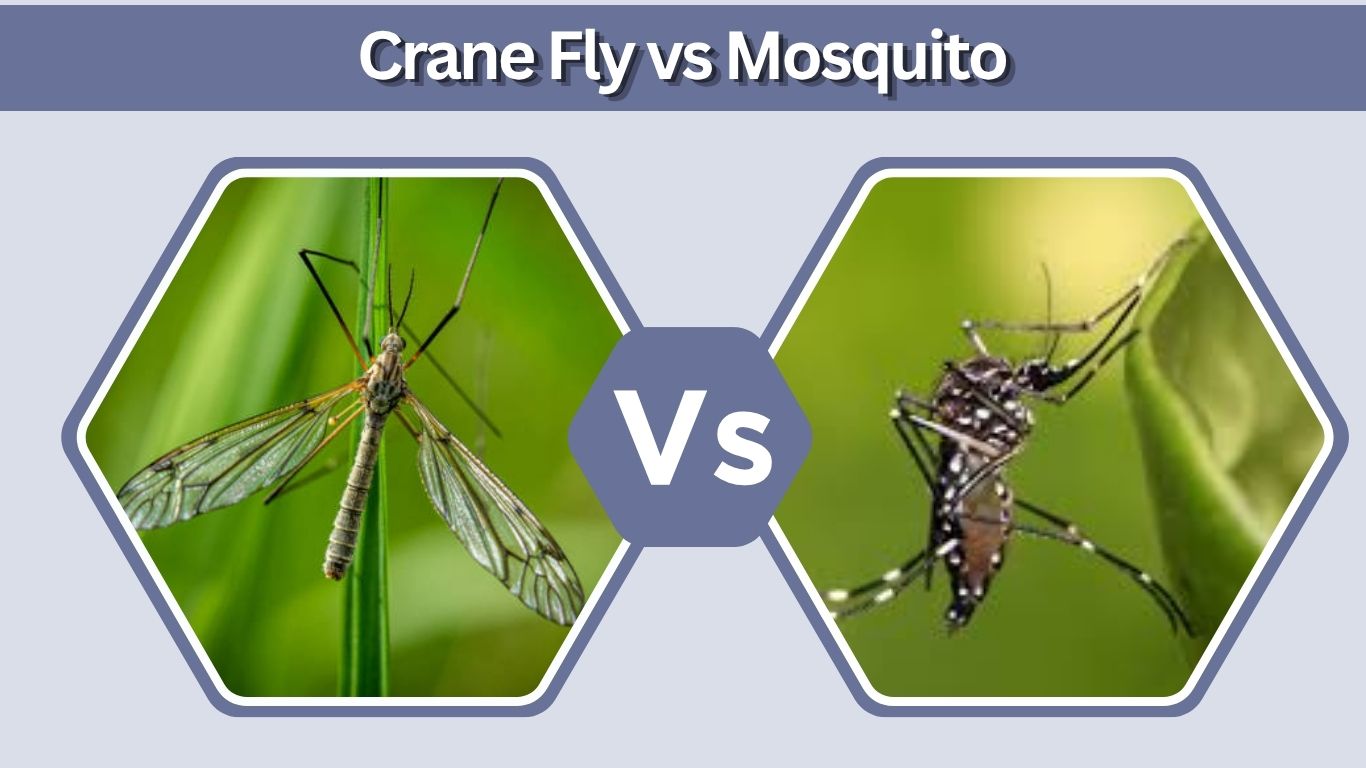
Crane flies and mosquitoes are often confused because both have long legs, narrow bodies, and delicate wings. Many people call crane flies “mosquito hawks,” “mosquito eaters,” or “giant mosquitoes,” but they are not the same insect. Mosquitoes can bite and spread diseases, while adult crane flies are mostly harmless. This guide compares crane flies vs mosquitoes by size, body shape, wings, behavior, habitat, and indoor signs so you can identify them quickly.
Crane Fly vs Mosquito: Quick Comparison
Crane flies and mosquitoes both belong to the order Diptera, meaning they are true flies with one pair of wings. However, their appearance and behavior are very different. Crane flies look like oversized mosquitoes, but they do not bite people. Mosquitoes are smaller, more compact, and females use piercing mouthparts to feed on blood.
| Feature | Crane Fly | Mosquito |
| Common names | Mosquito hawk, mosquito eater, daddy longlegs fly | Mosquito |
| Size | Usually much larger | Usually smaller |
| Legs | Very long and fragile | Long but shorter than crane fly legs |
| Body | Thin, soft, delicate | Slender but more compact |
| Bite humans? | No | Female mosquitoes can bite |
| Eats mosquitoes? | Usually no | No |
| Main concern | Lawn larvae may damage roots | Bites, itching, disease risk |
| Indoor behavior | Clumsy, attracted to lights | Searches for blood meals |
| Wings | Held open or roof-like at rest | Usually held over body |
| Larvae | Live in soil, water, or decaying matter | Live in standing water |
What Is a Crane Fly?
Crane flies are harmless, long-legged flies that many people mistake for giant mosquitoes. Their bodies are thin and fragile, and their legs often break off easily. Adult crane flies usually live only a short time and are often seen resting on walls, flying around porch lights, or drifting clumsily through homes.
Crane Fly Identification
You can identify a crane fly by looking for these features:
- Large mosquito-like body
- Very long, thin legs
- Slow, weak, clumsy flight
- No biting mouthparts
- Narrow wings
- Soft, fragile body
- Often found near lawns, damp soil, gardens, and lights
Crane flies may look scary because of their size, but they are not dangerous to people or pets. They do not sting, do not suck blood, and do not attack humans.
Are Crane Flies Mosquito Hawks?
Yes, many people call crane flies “mosquito hawks,” but the name is misleading. Most adult crane flies do not hunt mosquitoes. Some adults do not feed much at all, while others may take nectar or water. Their larvae usually feed on decaying organic matter, plant roots, algae, or other material depending on the species.
The name “mosquito hawk” creates confusion because it makes people think crane flies kill mosquitoes. In most cases, they do not control mosquito populations.
What Is a Mosquito?
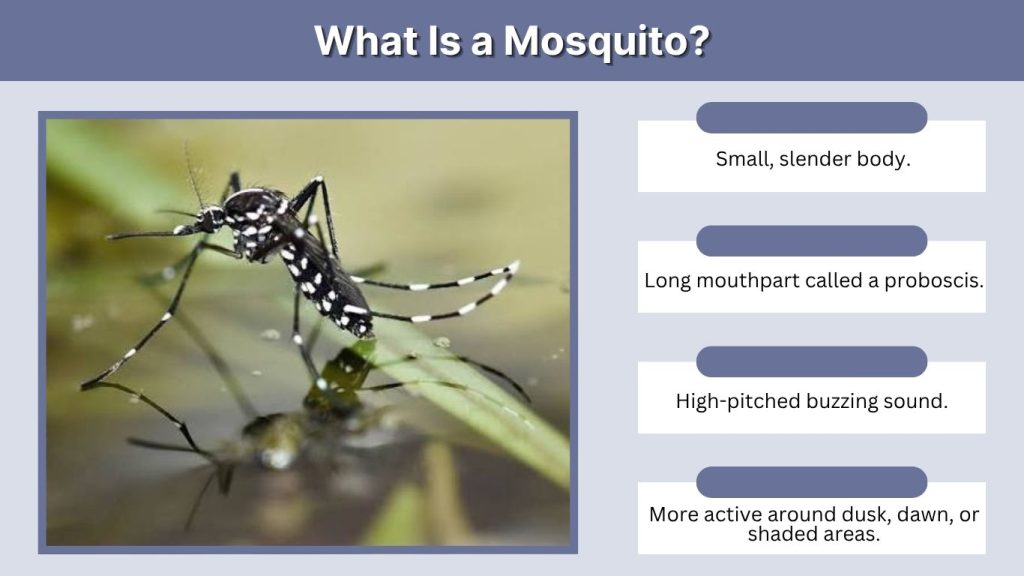
Mosquitoes are small flying insects best known for their bites. Female mosquitoes need blood from humans, birds, mammals, or other animals to help develop eggs. Male mosquitoes do not bite; they usually feed on nectar and plant sugars.
Mosquitoes are more than a nuisance because some species can spread diseases. Not every mosquito carries disease, but their bites can cause itching, swelling, and irritation.
Mosquito Identification
Mosquitoes are usually identified by their small size, narrow body, long legs, and needle-like mouthpart. They are more controlled in flight than crane flies and often fly close to people when looking for a blood meal.
Look for these mosquito signs:
- Small, slender body
- Long mouthpart called a proboscis
- High-pitched buzzing sound
- More active around dusk, dawn, or shaded areas
- Often near standing water
- Females bite humans and animals
- Larvae live in stagnant water
Mosquitoes are much smaller than crane flies, but because some mosquitoes have long legs, people sometimes confuse them with baby crane flies or tiny crane flies.
Crane Fly vs Mosquito Size
Size is one of the easiest ways to separate crane flies from mosquitoes. Crane flies are usually much larger and leggier, while mosquitoes are smaller and more compact.
| Insect | Typical Body Length | Overall Appearance |
| Crane fly | About 0.4–1.2 inches, sometimes larger | Large, delicate, long-legged |
| Mosquito | About 0.1–0.4 inches | Small, slender, compact |
| Gallinipper mosquito | Larger than many mosquitoes | Big mosquito, but still not a crane fly |
| Elephant mosquito | Large mosquito species | Thick-bodied, not as fragile-looking as crane fly |
Some large mosquitoes, such as gallinipper mosquitoes or elephant mosquitoes, can be confused with crane flies. However, even large mosquitoes usually look sturdier, have shorter legs compared with body size, and may show a clear proboscis.
Crane Fly vs Male Mosquito
Many people search for “crane fly vs male mosquito” because male mosquitoes also do not bite. Both are harmless to humans, but they are not the same.
Male mosquitoes are usually smaller than female mosquitoes and have feathery antennae. These antennae help them detect female mosquito wingbeats. Crane flies, on the other hand, are much larger and have extremely long legs.
Main Differences Between Crane Fly and Male Mosquito
- Male mosquitoes are much smaller than crane flies.
- Male mosquitoes have fuzzy or feathery antennae.
- Crane flies have very long, fragile legs.
- Male mosquitoes fly more like regular mosquitoes.
- Crane flies fly slowly and clumsily.
- Male mosquitoes may gather near breeding areas.
- Crane flies are often seen around lights, windows, lawns, and damp places.
Male mosquitoes do not bite, but they are still true mosquitoes. Crane flies are a different family of flies.
Crane Fly vs Female Mosquito
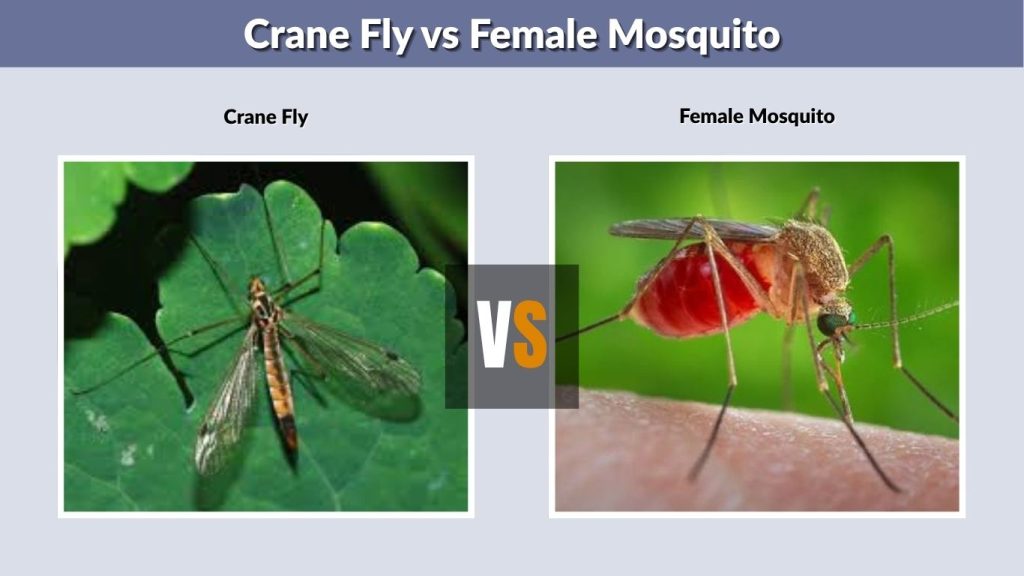
Female mosquitoes are the insects responsible for most mosquito bites. Crane flies cannot bite at all, so this is the most important difference for homeowners.
A female mosquito has a sharp proboscis that can pierce skin. She uses blood as a protein source for egg development. A crane fly does not have this kind of biting mouthpart.
If an insect lands on your skin and bites, it is not a crane fly. It is more likely a mosquito, biting midge, black fly, or another biting insect.
Crane Fly vs Mosquito Wings
Wings can also help with identification. Crane flies usually have long, narrow wings and may hold them open or slightly spread when resting. Mosquitoes often hold their wings over their body and have a more balanced, controlled resting posture.
Mosquito wings may also have tiny scales along the veins and edges. This detail can be hard to see without magnification, but it is one reason mosquitoes have a different wing texture from crane flies.
| Wing Feature | Crane Fly | Mosquito |
| Wing size | Long and delicate | Narrow and smaller |
| Resting position | Often spread or roof-like | Usually over the body |
| Flight style | Weak and clumsy | More controlled |
| Wing texture | Clear and delicate | Often scaled |
| Buzzing sound | Usually less noticeable | Often high-pitched |
Crane Fly vs Mosquito Identification by Behavior
Behavior is often easier to notice than body details. Crane flies behave like weak, awkward fliers. They may bump into walls, windows, lamps, or ceilings. Mosquitoes fly with more purpose, especially when tracking people or animals.
Crane Fly Behavior
Crane flies are commonly seen in spring or fall, depending on region and species. They are attracted to lights and may enter homes by accident. They do not chase people, and they do not try to bite.
Adult crane flies may only live long enough to mate and lay eggs. Their larvae, often called leatherjackets, may live in soil, wet ground, or decaying organic material.
Mosquito Behavior
Mosquitoes are often found near standing water, shaded vegetation, gutters, buckets, ponds, birdbaths, and containers. Female mosquitoes are attracted to carbon dioxide, body heat, sweat, and skin odors.
Mosquitoes may follow people indoors or bite outdoors during evening and early morning hours. Some species also bite during the day.
Crane Fly vs Mosquito Larvae
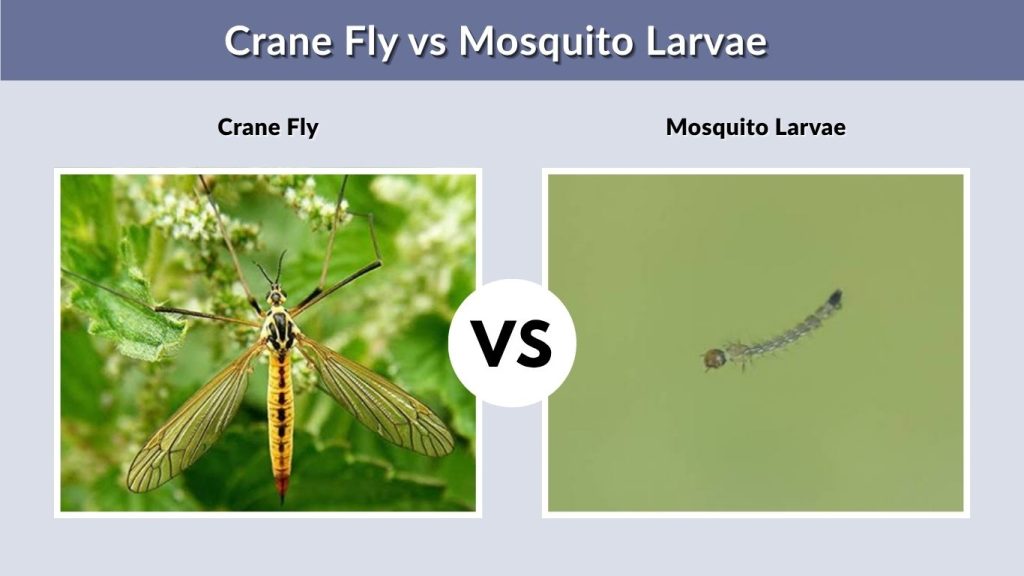
The larval stage is another big difference. Crane fly larvae and mosquito larvae live in different places and look different.
Mosquito larvae are aquatic. They live in standing water and often wiggle near the surface. Many people call them “wigglers.” They need water to grow.
Crane fly larvae are usually found in damp soil, mud, wet leaf litter, rotting vegetation, or aquatic habitats, depending on the species. Lawn-damaging crane fly larvae may feed on grass roots and crowns.
Where to Find the Larvae
- Mosquito larvae: buckets, tires, birdbaths, clogged gutters, puddles, plant saucers, ponds, and stagnant water
- Crane fly larvae: damp lawns, soil, compost, wet garden beds, stream edges, and decaying organic matter
If you see small worm-like larvae moving in standing water, they are more likely mosquito larvae than crane fly larvae.
Do Crane Flies Eat Mosquitoes?
This is one of the biggest myths about crane flies. Despite names like “mosquito eater” and “mosquito hawk,” adult crane flies usually do not eat mosquitoes. Most are harmless and do not hunt other flying insects.
Some crane fly larvae may feed on organic matter, plant roots, algae, fungi, or small organisms depending on the species. But crane flies should not be considered a reliable mosquito control method.
To reduce mosquitoes, focus on removing standing water, cleaning gutters, covering containers, and using screens or repellents when needed.
Crane Flies Indoors vs Mosquitoes Indoors
Crane flies and mosquitoes can both appear inside homes, but they behave differently once indoors.
Crane flies usually enter by accident. They may fly around lights, rest on walls, or bounce against windows. They are not looking for people to bite.
Mosquitoes enter homes to rest, escape weather, or find a blood meal. A mosquito may fly near your face, ears, arms, or legs. The familiar buzzing sound at night is often a sign of a mosquito, not a crane fly.
Indoor Identification Tips
- A large, clumsy insect near lights is probably a crane fly.
- A small buzzing insect near your body is likely a mosquito.
- An insect that bites is not a crane fly.
- Long fragile legs and weak flight point to a crane fly.
- A needle-like mouthpart points to a mosquito.
Crane Fly vs Giant Mosquito
Many people use the phrase “giant mosquito” when they see a crane fly. In most cases, the insect is not a giant mosquito at all. It is a crane fly.
However, some real mosquitoes are larger than average. Gallinipper mosquitoes and elephant mosquitoes can look impressive, but they still have mosquito features. They have a more mosquito-like body, clearer proboscis, and less exaggerated legs compared with crane flies.
A crane fly looks like a mosquito stretched out on long, thin legs. A large mosquito looks like a bigger version of a regular mosquito.
Are Crane Flies Dangerous?
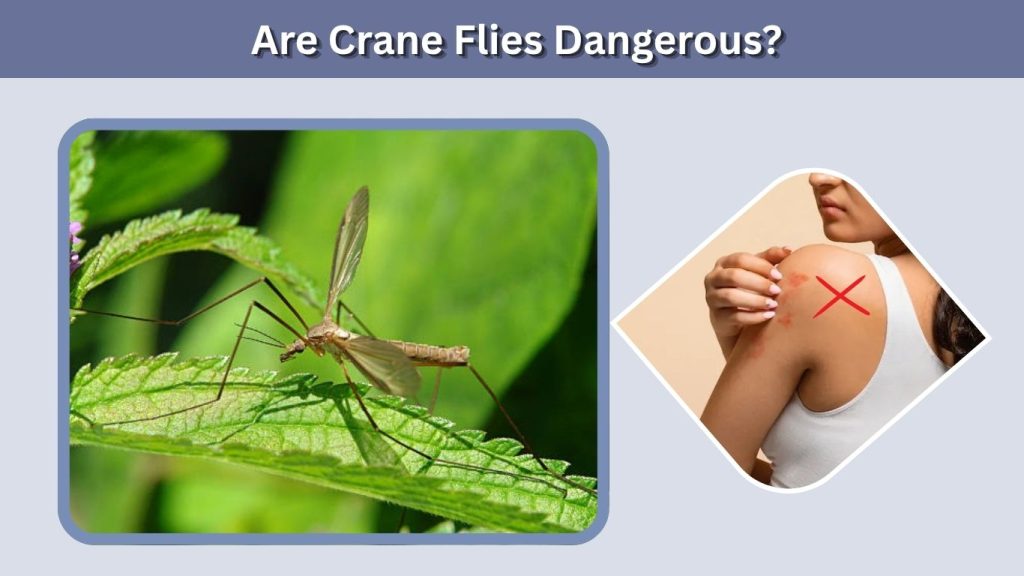
Crane flies are not dangerous to humans. They do not bite, sting, suck blood, or spread mosquito-borne diseases. If one gets inside your home, you can gently catch it and release it or remove it with a cup and paper.
The only real concern is with crane fly larvae in lawns. In some regions, heavy larval populations can damage turfgrass by feeding on roots. This is different from adult crane flies, which are mostly harmless.
Are Mosquitoes Dangerous?
Mosquitoes can be dangerous because some species transmit pathogens. The risk depends on location, mosquito species, season, and local disease activity. Even when disease risk is low, mosquito bites can cause itching, swelling, redness, and discomfort.
To lower mosquito problems around your home:
- Empty standing water weekly
- Clean clogged gutters
- Cover rain barrels
- Change birdbath water often
- Repair window and door screens
- Wear long sleeves in mosquito-heavy areas
- Use approved mosquito repellent when outdoors
- Keep grass and vegetation trimmed near sitting areas
How to Tell the Difference Fast
The fastest way to identify crane fly vs mosquito is to look at size, mouthparts, and behavior. A crane fly is large, fragile, and clumsy. A mosquito is smaller, more controlled, and may bite.
| Question | Likely Crane Fly | Likely Mosquito |
| Is it very large with extra-long legs? | Yes | Usually no |
| Does it bite? | No | Female does |
| Is it flying clumsily near lights? | Yes | Sometimes, but less likely |
| Is it buzzing near your ear at night? | Unlikely | Yes |
| Does it have a needle-like mouthpart? | No | Yes |
| Are larvae in standing water? | Usually no | Yes |
| Is it called a mosquito hawk? | Often yes | No |
FAQs
Is a crane fly the same as a mosquito?
No, a crane fly is not the same as a mosquito. Crane flies and mosquitoes are both true flies, but they belong to different groups. Crane flies are usually larger, have longer fragile legs, and do not bite. Mosquitoes are smaller, and females can bite humans and animals.
Do crane flies bite humans?
No, crane flies do not bite humans. They do not have the piercing mouthparts that female mosquitoes use for blood feeding. If you were bitten by a small flying insect, it was not a crane fly.
Why are crane flies called mosquito hawks?
Crane flies are called mosquito hawks because they look like large mosquitoes, and many people believe they eat mosquitoes. This name is misleading because most adult crane flies do not hunt or eat mosquitoes.
What is the main difference between a crane fly and a mosquito?
The main difference is that mosquitoes can bite, while crane flies cannot. Crane flies are also usually much larger, with very long legs and weak flight. Mosquitoes are smaller, more compact, and female mosquitoes have a needle-like proboscis.
Are crane flies good or bad?
Adult crane flies are mostly harmless. They do not bite or spread disease. Some crane fly larvae can damage lawns if they are present in large numbers, but many species are part of natural ecosystems and help break down organic material.