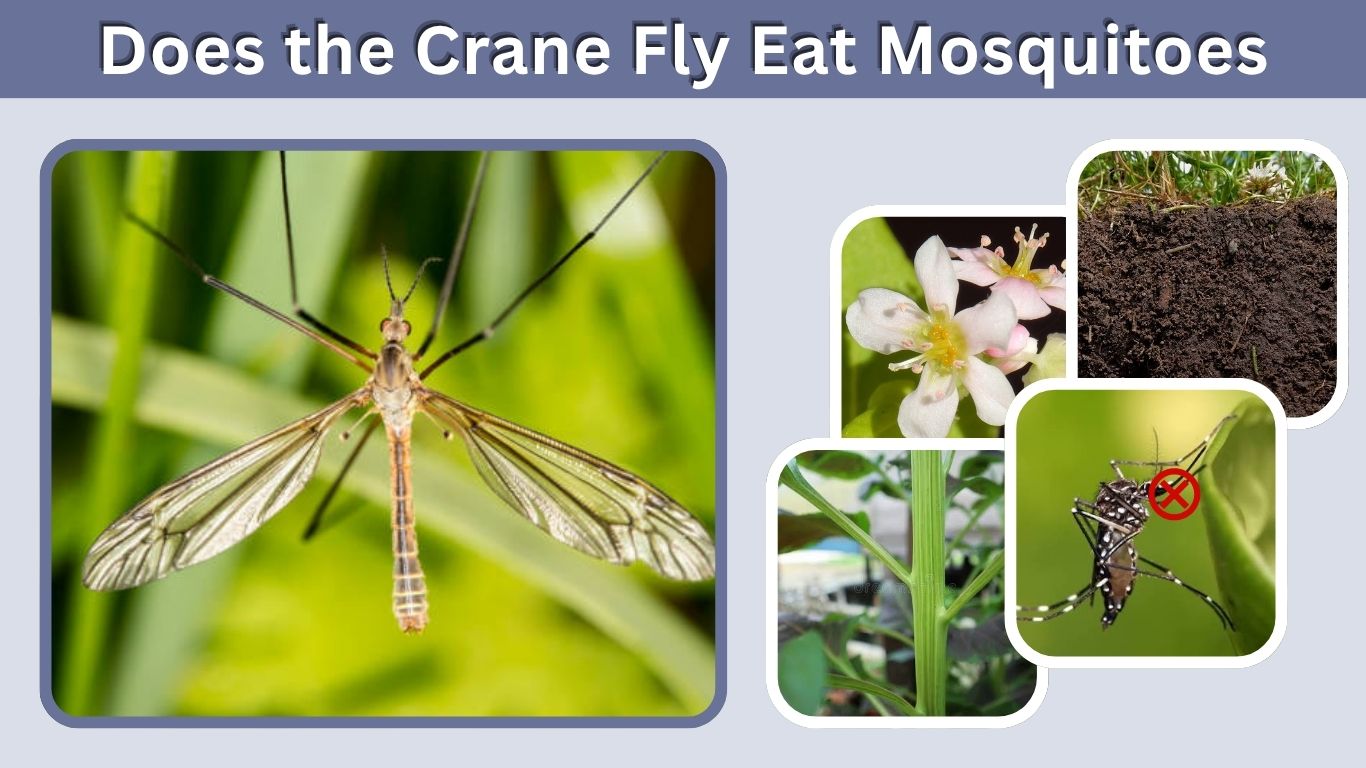
Many people believe crane flies eat mosquitoes because they are often called “mosquito hawks” or “mosquito eaters.” This common name makes crane flies sound like helpful predators that hunt mosquitoes around homes, ponds, and yards. However, the truth is different. Most adult crane flies do not eat mosquitoes at all. In fact, many adult crane flies eat very little, and some may not feed during their short adult life. Their larvae usually feed on decaying plant material, roots, algae, or organic matter.
Do Crane Flies Eat Mosquitoes?
Crane flies generally do not eat mosquitoes. Despite their nickname “mosquito hawk,” adult crane flies are not known as active mosquito predators. They do not fly around hunting adult mosquitoes, and they are not a reliable natural control method for mosquito problems.
The confusion mostly comes from their appearance. Crane flies look like giant mosquitoes because they have long legs, narrow bodies, and delicate wings. Since they look like oversized mosquitoes, many people assume they must be mosquito hunters. But crane flies and mosquitoes are different insects with very different feeding habits.
Why Are Crane Flies Called Mosquito Hawks?
The name “mosquito hawk” is misleading. People may have given crane flies this nickname because they look like large mosquitoes or because they appear around the same damp places where mosquitoes live.
In reality, the name does not describe their diet correctly. A true mosquito predator would actively catch and eat mosquito larvae or adult mosquitoes. Crane flies usually do not do that.
Do Adult Crane Flies Hunt Mosquitoes?
Adult crane flies do not normally hunt mosquitoes. They are weak, clumsy fliers and are not built like predatory insects. Their mouthparts are not designed for grabbing, biting, or chewing other insects.
Most adult crane flies spend their short lives mating and laying eggs. Some drink nectar or plant fluids, but many do not feed much at all.
Do Crane Fly Larvae Eat Mosquito Larvae?
Most crane fly larvae do not eat mosquito larvae either. Crane fly larvae, sometimes called leatherjackets, usually live in soil, mud, leaf litter, water, or decaying vegetation. Depending on the species, they may feed on roots, decomposing plants, fungi, algae, or organic debris.
Some aquatic crane fly larvae may live in wet habitats where mosquito larvae are also present, but that does not mean they commonly control mosquitoes. Mosquito larvae are not the main food of most crane fly larvae.
What Do Crane Flies Eat?
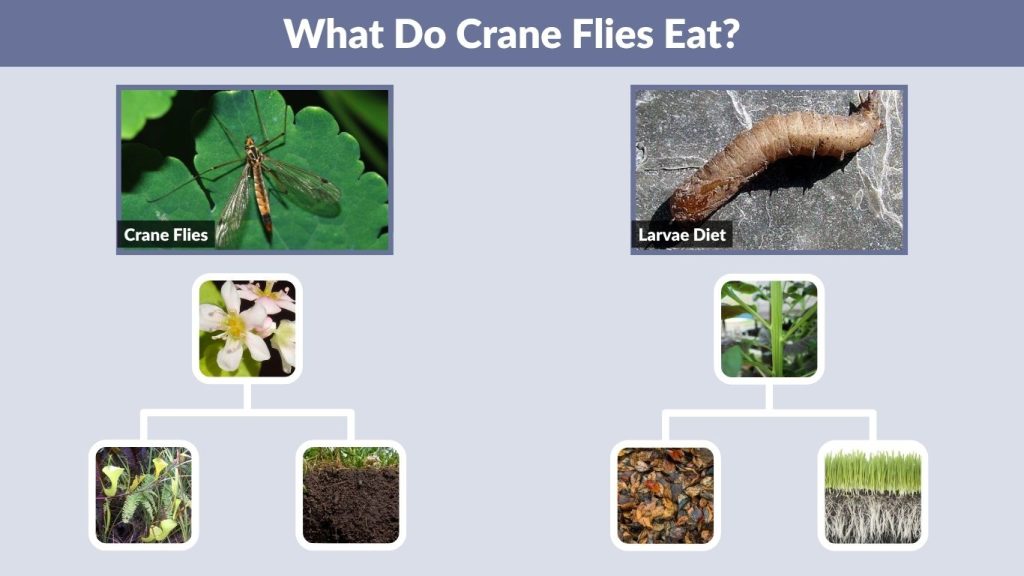
Crane fly diet depends on the life stage. Adult crane flies and crane fly larvae eat different things. Some adults feed lightly, while larvae usually do most of the feeding.
Adult Crane Fly Diet
Adult crane flies often eat very little. Some species may feed on nectar, pollen, or plant fluids. Others may not eat at all as adults because they live only long enough to mate and reproduce.
Adult crane flies may feed on:
- Flower nectar
- Plant fluids
- Moist organic material
- Very little or nothing, depending on the species
They do not suck blood like mosquitoes, and they do not bite humans or animals.
Crane Fly Larvae Diet
Crane fly larvae are more active feeders than adults. Their diet depends on the species and habitat. Many larvae help break down dead plant material, while some feed on roots and may damage lawns.
Crane fly larvae may eat:
- Decaying leaves
- Grass roots
- Plant stems
- Algae
- Fungi
- Organic matter
- Decomposing vegetation
In lawns, some larvae feed near grass roots and crowns. When there are many larvae, they can weaken turf and create brown or thin patches.
Crane Fly vs Mosquito
Crane flies and mosquitoes may look similar at first, but they are very different. Mosquitoes are usually smaller, more controlled fliers, and females of some species bite to get blood. Crane flies are larger, fragile, and harmless to people.
| Feature | Crane Fly | Mosquito |
|---|---|---|
| Common nickname | Mosquito hawk, mosquito eater | Mosquito |
| Size | Usually larger | Usually smaller |
| Bite humans | No | Some females bite |
| Eats mosquitoes | Usually no | No |
| Adult diet | Nectar, plant fluids, or little food | Nectar; females of some species also take blood |
| Larvae habitat | Soil, mud, water, organic matter | Standing water |
| Flight style | Weak and clumsy | More controlled |
| Danger to humans | Harmless | Some species can spread disease |
Why Crane Flies Look Like Giant Mosquitoes
Crane flies have long legs, narrow bodies, and delicate wings, which makes them look like oversized mosquitoes. However, their body structure is more fragile. Their legs can break off easily, and their flight is usually slow and awkward.
Mosquitoes are generally smaller and more agile. Female mosquitoes have specialized mouthparts for piercing skin, but crane flies do not.
Are Crane Flies Related to Mosquitoes?
Crane flies and mosquitoes are both true flies, meaning they belong to the order Diptera. True flies have one pair of wings. However, they are not the same insect and do not have the same behavior.
Being related as flies does not mean crane flies eat mosquitoes. It only means they share some basic insect features.
Do Crane Flies Help Control Mosquitoes?
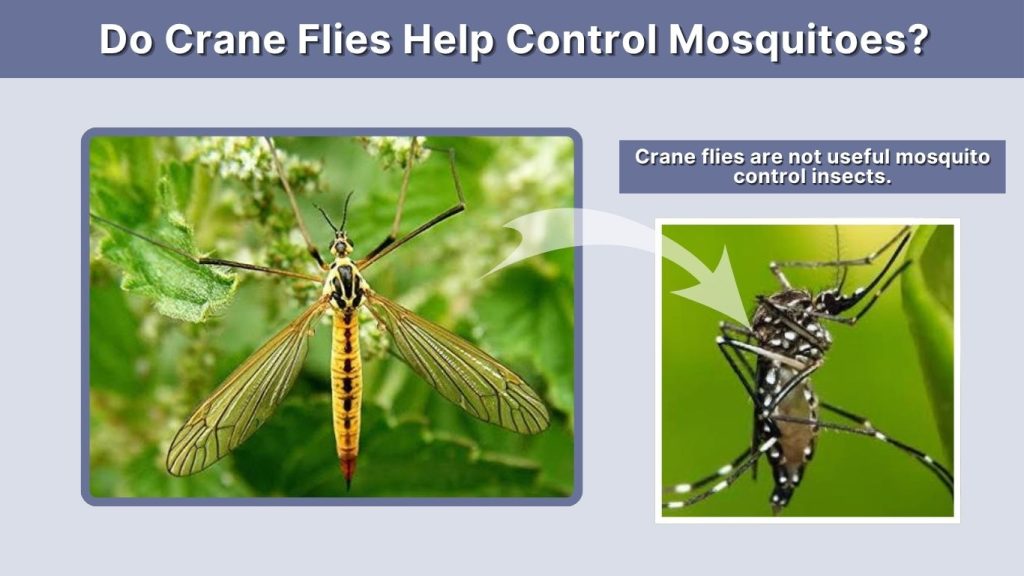
Crane flies are not useful mosquito control insects. If your yard has many mosquitoes, crane flies will not solve the problem. They do not remove standing water, do not hunt adult mosquitoes, and do not significantly reduce mosquito larvae.
Why Crane Flies Are Not Mosquito Control
Crane flies are not effective mosquito control because:
- Adults do not hunt mosquitoes.
- Larvae usually do not target mosquito larvae.
- Adults live for a short time.
- They are weak fliers.
- Their main purpose as adults is reproduction.
- Their larvae often feed on plant material or organic matter.
If you want fewer mosquitoes, it is better to remove mosquito breeding sites and use proven prevention methods.
What Actually Eats Mosquitoes?
Many animals and insects do eat mosquitoes or mosquito larvae. These predators are more useful than crane flies for natural mosquito control.
Mosquito predators include:
- Dragonflies
- Damselflies
- Bats
- Birds
- Fish
- Frogs
- Spiders
- Predatory aquatic insects
- Some beetle larvae
- Certain mosquito-eating fish
However, even predators cannot fully control mosquitoes if there is a lot of standing water nearby.
How to Reduce Mosquitoes Around Your Home
Since crane flies do not eat mosquitoes, mosquito control should focus on removing breeding areas. Mosquitoes need standing water to lay eggs, and larvae develop in water.
Remove Standing Water
The best way to reduce mosquitoes is to remove places where water collects. Even a small amount of water can support mosquito larvae.
Check and empty:
- Buckets
- Flowerpot saucers
- Birdbaths
- Old tires
- Gutters
- Pet bowls
- Tarps
- Trash can lids
- Wheelbarrows
- Plant containers
- Outdoor toys
Change birdbath water regularly and keep gutters clean so water does not sit for days.
Improve Yard Conditions
Mosquitoes like shaded, damp, protected areas. Keeping your yard clean and well maintained can reduce resting places.
Helpful steps include:
- Cut tall grass.
- Trim dense shrubs.
- Clean clogged drains.
- Fix leaky outdoor faucets.
- Keep ponds moving with a pump or fountain.
- Use screens on windows and doors.
- Repair holes in screens.
- Cover rain barrels tightly.
Use Mosquito Protection
When mosquitoes are active, personal protection can help prevent bites.
Useful protection methods include:
- Wearing long sleeves
- Using mosquito repellent
- Avoiding peak mosquito times
- Using fans on patios
- Keeping doors closed
- Sleeping under nets where needed
Are Crane Flies Good or Bad?
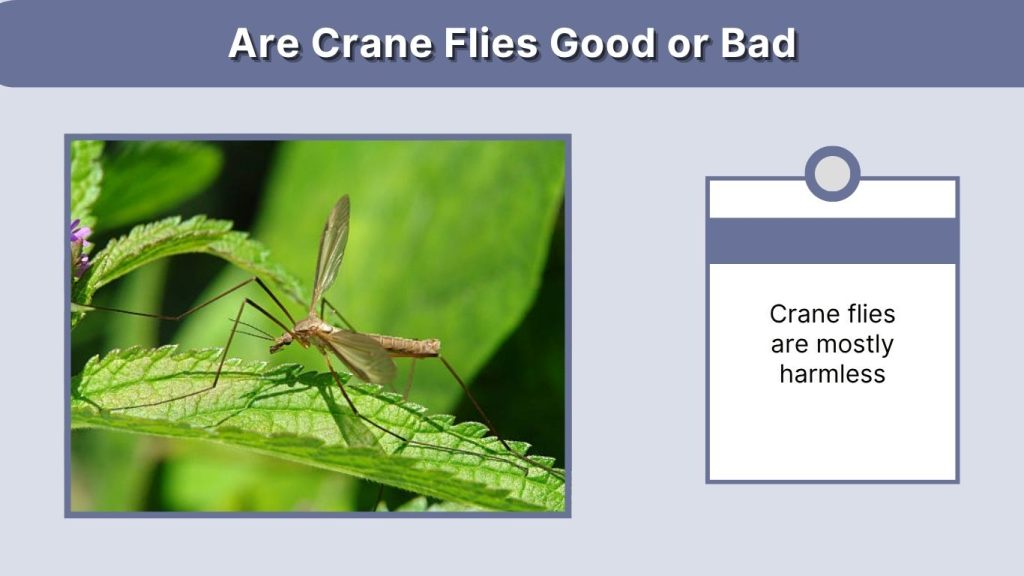
Crane flies are mostly harmless. They are not mosquito hunters, but they still have a role in nature. Adult crane flies are food for birds, bats, spiders, frogs, and other wildlife. Their larvae help recycle organic matter in soil and wet habitats.
However, some crane fly larvae can become lawn pests. When many larvae feed on grass roots, lawns may become thin, yellow, brown, or patchy.
Benefits of Crane Flies
Crane flies can be useful in natural ecosystems. Many species help break down dead plants and return nutrients to soil.
Benefits include:
- Larvae recycle organic matter.
- Adults provide food for wildlife.
- Aquatic larvae support freshwater food chains.
- Some adults may visit flowers.
- They are part of a healthy insect community.
When Crane Flies Become a Problem
Crane flies become a problem mainly when larvae damage lawns. Adult crane flies may be annoying indoors, but they do not cause structural damage, bite people, or breed inside most homes.
Signs of crane fly larvae damage include:
- Brown lawn patches
- Thin turf
- Loose grass roots
- Birds digging in the lawn
- Gray-brown larvae in soil
- Damage in damp lawn areas
Why Are There So Many Crane Flies?
Large numbers of adult crane flies may appear when conditions are right for emergence. Moist soil, lawns, gardens, wetlands, and mild weather can support crane fly development. Adults may also gather near porch lights and windows at night.
Seeing many adult crane flies does not always mean you have a serious infestation. Adults are short-lived and usually disappear naturally. If lawn damage is present, the larvae are the stage to inspect.
Crane Flies Indoors
Crane flies may enter homes by accident when doors or windows are open. They are attracted to light and may bounce around walls or ceilings. They do not reproduce indoors in normal dry house conditions and usually die quickly if trapped inside.
Should You Kill Crane Flies?
There is usually no need to kill crane flies. Adults are harmless and short-lived. If they enter your home, you can gently catch and release them outside. If larvae are damaging your lawn, focus on lawn care and targeted control rather than killing adult crane flies.
Common Myths About Crane Flies
Crane flies are surrounded by several myths because of their mosquito-like appearance and strange nicknames.
Myth 1: Crane Flies Eat Mosquitoes
This is the most common myth. Most crane flies do not eat mosquitoes. Their nickname “mosquito hawk” is inaccurate.
Myth 2: Crane Flies Bite Humans
Crane flies do not bite humans. They do not have the mouthparts needed to pierce skin or suck blood.
Myth 3: Crane Flies Are Giant Mosquitoes
Crane flies are not giant mosquitoes. They are different insects, even though they are both true flies.
Myth 4: Crane Flies Are Dangerous
Crane flies are not dangerous to people or pets. Their larvae may damage lawns in some cases, but adults are harmless.
Myth 5: More Crane Flies Means Fewer Mosquitoes
Seeing many crane flies does not mean mosquitoes will decrease. Crane flies are not reliable mosquito predators.
FAQs
Does a crane fly eat mosquitoes?
No, most crane flies do not eat mosquitoes. Adult crane flies usually feed on nectar, plant fluids, or little to nothing. Their larvae usually feed on roots, decaying plants, algae, fungi, or organic matter.
Why are crane flies called mosquito hawks?
They are called mosquito hawks because they look like large mosquitoes. The name is misleading because crane flies do not normally hunt or eat mosquitoes.
Do crane flies bite people?
No, crane flies do not bite people. They do not have biting mouthparts and do not feed on blood.
What eats mosquitoes if crane flies do not?
Dragonflies, damselflies, bats, birds, fish, frogs, spiders, and some aquatic insects eat mosquitoes or mosquito larvae. Removing standing water is still the best way to reduce mosquitoes.
Are crane flies good for your yard?
Crane flies can be good for the ecosystem because their larvae help break down organic matter and adults feed wildlife. However, some larvae can damage lawns when populations are high.