
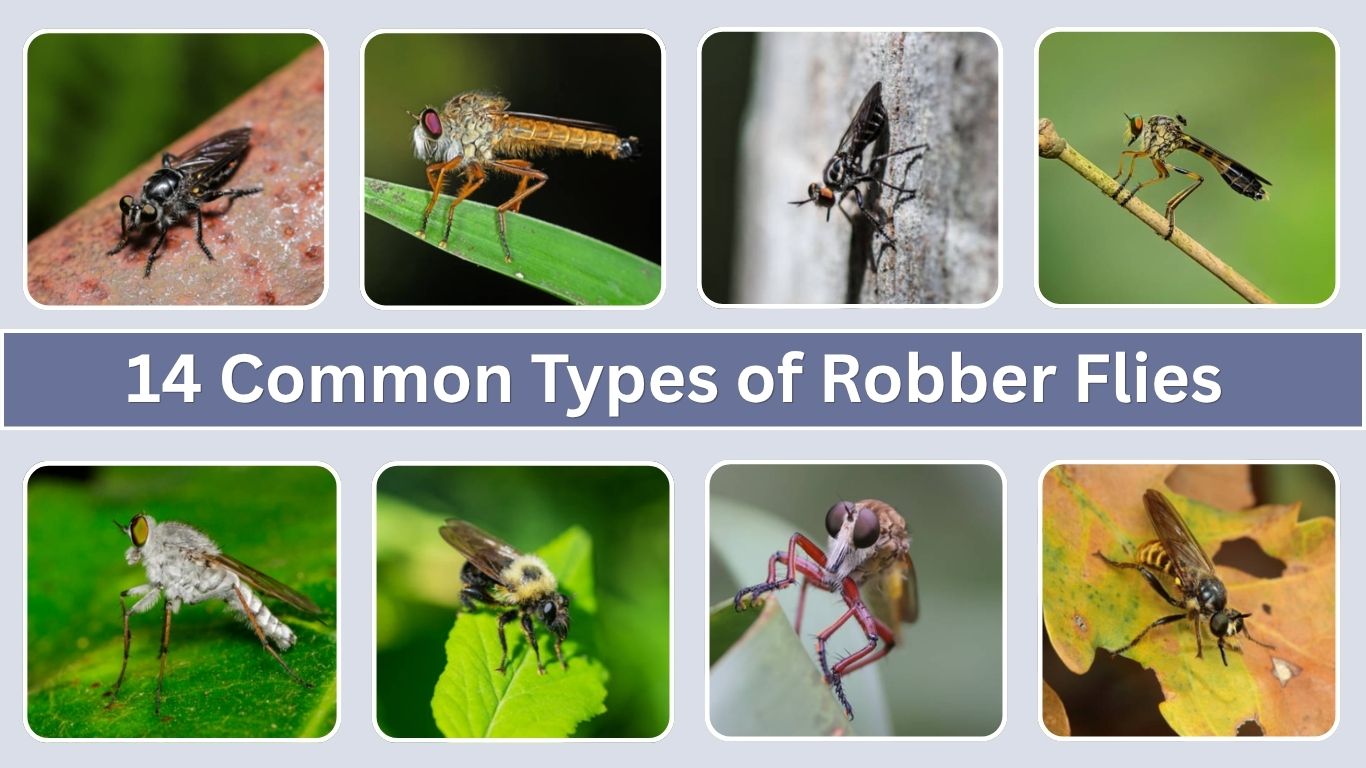
Robber flies are fascinating predatory insects belonging to the family Asilidae. Known for their exceptional hunting skills, powerful flight, and keen eyesight, these insects are found in a wide range of habitats worldwide. They play an important ecological role by controlling populations of other insects, including many agricultural pests. From bee-mimicking species to giant aerial hunters, robber flies exhibit remarkable diversity in appearance and behavior. In this guide, we’ll explore 14 common types of robber flies, highlighting their unique characteristics, habitats, feeding habits, and ecological importance.
1. Giant Robber Fly (Promachus spp.)
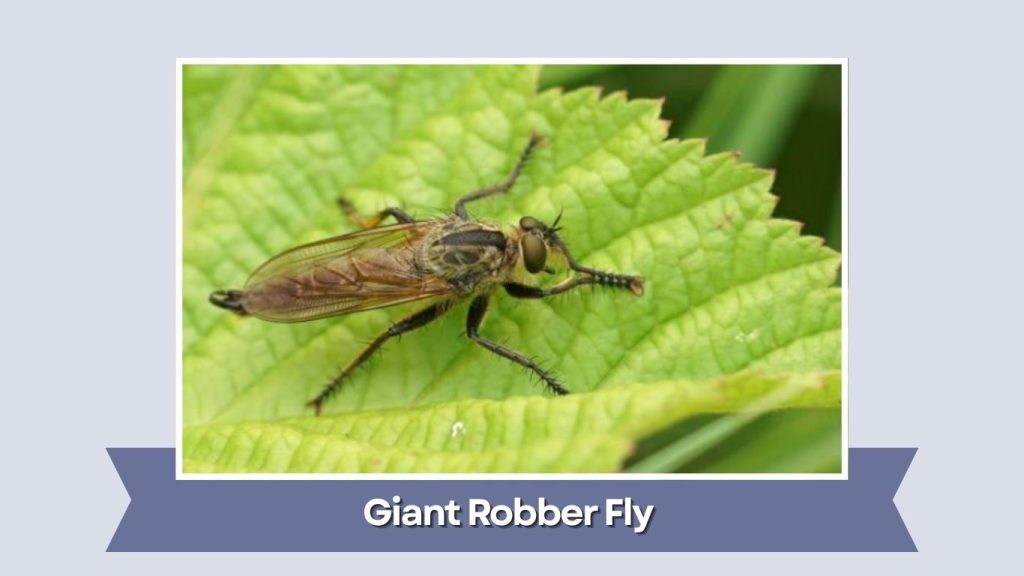
The Giant Robber Fly is one of the largest and most impressive members of the robber fly family (Asilidae). Known for its powerful hunting abilities, this predatory insect is commonly found in open fields, grasslands, and agricultural areas. Giant Robber Flies are beneficial insects because they help control populations of other flying insects, including pests. Their strong body, excellent eyesight, and swift flight make them highly effective aerial predators.
Characteristics
- Large body size, often reaching 25–40 mm in length
- Long, slender abdomen with a robust thorax
- Strong legs equipped with spines for gripping prey
- Large compound eyes that provide excellent vision
- Dense facial bristles known as a “mystax”
- Usually gray, brown, or black in coloration
- Fast and agile flight capabilities
- Predatory behavior toward various flying insects
Habitat and Distribution
Giant Robber Flies are widely distributed across North and South America, although different species can also be found in other regions. They prefer sunny, open environments such as meadows, prairies, farmland, and forest edges. These insects often perch on tall vegetation, fences, or branches while searching for prey. Warm weather conditions are especially favorable for their activity, making them most common during late spring and summer.
Feeding Behavior
As aggressive predators, Giant Robber Flies hunt a wide variety of insects, including bees, wasps, beetles, grasshoppers, and other flies. They typically wait on a perch before launching a rapid attack. Once prey is captured, the fly injects digestive saliva that immobilizes and liquefies the victim’s internal tissues. The robber fly then consumes the resulting fluid, leaving behind an empty exoskeleton.
Ecological Importance
Giant Robber Flies play a valuable role in maintaining ecological balance. By preying on numerous insect species, they help regulate insect populations and reduce the abundance of agricultural pests. Although they occasionally capture beneficial insects such as bees, their overall contribution to natural pest control makes them an important component of many ecosystems.
2. Bee Killer Robber Fly (Mallophora bomboides)
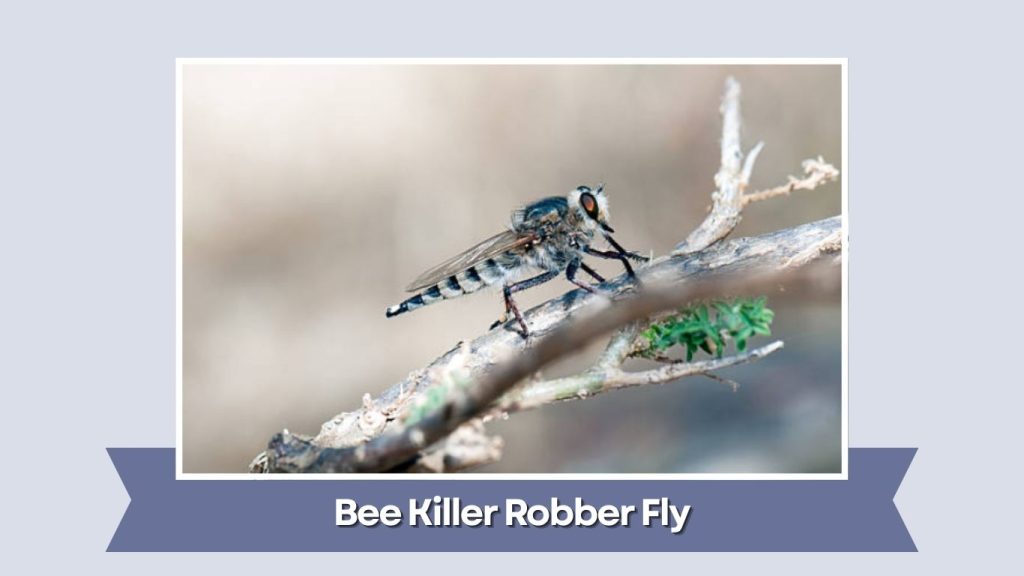
The Bee Killer Robber Fly is a large, hairy robber fly that closely resembles a bumblebee. This mimicry helps protect it from predators while allowing it to approach prey more easily. Despite its name, the Bee Killer Robber Fly does not feed exclusively on bees, although bees are among its preferred targets. It is commonly found in meadows, gardens, and open woodland habitats throughout parts of North and South America.
Characteristics
- Bumblebee-like appearance with dense body hair
- Large and robust body structure
- Black and yellow coloration that mimics bees
- Powerful legs adapted for grasping prey
- Large compound eyes with excellent vision
- Strong, fast flight abilities
- Prominent facial bristles (mystax)
- Length typically ranges from 20–30 mm
Habitat and Distribution
Bee Killer Robber Flies inhabit a variety of sunny environments, including grasslands, fields, gardens, and forest edges. They are most commonly observed during the warmer months when insect activity is high. These flies often perch on vegetation or exposed branches, waiting patiently for suitable prey to pass nearby. Their range extends across many parts of the Americas, where they thrive in regions with abundant flowering plants and pollinating insects.
Feeding Behavior
This species is an ambush predator that captures insects in midair. Bees, wasps, butterflies, and other flying insects are common targets. After seizing its prey with powerful legs, the robber fly injects paralyzing saliva and digestive enzymes. The prey’s internal tissues are liquefied and consumed, providing the fly with essential nutrients for growth and reproduction.
Ecological Importance
Bee Killer Robber Flies contribute to ecosystem balance by regulating populations of many flying insects. Although they sometimes prey on pollinators such as bees, they also help control pest insects. Their role as both predator and prey makes them an important part of food webs in natural and agricultural environments.
3. Hanging Thief Robber Fly (Diogmites spp.)
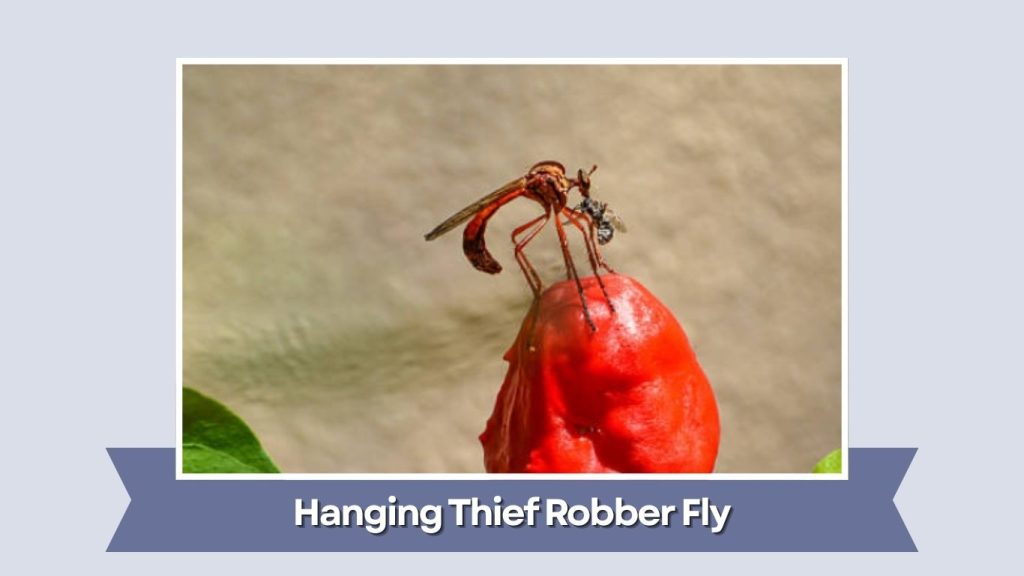
The Hanging Thief Robber Fly is a distinctive member of the robber fly family known for its unusual feeding posture. After capturing prey, it often hangs from vegetation using only one or two legs while feeding. This unique behavior has earned it the common name “Hanging Thief.” These slender, long-legged flies are commonly found in woodlands, gardens, and open grassy areas.
Characteristics
- Slender body with exceptionally long legs
- Body length typically between 15–35 mm
- Narrow abdomen and elongated appearance
- Large eyes for detecting moving prey
- Strong spiny legs for capturing insects
- Excellent aerial hunting skills
- Usually brown, black, or yellowish in color
- Known for hanging while feeding
Habitat and Distribution
Hanging Thief Robber Flies are widespread throughout North America and can be found in forests, meadows, parks, and gardens. They prefer warm, sunny locations where flying insects are abundant. Adults are most active during summer and are often seen resting on plant stems, shrubs, or tree branches while searching for prey.
Feeding Behavior
Like other robber flies, Hanging Thieves are skilled aerial hunters. They attack a variety of insects, including flies, bees, moths, and beetles. Once prey is captured, the fly frequently suspends itself from vegetation while feeding. This behavior may help reduce the risk of interference from predators or competing insects.
Ecological Importance
Hanging Thief Robber Flies play an important role in controlling insect populations. By preying on numerous flying insects, they help maintain ecological balance and contribute to natural pest management. Their presence is often considered a sign of a healthy and diverse insect community.
4. Red-Footed Cannibalfly (Promachus rufipes)
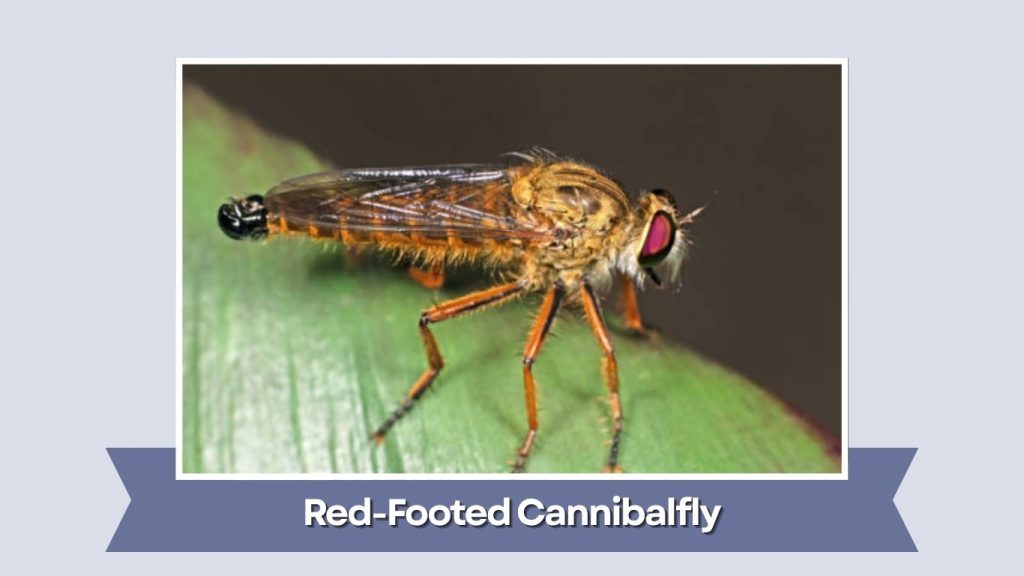
The Red-Footed Cannibalfly is one of the most recognizable robber flies in North America. Its name comes from the reddish coloration on its legs and its habit of preying on other insects, including fellow robber flies. This large and powerful predator is commonly found in fields, grasslands, and agricultural areas where flying insects are abundant. Its speed, strength, and hunting skills make it one of the most effective aerial predators among insects.
Characteristics
- Large body measuring 25–40 mm in length
- Distinctive reddish or orange-colored legs
- Gray, brown, or black body coloration
- Dense facial bristles that protect the head during attacks
- Large compound eyes with excellent vision
- Strong, spiny legs for gripping prey
- Fast and agile flight capabilities
- Occasionally preys on other robber flies
Habitat and Distribution
The Red-Footed Cannibalfly is widely distributed throughout the eastern and central regions of North America. It prefers open habitats such as meadows, pastures, farmlands, and roadside vegetation. Adults are most active during the summer months and are often seen perched on tall plants, waiting for prey to pass within striking distance.
Feeding Behavior
This species is an aggressive predator that targets a variety of insects, including beetles, bees, wasps, grasshoppers, and flies. It captures prey in flight and uses its sharp mouthparts to inject digestive enzymes. These enzymes immobilize the victim and liquefy its internal tissues, allowing the fly to consume the nutrient-rich fluid.
Ecological Importance
Red-Footed Cannibalflies help maintain healthy ecosystems by controlling insect populations. Their predatory behavior reduces the numbers of many pest species, making them beneficial insects in agricultural and natural environments.
5. Black Robber Fly (Asilus crabroniformis)
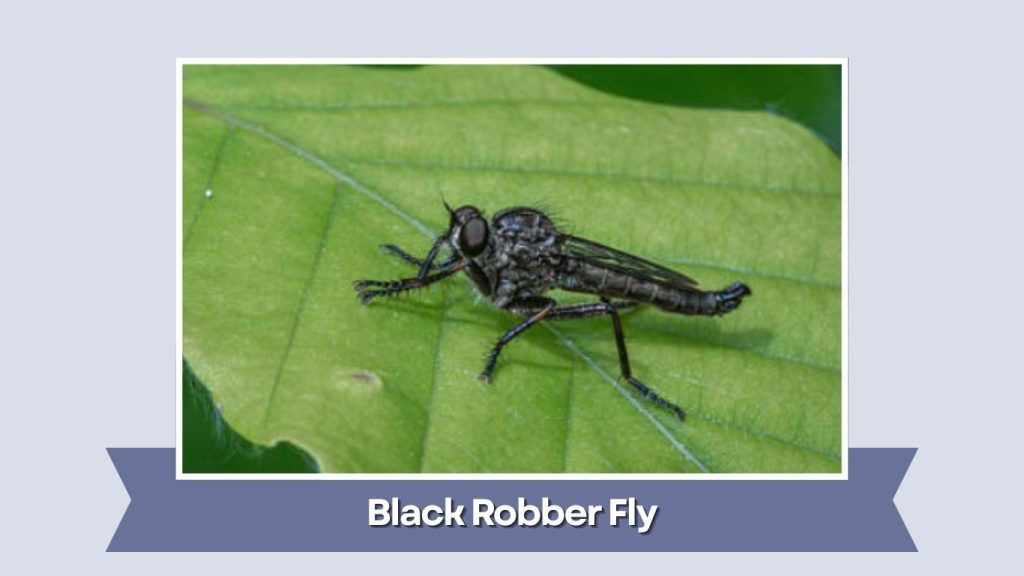
The Black Robber Fly is one of the largest robber fly species found in Europe. Its dark coloration and impressive size give it a formidable appearance. Despite its intimidating look, it poses little threat to humans and primarily focuses on hunting insects. This species is often associated with grasslands and grazing areas where prey is plentiful.
Characteristics
- Large and robust body structure
- Predominantly black or dark brown coloration
- Length typically ranges from 20–35 mm
- Thick facial bristles forming a protective mystax
- Strong legs equipped with sharp spines
- Large eyes that provide excellent vision
- Powerful flight muscles for rapid pursuit
- Distinctive elongated abdomen
Habitat and Distribution
Black Robber Flies are mainly found across parts of Europe, particularly in grasslands, heathlands, and pasture ecosystems. They favor sunny, open habitats with rich insect populations. Adults are usually active from mid-summer to early autumn and often rest on low vegetation while searching for prey.
Feeding Behavior
These flies are skilled predators that hunt beetles, flies, wasps, and other insects. They typically launch surprise attacks from a perch and capture prey in flight. Once secured, digestive saliva is injected into the victim, allowing the fly to consume the liquefied tissues.
Ecological Importance
The Black Robber Fly serves as a natural regulator of insect populations. By feeding on numerous insects, it contributes to ecological balance and helps limit the spread of certain pest species. Its presence is often considered an indicator of healthy grassland habitats.
6. Yellow Jacket Robber Fly (Laphria flavicollis)
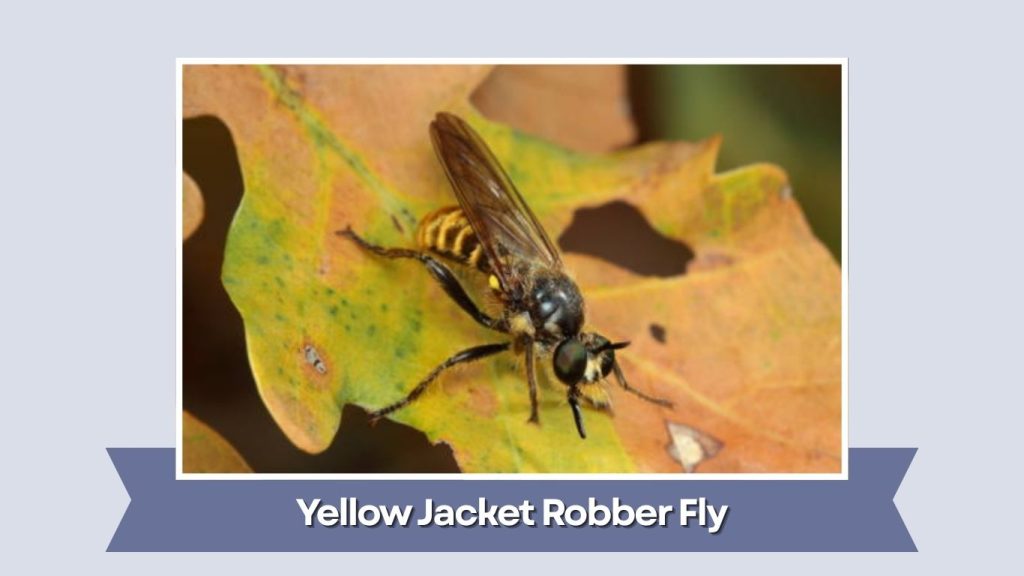
The Yellow Jacket Robber Fly is a striking species that closely resembles yellow jacket wasps. This resemblance helps deter predators and allows the fly to blend into environments where stinging insects are common. As a member of the robber fly family, it is a skilled predator that hunts a wide range of flying insects. It is most often found in wooded areas, forest edges, and regions with abundant insect activity.
Characteristics
- Resembles a yellow jacket wasp in appearance
- Dense yellow and black body hairs
- Medium to large body size
- Strong spiny legs for capturing prey
- Large compound eyes with excellent vision
- Prominent facial bristles (mystax)
- Fast and agile flight abilities
- Robust body adapted for predation
Habitat and Distribution
Yellow Jacket Robber Flies are commonly found in forests, woodlands, and areas with decaying trees. They are particularly attracted to sunny clearings and forest edges where prey insects are abundant. This species is distributed across parts of Europe and North America, depending on the specific population and habitat conditions. Adults are usually active during the warmer months of the year.
Feeding Behavior
Like other robber flies, this species is an aerial predator. It hunts bees, wasps, flies, beetles, and various other insects. The fly typically waits on a perch before rapidly intercepting prey in flight. After capture, it injects digestive enzymes that paralyze and liquefy the victim’s tissues, allowing easy consumption.
Ecological Importance
The Yellow Jacket Robber Fly helps regulate insect populations within forest ecosystems. By preying on numerous flying insects, it contributes to natural pest control and supports ecological balance. Its presence is often associated with healthy woodland habitats.
7. Bee-Like Robber Fly (Laphria spp.)
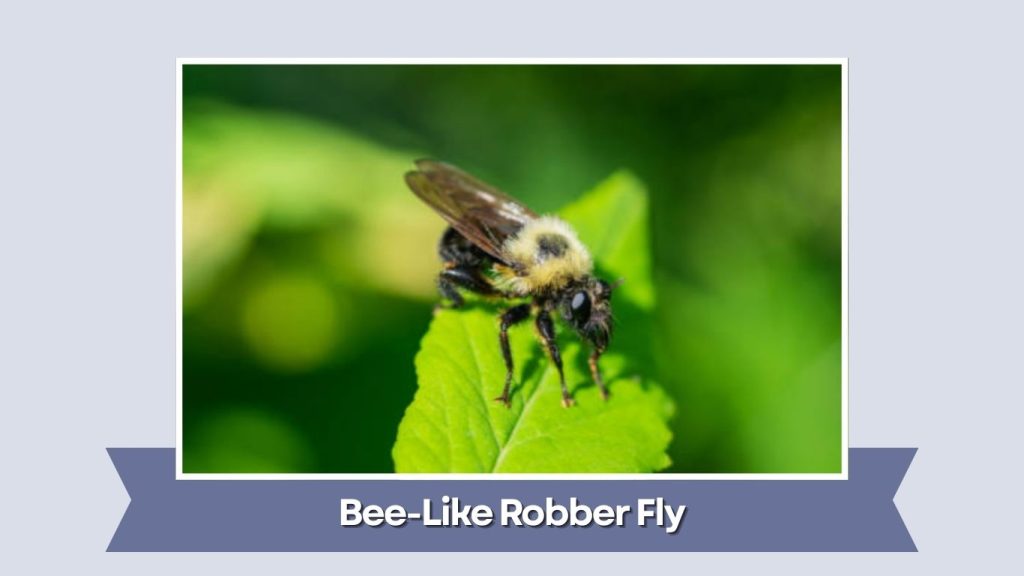
Bee-Like Robber Flies are among the most visually impressive robber flies due to their remarkable resemblance to bumblebees. Their hairy bodies and bee-like coloration provide protection from predators that avoid stinging insects. Despite their harmless appearance, these flies are highly efficient predators capable of capturing insects larger than themselves.
Characteristics
- Strong resemblance to bumblebees
- Thick, dense body hair
- Black, yellow, orange, or golden coloration
- Large compound eyes for detecting prey
- Powerful legs equipped with spines
- Stout body and strong thorax
- Excellent aerial hunting abilities
- Length typically ranges from 15–30 mm
Habitat and Distribution
Bee-Like Robber Flies are commonly found in forests, woodland clearings, gardens, and meadows. Many species prefer habitats with dead or decaying wood, where larvae develop. They occur throughout North America, Europe, and parts of Asia. Adults are frequently observed resting on tree trunks, logs, or branches while waiting for prey.
Feeding Behavior
These robber flies hunt a variety of insects, including bees, butterflies, flies, beetles, and wasps. They use a sit-and-wait strategy, launching rapid attacks when prey comes within range. Once captured, the prey is subdued with digestive saliva and consumed as liquefied nutrients.
Ecological Importance
Bee-Like Robber Flies play a significant role in maintaining insect population balance. Their predatory behavior helps reduce excessive insect numbers and contributes to ecosystem stability. They also serve as indicators of healthy forest environments where biodiversity remains high.
8. Giant Red Robber Fly (Microstylum morosum)
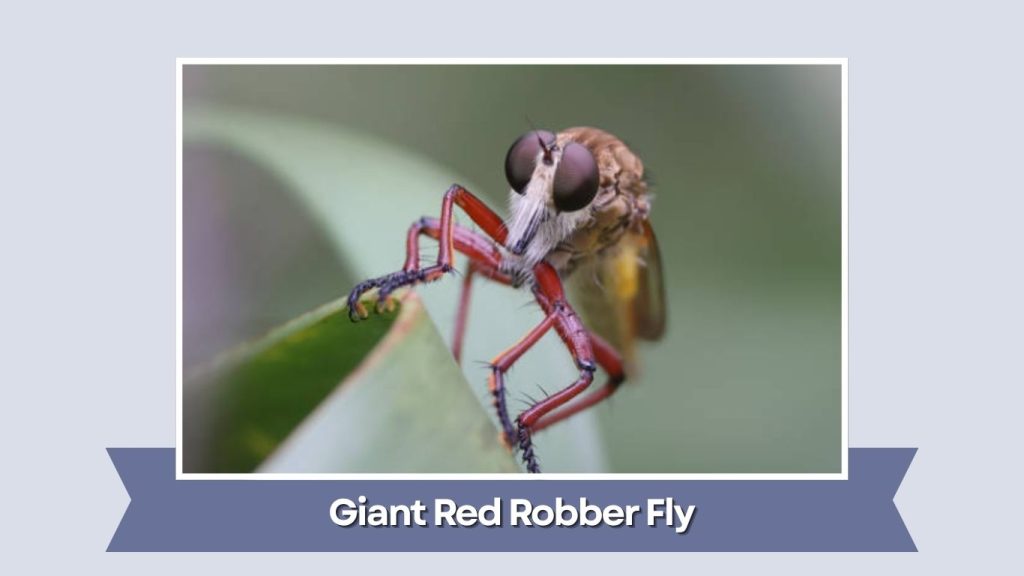
The Giant Red Robber Fly is one of the largest robber fly species found in Asia. Known for its impressive size and reddish coloration, this powerful predator dominates the insect world in its habitat. It is commonly seen resting on branches, fences, or exposed vegetation, where it waits for suitable prey. Its strength, speed, and excellent vision make it a highly effective hunter.
Characteristics
- One of the largest robber fly species
- Distinct reddish-brown body coloration
- Long, slender abdomen
- Large compound eyes with excellent eyesight
- Strong legs covered with spines
- Dense facial bristles for protection
- Powerful and fast flight
- Length can exceed 40 mm
Habitat and Distribution
The Giant Red Robber Fly is widely distributed across South and Southeast Asia, including India, Bangladesh, Thailand, and neighboring countries. It prefers open grasslands, agricultural fields, forest edges, and rural landscapes. Adults are most active during warm and sunny weather, often choosing elevated perches to monitor their surroundings.
Feeding Behavior
This species preys on a wide variety of insects, including beetles, grasshoppers, dragonflies, bees, and other flies. It captures prey in flight using its strong legs and immediately injects digestive saliva. The enzymes rapidly break down the prey’s internal tissues, allowing the fly to consume the nutrient-rich liquid.
Ecological Importance
The Giant Red Robber Fly helps maintain ecological balance by controlling populations of many insect species. Its predatory activities reduce the abundance of agricultural pests and contribute to healthier ecosystems. As a top insect predator, it plays an important role in natural food webs.
9. White-Bearded Robber Fly (Efferia albibarbis)
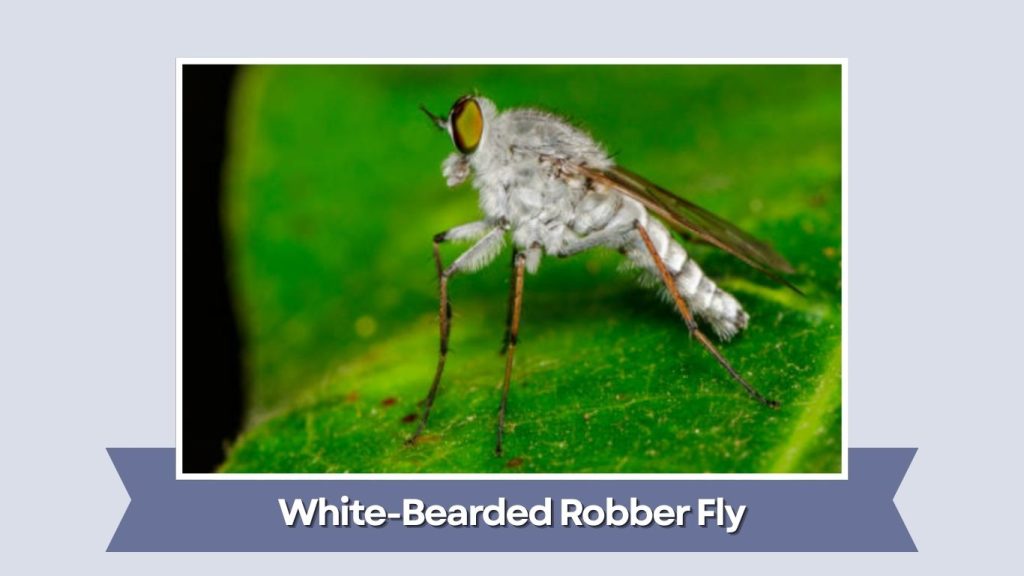
The White-Bearded Robber Fly is named for the distinctive white bristles covering its face. These bristles form a protective structure known as a mystax, which shields the head during encounters with struggling prey. This species is a skilled aerial hunter and is commonly found in dry, open habitats where insects are plentiful.
Characteristics
- Prominent white facial bristles (“beard”)
- Slender yet robust body structure
- Gray, black, or brown coloration
- Large compound eyes for superior vision
- Long spiny legs for grasping prey
- Excellent flight speed and agility
- Narrow, elongated abdomen
- Body length typically ranges from 20–35 mm
Habitat and Distribution
White-Bearded Robber Flies are primarily found in North America, especially in grasslands, deserts, prairies, and open woodlands. They thrive in warm, sunny environments with abundant insect populations. Adults are frequently seen perched on rocks, shrubs, or tall grasses while searching for prey.
Feeding Behavior
These robber flies are ambush predators that attack insects in midair. Their diet includes flies, bees, wasps, beetles, and various other flying insects. After capturing prey, they inject digestive enzymes that paralyze the victim and liquefy its internal tissues. The fly then consumes the resulting fluid.
Ecological Importance
White-Bearded Robber Flies contribute significantly to natural pest control. By reducing populations of numerous insects, they help maintain ecological stability in grassland and desert ecosystems. Their presence often indicates a healthy environment with a diverse insect community.
10. Gray Robber Fly (Efferia spp.)
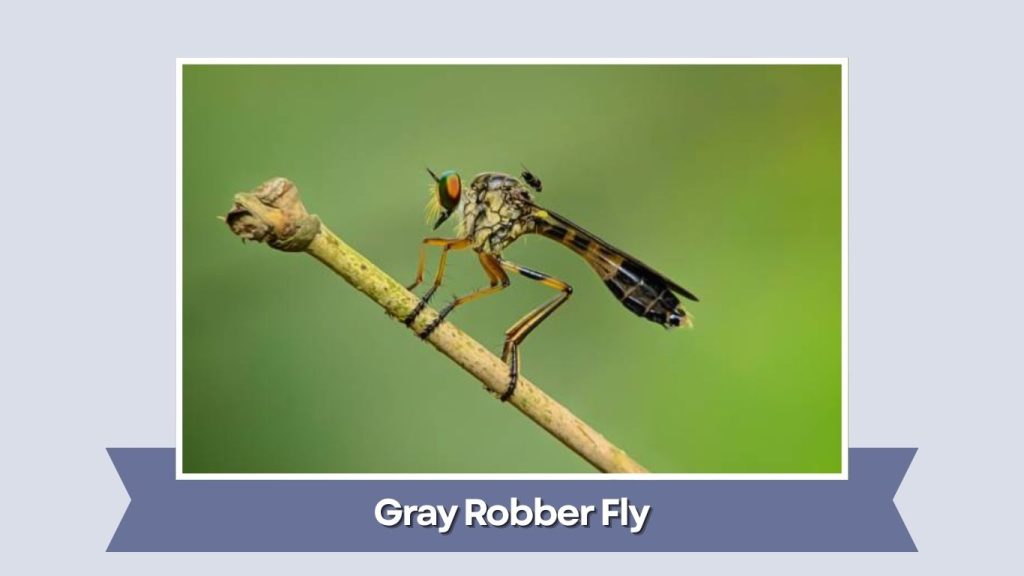
The Gray Robber Fly is a common and widespread member of the robber fly family. Its gray coloration provides excellent camouflage against soil, rocks, and dry vegetation, helping it remain hidden while waiting for prey. These flies are known for their speed, sharp vision, and aggressive hunting behavior. They are frequently observed in open landscapes where flying insects are abundant.
Characteristics
- Gray or grayish-brown body coloration
- Slender, elongated abdomen
- Large compound eyes with excellent vision
- Dense facial bristles forming a mystax
- Long spiny legs adapted for capturing prey
- Strong and rapid flight abilities
- Medium to large body size
- Highly effective aerial predator
Habitat and Distribution
Gray Robber Flies are found throughout North America and in various other regions depending on the species. They inhabit grasslands, prairies, deserts, agricultural fields, and open woodland areas. These insects prefer warm, sunny environments and are most active during the summer months. They often perch on rocks, fence posts, or tall vegetation while searching for prey.
Feeding Behavior
As ambush predators, Gray Robber Flies attack a wide variety of flying insects. Their diet includes flies, beetles, bees, wasps, butterflies, and grasshoppers. Once prey is detected, the fly launches a swift aerial pursuit and captures it with powerful legs. Digestive enzymes are then injected into the victim, allowing the fly to consume liquefied tissues.
Ecological Importance
Gray Robber Flies play an essential role in regulating insect populations. Their predatory behavior helps reduce the numbers of pest insects and contributes to the overall balance of natural ecosystems. They are considered valuable biological control agents in many habitats.
11. Feather-Legged Robber Fly (Dasypogon diadema)
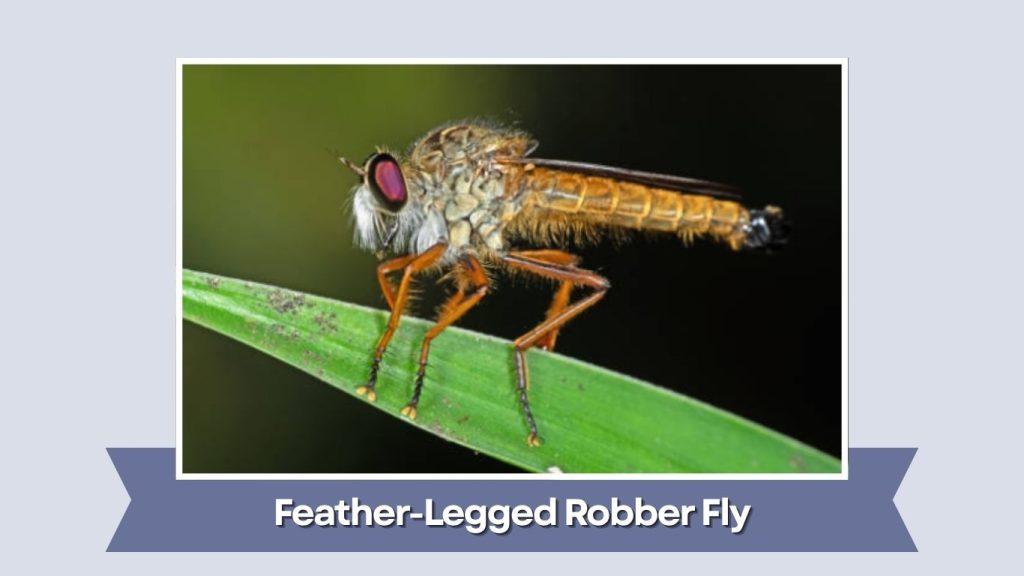
The Feather-Legged Robber Fly is a distinctive species recognized for the dense hairs covering its legs. These feather-like structures give the insect a unique appearance and make it one of the more easily identifiable robber flies. It is a skilled predator that inhabits sunny, open environments where prey insects are readily available.
Characteristics
- Dense feather-like hairs on the legs
- Compact and robust body structure
- Dark brown or black coloration
- Large compound eyes for detecting prey
- Strong spiny legs for gripping insects
- Well-developed facial bristles
- Excellent flight control and maneuverability
- Medium-sized robber fly species
Habitat and Distribution
The Feather-Legged Robber Fly is primarily found across Europe and parts of western Asia. It prefers dry grasslands, heathlands, open woodlands, and scrub habitats. Adults are most active during warm weather and are often seen resting on bare ground, rocks, or low vegetation while searching for prey.
Feeding Behavior
This species feeds on a variety of insects, including flies, beetles, bees, and wasps. It usually hunts from a perch, quickly intercepting prey that comes within range. After capturing its victim, the fly injects digestive saliva that immobilizes and dissolves internal tissues before feeding.
Ecological Importance
Feather-Legged Robber Flies contribute to healthy ecosystems by controlling populations of numerous insects. Their predatory activities help maintain natural balance and reduce the abundance of certain pest species. They are an important part of the food web in grassland and heathland environments.
12. Corsair Robber Fly (Tolmerus atricapillus)
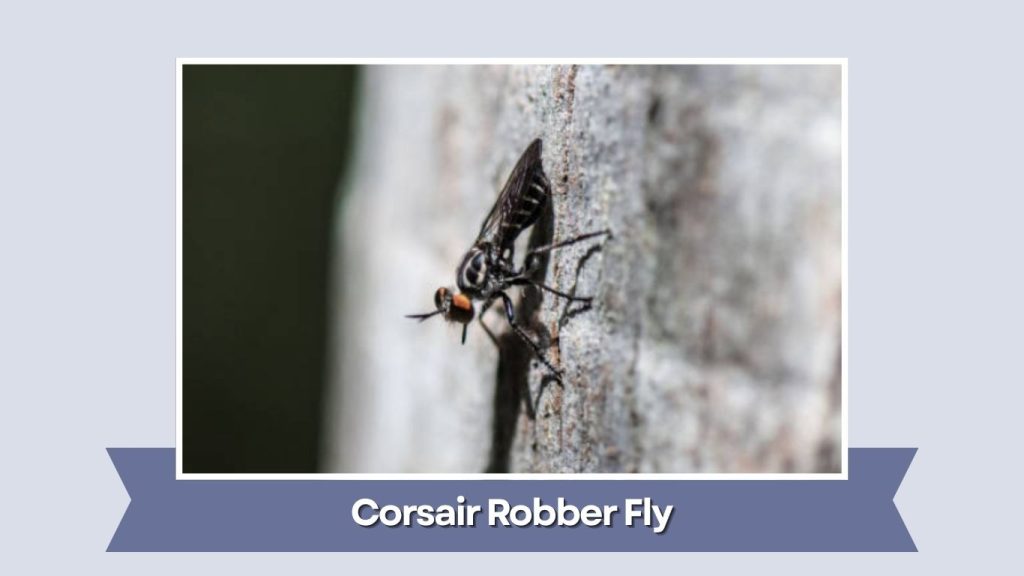
The Corsair Robber Fly is a widespread European species known for its slender body and remarkable hunting abilities. It is often seen resting on sunlit vegetation, fence posts, or tree branches while scanning for prey. Like other robber flies, it is an aerial predator that relies on speed, precision, and excellent eyesight to capture insects in flight.
Characteristics
- Slender and elongated body shape
- Grayish-brown to black coloration
- Large compound eyes with excellent vision
- Prominent facial bristles (mystax)
- Long, powerful legs with sharp spines
- Fast and agile flight capabilities
- Narrow abdomen with a pointed appearance
- Medium-sized robber fly species
Habitat and Distribution
The Corsair Robber Fly is widely distributed throughout Europe and parts of Asia. It inhabits grasslands, meadows, woodland edges, gardens, and open countryside. Adults are most active during the warmer months, especially in sunny weather. They frequently perch on elevated surfaces where they can easily spot potential prey.
Feeding Behavior
This species is a highly effective predator that hunts flies, bees, wasps, beetles, butterflies, and other insects. After detecting prey, it launches a rapid aerial attack and captures the victim with its spiny legs. Digestive enzymes are injected into the prey, liquefying its internal tissues for easy consumption.
Ecological Importance
Corsair Robber Flies help regulate insect populations and contribute to natural pest control. Their role as predators supports ecosystem balance and reduces the abundance of various pest insects. They are an important component of many grassland and woodland ecosystems.
13. Woodland Robber Fly (Laphria gibbosa)
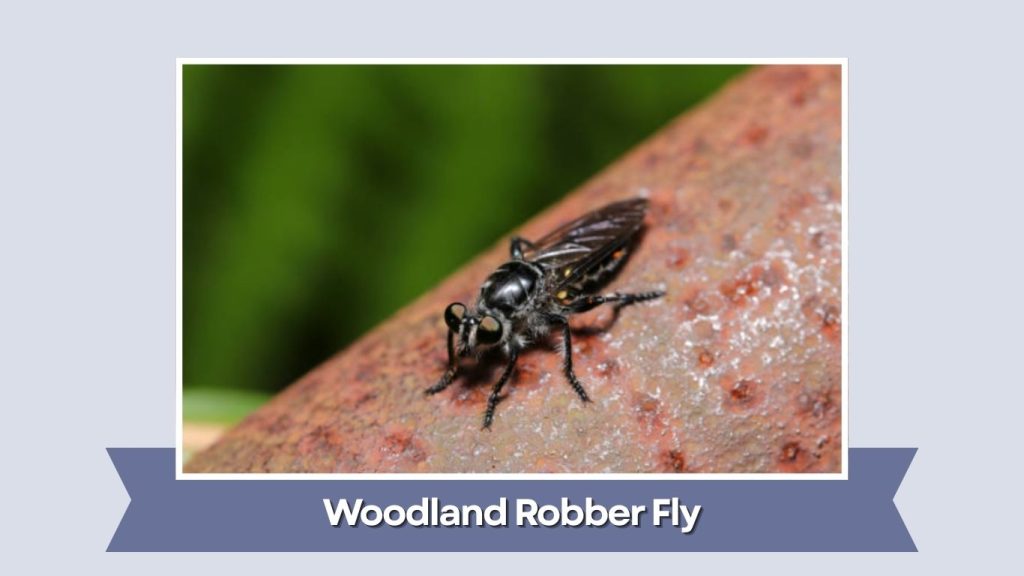
The Woodland Robber Fly is a bee-mimicking species commonly found in forested habitats. Its hairy body and coloration resemble those of bumblebees, helping it avoid predators. Despite its harmless appearance, this fly is a powerful predator capable of capturing insects both on the wing and from vegetation.
Characteristics
- Bumblebee-like appearance
- Dense black and yellow body hairs
- Stout and robust body structure
- Large compound eyes
- Strong spiny legs for holding prey
- Thick facial bristles for protection
- Excellent flying and hunting skills
- Medium to large body size
Habitat and Distribution
Woodland Robber Flies are primarily found in forests, woodland clearings, and areas with decaying trees. They are distributed across Europe and parts of Asia. Adults are often observed resting on tree trunks, fallen logs, or branches, where they wait for passing insects. Their preference for wooded habitats distinguishes them from many other robber fly species.
Feeding Behavior
These flies prey on a variety of insects, including flies, beetles, bees, and wasps. They typically use a sit-and-wait hunting strategy, remaining motionless until prey comes within range. Once captured, the prey is immobilized with digestive saliva and consumed as liquefied nutrients.
Ecological Importance
Woodland Robber Flies play a valuable role in forest ecosystems by controlling insect populations. They help maintain ecological balance and contribute to biodiversity by serving as both predators and prey within woodland food webs. Their presence is often an indicator of a healthy forest environment.
14. Common Awl Robber Fly (Neoitamus cyanurus)
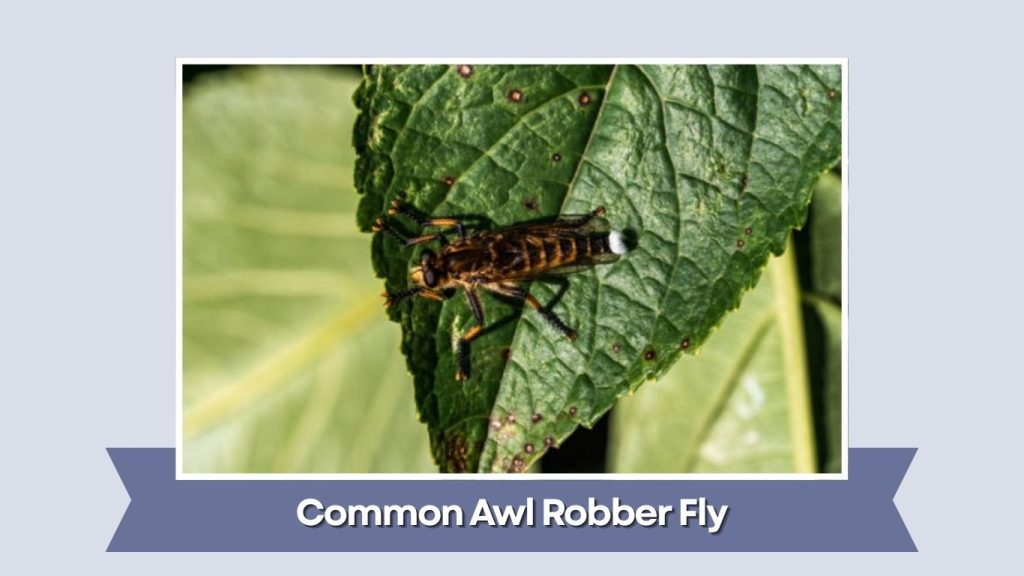
The Common Awl Robber Fly is a slender and agile predator commonly found across Europe and parts of Asia. It gets its name from its long, pointed abdomen, which resembles an awl—a tool used for piercing materials. This species is highly active during warm months and is often seen perched on vegetation, waiting for prey. Despite its relatively modest size compared to some robber flies, it is a highly efficient hunter capable of capturing insects in midair.
Characteristics
- Slender body with a long, pointed abdomen
- Gray, brown, or black coloration
- Large compound eyes for excellent vision
- Distinct facial bristles (mystax)
- Long legs equipped with sharp spines
- Fast and agile flight abilities
- Medium-sized robber fly species
- Skilled aerial predator
Habitat and Distribution
The Common Awl Robber Fly is widely distributed throughout Europe and extends into parts of Asia. It inhabits grasslands, meadows, woodland edges, gardens, and agricultural areas. This species prefers sunny locations with abundant insect activity. Adults are most commonly observed from late spring through early autumn, often resting on tall grasses, shrubs, or fence posts.
Feeding Behavior
Like other robber flies, the Common Awl Robber Fly is an ambush predator. It hunts a variety of insects, including flies, beetles, bees, wasps, and small butterflies. After spotting prey, it launches a rapid attack and captures the victim using its spiny legs. Digestive saliva is then injected into the prey, breaking down internal tissues into a liquid form that can be consumed.
Ecological Importance
The Common Awl Robber Fly plays an important role in maintaining ecological balance by controlling populations of flying insects. Its predatory behavior helps reduce the numbers of potential pest species and supports healthy ecosystems. As both a predator and a food source for larger animals, it contributes significantly to local food webs.
Frequently Asked Questions (FAQs) About Robber Flies
1. What is a robber fly?
A robber fly is a predatory insect belonging to the family Asilidae. These flies are known for their excellent hunting skills and ability to capture other insects in flight.
2. Are robber flies dangerous to humans?
No, robber flies are generally not dangerous to humans. They rarely bite people and usually only do so if handled or threatened.
3. What do robber flies eat?
Robber flies feed on a variety of insects, including flies, bees, wasps, beetles, butterflies, grasshoppers, and other flying insects.
4. Where are robber flies commonly found?
Robber flies can be found worldwide in habitats such as grasslands, forests, meadows, deserts, gardens, and agricultural fields.
5. How do robber flies catch their prey?
They use their excellent eyesight to locate prey and then launch a rapid aerial attack, grabbing the victim with their strong, spiny legs.
6. Why do some robber flies look like bees or wasps?
Many species mimic bees or wasps as a form of protective camouflage. This mimicry helps deter predators that avoid stinging insects.
7. Are robber flies beneficial to the environment?
Yes. Robber flies help control populations of many insects, including agricultural pests, making them valuable natural predators.
8. How large can robber flies grow?
Size varies by species, but some giant robber flies can exceed 40 mm (1.6 inches) in length.
9. Do robber flies have a stinger?
No, robber flies do not have a stinger. Their pointed abdomen may resemble a stinger, but it is harmless.
10. What is the lifespan of a robber fly?
Most robber flies live for several weeks to a few months as adults, though their complete life cycle may take one to several years depending on the species.
11. Can robber flies fly quickly?
Yes. Robber flies are among the fastest and most agile flying insects, allowing them to capture prey in midair.
12. What role do robber flies play in ecosystems?
They act as important predators that help maintain ecological balance by regulating insect populations and serving as part of the food web.