
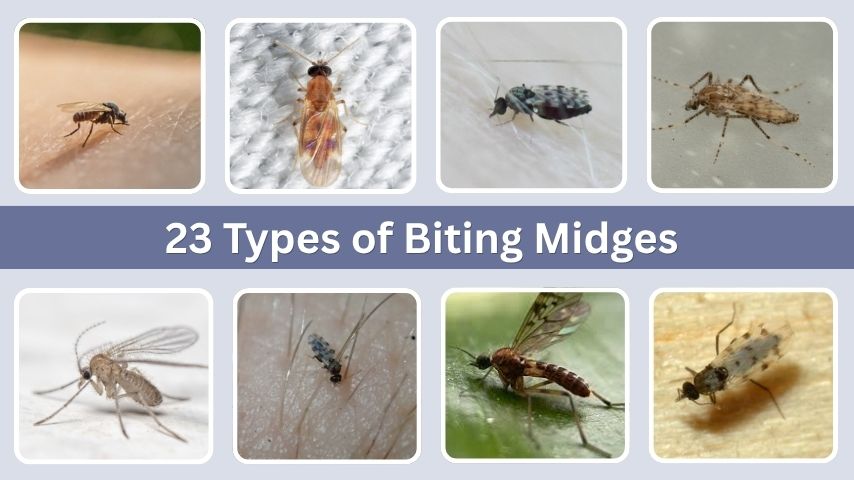
Biting midges are tiny, blood-feeding insects known for their painful bites and potential to transmit livestock and human pathogens. Found worldwide, especially in wetlands, pastures, and damp grassy areas, these insects are most active at dawn and dusk. While adults feed on mammal blood, larvae develop in moist, organic-rich soil or decaying vegetation, contributing to nutrient cycling. This guide explores 23 important biting midge species, detailing their identification, habitats, behaviors, diets, and lifecycles, providing a comprehensive resource for farmers, health professionals, and nature enthusiasts.
1. Culicoides impunctatus
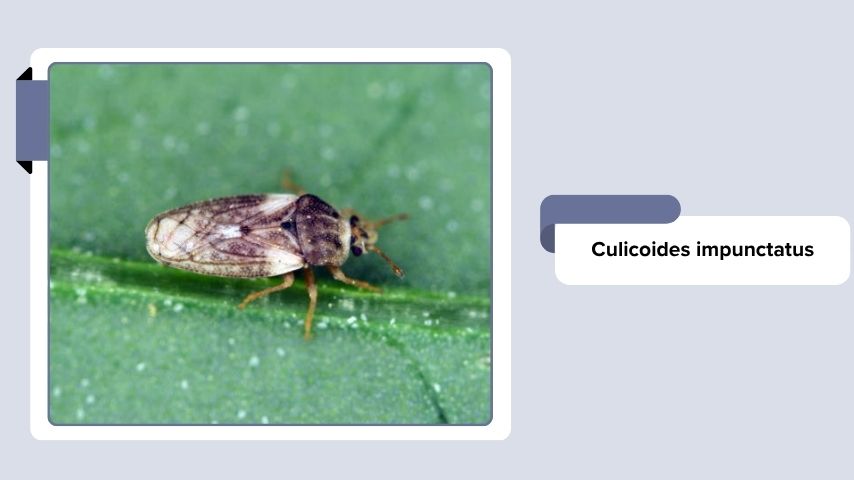
Culicoides impunctatus, commonly known as the Highland midge, is a small but notorious biting midge species found in northern Europe. These tiny, blood-feeding insects are known for their painful bites and swarming behavior during humid summer evenings. They are primarily active at dawn and dusk and can affect both humans and livestock. The larvae develop in damp, organic-rich soil or moss, contributing to nutrient cycling in their habitat.
Identification
- Very small, dark brown body (1–3 mm)
- Wings with fine dark spots
- Long, segmented antennae
- Slender legs adapted for landing on hosts
- Short, piercing mouthparts for blood feeding
Habitat and Distribution
Culicoides impunctatus is widespread in Scotland, Ireland, and northern Europe. Adults are most active near wetlands, moors, and damp grasslands. Larvae develop in moist soil, moss, or decaying vegetation where conditions are humid and rich in organic matter.
Behavior and Diet
Adults feed on the blood of mammals, including humans and livestock. They are most active during dawn and dusk and tend to swarm in large numbers. Larvae feed on decaying organic matter, contributing to soil nutrient cycling.
Lifecycle
Females lay eggs in damp, organic-rich substrates. Larvae pass through four instars, pupate in moist soil, and adults emerge after several weeks. Lifecycle duration varies with temperature and humidity, typically lasting 4–8 weeks.
2. Culicoides variipennis
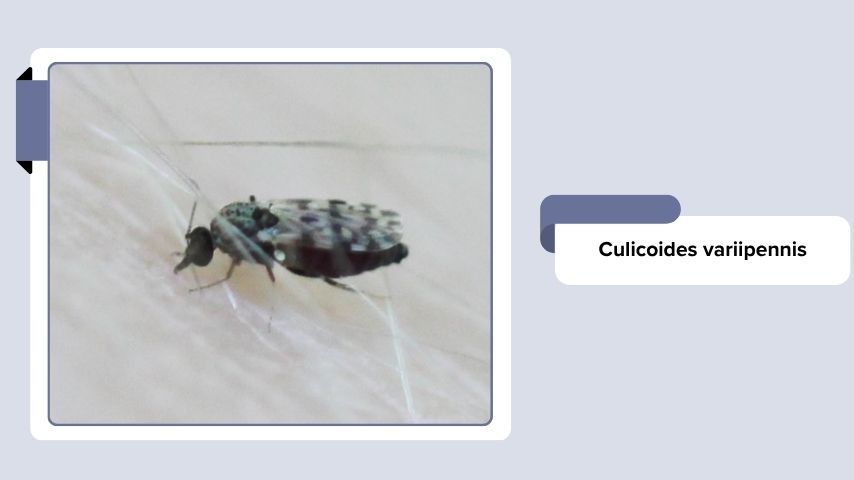
Culicoides variipennis is a small biting midge species native to North America, known for feeding on livestock and acting as a vector for bluetongue virus in cattle and sheep. These tiny insects are most active during dawn and dusk and are notorious for their persistent swarming around hosts. Larvae develop in moist, nutrient-rich soil or organic debris, contributing to decomposition and soil health.
Identification
- Very small, dark brown body (1–3 mm)
- Wings with subtle mottled or spotted patterns
- Long, segmented antennae
- Slender legs for landing on hosts
- Short, piercing mouthparts for blood feeding
Habitat and Distribution
Culicoides variipennis is widespread across the United States and parts of Canada. Adults are found near wetlands, pastures, and areas with moist soil. Larvae thrive in damp, organic-rich substrates such as mud, decaying vegetation, or animal waste.
Behavior and Diet
Adults feed on the blood of mammals, especially cattle and sheep, primarily at dawn and dusk. Larvae feed on decomposing organic matter, helping recycle nutrients. Adults are a significant nuisance to livestock and can transmit bluetongue virus.
Lifecycle
Females lay eggs in moist, nutrient-rich soil. Larvae develop through four instars, pupate in damp soil, and adults emerge after several weeks. Lifecycle duration varies with environmental conditions, typically 4–8 weeks.
3. Culicoides sonorensis
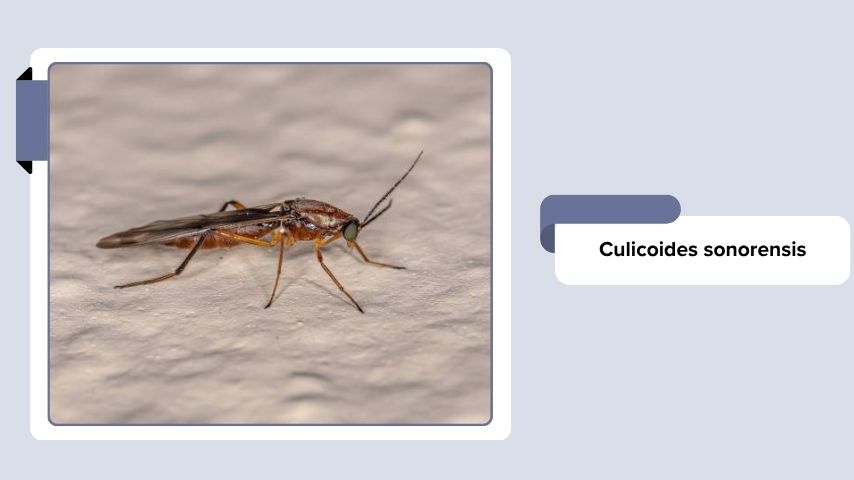
Culicoides sonorensis is a biting midge species widely known in North America as a major vector of bluetongue virus affecting livestock. These tiny, blood-feeding insects are most active during dawn and dusk and are attracted to cattle, sheep, and other mammals. Larvae develop in moist, organic-rich mud or soil, where they help decompose organic matter and maintain soil nutrient cycling.
Identification
- Small, dark brown body (1–3 mm)
- Wings with faint spotted or mottled patterns
- Long, segmented antennae
- Slender legs for landing on hosts
- Short, piercing proboscis for blood feeding
Habitat and Distribution
Culicoides sonorensis is found across the western and central United States and parts of Mexico. Adults are abundant near livestock pastures, wetlands, and irrigated fields. Larvae develop in moist soil, mud, or decaying vegetation, often in shaded areas.
Behavior and Diet
Adults feed on mammal blood, primarily from livestock, and are most active during dawn and dusk. Larvae feed on decaying organic matter, contributing to soil nutrient recycling. Adults are important disease vectors, transmitting bluetongue virus.
Lifecycle
Females lay eggs in moist, organic-rich soil. Larvae develop through four instars, pupate in soil, and adults emerge after several weeks. Lifecycle duration depends on temperature and humidity, typically lasting 4–8 weeks.
4. Culicoides nubeculosus
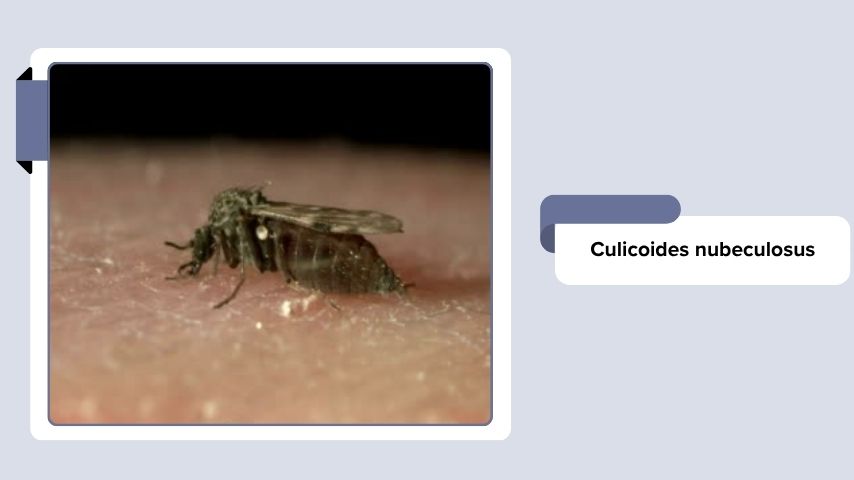
Culicoides nubeculosus is a biting midge species found across Europe, often used in research as a model vector for bluetongue and other livestock viruses. These small, blood-feeding insects are active at dawn and dusk and feed on mammals, including cattle, sheep, and occasionally humans. Larvae develop in moist, nutrient-rich soil or decaying organic matter, playing a minor role in soil nutrient cycling.
Identification
- Small, dark brown body (1–3 mm)
- Wings with fine mottled patterns
- Long, segmented antennae
- Slender legs adapted for landing on hosts
- Short, piercing mouthparts for blood feeding
Habitat and Distribution
Culicoides nubeculosus is widely distributed across Europe, particularly in pastures, wetlands, and moist grasslands. Larvae thrive in damp soil, mud, or decomposing organic material. Adults prefer shaded, humid areas and are most active during twilight hours.
Behavior and Diet
Adults feed on mammal blood, mainly from livestock, during dawn and dusk. Larvae consume decaying organic matter in soil, contributing to nutrient cycling. Adults are capable of transmitting livestock pathogens in research contexts.
Lifecycle
Females lay eggs in moist, organic-rich soil. Larvae pass through four instars, pupate in damp soil, and adults emerge after several weeks. Lifecycle duration varies with environmental temperature and humidity, typically 4–8 weeks.
5. Culicoides brevitarsis
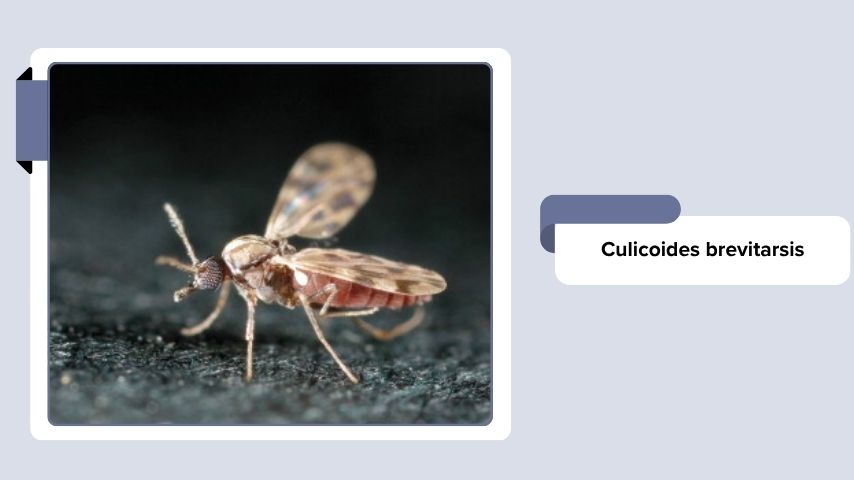
Culicoides brevitarsis is a biting midge species commonly found in Australia and parts of Southeast Asia. It is a known vector of livestock viruses such as bluetongue virus. These tiny, blood-feeding insects are most active at dawn and dusk and feed primarily on cattle, sheep, and other mammals. Larvae develop in moist, organic-rich soil or decaying plant material, contributing to decomposition and soil nutrient cycling.
Identification
- Small, dark brown body (1–3 mm)
- Wings with faint mottled patterns
- Long, segmented antennae
- Slender legs for landing on hosts
- Short, piercing proboscis for blood feeding
Habitat and Distribution
Culicoides brevitarsis is found across northern and eastern Australia and parts of Southeast Asia. Adults inhabit wetlands, pastures, and areas with moist soil. Larvae develop in damp soil, mud, or decaying vegetation, especially near livestock environments.
Behavior and Diet
Adults feed on mammal blood, particularly livestock, and are most active during dawn and dusk. Larvae feed on decaying organic matter in soil. Adults are important vectors of bluetongue virus and other livestock pathogens.
Lifecycle
Females lay eggs in moist, nutrient-rich soil. Larvae develop through four instars, pupate in damp soil, and adults emerge after several weeks. Lifecycle duration depends on temperature and humidity, typically 4–8 weeks.
6. Culicoides obsoletus
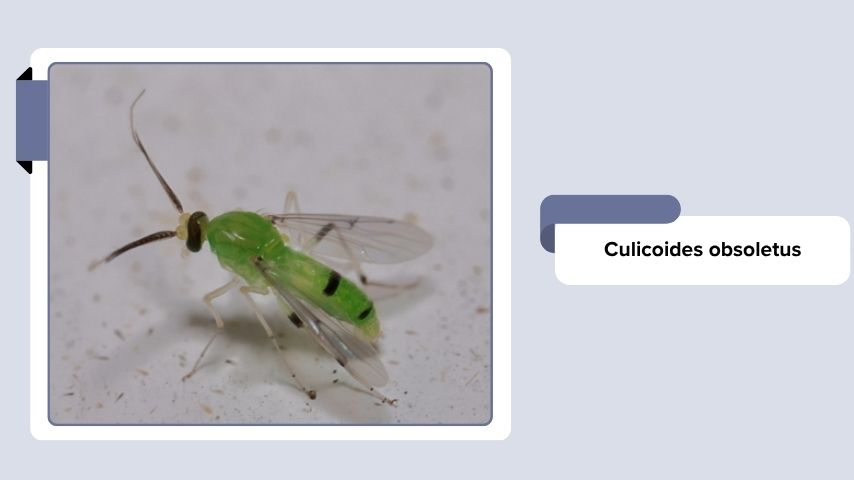
Culicoides obsoletus is a biting midge species widely found across Europe and parts of Asia. It is a significant vector of bluetongue virus and other livestock pathogens. These tiny, blood-feeding insects are most active during dawn and dusk, feeding on cattle, sheep, and other mammals. Larvae develop in moist, nutrient-rich soil or decaying organic matter, aiding in decomposition and soil health.
Identification
- Small, dark brown body (1–3 mm)
- Wings with faint mottled or spotted patterns
- Long, segmented antennae
- Slender legs for landing on hosts
- Short, piercing proboscis for blood feeding
Habitat and Distribution
Culicoides obsoletus is found throughout Europe, especially in pastures, wetlands, and damp grasslands. Larvae thrive in moist soil, mud, or decomposing organic material, often near livestock areas. Adults prefer shaded, humid resting spots and are most active at twilight.
Behavior and Diet
Adults feed on mammal blood, particularly livestock, mainly at dawn and dusk. Larvae consume decaying organic matter, contributing to soil nutrient cycling. Adults are important disease vectors, transmitting bluetongue and related viruses.
Lifecycle
Females lay eggs in moist, organic-rich soil. Larvae develop through four instars, pupate in damp soil, and adults emerge after several weeks. Lifecycle duration varies with temperature and humidity, typically 4–8 weeks.
7. Culicoides pulicaris
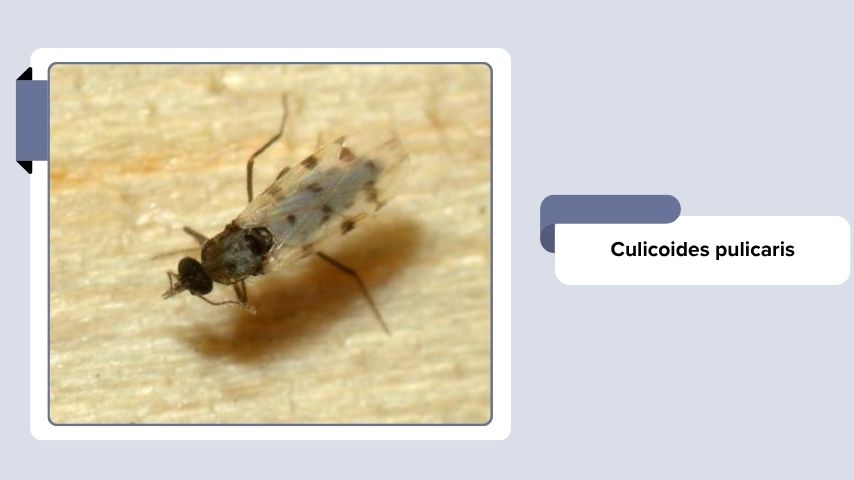
Culicoides pulicaris is a small biting midge species found throughout Europe and parts of Asia. It is a vector of livestock viruses and occasionally bites humans. These tiny, nocturnal insects are most active during dawn and dusk. Larvae develop in moist, organic-rich soil or decaying vegetation, contributing to nutrient cycling in the soil ecosystem.
Identification
- Small, dark brown body (1–3 mm)
- Wings with fine mottled or spotted patterns
- Long, segmented antennae
- Slender legs adapted for landing on hosts
- Short, piercing proboscis for blood feeding
Habitat and Distribution
Culicoides pulicaris is widespread across Europe, often near pastures, wetlands, and damp grassy areas. Larvae develop in moist soil, mud, or decaying organic material. Adults rest in shaded, humid microhabitats and are most active at dawn and dusk.
Behavior and Diet
Adults feed on mammal blood, mainly livestock and occasionally humans, during twilight hours. Larvae feed on decaying organic matter in soil, aiding in nutrient recycling. Adults are vectors of livestock pathogens and serve as prey for spiders and ants.
Lifecycle
Females lay eggs in moist, organic-rich soil. Larvae pass through four instars, pupate in damp soil, and adults emerge after several weeks. Lifecycle duration depends on temperature and humidity, typically 4–8 weeks.
8. Culicoides riethi
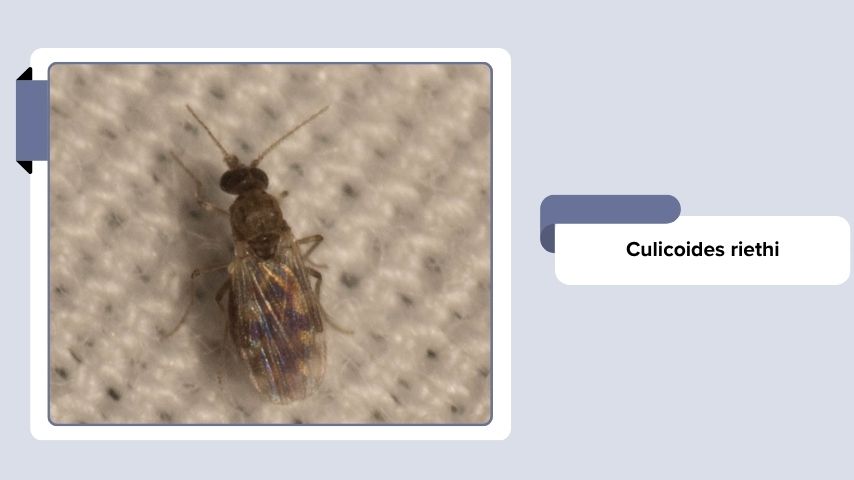
Culicoides riethi is a biting midge species found primarily in parts of Europe and Central Asia. These tiny, blood-feeding insects are most active at dawn and dusk and feed on mammals such as cattle, sheep, and occasionally humans. Larvae develop in moist, organic-rich soil or decaying vegetation, contributing to decomposition and nutrient cycling in their habitats.
Identification
- Small, dark brown body (1–3 mm)
- Wings with subtle mottled patterns
- Long, segmented antennae
- Slender legs for landing on hosts
- Short, piercing proboscis for blood feeding
Habitat and Distribution
Culicoides riethi is commonly found in wetlands, damp pastures, and grassy areas across Europe and Central Asia. Larvae thrive in moist soil, mud, and decaying organic matter, especially near livestock environments.
Behavior and Diet
Adults feed on mammal blood during dawn and dusk. Larvae consume decaying plant material, aiding in nutrient recycling. Adults are vectors of livestock pathogens and are preyed upon by spiders, ants, and other small predators.
Lifecycle
Females lay eggs in moist, nutrient-rich soil. Larvae develop through four instars, pupate in damp soil, and adults emerge after several weeks. Lifecycle duration typically ranges from 4–8 weeks, influenced by temperature and humidity.
9. Culicoides stellifer
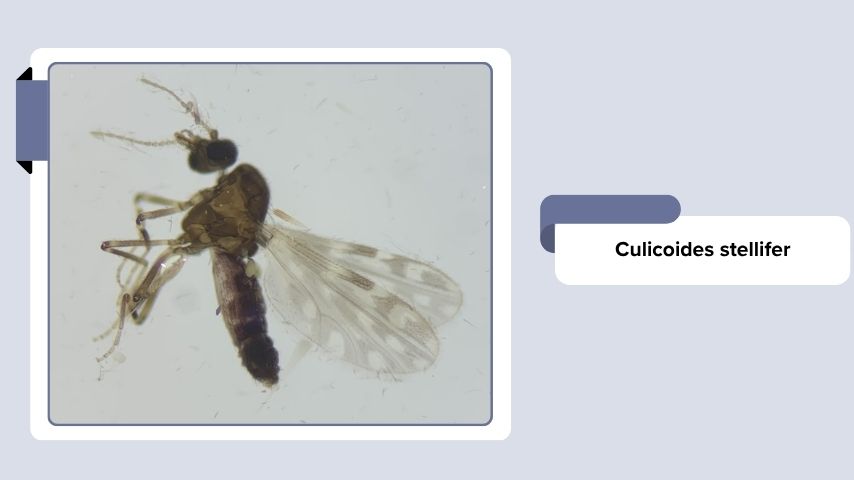
Culicoides stellifer is a biting midge species found primarily in North and Central America. These small, blood-feeding insects are most active during dawn and dusk and feed on mammals, including livestock and humans. Larvae develop in moist, organic-rich soil or decaying vegetation, contributing to nutrient cycling and supporting soil health.
Identification
- Small, dark brown body (1–3 mm)
- Wings with fine mottled or spotted patterns
- Long, segmented antennae
- Slender legs adapted for landing on hosts
- Short, piercing proboscis for blood feeding
Habitat and Distribution
Culicoides stellifer is commonly found in wetlands, pastures, and damp grassy areas across the United States and Central America. Larvae thrive in moist soil, mud, or decaying organic matter, particularly near livestock or shaded areas.
Behavior and Diet
Adults feed on mammal blood during dawn and dusk. Larvae consume decaying vegetation, aiding in soil nutrient recycling. Adults serve as vectors for livestock pathogens and are preyed upon by spiders, ants, and other small predators.
Lifecycle
Females lay eggs in moist, organic-rich soil. Larvae develop through four instars, pupate in damp soil, and adults emerge after several weeks. Lifecycle duration typically ranges from 4–8 weeks, depending on temperature and humidity.
10. Culicoides furens
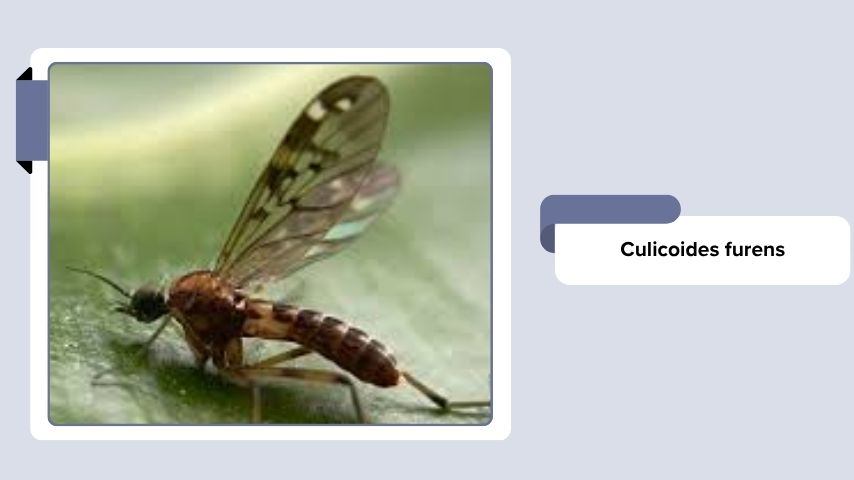
Culicoides furens is a biting midge species found in the Americas, particularly in the Caribbean and coastal regions of North and Central America. These tiny, blood-feeding insects are active during dawn and dusk and feed on mammals, including humans and livestock. Larvae develop in moist, organic-rich soil or decaying vegetation, contributing to decomposition and soil nutrient cycling.
Identification
- Small, dark brown body (1–3 mm)
- Wings with faint mottled patterns
- Long, segmented antennae
- Slender legs adapted for landing on hosts
- Short, piercing proboscis for blood feeding
Habitat and Distribution
Culicoides is commonly found in wetlands, coastal areas, and damp grasslands. Larvae develop in moist soil, mud, or decomposing organic matter, especially near livestock areas or shaded, humid environments.
Behavior and Diet
Adults feed on mammal blood at dawn and dusk. Larvae consume decaying organic matter, aiding in nutrient recycling. Adults are capable of transmitting livestock pathogens and serve as prey for spiders, ants, and other small predators.
Lifecycle
Females lay eggs in moist, organic-rich soil. Larvae pass through four instars, pupate in damp soil, and adults emerge after several weeks. Lifecycle duration depends on environmental temperature and humidity, typically 4–8 weeks.
11. Culicoides hollensis
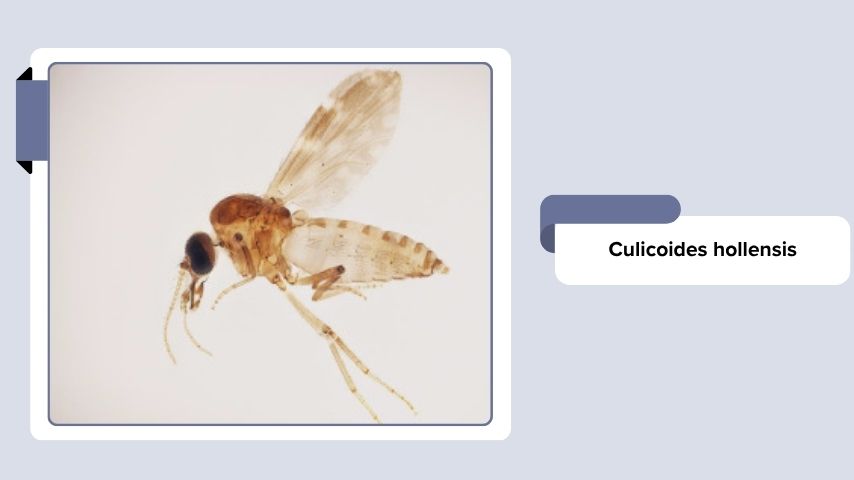
Culicoides hollensis is a biting midge species primarily found in Europe and parts of Asia. These tiny, blood-feeding insects are most active during dawn and dusk and feed on mammals, including livestock and occasionally humans. Larvae develop in moist, organic-rich soil or decaying vegetation, contributing to nutrient cycling and soil health.
Identification
- Small, dark brown body (1–3 mm)
- Wings with subtle mottled or spotted patterns
- Long, segmented antennae
- Slender legs adapted for landing on hosts
- Short, piercing proboscis for blood feeding
Habitat and Distribution
Culicoides hollensis is found in wetlands, pastures, and damp grassy areas across Europe and parts of Asia. Larvae thrive in moist soil, mud, and decomposing organic matter, often near livestock or shaded areas.
Behavior and Diet
Adults feed on mammal blood at dawn and dusk. Larvae consume decaying plant material, aiding in soil nutrient recycling. Adults can transmit livestock pathogens and serve as prey for spiders, ants, and other small predators.
Lifecycle
Females lay eggs in damp, organic-rich soil. Larvae develop through four instars, pupate in moist soil, and adults emerge after several weeks. Lifecycle duration typically ranges from 4–8 weeks, influenced by temperature and humidity.
12. Culicoides truncorum
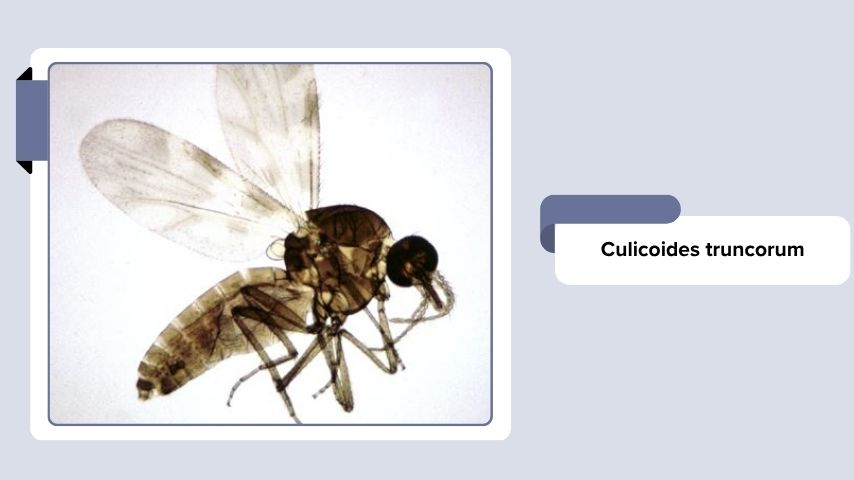
Culicoides truncorum is a biting midge species found across Europe, particularly in northern and central regions. These small, blood-feeding insects are active during dawn and dusk and feed on mammals, including livestock and occasionally humans. Larvae develop in moist, organic-rich soil or decaying vegetation, contributing to nutrient cycling in their habitats.
Identification
- Small, dark brown body (1–3 mm)
- Wings with faint mottled or spotted patterns
- Long, segmented antennae
- Slender legs for landing on hosts
- Short, piercing proboscis for blood feeding
Habitat and Distribution
Culicoides truncorum is commonly found in pastures, wetlands, and damp grassy areas across Europe. Larvae thrive in moist soil, mud, and decomposing organic matter, especially near livestock or shaded environments.
Behavior and Diet
Adults feed on mammal blood at dawn and dusk. Larvae consume decaying plant material in soil, aiding nutrient recycling. Adults are vectors for livestock pathogens and serve as prey for spiders, ants, and other small predators.
Lifecycle
Females lay eggs in moist, organic-rich soil. Larvae develop through four instars, pupate in damp soil, and adults emerge after several weeks. Lifecycle duration typically lasts 4–8 weeks depending on environmental conditions.
13. Culicoides vexans
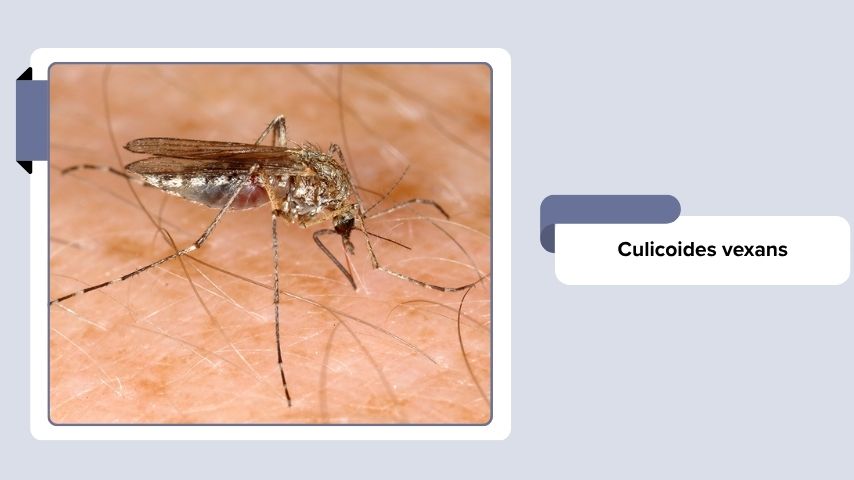
Culicoides vexans is a biting midge species found in parts of Europe, Asia, and Africa. These tiny, blood-feeding insects are active during dawn and dusk and feed on mammals, including humans and livestock. Larvae develop in moist, organic-rich soil or decaying vegetation, contributing to decomposition and nutrient cycling in their habitats.
Identification
- Small, dark brown body (1–3 mm)
- Wings with faint mottled or spotted patterns
- Long, segmented antennae
- Slender legs for landing on hosts
- Short, piercing proboscis for blood feeding
Habitat and Distribution
Culicoides vexans is commonly found near wetlands, pastures, and damp grassy areas. Larvae thrive in moist soil, mud, or decomposing organic material, often in shaded or humid environments near livestock.
Behavior and Diet
Adults feed on mammal blood at dawn and dusk. Larvae consume decaying plant matter in soil, aiding nutrient recycling. Adults can transmit livestock pathogens and are prey for spiders, ants, and other small predators.
Lifecycle
Females lay eggs in moist, nutrient-rich soil. Larvae develop through four instars, pupate in damp soil, and adults emerge after several weeks. Lifecycle duration typically ranges from 4–8 weeks, influenced by temperature and humidity.
14. Culicoides gejgelensis
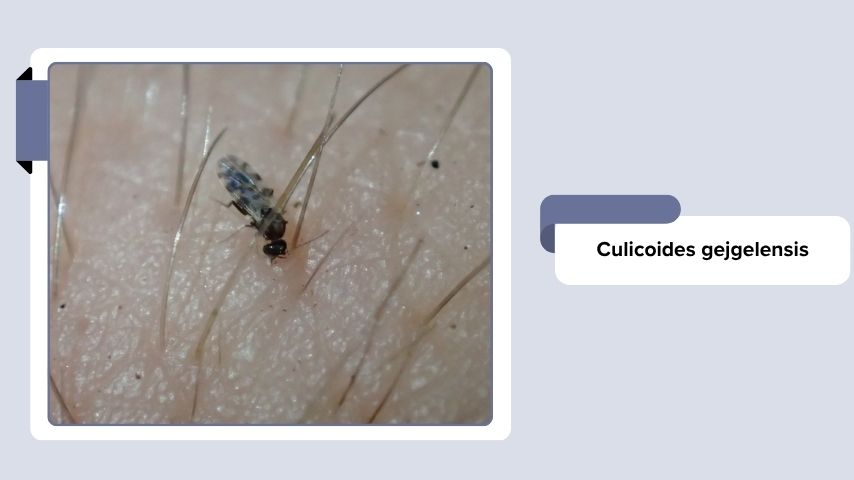
Culicoides gejgelensis is a biting midge species found in parts of Europe and Central Asia. These tiny, blood-feeding insects are most active during dawn and dusk and feed on mammals, including livestock and occasionally humans. Larvae develop in moist, organic-rich soil or decaying vegetation, contributing to decomposition and nutrient cycling within their habitats.
Identification
- Small, dark brown body (1–3 mm)
- Wings with subtle mottled or spotted patterns
- Long, segmented antennae
- Slender legs for landing on hosts
- Short, piercing proboscis for blood feeding
Habitat and Distribution
Culicoides gejgelensis is commonly found in wetlands, pastures, and damp grassy areas. Larvae thrive in moist soil, mud, and decaying organic matter, often near livestock or shaded areas.
Behavior and Diet
Adults feed on mammal blood at dawn and dusk. Larvae consume decaying plant material in soil, aiding nutrient recycling. Adults are vectors for livestock pathogens and serve as prey for spiders, ants, and other small predators.
Lifecycle
Females lay eggs in damp, nutrient-rich soil. Larvae develop through four instars, pupate in moist soil, and adults emerge after several weeks. Lifecycle duration typically ranges from 4–8 weeks depending on environmental conditions.
15. Culicoides circumscriptus
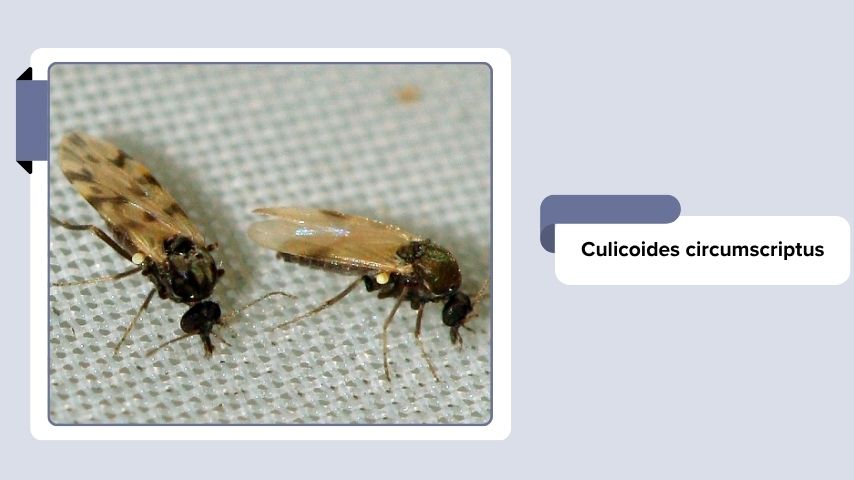
Culicoides circumscriptus is a biting midge species found across Europe, North Africa, and parts of the Middle East. These small, blood-feeding insects are active during dawn and dusk and feed on mammals, including humans and livestock. Larvae develop in moist, organic-rich soil or decaying vegetation, contributing to decomposition and nutrient cycling.
Identification
- Small, dark brown body (1–3 mm)
- Wings with faint mottled patterns
- Long, segmented antennae
- Slender legs for landing on hosts
- Short, piercing proboscis for blood feeding
Habitat and Distribution
Culicoides circumscriptus is commonly found in wetlands, pastures, and damp grassy areas. Larvae thrive in moist soil, mud, and decomposing organic material, often near livestock or shaded environments.
Behavior and Diet
Adults feed on mammal blood at dawn and dusk. Larvae consume decaying plant matter in soil, aiding nutrient recycling. Adults can transmit livestock pathogens and are preyed upon by spiders, ants, and other small predators.
Lifecycle
Females lay eggs in moist, nutrient-rich soil. Larvae develop through four instars, pupate in damp soil, and adults emerge after several weeks. Lifecycle duration typically ranges from 4–8 weeks, influenced by temperature and humidity.
16. Culicoides dewulfi
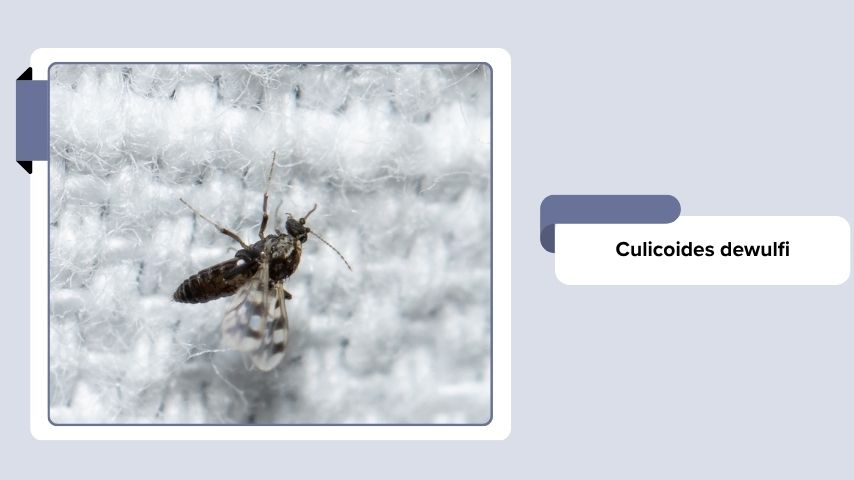
Culicoides dewulfi is a biting midge species found primarily in Europe. These tiny, blood-feeding insects are active during dawn and dusk and feed on mammals, including livestock and occasionally humans. Larvae develop in moist, organic-rich soil or decaying vegetation, contributing to decomposition and nutrient cycling within their habitats.
Identification
- Small, dark brown body (1–3 mm)
- Wings with subtle mottled or spotted patterns
- Long, segmented antennae
- Slender legs for landing on hosts
- Short, piercing proboscis for blood feeding
Habitat and Distribution
Culicoides dewulfi is commonly found near wetlands, pastures, and damp grassy areas in Europe. Larvae thrive in moist soil, mud, and decaying organic matter, often in shaded areas or near livestock.
Behavior and Diet
Adults feed on mammal blood at dawn and dusk. Larvae consume decaying plant material in soil, aiding nutrient recycling. Adults are capable of transmitting livestock pathogens and serve as prey for spiders, ants, and other small predators.
Lifecycle
Females lay eggs in damp, nutrient-rich soil. Larvae develop through four instars, pupate in moist soil, and adults emerge after several weeks. Lifecycle duration typically ranges from 4–8 weeks, depending on environmental conditions.
17. Culicoides newsteadi
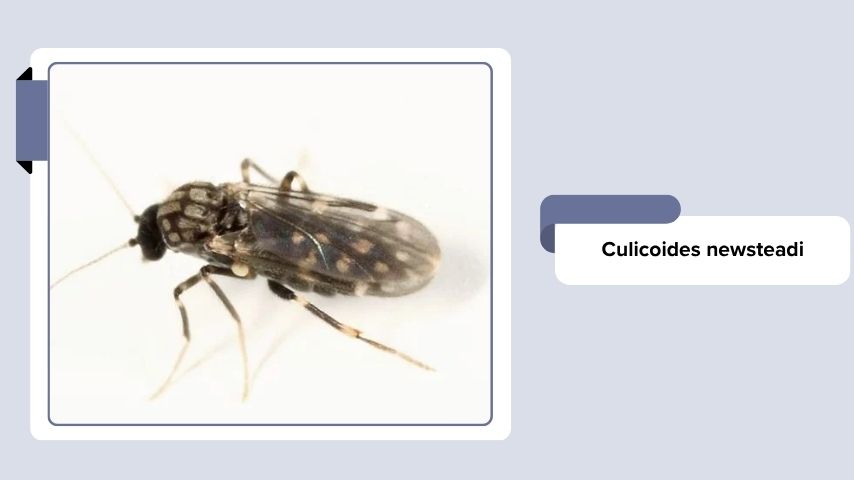
Culicoides newsteadi is a biting midge species found across Europe and parts of the Middle East. These small, blood-feeding insects are most active during dawn and dusk and feed on mammals, including livestock and occasionally humans. Larvae develop in moist, organic-rich soil or decaying vegetation, aiding decomposition and nutrient cycling in their habitats.
Identification
- Small, dark brown body (1–3 mm)
- Wings with faint mottled or spotted patterns
- Long, segmented antennae
- Slender legs for landing on hosts
- Short, piercing proboscis for blood feeding
Habitat and Distribution
Culicoides newsteadi is commonly found in wetlands, pastures, and damp grassy areas. Larvae thrive in moist soil, mud, and decomposing organic matter, often near livestock or shaded areas.
Behavior and Diet
Adults feed on mammal blood at dawn and dusk. Larvae consume decaying plant material in soil, contributing to nutrient recycling. Adults are vectors for livestock pathogens and are preyed upon by spiders, ants, and other small predators.
Lifecycle
Females lay eggs in damp, nutrient-rich soil. Larvae develop through four instars, pupate in moist soil, and adults emerge after several weeks. Lifecycle duration typically ranges from 4–8 weeks, depending on environmental conditions.
18. Culicoides scoticus
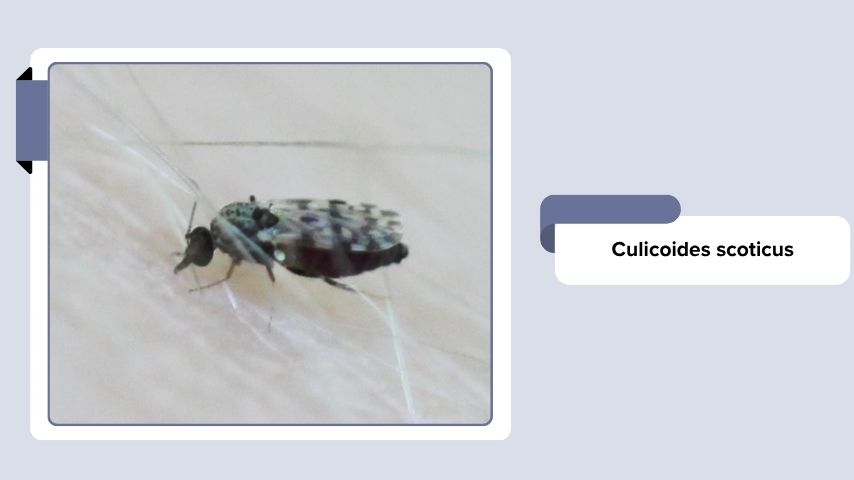
Culicoides scoticus is a biting midge species commonly found in Europe, particularly in northern and central regions. These small, blood-feeding insects are active during dawn and dusk and feed on mammals, including livestock and occasionally humans. Larvae develop in moist, organic-rich soil or decaying vegetation, contributing to nutrient cycling and supporting soil health.
Identification
- Small, dark brown body (1–3 mm)
- Wings with faint mottled or spotted patterns
- Long, segmented antennae
- Slender legs for landing on hosts
- Short, piercing proboscis for blood feeding
Habitat and Distribution
Culicoides scoticus is commonly found in wetlands, pastures, and damp grassy areas across Europe. Larvae thrive in moist soil, mud, and decaying organic matter, often near livestock or shaded areas.
Behavior and Diet
Adults feed on mammal blood at dawn and dusk. Larvae consume decaying plant material in soil, aiding nutrient recycling. Adults are vectors for livestock pathogens and serve as prey for spiders, ants, and other small predators.
Lifecycle
Females lay eggs in damp, nutrient-rich soil. Larvae develop through four instars, pupate in moist soil, and adults emerge after several weeks. Lifecycle duration typically ranges from 4–8 weeks, influenced by temperature and humidity.
19. Culicoides kibunensis
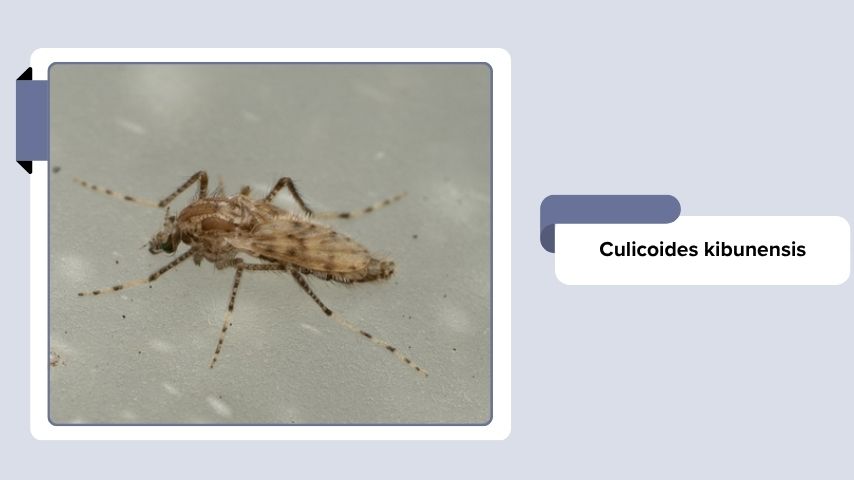
Culicoides kibunensis is a biting midge species found in parts of Europe and Asia. These tiny, blood-feeding insects are most active during dawn and dusk and feed on mammals, including livestock and occasionally humans. Larvae develop in moist, organic-rich soil or decaying vegetation, contributing to decomposition and nutrient cycling in their habitats.
Identification
- Small, dark brown body (1–3 mm)
- Wings with subtle mottled or spotted patterns
- Long, segmented antennae
- Slender legs for landing on hosts
- Short, piercing proboscis for blood feeding
Habitat and Distribution
Culicoides kibunensis is commonly found near wetlands, pastures, and damp grassy areas. Larvae thrive in moist soil, mud, and decaying organic matter, especially near livestock or shaded environments.
Behavior and Diet
Adults feed on mammal blood at dawn and dusk. Larvae consume decaying plant material in soil, aiding nutrient recycling. Adults are vectors for livestock pathogens and are preyed upon by spiders, ants, and other small predators.
Lifecycle
Females lay eggs in damp, nutrient-rich soil. Larvae develop through four instars, pupate in moist soil, and adults emerge after several weeks. Lifecycle duration typically ranges from 4–8 weeks, depending on environmental conditions.
20. Culicoides paraensis
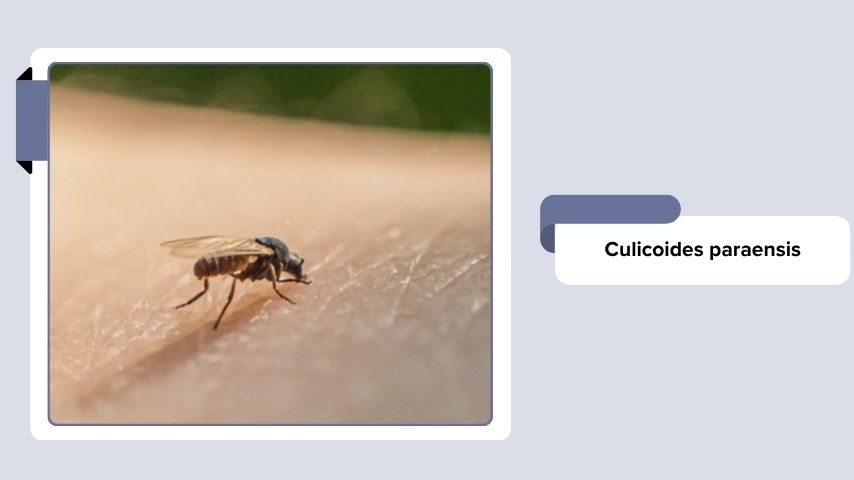
Culicoides paraensis is a biting midge species found in Central and South America. These small, blood-feeding insects are active during dawn and dusk and feed on mammals, including humans and livestock. Larvae develop in moist, organic-rich soil or decaying vegetation, contributing to decomposition and nutrient cycling in their habitats.
Identification
- Small, dark brown body (1–3 mm)
- Wings with faint mottled or spotted patterns
- Long, segmented antennae
- Slender legs for landing on hosts
- Short, piercing proboscis for blood feeding
Habitat and Distribution
Culicoides paraensis is commonly found near wetlands, pastures, and shaded, damp areas. Larvae thrive in moist soil, mud, and decomposing organic matter, particularly near livestock and human settlements.
Behavior and Diet
Adults feed on mammal blood at dawn and dusk. Larvae consume decaying plant material in soil, aiding nutrient recycling. Adults are capable of transmitting livestock pathogens and serve as prey for spiders, ants, and other small predators.
Lifecycle
Females lay eggs in damp, nutrient-rich soil. Larvae develop through four instars, pupate in moist soil, and adults emerge after several weeks. Lifecycle duration typically ranges from 4–8 weeks, influenced by temperature and humidity.
21. Culicoides crepuscularis
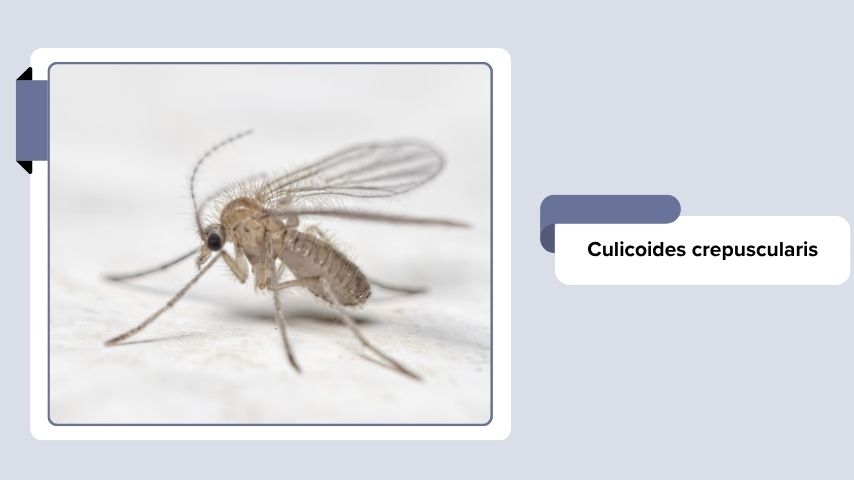
Culicoides crepuscularis is a biting midge species found primarily in North America. These tiny, blood-feeding insects are most active during dawn and dusk, feeding on mammals including humans and livestock. Larvae develop in moist, organic-rich soil or decaying vegetation, contributing to decomposition and nutrient cycling in their habitats.
Identification
- Small, dark brown body (1–3 mm)
- Wings with subtle mottled or spotted patterns
- Long, segmented antennae
- Slender legs for landing on hosts
- Short, piercing proboscis for blood feeding
Habitat and Distribution
Culicoides crepuscularis is commonly found near wetlands, pastures, and shaded, damp areas across North America. Larvae thrive in moist soil, mud, and decaying organic matter, especially around livestock or shaded environments.
Behavior and Diet
Adults feed on mammal blood at dawn and dusk. Larvae consume decaying plant material in soil, aiding nutrient recycling. Adults are vectors for livestock pathogens and serve as prey for spiders, ants, and other small predators.
Lifecycle
Females lay eggs in damp, nutrient-rich soil. Larvae develop through four instars, pupate in moist soil, and adults emerge after several weeks. Lifecycle duration typically ranges from 4–8 weeks depending on environmental conditions.
22. Culicoides melleus
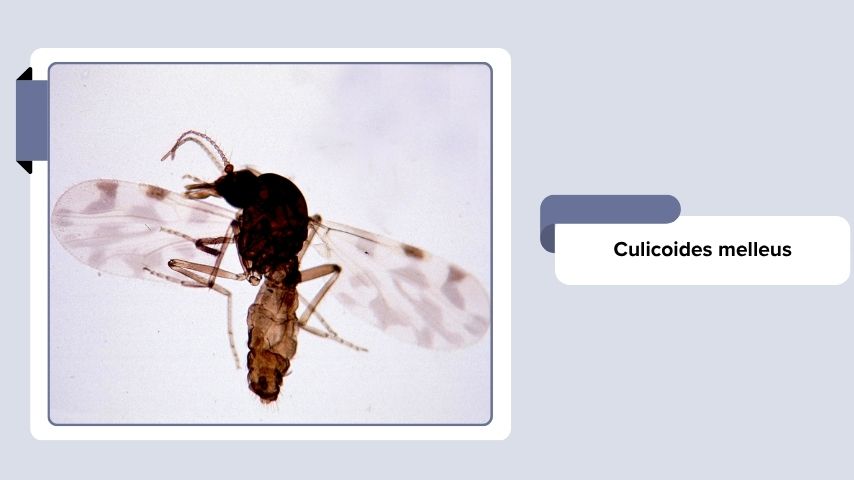
Culicoides melleus is a biting midge species found in parts of Europe, Asia, and Africa. These tiny, blood-feeding insects are most active during dawn and dusk and feed on mammals, including livestock and occasionally humans. Larvae develop in moist, organic-rich soil or decaying vegetation, contributing to decomposition and nutrient cycling within their habitats.
Identification
- Small, dark brown body (1–3 mm)
- Wings with faint mottled or spotted patterns
- Long, segmented antennae
- Slender legs for landing on hosts
- Short, piercing proboscis for blood feeding
Habitat and Distribution
Culicoides melleus is commonly found in wetlands, pastures, and damp grassy areas. Larvae thrive in moist soil, mud, and decaying organic matter, often near livestock or shaded environments.
Behavior and Diet
Adults feed on mammal blood at dawn and dusk. Larvae consume decaying plant material in soil, aiding nutrient recycling. Adults are capable of transmitting livestock pathogens and serve as prey for spiders, ants, and other small predators.
Lifecycle
Females lay eggs in damp, nutrient-rich soil. Larvae develop through four instars, pupate in moist soil, and adults emerge after several weeks. Lifecycle duration typically ranges from 4–8 weeks depending on temperature and humidity.
23. Culicoides cataneii
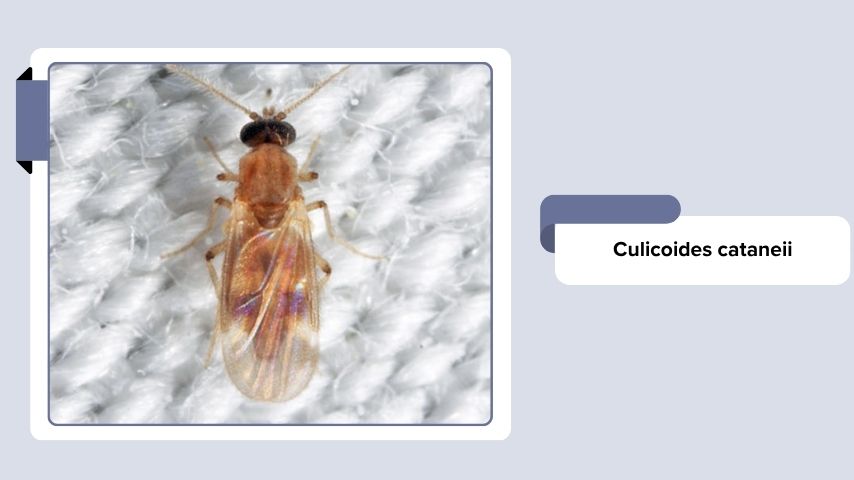
Culicoides cataneii is a biting midge species found in parts of Europe and North Africa. These small, blood-feeding insects are most active during dawn and dusk, feeding on mammals including livestock and occasionally humans. Larvae develop in moist, organic-rich soil or decaying vegetation, contributing to decomposition and nutrient cycling in their habitats.
Identification
- Small, dark brown body (1–3 mm)
- Wings with subtle mottled or spotted patterns
- Long, segmented antennae
- Slender legs for landing on hosts
- Short, piercing proboscis for blood feeding
Habitat and DistrCulicoides cataneii is commonly found in wetlands, pastures, and damp grassy areas. Larvae thrive in moist soil, mud, and decaying organic matter, often near livestock or shaded environments.
Behavior and Diet
Adults feed on mammal blood at dawn and dusk. Larvae consume decaying plant material in soil, aiding nutrient recycling. Adults are vectors for livestock pathogens and are preyed upon by spiders, ants, and other small predators.
Lifecycle
Females lay eggs in damp, nutrient-rich soil. Larvae develop through four instars, pupate in moist soil, and adults emerge after several weeks. Lifecycle duration typically ranges from 4–8 weeks depending on environmental conditions.
FAQs
Are biting midges dangerous to humans?
Yes, some biting midge species can transmit diseases such as bluetongue virus to livestock or, in rare cases, cause allergic reactions in humans. Their bites can also be irritating and itchy.
What do biting midge larvae eat?
Larvae feed on decaying organic matter in moist soil, mud, or leaf litter. They help recycle nutrients back into the soil, playing an important ecological role.
Where are biting midges commonly found?
Biting midges are found worldwide, especially in wetlands, pastures, damp grasslands, and areas with moist, organic-rich soil. Adults rest in shaded, humid spots during the day.
How long do biting midges live?
Adults live for 2–4 weeks, primarily to mate and lay eggs. Larvae develop over several weeks to months, depending on temperature and moisture conditions.
Can biting midges affect livestock?
Yes, biting midges feed on livestock blood and can transmit viruses like bluetongue or other pathogens. Larvae are harmless to livestock, but adults can be a nuisance and a health risk in endemic areas.