
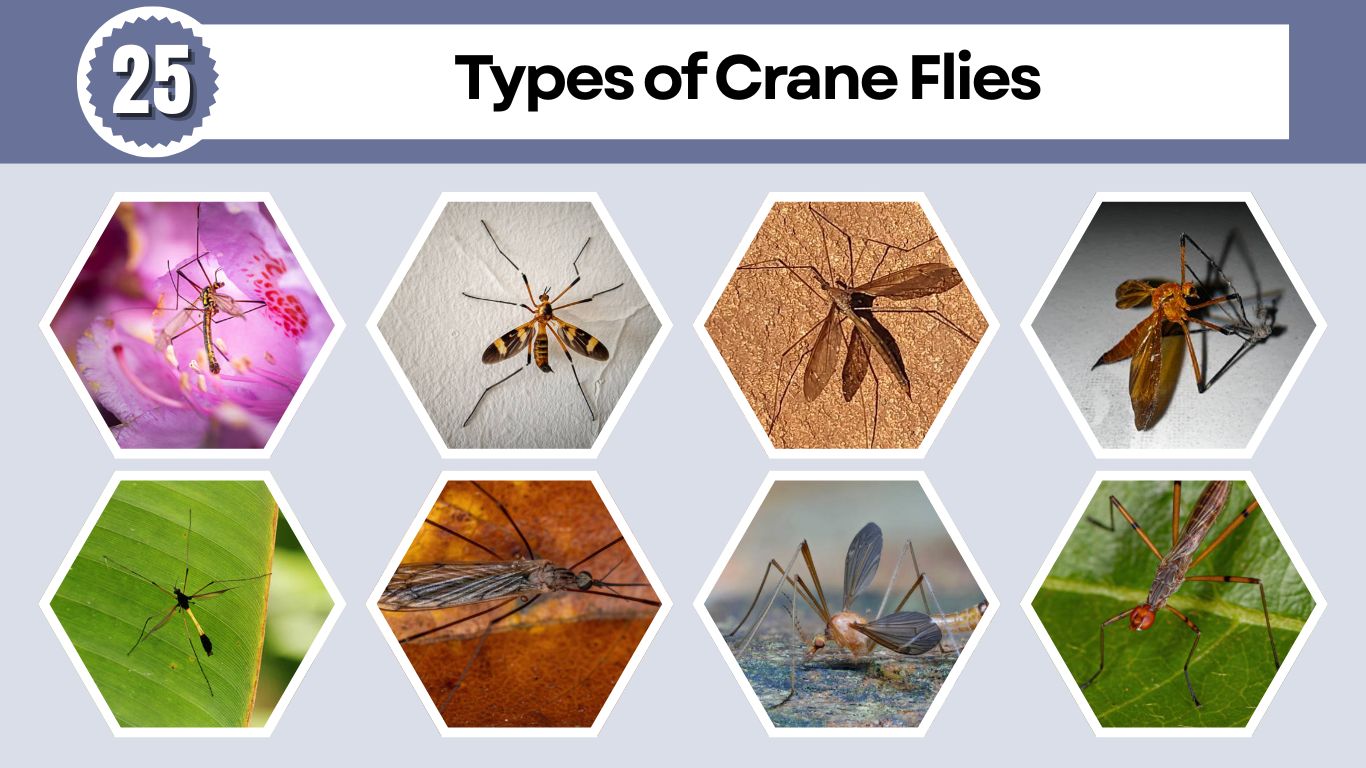
Crane flies are fascinating insects often mistaken for giant mosquitoes due to their long legs and slender bodies. Found worldwide, they inhabit wetlands, damp forests, grassy meadows, and moist soil environments. While adults feed minimally or not at all, their larvae play a crucial role in decomposing organic matter, recycling nutrients, and supporting soil health. This guide explores 25 types of crane flies, highlighting their identification features, habitats, behaviors, diets, and lifecycles, offering a comprehensive overview for enthusiasts and nature observers alike.
1. Tipula Crane Fly
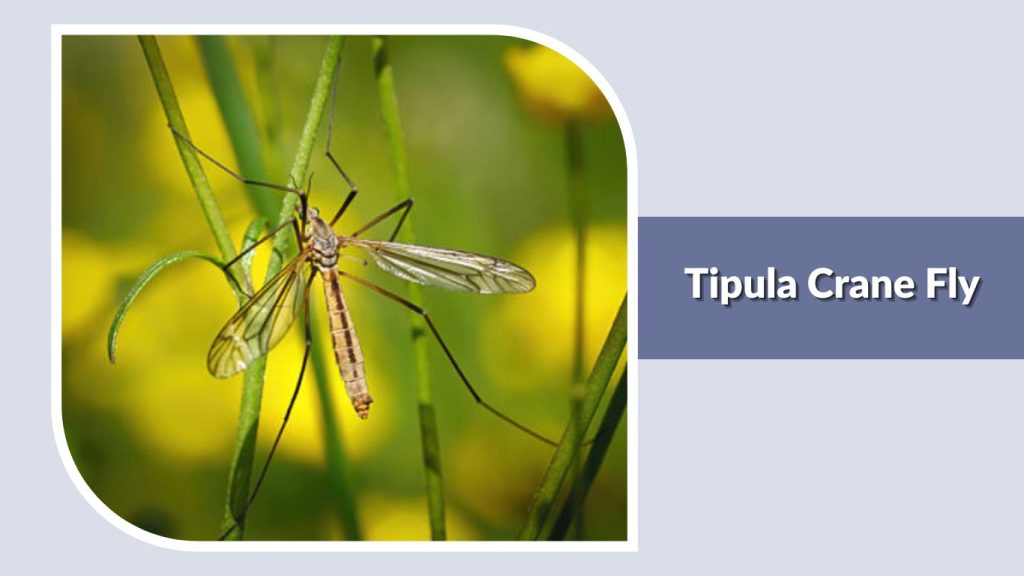
Tipula crane flies are common and widespread insects known for their long, delicate legs and slender bodies. Often mistaken for giant mosquitoes, they are harmless to humans. They thrive in moist environments such as wetlands, forests, and grasslands, where their larvae help decompose organic matter and enrich the soil.
Identification
- Slender gray or brown body
- Extremely long, fragile legs
- Transparent or lightly tinted wings
- Long segmented antennae
- Body length 15–25 mm
Habitat and Distribution
Tipula crane flies are found globally, especially in damp soils and grassy areas. Larvae, called leatherjackets, live underground or in decaying vegetation, feeding on roots and organic matter. Adults prefer resting on vegetation and are most active during moist evenings.
Behavior and Diet
Adult Tipula crane flies feed little or not at all. Larvae consume roots, decaying plant matter, and contribute to soil nutrient cycling. They serve as prey for birds, amphibians, and small mammals, making them ecologically important despite their short adult lifespan.
Lifecycle
Eggs are laid in soil or leaf litter. Larvae develop through several stages over months, pupate underground, and emerge as adults in spring or summer, completing their life cycle in a single season.
2. Nephrotoma Crane Fly
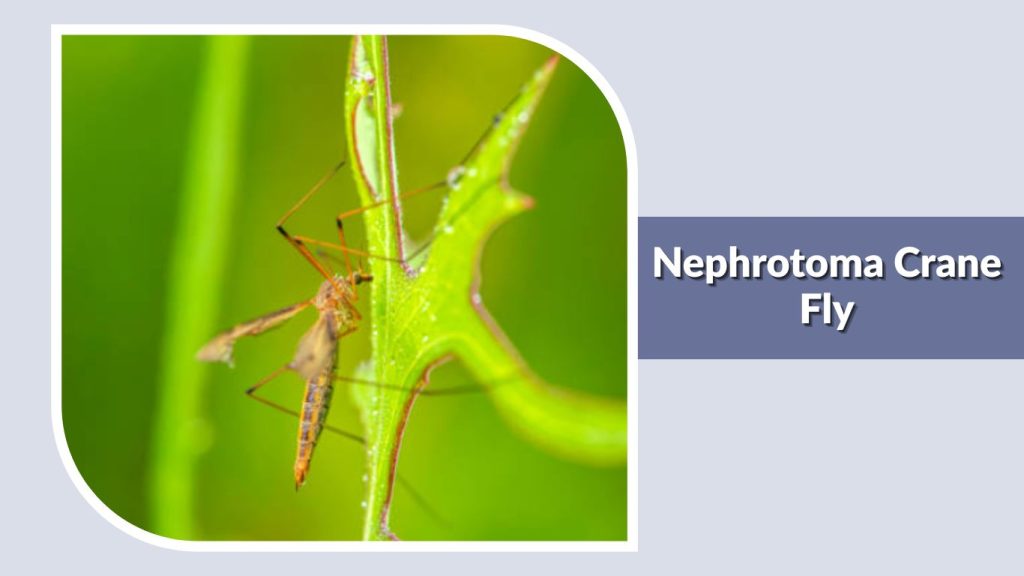
Nephrotoma crane flies, commonly called tiger crane flies, are easily recognized by their distinctive striped bodies and long legs. Harmless to humans, they are widespread in grassy fields, wetlands, and gardens. Their larvae live in soil, feeding on decaying plant matter and roots, playing an important role in soil health and ecosystem balance.
Identification
- Slender body with yellow and black stripes
- Very long, fragile legs
- Transparent or lightly tinted wings
- Long, segmented antennae
- Body length 15–30 mm
Habitat and Distribution
Nephrotoma crane flies are found across Europe, Asia, and North America. Larvae inhabit moist soil or leaf litter, feeding on roots and decaying organic material. Adults are commonly seen resting on grass or low vegetation during warm, damp weather.
Behavior and Diet
Adults feed very little or not at all, while larvae consume plant roots and organic debris. These larvae help in soil aeration and nutrient cycling. Adults are primarily active in the evening and serve as prey for birds and other predators.
Lifecycle
Eggs are laid in soil, where larvae develop through multiple instars over months. After pupation underground, adults emerge in late spring or summer, completing a single-season life cycle.
3. Pedicia Crane Fly
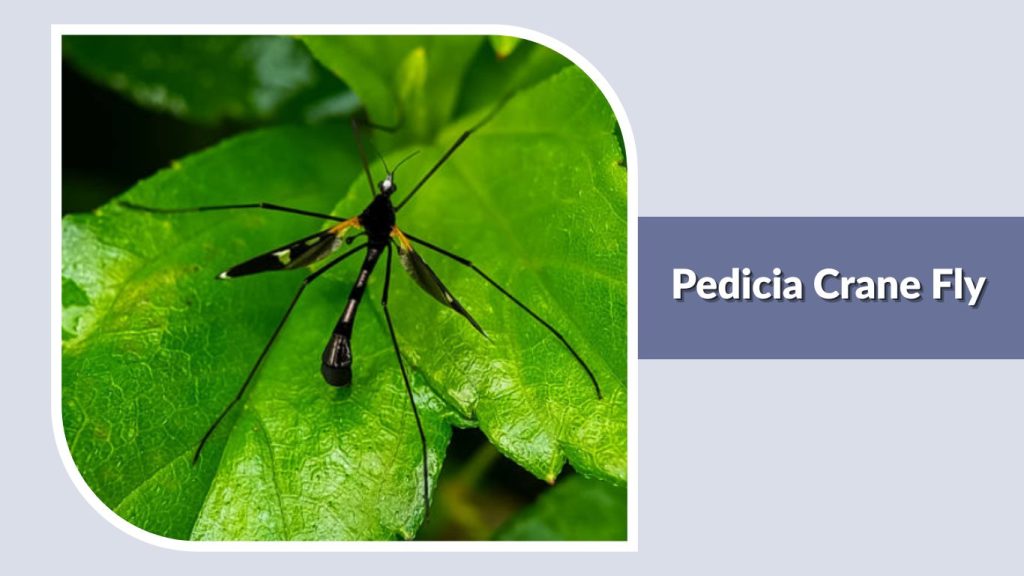
Pedicia crane flies are medium-sized crane flies, often found near streams, marshes, and other moist habitats. They are harmless to humans and play a crucial role in nutrient cycling. Their larvae develop in wet soil or shallow water, feeding on decaying organic matter, making them important contributors to freshwater and soil ecosystems.
Identification
- Slender, elongated body, typically brown or gray
- Very long, delicate legs
- Transparent wings with fine veins
- Long, multi-segmented antennae
- Body length 12–25 mm
Habitat and Distribution
Pedicia crane flies are widely distributed across North America and Europe. They prefer wetlands, riverbanks, and damp forest floors. Larvae live in moist soil or shallow water, consuming decaying plant material and contributing to the breakdown of organic matter.
Behavior and Diet
Adult Pedicia crane flies feed minimally, while larvae feed on roots, decaying vegetation, and detritus. They are active mostly in early evening and serve as prey for birds, amphibians, and aquatic insects.
Lifecycle
Females lay eggs in wet soil or water. Larvae develop through several stages over weeks to months, pupating in moist substrate before emerging as adults in spring or summer.
4. Dicranomyia Crane Fly
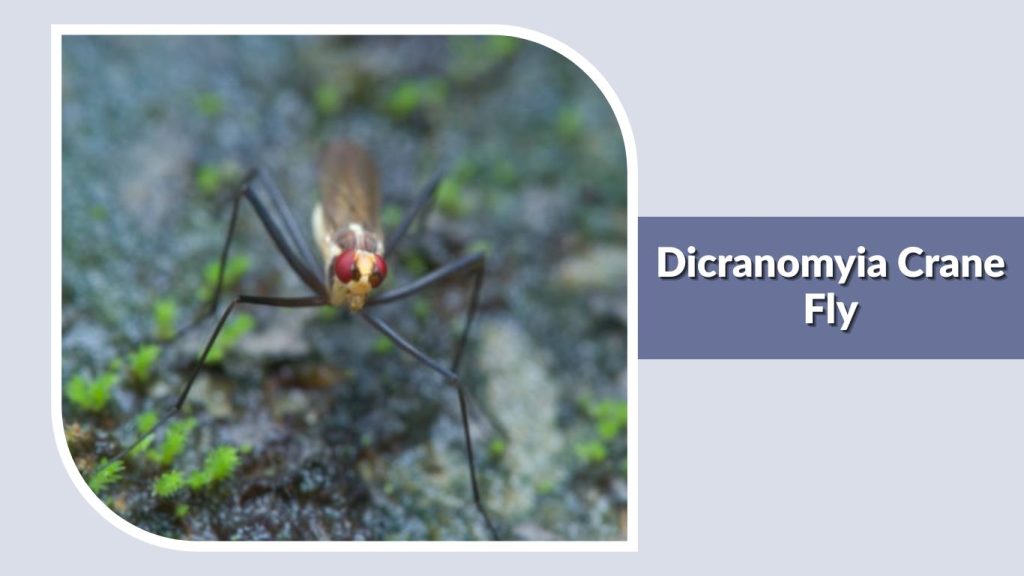
Dicranomyia crane flies are small to medium-sized crane flies, recognizable by their slender bodies and long legs. They are harmless to humans and are commonly found in damp environments such as marshes, wetlands, and moist forest floors. Their larvae contribute to soil health by feeding on decaying plant material.
Identification
- Slender, elongated body, usually brown or gray
- Extremely long, delicate legs
- Transparent wings with fine venation
- Long, segmented antennae
- Body length 10–20 mm
Habitat and Distribution
Dicranomyia crane flies are found across Europe, North America, and parts of Asia. Larvae inhabit moist soil, leaf litter, or shallow water, feeding on decomposing vegetation and organic matter. Adults are often seen resting on low vegetation.
Behavior and Diet
Adults feed little or not at all, while larvae feed on decaying plant matter. They play a role in nutrient cycling and serve as food for birds, amphibians, and small invertebrate predators.
Lifecycle
Females lay eggs in wet soil or decaying plant matter. Larvae develop through several instars over weeks, pupate in moist substrate, and emerge as adults, usually during spring and summer.
5. Limonia Crane Fly
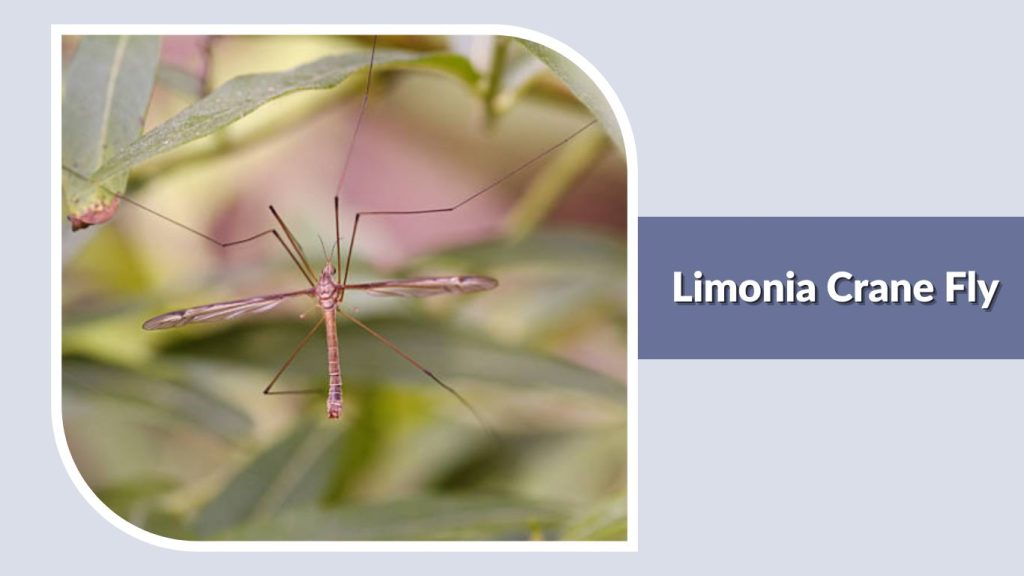
Limonia crane flies are small to medium-sized crane flies with slender bodies and long, delicate legs. They are harmless to humans and are often found in moist habitats such as wetlands, riverbanks, and damp forests. Their larvae feed on decaying vegetation, helping maintain soil health and contributing to ecosystem nutrient cycling.
Identification
- Slender, brown or gray body
- Long, fragile legs
- Transparent wings with fine veins
- Long, segmented antennae
- Body length 10–18 mm
Habitat and Distribution
Limonia crane flies are widespread in Europe, North America, and parts of Asia. Larvae live in moist soil, leaf litter, or decomposing organic matter. Adults are frequently seen resting on low vegetation during wet or damp conditions.
Behavior and Diet
Adult Limonia crane flies feed very little or not at all. Larvae consume decaying plant material, contributing to nutrient recycling in soil and serving as prey for birds, amphibians, and small invertebrates.
Lifecycle
Eggs are deposited in moist soil or leaf litter. Larvae develop through multiple instars over weeks or months, pupate in soil, and adults emerge during spring or summer, completing their life cycle.
6. Gonomyia Crane Fly
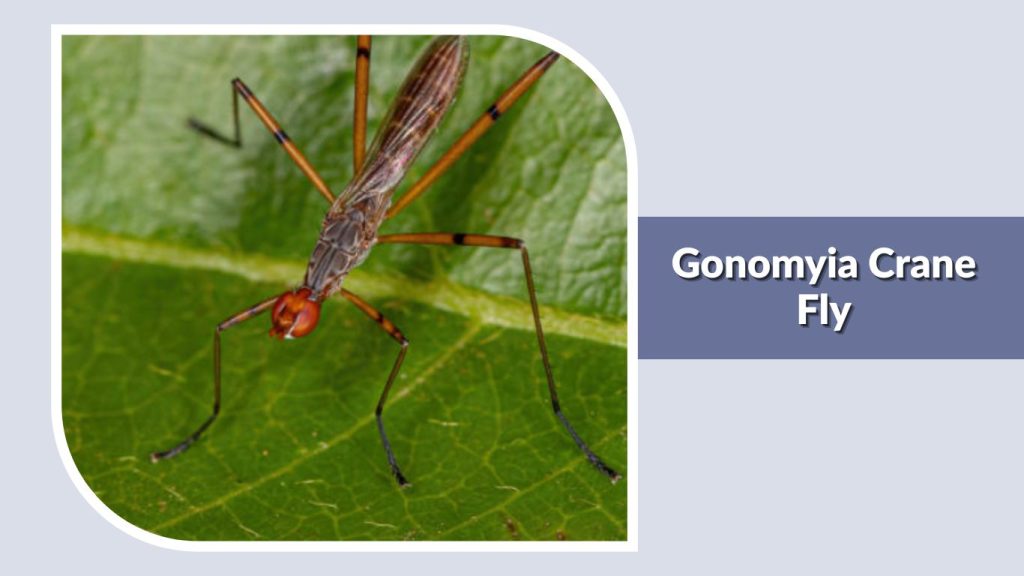
Gonomyia crane flies are delicate, medium-sized flies distinguished by their long legs and slender bodies. Harmless to humans, they are often found in damp forests, wetlands, and grasslands. Their larvae inhabit moist soil or leaf litter, feeding on decaying organic matter, and play an essential role in soil nutrient cycling and ecosystem health.
Identification
- Slender, brown or gray body
- Extremely long, fragile legs
- Transparent wings with fine venation
- Long, segmented antennae
- Body length 12–22 mm
Habitat and Distribution
Gonomyia crane flies are widely distributed across Europe, North America, and Asia. Larvae prefer moist soil or decaying plant matter. Adults are commonly seen resting on low vegetation or flying slowly in shaded, damp areas.
Behavior and Diet
Adults feed very little or not at all. Larvae consume decaying vegetation, roots, and organic debris. They serve as an important food source for birds, amphibians, and small predatory insects.
Lifecycle
Females lay eggs in moist soil or leaf litter. Larvae develop over several weeks, pupate underground, and adults emerge in spring or summer, completing their seasonal life cycle.
7. Rhabdomastix Crane Fly
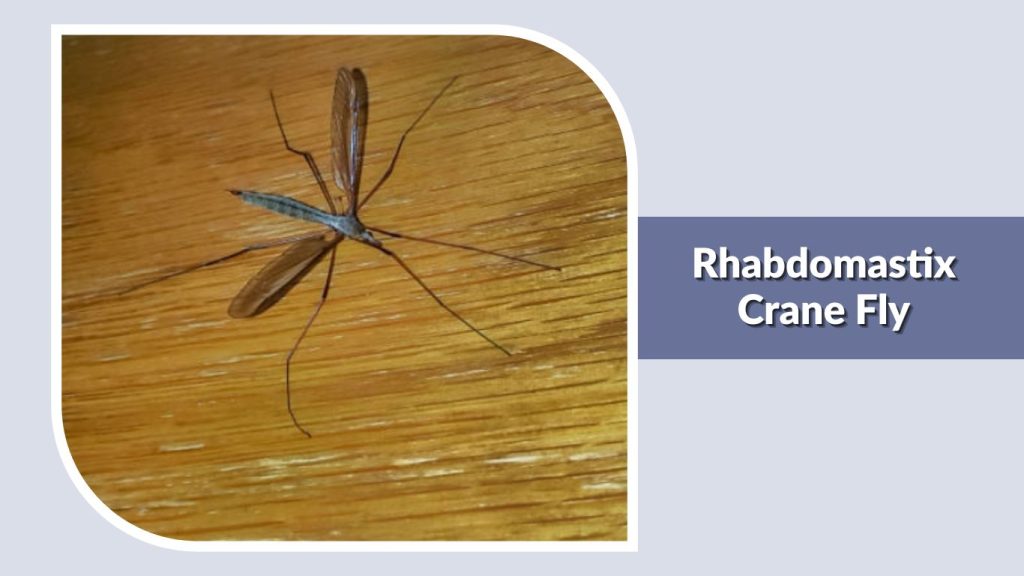
Rhabdomastix crane flies are medium-sized, slender insects with long, delicate legs. They are harmless to humans and prefer damp habitats like marshes, wetlands, and moist forest floors. Their larvae play an important ecological role by feeding on decaying plant material, aiding in nutrient recycling and maintaining healthy soil ecosystems.
Identification
- Slender, brown or gray body
- Very long, fragile legs
- Transparent wings with fine venation
- Long, multi-segmented antennae
- Body length 12–25 mm
Habitat and Distribution
Rhabdomastix crane flies are found across Europe, North America, and parts of Asia. Larvae develop in moist soil, leaf litter, or decaying vegetation. Adults are often seen resting on grass or low plants in damp environments.
Behavior and Diet
Adults feed very little or not at all. Larvae consume roots, decaying leaves, and organic matter, contributing to soil health. They also serve as prey for birds, amphibians, and small predatory insects.
Lifecycle
Females lay eggs in wet soil or decaying vegetation. Larvae develop through several instars over weeks, pupate in moist substrate, and adults emerge during spring or summer, completing their life cycle.
8. Ormosia Crane Fly
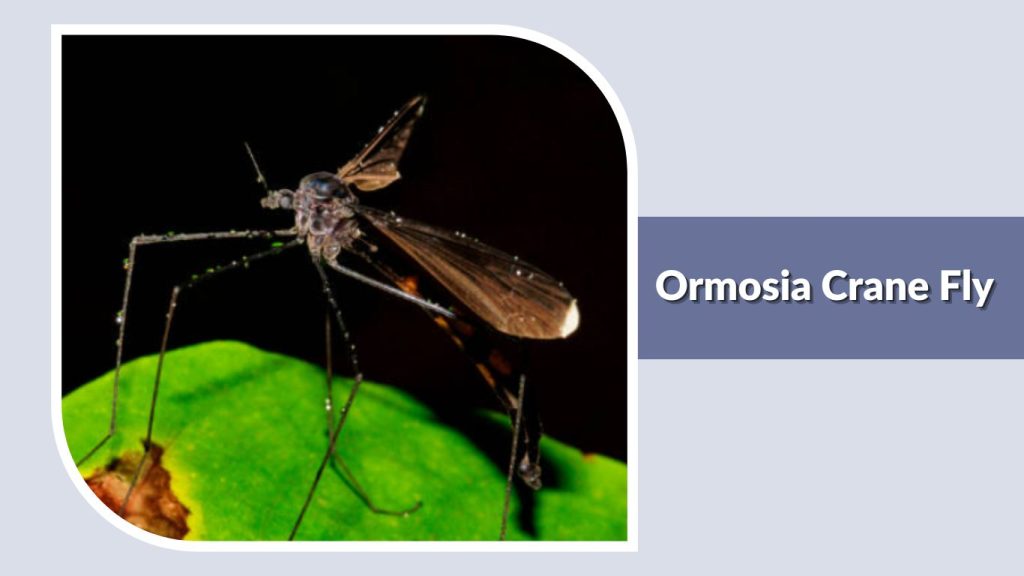
Ormosia crane flies are small to medium-sized crane flies with slender bodies and long legs. Harmless to humans, they are typically found in moist environments such as wetlands, riverbanks, and damp forested areas. Their larvae feed on decaying organic material, helping in nutrient cycling and maintaining healthy soil ecosystems.
Identification
- Slender, brown or gray body
- Extremely long, delicate legs
- Transparent wings with fine veins
- Long, segmented antennae
- Body length 10–20 mm
Habitat and Distribution
Ormosia crane flies are distributed across Europe, North America, and parts of Asia. Larvae live in moist soil, leaf litter, or decomposing vegetation. Adults are usually observed resting on low vegetation or flying slowly in shaded, damp areas.
Behavior and Diet
Adults feed minimally or not at all. Larvae consume decaying plant matter and roots, contributing to soil nutrient recycling. They are also an important food source for birds, amphibians, and small invertebrate predators.
Lifecycle
Eggs are laid in moist soil or leaf litter. Larvae develop over several weeks, pupate in moist substrate, and adults emerge in spring or summer, completing their seasonal life cycle.
9. Molophilus Crane Fly
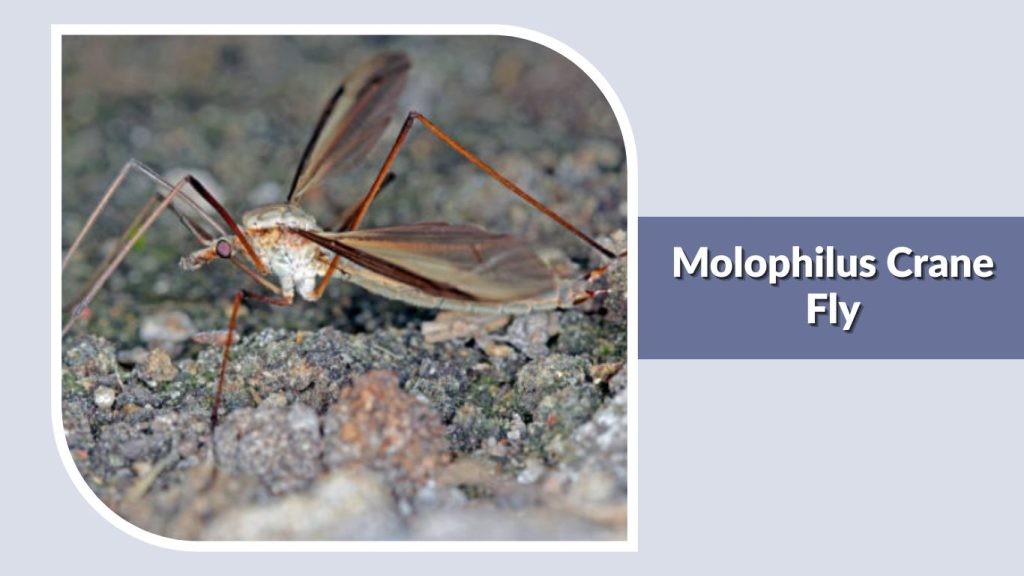
Molophilus crane flies are small, slender insects with long, delicate legs. They are harmless to humans and thrive in moist habitats such as wetlands, damp forests, and grassy meadows. Their larvae feed on decaying plant matter, playing an important role in soil health and nutrient cycling within their ecosystems.
Identification
- Slender, brown or gray body
- Very long, fragile legs
- Transparent wings with fine venation
- Long, multi-segmented antennae
- Body length 10–18 mm
Habitat and Distribution
Molophilus crane flies are widely distributed across Europe, North America, and parts of Asia. Larvae inhabit moist soil, leaf litter, or decaying organic matter, while adults are commonly found resting on low vegetation or flying slowly in shaded areas.
Behavior and Diet
Adults feed little or not at all. Larvae consume roots, decaying leaves, and organic debris, aiding in nutrient recycling. They are preyed upon by birds, amphibians, and small predatory insects, contributing to the local food web.
Lifecycle
Eggs are laid in damp soil or leaf litter. Larvae develop through multiple instars over weeks, pupate in moist substrate, and adults emerge during spring or summer, completing their life cycle.
10. Tanyptera Crane Fly
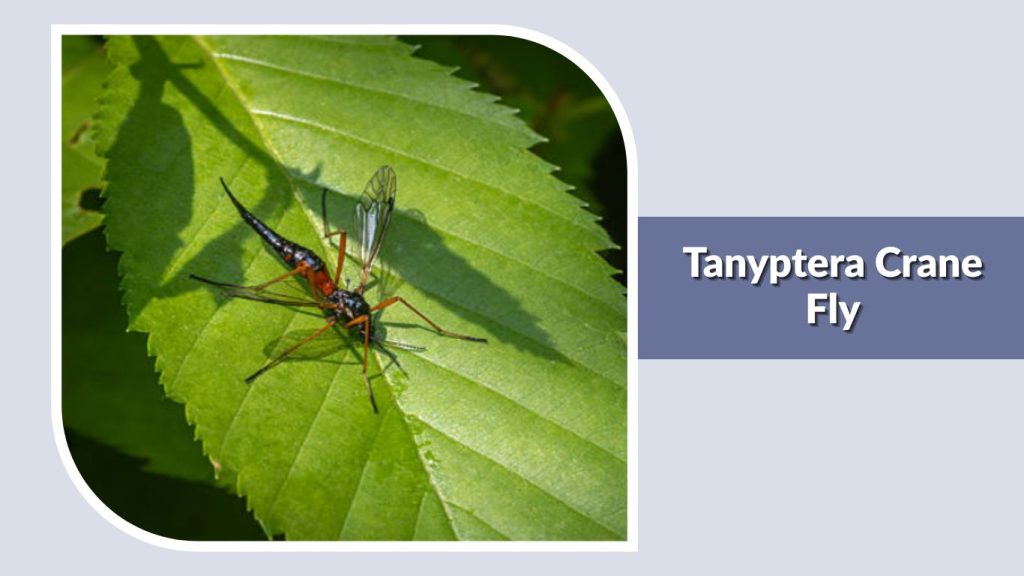
Tanyptera crane flies are medium-sized, slender insects with long, delicate legs. They are harmless to humans and are often found in damp forests, wetlands, and meadows. Their larvae develop in moist soil or decaying plant material, playing a crucial role in decomposition and nutrient cycling within their habitats.
Identification
- Slender, brown or gray body
- Extremely long, fragile legs
- Transparent wings with fine venation
- Long, segmented antennae
- Body length 12–25 mm
Habitat and Distribution
Tanyptera crane flies are found throughout Europe, North America, and parts of Asia. Larvae inhabit moist soil, leaf litter, or decomposing vegetation. Adults are commonly observed resting on low vegetation in shaded, damp areas.
Behavior and Diet
Adult Tanyptera crane flies feed very little or not at all. Larvae consume decaying plant matter and roots, aiding in soil nutrient cycling. Adults and larvae also serve as prey for birds, amphibians, and predatory insects.
Lifecycle
Females lay eggs in moist soil or decaying organic material. Larvae develop through several instars over weeks, pupate in moist substrate, and adults emerge during spring or summer, completing their life cycle.
11. Holorusia Crane Fly
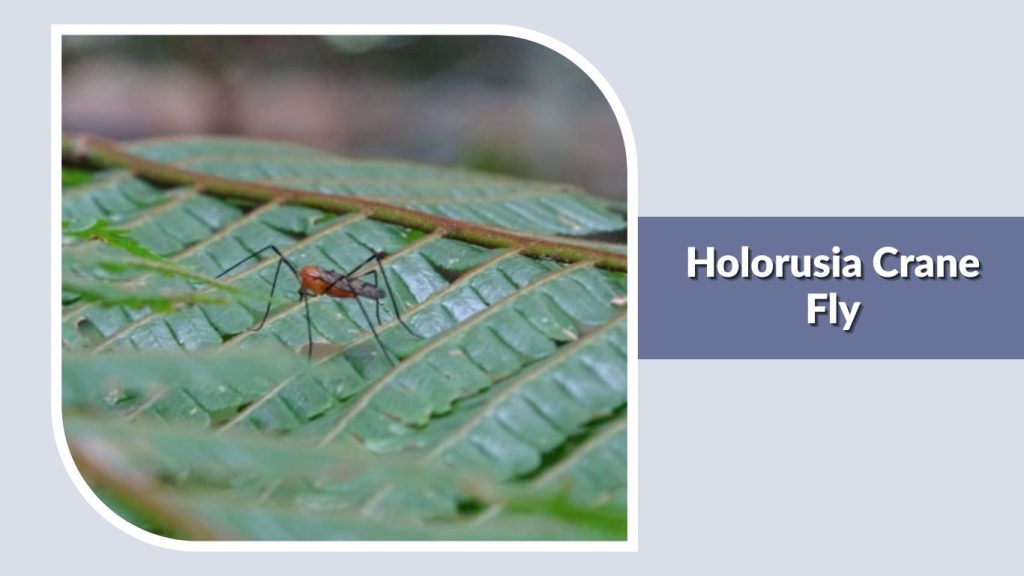
Holorusia crane flies are among the largest crane flies, with long, delicate legs and elongated bodies. Harmless to humans, they are commonly found in wetlands, damp forests, and grassy areas. Their larvae develop in moist soil, feeding on decaying vegetation and contributing significantly to nutrient cycling in ecosystems.
Identification
- Large, slender body, brown or gray
- Extremely long, fragile legs
- Transparent or lightly tinted wings
- Long, segmented antennae
- Body length 25–35 mm
Habitat and Distribution
Holorusia crane flies are widely distributed across North America, Europe, and parts of Asia. Larvae live in moist soil, leaf litter, or decaying plant matter. Adults are often seen resting on vegetation or flying slowly in shaded, damp areas.
Behavior and Diet
Adults feed very little or not at all. Larvae consume decaying plant matter and roots, aiding in soil nutrient recycling. Both adults and larvae serve as food for birds, amphibians, and small predatory insects.
Lifecycle
Females lay eggs in moist soil or leaf litter. Larvae develop over several weeks, pupate in soil, and adults emerge in spring or summer, completing their life cycle.
12. Antocha Crane Fly
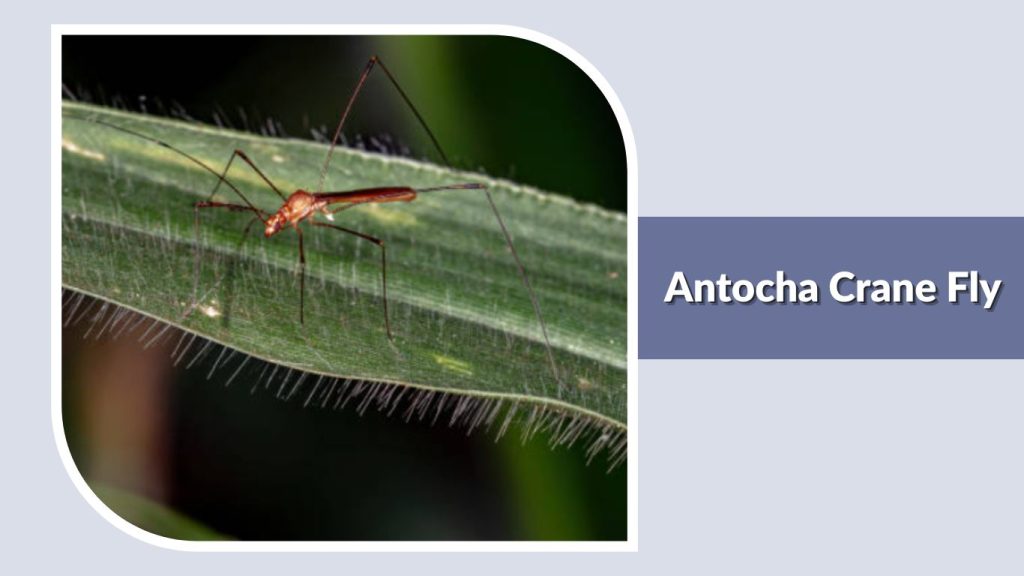
Antocha crane flies are small to medium-sized crane flies with slender bodies and long, delicate legs. They are harmless to humans and are typically found near streams, wetlands, and damp forest floors. Their larvae live in moist soil or water, feeding on decaying plant material and contributing to nutrient cycling.
Identification
- Slender, brown or gray body
- Very long, fragile legs
- Transparent wings with fine venation
- Long, segmented antennae
- Body length 10–18 mm
Habitat and Distribution
Antocha crane flies are found across Europe, North America, and parts of Asia. Larvae develop in moist soil, leaf litter, or shallow water, feeding on decomposing organic material. Adults are often seen resting on low vegetation in damp environments.
Behavior and Diet
Adults feed little or not at all. Larvae consume decaying leaves and plant matter, enriching the soil and serving as prey for birds, amphibians, and small predatory insects.
Lifecycle
Females lay eggs in moist soil or shallow water. Larvae develop over several weeks, pupate in moist substrate, and adults emerge in spring or summer, completing their seasonal life cycle.
13. Epiphragma Crane Fly
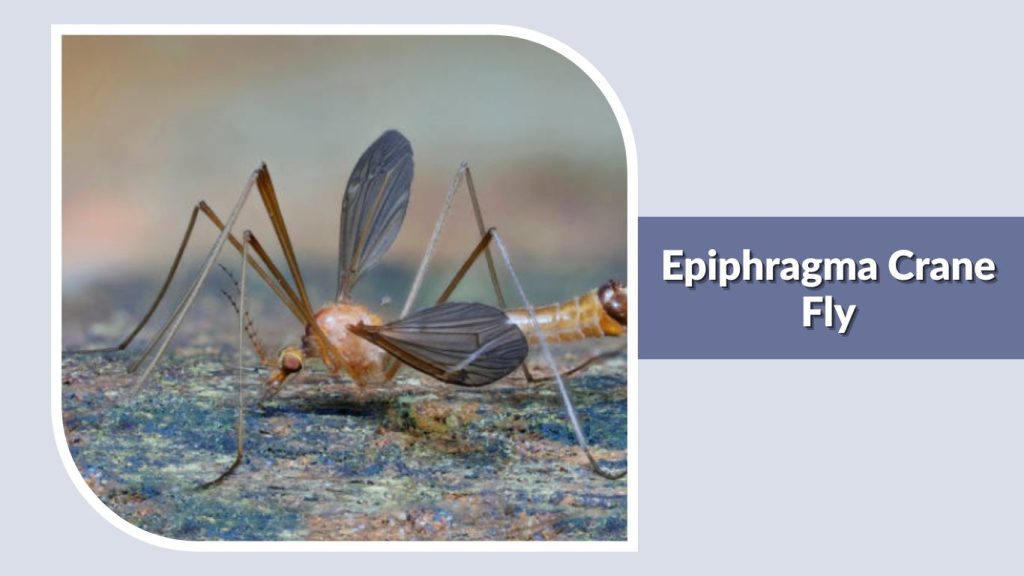
Epiphragma crane flies are medium-sized, slender insects with long, delicate legs. They are harmless to humans and are commonly found in damp forests, wetlands, and grassy meadows. Their larvae inhabit moist soil or decaying vegetation, playing an important role in nutrient recycling and supporting soil health.
Identification
- Slender, brown or gray body
- Extremely long, fragile legs
- Transparent wings with fine venation
- Long, segmented antennae
- Body length 12–22 mm
Habitat and Distribution
Epiphragma crane flies are widely distributed across Europe, North America, and parts of Asia. Larvae live in damp soil or decomposing organic matter. Adults are frequently observed resting on low vegetation in shaded, moist areas.
Behavior and Diet
Adults feed very little or not at all. Larvae consume decaying plant matter, roots, and organic debris, aiding in nutrient cycling. Both adults and larvae serve as food for birds, amphibians, and small predatory insects.
Lifecycle
Females lay eggs in moist soil or leaf litter. Larvae develop through multiple instars over weeks, pupate in damp substrate, and adults emerge in spring or summer, completing their life cycle.
14. Erioptera Crane Fly
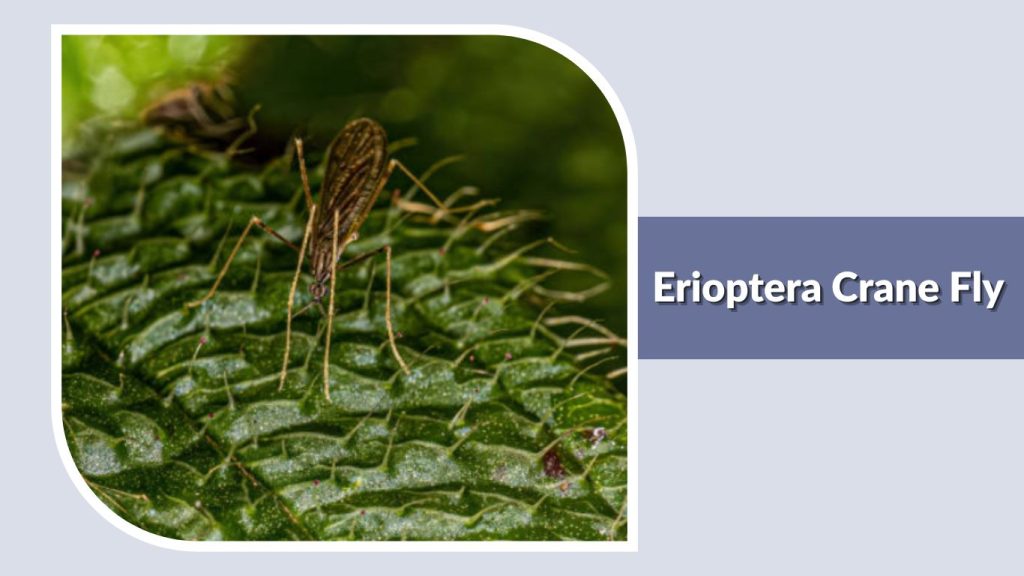
Erioptera crane flies are small to medium-sized flies with slender bodies and long, delicate legs. Harmless to humans, they are commonly found in wetlands, damp forests, and moist meadows. Their larvae live in soil or decaying vegetation, feeding on organic matter and playing a key role in nutrient cycling within their habitats.
Identification
- Slender, brown or gray body
- Very long, fragile legs
- Transparent wings with fine venation
- Long, segmented antennae
- Body length 10–18 mm
Habitat and Distribution
Erioptera crane flies are widely distributed across Europe, North America, and parts of Asia. Larvae develop in moist soil, leaf litter, or decaying plant matter. Adults are often seen resting on low vegetation or flying slowly in shaded, damp environments.
Behavior and Diet
Adults feed minimally or not at all. Larvae consume decaying plant material, roots, and organic debris, aiding in soil health. They also serve as prey for birds, amphibians, and small predatory insects.
Lifecycle
Eggs are laid in moist soil or leaf litter. Larvae develop through multiple instars over weeks, pupate in damp substrate, and adults emerge in spring or summer, completing their seasonal life cycle.
15. Phoroctenia Crane Fly
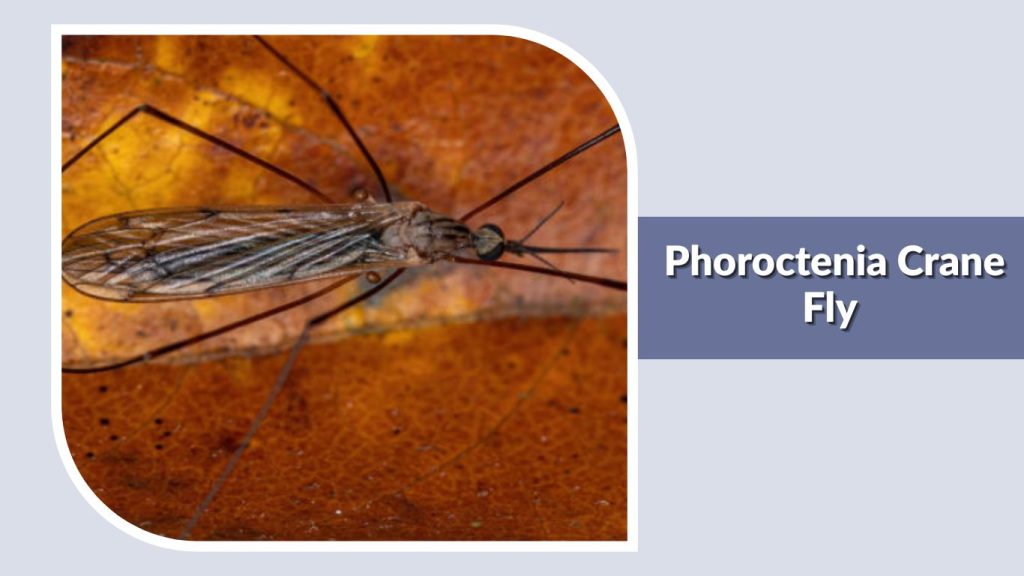
Phoroctenia crane flies are medium-sized, slender insects with long, delicate legs. They are harmless to humans and are typically found in damp forests, wetlands, and grassy meadows. Their larvae inhabit moist soil or decaying organic matter, contributing to nutrient cycling and supporting soil ecosystem health.
Identification
- Slender, brown or gray body
- Extremely long, fragile legs
- Transparent wings with fine venation
- Long, segmented antennae
- Body length 12–20 mm
Habitat and Distribution
Phoroctenia crane flies are found across Europe, North America, and parts of Asia. Larvae develop in damp soil, leaf litter, or decomposing plant material. Adults are often observed resting on low vegetation or flying slowly in shaded, moist areas.
Behavior and Diet
Adults feed very little or not at all. Larvae consume decaying leaves, roots, and plant matter, aiding in soil nutrient recycling. Both adults and larvae serve as prey for birds, amphibians, and small predatory insects.
Lifecycle
Females lay eggs in moist soil or decaying vegetation. Larvae develop through several instars over weeks, pupate in damp substrate, and adults emerge during spring or summer, completing their life cycle.
16. Heterolimnophila Crane Fly
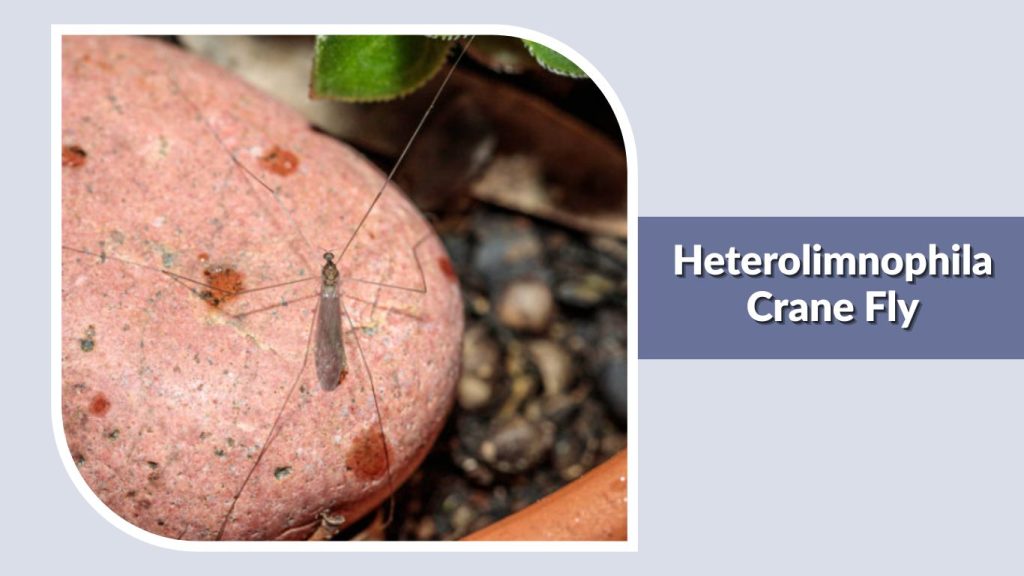
Heterolimnophila crane flies are small to medium-sized, slender insects with long, delicate legs. Harmless to humans, they are commonly found in damp forests, wetlands, and moist meadows. Their larvae live in soil or decaying vegetation, feeding on organic matter and playing an essential role in nutrient cycling and soil health.
Identification
- Slender, brown or gray body
- Extremely long, fragile legs
- Transparent wings with fine venation
- Long, segmented antennae
- Body length 10–18 mm
Habitat and Distribution
Heterolimnophila crane flies are widely distributed across Europe, North America, and parts of Asia. Larvae develop in moist soil, leaf litter, or decomposing organic material. Adults are usually seen resting on low vegetation or flying slowly in shaded, damp areas.
Behavior and Diet
Adult Heterolimnophila crane flies feed minimally or not at all. Larvae consume decaying leaves, roots, and other plant material, contributing to soil nutrient cycling. Both adults and larvae serve as prey for birds, amphibians, and small predatory insects.
Lifecycle
Eggs are laid in damp soil or leaf litter. Larvae develop through multiple instars over weeks, pupate in moist substrate, and adults emerge in spring or summer, completing their life cycle.
17. Liogma Crane Fly
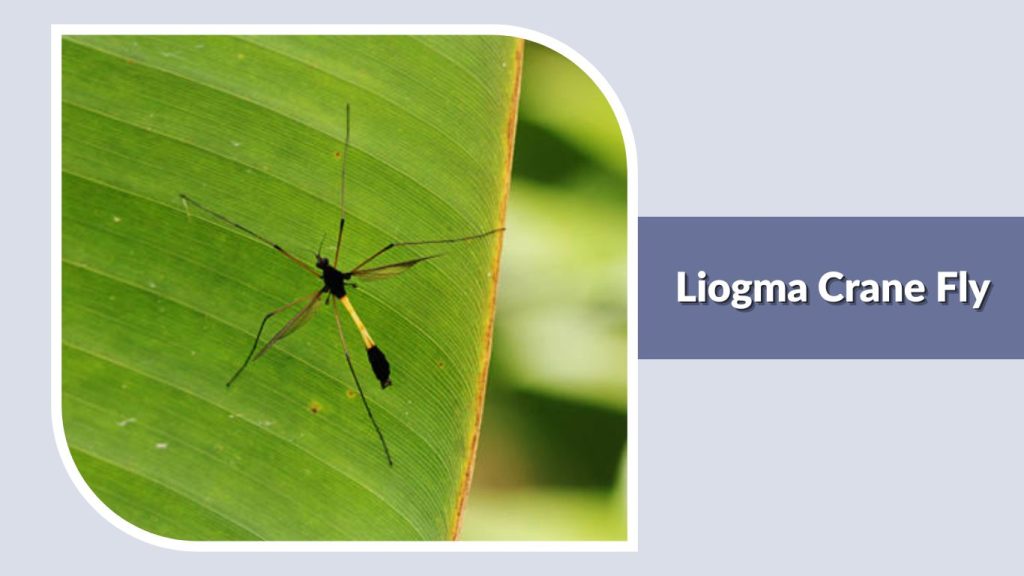
Liogma crane flies are small, slender insects with long, delicate legs. Harmless to humans, they are often found in wetlands, damp forests, and grassy meadows. Their larvae live in moist soil or decaying organic matter, feeding on decomposing vegetation and contributing to soil nutrient cycling.
Identification
- Slender, brown or gray body
- Very long, fragile legs
- Transparent wings with fine venation
- Long, segmented antennae
- Body length 10–18 mm
Habitat and Distribution
Liogma crane flies are distributed across Europe, North America, and parts of Asia. Larvae develop in damp soil, leaf litter, or decaying plant material. Adults are commonly observed resting on low vegetation or flying slowly in shaded, moist areas.
Behavior and Diet
Adults feed very little or not at all. Larvae consume decaying leaves, roots, and plant matter, aiding in soil nutrient recycling. They also serve as prey for birds, amphibians, and small predatory insects.
Lifecycle
Females lay eggs in moist soil or leaf litter. Larvae develop through multiple instars over weeks, pupate in damp substrate, and adults emerge in spring or summer, completing their seasonal life cycle.
18. Metalimnobia Crane Fly
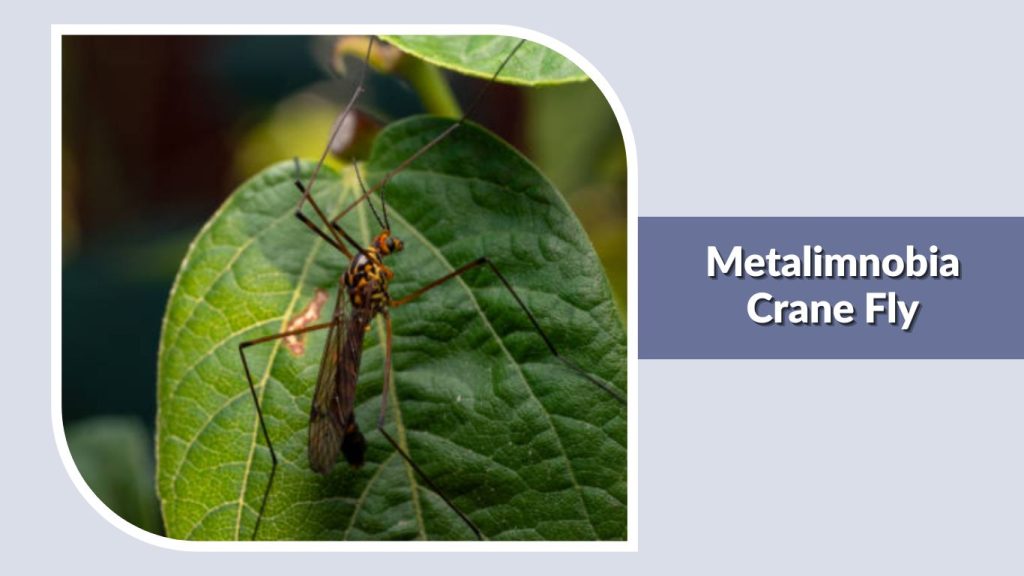
Metalimnobia crane flies are medium-sized, slender insects with long, delicate legs. Harmless to humans, they are commonly found in wetlands, damp forests, and grassy areas. Their larvae develop in moist soil or decaying plant matter, playing an important role in nutrient cycling and supporting soil ecosystem health.
Identification
- Slender, brown or gray body
- Extremely long, fragile legs
- Transparent wings with fine venation
- Long, segmented antennae
- Body length 12–22 mm
Habitat and Distribution
Metalimnobia crane flies are widely distributed across Europe, North America, and parts of Asia. Larvae inhabit damp soil, leaf litter, or decaying vegetation. Adults are often seen resting on low plants or flying slowly in shaded, moist environments.
Behavior and Diet
Adult Metalimnobia crane flies feed very little or not at all. Larvae consume decaying plant material and roots, contributing to soil nutrient recycling. Both adults and larvae serve as food for birds, amphibians, and small predatory insects.
Lifecycle
Females lay eggs in moist soil or decaying vegetation. Larvae develop through several instars over weeks, pupate in damp substrate, and adults emerge during spring or summer, completing their life cycle.
19. Hexatoma Crane Fly
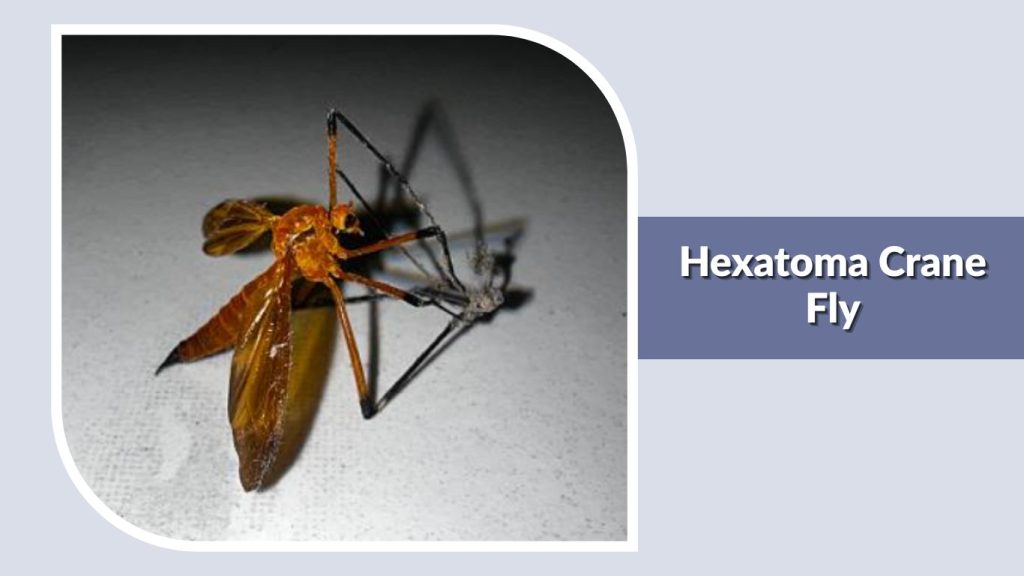
Hexatoma crane flies are medium to large-sized crane flies with slender bodies and long, delicate legs. They are harmless to humans and are typically found in wetlands, damp forests, and grassy meadows. Their larvae feed on decaying vegetation, contributing to soil nutrient cycling and supporting healthy ecosystems.
Identification
- Slender, brown or gray body
- Very long, fragile legs
- Transparent wings with fine venation
- Long, segmented antennae
- Body length 15–30 mm
Habitat and Distribution
Hexatoma crane flies are distributed across Europe, North America, and parts of Asia. Larvae develop in moist soil, leaf litter, or decomposing plant material. Adults are often observed resting on low vegetation or flying slowly in shaded, damp areas.
Behavior and Diet
Adults feed little or not at all. Larvae consume roots, decaying leaves, and plant matter, aiding in soil nutrient recycling. They are also an important food source for birds, amphibians, and small predatory insects.
Lifecycle
Females lay eggs in damp soil or leaf litter. Larvae develop through several instars over weeks, pupate in moist substrate, and adults emerge during spring or summer, completing their seasonal life cycle.
20. Prionocera Crane Fly
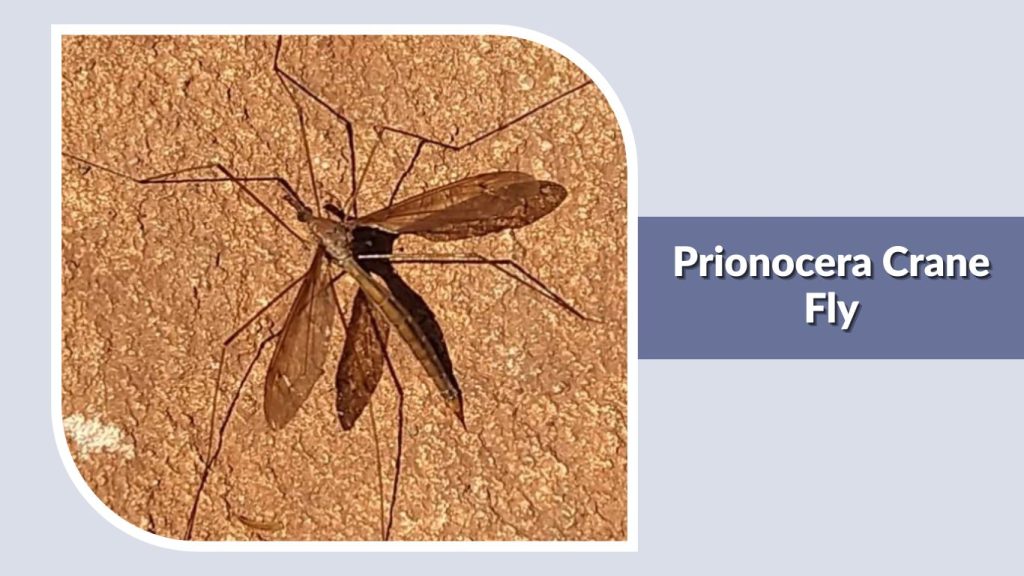
Prionocera crane flies are medium-sized, slender insects with long, delicate legs. Harmless to humans, they are commonly found in wetlands, damp forests, and grassy areas. Their larvae develop in moist soil or decaying vegetation, feeding on organic matter and playing an essential role in nutrient cycling and soil health.
Identification
- Slender, brown or gray body
- Extremely long, fragile legs
- Transparent wings with fine venation
- Long, segmented antennae
- Body length 12–22 mm
Habitat and Distribution
Prionocera crane flies are widely distributed across Europe, North America, and parts of Asia. Larvae inhabit damp soil, leaf litter, or decaying plant material. Adults are often observed resting on low vegetation or flying slowly in shaded, moist areas.
Behavior and Diet
Adult Prionocera crane flies feed very little or not at all. Larvae consume decaying plant matter, roots, and organic debris, contributing to soil nutrient recycling. Both adults and larvae serve as prey for birds, amphibians, and small predatory insects.
Lifecycle
Females lay eggs in moist soil or decaying vegetation. Larvae develop through multiple instars over weeks, pupate in damp substrate, and adults emerge in spring or summer, completing their life cycle.
21. Teucholabis Crane Fly
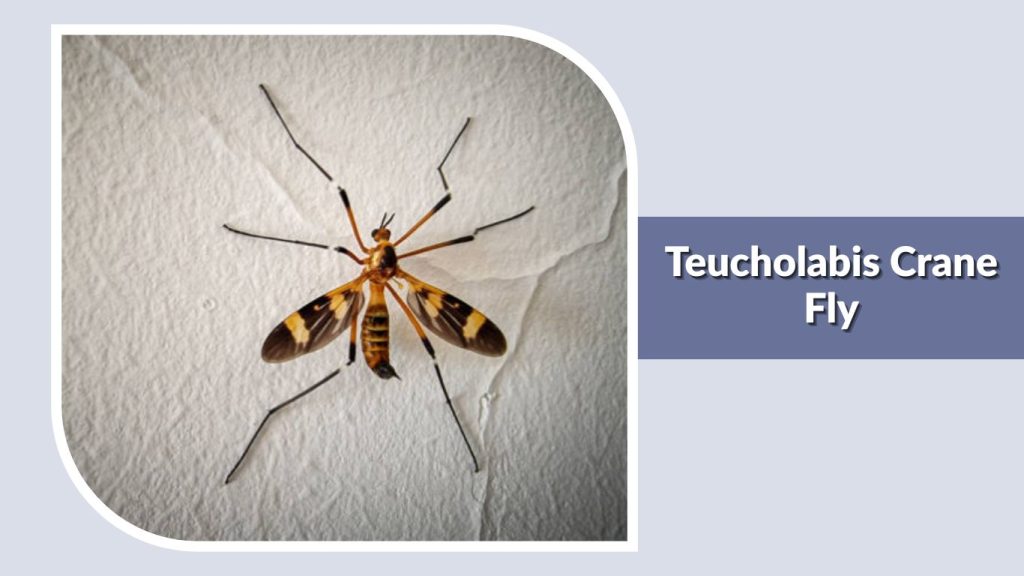
Teucholabis crane flies are medium-sized, slender insects with long, delicate legs. They are harmless to humans and commonly inhabit wetlands, damp forests, and grassy areas. Their larvae develop in moist soil or decaying plant matter, feeding on organic material and contributing to nutrient cycling and healthy soil ecosystems.
Identification
- Slender, brown or gray body
- Extremely long, fragile legs
- Transparent wings with fine venation
- Long, segmented antennae
- Body length 12–25 mm
Habitat and Distribution
Teucholabis crane flies are found across Europe, North America, and parts of Asia. Larvae live in moist soil, leaf litter, or decomposing vegetation. Adults are often observed resting on low vegetation or flying slowly in shaded, damp environments.
Behavior and Diet
Adults feed very little or not at all. Larvae consume decaying leaves, roots, and organic debris, contributing to soil nutrient recycling. Both adults and larvae serve as prey for birds, amphibians, and small predatory insects.
Lifecycle
Females lay eggs in damp soil or decaying vegetation. Larvae develop through several instars over weeks, pupate in moist substrate, and adults emerge in spring or summer, completing their seasonal life cycle.
22. Styringomyia Crane Fly
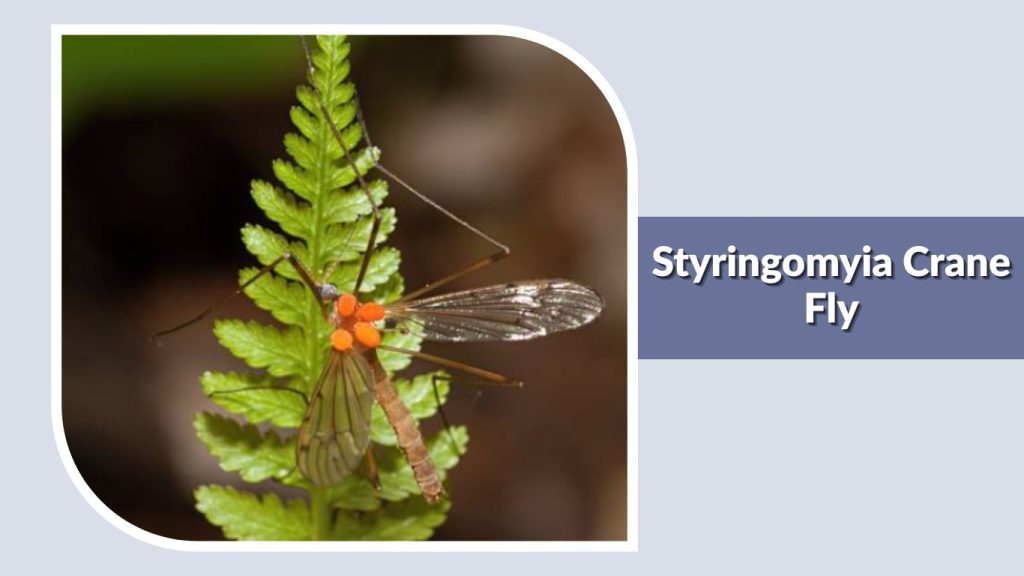
Styringomyia crane flies are medium-sized, slender insects with long, delicate legs. They are harmless to humans and are typically found in wetlands, damp forests, and grassy meadows. Their larvae live in moist soil or decaying organic matter, feeding on decomposing vegetation and contributing to soil nutrient cycling.
Identification
- Slender, brown or gray body
- Very long, fragile legs
- Transparent wings with fine venation
- Long, segmented antennae
- Body length 12–22 mm
Habitat and Distribution
Styringomyia crane flies are found across Europe, North America, and parts of Asia. Larvae develop in damp soil, leaf litter, or decaying plant material. Adults are often seen resting on low vegetation or flying slowly in shaded, moist areas.
Behavior and Diet
Adults feed very little or not at all. Larvae consume decaying leaves, roots, and organic debris, aiding in nutrient recycling. They are also an important food source for birds, amphibians, and small predatory insects.
Lifecycle
Eggs are laid in moist soil or decaying vegetation. Larvae develop through multiple instars over weeks, pupate in damp substrate, and adults emerge during spring or summer, completing their life cycle.
23. Macromastix Crane Fly
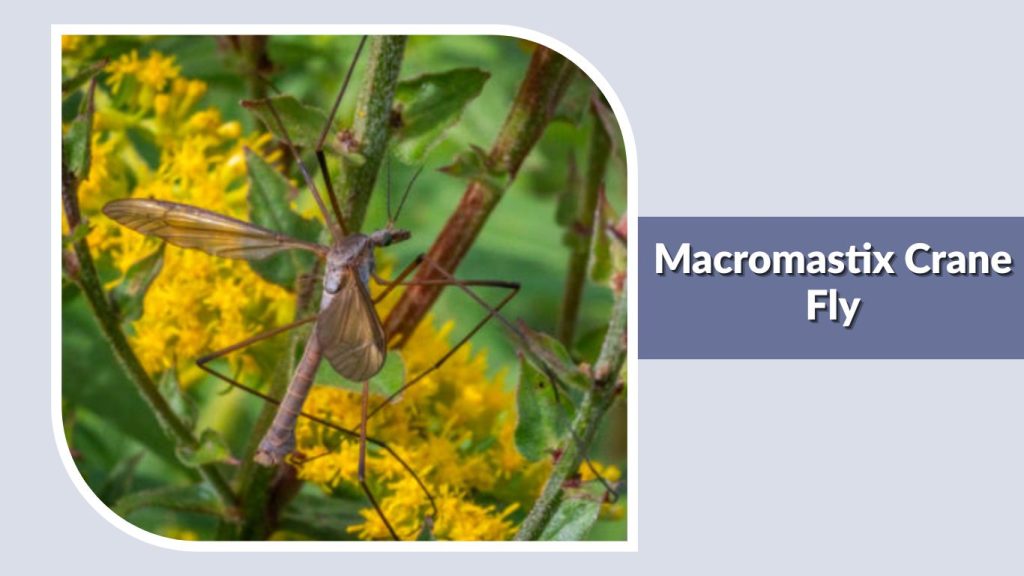
Macromastix crane flies are medium-sized, slender insects with long, delicate legs. Harmless to humans, they are commonly found in wetlands, damp forests, and grassy areas. Their larvae develop in moist soil or decaying vegetation, feeding on organic matter and playing a key role in nutrient cycling and soil ecosystem health.
Identification
- Slender, brown or gray body
- Extremely long, fragile legs
- Transparent wings with fine venation
- Long, segmented antennae
- Body length 12–25 mm
Habitat and Distribution
Macromastix crane flies are widely distributed across Europe, North America, and parts of Asia. Larvae inhabit damp soil, leaf litter, or decaying plant material. Adults are often observed resting on low vegetation or flying slowly in shaded, moist environments.
Behavior and Diet
Adults feed very little or not at all. Larvae consume decaying leaves, roots, and organic debris, contributing to soil nutrient recycling. Both adults and larvae serve as prey for birds, amphibians, and small predatory insects.
Lifecycle
Females lay eggs in damp soil or decaying vegetation. Larvae develop through several instars over weeks, pupate in moist substrate, and adults emerge in spring or summer, completing their seasonal life cycle.
24. Hexatoma Angusticornis Crane Fly
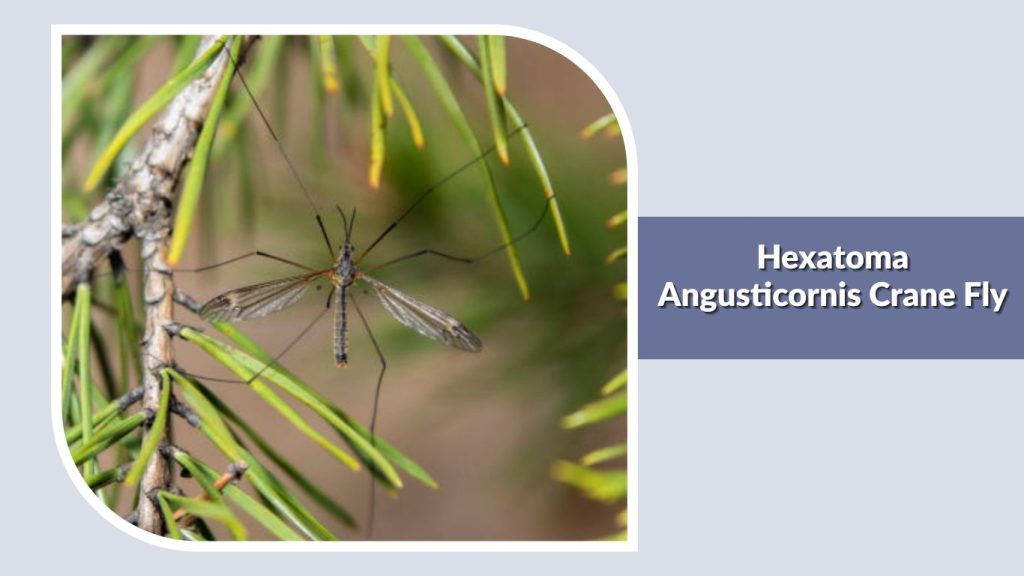
Hexatoma angusticornis crane flies are medium-sized, slender insects with long, delicate legs. Harmless to humans, they are typically found in wetlands, damp forests, and grassy meadows. Their larvae develop in moist soil or decaying plant matter, feeding on organic material and aiding in nutrient cycling.
Identification
- Slender, brown or gray body
- Very long, fragile legs
- Transparent wings with fine venation
- Long, segmented antennae
- Body length 15–28 mm
Habitat and Distribution
Hexatoma angusticornis crane flies are found across Europe, North America, and parts of Asia. Larvae inhabit damp soil, leaf litter, or decaying vegetation. Adults are frequently observed resting on low vegetation or flying slowly in shaded, moist environments.
Behavior and Diet
Adults feed minimally or not at all. Larvae consume decaying plant matter and roots, contributing to soil nutrient cycling. Both adults and larvae are preyed upon by birds, amphibians, and small predatory insects.
Lifecycle
Females lay eggs in moist soil or decaying vegetation. Larvae develop over several weeks, pupate in damp substrate, and adults emerge in spring or summer, completing their seasonal life cycle.
25. Nephrotoma Appendiculata Crane Fly
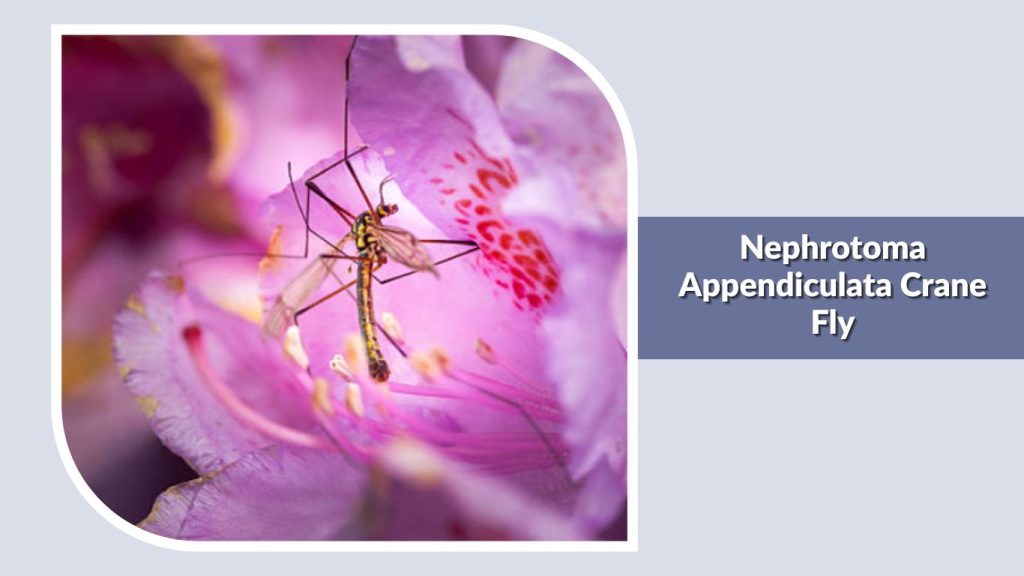
Nephrotoma appendiculata crane flies, also known as a type of tiger crane fly, are medium-sized, slender insects with long, delicate legs. Harmless to humans, they are commonly found in wetlands, damp forests, and grassy meadows. Their larvae feed on decaying vegetation, contributing to nutrient cycling and soil health.
Identification
- Slender body with yellow and black markings
- Very long, fragile legs
- Transparent or lightly tinted wings
- Long, segmented antennae
- Body length 15–30 mm
Habitat and Distribution
Nephrotoma appendiculata crane flies are found throughout Europe and parts of Asia. Larvae develop in moist soil, leaf litter, or decaying plant material. Adults are commonly seen resting on grass or low vegetation in shaded, damp areas.
Behavior and Diet
Adults feed minimally or not at all. Larvae consume decaying leaves, roots, and plant matter, aiding in nutrient recycling. They also serve as prey for birds, amphibians, and small predatory insects.
Lifecycle
Females lay eggs in damp soil or decaying vegetation. Larvae develop through several instars over weeks, pupate in moist substrate, and adults emerge during spring or summer, completing their seasonal life cycle.
FAQs
Are crane flies dangerous to humans?
No, crane flies are harmless. Despite their mosquito-like appearance, they do not bite or sting humans. Their primary ecological role is as decomposers and as a food source for birds and other predators.
What do crane fly larvae eat?
Crane fly larvae, often called leatherjackets, feed on decaying vegetation, plant roots, and organic matter in moist soil or leaf litter. This helps recycle nutrients back into the soil.
Where are crane flies commonly found?
Crane flies are found worldwide, especially in wetlands, damp forests, grassy meadows, and moist soil environments where their larvae can develop.
How long do crane flies live?
Adults typically live only a few days to a couple of weeks, primarily to mate and lay eggs. Larvae may develop over several weeks to months, depending on the species and environmental conditions.
Do crane flies bite or sting pets?
No, crane flies are harmless to pets. They do not bite, sting, or transmit diseases. The larvae feed on roots and decaying matter, posing no direct threat to animals.