
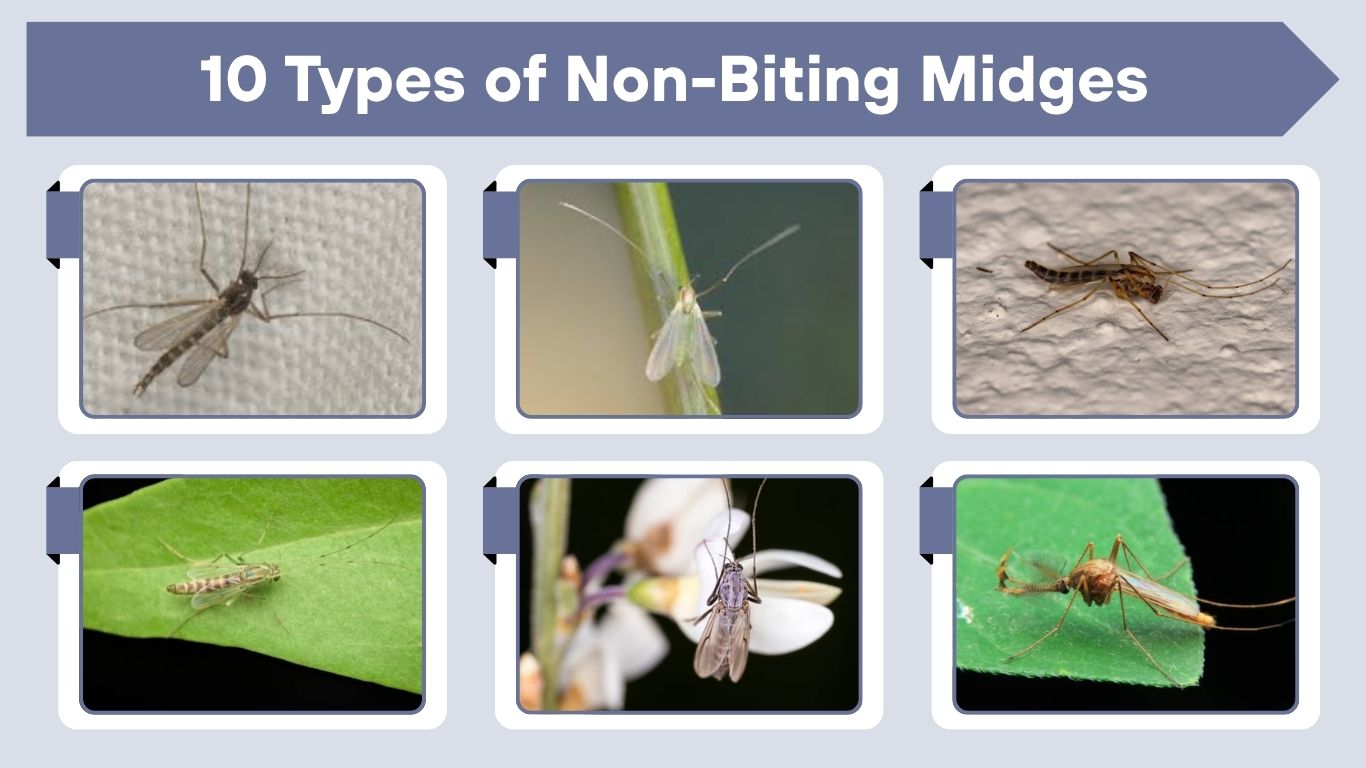
Non-biting midges are small, mosquito-like insects commonly found near freshwater habitats such as lakes, ponds, rivers, and wetlands. Despite their appearance, they do not bite or feed on blood, making them completely harmless to humans. These insects are often seen in large swarms, especially during warm seasons near water bodies.
They play an important ecological role in aquatic ecosystems. Their larvae live in water sediments, where they help break down organic matter and recycle nutrients. This makes them a key part of the food chain, supporting fish and other aquatic organisms. In this guide, you’ll explore 10 different types of non-biting midges, along with their key features and habitats.
1. Chironomus plumosus
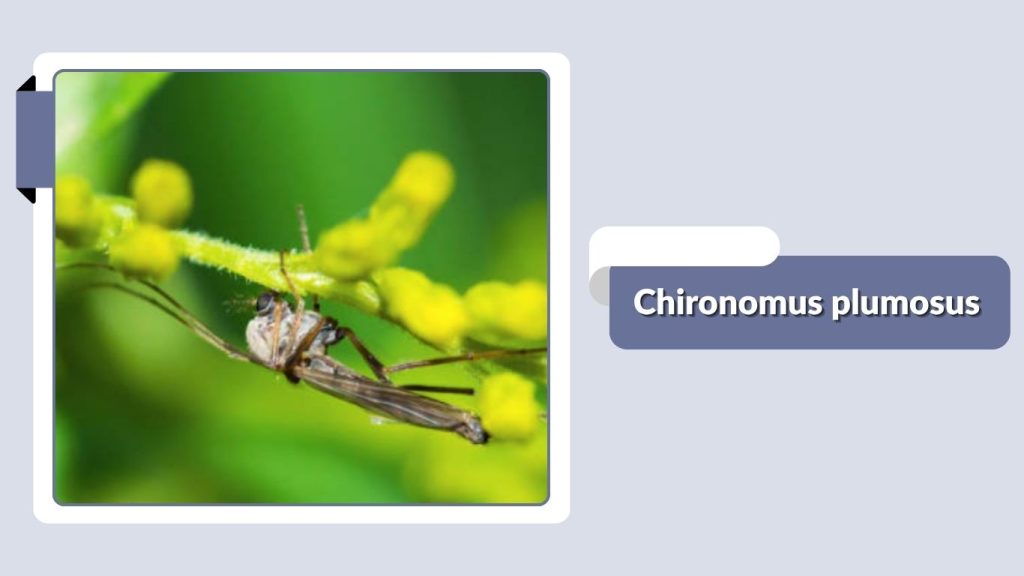
Chironomus plumosus is one of the most common and widely distributed non-biting midges found near freshwater habitats such as lakes, ponds, rivers, and wetlands. Despite looking similar to mosquitoes, it does not bite or feed on blood. Instead, it plays an important role in aquatic ecosystems, especially during its larval stage, where it helps break down organic matter and recycle nutrients in water bodies.
These midges are often seen in large swarms, especially during warm seasons. While the adults are short-lived and mostly harmless, the larvae are highly important in maintaining ecological balance in freshwater environments.
Physical Appearance
Chironomus plumosus adults are slender insects with delicate, mosquito-like bodies. They usually have pale to brownish coloring and long, thin legs. One of their key identifying features is their feathery antennae, especially in males, which help them detect mates. Unlike mosquitoes, they lack a piercing mouthpart, meaning they cannot bite or suck blood. Their wings are narrow and held close to the body when resting.
Characteristics
- Non-biting midge species (harmless to humans)
- Mosquito-like appearance but no blood-feeding ability
- Males have feathery antennae
- Short adult lifespan
- Often seen in large swarms near water
- Important aquatic ecosystem species
- Larvae live in muddy or oxygen-poor sediments
Habitat and Distribution
Chironomus plumosus is found worldwide, especially in temperate regions with abundant freshwater bodies. It thrives in lakes, ponds, marshes, and slow-moving rivers. The larvae are commonly found buried in soft sediments at the bottom of these water bodies, where they can tolerate low oxygen conditions that many other insects cannot survive.
Behavior and Life Cycle
The life cycle of Chironomus plumosus includes four stages: egg, larva, pupa, and adult. The larval stage is the longest and most important, as the larvae feed on decomposing organic material in sediment. After pupation, adults emerge and live only a few days, mainly focusing on reproduction. They do not feed much and quickly form mating swarms above water surfaces before completing their life cycle.
2. Chironomus riparius
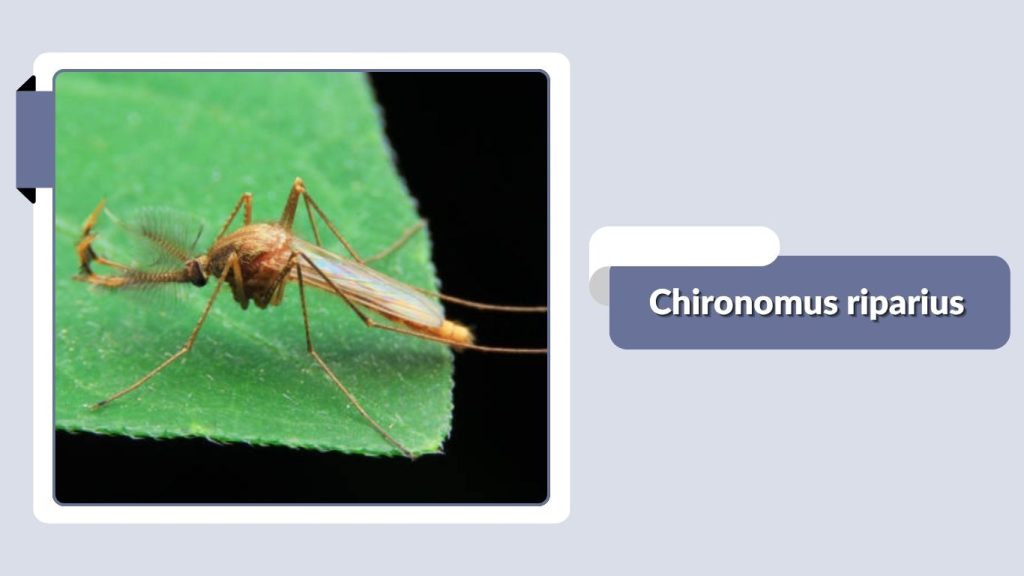
Chironomus riparius is a common non-biting midge species found in freshwater environments across Europe, North America, and parts of Asia. It is closely related to mosquitoes in appearance but is completely harmless to humans because it does not bite or feed on blood. This species is widely studied in environmental science because its larvae are sensitive to water pollution and oxygen levels, making it an important bioindicator of freshwater health.
The larvae of Chironomus riparius play a major ecological role by breaking down organic matter in aquatic sediments. This helps recycle nutrients and supports the overall productivity of freshwater ecosystems.
Physical Appearance
Adult Chironomus riparius are slender, delicate insects with pale to light brown bodies. They have long legs and narrow wings that fold neatly over the body when at rest. Males have distinctive feathery antennae used to detect female mating signals. Unlike mosquitoes, they lack a piercing mouthpart and cannot bite. Their appearance often leads people to confuse them with mosquitoes, but their behavior is completely different.
Characteristics
- Non-biting midge species
- Mosquito-like appearance but harmless
- Males have feathery antennae
- Short adult lifespan (few days)
- Strong bioindicator of water quality
- Larvae live in sediment and low oxygen zones
- Common in large swarms near water
Habitat and Distribution
Chironomus riparius is widely distributed in freshwater habitats such as ponds, lakes, rivers, canals, and wetlands. It prefers environments with soft, muddy bottoms where organic material accumulates. The larvae can survive in low-oxygen conditions, allowing them to thrive in polluted or nutrient-rich waters where many other aquatic insects cannot survive.
Behavior and Life Cycle
The species undergoes complete metamorphosis: egg, larva, pupa, and adult. The larval stage is the longest and involves feeding on decomposing organic matter in sediment. After pupation, adults emerge and form mating swarms above water surfaces. Adults live briefly, usually only long enough to reproduce before dying.
3. Chironomus decorus
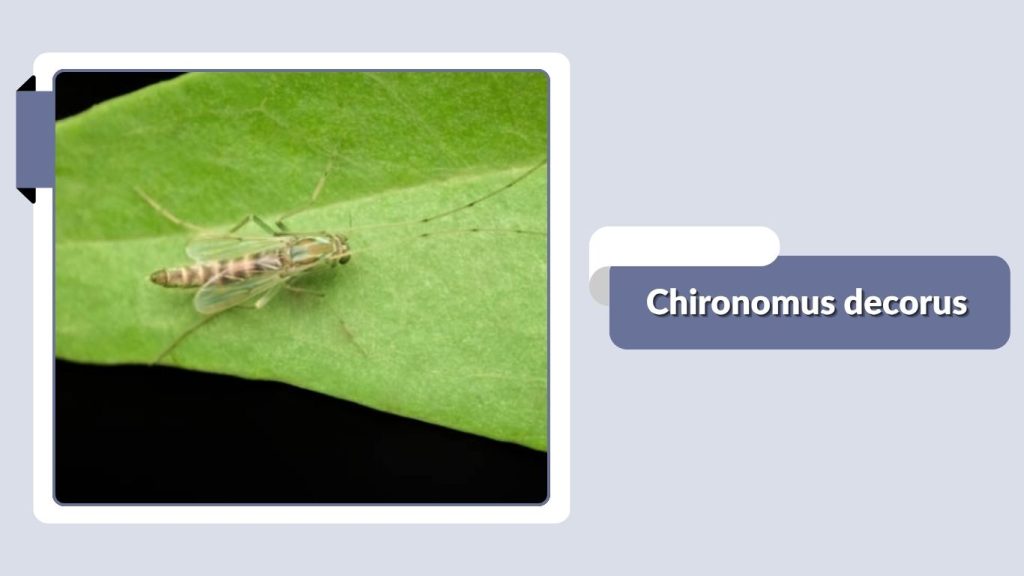
Chironomus decorus is a widespread non-biting midge species commonly found in freshwater habitats across North America. Like other members of the genus, it resembles a mosquito but does not bite or feed on blood. Instead, it plays a crucial role in aquatic ecosystems, especially during its larval stage, where it helps break down organic material and recycle nutrients in sediment.
This species is often used in scientific studies because its larvae are sensitive to changes in water quality, making it a useful indicator of environmental conditions in lakes and rivers.
Physical Appearance
Adult Chironomus decorus has a slender body with pale to brownish coloration. Its wings are narrow and held close to the body when at rest. Males have distinctive feathery antennae used for detecting female mating signals. Despite its mosquito-like appearance, it lacks biting mouthparts and is completely harmless to humans.
Characteristics
- Non-biting midge species
- Mosquito-like but harmless insect
- Males have feathery antennae
- Short adult lifespan (few days)
- Important aquatic bioindicator
- Larvae live in sediment layers
- Common in freshwater swarms
Habitat and Distribution
Chironomus decorus is found in lakes, ponds, rivers, and marshes, especially in regions with soft, muddy sediment. It is well adapted to environments with varying oxygen levels, allowing it to survive in both clean and moderately polluted waters. Its wide distribution makes it a common species in many freshwater systems.
Behavior and Life Cycle
The species undergoes complete metamorphosis: egg, larva, pupa, and adult. The larval stage is the longest, during which it feeds on decomposing organic matter in sediment. After pupation, adults emerge and form swarms above water surfaces for mating. Adults live only a few days and do not feed, focusing solely on reproduction.
4. Chironomus anthracinus
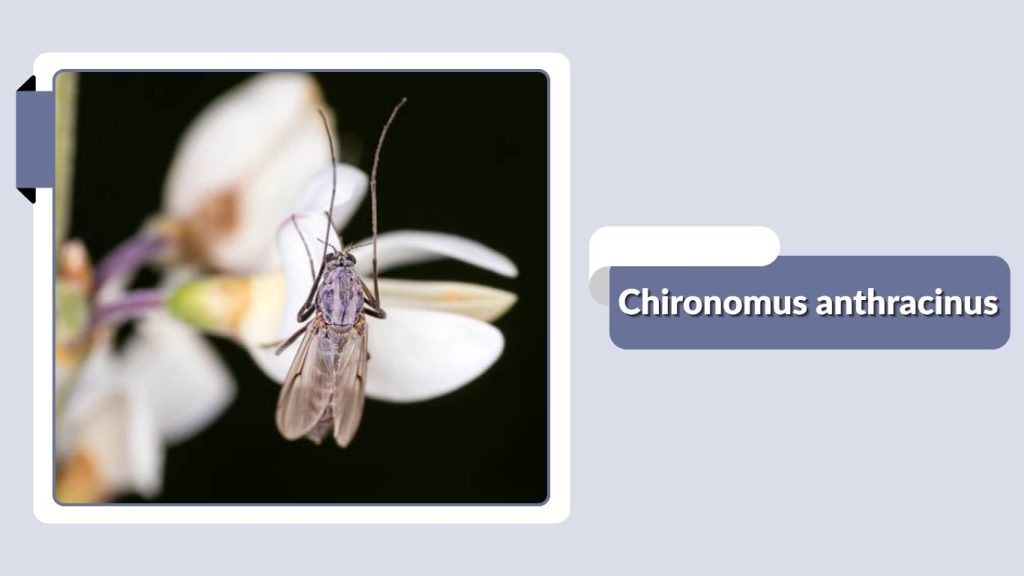
Chironomus anthracinus is a non-biting midge species found mainly in freshwater ecosystems across Europe and parts of Asia. It is often mistaken for mosquitoes due to its similar appearance, but it does not bite or transmit diseases. This species is particularly important in aquatic food webs, serving as both a decomposer in its larval stage and as prey for fish and other aquatic animals.
The larvae are known for their ability to survive in low-oxygen environments, making them highly adaptable to different water conditions.
Physical Appearance
Adult Chironomus anthracinus has a slim, delicate body with dark brown to blackish coloration. Its wings are narrow and transparent, held flat over the body when resting. Males have prominent feathery antennae used to detect mates in swarming behavior. Unlike mosquitoes, it lacks a proboscis and cannot bite.
Characteristics
- Non-biting midge species
- Mosquito-like appearance but harmless
- Males with feathery antennae
- Short-lived adult stage
- Larvae tolerant of low oxygen
- Important aquatic food source
- Common in freshwater swarms
Habitat and Distribution
This species is found in lakes, ponds, rivers, and wetlands, especially in areas with muddy or silty bottoms. It is well adapted to both clean and nutrient-rich waters and can survive in habitats with low oxygen levels where other insects struggle to survive.
Behavior and Life Cycle
Chironomus anthracinus undergoes complete metamorphosis. The larval stage is the longest, during which it feeds on organic material in sediment. After pupation, adults emerge and form mating swarms above water surfaces. Adults live only a short time, focusing entirely on reproduction before dying.
5. Chironomus tentans
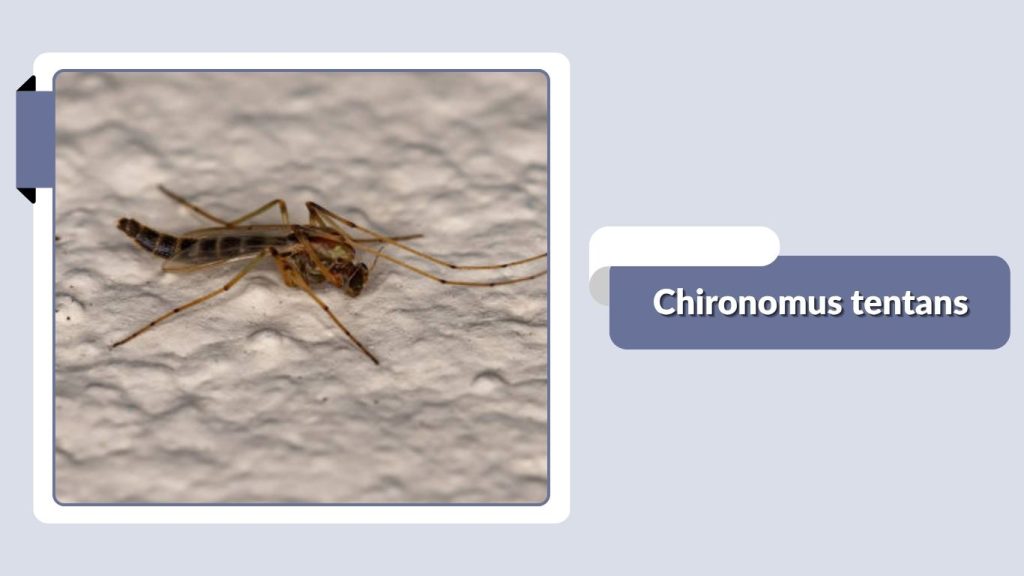
Chironomus tentans is a widely studied non-biting midge species found in freshwater environments across North America and other temperate regions. It is often used in laboratory research because its larvae are highly sensitive to pollutants and environmental changes. Despite its mosquito-like appearance, it is completely harmless to humans and does not bite or transmit diseases.
This species plays an important ecological role in aquatic ecosystems, especially in nutrient recycling. Its larvae live in sediment and help break down organic matter, making it an essential part of freshwater food chains.
Physical Appearance
Adult Chironomus tentans has a slender, delicate body with pale greenish to brown coloration. The wings are narrow and transparent, held close to the body when at rest. Males possess prominent feathery antennae used to detect females during swarming. Like other non-biting midges, it lacks a proboscis and cannot bite.
Characteristics
- Non-biting midge species
- Mosquito-like but harmless insect
- Males have feathery antennae
- Short adult lifespan
- Widely used in scientific research
- Larvae sensitive to pollution
- Important aquatic ecosystem species
Habitat and Distribution
Chironomus tentans is commonly found in lakes, ponds, slow-moving rivers, and wetlands. It prefers soft sediment environments where organic matter accumulates. The larvae can survive in low-oxygen conditions, allowing them to thrive in both clean and moderately polluted waters.
Behavior and Life Cycle
The species undergoes complete metamorphosis: egg, larva, pupa, and adult. The larval stage is the longest, during which it feeds on decomposing organic material in sediment. After pupation, adults emerge and form swarms above water surfaces for mating. Adults live only a few days and do not feed.
6. Chironomus dorsalis
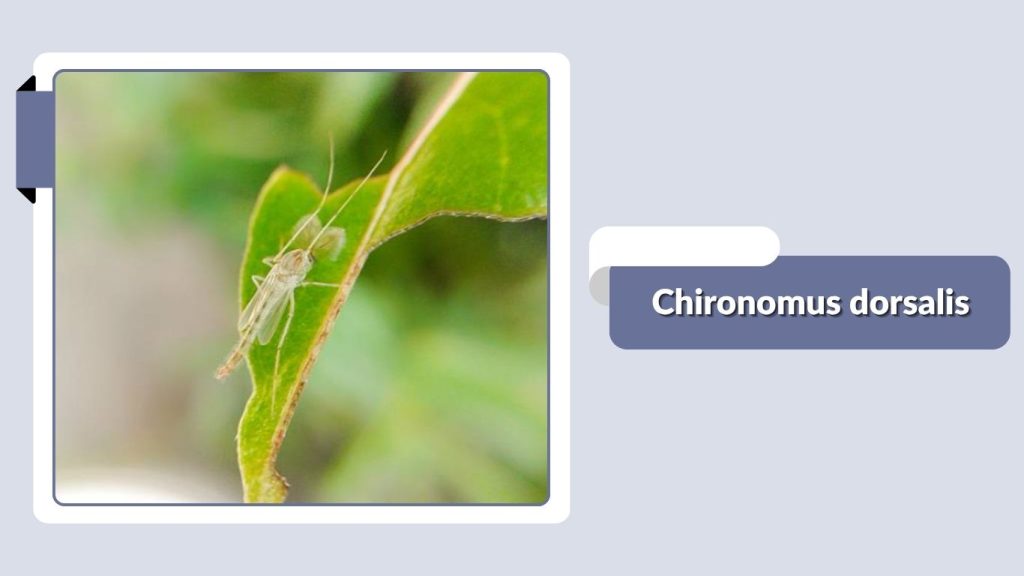
Chironomus dorsalis is a non-biting midge species commonly found in freshwater habitats across Europe and parts of Asia. It is closely related to mosquitoes in appearance but does not bite or feed on blood. This species is an important part of aquatic ecosystems, particularly in its larval stage, where it contributes to the breakdown of organic material in sediment.
Because of its sensitivity to environmental changes, Chironomus dorsalis is often used as an indicator species in ecological and water quality studies.
Physical Appearance
Adult Chironomus dorsalis has a slender body with brownish to dark coloration. Its wings are narrow and transparent, resting flat along the body when not in flight. Males have distinctive feathery antennae used to detect females during mating swarms. It lacks biting mouthparts, making it harmless to humans.
Characteristics
- Non-biting midge species
- Mosquito-like but harmless appearance
- Males have feathery antennae
- Short adult lifespan
- Sensitive to water quality changes
- Larvae live in sediment layers
- Important aquatic ecosystem role
Habitat and Distribution
This species is found in lakes, ponds, rivers, and wetlands, especially in areas with muddy or silty bottoms. It can survive in a range of water conditions, including low-oxygen environments. Its presence is often linked to nutrient-rich freshwater systems.
Behavior and Life Cycle
Chironomus dorsalis undergoes complete metamorphosis. The larval stage is the longest, during which it feeds on decomposing organic matter in sediment. After pupation, adults emerge and form mating swarms above water surfaces. Adults live only a few days and focus entirely on reproduction.
7. Chironomus staegeri
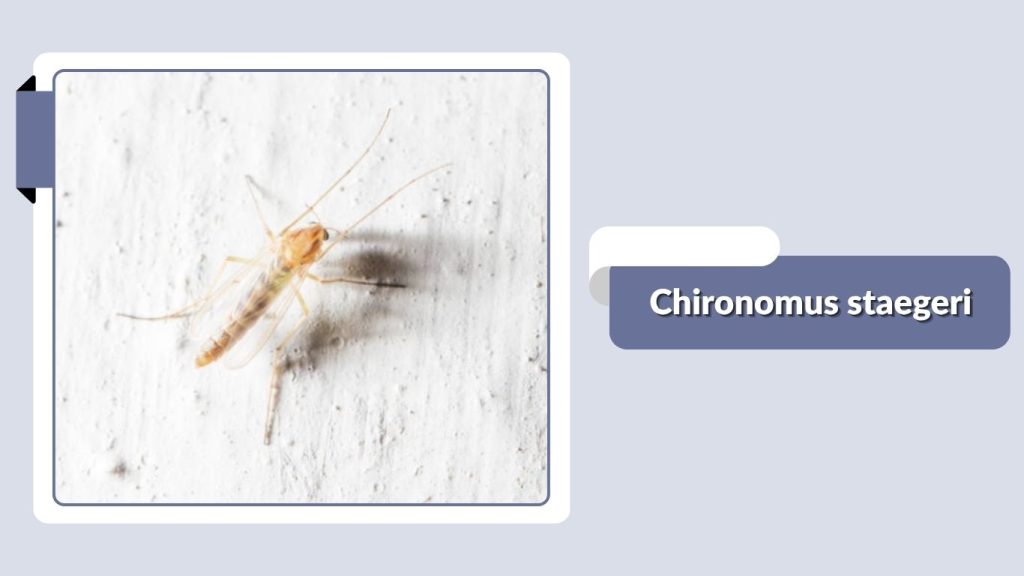
Chironomus staegeri is a non-biting midge species found in freshwater habitats across northern Europe and parts of Asia. It closely resembles mosquitoes in appearance, but it does not bite or feed on blood. Instead, it plays an important ecological role in aquatic ecosystems, especially during its larval stage, where it contributes to breaking down organic matter in sediments.
This species is often studied in freshwater ecology because its larvae can survive in low-oxygen environments, making it useful for understanding water quality and environmental changes.
Physical Appearance
Adult Chironomus staegeri has a slender, delicate body with pale brown to darker shading depending on environmental conditions. Its wings are narrow and transparent, held flat over the body when resting. Males have noticeable feathery antennae that help detect females during mating swarms. It lacks a biting mouthpart, so it cannot harm humans.
Characteristics
- Non-biting midge species
- Mosquito-like but harmless
- Males have feathery antennae
- Short adult lifespan
- Larvae tolerate low oxygen conditions
- Important in aquatic ecosystems
- Common in freshwater swarms
Habitat and Distribution
Chironomus staegeri is found in lakes, ponds, slow rivers, and wetlands, especially in cooler northern regions. It prefers muddy or silty bottoms where organic material accumulates. The larvae can survive in oxygen-poor sediments, allowing them to thrive where many other aquatic insects cannot.
Behavior and Life Cycle
The species undergoes complete metamorphosis: egg, larva, pupa, and adult. The larval stage is the longest and involves feeding on decomposing organic matter in sediment. After pupation, adults emerge and form swarms above water for mating. Adults live only a few days and do not feed.
8. Tanytarsus dissimilis
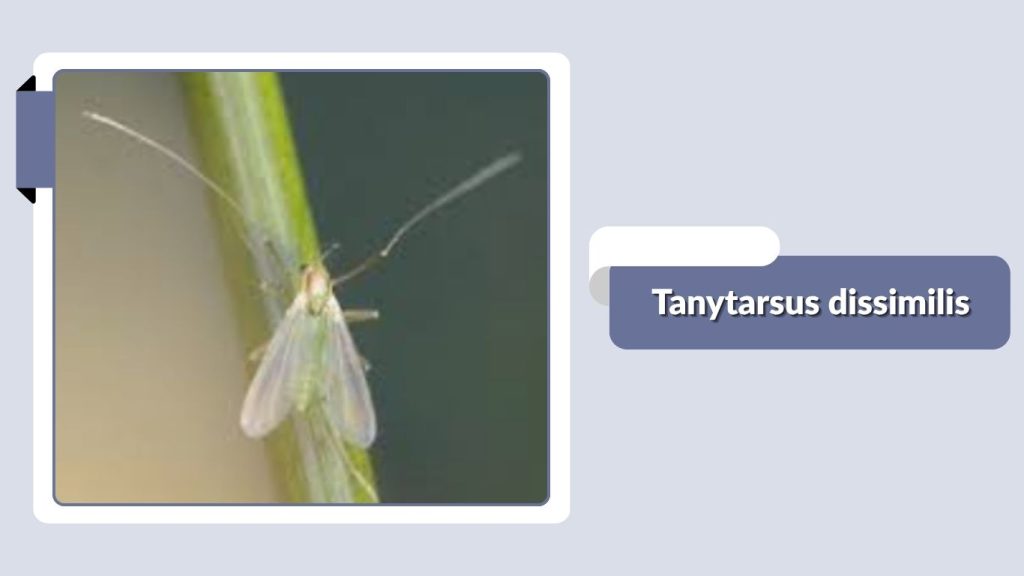
Tanytarsus dissimilis is a small non-biting midge species found in freshwater environments across Europe and parts of Asia. Unlike mosquitoes, it does not bite or feed on blood. It is an important part of aquatic ecosystems, especially in nutrient cycling and as a food source for fish and other aquatic organisms.
This species is commonly found in clean to moderately enriched freshwater systems and is often used in ecological studies to assess water quality.
Physical Appearance
Adult Tanytarsus dissimilis is smaller and more delicate compared to many Chironomus species. It has a slender body with light brown to yellowish coloration. Its wings are narrow and transparent, held close to the body when resting. Males have feathery antennae used to detect females during swarming behavior. It lacks biting mouthparts and is completely harmless.
Characteristics
- Non-biting midge species
- Small and delicate body structure
- Males have feathery antennae
- Short adult lifespan
- Important freshwater ecosystem species
- Sensitive to environmental changes
- Common in aquatic swarms
Habitat and Distribution
Tanytarsus dissimilis is found in lakes, ponds, rivers, and streams, especially in clean freshwater environments. It prefers well-oxygenated water and is often associated with less polluted habitats compared to some other midge species.
Behavior and Life Cycle
This species undergoes complete metamorphosis. The larval stage is the longest, during which it feeds on organic particles and microorganisms in sediment. After pupation, adults emerge and form mating swarms above water surfaces. Adults live only a few days and focus entirely on reproduction before dying.
9. Tanytarsus gracilentus
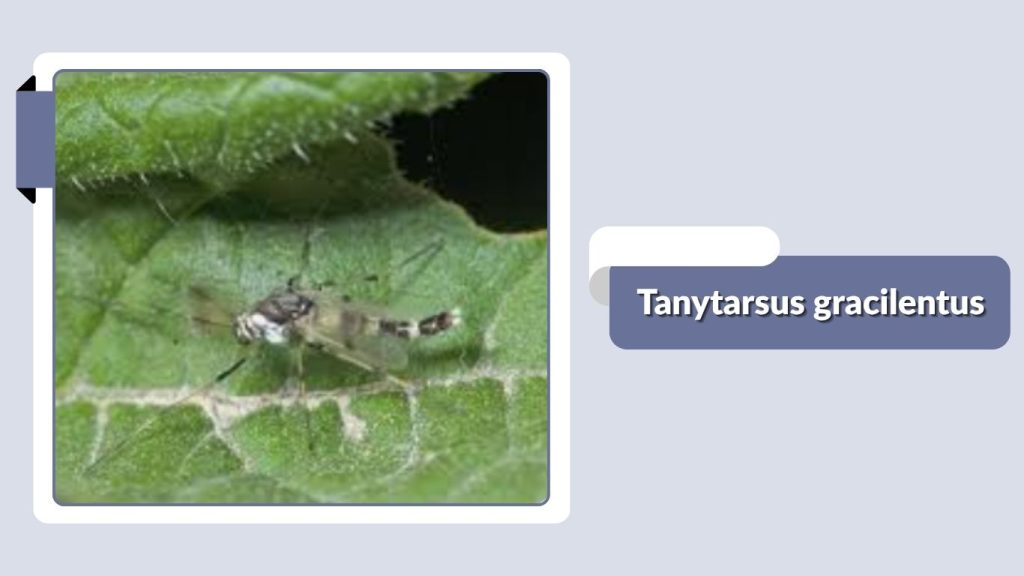
Tanytarsus gracilentus is a delicate non-biting midge species found in freshwater ecosystems across Europe and parts of Asia. Like other midges, it resembles a mosquito but is completely harmless to humans because it does not bite or feed on blood. It plays an important role in aquatic food webs, especially as a food source for fish and other invertebrates.
This species is often associated with clean, oxygen-rich waters, making it useful in environmental monitoring and ecological studies.
Physical Appearance
Adult Tanytarsus gracilentus has a very slender and fragile body with pale yellowish to light brown coloration. Its wings are narrow, transparent, and held close to the body when at rest. Males have fine feathery antennae used for detecting females during swarming. It lacks a proboscis, so it cannot bite or feed on blood.
Characteristics
- Non-biting midge species
- Small and delicate body form
- Males have feathery antennae
- Short adult lifespan
- Indicator of clean water
- Important aquatic food source
- Harmless to humans
Habitat and Distribution
This species is found in lakes, ponds, rivers, and streams with good water quality. It prefers well-oxygenated freshwater environments and is commonly associated with clean, unpolluted habitats. The larvae live in sediment and are sensitive to environmental changes.
Behavior and Life Cycle
Tanytarsus gracilentus undergoes complete metamorphosis with four stages: egg, larva, pupa, and adult. The larval stage is the longest, during which it feeds on organic particles and microorganisms in sediment. After pupation, adults emerge and form mating swarms above water. Adults live only a few days and focus entirely on reproduction.
10. Polypedilum nubifer
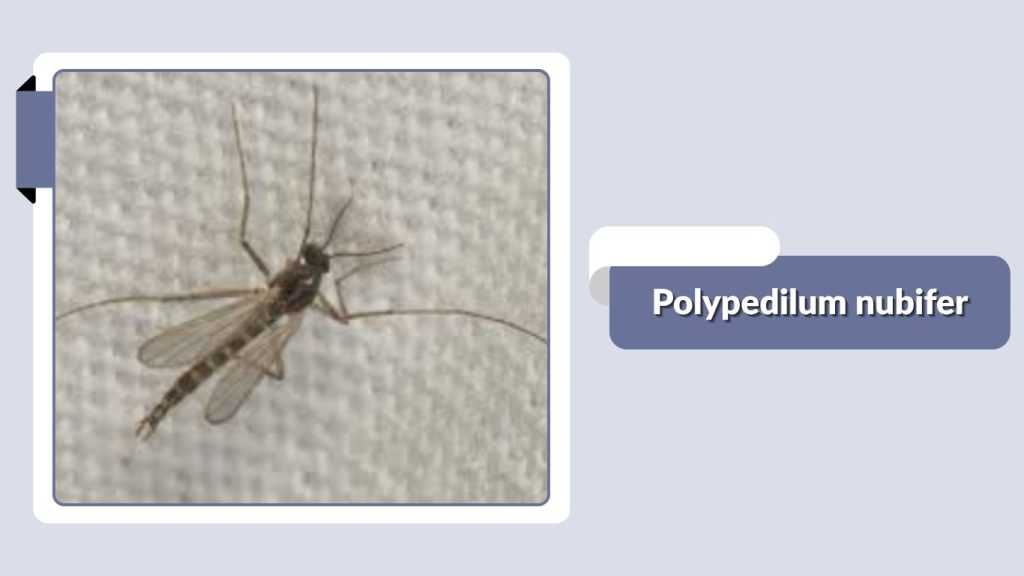
Polypedilum nubifer is a widely distributed non-biting midge species found in freshwater habitats around the world. It is commonly encountered in both natural and human-influenced water bodies. Despite its mosquito-like appearance, it is completely harmless and does not bite or transmit diseases.
This species is highly adaptable and can survive in a wide range of environmental conditions, including waters with varying levels of pollution.
Physical Appearance
Adult Polypedilum nubifer has a small, slender body with light brown to grayish coloration. Its wings are narrow and transparent, held flat over the body when resting. Males have characteristic feathery antennae used to detect mates during swarming activity. Like all non-biting midges, it lacks a piercing mouthpart.
Characteristics
- Non-biting midge species
- Highly adaptable to different water conditions
- Males have feathery antennae
- Short adult lifespan
- Common freshwater insect
- Important in aquatic food chains
- Harmless to humans
Habitat and Distribution
Polypedilum nubifer is found globally in lakes, ponds, rivers, streams, and even temporary water bodies. It can tolerate a wide range of environmental conditions, including low oxygen and moderately polluted waters. This adaptability makes it one of the most widespread midge species.
Behavior and Life Cycle
The species undergoes complete metamorphosis. The larval stage is the longest and involves feeding on organic matter and microorganisms in sediment. After pupation, adults emerge and form mating swarms near water surfaces. Adults live only a few days and do not feed, focusing solely on reproduction.
FAQs About Non-Biting Midges
What are non-biting midges?
Non-biting midges are small insects that look like mosquitoes but do not bite or feed on blood. They are harmless to humans and are commonly found near freshwater habitats.
Are non-biting midges dangerous?
No, non-biting midges are not dangerous. They do not sting, bite, or spread diseases. They may sometimes be a nuisance when they appear in large swarms, but they are harmless.
Why do non-biting midges swarm?
Male and female midges form swarms for mating. These swarms usually occur near water bodies during warm weather, especially in the evening.
Where do non-biting midges live?
They live near freshwater environments such as lakes, rivers, ponds, wetlands, and streams. Their larvae develop in water or sediment at the bottom of these habitats.
What do non-biting midge larvae eat?
The larvae feed on organic matter, algae, and microorganisms found in aquatic sediments. This helps recycle nutrients in freshwater ecosystems.
How long do non-biting midges live?
Adult non-biting midges usually live only a few days. Most of their life is spent in the larval stage underwater.
Why are non-biting midges important?
They are an important food source for fish, birds, and other aquatic animals. They also help break down organic material in water, supporting ecosystem health.
How can you tell midges apart from mosquitoes?
Mosquitoes have biting mouthparts and often feed on blood, while non-biting midges do not bite and have feathery antennae, especially in males.