
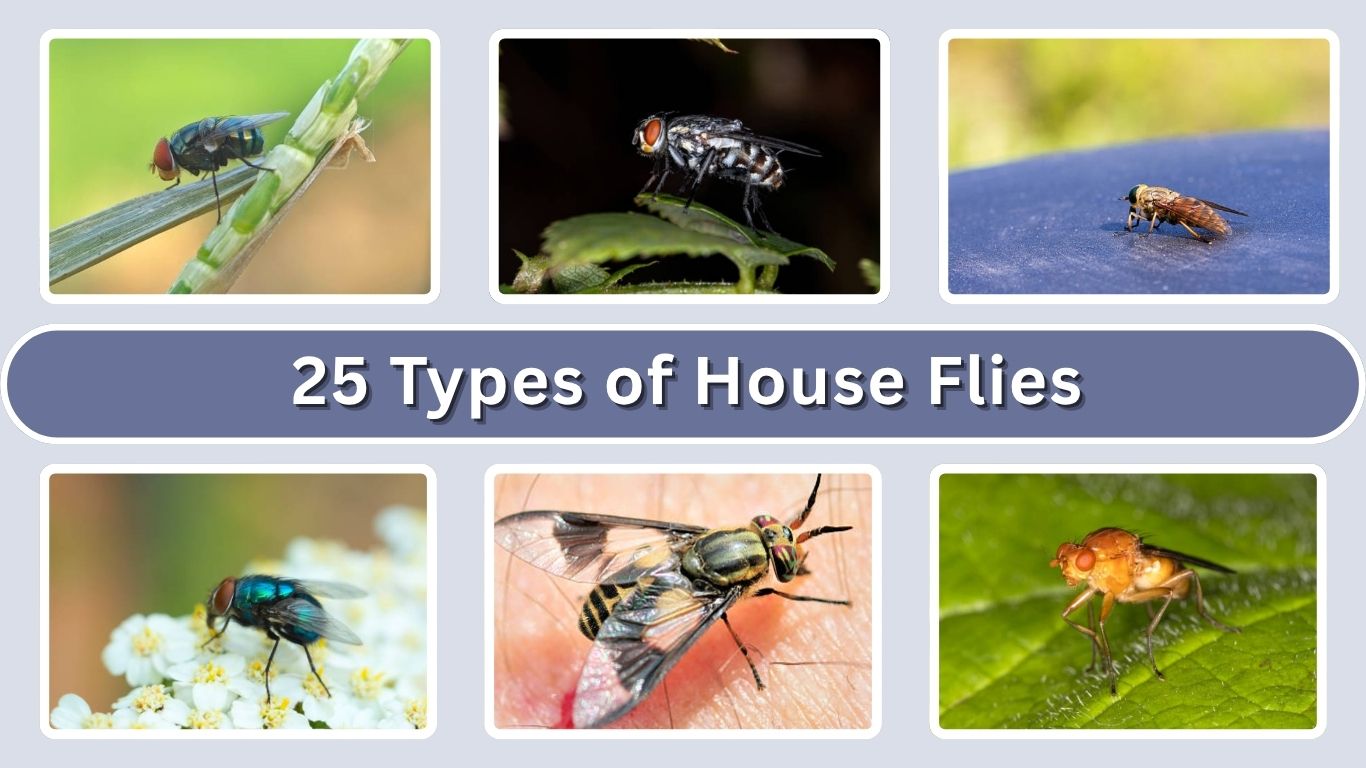
House flies and related fly species are among the most common insects found in human environments across the world. They are strongly associated with waste, decaying organic matter, livestock areas, and household food sources. While many of these flies play a natural role in breaking down organic material, several species are also known as serious pests because they can contaminate food and spread disease-causing microorganisms.
1. House Fly
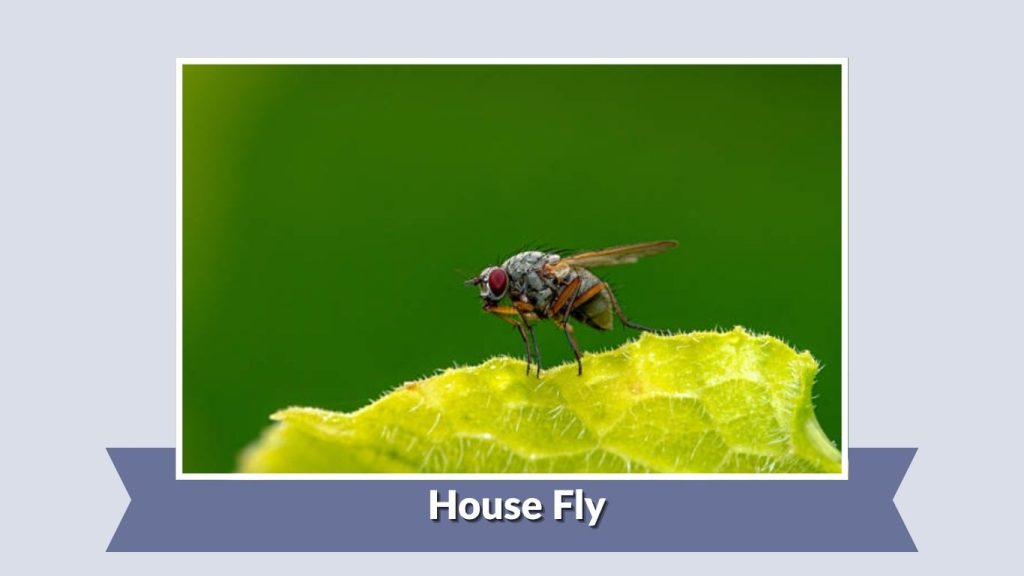
The House Fly is one of the most common and widespread fly species found around human settlements. It is closely associated with food waste, garbage, and decaying organic matter. Although small in size, it is known for its rapid breeding and ability to spread disease-causing microorganisms, making it a significant pest in homes and public areas.
Identification
- Grayish body with four dark stripes on the thorax
- Large red compound eyes
- Transparent wings held slightly apart at rest
- Short antennae
- Slightly hairy body
- About 6–7 mm in length
Habitat
House Flies are found worldwide and thrive in warm environments close to humans. They are commonly seen around kitchens, markets, garbage bins, livestock areas, and toilets. They breed in decaying organic matter such as food waste, manure, and rotting materials. Their close association with human activity makes them one of the most familiar insect pests.
Behavior
House Flies are active during the day and feed on a wide range of liquid and semi-liquid substances. They cannot chew solid food, so they regurgitate digestive fluids to dissolve it before feeding. They often move between waste and human food, which allows them to spread bacteria and pathogens. Despite being a nuisance, they play a minor ecological role in breaking down organic waste.
2. Lesser House Fly
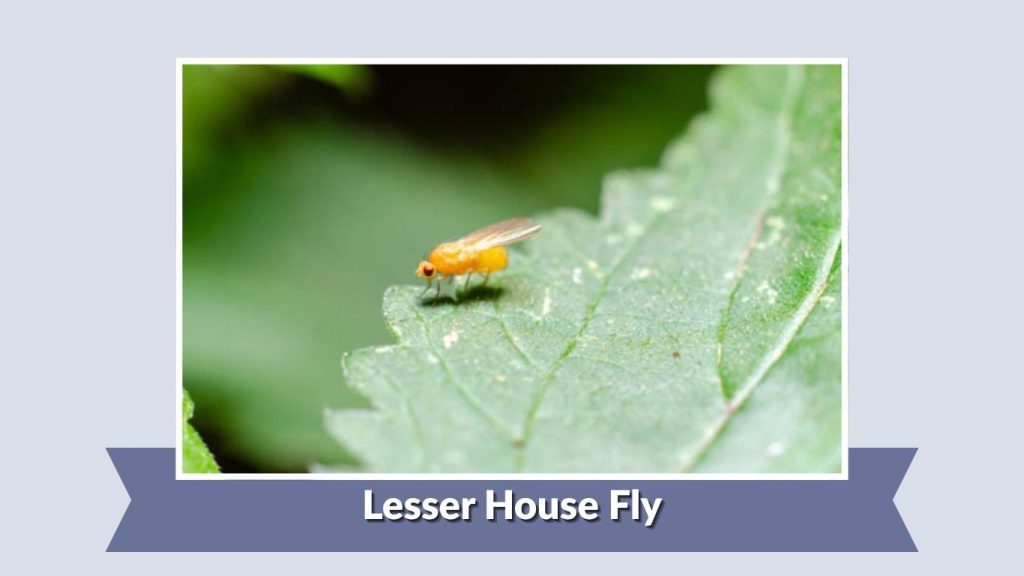
The Lesser House Fly is a smaller relative of the common house fly and is often found in similar environments. Although less noticeable due to its size, it is still considered a nuisance pest in homes, farms, and animal shelters. It is commonly associated with decaying organic matter and waste materials.
Identification
- Small grayish body
- Similar shape to house fly but more slender
- Red compound eyes
- Transparent wings held flat when resting
- Slightly hairy body
- Around 3–5 mm in length
Habitat
Lesser House Flies are found in human-influenced environments such as kitchens, garbage areas, animal barns, and compost sites. They prefer warm, moist places where organic waste is present. They are especially common in areas with poor sanitation or exposed food waste, where they can breed quickly.
Behavior
These flies are active during the day and feed on liquid or softened organic matter. Like other flies, they cannot chew solid food and instead dissolve it externally before feeding. They are known to move between contaminated materials and human food sources, increasing the risk of spreading germs. Despite their pest status, they also contribute to the breakdown of organic waste in nature.
3. Stable Fly
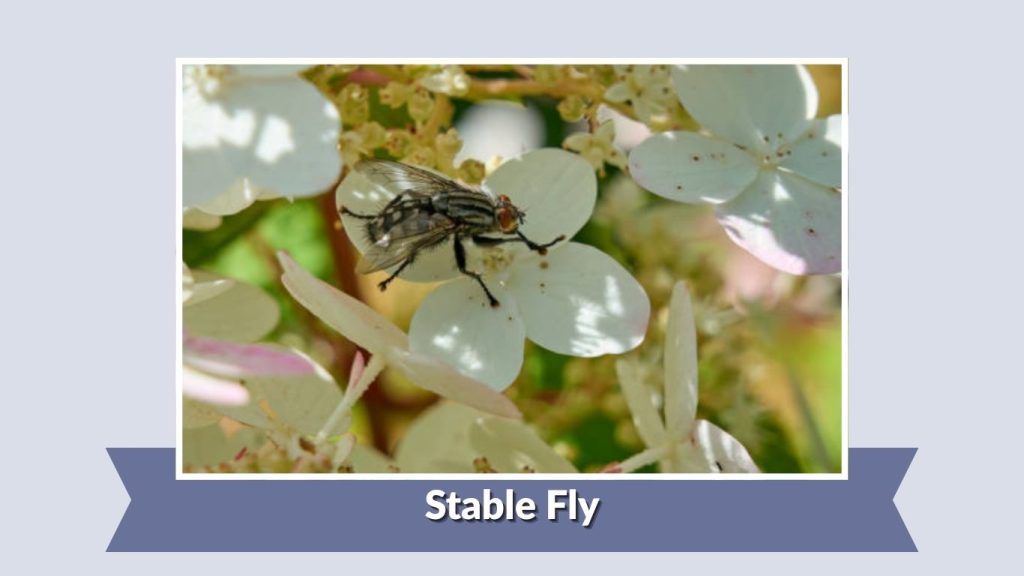
The Stable Fly is a biting fly species commonly found around livestock and rural environments. Unlike the house fly, it feeds on blood, making it a serious pest for animals and sometimes humans. Its painful bite and persistent feeding behavior make it one of the most irritating fly species in agricultural areas.
Identification
- Gray body with checker-like pattern on abdomen
- Forward-pointing piercing mouthparts
- Red compound eyes
- Transparent wings held slightly apart
- Slightly hairy body
- About 5–7 mm in length
Habitat
Stable Flies are commonly found in cattle farms, horse stables, barns, and rural areas with livestock. They breed in decaying plant material mixed with manure, such as rotting hay or straw. They are especially abundant in warm and humid conditions where organic waste accumulates.
Behavior
Stable Flies are blood-feeding insects that bite livestock and sometimes humans to obtain blood meals. Both males and females may feed on blood, unlike many other fly species. Their bites are painful and often cause animals to become stressed and restless. They are most active during the daytime and tend to feed repeatedly. Despite being pests, they also play a role in the decomposition of organic matter during their larval stage.
4. Latrine Fly
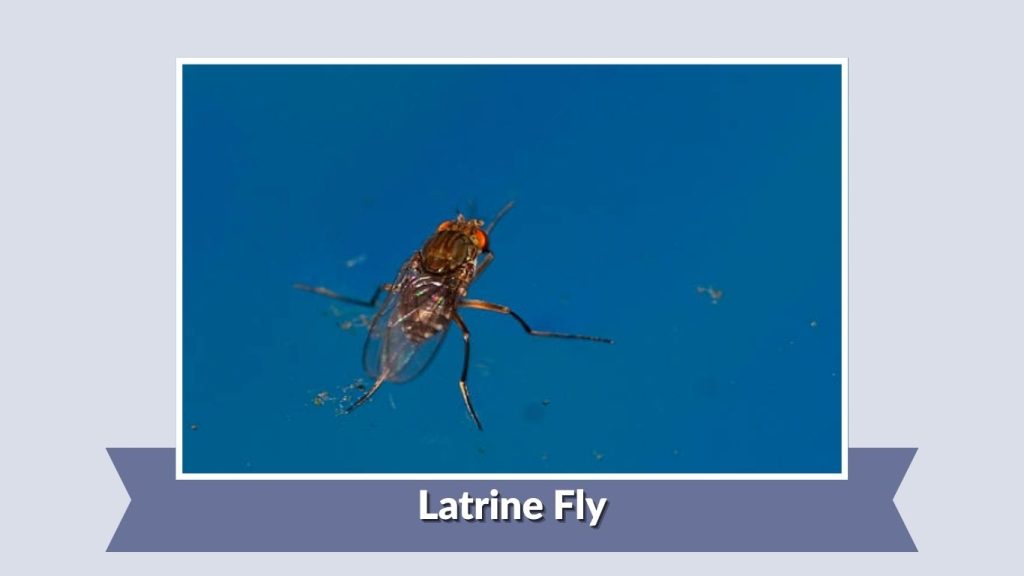
The Latrine Fly is a small fly species commonly associated with unsanitary environments such as toilets, sewage areas, and decomposing organic waste. It is considered a serious nuisance pest due to its ability to spread pathogens from contaminated sites to human food and living spaces.
Identification
- Small gray to dark gray body
- Short antennae
- Clear wings held roof-like at rest
- Slightly hairy appearance
- Red or dark compound eyes
- About 4–6 mm in length
Habitat
Latrine Flies are commonly found in toilets, septic tanks, drains, garbage dumps, and areas with human or animal waste. They prefer moist, decaying organic material for breeding. These flies are especially common in places with poor sanitation and warm climates where waste accumulates.
Behavior
Latrine Flies are active during the day and are strongly attracted to foul-smelling organic matter. They feed on liquid waste and decaying materials, and frequently move between contaminated surfaces and human environments. This behavior makes them effective carriers of bacteria and disease-causing organisms. Although they play a role in breaking down waste in nature, they are considered a health risk in human habitats.
5. Fannia canicularis
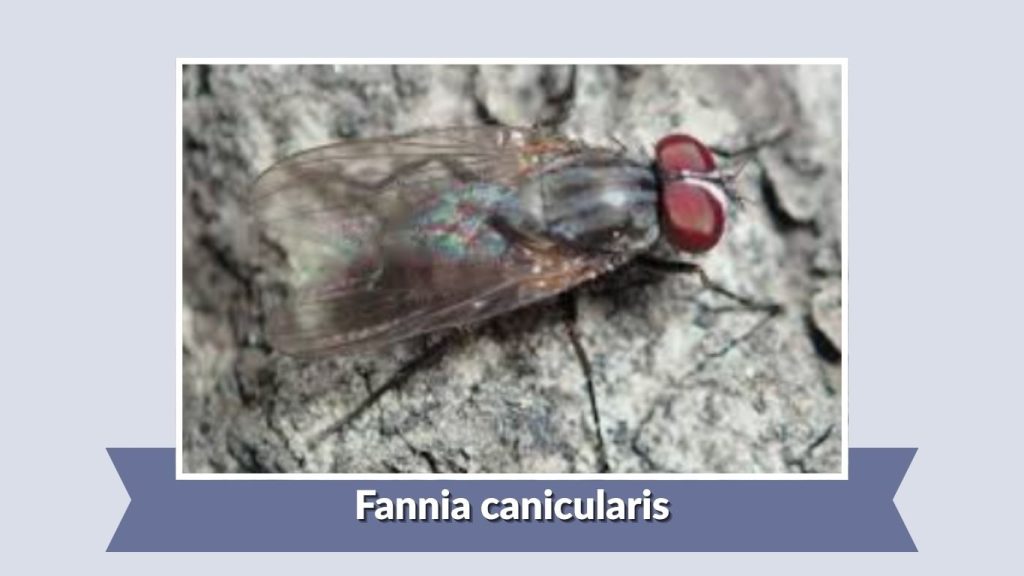
Fannia canicularis, commonly known as the Lesser House Fly, is a small fly species often found in and around human dwellings. It is less noticeable than the common house fly but can still become a nuisance, especially in kitchens, bathrooms, and animal-keeping areas. It is also known for its hovering flight pattern inside rooms.
Identification
- Small slender grayish body
- Three dark stripes on the thorax (faint)
- Transparent wings held slightly apart
- Red compound eyes
- Lightly hairy body
- Around 4–6 mm in length
Habitat
Fannia canicularis is commonly found in homes, barns, poultry houses, and garbage areas. It prefers moist organic material such as decaying food, manure, and waste for breeding. It is especially common in rural and semi-urban environments where animals and waste sources are nearby.
Behavior
This fly is active during the day and is often seen hovering in the center of rooms, especially near ceilings or light sources. It feeds on liquid and semi-liquid organic matter and can move between contaminated materials and human food. Although it does not bite, it can still spread bacteria and pathogens. Its larvae develop in decaying organic waste, helping in natural decomposition processes.
6. Fannia scalaris
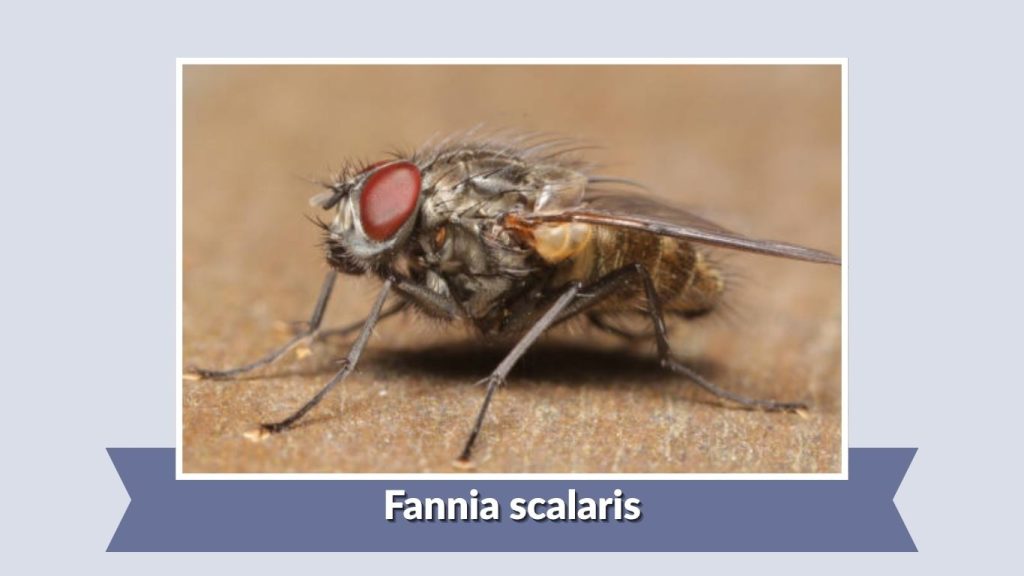
Fannia scalaris, commonly known as the Scavenger Fly, is a small fly species often associated with decomposing organic matter. It is frequently found in unsanitary environments and is considered a nuisance pest due to its breeding habits and potential to spread disease-causing organisms.
Identification
- Small grayish body
- Three dark longitudinal stripes on thorax
- Narrow abdomen with faint markings
- Transparent wings held flat when resting
- Red compound eyes
- About 5–7 mm in length
Habitat
Fannia scalaris is commonly found in latrines, sewage areas, manure piles, garbage dumps, and decaying organic waste. It prefers moist, decomposing materials for egg-laying and larval development. It is more common in rural and poorly sanitized urban environments.
Behavior
This species is active during the day and is strongly attracted to foul-smelling organic matter. It feeds on liquid waste and decaying materials. Like other flies, it can move between contaminated sites and human environments, increasing the risk of spreading pathogens. Its larvae play a role in breaking down waste, but the adult fly is considered a public health concern due to its association with unsanitary conditions.
7. Blow Fly
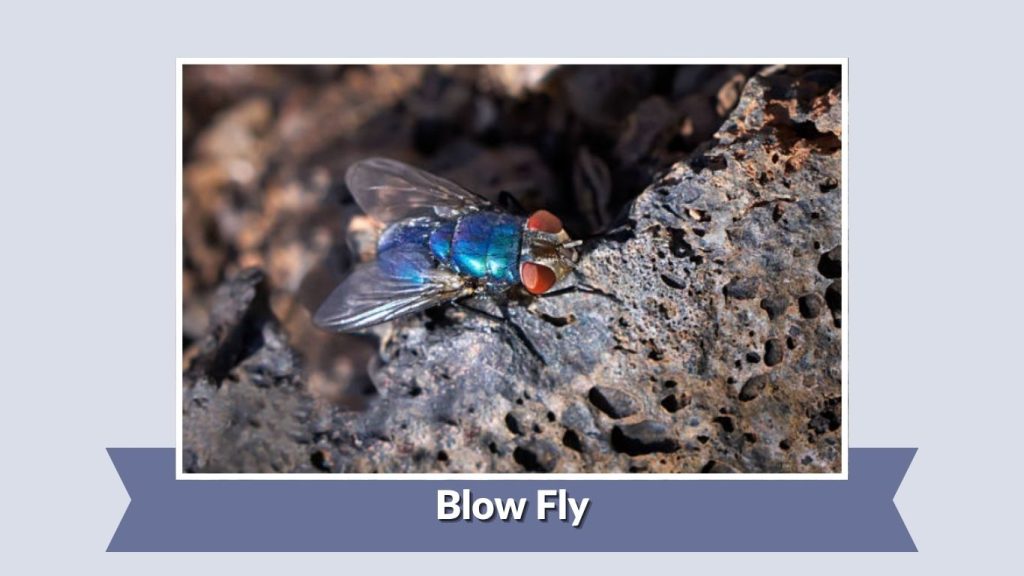
The Blow Fly is a common fly species known for its metallic coloration and association with decaying animal matter. It is often one of the first insects to arrive at carrion, making it important in natural decomposition processes and forensic investigations. Despite its ecological role, it is also considered a nuisance and potential disease carrier.
Identification
- Shiny metallic blue, green, or black body
- Stout and slightly larger than house flies
- Red compound eyes
- Clear wings held flat when resting
- Short antennae
- About 8–14 mm in length
Habitat
Blow Flies are found worldwide and are commonly seen around decaying meat, animal carcasses, garbage, and open waste areas. They prefer warm environments and are especially abundant in places where organic matter is exposed. They can also be found near homes, slaughterhouses, and farms.
Behavior
Blow Flies are highly active during the day and are strongly attracted to decomposing organic material. Females lay eggs on carrion or waste, and the larvae (maggots) feed on the decaying matter. This helps accelerate decomposition in nature. Adults feed on liquids such as nectar, plant juices, and decaying fluids. While beneficial in decomposition, they can also spread pathogens when they come into contact with human food and living spaces.
8. Green Bottle Fly
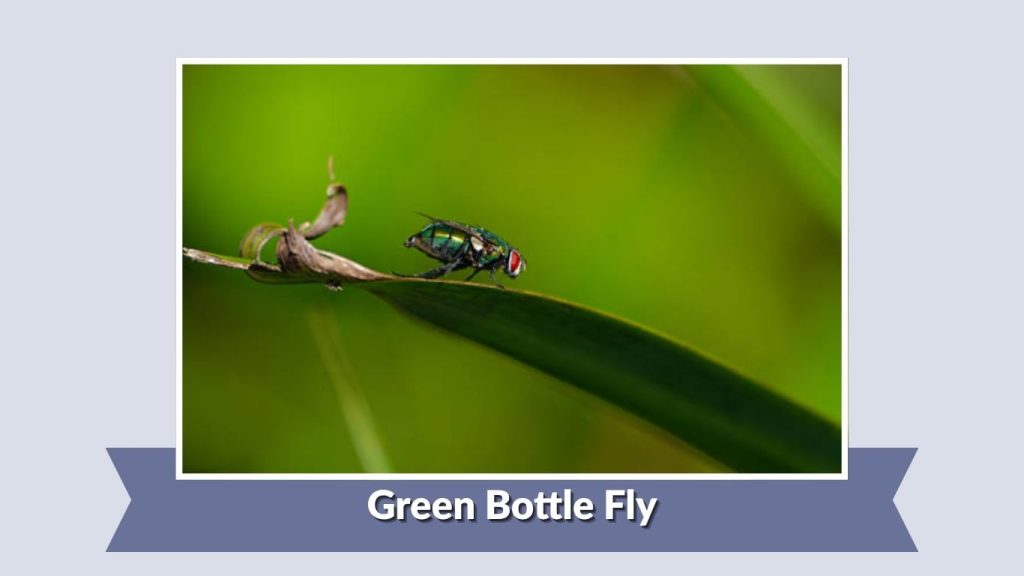
The Green Bottle Fly is a metallic green fly commonly found around decaying organic matter. It is one of the most recognizable blow fly species and plays an important role in decomposition and nutrient recycling in nature. However, it can also act as a nuisance in homes and livestock areas.
Identification
- Bright metallic green body
- Red compound eyes
- Stout body slightly larger than house fly
- Transparent wings held flat when resting
- Short antennae
- About 8–12 mm in length
Habitat
Green Bottle Flies are commonly found near decaying meat, animal carcasses, garbage, and manure. They are widespread in both rural and urban environments. They prefer warm climates and are often seen around slaughterhouses, farms, and outdoor waste areas where organic material is exposed.
Behavior
These flies are active during the day and are strongly attracted to decomposing organic matter. Females lay eggs on carrion or waste, and the larvae feed on the decaying material. This helps in natural decomposition and nutrient recycling. Adults feed on nectar, plant juices, and other liquid substances. Although beneficial in ecosystems, they can also spread bacteria if they come into contact with human food or living spaces.
9. Blue Bottle Fly
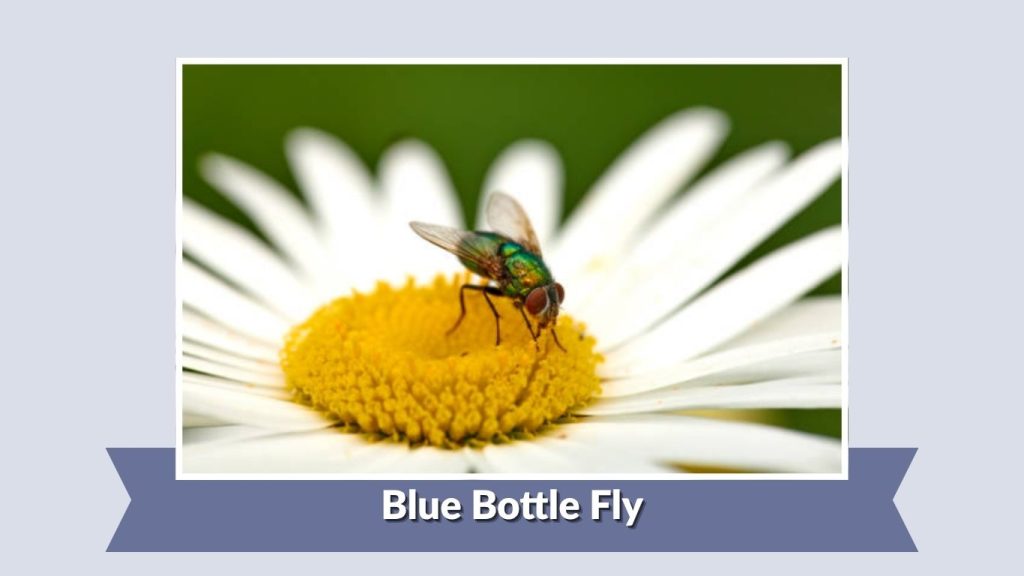
The Blue Bottle Fly is a large, metallic blue fly commonly associated with decaying organic matter. It is one of the most widespread blow fly species and is often seen around garbage, carrion, and animal waste. It plays an important ecological role in decomposition but can also be a household and agricultural pest.
Identification
- Shiny metallic blue body
- Large red compound eyes
- Robust and slightly hairy body
- Clear wings held flat when resting
- Short antennae
- About 10–14 mm in length
Habitat
Blue Bottle Flies are found in a wide range of environments including urban areas, farms, slaughterhouses, and natural habitats. They are especially attracted to decaying meat, animal carcasses, and organic waste. Warm climates and exposed waste materials provide ideal breeding conditions for this species.
Behavior
These flies are active during the day and are strongly attracted to rotting organic matter. Females lay eggs on carrion or waste, and the larvae (maggots) feed on decomposing tissue. This helps speed up natural decomposition processes. Adults feed on nectar, plant fluids, and other liquid substances. While ecologically useful, they can also spread harmful bacteria if they come into contact with human food or living environments.
10. Flesh Fly
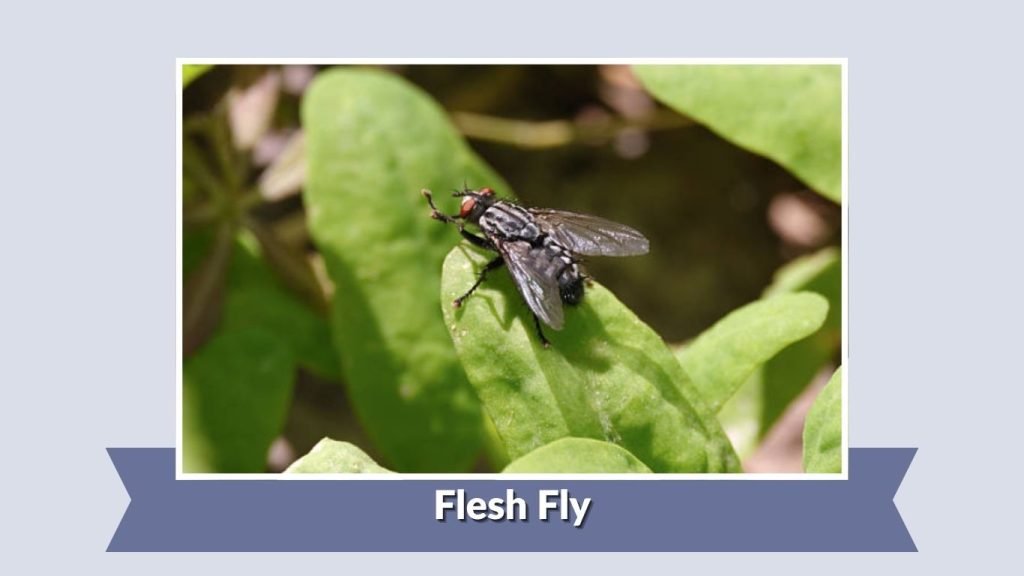
The Flesh Fly is a medium to large fly species known for its gray body with distinctive checkerboard patterns on the abdomen. Unlike many other flies, some flesh flies give birth to live larvae instead of laying eggs. It is commonly found around decaying organic matter and plays a role in decomposition.
Identification
- Gray body with black checkerboard pattern on abdomen
- Red compound eyes
- Three dark stripes on thorax
- Slightly hairy appearance
- Large and robust body
- About 8–15 mm in length
Habitat
Flesh Flies are found in urban and rural environments, especially near decaying meat, animal carcasses, garbage, and feces. They are also common around slaughterhouses and animal farms. These flies prefer warm climates and areas with abundant organic waste for breeding.
Behavior
Flesh Flies are active during the day and are strongly attracted to decomposing organic material. Unlike many flies, females often deposit live larvae directly onto food sources instead of eggs. The larvae feed on decaying matter, helping in decomposition. Adults feed on nectar, plant juices, and liquid waste. While they contribute to natural recycling processes, they can also spread disease-causing bacteria when they come into contact with human environments.
11. Cluster Fly
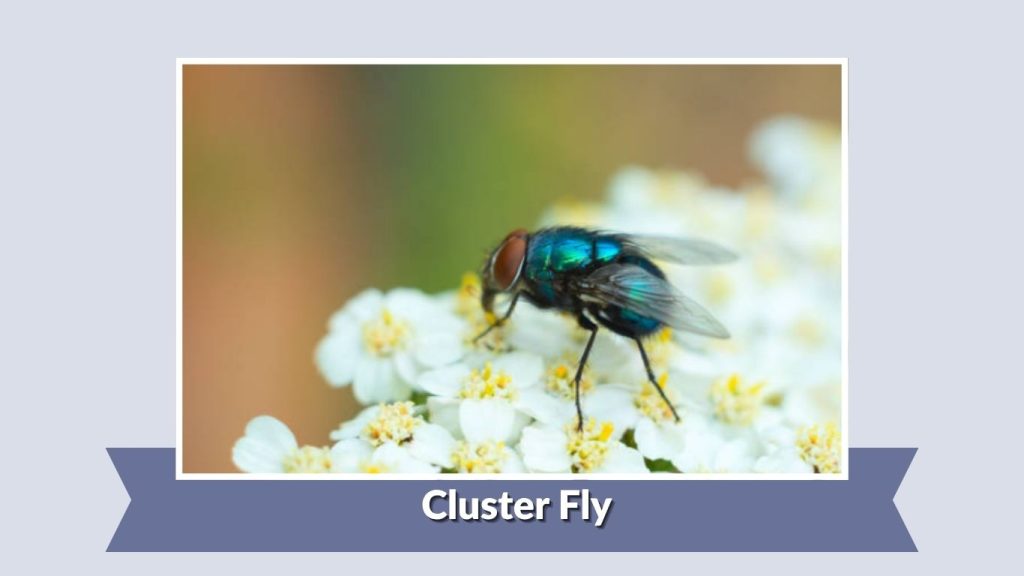
The Cluster Fly is a slow-moving fly species commonly found around homes, especially during cooler seasons. It is known for entering buildings in large numbers and clustering in walls, ceilings, and attics to overwinter. Unlike many other flies, it does not develop in garbage or waste.
Identification
- Dark gray body with golden or yellowish hairs
- Non-metallic appearance
- Red compound eyes
- Overlapping wings when at rest
- Sluggish flight compared to house flies
- About 8–10 mm in length
Habitat
Cluster Flies are commonly found in rural and suburban areas, especially near fields and grassy lands. They breed in earthworms found in soil, which is different from most household flies. In colder seasons, they enter houses, barns, and buildings to escape low temperatures and often gather in large groups.
Behavior
These flies are slow and less active than other common flies. Adults feed on flower nectar and plant juices. During autumn and winter, they move indoors and cluster in hidden warm spaces like wall voids and attics. Although they do not bite or feed on waste, they can become a nuisance when large numbers invade homes. They are mostly harmless but unpleasant due to their presence in living spaces.
12. Face Fly
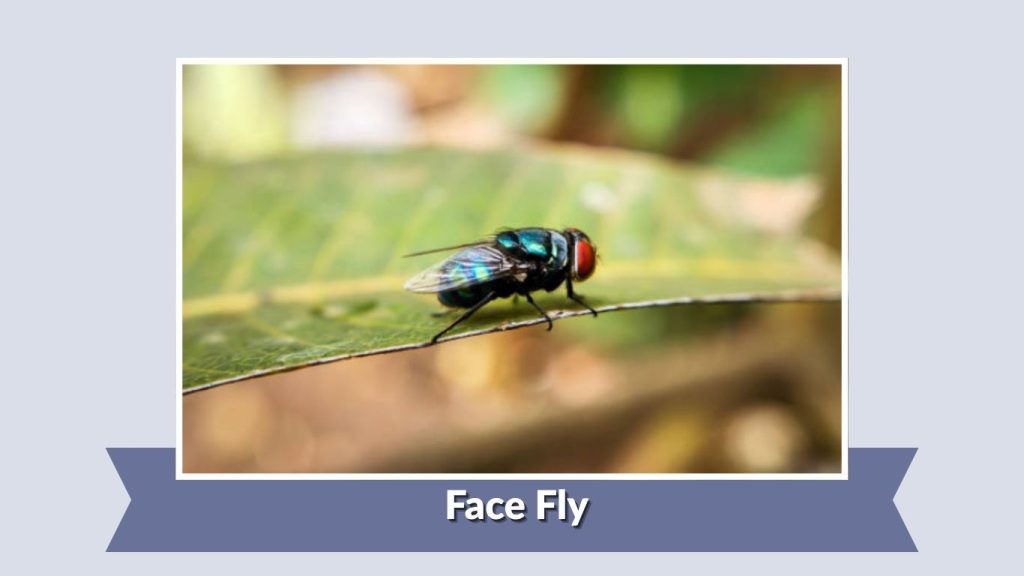
The Face Fly is a livestock-associated fly species commonly found around cattle and other grazing animals. It is known for feeding on secretions from the eyes, nose, and mouth of animals, which can cause irritation and stress. This fly is considered an important pest in dairy and beef farming.
Identification
- Dark gray body similar to house fly
- Slightly larger and more robust than house fly
- Red compound eyes
- Four dark stripes on thorax
- Wings held flat at rest
- About 6–8 mm in length
Habitat
Face Flies are commonly found in cattle farms, pastures, barns, and rural grazing areas. They are strongly associated with livestock, especially cattle. Their larvae develop in fresh cow dung, making farms with large animal populations ideal breeding grounds. They are most active during warm seasons.
Behavior
These flies are non-biting but feed on secretions from the faces of cattle, especially around the eyes and nostrils. This behavior can spread bacteria and irritate animals, sometimes leading to eye infections. Adults feed on plant nectar and animal secretions. They are active during the daytime and often gather around herds of cattle. Although they do not bite humans, they are considered pests due to their impact on livestock health and productivity.
13. Drain Fly
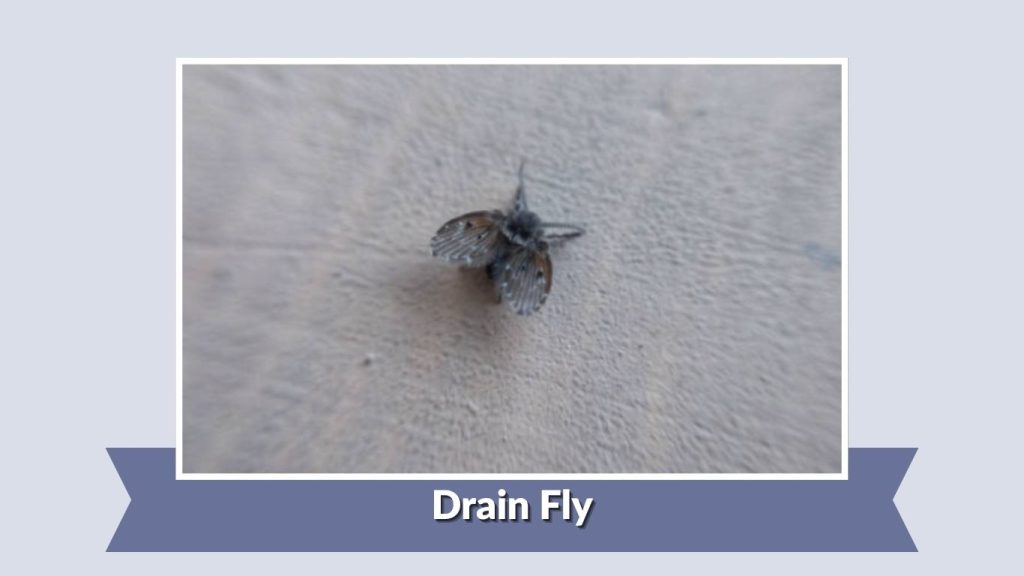
The Drain Fly is a small, moth-like fly commonly found in damp indoor environments. It is often seen around sinks, bathrooms, and drainage systems where organic sludge accumulates. Although harmless to humans, it can become a nuisance when present in large numbers.
Identification
- Small, fuzzy moth-like body
- Gray to dark brown coloration
- Hairy wings held roof-like over body
- Short, fuzzy antennae
- Slow, weak flying pattern
- About 1.5–5 mm in length
Habitat
Drain Flies are commonly found in bathrooms, kitchens, sewage systems, floor drains, septic tanks, and damp organic matter. They breed in the gelatinous film that forms inside drains and pipes. Warm, moist, and poorly cleaned drainage systems provide ideal breeding conditions for this species.
Behavior
These flies are mostly active at night or in low-light conditions. Adults are weak fliers and often rest on walls near breeding sites. They feed on organic matter in drain biofilm. While they do not bite or spread diseases directly like house flies, their presence indicates unclean or clogged drainage systems. They are mainly a nuisance pest and can multiply quickly if breeding sites are not cleaned properly.
14. Fruit Fly
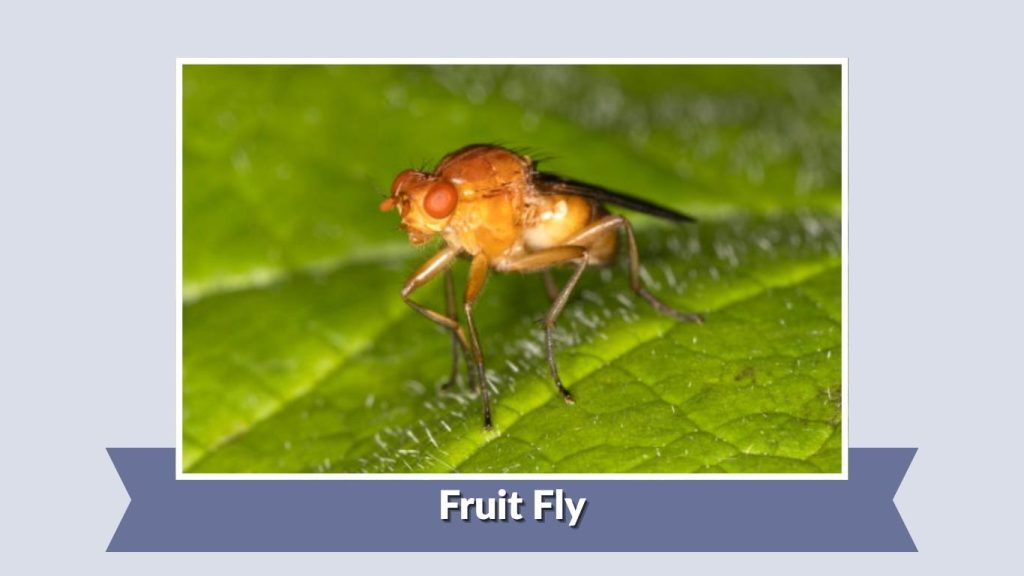
The Fruit Fly is a very small but highly common fly species often found around ripe, fermenting, or decaying fruits and vegetables. It is widely known as a household pest because it multiplies quickly and is frequently seen in kitchens, fruit baskets, and garbage areas.
Identification
- Very small yellowish-brown or tan body
- Red compound eyes
- Clear wings
- Rounded abdomen
- Short antennae
- About 2–4 mm in length
Habitat
Fruit Flies are commonly found in homes, markets, grocery stores, kitchens, and places where fruits and vegetables are stored. They are strongly attracted to overripe or fermenting organic matter. They also breed in drains, garbage bins, and compost piles where yeast and bacteria are present.
Behavior
Fruit Flies are active during the day and are highly attracted to the smell of fermenting fruit. Females lay eggs on soft, decaying fruit surfaces, and the larvae feed on the yeast and bacteria growing there. They reproduce very quickly, leading to rapid infestations in suitable environments. Although they do not bite, they can contaminate food and are considered a major household nuisance worldwide.
15. Vinegar Fly
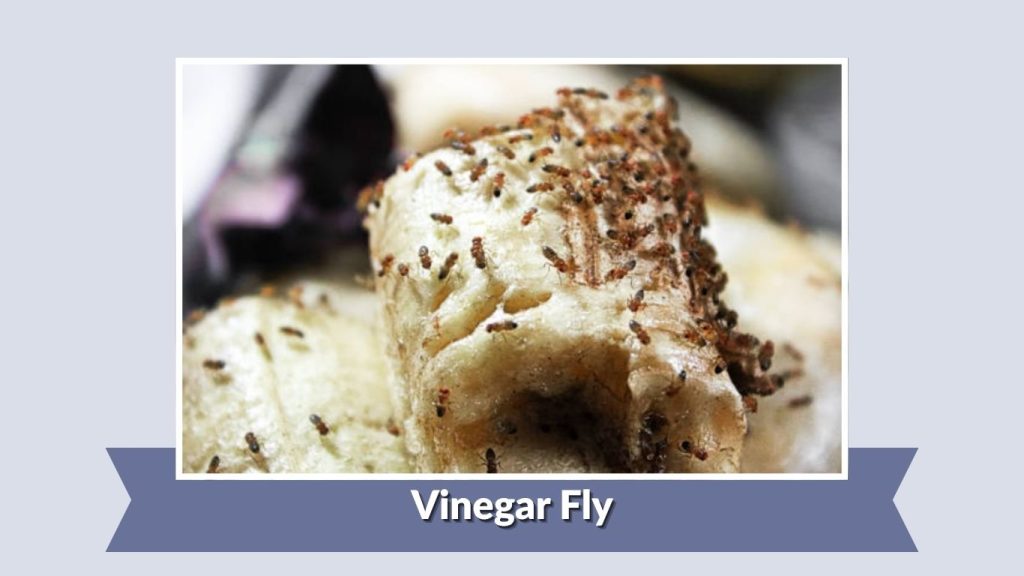
The Vinegar Fly is a small fly species closely related to the common fruit fly. It is especially attracted to fermenting liquids such as vinegar, wine, beer, and overripe fruits. Because of its rapid breeding and attraction to household food waste, it is often considered a common kitchen pest.
Identification
- Tiny yellowish to light brown body
- Bright red compound eyes
- Clear wings held flat when resting
- Rounded abdomen
- Short antennae
- About 2–3 mm in length
Habitat
Vinegar Flies are commonly found in homes, kitchens, restaurants, fruit storage areas, and garbage bins. They thrive in places where fermenting organic liquids are present. They are also frequently seen around spilled drinks, fruit juices, and compost materials containing yeast activity.
Behavior
These flies are highly active during the day and are strongly attracted to fermenting smells. Females lay eggs on or near fermenting organic matter, and the larvae feed on yeast and microorganisms. They reproduce quickly under warm conditions, leading to fast infestations in kitchens. Although they do not bite humans, they can contaminate food surfaces and are considered a nuisance pest in households and food-handling areas.
16. Cheese Fly
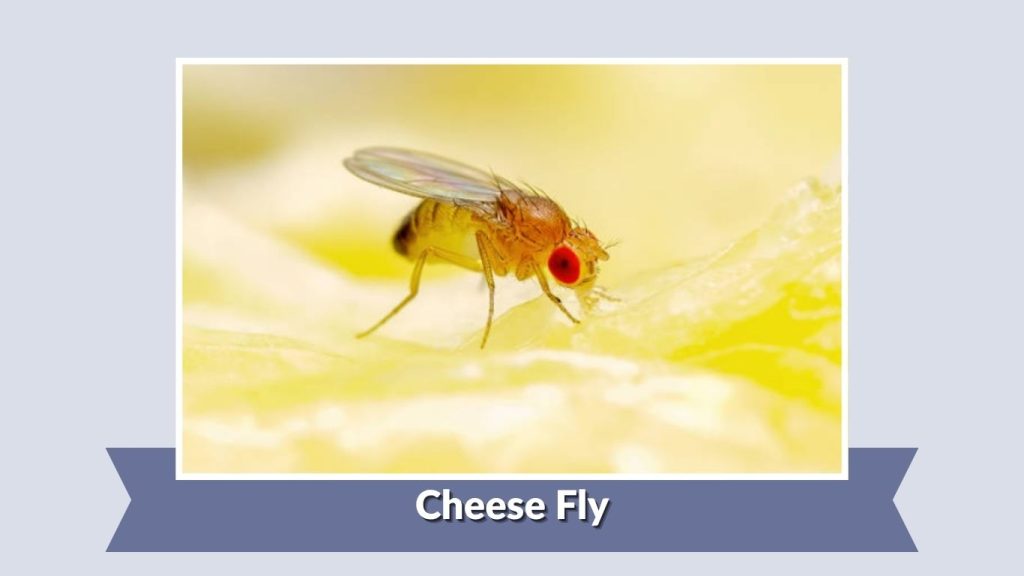
The Cheese Fly is a small fly species known for its association with stored food products, especially cheese and other protein-rich materials. It is commonly found in kitchens, food storage areas, and places where organic matter is left exposed. It is considered a nuisance pest due to its breeding habits and potential to contaminate food.
Identification
- Small dark gray to black body
- Red compound eyes
- Clear wings held flat at rest
- Slightly hairy appearance
- Short antennae
- About 4–6 mm in length
Habitat
Cheese Flies are commonly found in homes, dairies, food storage rooms, and garbage areas. They are attracted to protein-rich and decaying organic matter such as cheese, meat, and waste food. They prefer warm environments with access to moist organic materials for breeding.
Behavior
These flies are active during the day and are strongly attracted to decomposing protein sources. Females lay eggs on or near suitable food materials, and the larvae feed on the decaying matter. This helps in natural decomposition but also leads to food contamination. Adults feed on liquid and semi-liquid substances. Although they do not bite, Cheese Flies are considered a health concern in food storage and handling areas due to their association with spoiled food and unsanitary conditions.
17. Sand Fly
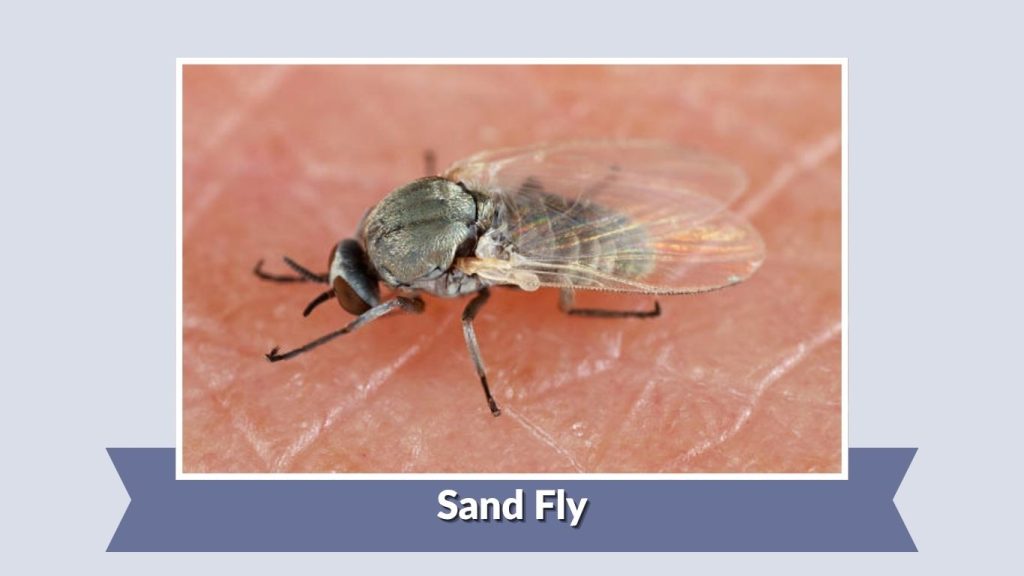
The Sand Fly is a small biting fly species known for its role in transmitting diseases in some regions. It is commonly found in sandy, humid environments and is most active during dusk and nighttime. Despite its tiny size, it can cause painful bites and significant irritation to humans and animals.
Identification
- Very small, slender body
- Pale yellowish to brown coloration
- Hairy wings held in a V-shape when resting
- Long legs relative to body size
- Black compound eyes
- About 1.5–3 mm in length
Habitat
Sand Flies are commonly found in tropical and subtropical regions, especially in sandy soils, riverbanks, forests, caves, and animal shelters. They breed in moist organic matter such as soil mixed with decaying plant material, cracks in walls, and rodent burrows. Warm, humid environments are ideal for their development.
Behavior
Female Sand Flies are blood-feeders and bite humans and animals to obtain blood for egg development. Their bites are painful and can cause itching and swelling. They are most active during evening and night hours. Males feed on plant nectar. In some regions, Sand Flies are known to transmit diseases such as leishmaniasis. Despite their small size, they are considered medically important pests in affected areas.
18. Horse Fly
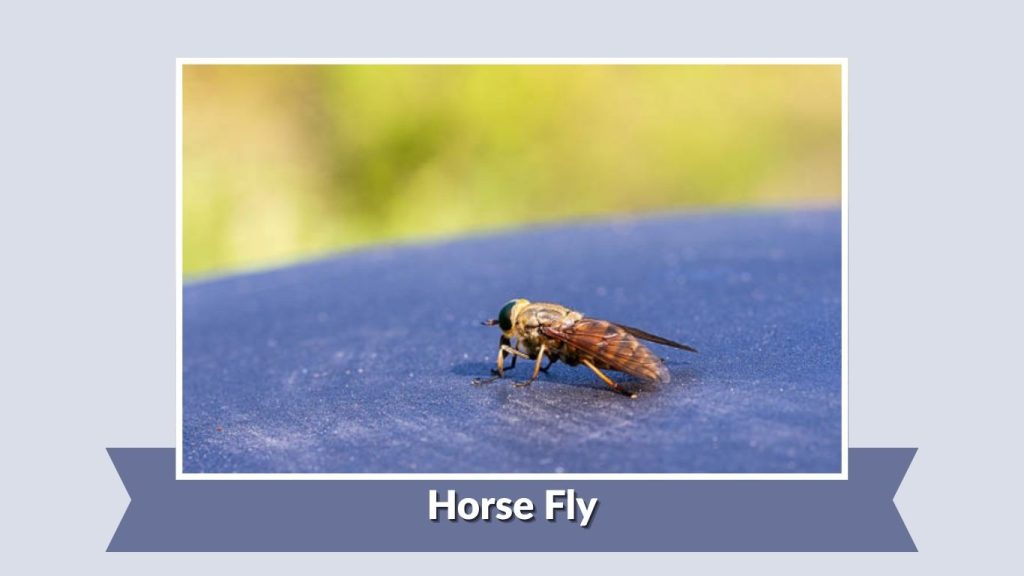
The Horse Fly is a large, strong-flying biting fly known for its painful bite and persistence around livestock. It is commonly found in rural and wetland areas and is considered a serious pest of cattle, horses, and sometimes humans due to its blood-feeding behavior.
Identification
- Large robust body
- Gray or black coloration, sometimes patterned eyes
- Very large, brightly colored compound eyes
- Strong wings with clear venation
- Stout mouthparts adapted for cutting skin
- About 10–25 mm in length
Habitat
Horse Flies are commonly found in pastures, forests, wetlands, and areas near rivers, lakes, and ponds. They prefer warm, humid environments. Their larvae develop in moist soil, mud, or aquatic habitats rich in organic matter. They are most abundant during summer months.
Behavior
Female Horse Flies are blood-feeders and bite mammals, including livestock and humans, to obtain blood for egg development. Their bites are painful because they cut the skin rather than piercing it. Males feed on nectar and plant juices. These flies are most active during the daytime, especially in sunny conditions. They are strong fliers and can be persistent in chasing hosts. Due to their biting behavior and irritation to animals, they are considered significant agricultural pests.
19. Deer Fly
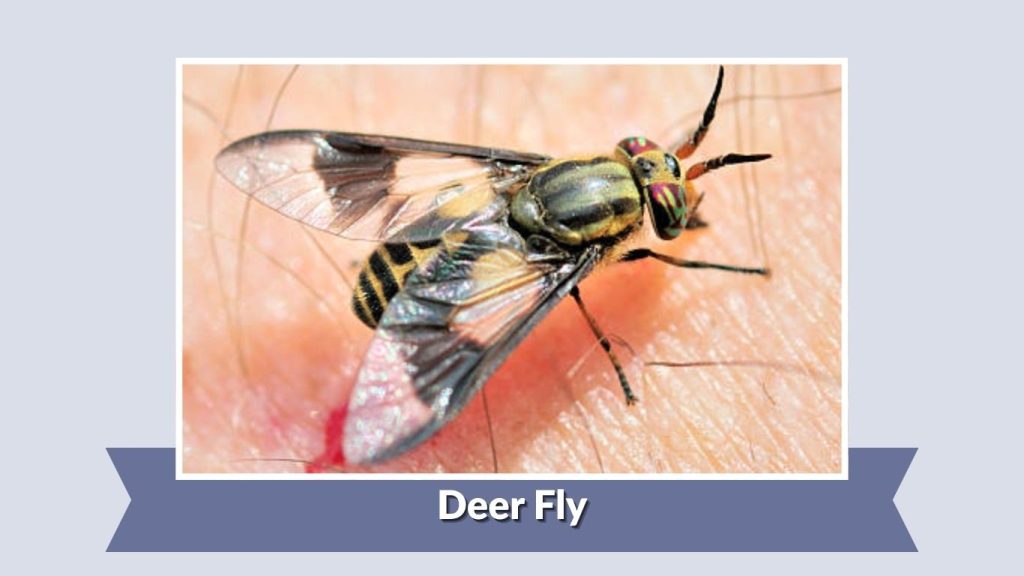
The Deer Fly is a biting fly species closely related to the horse fly. It is known for its persistent biting behavior and ability to cause irritation to both humans and animals. It is commonly found in outdoor environments, especially near water and vegetation.
Identification
- Medium-sized body, smaller than horse fly
- Dark brown or black coloration
- Bright green or golden patterned eyes
- Clear wings, sometimes with dark bands
- Stout body with strong legs
- About 6–12 mm in length
Habitat
Deer Flies are commonly found in wetlands, forests, grasslands, and areas near rivers, ponds, and lakes. They prefer warm, humid environments with plenty of vegetation. Their larvae develop in moist soil or aquatic habitats rich in organic material. They are most active during late spring and summer.
Behavior
Female Deer Flies are blood-feeders and bite mammals, including humans, for blood meals needed for reproduction. Their bites are painful and can cause itching and swelling. Males feed on nectar and plant juices. They are active during daylight hours and are attracted to movement and dark colors. Deer Flies are strong fliers and can be very persistent when searching for hosts. They are considered important pests in outdoor recreational and livestock areas.
20. Black Dump Fly
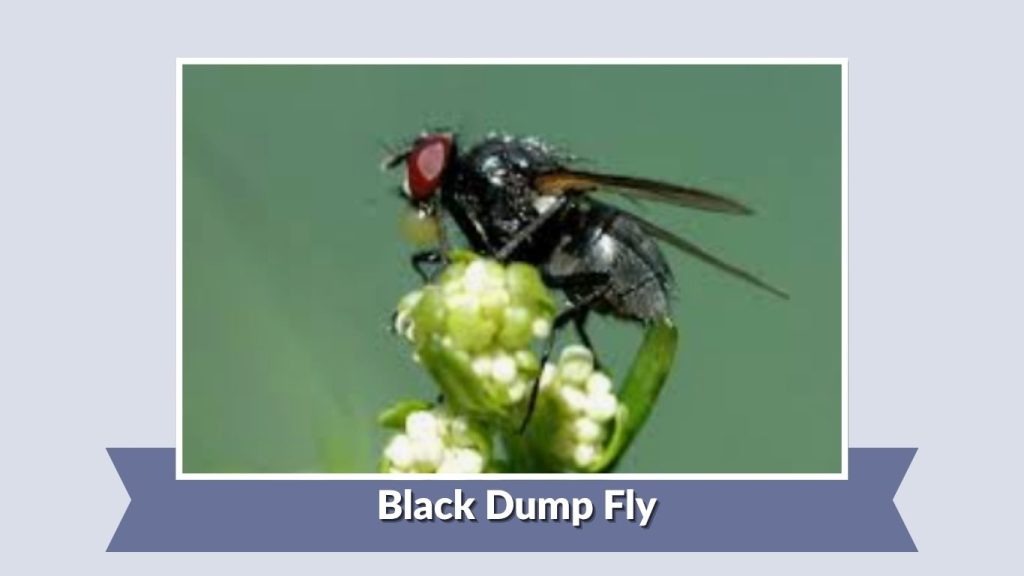
The Black Dump Fly is a lesser-known fly species commonly associated with decaying organic waste and dumping sites. It is considered a nuisance pest because it thrives in unsanitary environments and can contribute to the spread of contamination when it moves between waste and human living areas.
Identification
- Small to medium black or dark gray body
- Slightly shiny appearance
- Red or dark compound eyes
- Clear wings held flat when resting
- Short antennae
- About 5–8 mm in length
Habitat
Black Dump Flies are commonly found in garbage dumps, landfill sites, open waste areas, and places with decomposing organic matter. They are especially abundant in warm climates where waste accumulates in large amounts. They may also be found near animal waste and poorly managed sanitation areas.
Behavior
These flies are active during the day and are strongly attracted to rotting organic material. They feed on decomposing waste and liquid organic substances. Females lay eggs in decaying matter, where larvae develop by feeding on the organic material. Although they play a role in waste breakdown, they are considered pests due to their association with unsanitary conditions and potential to spread harmful microorganisms.
21. Bush Fly
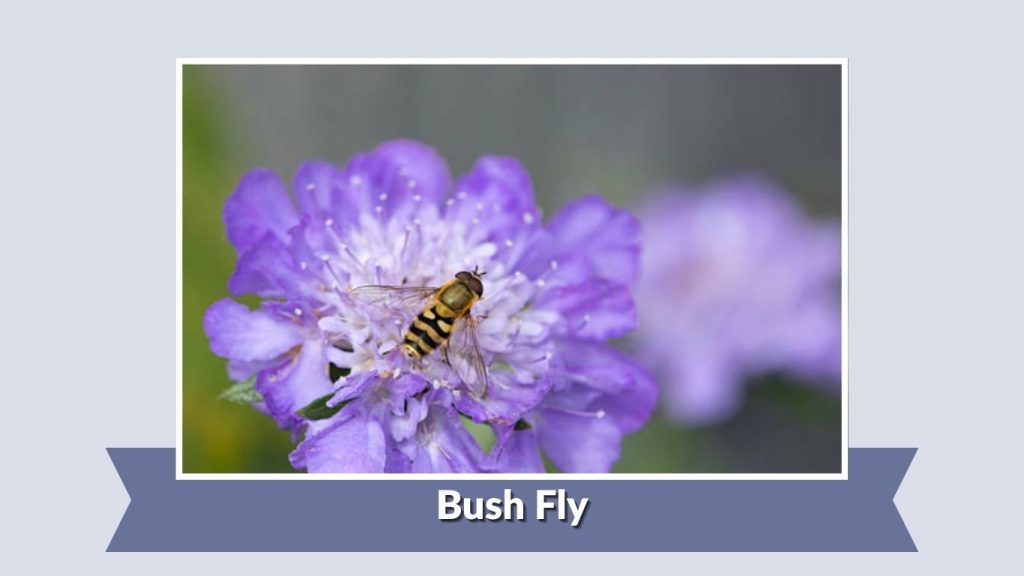
The Bush Fly is a common nuisance fly species often found in outdoor environments, especially in rural and semi-rural regions. It is known for being attracted to sweat, food, and organic waste, and it frequently bothers humans and livestock during warm weather.
Identification
- Small grayish body
- Two dark stripes on the thorax
- Red compound eyes
- Transparent wings held flat at rest
- Slightly hairy body
- About 5–7 mm in length
Habitat
Bush Flies are commonly found in fields, grasslands, farms, gardens, and areas around livestock. They are especially abundant in warm and dry climates. They are attracted to animal dung, garbage, and human activity, making them very common in outdoor living spaces.
Behavior
These flies are active during the day and are known for their annoying behavior of landing on humans, especially around the face and eyes. They feed on sweat, tears, saliva, and decaying organic matter. Females lay eggs in animal dung, where the larvae develop. Although they do not bite, they are considered pests due to their constant irritation and potential to spread contamination.
22. Sheep Head Fly
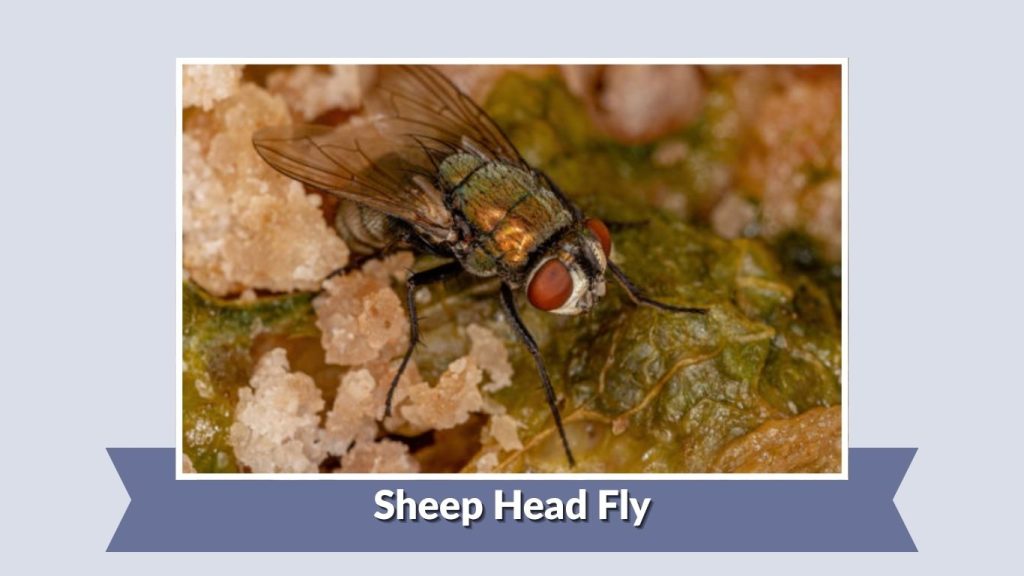
The Sheep Head Fly is a livestock-associated fly species commonly found around sheep and other grazing animals. It is considered a pest because it irritates animals by feeding on bodily secretions and can contribute to stress and reduced productivity in livestock.
Identification
- Small to medium grayish body
- Red compound eyes
- Three dark stripes on thorax
- Narrow abdomen
- Transparent wings held flat at rest
- About 5–8 mm in length
Habitat
Sheep Head Flies are commonly found in pastures, sheep farms, barns, and rural grazing lands. They are closely associated with livestock environments, especially areas with sheep herds. Their larvae develop in animal dung and moist organic matter found in grazing fields.
Behavior
These flies are non-biting but feed on secretions around the eyes, nose, and mouth of sheep and other animals. This behavior can irritate livestock and may help spread bacteria between animals. Adults are active during the daytime and often gather around herds. They feed on nectar and animal secretions. Although they do not directly harm humans, they are considered agricultural pests due to their impact on animal health and comfort.
23. Moth Fly
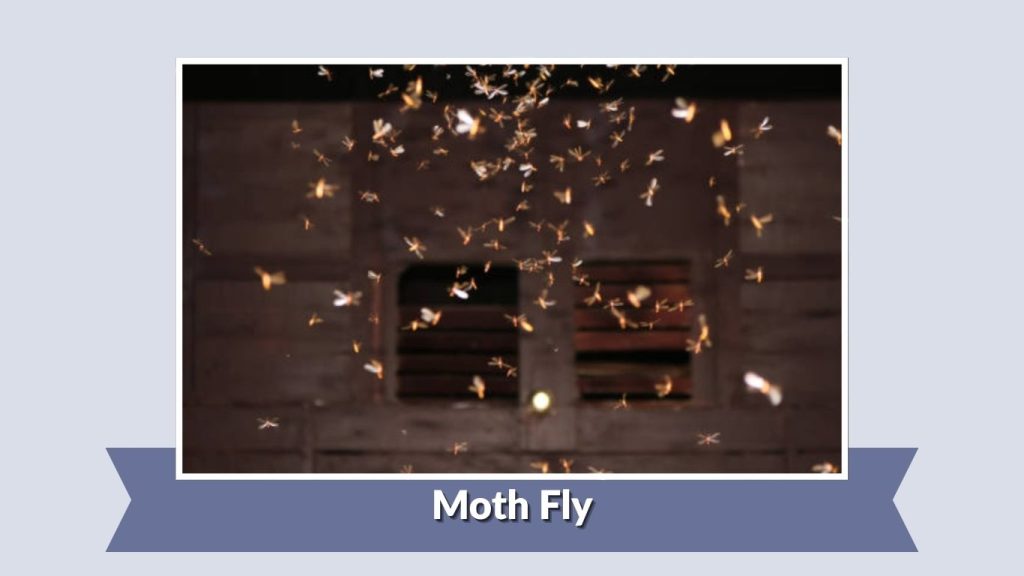
The Moth Fly is a small, fuzzy fly species commonly found in damp indoor environments. It gets its name from its moth-like appearance and weak, fluttering flight. It is often seen in bathrooms and kitchens and is generally considered a nuisance pest rather than a harmful insect.
Identification
- Very small, grayish to dark brown body
- Dense, hairy appearance
- Wings covered with fine hairs, held roof-like
- Slow, weak moth-like flight
- Short antennae
- About 1.5–5 mm in length
Habitat
Moth Flies are commonly found in bathrooms, kitchens, drains, sewage systems, and other damp areas with organic buildup. They breed in the slimy biofilm that forms inside drains, pipes, and septic systems. Warm and moist environments are ideal for their development, especially in poorly cleaned drainage systems.
Behavior
These flies are mostly active at night and are weak fliers, often seen resting on walls near drains or sinks. They feed on organic matter in drainage biofilm. While they do not bite or spread disease directly, their presence indicates unclean or clogged drainage systems. Large infestations can become a household nuisance if breeding sites are not cleaned properly.
24. Lesser Flesh Fly
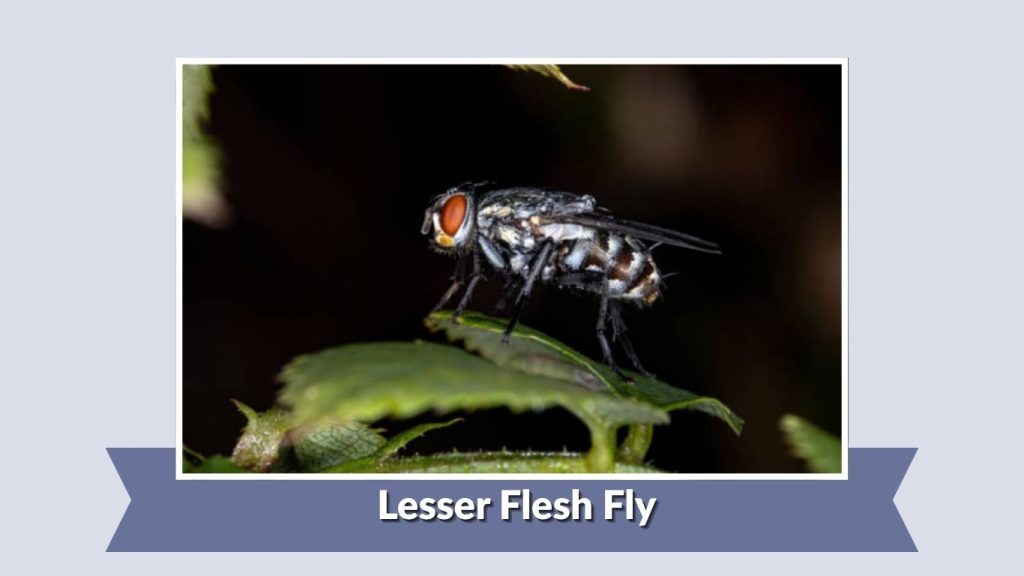
The Lesser Flesh Fly is a small to medium-sized fly species closely related to the common flesh fly. It is typically found in environments with decaying organic matter and plays a role in natural decomposition. However, it can also act as a nuisance in human-inhabited areas due to its breeding habits.
Identification
- Gray body with faint checkerboard pattern on abdomen
- Red compound eyes
- Three dark stripes on thorax
- Slightly hairy body
- Transparent wings held flat at rest
- About 6–10 mm in length
Habitat
Lesser Flesh Flies are commonly found in garbage areas, animal carcasses, feces, and other decaying organic materials. They are widespread in both urban and rural environments. Their larvae develop in moist, decomposing organic matter, especially in warm climates where decay occurs quickly.
Behavior
These flies are active during the day and are strongly attracted to decomposing organic matter. Unlike many flies that lay eggs, females often deposit live larvae directly onto suitable food sources. The larvae feed on decaying material, aiding decomposition. Adults feed on nectar and liquid organic substances. Although they help break down waste in nature, they can also spread bacteria when they come into contact with human food and living environments.
25. Oriental Latrine Fly
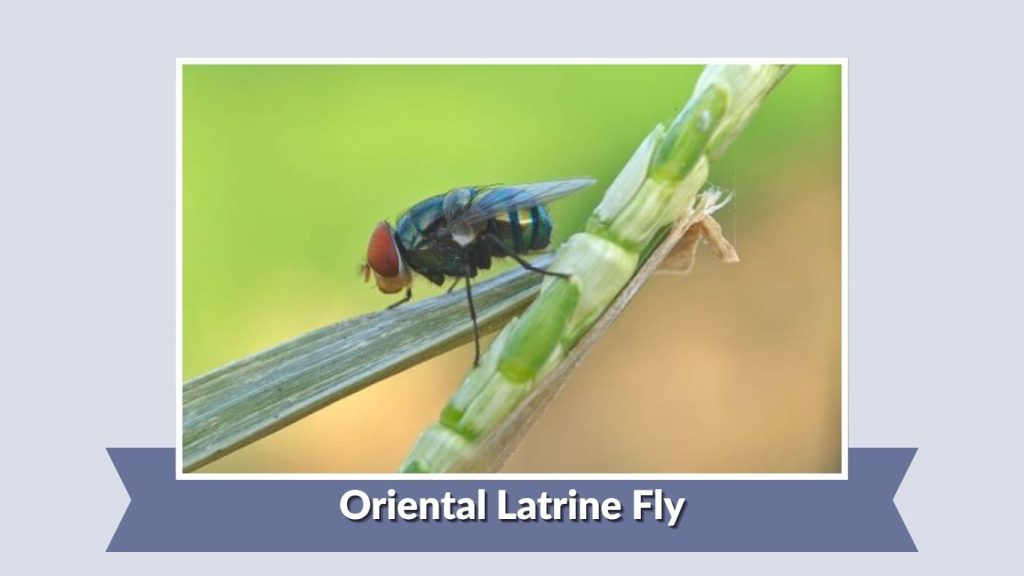
The Oriental Latrine Fly is a small fly species commonly associated with unsanitary and waste-rich environments. It is considered a significant nuisance pest due to its strong attraction to human and animal excreta and its potential to spread disease-causing organisms.
Identification
- Small dark gray to black body
- Red compound eyes
- Short antennae
- Transparent wings held flat when resting
- Slightly hairy body
- About 5–7 mm in length
Habitat
Oriental Latrine Flies are commonly found in toilets, latrines, sewage systems, garbage dumps, and areas with decomposing waste. They prefer warm, humid environments where organic waste is abundant. They are especially common in places with poor sanitation and inadequate waste management.
Behavior
These flies are active during the day and are strongly attracted to fecal matter and decaying organic waste. They feed on liquid waste and decomposing material. Females lay eggs in latrines or sewage, where larvae develop in contaminated organic matter. They can move between waste and human environments, increasing the risk of spreading bacteria and pathogens. Although they play a role in waste decomposition, they are mainly considered public health pests.