
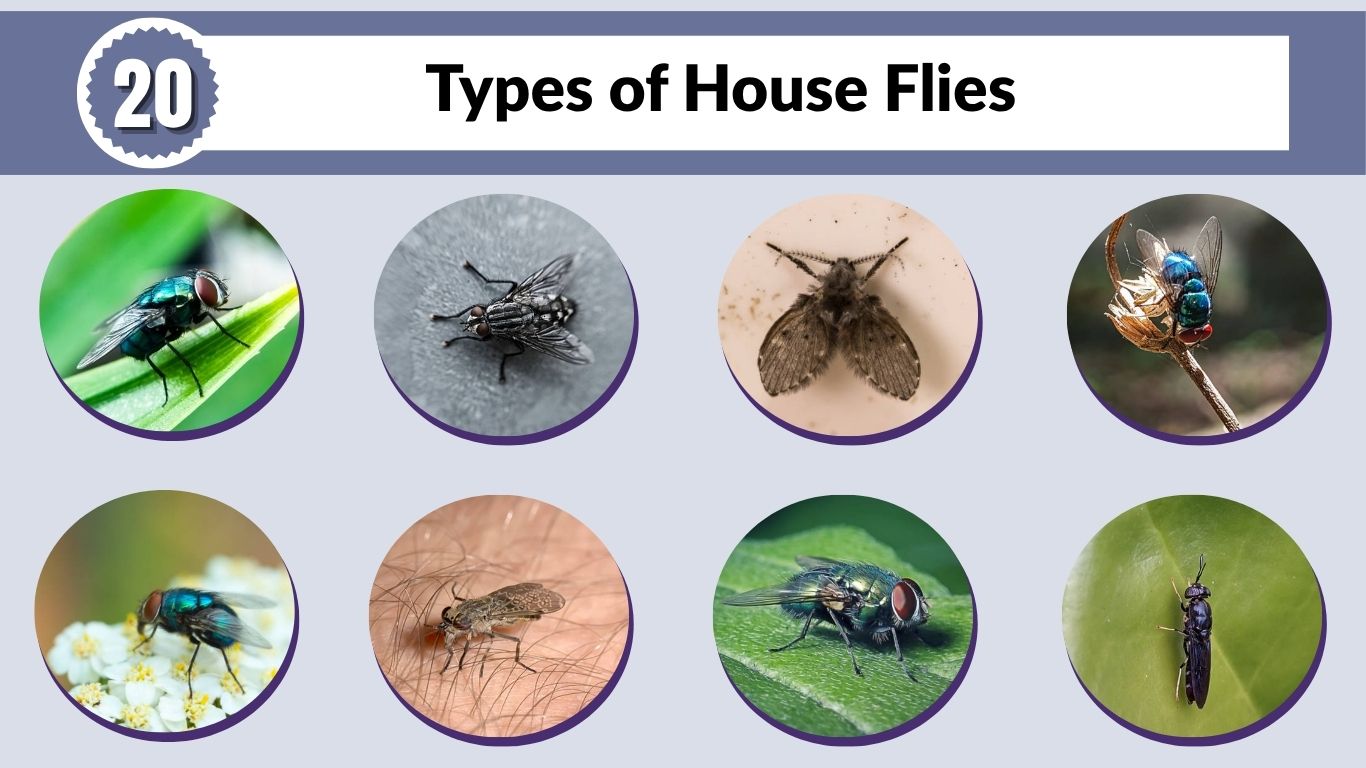
House flies are among the most common insects found around homes, farms, gardens, garbage areas, and food storage spaces. While many fly species look similar at first glance, they differ in size, color, habitat, feeding habits, and behavior. Some flies are harmless scavengers, while others can spread bacteria, irritate animals, or damage food supplies.
Certain species, such as the Common House Fly and Fruit Fly, are commonly seen indoors near food and waste materials. Others, including Horse Flies and Stable Flies, are known for painful bites and their close association with livestock. There are also unique species like the Drain Fly, Fungus Gnat Fly, and Cheese Skipper Fly that thrive in damp or decaying organic environments.
Understanding different types of house flies helps with proper identification and pest control. In this guide, you will discover 20 types of house flies along with their size, color, habitat, identification features, and pictures.
1. Common House Fly
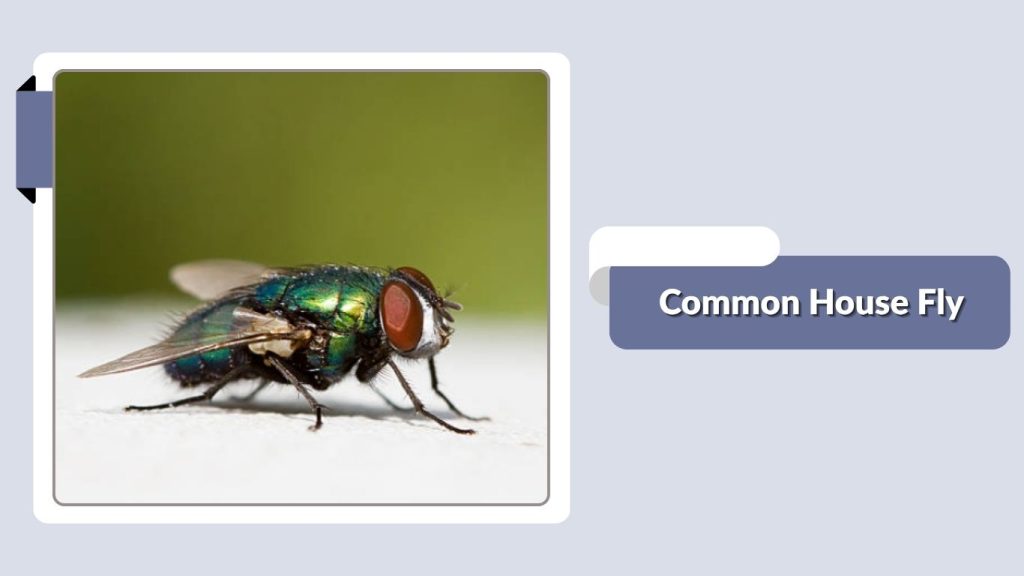
The Common House Fly is one of the most widespread fly species found around the world. It is commonly seen in homes, farms, restaurants, garbage areas, and animal shelters. This fly is known for its fast movement, buzzing sound, and ability to survive in many different environments. Although small in size, it can spread bacteria and germs by landing on food and surfaces.
Size
The Common House Fly usually measures about 0.2 to 0.3 inches in length. It has a lightweight body with transparent wings that allow quick and agile flight. Despite its small size, the fly is highly active and capable of traveling long distances in search of food and breeding areas.
Color
This fly has a dull gray body with four dark stripes running along its thorax. Its abdomen may appear slightly yellow or cream-colored on the sides. The wings are transparent, while the eyes are large and reddish-brown. Fine body hairs help the fly detect movement and environmental changes.
Habitat
The Common House Fly thrives in warm environments where food waste, animal manure, and decaying organic matter are available. It is commonly found in homes, kitchens, barns, markets, garbage bins, and farms. The species breeds rapidly in moist waste materials, especially during warm weather conditions.
Identification
- Gray body with four dark thorax stripes
- Transparent wings with rapid flight movement
- Large reddish compound eyes
- Small body measuring around 0.2 to 0.3 inches
- Frequently found near food and garbage
- Produces a noticeable buzzing sound
2. Stable Fly
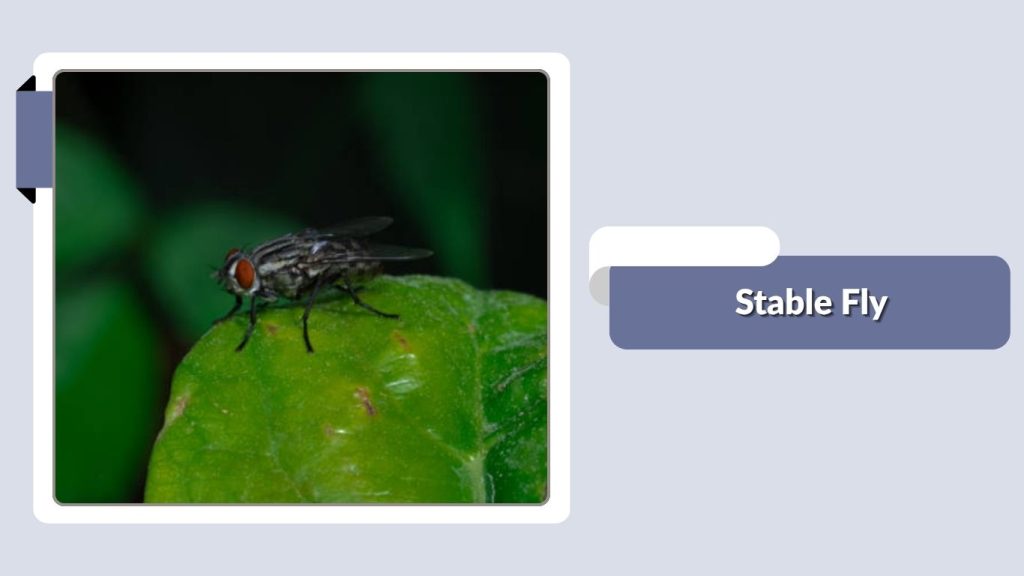
The Stable Fly is a blood-feeding fly species commonly found around livestock, farms, and rural areas. It closely resembles the Common House Fly but is more aggressive because it bites humans and animals to feed on blood. This fly is considered a serious pest in agricultural environments due to the discomfort it causes to livestock.
Size
The Stable Fly measures about 0.2 to 0.3 inches in length, making it similar in size to the Common House Fly. It has a compact body and strong wings that allow fast and direct flight. The fly is highly active during daylight hours, especially in warm weather conditions.
Color
This fly has a gray body with several dark stripes on the thorax. Its abdomen contains checkered black and gray patterns that help distinguish it from other fly species. The wings are transparent, and the fly has large reddish eyes. A sharp, forward-pointing mouthpart is visible, which is used for biting.
Habitat
The Stable Fly commonly lives near farms, stables, grasslands, barns, and animal shelters. It breeds in moist organic materials such as hay, manure, decaying grass, and animal waste. Adult flies are often seen resting on walls, fences, and vegetation close to livestock areas.
Identification
- Gray body with dark thorax stripes
- Checkered black and gray abdomen
- Sharp forward-pointing biting mouthpart
- Transparent wings with strong flight ability
- Similar in size to the Common House Fly
- Commonly found around livestock and farms
3. Cluster Fly
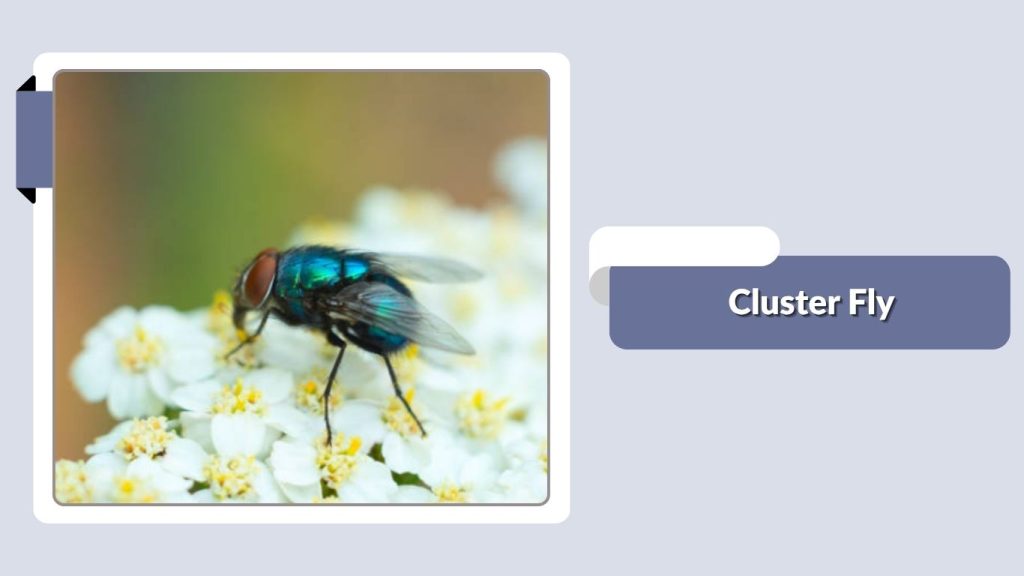
The Cluster Fly is a slow-moving fly species commonly found inside homes during cooler months. Unlike many other flies, it does not breed in garbage or decaying food. Instead, its larvae develop as parasites inside earthworms. These flies often gather in large groups inside attics, walls, and windows during winter for warmth and shelter.
Size
The Cluster Fly measures about 0.3 to 0.4 inches in length, making it slightly larger than the Common House Fly. It has a sturdy body and broad wings that allow steady but slower flight. Adult flies are most active during warm seasons before entering buildings in colder weather.
Color
This fly has a dark gray body covered with short golden hairs on the thorax. Its abdomen appears checkered with light and dark gray markings. The wings overlap slightly when resting, and the eyes are reddish-brown. The golden hairs give the fly a slightly fuzzy appearance compared to smoother fly species.
Habitat
Cluster Flies are commonly found in fields, gardens, farms, and grassy outdoor areas where earthworms are present. During autumn and winter, they enter houses, attics, garages, and wall spaces to hibernate. They prefer quiet indoor locations with warmth and limited disturbance.
Identification
- Dark gray body with golden hairs
- Slightly larger than a Common House Fly
- Slow-moving flight behavior
- Wings overlap when resting
- Commonly gathers in large indoor clusters
- Frequently found in attics and windows during winter
4. Little House Fly
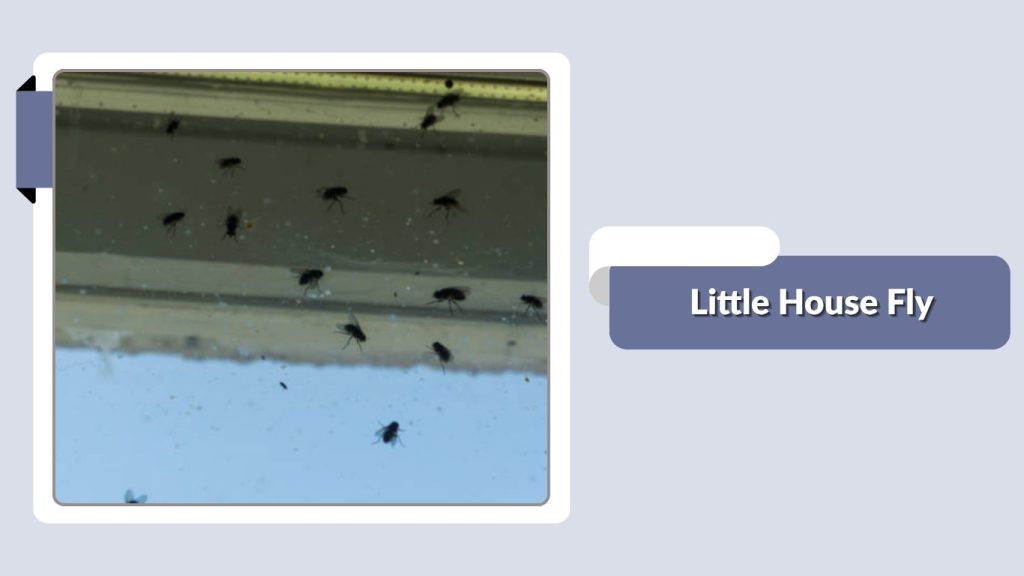
The Little House Fly is a small fly species commonly found in homes, poultry farms, and animal shelters. It resembles the Common House Fly but is smaller and often flies in circular patterns around lights and ceilings. This species becomes especially abundant in warm climates and crowded animal areas.
Size
The Little House Fly measures about 0.15 to 0.25 inches in length. Its smaller body allows quick and agile movement indoors. The fly is lightweight and highly active, especially during daytime when temperatures are warm.
Color
This fly has a dark gray to black body with lighter markings on the abdomen. The wings are transparent with fine veins visible under light. Males are usually darker than females, and both have large reddish eyes that help detect movement quickly.
Habitat
The Little House Fly commonly lives near poultry farms, garbage areas, kitchens, barns, and animal waste sites. It breeds in manure, decaying organic material, and moist waste. Indoors, it is often seen flying near ceilings, windows, and hanging lights.
Identification
- Small dark gray or black body
- Circular flying pattern indoors
- Transparent wings with visible veins
- Large reddish compound eyes
- Common near poultry farms and waste areas
- Smaller than the Common House Fly
5. Flesh Fly
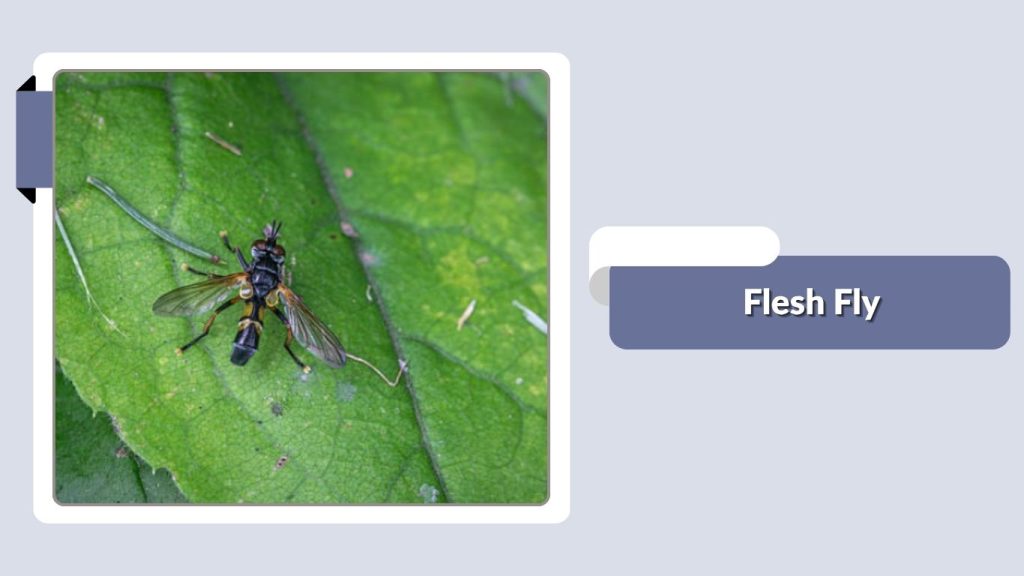
The Flesh Fly is a large fly species known for its habit of feeding and breeding on decaying meat, dead animals, and waste materials. It is commonly found in warm environments and is important in the natural decomposition process. Some species can also affect livestock and occasionally cause health concerns in humans.
Size
The Flesh Fly measures around 0.3 to 0.6 inches in length, making it larger than many common household flies. It has a strong body and broad wings that support fast and direct flight. The fly is highly active during warm daytime conditions.
Color
This fly has a gray body with three dark stripes on the thorax. Its abdomen displays a checkered black and gray pattern that makes it easy to recognize. The eyes are bright red, and the wings are transparent with visible veins. The body often appears slightly shiny under sunlight.
Habitat
Flesh Flies are commonly found near garbage, animal carcasses, slaughterhouses, farms, and outdoor waste areas. They prefer warm places with decaying organic matter where females can deposit larvae. Adult flies are also attracted to flowers and exposed food sources.
Identification
- Gray body with three dark thorax stripes
- Checkered black and gray abdomen
- Large bright red eyes
- Strong and fast flight behavior
- Larger than most house flies
- Common near decaying meat and waste
6. Blow Fly
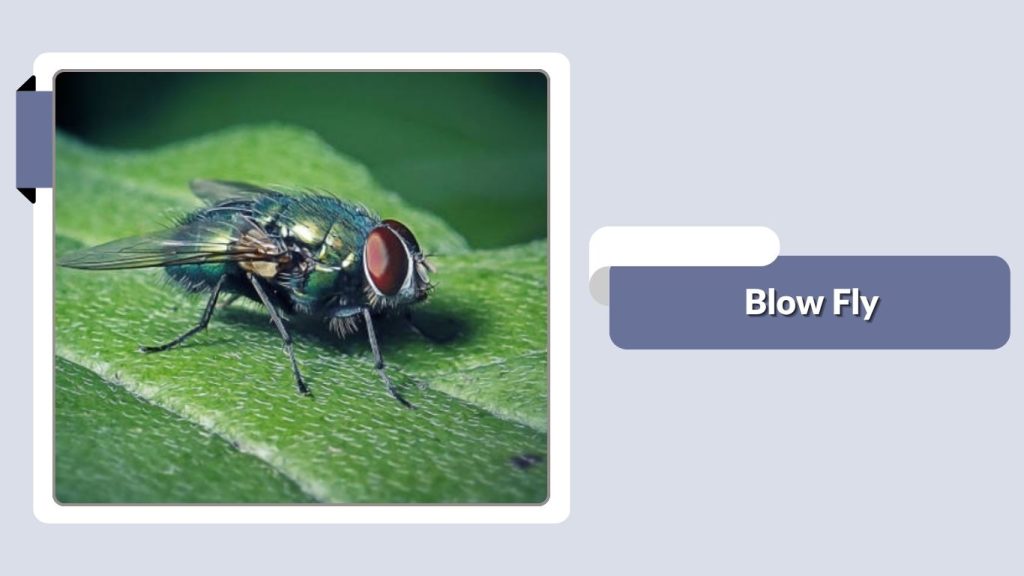
The Blow Fly is a metallic-colored fly species commonly associated with garbage, dead animals, and decaying organic matter. It is one of the first insects to appear around carcasses and plays an important role in decomposition. Blow Flies are also widely studied in forensic science.
Size
The Blow Fly measures about 0.3 to 0.5 inches in length. It has a sturdy body and powerful wings that allow rapid flight. Adult flies are very active and can quickly locate food or breeding sources from long distances.
Color
This fly is famous for its shiny metallic appearance. Depending on the species, the body may appear blue, green, bronze, or black with an iridescent glow. The wings are transparent, and the eyes are usually reddish-brown. Its bright body color makes it easy to distinguish from dull gray flies.
Habitat
Blow Flies are commonly found near garbage bins, animal carcasses, slaughterhouses, farms, and outdoor waste areas. They prefer warm climates and areas with decaying organic material. Adults are also seen visiting flowers for nectar during daylight hours.
Identification
- Metallic blue, green, or bronze body
- Transparent wings with rapid flight
- Medium-sized sturdy body
- Large reddish-brown eyes
- Common near carcasses and garbage
- Strong shiny appearance under sunlight
7. Horse Fly
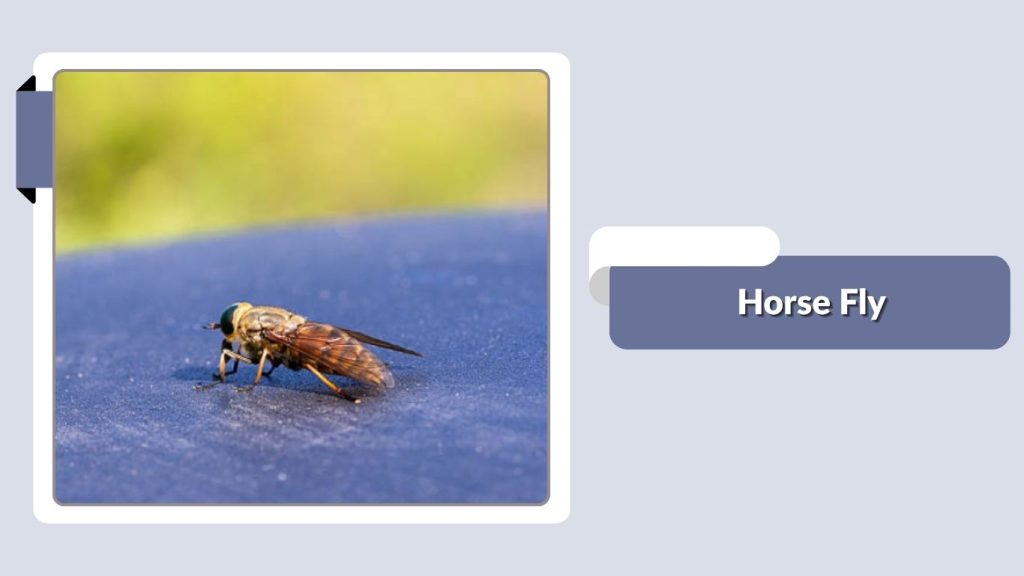
The Horse Fly is a large biting fly commonly found near farms, forests, wetlands, and grazing animals. Female Horse Flies feed on blood from livestock, wildlife, and sometimes humans. Their painful bites and aggressive behavior make them one of the most annoying fly species in rural environments.
Size
The Horse Fly measures about 0.4 to 1 inch in length, making it much larger than the Common House Fly. It has a heavy body and strong wings that allow fast and powerful flight. The fly is active during warm daylight hours, especially in summer.
Color
This fly usually has a dark brown, black, or gray body with patterned wings in some species. The abdomen may contain stripes or spots, while the eyes are often large and brightly colored with green or purple shades. Its strong body gives it a robust appearance.
Habitat
Horse Flies are commonly found near wetlands, forests, grasslands, farms, and lakes. They breed in moist soil and muddy environments close to water sources. Adults are frequently seen around horses, cattle, and other large animals during warm weather.
Identification
- Large heavy-bodied fly
- Dark brown, black, or gray coloration
- Large colorful compound eyes
- Painful biting mouthparts in females
- Strong and fast flight behavior
- Common near livestock and wetlands
8. Face Fly
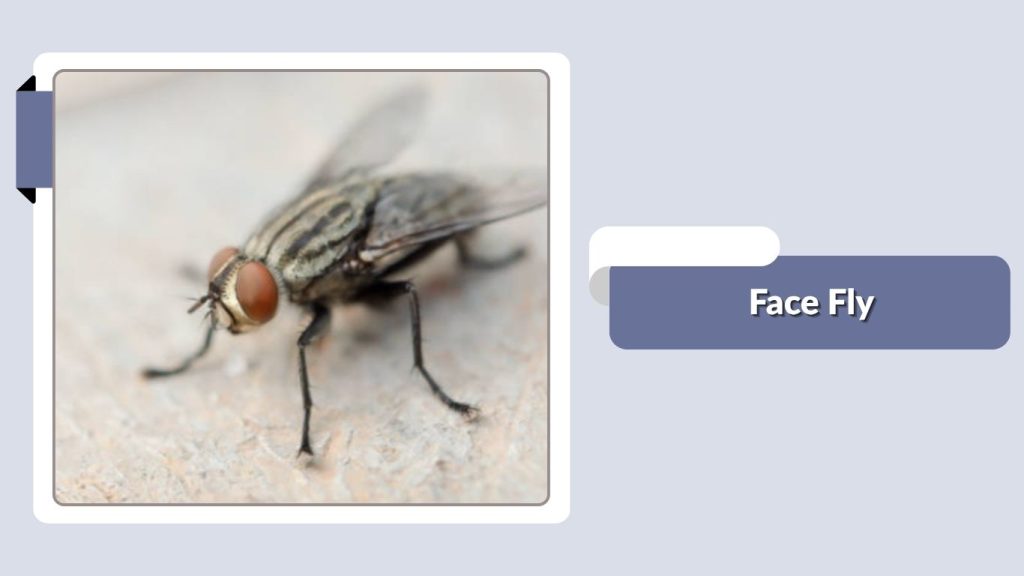
The Face Fly is a non-biting fly species commonly found around cattle and grazing animals. It feeds on moisture around the eyes, nose, and mouth of animals, which can spread infections and diseases. This fly is especially common in rural farming environments.
Size
The Face Fly measures about 0.25 to 0.35 inches in length. It is similar in size to the Common House Fly but slightly darker and more robust. The fly is active during daytime and often rests on fences, walls, and vegetation near livestock.
Color
This fly has a dark gray body with black markings on the thorax and abdomen. Its wings are transparent, and the eyes are reddish-brown. The body appears slightly shinier and darker than the typical Common House Fly.
Habitat
Face Flies mainly live in grasslands, pastures, cattle farms, barns, and rural fields. They breed in fresh cattle manure and remain close to livestock areas where food sources are easily available. Adults are often seen around the faces of cows and horses.
Identification
- Dark gray body with black markings
- Similar in size to a Common House Fly
- Transparent wings and reddish eyes
- Frequently gathers around animal faces
- Common in cattle farms and pastures
- Non-biting but irritating to livestock
9. Drain Fly
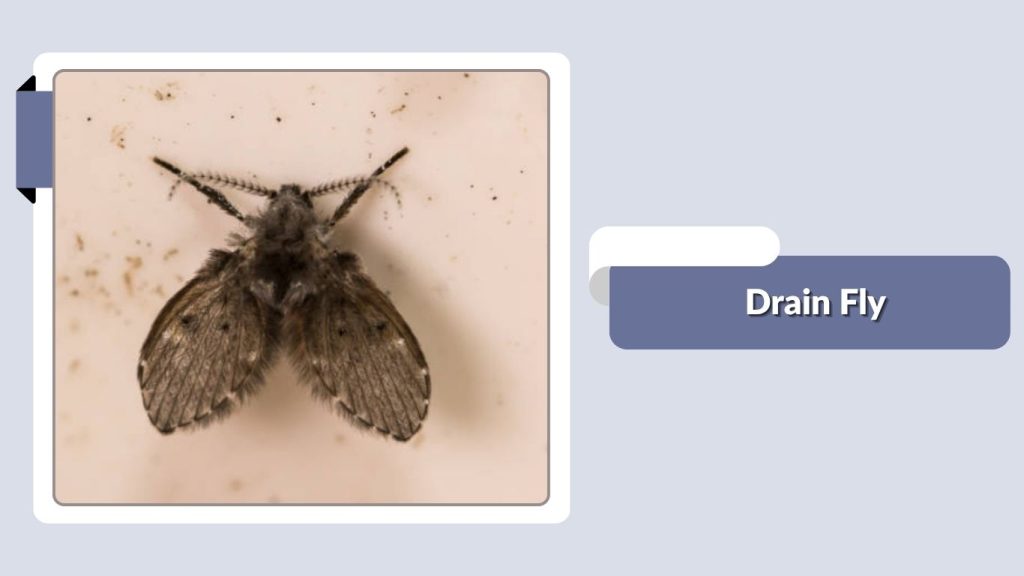
The Drain Fly is a tiny fuzzy fly commonly found around sinks, drains, bathrooms, and damp indoor spaces. It is also known as the moth fly because of its hairy wings and moth-like appearance. Although harmless to humans, large numbers of Drain Flies can become a nuisance inside homes and buildings.
Size
The Drain Fly measures about 0.06 to 0.2 inches in length. Its small body and short wings make it a weak flyer compared to larger fly species. These flies usually move in short hopping flights and are often seen resting near drains or walls.
Color
This fly has a gray, black, or tan body covered with tiny hairs. Its wings are broad, fuzzy, and slightly heart-shaped, giving it a moth-like look. The body appears soft and velvety under light, while the eyes are small and dark.
Habitat
Drain Flies prefer moist environments with standing water and organic buildup. They are commonly found in kitchen drains, bathroom pipes, sewage systems, basements, and garbage disposal areas. Their larvae develop in slimy organic material inside drains and wet surfaces.
Identification
- Tiny fuzzy gray or black body
- Hairy moth-like wings
- Weak hopping flight pattern
- Common near sinks and drains
- Small dark eyes and velvety appearance
- Found in damp indoor environments
10. Fruit Fly
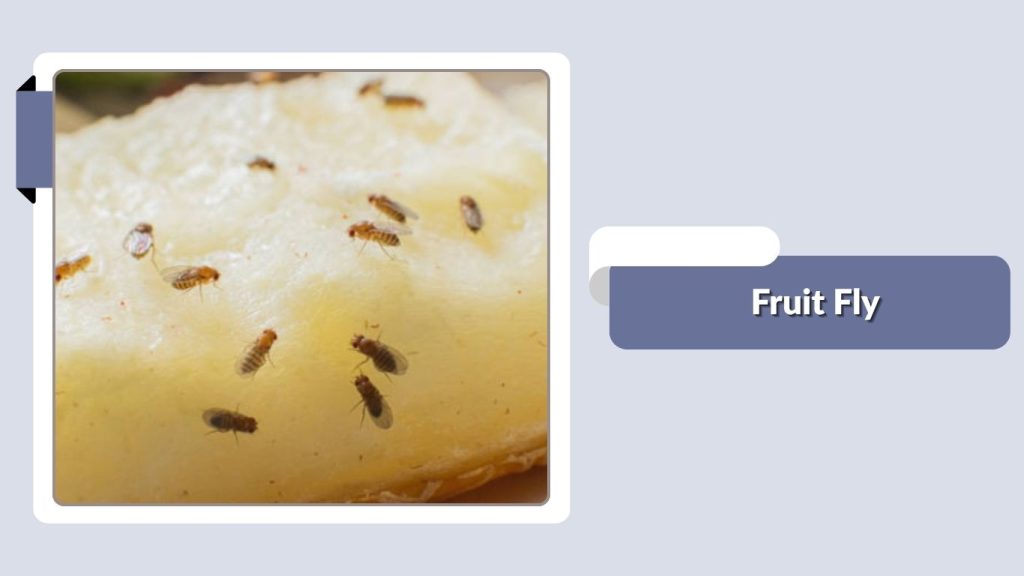
The Fruit Fly is a tiny fly species commonly attracted to ripe fruits, vegetables, sugary liquids, and fermented foods. It is often seen in kitchens, grocery stores, and food preparation areas. Due to its rapid breeding cycle, Fruit Fly populations can increase very quickly indoors.
Size
The Fruit Fly measures about 0.1 to 0.15 inches in length. Its body is extremely small and lightweight, allowing quick movement around food sources. Despite its tiny size, the fly is highly active and reproduces rapidly in warm conditions.
Color
This fly usually has a tan, yellowish, or light brown body with bright red eyes. The wings are transparent and delicate, while the abdomen may appear darker near the tip. Its small colorful body makes it easy to distinguish from darker household flies.
Habitat
Fruit Flies commonly live near ripe fruits, vegetables, garbage bins, juice spills, and fermented materials. They are especially common in kitchens, restaurants, markets, and food storage areas. The larvae develop in moist sugary substances and decaying produce.
Identification
- Very small tan or yellowish body
- Bright red compound eyes
- Transparent delicate wings
- Attracted to fruits and sugary foods
- Fast breeding in warm environments
- Common in kitchens and food storage areas
11. Black House Fly
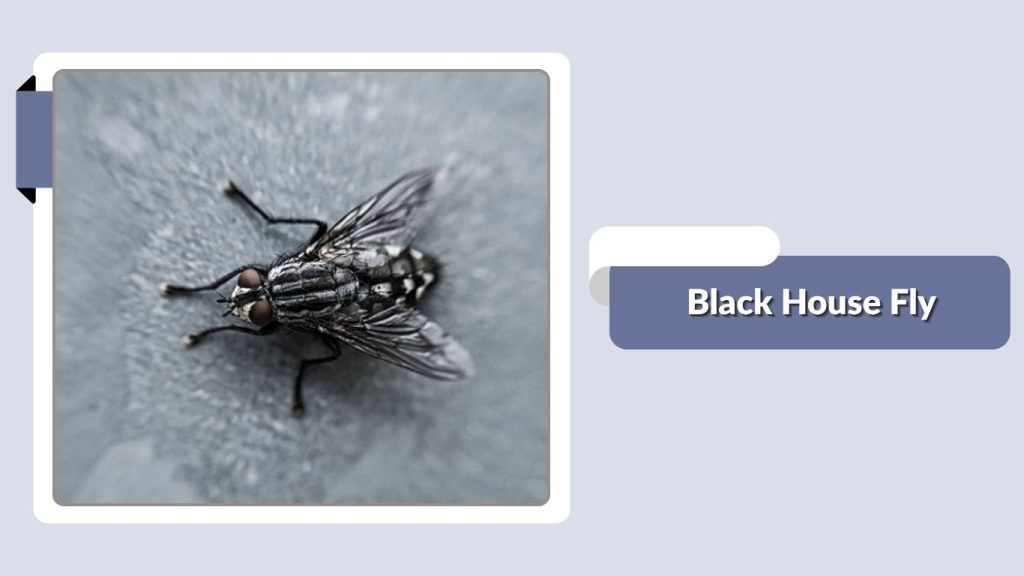
The Black House Fly is a dark-colored fly species commonly found in homes, farms, garbage areas, and outdoor environments. It resembles the Common House Fly but has a darker and shinier appearance. This species is highly active during warm weather and is often attracted to food waste and decaying organic matter.
Size
The Black House Fly measures about 0.2 to 0.3 inches in length. Its compact body and transparent wings allow quick and agile flight indoors and outdoors. The fly moves rapidly and is commonly seen resting on walls, windows, and food surfaces.
Color
This fly has a dark gray to black body with a slightly shiny texture. The wings are clear and transparent, while the eyes are reddish-brown. Some individuals may show faint dark stripes on the thorax, though the overall appearance remains darker than the Common House Fly.
Habitat
Black House Flies are commonly found in kitchens, garbage bins, farms, barns, markets, and animal shelters. They prefer warm environments with easy access to waste materials and decaying food. The species breeds in moist organic matter and spreads quickly in unsanitary conditions.
Identification
- Dark gray or black shiny body
- Transparent wings with fast flight
- Large reddish-brown eyes
- Similar in size to a Common House Fly
- Frequently found near garbage and food
- Active in warm indoor and outdoor areas
12. Blue Bottle Fly
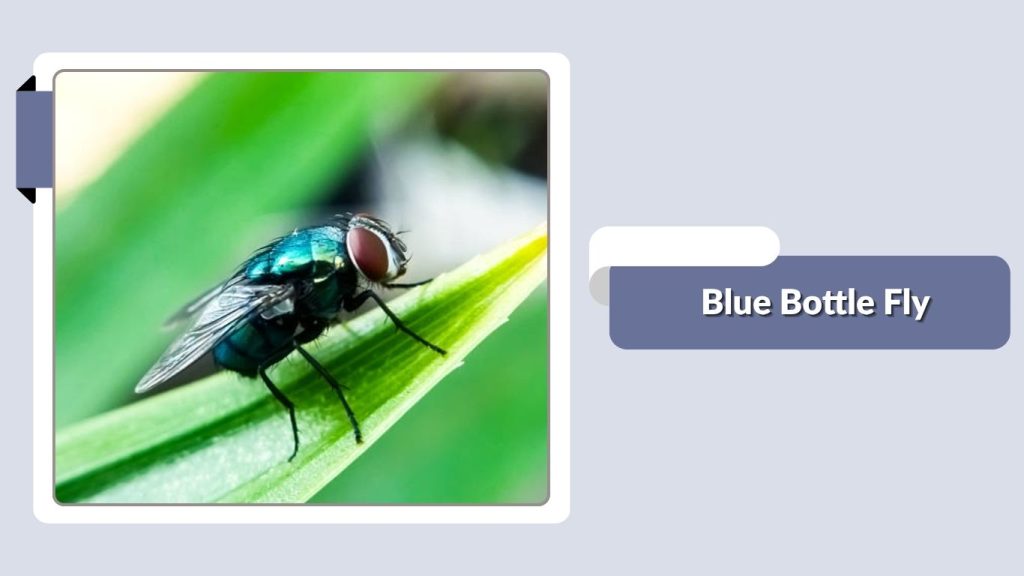
The Blue Bottle Fly is a large metallic fly species known for its bright blue body and loud buzzing flight. It is commonly associated with decaying meat, garbage, and animal carcasses. This fly plays an important role in decomposition and is widely studied in forensic investigations.
Size
The Blue Bottle Fly measures around 0.3 to 0.6 inches in length. It has a sturdy body and powerful wings that support rapid flight. The fly is highly active during daylight hours and can travel long distances while searching for food and breeding sites.
Color
This fly is easily recognized by its shiny metallic blue abdomen. The thorax may appear dark blue or black, while the wings are transparent with visible veins. Its large reddish eyes and reflective body give it a striking appearance under sunlight.
Habitat
Blue Bottle Flies are commonly found near garbage dumps, slaughterhouses, dead animals, compost piles, and outdoor waste areas. They prefer warm climates and environments with decaying organic matter. Adults may also visit flowers to feed on nectar.
Identification
- Metallic blue shiny abdomen
- Large sturdy body structure
- Transparent wings with loud buzzing flight
- Bright reddish compound eyes
- Common near carcasses and garbage
- Strong metallic appearance in sunlight
13. Green Bottle Fly
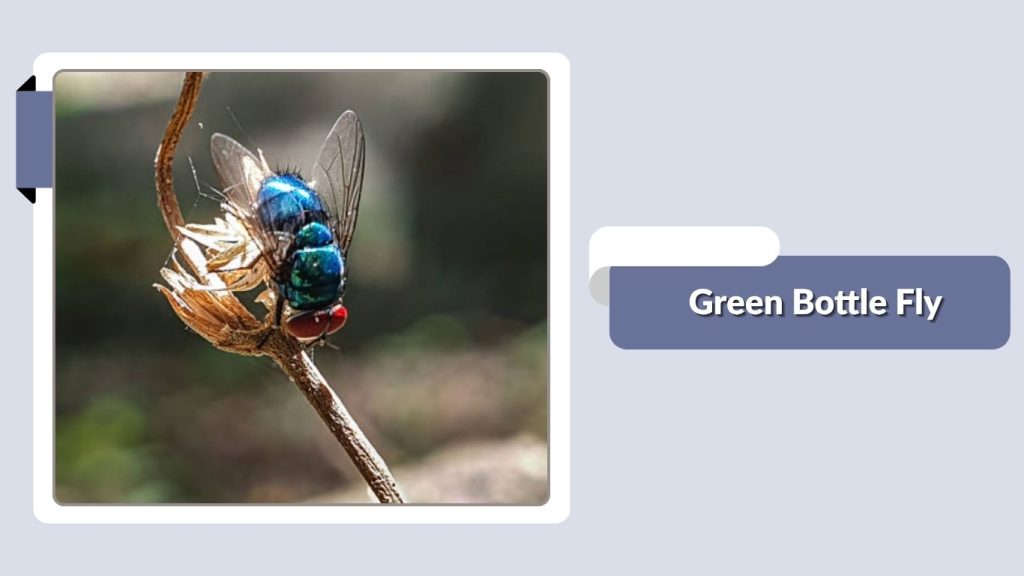
The Green Bottle Fly is a metallic-colored fly species commonly found around garbage, animal carcasses, compost piles, and decaying organic matter. It is closely related to the Blue Bottle Fly but is easily recognized by its bright green body. This fly plays an important role in decomposition and nutrient recycling in nature. It is also important in forensic science because it quickly appears around dead animals and organic waste.
Size
The Green Bottle Fly measures about 0.3 to 0.5 inches in length. It has a compact but sturdy body with strong transparent wings that support fast and noisy flight. The fly is highly active during warm weather and can travel quickly while searching for food or breeding locations. Its medium-sized body makes it larger than a typical Fruit Fly but smaller than a Horse Fly.
Color
This fly is famous for its shiny metallic green body that reflects brightly under sunlight. The thorax and abdomen may appear emerald green, blue-green, or bronze-green depending on the light angle. Its wings are clear and delicate, while the large eyes are reddish-brown. The metallic shine gives the fly a very distinctive appearance compared to dull gray household flies.
Habitat
Green Bottle Flies are commonly found in garbage areas, compost bins, slaughterhouses, farms, gardens, and outdoor waste sites. They are especially attracted to decaying meat, dead animals, and moist organic material where females lay eggs. Adults may also visit flowers for nectar and are frequently seen around sunny outdoor environments during summer months.
Identification
- Metallic green shiny body
- Medium-sized sturdy fly
- Transparent wings with fast flight
- Large reddish-brown eyes
- Common near garbage and decaying matter
- Loud buzzing sound during flight
14. Eye Gnat Fly
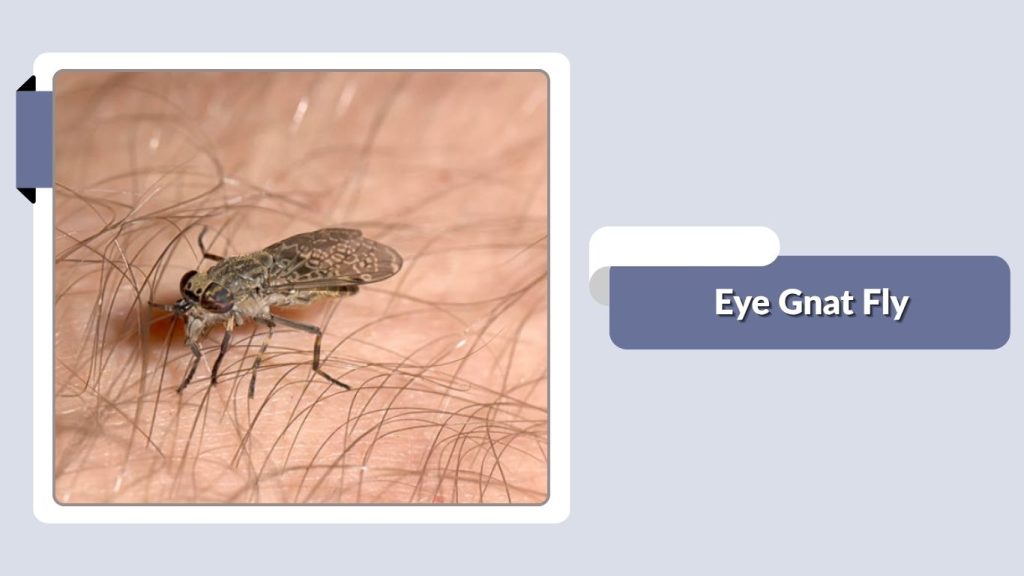
The Eye Gnat Fly is a tiny nuisance fly commonly found in warm and humid regions. It is known for gathering around the eyes, nose, and mouth of humans and animals to feed on moisture. Although it does not bite, its persistent swarming behavior can become highly irritating outdoors.
Size
The Eye Gnat Fly is extremely small, measuring about 0.06 to 0.12 inches in length. Its tiny body allows it to move quickly through the air and gather in large swarms around people and animals. Because of its lightweight structure, the fly is easily carried by wind currents.
Color
This fly usually has a black or dark brown body with transparent wings. The body appears slender and smooth, while the eyes are dark and relatively large for its small size. Some species may show faint yellow or gray markings on the abdomen.
Habitat
Eye Gnat Flies are commonly found in grassy fields, farms, gardens, beaches, and humid outdoor environments. They breed in moist soil, decaying vegetation, and areas with organic waste. These flies become especially active during warm seasons with high humidity and sunlight.
Identification
- Extremely tiny dark-colored body
- Transparent narrow wings
- Swarms around eyes and facial moisture
- Weak but persistent flight behavior
- Common in warm humid environments
- Non-biting but highly irritating outdoors
15. Soldier Fly
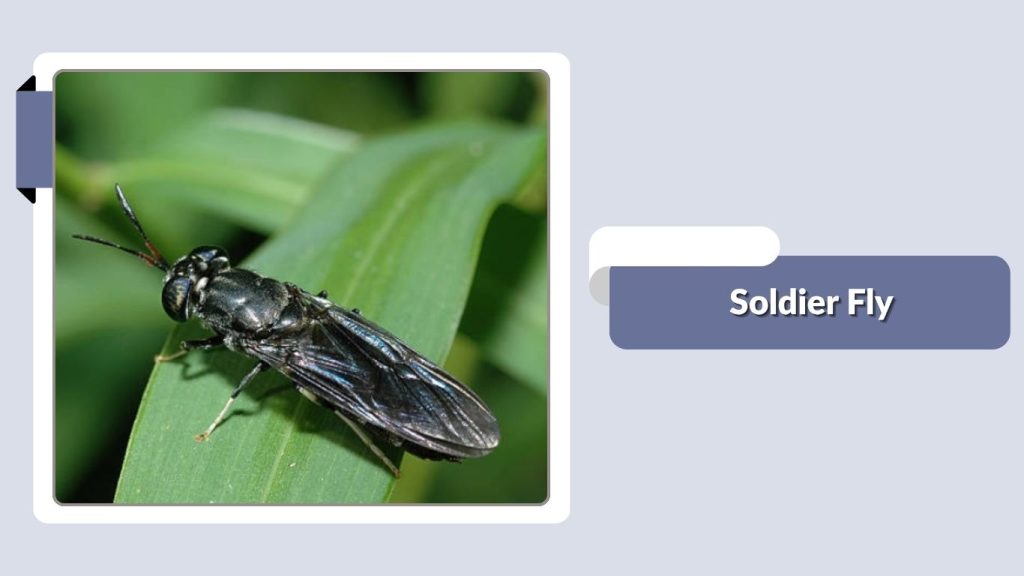
The Soldier Fly is a unique fly species known for its slender body, long legs, and wasp-like appearance. Unlike many pest flies, Soldier Flies are generally harmless and can even be beneficial to the environment. Their larvae help break down organic waste and are commonly used in composting and animal feed production.
Size
The Soldier Fly measures about 0.5 to 0.8 inches in length. It has a long and narrow body with broad wings folded flat over the back when resting. The fly is a moderate flier and is usually active during warm daylight hours in outdoor environments.
Color
This fly commonly has a black body with metallic blue, green, or bronze reflections depending on the species. Some Soldier Flies also display yellow or transparent markings near the abdomen that resemble wasp patterns. The wings are dark or smoky in appearance, while the eyes are large and well developed.
Habitat
Soldier Flies are commonly found in gardens, compost piles, farms, forests, and moist outdoor environments. Their larvae develop in decaying organic matter, manure, and compost materials. Adult flies are often seen resting on leaves, flowers, and wooden surfaces near humid areas.
Identification
- Long slender black body
- Wasp-like appearance with narrow waist
- Dark smoky wings folded over the back
- Metallic blue or green body reflections
- Long legs and slow flight movement
- Common near compost and organic waste
16. Humpbacked Fly
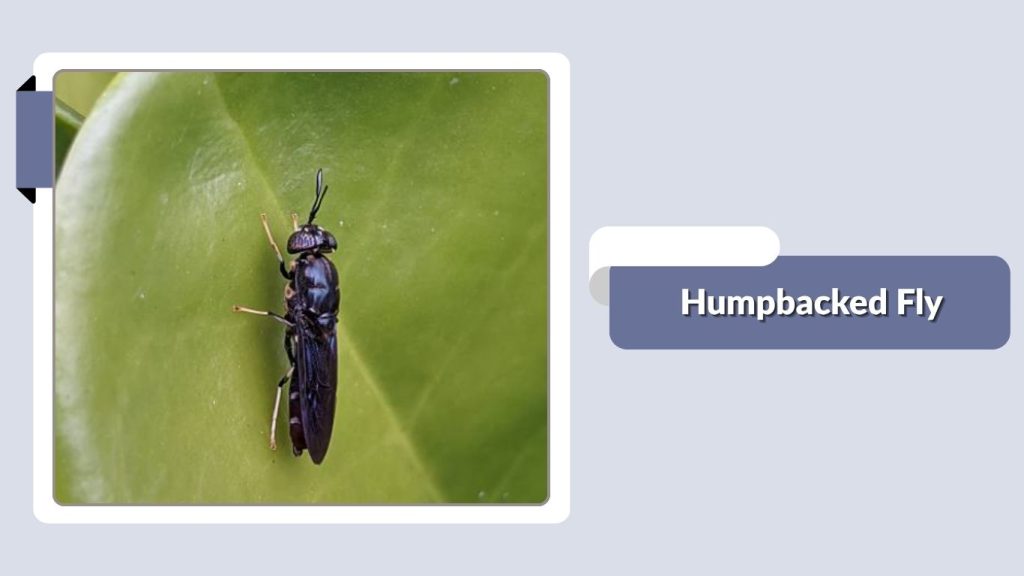
The Humpbacked Fly is a small fly species recognized by its rounded thorax that creates a humpbacked appearance. It is commonly found in homes, drains, garbage areas, and decaying organic material. Some species are also known as scuttle flies because they run quickly across surfaces instead of flying continuously.
Size
The Humpbacked Fly measures around 0.08 to 0.2 inches in length. Its tiny body and short wings make it a fast-moving insect in confined spaces. Although capable of flight, it often moves by running rapidly across floors, counters, and walls.
Color
This fly usually has a brown, black, or yellowish-brown body with transparent wings. The thorax is enlarged and curved upward, giving the fly its humpbacked shape. The body appears smooth and shiny under light, while the eyes are dark and prominent.
Habitat
Humpbacked Flies commonly live in drains, garbage bins, decaying food, sewage areas, and moist indoor environments. They breed in rotting organic material, dead insects, and damp waste products. These flies are especially common in kitchens, restaurants, and poorly cleaned areas.
Identification
- Small body with humpbacked thorax
- Brown or black coloration
- Transparent short wings
- Fast running movement on surfaces
- Common near drains and decaying matter
- Often called scuttle flies due to rapid movement
17. Fungus Gnat Fly
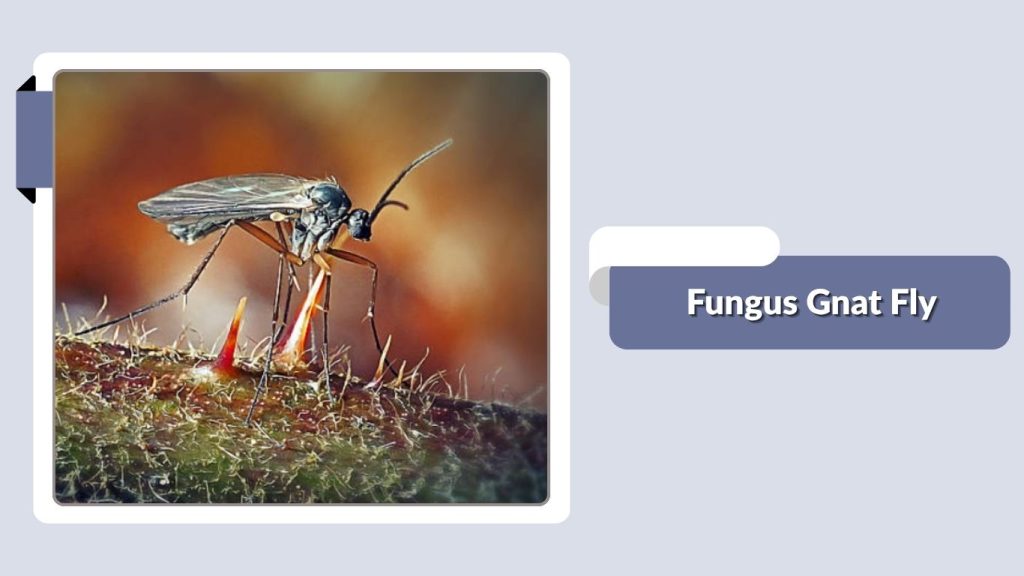
The Fungus Gnat Fly is a tiny delicate fly commonly found around indoor plants, greenhouses, damp soil, and decaying vegetation. These flies are especially common in homes with overwatered plants because their larvae thrive in moist soil conditions. While adult Fungus Gnats are mostly harmless, large infestations can damage young plant roots.
Size
The Fungus Gnat Fly measures about 0.08 to 0.15 inches in length. It has a slender body with long legs and narrow transparent wings. Due to its lightweight structure, the fly moves with weak and drifting flight patterns around plants and indoor lights.
Color
This fly usually has a dark gray or black body with clear wings and long antennae. The legs are thin and delicate, giving the insect a mosquito-like appearance. Its body may appear slightly shiny under direct light, while the wings show fine visible veins.
Habitat
Fungus Gnat Flies prefer damp environments with moist organic matter and fungal growth. They are commonly found in potted plants, greenhouses, compost piles, forests, and humid indoor spaces. The larvae develop in wet soil where fungi, roots, and decaying plant material are available as food sources.
Identification
- Tiny black or dark gray body
- Long legs and long antennae
- Weak drifting flight behavior
- Transparent narrow wings
- Common around indoor plants and damp soil
- Mosquito-like appearance without biting
18. March Fly
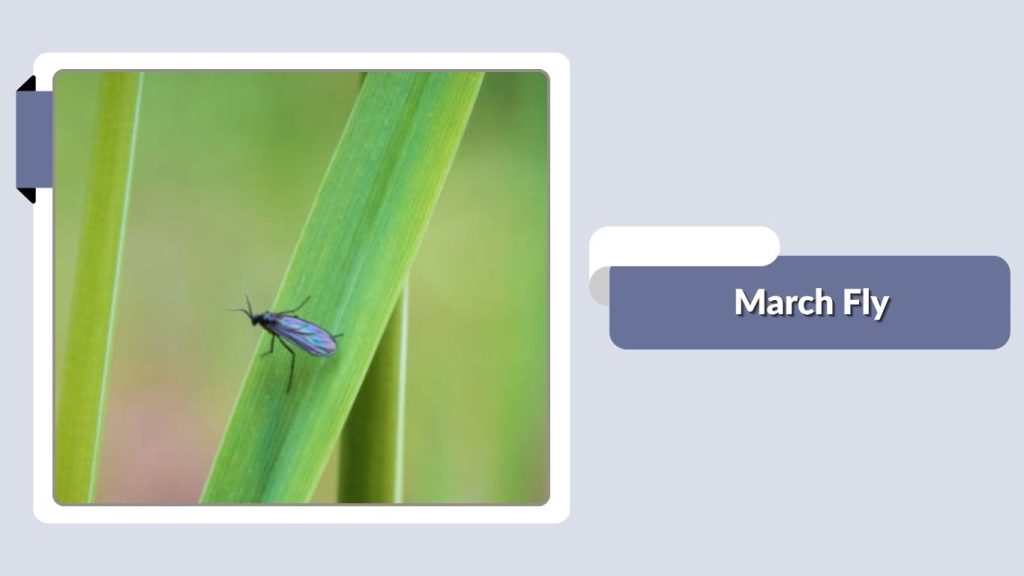
The March Fly is a medium-sized fly species commonly found in forests, grasslands, and rural outdoor environments. It is active mainly during spring and early summer, which is how it received its name. Some species are known for biting humans and animals, while others mainly feed on nectar and plant fluids.
Size
The March Fly measures around 0.3 to 1 inch in length depending on the species. It has a sturdy body and strong wings that support quick flight through open landscapes. Larger species are noticeably heavier and more robust than typical household flies.
Color
This fly can appear black, dark brown, gray, or sometimes metallic depending on the species. Some March Flies have patterned wings or brightly colored markings on the abdomen. The eyes are large and widely spaced, giving the fly excellent vision during flight.
Habitat
March Flies are commonly found in forests, grasslands, farms, wetlands, and woodland edges. They prefer warm outdoor environments with abundant vegetation and moisture. Larvae develop in soil, decaying organic material, or near water-rich habitats.
Identification
- Medium to large sturdy body
- Black, brown, or metallic coloration
- Large widely spaced eyes
- Strong fast flight behavior
- Some species have biting mouthparts
- Common during spring and early summer
19. Lesser House Fly
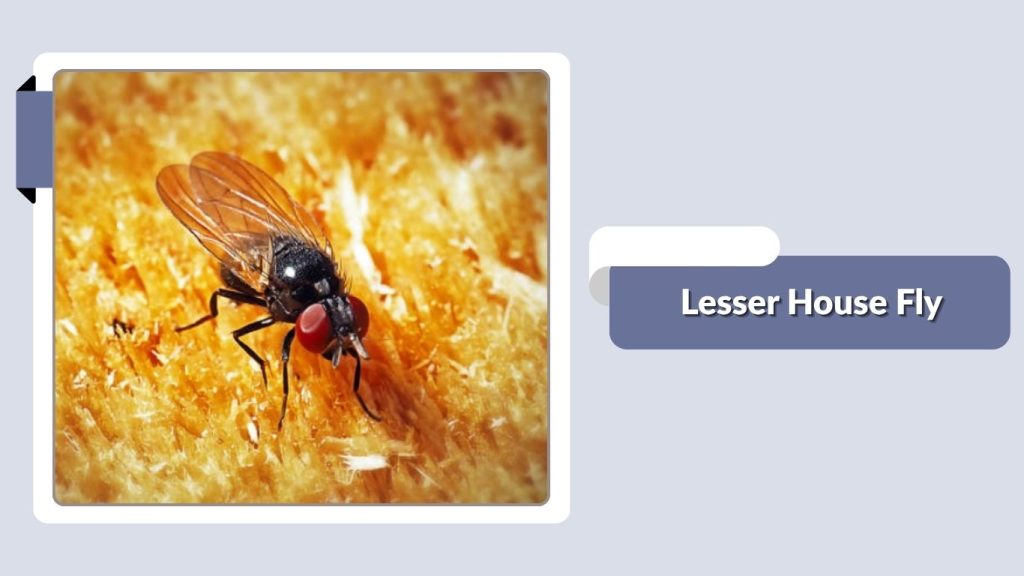
The Lesser House Fly is a small fly species commonly found in homes, poultry farms, barns, and animal shelters. It closely resembles the Common House Fly but is smaller and more slender in appearance. This fly is known for its unusual flying behavior, often moving in circular patterns around ceilings and hanging lights indoors.
Size
The Lesser House Fly measures about 0.15 to 0.25 inches in length. Its body is lighter and narrower than the Common House Fly, allowing quick and agile flight in confined spaces. Males are especially active and can often be seen hovering continuously indoors during warm weather.
Color
This fly usually has a gray or dark gray body with black markings on the thorax. The abdomen may appear yellowish near the sides in some individuals. Its wings are transparent and delicate, while the large reddish-brown eyes provide excellent movement detection during flight.
Habitat
Lesser House Flies are commonly found in poultry farms, kitchens, garbage areas, barns, and animal shelters. They breed in manure, moist waste, and decaying organic matter. Indoors, they are frequently seen near ceilings, windows, and light fixtures where warm temperatures are present.
Identification
- Small slender gray body
- Circular hovering flight indoors
- Transparent delicate wings
- Large reddish-brown eyes
- Common in poultry farms and homes
- Smaller than the Common House Fly
20. Cheese Skipper Fly
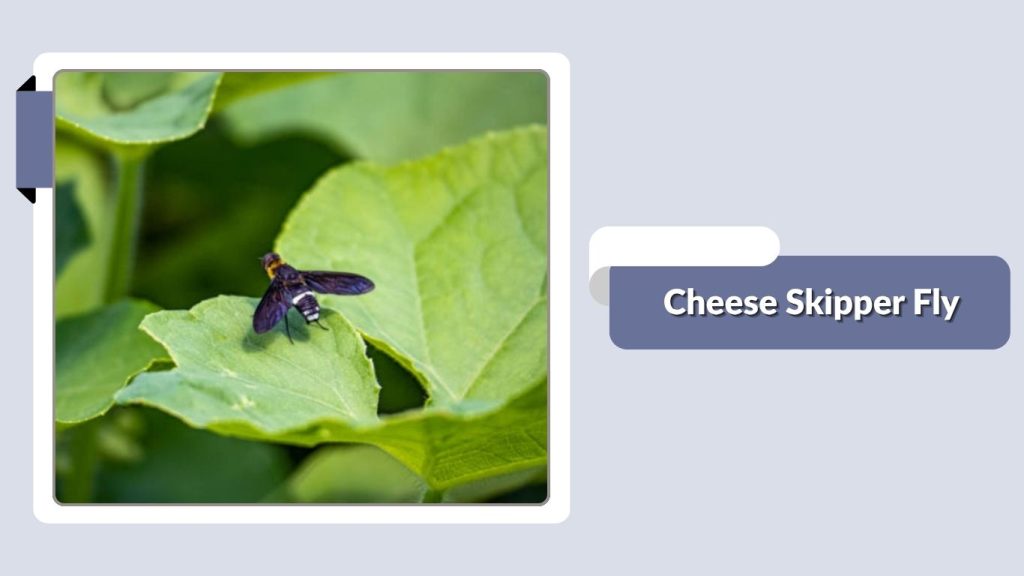
The Cheese Skipper Fly is a small fly species known for breeding in cheese, cured meat, and decaying animal products. Its larvae are called cheese skippers because they can jump into the air by bending their bodies. This unusual behavior makes the species easy to recognize among household and food-related flies.
Size
The Cheese Skipper Fly measures around 0.15 to 0.2 inches in length. It has a compact body with narrow wings that support short but active flight. Although the adult fly is small, its larvae are highly energetic and capable of strong jumping movements.
Color
This fly usually has a shiny black, dark brown, or bronze-colored body. The wings are transparent with fine veins visible under light. Its legs are pale yellow to light brown, and the eyes are dark and prominent compared to its small body size.
Habitat
Cheese Skipper Flies are commonly found near cheese factories, meat storage areas, garbage bins, animal remains, and decaying food products. They prefer warm environments where protein-rich organic matter is available for breeding. Infestations are more common in poorly stored food materials.
Identification
- Small shiny black or bronze body
- Transparent narrow wings
- Larvae capable of jumping movements
- Common near cheese and cured meat
- Pale yellow or brown legs
- Attracted to decaying animal products
FAQs
What is the most common type of house fly?
The Common House Fly is the most widespread and frequently seen fly species around homes, restaurants, farms, and garbage areas. It is recognized by its gray body, transparent wings, and rapid flight. This species is highly adaptable and survives in many different environments worldwide.
Why are house flies attracted to homes?
House flies are attracted to homes because of food, garbage, moisture, and warm indoor temperatures. Open food containers, dirty drains, decaying organic matter, and pet waste provide ideal feeding and breeding conditions for many fly species.
Are all house flies harmful?
Not all house flies are dangerous, but many can spread bacteria and germs by landing on food and surfaces. Some species, such as Stable Flies and Horse Flies, can bite humans and animals, while others mainly act as nuisance pests indoors.
How can you identify different fly species?
Fly species can be identified by their size, body color, wing shape, eye color, and behavior. Some flies have metallic bodies, while others appear gray or black. Habitat and movement patterns also help distinguish species from one another.
What attracts flies the most?
Flies are mainly attracted to decaying food, garbage, sugary liquids, animal waste, damp environments, and rotting organic matter. Certain species are also drawn to fruits, flowers, manure, or standing water depending on their feeding habits and breeding needs.
How can house flies be controlled naturally?
House flies can be reduced naturally by keeping areas clean, sealing garbage containers, removing food waste, cleaning drains, and reducing moisture buildup. Screens on doors and windows also help prevent flies from entering homes and buildings.